Yo, let’s talk about the coast. But I’m not talking about your average, run-of-the-mill sandy beach with a few palm trees. I’m talking about a coastline that’s straight-up epic, a place where the planet’s diary is written in stone, and every cliff face has a story to tell that’s millions of years old. Welcome to the San’in Kaigan UNESCO Global Geopark, a wild, rugged stretch of Japan’s main island, Honshu, that faces the mighty Sea of Japan. This isn’t just a pretty place; its UNESCO Global Geopark status is a legit seal of approval, telling you the geology here is globally significant. It’s the living, breathing story of how the Sea of Japan was born, a drama of volcanic eruptions, tectonic shifts, and the relentless artistry of wind and water. This coastline is a total mood—raw, untamed, and so powerful it can make you feel small in the absolute best way possible. It’s where you come to unplug from the noise and plug into the deep, rhythmic pulse of the Earth. It’s a side of Japan that’s pure, elemental, and unforgettable. Before we dive headfirst into this geological wonderland, let’s get our bearings and see the sheer scale of this masterpiece.
The Vibe Check: What’s the San’in Kaigan All About?
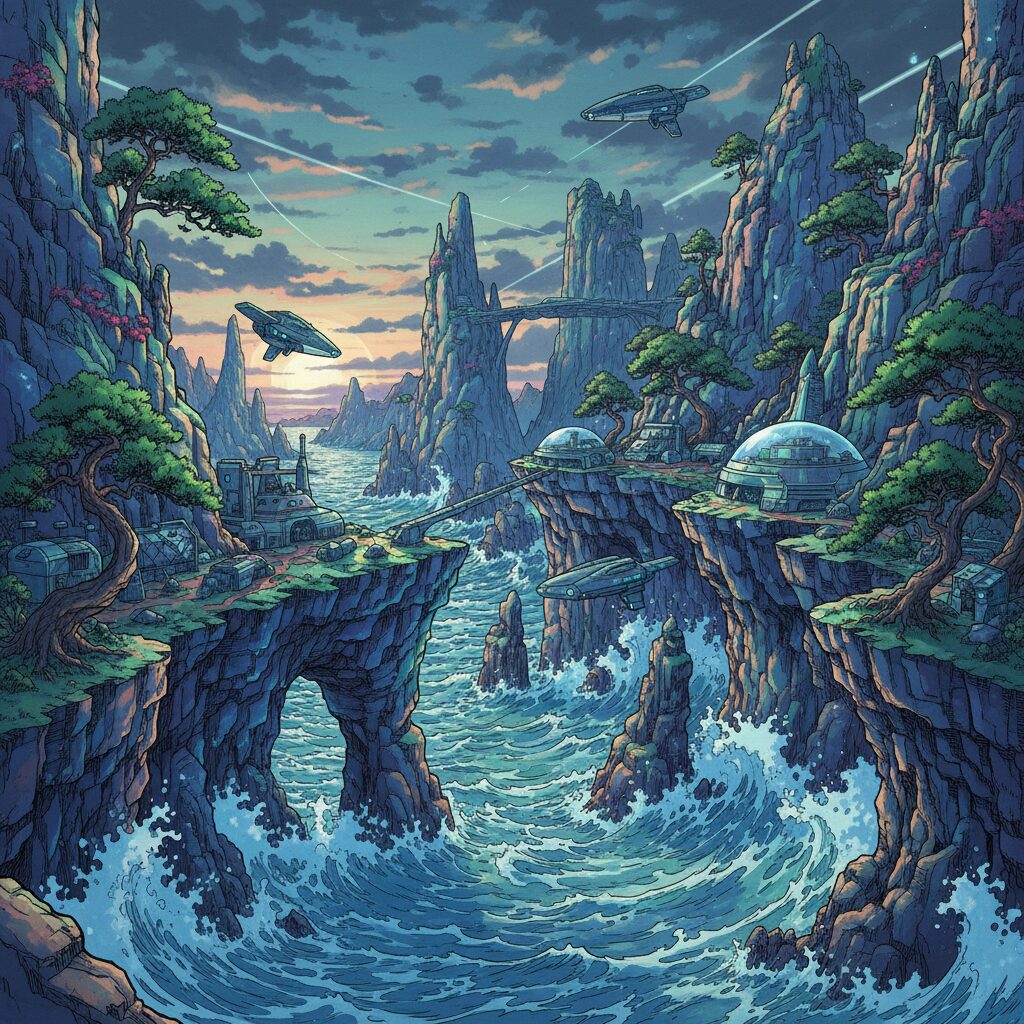
First, let’s set the right mood. Forget the neon-lit, ultra-modern image of Japan you may imagine. This is the Japan of ancient myths and legends, where nature remains the central figure. The air here tastes distinct—a sharp, fresh blend of sea salt and pine from the coastal forests. The wind isn’t just a soft breeze; it’s a force, a voice that seems to whisper tales from long ago. This isn’t just one spot; it’s an expansive 120-kilometer-long natural museum stretching from the stunning Kyotango coast in Kyoto Prefecture, winding through the dramatic cliffs and hot spring towns of northern Hyogo, and culminating in the vast, breathtaking landscapes of Tottori Prefecture. It’s a place of striking contrasts. One moment you’re relaxing on a tranquil beach where the water glows a vivid emerald green, the next, you’re standing beneath a towering volcanic cliff, its dark rock face appearing as if clawed by some giant ancient creature. This isn’t a place to just observe from afar. It’s an invitation to get out and explore, to feel the earth’s power beneath your feet. The constant surprises are what make it truly special. Each bend along the coastal road unveils a new view, a hidden cove, or an unusual rock formation that makes you want to stop. It’s a geological rollercoaster that keeps you hooked, and the excitement is completely real.
Level Up Your Geo-Game: The Main Attractions
The San’in Kaigan Geopark is packed with remarkable spots, each delivering a completely unique yet equally awe-inspiring experience. These locations aren’t just scenic backdrops; they’re interactive exhibitions in the grand museum of Earth.
Tottori Sand Dunes: Beyond Just a Vast Beach
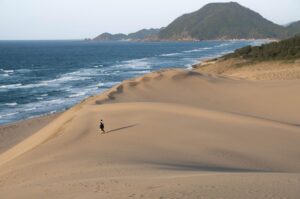
Let’s begin with the icon, the showstopper: the Tottori Sand Dunes. The moment you crest the first sandy ridge and grasp the immense scale of the terrain, it literally takes your breath away. This isn’t merely a heap of sand; it’s a living desert landscape, continuously shifting and reshaped by powerful winds blowing in from the Sea of Japan. Spanning about 16 kilometers in length and 2 kilometers in width, it’s Japan’s largest sand dune system. The main summit, known as “Umanose” or “horse’s back,” is a challenging yet rewarding climb. From there, you’re treated to a stunning 360-degree view: the endless ripples of sand, the deep, dark blue sea crashing along the shore, and the lush green of the Sendaigawa River estuary and surrounding mountains. It’s like three distinct worlds converging in one breathtaking panorama. What’s there to do? Camel rides are a classic photo opportunity, lending the place a surreal, Silk Road-on-the-sea atmosphere. For an adrenaline boost, sandboarding is a must-try—it’s essentially snowboarding on sand and a total blast. The soft landing makes it perfect for beginners. For a more peaceful experience, simply kicking off your shoes and feeling the surprisingly cool sand between your toes as you walk to the water’s edge offers a form of meditation. A huge pro tip from a local: visit at sunrise or sunset. The low sun casts long, dramatic shadows across the dunes, bathing the sand in golden and orange hues. The atmosphere is unbeatable, and it’s much less crowded. Another highlight is the Sand Museum, located adjacent to the dunes. Forget any notion of a dusty, old building—this place showcases massive, intricately detailed sand sculptures crafted by world-class artists. With an annually changing theme, there’s always something fresh to admire. It’s high art created from the very essence of the landscape.
The Uradome Coast: Nature’s Masterpiece Sculpted by the Sea
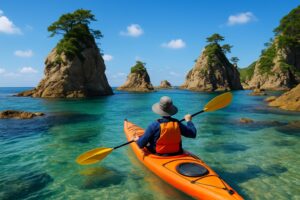
If the Tottori Sand Dunes are the geopark’s blockbuster, the Uradome Coast is its art-house gem. This 15-kilometer stretch of coastline showcases the sea’s power as a master sculptor. The water clarity here is exceptional, often compared to the famed Matsushima Bay, with visibility reaching up to 25 meters on calm days. The scenery is a stunning assembly of eroded sea cliffs, tunnels, caves, and numerous pine-covered islets jutting from the emerald waters. To take it in from land, the Uradome Coast Nature Trail is a fantastic hiking route that winds along cliffs, offering incredible views into hidden coves. But to truly experience Uradome’s magic, you need to get on the water. The sightseeing boat tours are essential. These 40-minute cruises, helmed by expert captains, navigate narrow channels and bring you impressively close to the natural wonders. You’ll pass beneath natural arches and enter sea caves, witnessing the intricate wave-carved rock patterns formed over millennia. For a more intimate and adventurous experience, sea kayaking is ideal. You’re the captain of your own craft, paddling at your own pace. You can glide into quiet inlets inaccessible by larger boats, and the feeling of passing through a stone archway with clear water revealing the seabed below is pure magic. It’s a fully immersive sensory encounter with the geopark’s raw beauty and power.
Genbudo Cave: Stunning Basalt Columns That Impress
Heading west into Hyogo Prefecture near the onsen town of Kinosaki, you’ll find Genbudo Park. The ambiance here shifts from the exposed, windswept coast to something more sheltered, ancient, and reflective. The main attraction is Genbudo, a cave formed by quarrying hundreds of years ago, which fortunately revealed an incredible natural marvel: perfectly shaped hexagonal and pentagonal basalt columns. These breathtaking geometric formations were created 1.6 million years ago when lava from volcanic eruptions cooled and contracted, causing cracks to form in these precise patterns. It resembles a giant honeycomb or a massive natural pipe organ. Standing inside, you’re surrounded by stark, powerful geometry that feels almost sacred. The story gets even more fascinating. This site holds major scientific significance. In the 1920s, Japanese scientist Dr. Motonori Matuyama studied these rocks and discovered their magnetic orientation was completely opposite to Earth’s current magnetic field. This was pioneering evidence for geomagnetic reversal and led to the naming of the Matuyama-Brunhes reversal period. You are quite literally standing in a location that transformed our understanding of the planet. The park has five caves to explore, each with its own character. Seiryudo (Blue Dragon Cave) is especially stunning, with columns cascading down a cliffside like a frozen stone waterfall. It’s a tranquil site that delivers both scientific insight and visual impact.
Hidden Gem: The Amarube Viaduct
While exploring the Hyogo section of the geopark, be sure to visit the Amarube Viaduct. For nearly a century, the original iconic red steel trestle bridge was a beloved landmark on the JR San’in Main Line—a symbol of industrial strength against a wild natural backdrop. In 2010, it was replaced by a modern concrete bridge, but a portion of the old steel structure was preserved and transformed into a spectacular observation deck called “Sora no Eki” (Station in the Sky). You can walk along the old railway tracks suspended 40 meters above a small fishing village and the sea below. The view of the rugged coastline is absolutely breathtaking. Watching trains speed by on the new bridge just beside you provides a unique perspective. It’s the perfect blend of industrial heritage and natural beauty, showcasing the human ingenuity needed to connect these remote coastal communities. The photo opportunities here are absolutely spectacular.
Beyond the Rocks: Culture and Eats
The geopark’s striking geology has shaped more than just the physical landscape; it has deeply impacted the local culture, lifestyle, and, most delectably, the cuisine.
Onsen Paradise: Kinosaki and Yumura
The same volcanic forces that created the dramatic coastline also endowed the region with an abundance of world-class hot springs, or onsen. Kinosaki Onsen stands out as the unrivaled highlight. Here, the town itself is the main attraction. A scenic canal lined with weeping willows runs through the center, spanned by charming stone bridges. The classic Kinosaki experience is the “sotoyu meguri,” or pilgrimage to the seven public bathhouses scattered throughout town. Visitors purchase a day pass, slip into the yukata (light cotton kimono) and geta (wooden sandals) provided by their ryokan, and join the gentle clatter of sandals on the streets as they move from one bath to another. Each bathhouse features its own distinctive design and legend, from the majestic, cypress-wood Goshono-yu, said to bring luck in love, to the enigmatic, cave-like Mandara-yu. It’s a deeply soothing, social, and beautiful cultural ritual. Slightly further west, Yumura Onsen offers a more rustic, authentic onsen experience. Its claim to fame is “Arayu,” a 98°C hot spring source bubbling up right in the heart of town. Here, locals and tourists alike use the public cooking basin, called a “yuba,” to boil eggs (creating the perfect onsen tamago) and vegetables in string nets. This provides a wonderfully direct and tangible connection to the geothermal energy flowing just beneath their feet.
Seafood That Impresses: The Flavors of the Sea of Japan
The nutrient-rich, cold waters of the Sea of Japan, combined with the complex, rocky seafloor of the geopark, create an ideal habitat for some of Japan’s most prized seafood. This is not just about food; it stands as a fundamental part of the local culture and economy. The undisputed king of this marine bounty is the male snow crab, known locally as Matsuba-gani. Available only during the strict fishing season from November to March, this is a genuine luxury experience. Staying at a traditional inn in coastal towns like Kasumi or Hamasaka for a full-course crab kaiseki dinner is a bucket-list culinary adventure. Crab is served in every imaginable form: simply boiled to highlight its natural sweetness, charcoal grilled, offered as delicate sashimi, simmered in a hot pot (kani-suki), and finally, the intensely flavorful “kani-miso” (the rich innards) grilled right in the shell. The taste is complex, sweet, umami-rich, and utterly unforgettable. But the feast doesn’t end in winter. In summer, the star of the show is the white squid, or “shiroika.” At night, the sea is dotted with the bright lights of fishing boats, known as “isaribi,” used to attract the squid to the surface. Eaten as sashimi just hours after being caught, its flesh is almost translucent, incredibly sweet, and has a firm, satisfying texture unlike any squid you’ve tasted before. Add to that the seasonal hauls of rockfish (hata-hata) in early winter and the rich, tasty winter yellowtail (kan-buri), and you have a year-round seafood paradise. A visit to a local fish market, such as the one at Karo Port in Tottori, is essential to experience the vibrant energy and see the incredible variety of the day’s catch.
The Practical Deets: How to Actually Do This
Alright, you’re convinced by the idea. But how do you turn this trip into a reality? Exploring the San’in Kaigan Geopark is a journey—not just a quick stop—and a bit of planning makes all the difference.
Getting There and Getting Around
Getting there is part of the fun. The main gateway cities are Tottori City in the east and Toyooka City (famous for Kinosaki Onsen) in the west. You can fly into Tottori Sand Dunes Conan Airport (yes, named after the iconic anime detective) or the smaller Konotori Tajima Airport. From major hubs such as Osaka, Kyoto, or Hiroshima, express trains will get you to the region in about 2.5 to 3 hours. However, once there, the best way to explore the vast geopark is by renting a car. A car is the ultimate way to enjoy freedom and flexibility. The most breathtaking viewpoints, hidden coves, and charming fishing villages are often off the main train routes. Driving the coastal roads is an experience itself, with stunning scenery unfolding at every turn. For those who prefer public transport, the JR San’in Main Line offers a beautifully scenic route along much of the coastline. You can definitely plan your trip around key stations, but be aware that local buses to more remote spots may be infrequent—always check timetables ahead of time. If focusing on train travel, consider a regional rail pass such as the San’in-Okayama Area Pass for possible savings.
When to Visit? Seasonal Highlights
There’s no single “best” time to visit the geopark; it depends on the vibe and experiences you want. Each season has its own special charm.
- Spring (March-May): Simply stunning. The weather is mild and ideal for hiking coastal trails. Cherry blossoms add splashes of pink against the blue sea and green pines. The calm sea is perfect for boat tours. It’s popular for good reason.
- Summer (June-August): The peak season for marine activities. The water is warm enough for swimming, snorkeling, and sea kayaking along the Uradome Coast. The landscape turns a lush, deep green. It can be hot and humid, and typhoons are a possibility, so staying flexible is important. Still, a clear summer day here feels like paradise.
- Autumn (September-November): My personal favorite. The summer heat fades into crisp, cool air, perfect for exploring. Autumn foliage paints the mountains red, orange, and yellow against the blue sea. Crowds thin out, and it’s the season to enjoy fresh local produce like pears.
- Winter (December-February): Ideal for those who appreciate a dramatic, moody atmosphere. The Sea of Japan can be wild, with powerful waves crashing on the cliffs. Snowfall transforms the Tottori Sand Dunes into a surreal white wonderland. While outdoor activities may be limited, this season offers prime opportunities to relax in hot onsens and savor Matsuba-gani, the king of crabs.
Pro Tips for First-Time Visitors
- Footwear Matters: Don’t attempt to hike coastal trails in flimsy sneakers or sandals. A sturdy pair of walking shoes or light hiking boots with good grip is essential. The terrain can be rocky, slippery, and uneven.
- Carry Cash: While hotels, larger restaurants, and shops in towns like Kinosaki accept credit cards, many small family-run eateries, local shops, and rural ticket counters only take cash. Always have enough yen on hand.
- Welcome the Detours: Avoid sticking strictly to a fixed itinerary. Some of the best discoveries along the San’in coast—small fishing villages, unnamed viewpoints, quiet shrines—come from taking a spontaneous turn off the main road. Let your curiosity lead you.
- Monitor Sea Conditions: If boat tours or sea kayaking are on your wish list, check sea conditions beforehand. Tours often get canceled due to high waves, especially from late autumn through early spring. Most operators provide daily updates on their websites or social media.
More Than Just a Pretty Coast
So, what’s the final verdict on the San’in Kaigan UNESCO Global Geopark? It’s far more than just a collection of fascinating rocks and Instagram-worthy views. It’s a place where you can literally touch the story of our planet, where the vastness of geological time becomes something you can feel. This coastline has shaped not only the land but also the very spirit of the people who live there—their resilience, their deep bond with the changing seasons, and their profound respect for the power of the sea. You might arrive expecting to witness stunning nature, but you’ll leave with a deeper understanding of time itself, and of the slow, patient, and incredibly powerful forces that shape our world. From the sweeping sands of Tottori to the microscopic history locked in a single basalt column at Genbudo, this place has a way of transforming your perspective. It’s a journey that’s both thrilling and deeply grounding, a powerful reminder that the greatest stories aren’t found in books, but are written across the landscape around us. So pack your bags, bring an open mind and a sense of wonder, and come hear what the wild coast of Japan has to share. It’s a conversation you’ll never forget. Seriously.