Yo, let’s talk real for a sec. When you picture Japan, what pops into your head? Neon-drenched Tokyo streets? Serene Kyoto temples? Maybe that perfect shot of Mt. Fuji? All iconic, all legit. But what if I told you there’s a whole other side to Japan, a wild, rugged, jaw-droppingly beautiful coastline where the mountains crash into water so clear it feels like you’re flying? A place where millions of years of Earth’s drama are etched into every cliff face and sea cave? Welcome, my friends, to the San’in Kaigan UNESCO Global Geopark. This isn’t just a park; it’s a living museum of our planet’s history, stretching all the way from the eastern coast of Tottori Prefecture to the tip of Kyotango in Kyoto Prefecture. And the absolute best way to get up close and personal with this masterpiece? From the cockpit of a sea kayak. Forget crowded trains and tourist traps. We’re talking about paddling through secret coves, exploring sea caves that echo with the whispers of ancient legends, and discovering a side of Japan that feels raw, untouched, and utterly epic. It’s an adventure that gets your heart pumping and your soul soaring. This is the real deal, an unfiltered experience that connects you straight to the raw power and beauty of nature. So grab a paddle, because we’re about to dive deep into one of Japan’s most spectacular hidden gems.
To fully appreciate the geological wonders you’ll be paddling past, check out our complete guide to the San’in Kaigan Geopark.
The Vibe Check: What’s the San’in Coast All About?
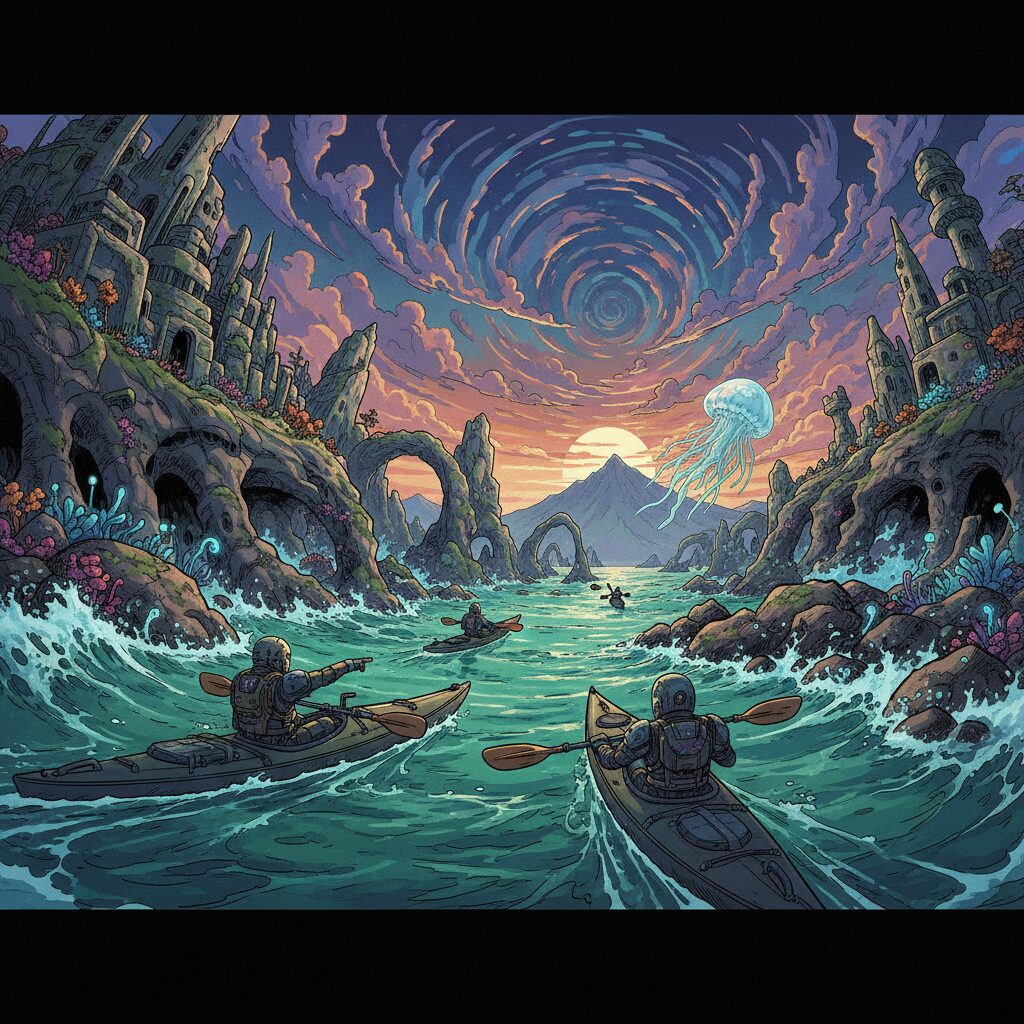
Before we even discuss getting into the water, you need to grasp the vibe here. It’s a complete 180 from the urban rush. The moment you arrive, the first thing that strikes you is the air. It’s heavy with the clean, sharp scent of salt and pine, carried on a breeze that seems to have traveled across the entire Sea of Japan just to welcome you. The soundtrack isn’t the beep of a crosswalk; it’s the rhythmic crash of waves against ancient rocks, the call of a sea hawk circling overhead, and the rustle of wind through coastal forests. It’s a place that asks you to slow down, to breathe more deeply. The energy here is ancient and powerful. Standing on a cliffside viewpoint, looking out at a jagged line of islands and sea stacks, you can truly feel the eons of geological time that shaped this landscape. It’s humbling, in the best way. The water itself sets a whole mood. Locals call its stunning clarity “San’in blue,” and it’s no exaggeration. On a calm day, it reveals a mesmerizing gradient of turquoise, emerald, and deep sapphire. You can see straight to the sandy bottom, watching schools of small fish dart through seaweed forests. There’s a sense of pristine, untouched beauty that is increasingly rare in today’s world. It’s a place that feels both dramatic and serene, wild yet welcoming. This is the kind of scenery that doesn’t just create a great photo; it evokes something deeper, a profound connection to the planet. This isn’t just a spot to observe; it’s an immersive environment that recharges your spirit and clears your mind.
Geopark 101: More Than Just Pretty Rocks
The term “Geopark” might sound somewhat academic. But believe me, the story behind the San’in Kaigan is pure drama—a blockbuster epic crafted by Mother Nature herself. It all begins about 25 million years ago, when Japan was still connected to the Asian continent. As tectonic plates shifted, this region started to stretch and crack, eventually breaking off to form the Sea of Japan. This tectonic upheaval triggered intense volcanic activity. Magma surged and erupted, creating the igneous rocks that form the very foundation of this coastline. Fast forward a few million years, and the Earth’s climate cycles through ice ages, with sea levels rising and falling. Each shift left its trace. The rising seas carved the cliffs, while the relentless waves and wind sculpted them into the stunning shapes we see today. You’re not just gazing at rocks; you’re witnessing a timeline of Earth’s history. These layers of the past are visible everywhere. On the Kasumi Coast in Hyogo, you’ll find striking geometric basalt columns formed as lava cooled quickly. They resemble something out of a sci-fi film—massive hexagonal pillars arranged like a giant’s staircase. Then there’s the Uradome Coast in Tottori, where white granite rocks stand in sharp contrast against the blue sea. These varied rock formations tell different chapters of the same story. But this geological heritage is more than a backdrop; it’s interwoven with the local culture. The unique coastline created natural harbors, turning small towns into major fishing centers for centuries. The area’s legends and folklore abound with tales linked to specific rock features. That solitary sea stack? It’s said to be a heartbroken princess turned to stone. That cave? It’s believed to be the dwelling of a dragon god protecting local fishermen. By understanding the geology, you begin to understand the people, their history, and their profound spiritual connection to this powerful landscape.
Gearing Up: Your Ultimate Sea Kayak Adventure
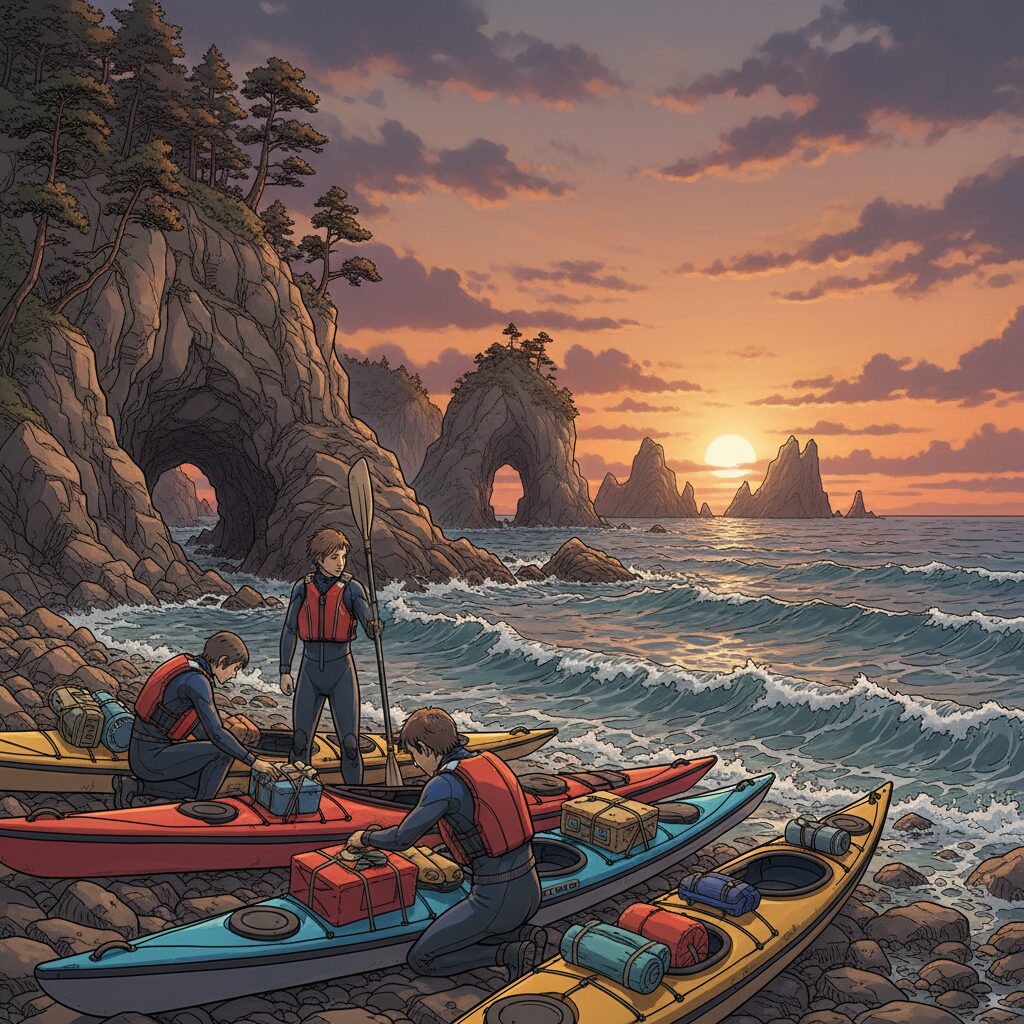
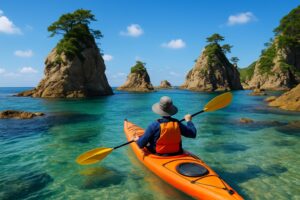
Alright, let’s dive into the main event. Sea kayaking is undoubtedly the most intimate way to experience the San’in Kaigan Geopark. It places you right at water level, offering a perspective that’s impossible from land or a large boat. You’re not merely observing the scenery; you become a part of it. You can feel the gentle sway of the sea beneath you, reach out to touch the cool, rugged surface of a million-year-old rock, and quietly glide into hidden spots that feel like your own private discovery. The best part? You don’t need to be an expert. The bays are often calm and sheltered, making them accessible to beginners, while the open coastline provides an exciting challenge for seasoned paddlers. It’s an adventure for all.
Choosing Your Paddle Playground: Uradome Coast
If you want a paddle spot that delivers maximum “wow,” the Uradome Coast in Tottori is the place to be. This coastline is famous for its crystal-clear waters and stunning collection of islands, sea caves, and beautifully sculpted sea arches. Often called the “San’in Matsushima,” in reference to one of Japan’s three most scenic sites, it truly lives up to its reputation. Launching from one of the small sandy beaches, the first thing you’ll notice is how it feels like you’re floating on liquid glass. You can see crabs scurrying on the seabed ten feet below. As you paddle away from shore, the adventure unfolds. Your guide will lead you along towering granite cliffs, highlighting the intricate patterns and colors. The real magic begins when you start exploring the nooks and crannies. You’ll paddle right through a natural stone arch, the water gently echoing beneath you. You’ll glide into a dark sea cave, where your eyes adjust to reveal the incredible textures of the rock walls, illuminated only by the shimmering blue light reflecting off the water. It’s like entering another world. Many tours pause at a secluded beach accessible only by water, where you can pull your kayak ashore, swim in outrageously clear water, and simply bask in the feeling of your own private paradise. It’s a surreal, deeply peaceful experience that lingers long after you’ve dried off.
The Kasumi Coast Crew: A Different Flavor of Awesome
Travel east into Hyogo Prefecture, and the coastline’s character changes. The Kasumi Coast is more rugged, dramatic, and raw. The energy here is pure power. The star attraction is the geology itself—towering cliffs and some of the most striking rock formations in the entire geopark. Paddling here feels like exploring a lost world. The most famous landmark is the “Yoroi no Sode” cliff, which means “Sleeve of Armor.” Approaching it from the water, it’s clear why. The rock face is cracked vertically and horizontally, resembling the layered plates of samurai armor. It’s immense, imposing, and awe-inspiring from a tiny kayak. The sea caves along the Kasumi Coast are legendary too—larger and more complex than those on the Uradome side. Paddling into Gomi-do Cave, for example, is a thrilling adventure. You navigate through a series of chambers, your paddle strokes echoing in the vast darkness. The water is a deep, mysterious emerald, and the sheer size of the cave makes you feel very small. It’s a heart-pounding experience. This side of the park celebrates the raw, untamed force of nature, shaped by violent volcanic activity, and experiencing it from the water is the ultimate tribute.
Finding Your Guide: The Lowdown on Tours
Unless you’re a kayaking master with your own gear, booking a tour is your best bet. Honestly, even experts might benefit from it. Local guides hold the secrets of this coastline—they know which caves are safe to enter depending on tides, where hidden beaches lie, and the best spots to spot marine life. They’ll also share local stories and geological insights, enriching your experience. Numerous tour operators are based in towns like Iwami in Tottori and Kasumi or Takeno in Hyogo. A quick online search will reveal plenty of options. Most offer a range of tours—from short two-hour beginner sessions to half-day or full-day expeditions for those who want to explore further. Typical tours provide everything you need: a stable, easy-to-handle sea kayak, paddle, life jacket, and sometimes water shoes. The experience begins with a safety briefing and a quick lesson on paddling techniques right on the beach. Guides are patient and excellent at helping newcomers feel comfortable and confident, having you paddling like a pro in no time. For a truly special experience, look for a sunset tour. Paddling over the calm sea as the sky bursts into shades of orange, pink, and purple, with the silhouettes of cliffs and islands around you, creates a memory that lasts a lifetime. It’s pure magic.
Beyond the Kayak: Exploring the Geopark on Foot and by Boat
While kayaking remains the main attraction, there is plenty more to see and do in San’in Kaigan Geopark. Varying your activities allows for a deeper appreciation of the vastness and diversity of this remarkable area. Sometimes, the best way to truly take in where you have been is to view it from a different perspective, and the geopark offers numerous opportunities for this—whether you’re hiking or relaxing on a cruise.
Hiking the Coastline: Trails with Stunning Views
After spending time at sea level, gaining some elevation is a wonderful way to shift your perspective. The geopark is interlaced with hiking trails that provide some of the most breathtaking coastal scenery in Japan. The Uradome Coast Nature Trail is a must-try. This well-kept path meanders along the cliffs, weaving through shady pine forests and opening up at awe-inspiring lookout points. From these vantage points, you can gaze down at the same turquoise coves and sea arches you explored earlier by kayak. Seeing the landscape spread out beneath you like a map greatly enhances your appreciation for the complex geography of the coastline. The trail is fairly easy, making it suitable for most fitness levels, and it’s ideal for a morning or afternoon outing. You can hike the full stretch or just cover a short section between viewpoints. Each stop presents a new, picture-perfect scene, so be sure your camera battery is fully charged. The blend of twisted pine trees, white granite cliffs, and the endless blue ocean is simply captivating.
Sightseeing Cruises: All the Views, Without the Effort
If you’d like to take in impressive coastal views without the physical exertion, or if you’re traveling with family or individuals with limited mobility, local sightseeing cruises are an excellent choice. These boats depart from several ports along the coastline, including Uradome and Kasumi. They follow routes that showcase all the key highlights. The vessels are designed to get you very close to the sights—they sail right alongside towering cliffs and even enter the mouths of some of the larger sea caves, enabling you to experience their scale and grandeur from a safe, comfortable platform. The onboard commentary, though often in Japanese, points out famous formations and shares local stories, providing rich context for the stunning scenery around you. It’s a relaxing and efficient way to see a lot in a limited time, and especially enjoyable on days when the sea is too rough for kayaking.
The Sand Museum & Tottori Sand Dunes: A Completely Different Experience
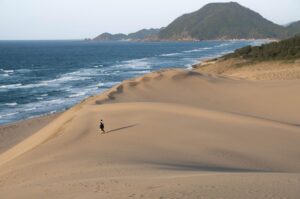
You absolutely cannot visit this region without exploring the Tottori Sand Dunes. They are unquestionably one of Japan’s most surreal and unique landscapes. Located right on the coast, just a short drive from the Uradome area, these vast dunes are an official part of the geopark. They were formed over thousands of years as sediment from the Chugoku Mountains was carried down the Sendai River, deposited into the sea, and then reshaped by ocean currents and winds onto the shore. Standing atop the Umanose (“horse’s back”) dune and looking out over the endless stretch of sand meeting the sea is a mind-bending experience. It feels as though the Sahara Desert has suddenly joined a beach party. You can ride a camel, try sandboarding, or simply walk along the wind-sculpted ridges, leaving the first footprints of the day. Just a short distance from the dunes is The Sand Museum, an attraction far cooler than its name suggests. Each year, the museum invites master sand sculptors from around the world to create enormous, intricately detailed sculptures based on a theme. The size and craftsmanship are truly breathtaking. It’s a must-visit that beautifully complements the natural wonder of the dunes themselves.
Refuel Mission: What to Eat in the San’in Region
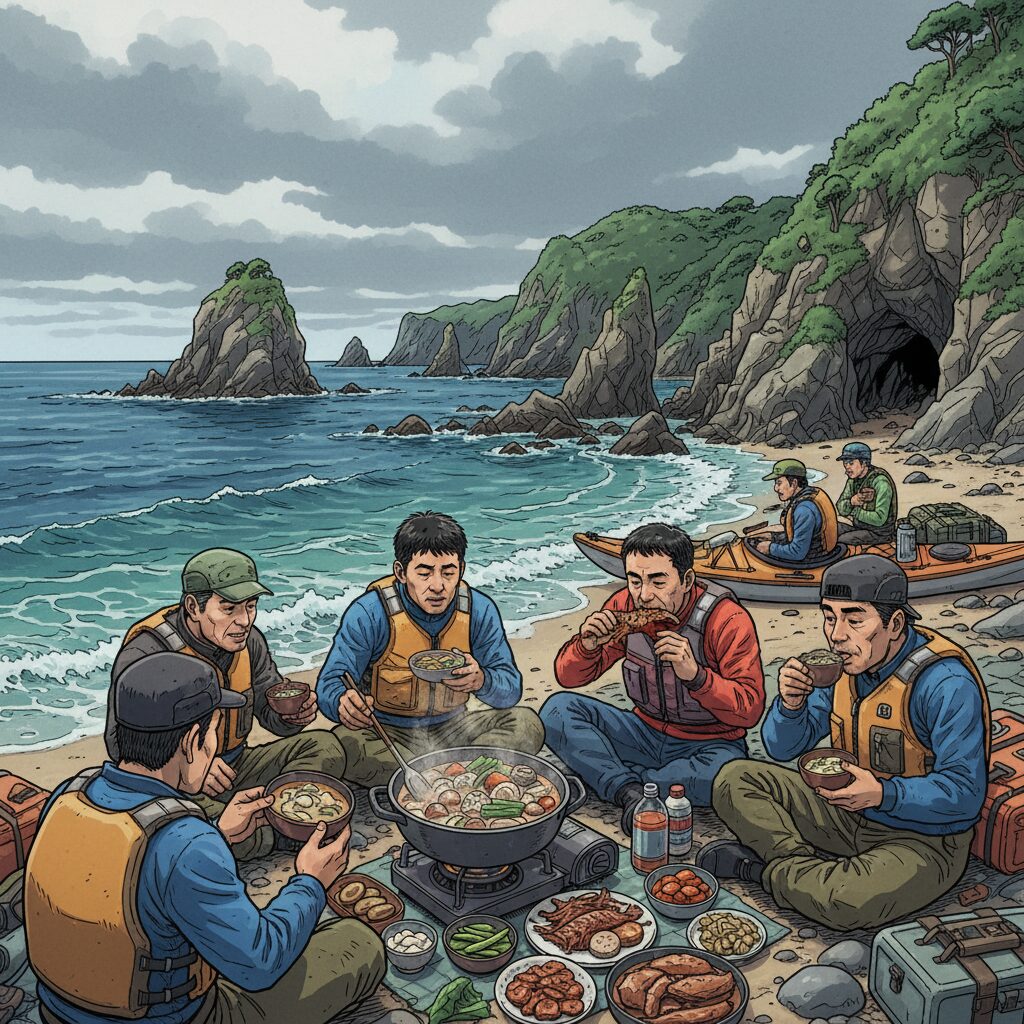
An adventure of this scale demands serious fuel, and fortunately, the San’in region is a paradise for food lovers. The local cuisine is a true reflection of its surroundings: fresh, seasonal, and intimately tied to the sea. After a day of paddling, nothing is more satisfying than enjoying a meal prepared with ingredients caught just steps from your table. This is farm-to-table—or rather, boat-to-table—dining at its finest.
Seafood That Stands Out
Let’s be honest, you’re here for the seafood. The Sea of Japan is famous for its abundant fishing grounds, and the ports along the San’in coast bring in some of the finest seafood in the country. The undisputed star of the summer months is the white squid, or `shiroika`. It’s prized for its incredible sweetness and tender texture, served as ultra-fresh sashimi that melts in your mouth, lightly grilled, or seasoned as tempura. Many local restaurants keep tanks on-site, so you know your meal was swimming only minutes before being served. If you visit between late autumn and early spring, you’ll experience a legendary delicacy: `Matsuba-gani`, or male snow crab. This is the ultimate treat for crab enthusiasts. The flavor is delicate yet rich, with meat that is remarkably sweet. A full crab course at a traditional ryokan offers a once-in-a-lifetime feast, featuring everything from boiled and grilled crab to crab sashimi and hot pot. It’s a splurge well worth making. Other must-try items include the fatty `nodoguro` (blackthroat seaperch) and a variety of seasonal fish and shellfish.
Tottori’s Local Specialties
Beyond seafood, Tottori boasts unique local dishes worth seeking out. The prefecture has an unexpected love for curry, and Tottori Curry is a local favorite. Each establishment offers its own special recipe, often highlighting local ingredients. It’s a hearty, comforting meal perfect after a day on the water. Another popular local specialty is `ago-chikuwa`, a type of fish cake made from `ago`, or flying fish. The fish is ground into a paste, wrapped around bamboo sticks, and grilled to a firm, springy texture with a savory, slightly smoky flavor. It’s an excellent snack to pick up from local shops. Pair these dishes with some local `jizake` (craft sake) from one of the region’s small historic breweries, and you’ll have the perfect taste of San’in.
The Practical Stuff: Getting There & Getting Around
Alright, so you’re convinced. But how exactly do you reach this remote paradise? The San’in region is certainly off the beaten path, yet it’s more accessible than you might expect. With a bit of planning, your trip can be smooth and stress-free.
Your Transit Blueprint
Most international visitors will likely begin their journey in major cities like Tokyo, Osaka, or Kyoto. From any of these hubs, taking the train is your best option. While the Shinkansen (bullet train) doesn’t go directly to Tottori, it will get you most of the way there. From Osaka or Kyoto, you can board the Super Hakuto Limited Express train, offering a direct and scenic ride to Tottori City in about 2.5 to 3 hours. From Tokyo, the usual route involves taking the Shinkansen to Himeji or Okayama, then transferring to a limited express train bound for Tottori. The entire trip takes roughly 5 to 6 hours. Once you reach Tottori City, the main gateway to the geopark’s eastern side, you’ll need to arrange local transportation. While there are local buses that run along the coast, they tend to be infrequent. To genuinely explore the geopark at your own pace and enjoy the freedom to stop at every scenic viewpoint and quaint fishing village, renting a car is highly recommended. Car rentals are available near Tottori Station. Driving here is quite easy, thanks to well-maintained roads and breathtaking coastal views.
When to Go: Timing is Everything
The best time for sea kayaking and experiencing the San’in coast is from late spring to early autumn, roughly May through October. During this period, the weather is generally pleasant, with the sea calm and warm. Summer (July and August) marks the peak season, with long, hot days perfect for swimming and paddling, and a landscape lush and vibrant. It also tends to be the busiest time, so booking tours and accommodations ahead is advisable. Spring (May and June) and autumn (September and October) are arguably the ideal seasons. The weather is comfortably warm without summer’s intense humidity, and crowds are smaller. The water may be a little cooler, but still suitable for kayaking, and the crisp, clear autumn air offers incredible visibility. Winter is another matter entirely—the Sea of Japan can be rough, and conditions tend to be too cold and unpredictable for kayaking. However, winter is prime snow crab season, attracting food enthusiasts from across Japan for a different kind of coastal pilgrimage.
Where to Crash: Laying Your Head
The San’in region offers a fantastic variety of accommodations to suit all tastes and budgets. For the full experience, I highly recommend staying in a traditional `ryokan` (Japanese inn), especially one with an `onsen` (hot spring). Many coastal towns like Iwami, Hamasaka, and Kasumi boast wonderful ryokans, often with ocean views. There’s nothing better than soaking in a hot mineral bath after a day of paddling, easing your tired muscles while listening to the waves. A stay at a ryokan generally includes a multi-course `kaiseki` dinner showcasing local seasonal ingredients, which is a treat in itself. For a more casual, budget-friendly option, consider `minshuku`—family-run guesthouses that offer a more intimate look into Japanese life. While simpler than ryokans, the hospitality is warm and genuine, and the home-cooked meals are often exceptional. If you prefer the convenience and amenities of a modern hotel, basing yourself in Tottori City is your best bet, as it offers a wide range of options and serves as a convenient hub for exploring the eastern part of the geopark.
First-Timer’s Field Guide: Pro Tips for Your Trip
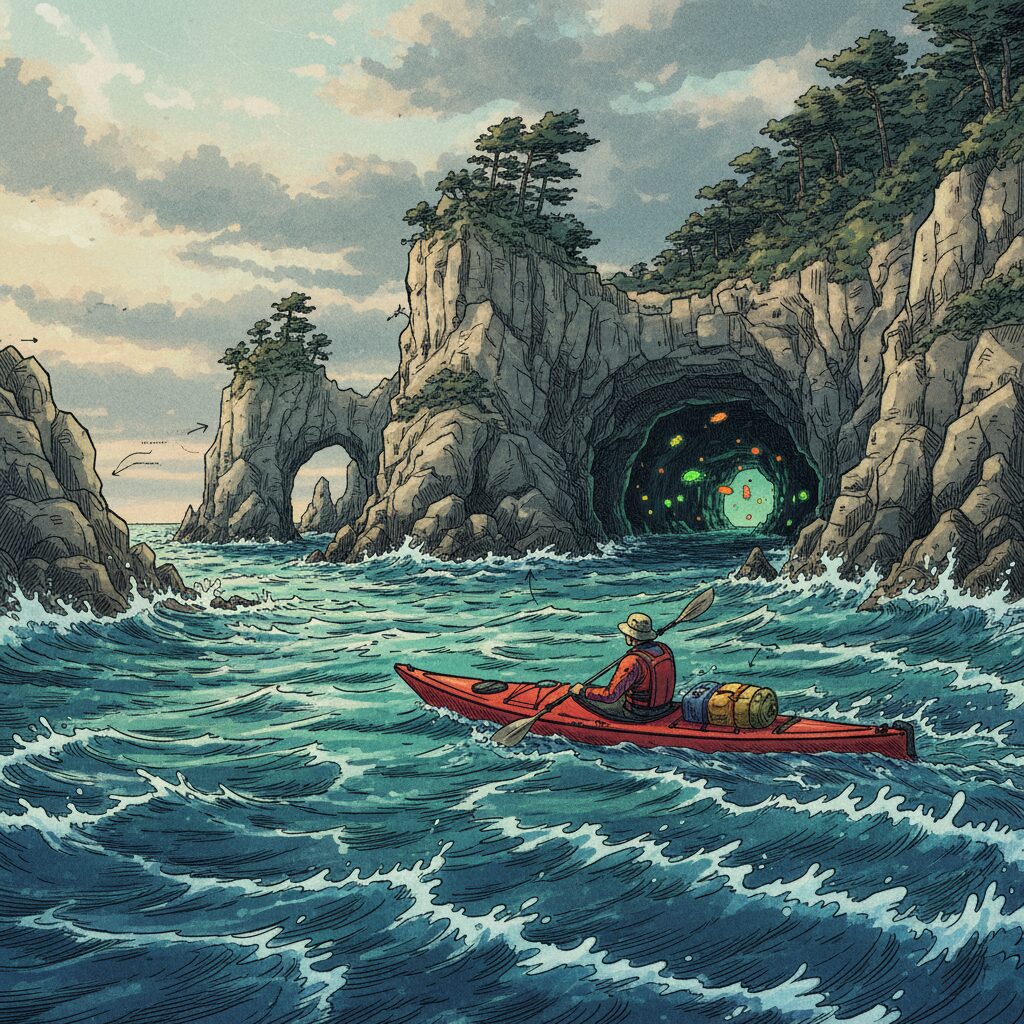
A few small tips can make a big difference on your San’in coast adventure. Consider this your handy cheat sheet for a smooth and unforgettable trip. First, what to pack for your kayaking day: the sun reflecting off the water is intense, so sunscreen, a wide-brimmed hat, and polarized sunglasses are essential. Wear clothes you don’t mind getting wet—quick-dry synthetics work best. Skip the flip-flops and choose water shoes or an old pair of sneakers that can get soaked. The most important item? A waterproof pouch or dry bag for your phone and camera, because you’ll want to capture countless photos. Next, a note about money: while credit cards are commonly accepted in cities and larger hotels, this is rural Japan. Smaller shops, local eateries, and some tour operators may only accept cash, so it’s wise to carry a sufficient amount of yen. Don’t rush. The charm of the San’in coast lies in its leisurely pace. This isn’t a checklist destination; allow extra time to sit at a viewpoint, linger over coffee in a small town, or take an unplanned detour down an inviting side road. Let the area unfold naturally. Lastly, a little Japanese goes a long way. You don’t need to be fluent, but knowing a few basic phrases can enrich your interactions. A simple `Konnichiwa` (Hello), `Arigatou gozaimasu` (Thank you very much), and `Sumimasen` (Excuse me/Sorry) will be greeted with smiles and gratitude wherever you go.
The Final Paddle: Why the San’in Coast Stays With You
As you pack your bags and return to the city, something from the San’in coast will have left a lasting impression on you. It’s more than just the stunning photos on your camera or the lingering taste of fresh squid. It’s the feeling. It’s the memory of profound silence inside a sea cave, broken only by the gentle ripple of water against your kayak. It’s the sensation of your muscles burning after a long paddle, a satisfying ache that reminds you of your achievement. It’s the shared laughter with your guide as they recount a quirky local legend. This is what travel truly means—not just seeing new places, but creating new emotions and forming new connections. The San’in Kaigan Geopark stands as a powerful reminder that our planet is a breathtakingly beautiful and ever-changing place. It’s a call to adventure, an invitation to step away from the everyday and immerse yourself in the raw, unfiltered beauty of nature. It’s a journey that challenges you, inspires you, and ultimately alters you just a little. So, when planning your next trip, dare to look beyond the guidebooks’ top ten lists. Seek out wild coastlines, hidden coves, and stories written in stone. You might just discover your own slice of paradise there.