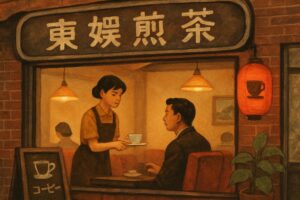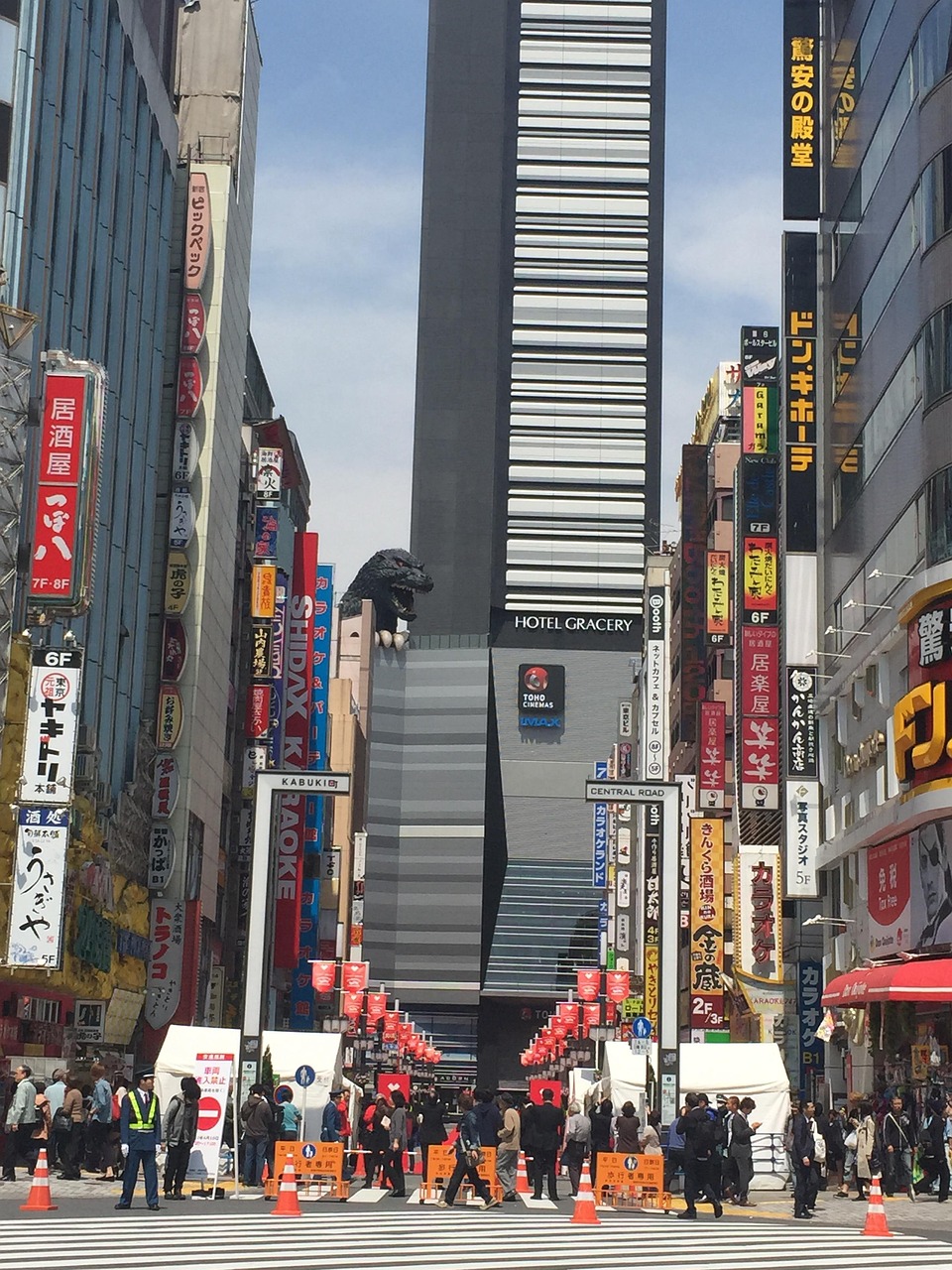
Yo, let’s talk about what happens when the sun dips below the Tokyo skyline. The city doesn’t just go to sleep; it pulls a total 180 and gets a whole new vibe. The crisp suits and formal daytime hustle fade into a warm, buzzing glow, a symphony of clinking glasses, sizzling grills, and infectious laughter. This is the world of the izakaya, the absolute heart and soul of Japan’s social scene. Forget everything you think you know about ‘going out for a drink.’ An izakaya isn’t just a bar, and it’s not quite a restaurant. It’s a vibe, a sanctuary, a third space where life happens. It’s where deals are sealed, friendships are forged, and the real, unfiltered Japan comes out to play. For travelers, stepping through the noren curtain of an izakaya is like finding a portal to the authentic, everyday culture you came here to see. It’s about way more than just grabbing a bite; it’s about sharing moments, plates, and stories. Ready to dive into the neon-drenched, lantern-lit world of Japan’s legendary watering holes? Let’s get this party started. This is your guide to navigating the cozy chaos and finding your new favorite spot after dark.
If you’re looking for a more casual daytime food adventure before your izakaya crawl, don’t miss the nostalgic charm and delicious bites of Tokyo’s retro Yanaka Ginza street.
The Izakaya Vibe: More Than Just a Bar
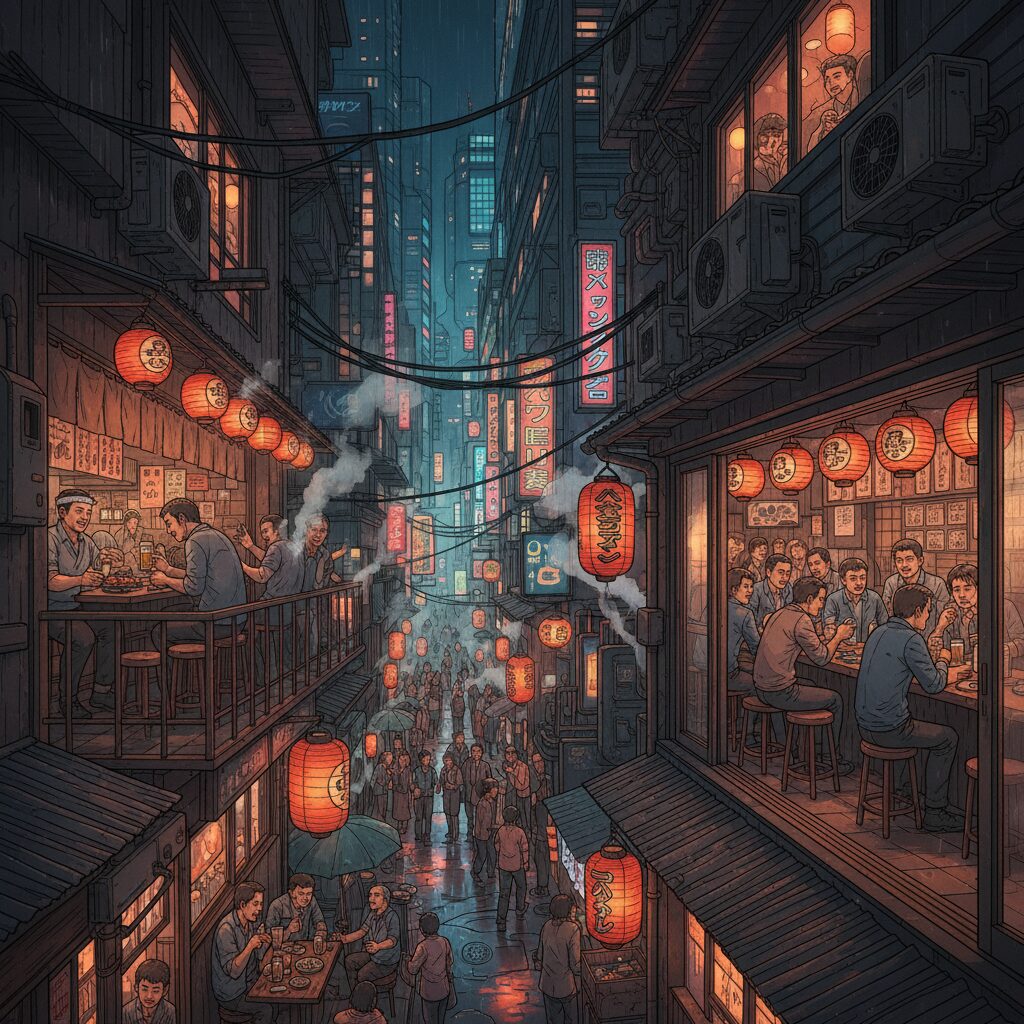
So, what exactly is an izakaya? The name breaks down literally to ‘i’ (to stay) and ‘sakaya’ (sake shop). It originated way back in the Edo period as a place where you could stand and sip sake straight from the cask. But it evolved over time. People started wanting snacks with their drinks, and eventually, they wanted to sit down and relax. Fast forward to today, and you have the modern izakaya: the undisputed star of Japanese nightlife. Think of it as Japan’s answer to a British pub or a Spanish tapas bar, but with a completely unique vibe.
The moment you slide open that wooden door, you’re greeted by a wave of sensory delight. The air is thick with the savory, smoky aroma of yakitori grilling over charcoal. You’ll hear the constant, lively buzz of conversation—what the Japanese call ‘gaya gaya’—a comforting hum. It’s not rowdy or aggressive; it’s the sound of people unwinding and letting loose after a long day. The lighting is usually warm and low, coming from paper lanterns (aka chochin) that cast a soft, nostalgic glow over everything. The walls are a delightful mess of handwritten menus, vintage posters, and shelves packed with ‘keep bottles’ of shochu reserved for regulars. It’s cozy, a bit cramped, and absolutely perfect.
There’s an izakaya for every mood. You’ve got your old-school, Showa-era spots that look like they haven’t changed in 70 years, run by a sweet old couple who have seen it all. Then there are sleek, modern izakayas in neighborhoods like Ebisu or Nakameguro, featuring creative fusion dishes and extensive craft sake lists. You’ll find huge chain izakayas with touch-screen ordering and all-you-can-drink deals, as well as tiny six-seater spots tucked away in back alleys where the owner knows everyone’s name. But they all share the same core DNA: a place to gather, share good food and drink, and just be yourself. It’s a low-pressure environment—you’re not rushed, you can order at your own pace, and you can stay for hours, simply soaking it all in. It’s the ultimate living room for the city.
Decoding the Menu: Your Ultimate Izakaya Cheat Sheet
The menu might seem a bit overwhelming at first, especially if it’s entirely in Japanese. But trust me, it’s a map leading to a treasure trove of deliciousness. The whole concept centers around sharing small plates, so you get to sample a bit of everything. Don’t hesitate; just point and go if you have to. Here’s a rundown of the essentials to help you look like a pro.
Drinks (Nomimono): The Main Attraction
First things first. In Japan, evenings start with an unspoken universal ritual. When you sit down, someone will almost always say, “Toriaezu, biiru?” which basically means, “Beer for now, right?” It’s the social grease that gets things moving. Japanese draft beer (nama biiru) is crisp, cold, and a perfect way to kick off the night.
But the real journey begins beyond the beer. Let’s discuss Nihonshu, known worldwide as sake. It’s an entire universe on its own. You can enjoy it hot (atsukan), which is wonderful on chilly nights, or chilled (reishu), highlighting more delicate, fruity flavors. Don’t worry too much about terms like junmai or daiginjo at first—just tell your server if you prefer sweet (amakuchi) or dry (karakuchi), and they’ll steer you right. Sake typically comes in a small flask called a ‘tokkuri’ and is poured into tiny ‘ochoko’ cups. Sometimes, the cup is set inside a small wooden box, or ‘masu,’ and generously overflowed as a gesture of hospitality. That’s the good stuff.
Next up is shochu, Japan’s native distilled spirit. It’s incredibly versatile and can be made from barley, sweet potatoes, rice, or even buckwheat. You can enjoy it straight, on the rocks (rokku de), mixed with cold or hot water (mizuwari/oyuwari), or as the base for a ‘chuhai’ or ‘sour.’ These are the real crowd-pleasers. Sours are shochu mixed with soda and a fruit flavor like lemon, grapefruit, or ume (pickled plum). They’re refreshing, easy to drink, and delightfully addictive. The classic Lemon Sour is the quintessential izakaya drink for good reason. And of course, there’s the Highball—Japanese whisky paired with highly carbonated soda. It’s clean, classic, and totally iconic.
Food (Tabemono): The Ideal Companions
Izakaya food isn’t just an afterthought; it’s made to perfectly complement the drinks. It’s salty, savory, and utterly addictive. You order a few dishes at a time, and they keep coming.
Let’s begin with the undisputed king: Yakitori. These are grilled chicken skewers, but it goes beyond just breast meat. Izakayas grill everything from thigh (momo) and leek-and-chicken combos (negima) to meatballs (tsukune), wings (tebasaki), and even heart (hatsu) and skin (kawa). Each piece is kissed by charcoal flames and usually seasoned with either salt (shio) or a sweet soy glaze (tare). It’s simple, perfect cooking.
Next is the supreme fried dish: Karaage. This Japanese fried chicken will change your life. Juicy, marinated chicken thighs coated in potato starch and fried to a crispy, golden finish. A squeeze of lemon takes it to heaven. Another fried favorite is Agedashi Tofu—silky tofu lightly fried and served in a warm, savory dashi broth with bonito flakes and green onions. It’s pure comfort in a bowl.
For something fresh, you can’t go wrong with Edamame. These boiled and salted soybeans are the original drinking snack. Most izakayas also offer some kind of fresh fish, whether it’s a plate of sashimi or the grilled fish of the day, like mackerel (saba) or atka mackerel (hokke). To round off the meal, you’ll find items like Tsukemono (Japanese pickles) to cleanse the palate, and hearty dishes like Yakisoba (fried noodles) or Potato Salad, an unexpectedly popular izakaya staple.
When you’re ready to finish up, order the ‘shime,’ the final dish meant to satisfy your hunger. This is usually a carb-based dish like Onigiri (grilled rice balls) or Ochazuke—a bowl of rice topped with ingredients such as salmon or ume, over which hot green tea or dashi broth is poured. It’s the perfect, soothing conclusion to a fantastic meal.
Where to Find the Real Deal: Navigating Japan’s Yokocho
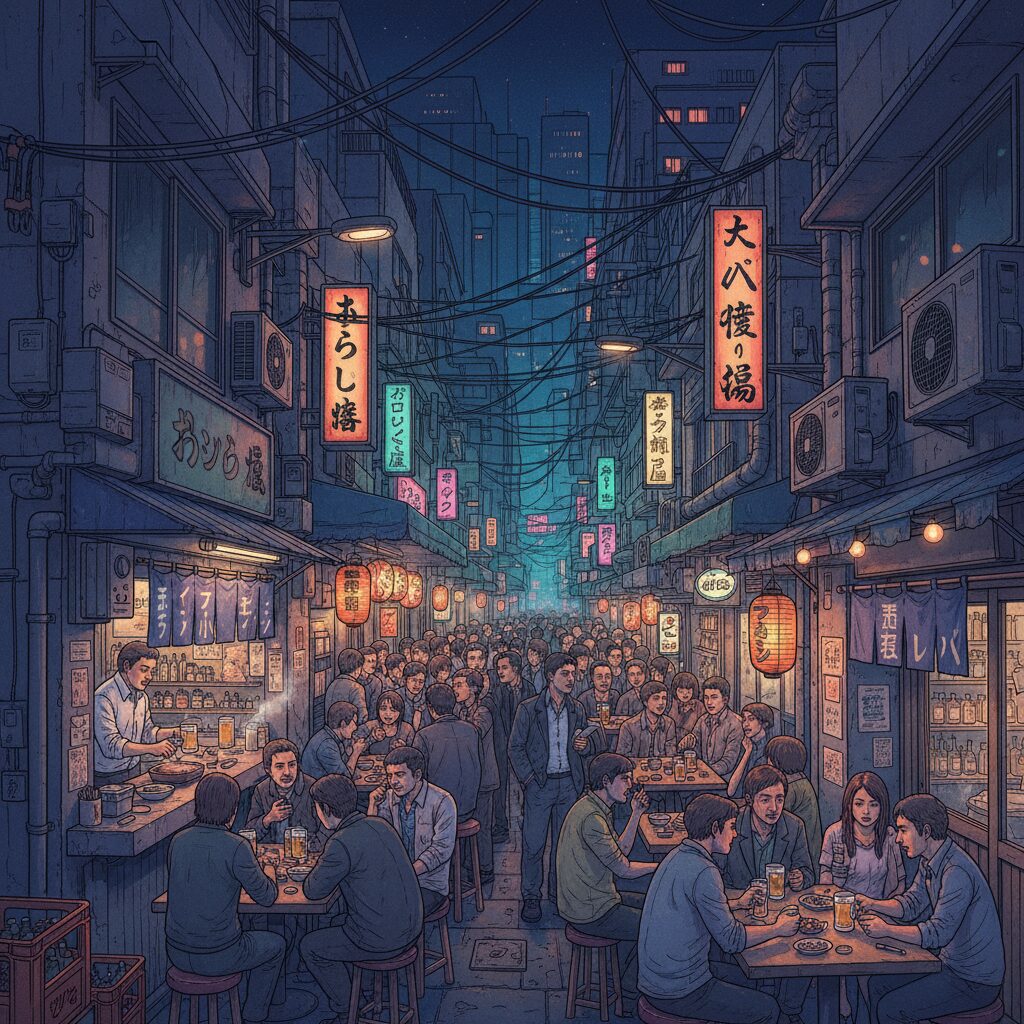
To truly immerse yourself in the authentic izakaya experience, you must explore the ‘yokocho,’ which means ‘side alley.’ These are narrow, winding alleyways, often gathered around train stations, filled with tiny, atmospheric bars and eateries. They stand as living remnants of a bygone era, buzzing with raw, electric energy that’s utterly captivating. This is where you discover the real Japan.
Tokyo’s Iconic Alleys
Tokyo offers countless options. Shinjuku boasts two of the most renowned yokocho. First is Omoide Yokocho, affectionately nicknamed ‘Piss Alley’ by locals—a name originating from its gritty post-war days when plumbing was scarce. Don’t be misled by the name. This narrow street, constantly enveloped in the smoky aroma of yakitori, is like stepping back in time. You’ll sit shoulder-to-shoulder with local salarymen on tiny stools, watching skilled grill masters work their magic over open flames. The atmosphere radiates pure Showa-era nostalgia, and the food is simple, honest, and exceptionally delicious.
Just a few blocks away lies Golden Gai, a completely different scene. This surreal labyrinth consists of six tiny alleyways packed with over 200 even smaller bars, some accommodating only five or six patrons. Each bar boasts its own unique theme and personality, ranging from punk rock dens and vintage cinema spots to quiet, moody lounges. It once attracted writers, artists, and filmmakers, and still preserves that bohemian, slightly quirky vibe. Note that many bars here charge a cover fee (about ¥1000) and may display ‘regulars only’ signs, but plenty welcome newcomers. Just glance inside, and if the atmosphere appeals, dive in.
For a more modern and refined experience, check out Ebisu Yokocho. This indoor venue houses various stalls under one roof, creating an energetic, festival-like vibe. The crowd tends to be younger and trendier, with a wider range of food options—from mushroom specialists to beef sushi stands. It gets loud and lively, making it a fantastic spot to start your night out.
Beyond Tokyo
The yokocho culture extends well beyond the capital. In Osaka, known as the city of ‘kuidaore’ (eat until you drop), Ura Namba is an extensive network of alleys behind the main station, brimming with incredible food stalls, tachinomi (standing bars), and izakayas. The energy here is famously boisterous and welcoming. Don’t be surprised if a complete stranger sparks up a conversation with you.
In Kyoto, Pontocho Alley offers a more elegant and enchanting experience. This long, narrow cobblestone path runs alongside the Kamo River and is lined with beautiful traditional wooden buildings, many housing upscale restaurants and exclusive teahouses. Yet, you can still find numerous accessible izakayas and bars tucked inside. At night, with glowing lanterns and the occasional sighting of a geiko or maiko gliding by, it truly feels like stepping into another world.
Izakaya Etiquette 101: How to Vibe Like a Local
Navigating the social etiquette of an izakaya is fairly simple, but understanding a few key points will make your experience smoother and earn you some genuine cool points with the locals.
When you sit down, you’ll be given an ‘oshibori,’ a small towel. If it’s warm, it’s for wiping your hands; if it’s cold and wrapped in plastic, it’s a wet napkin. Use it only for your hands, not your face or the table. This is a gesture of hospitality to help you freshen up.
Shortly thereafter, a small appetizer you didn’t order will be served. This is the ‘otoshi.’ It’s not an error or a trick; it’s a customary seating charge that doubles as your first snack while you decide on your drinks. Consider it part of the experience. The cost is usually a few hundred yen, automatically added to your bill.
When ordering, there’s no need to hurry. It’s common to start with drinks and a couple of dishes, then order more throughout the evening. To get the staff’s attention, simply say a loud but friendly ‘Sumimasen!’ (‘Excuse me!’). Avoid snapping fingers or waving wildly; a gentle hand raise with a call is enough.
The most important rule concerns pouring drinks. In Japan, you pour for others, and they pour for you. This shows respect and friendship. If you’re sharing a bottle of beer or sake, keep an eye on your companions’ glasses and refill them when they’re low. When someone pours for you, it’s polite to hold your glass with one hand and support it from underneath with the other. This small gesture shows appreciation.
Before anyone takes their first sip, the entire table raises their glasses together for a collective ‘Kanpai!’ It’s Japan’s equivalent of ‘Cheers!’ and marks the official start of the fun. Wait for the toast before drinking.
When it’s time to leave, you’ll usually find the bill at your table or receive it from the staff. Payment is almost always made at the cash register near the exit, not at the table. It’s also common for one person to pay for the group with others reimbursing them later, so don’t be surprised if they prefer not to split the bill. Cash is still favored at many smaller, older establishments, so it’s wise to carry some with you.
Finally, as you depart, a sincere ‘Gochisousama deshita!’ (‘Thank you for the meal!’) is a beautiful way to express gratitude to the staff and chef. It acknowledges their hard work and is greatly appreciated.
The world of izakayas and local bars is Japan’s social fabric in one lively setting. It’s where you’ll find the best food, the warmest welcomes, and unforgettable stories. It’s a place to drop formalities and simply connect. So be bold. Peek behind the curtain, slide open the door, find an empty seat at the counter, and prepare for a night you won’t forget. Go on, a whole world of flavor and friendship awaits. Kanpai!