Yo, what’s the deal with Japan? It’s a question that probably lives rent-free in your head, especially if you’ve spent any time here. You’re standing on a platform in Shinjuku, a literal human ocean surging around you. It’s organized chaos, a beautiful mess, and you’re just trying to find the right train to get to your next vibe-check in Shimokitazawa. Then, right as the train doors are about to slide shut, you hear it. Not a harsh buzzer, not a sterile beep, but a… jingle. A quirky, 7-second, 8-bit-sounding melody that feels like it was ripped straight out of a retro video game. It’s over before you can even process it, and the train glides away. You’re left standing there thinking, “Did that really just happen? Is this whole country a game?” And honestly? You’re not that far off. That little tune has a name: ekimelo (駅メロ), a portmanteau of eki (station) and melody. It’s the overworld music to your daily Japanese quest, a sonic breadcrumb in the urban labyrinth. It’s not just some random cute quirk; it’s a masterclass in Japanese design philosophy—a system of subtle nudges, psychological hacks, and cultural easter eggs designed to keep millions of people moving safely and efficiently every single day. Forget everything you thought you knew about public transport. We’re about to decode the secret language of Japan’s train stations, and trust me, you’ll never hear them the same way again.
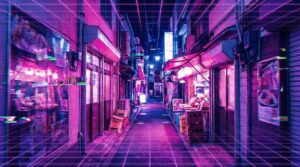
To fully immerse yourself in Tokyo’s layered urban culture after decoding its station melodies, explore the city’s atmospheric yokocho alleyways.
The OG Mission: From Harsh Buzzers to Soothing Jingles
To truly understand why ekimelo is such a subtle stroke of genius, you need to rewind the tape. Imagine Tokyo in the 70s and 80s, at the height of its economic boom. The city was electric, a neon-lit vision of unstoppable progress. But the downside of that rush was the commute. Train stations were far from the clean, orderly spaces we see today. Instead, they were pressure cookers. And the soundtrack to this daily ordeal? A terrifying, industrial buzzer. Picture the most jarring, anxiety-provoking fire alarm you can think of, and you’re close. This wasn’t a gentle “doors are closing” signal; it was an auditory attack screaming, “THE TRAIN IS LEAVING, RUN FOR YOUR LIFE!”
This harsh noise had a very real and dangerous consequence: kakekomi jōsha (駆け込み乗車), the frantic last-second sprint onto the train. The buzzer triggered panic. People would hear it and rush forward, pushing through the closing doors, often trapping bags, umbrellas, and sometimes even themselves. It was a daily struggle against the system, causing accidents, delays, and a massive amount of shared stress. The platform atmosphere was tense, a stark contrast to the polite, orderly image Japan usually projects. This was a systemic issue rooted in sound.
By the late 1980s, Japan National Railways (JNR) was privatized, divided into regional companies, with JR East taking over the Tokyo metropolitan area. This corporate overhaul brought fresh ideas. The new management looked at the chaotic platforms and realized that harsh buzzers weren’t effective. They needed to change the entire atmosphere of the station experience—stop shouting at passengers and start communicating. The goal was to foster calmness. The solution, introduced in 1989, was the ekimelo. The concept was simple but revolutionary: replace the panic-inducing buzzer with a pleasant melody. Instead of a buzzer that triggered anxiety, they introduced a brief, composed tune. This was more than just making the sound more pleasant; it was a deliberate psychological strategy. The aim was to turn the platform from a battleground into a calmer, more predictable environment. They theorized that a soothing sound would subconsciously reduce passengers’ stress, decreasing the likelihood of dangerous last-minute dashes. It was a bold use of audio design as crowd control—a way to hack the human mind for public safety and efficiency. The era of the buzzer ended; the station’s symphony was about to begin.
Level Up: Crafting the Perfect 7-Second Banger
JR East decided to vibe-check their stations. However, this wasn’t as simple as just selecting some public domain tunes and hitting play. Crafting an effective ekimelo is a sophisticated art, combining musical theory, acoustic engineering, and behavioral psychology. These aren’t mere jingles; they are highly functional pieces of sonic design. Companies like the renowned sound design firm Yamaha and the specialist firm Switch Co. treat the task with the seriousness of composing a film score. In a sense, they are scoring the daily lives of millions.
The Sonic Psychology of Safety
The primary rule of ekimelo is that it must function flawlessly as a departure signal. The average length is roughly seven seconds—long enough to be registered and processed, yet short enough to avoid becoming annoying background noise or delaying the train. Every millisecond is intentional. The melody’s composition is critical. Most ekimelo follow a clear musical structure: a beginning, a middle, and a distinct ending. They often resolve on a conclusive note, providing a sense of finality. This is a deliberate psychological cue. An unresolved melody might leave passengers wondering, “Is it over? Is there more?” Such ambiguity could cause hesitation and last-minute rushing, which the system aims to prevent. The resolved melody subtly communicates, “The event is complete. The doors are now closing.”
Instrumentation choice is equally important. The sounds tend to be bright, clear, and synthetic—such as synth chimes, digital pianos, or electronic harps—for a practical reason. The sound needs to be audible and distinct amid the surrounding noise of a busy station: the rumble of trains, footsteps, announcements, and crowd chatter. Specific frequencies are selected to cut through low-frequency noise without sounding shrill or alarming like old buzzers. It must capture attention without causing stress. This delicate balance often leads to a slightly retro, almost 8-bit video game quality. That sound profile feels nostalgic to many, and it’s inherently non-threatening—it’s the sound of a game, not an emergency. It’s a notification, not a warning.
Moreover, the tempo and rhythm are carefully crafted. Melodies are typically brisk but not frantic, creating a gentle sense of urgency, signaling “time to go” rather than “RUN!” Some melodies subtly accelerate toward the end, offering a non-verbal signal that time is running out. It’s a masterful use of music to convey information and influence behavior on a massive scale, all working subtly in the background of your awareness.
Platform-Specific Playlists: Why Your Transfer Has a Different Vibe
This system elevates itself from a simple safety feature to a navigational aid. If you’re a daily commuter in Tokyo, you’ve probably noticed the melody for the Yamanote Line differs from that of the Chuo Line. This is entirely intentional. Major stations are confusing mazes of concrete and steel, and unique melodies assigned to different lines act as audio guideposts—a form of sonic branding.
For tourists, these might seem like a series of pleasant but random tunes. For locals, however, they’re deeply embedded in their mental map of the city. Their brains form a strong association: this specific jingle means my train home. If, after a long day, they hear the “wrong” melody on autopilot, it instantly alerts them. It acts as a subconscious check: “Wait, this isn’t the Chuo Line’s sound. I must be on the wrong platform.” This adds another sensory layer to the environment, lowering the cognitive load needed to navigate such a complex system. It’s especially useful for visually impaired passengers, for whom these distinct audio cues are vital to independently navigating the transit network.
The system is sometimes refined even further. At certain stations, the inbound and outbound platforms of the same line feature different melodies. Sometimes these are variations on a theme, like a musical question and answer. One might ascend in pitch, while its counterpart on the opposite platform descends. This subtle detail helps prevent passengers from accidentally boarding trains headed in the wrong direction. This obsessive attention to detail and relentless pursuit of a smooth user experience is quintessentially Japanese. The ekimelo system isn’t just about safety; it’s about crafting an intuitive, multi-sensory environment where information flows seamlessly—often without passengers even realizing they’re being guided.
The Local Flavor DLC: When Ekimelo Gets Personal
Alright, so ekimelo is a hyper-functional system designed for safety and navigation. Understood. But this is Japan, where function is always, always integrated with form, culture, and a healthy dose of fun. The true magic of ekimelo lies in how it has transformed from a standardized safety signal into a canvas for local identity and cultural expression. This is where the system gains its soul. Stations aren’t just anonymous transit points; they serve as gateways to neighborhoods, each with its own history, vibe, and story. And ekimelo has become the anthem for that story.
Hometown Anthems and Anime OSTs
This is the part that feels like uncovering a secret level in a video game. Across Japan, stations have adopted custom melodies deeply connected to their local areas. This practice, known as gotōchi merodī (ご当地メロディー), or “local melody,” transforms a routine commute into an enjoyable cultural scavenger hunt. It’s a form of sonic placemaking that fosters local pride and gives each neighborhood a unique audio signature.
Let’s highlight some iconic examples. At Takadanobaba Station on the JR Yamanote Line, you’ll hear the iconic theme from the classic anime Astro Boy (Tetsuwan Atomu). Why? Because the area is home to Tezuka Productions, the studio founded by Osamu Tezuka, the “God of Manga” and creator of the character. The melody honors this local legend, instantly linking the station to its anime heritage. It brings a smile to fans worldwide.
At Ebisu Station, also on the Yamanote Line, the departure melody is the famous theme from a Yebisu Beer commercial. This isn’t mere product placement; the entire Ebisu district and the station itself are named after the beer, first brewed there in 1890 at what is now Yebisu Garden Place. The melody pays homage to the area’s industrial and corporate roots, a living piece of history played every seven seconds.
If you’re headed to Tokyo Disneyland, your journey begins before you even enter the park. Maihama Station, the resort’s gateway, plays classic Disney tunes like “Zip-a-Dee-Doo-Dah” and “It’s a Small World.” This clever choice extends the magical brand experience onto public transit, building excitement and setting the tone as soon as you step off the train.
This phenomenon isn’t exclusive to Tokyo. In Kamakura, the station plays a snippet of a traditional folk song called “Kamakura,” anchoring visitors in the region’s rich cultural and historical heritage. In Kyoto, some stations use melodies inspired by traditional Japanese court music or local festivals. In Sendai, stations might play songs by famous local bands. Each melody acts as a tiny audio postcard, offering clues to the identity of the place you’ve just arrived. It invites travelers to engage more deeply with their surroundings, rewarding the curious with a piece of local lore.
Limited-Time Collabs: The Seasonal Drops
True to Japan’s passion for seasonality and limited-edition items, ekimelo is constantly evolving. Stations often introduce temporary melodies that function like pop-up shops or seasonal menu specials. This keeps the urban soundscape fresh and creates moments of surprise and delight for regular commuters.
During the Christmas season, major stations frequently replace their usual jingles with instrumental versions of classic carols like “Jingle Bells” or “Silent Night.” It’s a small detail that adds to the city’s festive atmosphere. A big movie release might be promoted with its theme song played as the ekimelo at a key station like Shibuya for a few weeks. When the national rugby team competes in a major tournament, a station near the stadium may adopt the team’s fight song. These ephemeral audio events create a feeling of insider knowledge and connection to the city’s cultural rhythm for those who notice them.
This practice perfectly blends culture and commerce. It serves as a unique marketing tool, but in a way that enhances public space with value and novelty instead of cluttering it with visual ads. It taps into the Japanese love for gentei (限定), or limited-time-only items. The temporary nature of these melodies makes them special. You might ride the same train line daily for a year, but the one month it features the Star Wars theme becomes a memorable part of your commuting experience. It’s another layer of the game, a seasonal event in your daily routine that makes it feel a little less ordinary.
The Flip Side: Is It All Good Vibes?
Now, it’s easy to romanticize ekimelo as a perfectly crafted, whimsical system. And in many ways, it is. However, it’s important to consider the full picture, because no system is flawless, and the city’s constant soundscape has its drawbacks. For every traveler charmed by a Disney tune, there’s a local resident whose apartment window faces the tracks and must endure “It’s a Small World” on repeat hundreds of times a day. As a cultural interpreter, it’s essential to be honest: the background music to your adventure can be noise pollution for someone else’s life.
The Noise Pollution Debate
While the melodies are intended to be pleasant, the old adage “you can have too much of a good thing” certainly applies. The repetition is at the heart of the problem. Trains in Tokyo run with incredible frequency, from the first service around 5 AM to the last well after midnight. For those living near a station, this means the same seven-second melody plays every few minutes for over 19 hours a day. It’s relentless. What starts as a charming jingle can quickly turn into a maddening intrusion—a sonic wallpaper that you can never escape.
There have been numerous complaints and even organized community movements opposing the use of ekimelo, especially in densely populated residential areas. Residents claim it disrupts sleep, hampers concentration, and generally lowers their quality of life. In response, some railway operators have taken measures. Certain stations now turn off the melodies late at night, replacing them with a simpler, quieter chime or sometimes complete silence. Others have collaborated with sound engineers to adjust the volume and frequency to be less intrusive, or installed directional speakers to focus the sound on the platform and away from nearby homes. It’s an ongoing balance between the practical demands of a vast transit system and the right of local residents to peace and quiet. The “ideal” soundscape for commuters isn’t always the same for those trying to rest just meters away.
The Pavlovian Response of a Commuter
There is also a deeper psychological critique. A system designed to reduce stress can, over time, become a source of it. For the millions of salarymen and students using this system daily, ekimelo isn’t a delightful surprise; it’s the bell in a massive Pavlovian experiment. That familiar tune becomes tightly linked to the daily grind, the rush to be punctual, the anxiety of lateness. It signals the start of a race they must run every morning and evening.
When you hear your train’s melody begin while still halfway down the stairs, it triggers an involuntary surge of adrenaline. Your heart rate quickens, your pace speeds up. The calming intent is undermined by the pressure it represents. The sound becomes a symbol of life dictated by a strict, unforgiving train schedule. It’s the soundtrack of being a cog in the machine. While certainly less harsh than a blaring buzzer, it can still contribute to a low-level, chronic stress. Some Japanese people I’ve spoken to say they have an almost visceral reaction to hearing their home station’s melody outside the commuting context—on TV or in a store, for example. The sound, so deeply tied to the pressures of daily routine, can provoke a phantom anxiety. The melody meant to soothe has become a trigger—an example of how even the best-intentioned design can have unintended psychological effects when repeated endlessly.
So, What’s the Final Quest Reward?
Stepping back from the platform and observing the entire system, what do we notice? The ekimelo is far more than just a departure signal. It serves as a perfect microcosm of modern Japanese culture—a place where hyper-functionality, meticulous design, deep-rooted cultural narratives, and commercial acumen intersect in a seven-second symphony. It reflects a society that manages the potential chaos of vast crowds not through loud commands or overt force but with subtle cues, psychological nudges, and an ambient sense of order. It’s efficiency conveyed through atmosphere. It solves a public safety challenge by commissioning a catchy tune.
For the visitor, it’s a layer of the travel experience easily overlooked if you’re not paying close attention. But once you know its story, Japan’s stations transform. They cease to be mere points on a map and become a curated gallery of sound, an interactive museum of local culture. You start to listen differently, finding yourself trying to identify the melody at each new stop, wondering about the story behind it. Why was this song chosen for this place? It adds a whole new dimension to exploring the city—a side quest that runs alongside your main itinerary.
The ultimate quest reward, then, isn’t a destination but a deeper understanding. It’s that “Ah, now I get it” moment. You realize that in Japan, even the most mundane aspects of public infrastructure are thoughtfully designed with almost obsessive attention to user experience and imbued with layers of meaning. The ekimelo is audible proof that this is a country attentive to the little things, believing in the power of good design to make life better, safer, and just a bit more magical. It’s the quiet, constant soundtrack of one of the world’s most complex and fascinating societies. So next time you stand on a platform in Japan, pop in your AirPods for a moment. Listen. The city is playing you a song. Keep your ears open, and may your daily quest have an unforgettable soundtrack.