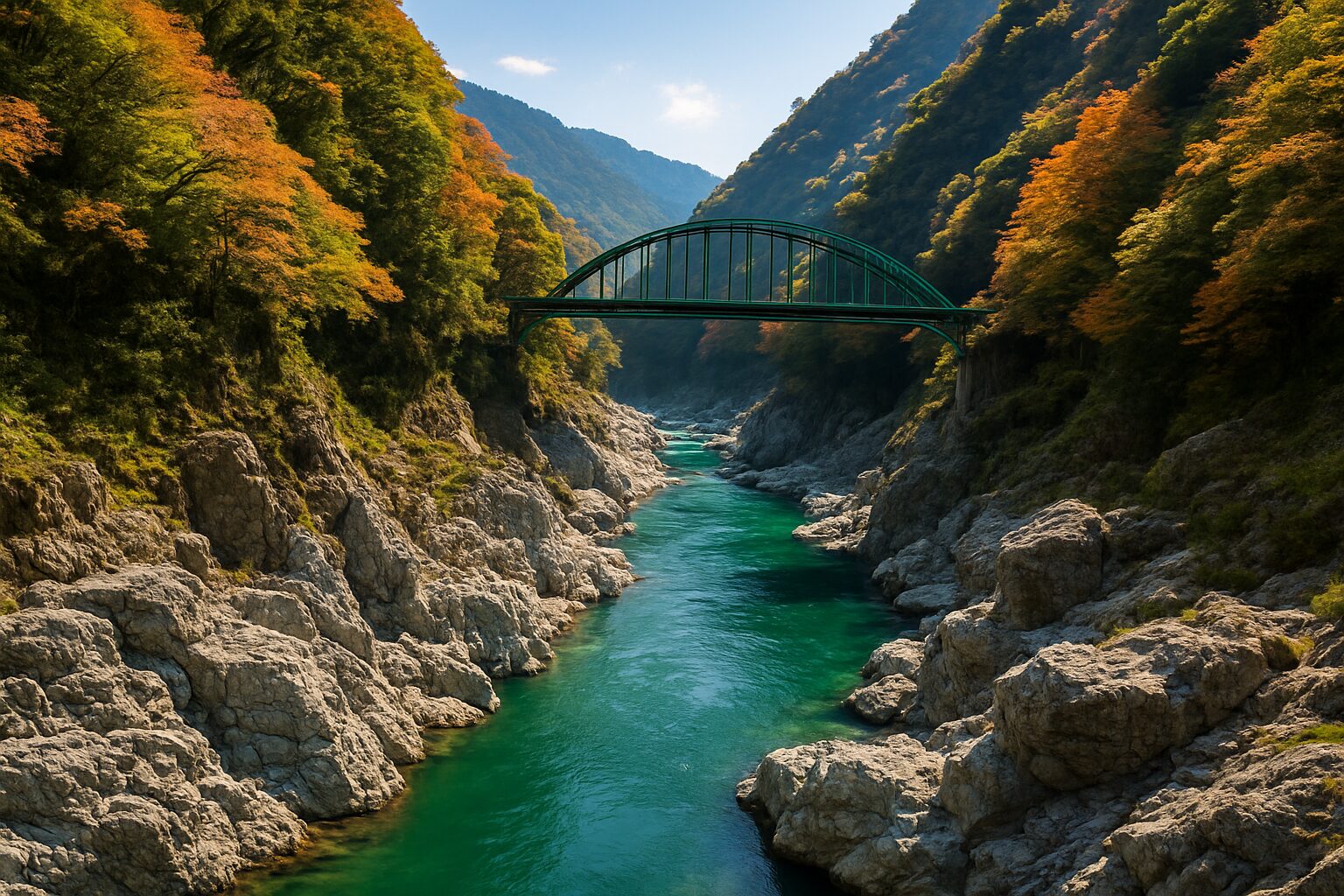
Yo, what’s the move? If you’re tired of the same old Tokyo-Kyoto-Osaka circuit and your soul is screaming for something real, something that hits different, then you gotta listen up. We’re ditching the neon jungles and bullet trains for a minute. We’re diving deep, deep into the wild heart of Shikoku, one of Japan’s four main islands, and a place that still feels low-key undiscovered. Tucked away in Tokushima Prefecture is a masterpiece carved by Mother Nature herself, a place called Oboke Gorge. Forget everything you think you know about Japanese landscapes. This ain’t just a pretty view; it’s an entire vibe, a raw, untamed energy that flows through the emerald-green Yoshino River. And the absolute best way to soak it all in? A legendary river boat tour that takes you right into the belly of this beast. It’s a journey through millions of years of history, with towering, jagged cliffs of crystalline schist that look like something straight out of a fantasy epic. This is where you connect with a side of Japan that’s pure, powerful, and unapologetically epic. It’s not just a sightseeing trip; it’s a full-on reset button for the senses. So buckle up, fam, because we’re about to float through a world of jade waters and sculpted stone that’ll live in your head rent-free forever.
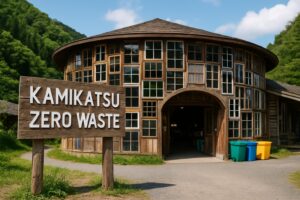
For a different kind of adventure that also connects with the raw spirit of Shikoku, consider visiting the inspiring zero-waste town of Kamikatsu.
The Emerald Soul of Shikoku: The Yoshino River
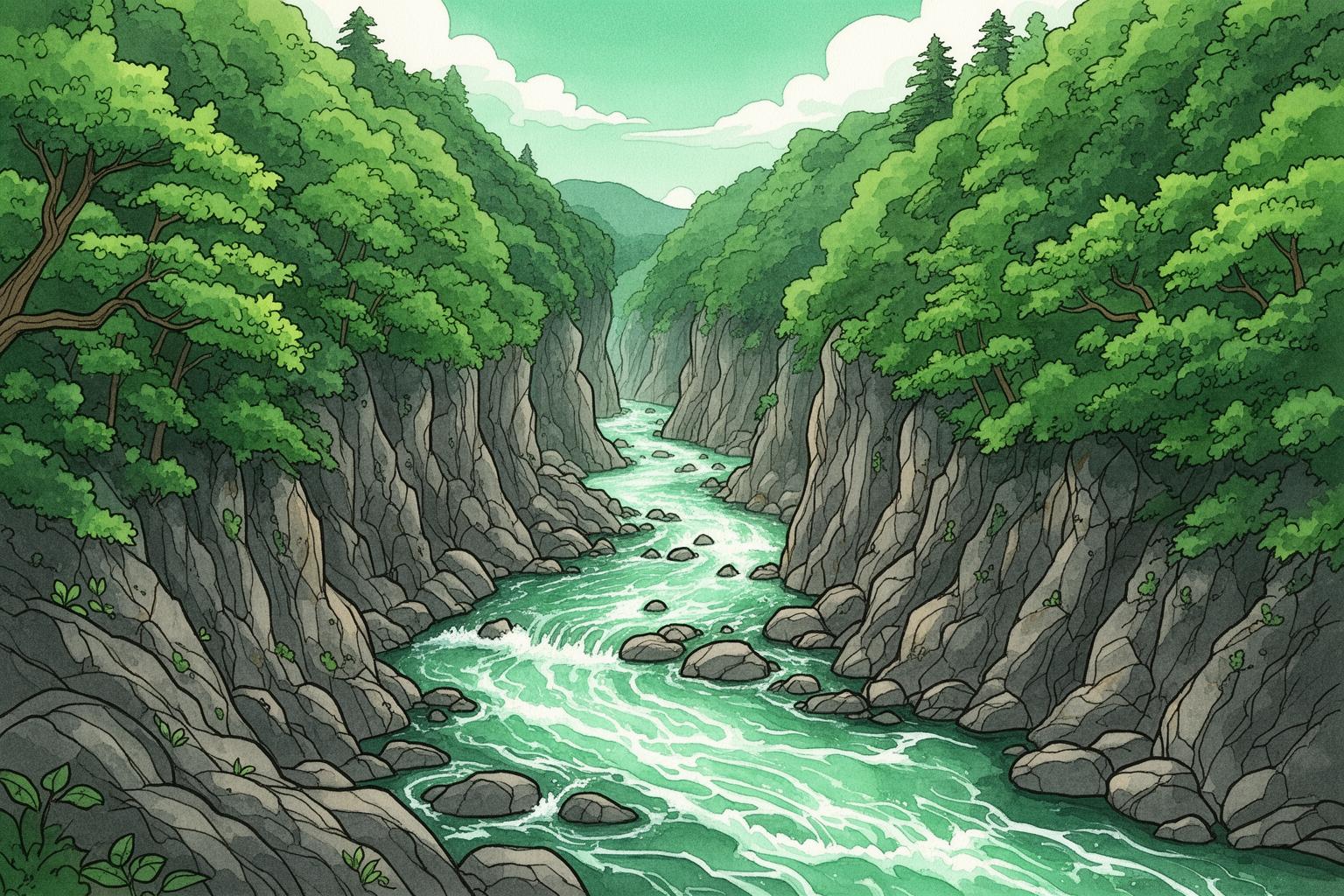
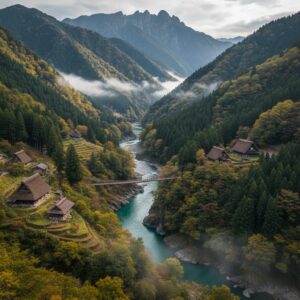
Before we even get into the gorge itself, you need to understand the main star of this entire story: the Yoshino River. This isn’t just any random waterway. In Japan, it’s known as one of the “Three Great Untamed Rivers,” alongside the Tone and Chikugo rivers. That title alone hints at its wild nature. Stretching 194 kilometers, it carves its way through Shikoku’s mountains, with the section cutting through Oboke and its smaller neighbor, Koboke Gorge, being where the true magic happens. The first thing that will amaze you is the color. We’re talking about a green so vivid and richly saturated it almost feels unreal. It’s not a dull green or a simple blue-green; it’s a deep, luminous emerald, sometimes shifting to jade or turquoise, depending on the light and water depth. It’s the kind of shade that stops you in your tracks, making you wonder how nature created such a flawless hue. The water also boasts incredible clarity. From a boat, you can often see the smooth, pale rocks lining the riverbed below, providing a striking contrast with the vibrant water. This famous color comes from the unique geology of the region—the specific minerals in the crystalline schist rocks that line the river’s path. The water continuously interacts with these ancient stones, absorbing their essence and reflecting the lush green canopy of the surrounding forest. It’s a living, breathing part of the landscape, not just a passive feature. The river’s energy shifts with the seasons. In spring, it’s a joyful, rushing force, fed by melting mountain snow. In summer, it offers a cool, refreshing retreat, its surface sparkling under the blazing sun. In autumn, it turns into a mirror, perfectly reflecting the fiery reds and golds of maple leaves on the cliffs above. During winter, it takes on a deeper, more mysterious hue, a dark teal ribbon winding through a monochrome world of snow-dusted rock. This river is the valley’s lifeblood. It shaped the very ground beneath your feet, and its steady, powerful flow serves as a reminder of nature’s relentless force. Riding its surface, you feel as if you’re on the back of a gentle dragon, gliding through its sacred domain.
Nature’s Sculpture Studio: The Making of a Masterpiece
So how did this breathtaking landscape come to exist? It’s a tale literally etched in stone, a saga spanning over 200 million years. This isn’t merely a canyon; it’s a geological marvel, and gaining some insight into its formation elevates the entire experience. The main feature here is a metamorphic rock known as crystalline schist. Don’t be put off by the technical term. Imagine immense pressure and heat deep within the Earth’s crust transforming ancient sedimentary rocks by cooking and squeezing them. This process aligned the minerals into layers, or foliation, giving the rock its distinctive, almost flaky or ribbon-like texture. The cliffs of Oboke Gorge are essentially massive, vertical walls of this material. Over millions of years, the powerful, relentless Yoshino River worked like a master sculptor wielding a water chisel, patiently carving, grinding, and polishing the rock bed. Because of the schist’s layered structure, the river didn’t carve out a smooth U-shaped valley. Instead, it exploited the rock’s weaknesses, creating the dramatic, jagged V-shaped gorge you see today. The cliffs rise nearly vertically from the water, showcasing beautiful rock layers that resemble the pages of an ancient stone book telling Earth’s history. You can observe how tectonic forces have twisted and folded the rock, producing mind-boggling patterns and textures. The name “Oboke” hints at the gorge’s nature, written with characters meaning “big, dangerous steps” (大歩危). Legend says the narrow, perilous cliffside paths were so risky that taking large strides was dangerous. Just nearby is “Koboke,” meaning “small, dangerous steps” (小歩危), a narrower, even more rapid-filled section of the gorge. These names aren’t mere labels; they reflect the raw, formidable power of this place that early travelers had to respect. When you’re on a boat, gazing up at these sheer rock faces towering hundreds of feet above, you can feel that history. You’re drifting through a channel carved by time itself. It’s truly humbling. You’re not simply looking at rocks; you’re witnessing evidence of planetary forces, a slow-motion act of creation still unfolding subtly around you. This sense of deep time makes Oboke far more than a scenic spot—it’s a profound connection to the Earth’s story.
All Aboard the Dragon Boat: The Tour Experience
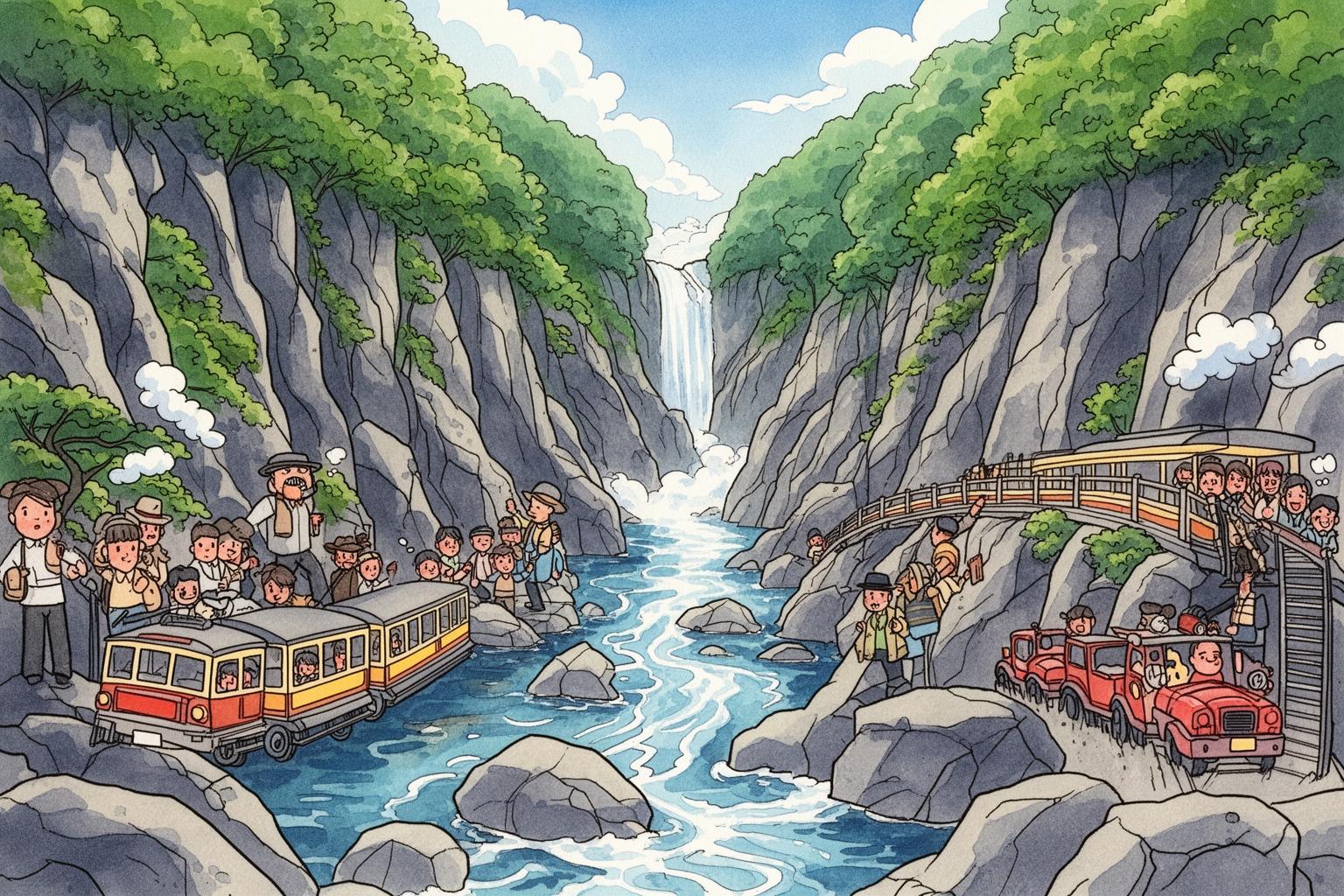
Alright, let’s dive into the main attraction—the reason we’ve all gathered here: the Oboke Gorge Sightseeing Boat tour. This is undoubtedly the best and most immersive way to truly experience the gorge. Forget trying to catch a glimpse from the road above; you need to be right on the water, at the heart of it all. The operation runs smoothly, embodying that signature Japanese efficiency and charm. You’ll head to the Mannaka restaurant and gift shop complex, perched above the river, where you’ll purchase your tickets. The atmosphere is lively yet welcoming—a classic roadside stop filled with local snacks and souvenirs to explore later. Once you have your ticket, you’ll begin the descent down a long, steep staircase leading to the boat dock. This walk is part of the experience itself. With every step, the noise from the road fades away, replaced by the sounds of the gorge—rushing water and wind rustling through the trees. The air grows cooler and fresher. You’re stepping into a different world. At the bottom, you’ll find the boats—traditional-style, long, flat-bottomed vessels called “yakatabune,” featuring a roof to shield you from sun or rain. They’re spacious and open on the sides, offering unobstructed views. You’ll be asked to remove your shoes and store them in a small cubby before stepping onto the tatami-matted floor, a uniquely Japanese touch that instantly makes the experience feel more intimate and respectful. Find a seat, get comfortable, and prepare to set off. As the boatman—a seasoned expert familiar with every ripple and rock in the river—uses a long bamboo pole to push away from the dock, the journey begins. The boat glides into the middle of the river as the engine hums to life. The tour lasts about 30 minutes round trip, covering roughly 4 kilometers of the gorge’s most scenic stretches. The boatman offers a running commentary, typically in Japanese, but even if you don’t understand the words, the passion and local pride in their tone are clear. They’ll point out rock formations that resemble animals or objects—the most famous being Shishi-iwa, or Lion Rock, which, with a little imagination, truly looks like a lion’s head. They skillfully navigate the boat, bringing you tantalizingly close to towering cliffs so you can admire the sheer scale and intricate details of the schist. You can almost reach out and touch the cool, ancient stone. The water-level perspective is mind-blowing—the cliffs loom above you, enveloping you in their vast, silent presence. You’ll see waterfalls trickling down mossy rocks, and if you’re lucky, spot local wildlife like Japanese serows (goat-antelope) traversing the steep slopes. The entire trip is a sensory feast: the cool mist on your skin, the gentle lapping of water against the hull, and the stunning panorama of emerald and grey unfolding before your eyes. It’s incredibly peaceful yet exhilarating. It’s the kind of experience that makes you put your phone away and just be present, soaking in the raw beauty all around you.
A Canvas for Every Season: Timing Your Oboke Adventure
Oboke Gorge is stunning all year round, no doubt. However, the experience you get varies completely depending on when you visit. Each season colors the gorge with its own distinct palette, creating a unique atmosphere every time. Choosing the “best” time really depends on the type of experience you’re seeking.
Spring: The Awakening
Spring (late March to May) is truly magical. After winter’s chill, the gorge bursts with new life. The mountainsides are sprinkled with the soft pinks and whites of wild cherry blossoms, or yamazakura. Unlike carefully trimmed city park cherry trees, these are wild, scattered splashes of color resembling delicate watercolor paintings against the rugged gray cliffs and fresh green leaves. The air is crisp and pure, and the Yoshino River, often swollen with mountain snowmelt, flows with renewed vigor. The temperature is ideal for outdoor activities—not too warm, not too cold. It’s a season of rebirth, and the optimism is palpable. A boat ride feels like drifting through a landscape waking from a long slumber, showcasing more subtle, delicate beauty than bold, dramatic colors. The soft spring light is perfect for photography, making the emerald water and pink blossoms truly stand out.
Summer: The Lush Escape
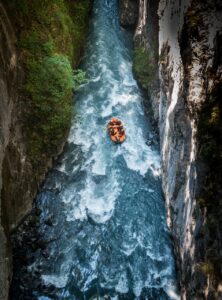
Summer (June to August) in Japan can be oppressively hot and humid, making Oboke Gorge the perfect oasis. Nestled between towering cliffs and beside cool waters, the gorge remains a few degrees cooler than the surrounding areas. The scenery is lush and vibrant, with countless shades of deep green. Trees are dense with leaves, forming a thick canopy that filters sunlight and creates dancing patches of light on the river’s surface. The constant buzz of cicadas sets a natural rhythm to your adventure. Mornings often bring a fine mist, adding mystery and ambiance to the scene. This season showcases the river’s life-giving force. For thrill-seekers, summer is peak whitewater rafting season just downstream in the more turbulent Koboke Gorge. Pair a serene Oboke boat tour with a wild rafting trip for the ultimate Yoshino River experience. It’s a season of intense, energetic nature.
Autumn: The Fiery Masterpiece
Many would argue that autumn (late October to late November) is the unrivaled champion season for visiting Oboke Gorge—and they’re right. The scenery is so breathtaking it almost seems unreal. This season offers the gorge’s most spectacular and famous display. The maple, beech, and ginkgo leaves transform the cliffsides into a vibrant mosaic of fiery reds, vivid oranges, and brilliant golds. This vivid explosion of warm hues against the cool emerald river and stark gray schist creates a striking visual contrast. The air is crisp and clear, with a richer shade of blue overhead. Boat rides become a slow glide through a blazing landscape, revealing ever more stunning views with each bend of the river. It’s a photographer’s dream and the busiest time to visit. The beauty here is all-encompassing and nearly spiritual. For those wanting Oboke Gorge at its most dramatic and unforgettable, autumn is the perfect choice. It is an experience you won’t forget—a core memory in the making.
Winter: The Silent Majesty
Winter (December to February) is the gorge’s most underrated season. It’s a time of quietude, solitude, and simple, stark beauty. The crowds vanish, and a deep peace blankets the valley. When snow falls, the gorge turns into a magnificent monochrome wonderland. Dark, jagged cliffs wear a light dusting of snow, while the bare tree branches form intricate, skeletal patterns against the sky. The Yoshino River’s emerald green appears even more vivid amid the muted winter tones. This creates a serene, almost meditative atmosphere. The air is cold and sharp, your breath visible in the frosty air. Snow muffles sounds so that the gentle river flow and the boat’s quiet engine hum are your main companions. Boats often provide heaters or blankets, making the trip cozy and comfortable. A winter visit to Oboke Gorge suits travelers who want to appreciate the landscape’s raw, architectural beauty without the distraction of foliage. It’s an opportunity to connect with the place’s quiet, powerful spirit in a way not possible any other time. Here, nature is presented in its purest, most elemental form.
Beyond the Boat: Exploring the Iya Valley Legend
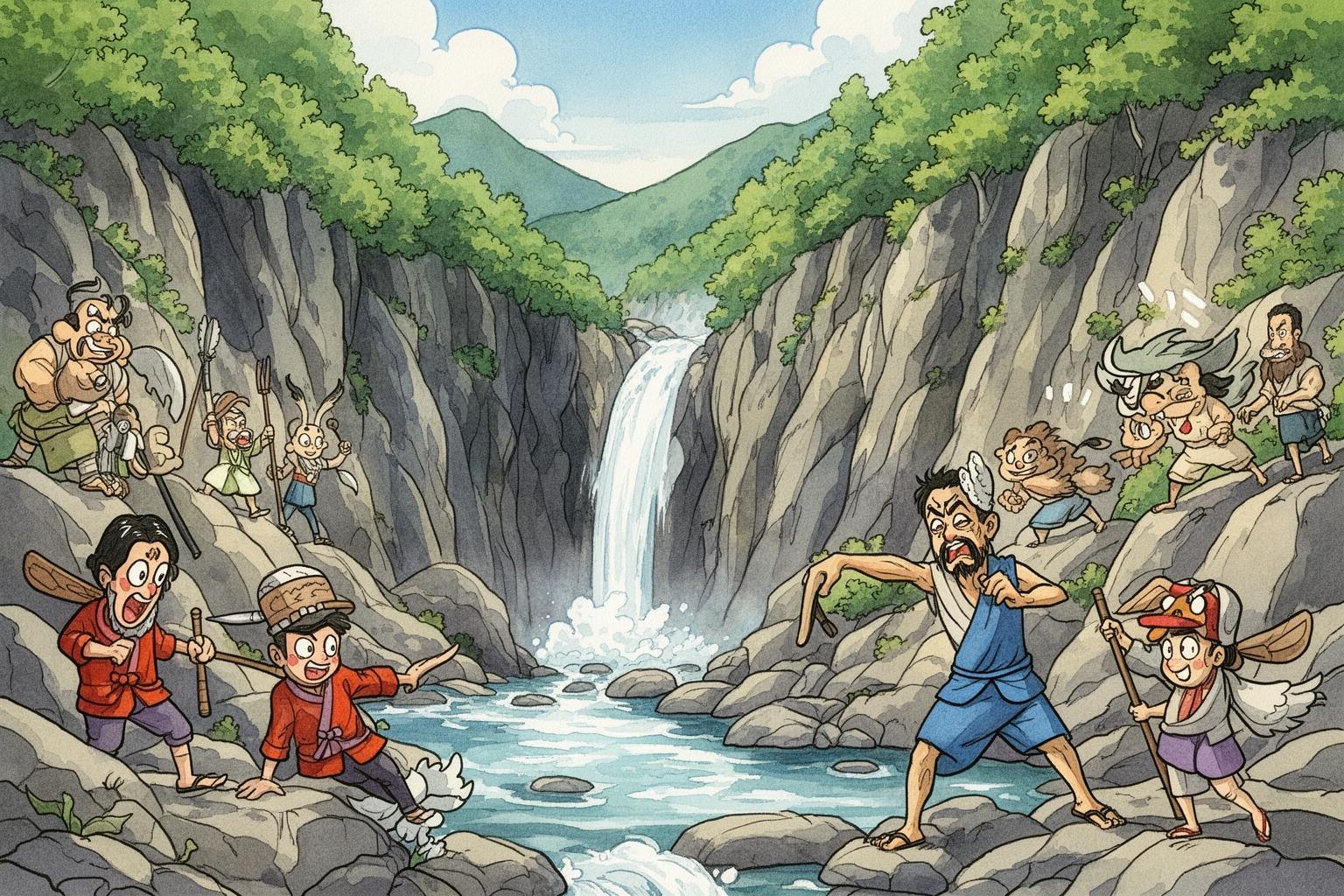
Taking the boat tour is an absolute must, but your adventure in this part of Shikoku is only just beginning. Oboke Gorge serves as the gateway to one of Japan’s most mysterious and captivating regions: the Iya Valley. This area isn’t just another scenic spot; it’s rich with history, legend, and a strong sense of isolation. Known as one of Japan’s “Three Hidden Regions,” the Iya Valley has long been difficult to access, which has helped preserve its unique culture and untamed beauty. According to legend, after the Genpei War in the 12th century, defeated warriors of the Heike (Taira) clan fled to this remote valley to escape their foes, the Genji (Minamoto) clan. They lived in seclusion, and it is said that their descendants still inhabit the valley today. Whether the story is entirely true or not, it adds a remarkable layer of romantic and tragic history to the area. You can really sense this feeling of a world apart as you travel along the winding, narrow mountain roads.
One of the most iconic symbols of the Iya Valley, and an absolute must for thrill-seekers, is the Kazurabashi Bridge. A few of these traditional vine bridges remain in the area, but the main one in Nishi-Iya is the most famous and easily accessible. These bridges are crafted from sturdy mountain vines (kazura) woven together—no steel cables or modern reinforcements. They are rebuilt every three years to maintain safety, but crossing one still delivers a serious adrenaline rush. As you step onto the bridge, you’ll notice the wide gaps between the wooden slats, and you can see the rushing Iya River directly beneath your feet, a dizzying 14 meters below. The bridge sways and creaks with every step, like a living, breathing structure. It’s definitely a test of courage, but the experience of being suspended over the beautiful valley, supported only by ancient craftsmanship, is unforgettable. The view from the center of the bridge, looking both up and down the river, is stunning—especially in autumn when the surrounding slopes are ablaze with color.
Further into the valley, you’ll discover even more hidden treasures. There’s the Peeing Boy of Iya statue, perched precariously on a cliff edge overlooking a heart-stopping drop into the valley below. This quirky and surprisingly thrilling photo spot honors the bravery of local children and construction workers who once relieved themselves from this very spot. To delve deeper into the valley’s history, you can visit traditional thatched-roof farmhouses known as “chiiori,” some of which have been converted into guesthouses where you can experience a glimpse of old-world Japanese life. The entire valley is a playground for explorers, with hiking trails, breathtaking viewpoints, and a sense of discovery at every hairpin turn. Combining a trip to Oboke Gorge with a journey into the Iya Valley creates a perfect blend of nature and culture, offering a profound appreciation for the wild, rugged spirit of Shikoku.
The Practical Playbook: Nailing Your Oboke Trip
Alright, you’re convinced and ready to discover the magic of Oboke Gorge. Let’s go over the details so your trip goes smoothly. Getting to this part of Shikoku is an adventure in itself, but definitely achievable.
Getting There
- By Train: This is probably the most scenic and classic way to arrive. The JR Dosan Line runs right through the gorge, offering one of the most beautiful train rides in Japan. You’ll want to get off at JR Ōboke Station. From major cities like Okayama on Honshu, you can take a limited express train (such as the “Nanpu”) which takes about two hours. The train winds through mountains and along the river, delivering stunning views before you even get there. From Oboke Station, the boat tour pier is roughly a 20-25 minute walk or a short taxi or bus ride. The walk is quite pleasant, following the river and providing great vantage points.
- By Car: If you want maximum flexibility to explore the entire Iya Valley, renting a car is an excellent choice. You can drive from major cities like Takamatsu or Tokushima within a couple of hours. The roads are well-kept but expect some winding mountain routes, especially as you head deeper into Iya. The boat tour location offers a large free parking lot, making it very convenient. Having a car lets you move at your own pace, stopping at viewpoints and exploring hidden side roads.
Getting Around
If you arrive by train without a car, you can still explore nearby spots using the local bus network. Shikoku Kotsu buses run from Oboke Station to various attractions, including the Kazurabashi Bridge and other parts of the Iya Valley. That said, the bus service is infrequent. You absolutely must check the timetable ahead and plan your day carefully. Missing a bus could mean waiting several hours. This requires extra planning but is a very authentic way to see the area.
Pro Tips for First-Timers
- Footwear Matters: Whether you’re taking the boat tour or exploring, wear comfortable shoes. There’s quite a bit of walking involved, including steep stairs to the boat dock. If you plan to cross the Kazurabashi Bridge, closed-toe shoes with good grip are essential.
- Dress in Layers: Mountain weather can change rapidly. Even on warm days, it can feel cool and breezy down by the river in the gorge. Bringing a light jacket or extra layer is wise, no matter the season.
- Carry Cash: While bigger places like the main restaurant might accept cards, many small shops, food stalls, and even bus fares often require cash. It’s smart to have enough yen on hand when traveling rural Japan.
- Check Boat Schedules: Sightseeing boats run frequently between roughly 9:00 AM and 5:00 PM, but operating times can vary with the season and weather. Check the official website for the latest info before you go, especially during off-season or if the forecast looks uncertain. The river level can rise fast after heavy rain, sometimes forcing temporary service suspensions.
- Bring Your Camera (and a Battery Pack): This may seem obvious, but you’ll take far more photos than you expect. The scenery is that stunning. Make sure your camera or phone is fully charged, and carrying a portable battery pack helps ensure you won’t miss that perfect shot.
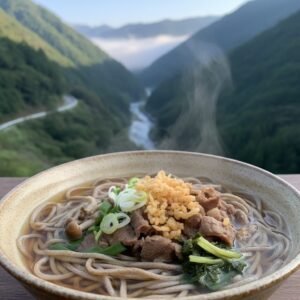
- Savor the Local Flavors: Don’t just take in the sights—taste them too! The restaurant at the boat dock serves delicious local dishes. Be sure to try the regional specialty soba noodles or snack on grilled amego (a local river fish) on a stick. It’s all part of the immersive experience.
A Final Echo from the Gorge
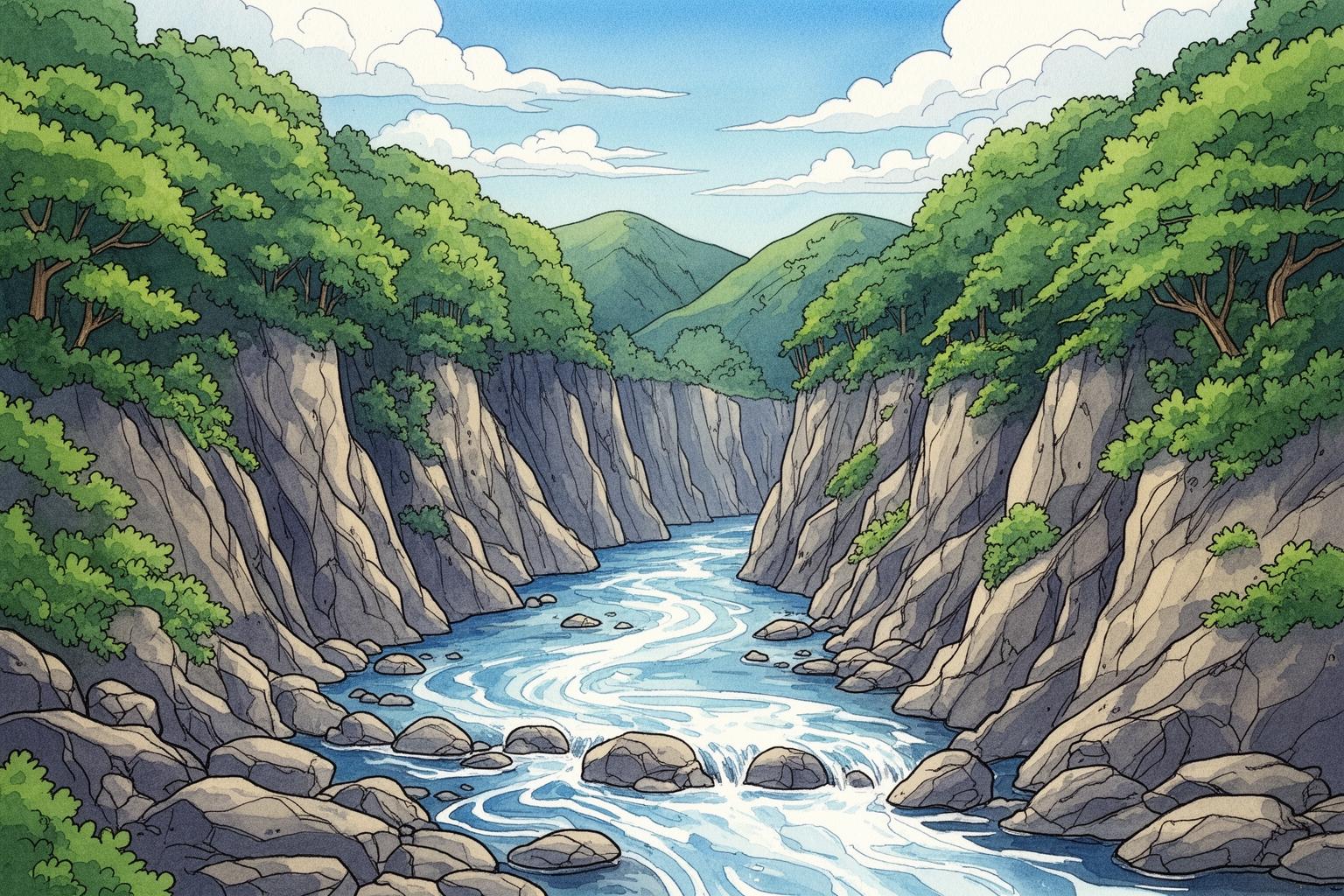
Leaving Oboke Gorge feels like emerging from a vivid dream. The memory of that impossibly green water, the silent, towering cliffs, and the sensation of gliding through a channel carved by eons of time—lingers with you. It’s a powerful reminder that some places in the world remain raw, ancient, and deeply beautiful. This isn’t merely a check on a travel itinerary; it’s an experience that calms the mind and nourishes the soul. It’s the excitement of adventure blended with a profound sense of peace. In a world that rushes by, a trip to Oboke offers a chance to attune yourself to a slower, mightier rhythm—the rhythm of the river, the mountains, and the steady flow of geological time. It’s the kind of journey that rekindles your curiosity and reminds you why you first fell in love with travel. So when planning your next trip to Japan, dare to look beyond the usual destinations. Venture into the wild heart of Shikoku, find your way to the Yoshino River, and let the emerald dragon guide you through its realm. You’ll return with more than just photographs; you’ll carry a piece of its timeless magic in your heart.