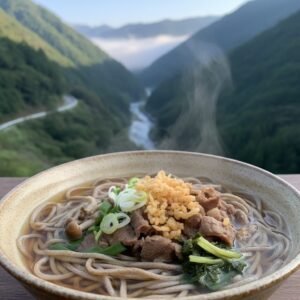
To truly immerse yourself in the valley’s culture, be sure to experience its unique Iya Soba cuisine.
Unplug and Get Lost in Japan’s Last Frontier
Alright, let’s get real for a moment. When you think of Japan, what do you imagine? A flood of neon lights in Shinjuku? Serene temples in Kyoto, crowded with countless selfie sticks? Bullet trains cutting through the landscape with perfect precision? All of that is true and an essential part of the Japan experience. But it’s not the full picture. Not even close. If you want to uncover the layers and discover the soul of this country humming a tune that’s centuries old, you have to go off the beaten path. You need to get lost. You need to find your way to the Iya Valley.
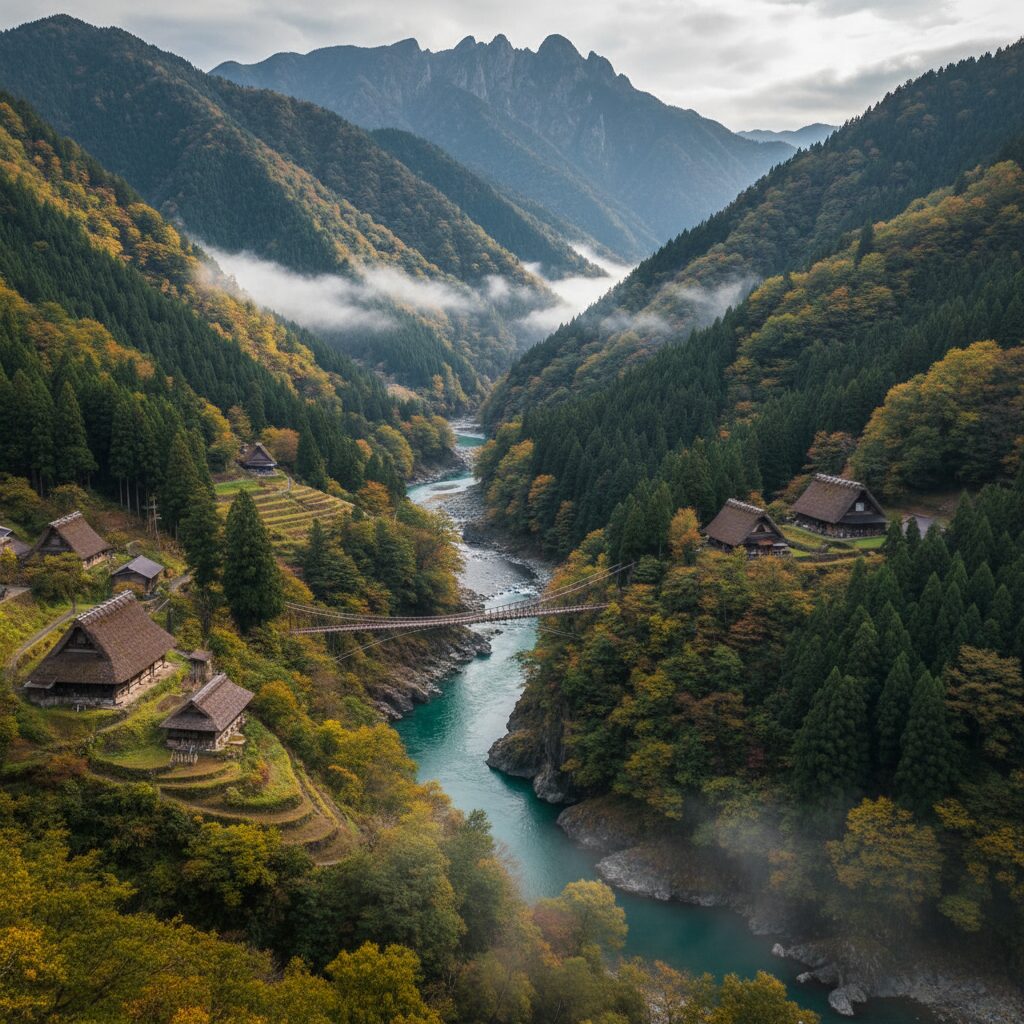
Tucked deep in the mountainous core of Shikoku Island, in Tokushima Prefecture, Iya is one of Japan’s “Three Hidden Regions,” and believe me, it lives up to every bit of the hype. This isn’t just a place; it’s like stepping back in time. A land of steep V-shaped gorges, emerald rivers so clear they resemble liquid glass, and mist that clings to cedar-covered mountains like a well-kept secret. This is where ancient vine bridges sway above roaring waters, entire villages cling to impossibly steep hillsides, and the silence is so deep you can hear your own heartbeat. Forget Wi-Fi; the only connection here is with nature, history, and perhaps a wilder version of yourself you never knew was there. The atmosphere is flawless—mysterious, rugged, and deeply peaceful. It’s definitely a challenge. The roads are narrow, buses are rare, and visiting requires a spirit of adventure. But the reward? It’s a feeling, a memory, a story that will stay with you forever. This is the Japan that existed long before skyscrapers and convenience stores. This is Iya Valley, and it’s ready to blow your mind.
Walking on Air: The Legendary Kazurabashi
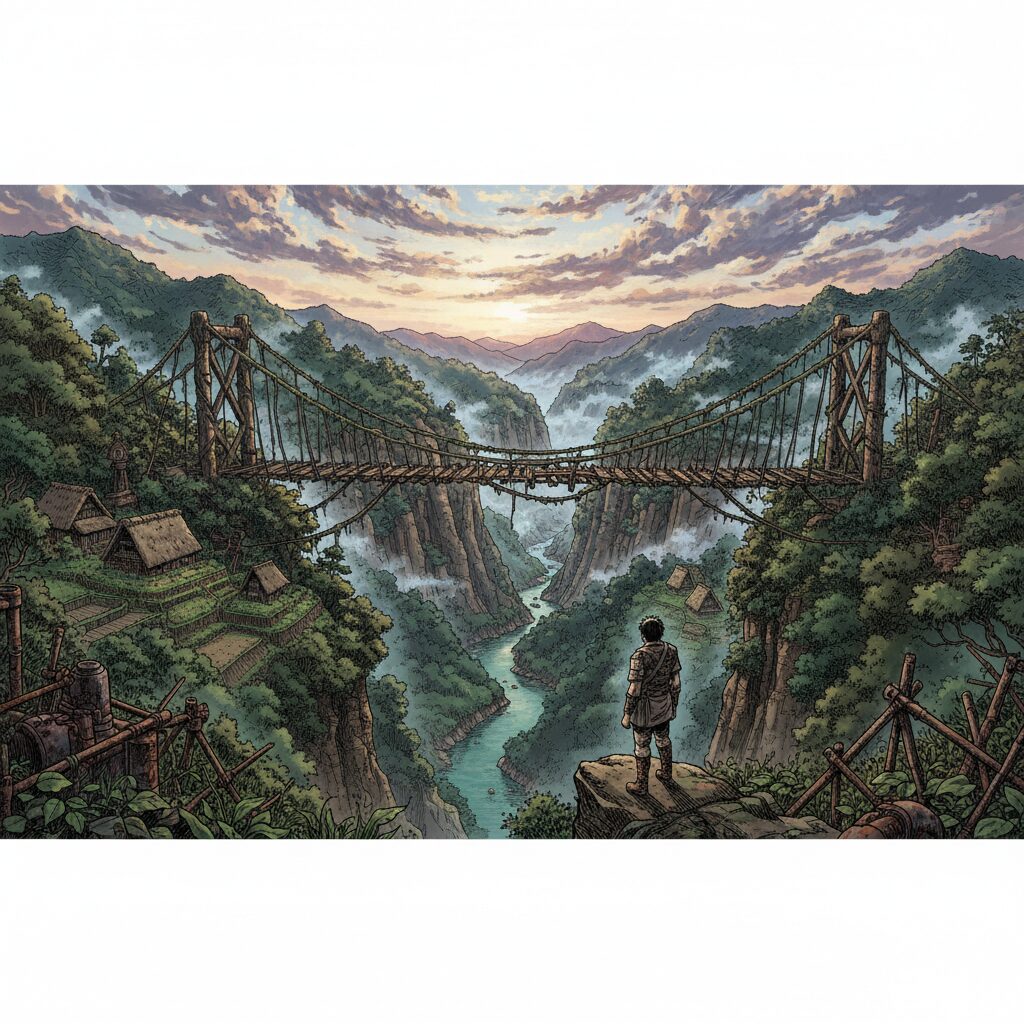
Let’s begin with the icons—the features that put Iya on the map for those who know it well. We’re talking about the Kazurabashi, the remarkable hand-woven vine suspension bridges that stand as both the literal and symbolic heart of the valley’s history. These are far from mere charming tourist spots; they’re living artifacts from a feudal era. According to legend, these bridges were constructed by the defeated Heike (Taira) clan samurai who fled to this remote valley after a major civil war in the 12th century. The brilliance of their design? They could be cut down instantly to block any pursuing enemies—a dramatic exit strategy, indeed. Today, only a few remain, carefully rebuilt every three years by local craftsmen to preserve the tradition. Crossing one is an absolute rite of passage for any visitor.
The Main Event: Iya Kazurabashi
The most famous and accessible bridge is the Iya Kazurabashi in Nishi-Iya (West Iya). Spanning 45 meters over the Iya River, it hangs a dizzying 14 meters above the water. Honestly, no photo can fully prepare you for the experience. The moment you step onto the widely spaced wooden slats, your mind reels. You can see the turquoise river rushing beneath your feet through the wide gaps in the planks. The entire structure sways with every step, and the thick, twisted kiwi vines that make up the bridge feel surprisingly alive and natural under your hands. It’s a true test from Mother Nature. Your heart does a little flip, a blend of adrenaline and pure wonder. The challenge is not to look down (nearly impossible) and to hold on tight. You’ll see some people inching across, clutching the vines desperately, while others stride confidently. Whatever your pace, stepping onto the other side feels like pure triumph. Pro tip: visit early in the morning or late afternoon to dodge the biggest crowds and snap that perfect, empty-frame photo. Nearby, you can visit the Biwa Waterfall, a serene spot where Heike refugees supposedly played the biwa (a Japanese lute) to ease their sorrows.
The Deep Cut: Oku-Iya Niju Kazurabashi
For those eager to elevate their adventure, venture deeper into the valley to Oku-Iya, or “Inner Iya.” Here you’ll find the Oku-Iya Niju Kazurabashi— the Double Vine Bridges. The drive is longer and more winding, but the payoff is tremendous. The atmosphere shifts—quieter, wilder, and more mystical. Here, you get two bridges side-by-side: a larger “husband” bridge (Otto no Hashi) and a smaller “wife” bridge (Tsuma no Hashi). These bridges are less crowded, letting you take your time and fully absorb the raw beauty of the surrounding forest. The experience feels more personal, more deeply connected to the area’s history. Plus, there’s a fun rustic bonus: the “Yaen.” It’s a small wooden cart that runs on a rope, pulling you across the gorge. You literally climb into this open-air box and haul yourself across with a rope. It’s said to be based on how people and goods were once transported across the valley. It’s low-tech, a bit nerve-wracking, and absolutely unforgettable. This is the authentic, unfiltered Iya experience.
The Quirks and Wonders: Beyond the Bridges

Iya’s charm lies not only in its dramatic landscapes but also in its uniquely quirky and sometimes bizarre human touches. These elements add rich layers of story and character to the valley, making it much more than just a scenic spot.
The Manneken Pis of the Mountains: The Peeing Boy Statue
Situated on the edge of a sheer 200-meter cliff overlooking a stunning hairpin bend in the valley is one of Iya’s most famous and intriguing landmarks: a statue of a small boy with his pants down, boldly peeing into the abyss. It’s definitely a striking sight. But there’s a meaningful story behind it. The statue was erected to honor the local legend of children and workers who proved their courage by standing on this very rock. It symbolizes the rugged, untamed spirit of the people who have inhabited this challenging terrain for centuries. While attempting the stunt yourself is not recommended, visiting the viewpoint beside the statue is a must. The sweeping view of the gorge below is dizzyingly beautiful and absolutely breathtaking. It’s the kind of vista that makes you feel very small in the grand scale of things, offering a perfect photo opportunity that captures Iya’s wild and untamable essence.
The Village of Dolls: Nagoro Scarecrow Village
Prepare yourself for one of the most surreal, moving, and oddly beautiful experiences imaginable. Tucked away in the eastern part of the valley is the village of Nagoro, though its residents might surprise you. The human population has dwindled to just a few, but the village is teeming with life-sized scarecrows, or `kakashi`. There are hundreds of them, carefully crafted and placed all around. You’ll find them laboring in the fields, waiting at bus stops, fishing by the river, and even occupying desks in the long-closed village school. These creations are the work of a local resident, Tsukimi Ayano, who returned home and began making the scarecrows to fight loneliness and to remember neighbors who had moved away or passed on. The effect is astonishing. Rather than eerie, it’s deeply touching. Each scarecrow embodies a personality, a posture, a story. The school is particularly striking, with doll students attentively facing their doll teacher in a silent classroom. Nagoro is a living, breathing art installation about memory, loss, community, and the passage of time. The silence here isn’t empty; it’s filled with untold stories. It’s a quietly haunting yet profoundly beautiful masterpiece that lingers in your mind long after you leave.
The Bigger Picture: Gorges, Villages, and Living History
While the individual attractions are impressive, the true enchantment of Iya lies in the valley itself—the vastness of the landscape and the way human history is intricately woven into its very essence. To fully appreciate it, you need to explore the broader context.
Nature’s Masterpiece: Oboke and Koboke Gorges
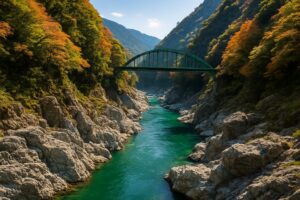
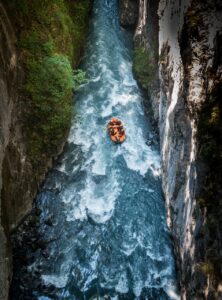
At the entrance to the Iya Valley, the mighty Yoshino River has spent around 200 million years carving out two breathtaking gorges: Oboke and Koboke. Their names ominously mean “Big Dangerous Steps” and “Small Dangerous Steps,” referring to the hazardous terrain walkers face. This geological craftsmanship has created a stunning canyon lined with jagged, crystalline schist rock formations alongside a river of striking turquoise blue. The contrast between the grey-green rocks and the vivid water is almost surreal. One of the best ways to experience the gorges is from the water. You can embark on a sightseeing boat cruise from Oboke, gliding gently between towering cliffs and gaining a fresh perspective on their immense scale and beauty. Guides highlight rock formations resembling lions and other animals, adding an element of fun to the majestic landscape. For thrill-seekers, this stretch of the Yoshino River offers some of Japan’s finest white-water rafting. In summer, rafts packed with laughing, screaming adventurers navigate the world-class rapids. Whether you prefer a peaceful cruise or an adrenaline rush, the gorges serve as the grand gateway to Iya’s natural marvels.
A Glimpse of the Past: Ochiai Village and Chiiori Trust
To grasp how people have endured and flourished in this harsh environment, you must visit the `shuraku`, or mountain villages. The most remarkable is Ochiai Village, perched on a steep mountainside in Higashi-Iya (East Iya). The entire village is designated as an Important Preservation District for Groups of Traditional Buildings. From the observatory opposite the valley, the view is iconic. Dozens of traditional thatch-roofed farmhouses, surrounded by carefully terraced fields of potatoes, buckwheat, and tea, appear to be almost glued to the hillside. It’s a stunning testament to the harmony between humans and nature—a sustainable lifestyle refined over centuries. It looks like a scene straight from a classic Japanese folktale. You can even stay in some of these beautifully restored farmhouses, or `kominka`. One of the most renowned is the Chiiori House, a 300-year-old farmhouse restored by Japanologist and author Alex Kerr. His Chiiori Trust project was among the first major initiatives to preserve this unique architectural heritage. Staying in one of these houses, with its dark wooden beams, irori hearth, and sweeping mountain views, is the ultimate immersion. It’s more than just accommodation; it’s a way to connect with the valley’s very soul, to sense its history in the grain of the wood and the cool mountain air.
The Nitty-Gritty: Planning Your Epic Iya Adventure
Alright, you’re convinced. You’re ready to immerse yourself in Japan’s hidden world. But visiting Iya demands a bit more preparation than a weekend in Tokyo. Its remoteness is its greatest allure, yet also its biggest logistical challenge. Here’s the essential info on how to make it happen.
Getting There is Half the Experience
Iya Valley lies in central Shikoku, the smallest of Japan’s four main islands. The primary gateway to the area is Oboke Station. To reach there from major hubs like Tokyo or Osaka, the best route is to take the Shinkansen (bullet train) to Okayama Station. From Okayama, transfer to the JR Dosan Line and board the Nanpu Limited Express train, which meanders through the mountains down to Oboke. The train ride itself is stunning, giving you a preview of the mountain scenery ahead. It’s a scenic journey that builds anticipation perfectly. Once you arrive at the quaint, charming Oboke Station, you’ve officially reached the edge of the wild.
The Keys to the Kingdom: Getting Around Iya
This is the most crucial part of your planning. Public transportation within Iya Valley is very limited. Local buses do run, but only a few times a day. If you’re only planning a quick day trip to see the iconic Kazurabashi bridge near Oboke, the bus schedule might suffice. But if you want to explore Oku-Iya, Nagoro Village, or the Ochiai viewpoint, your options are severely limited. So, here’s the real talk: renting a car is the ultimate move. It gives you the freedom to explore at your own pace, stop for photos whenever a breathtaking view appears (which is about every five minutes), and reach hidden gems that buses don’t serve. Cars can be rented in larger cities like Takamatsu or Tokushima, or sometimes at smaller agencies near major train stations. A word of caution about driving in Iya: the roads are not for the faint-hearted. They are extremely narrow, winding, and often single-lane with passing points. You’ll be navigating blind corners and hugging mountain edges. Honk before rounding sharp turns to alert oncoming traffic. Drive slowly. But honestly, the drive is part of the adventure. It encourages you to slow down and truly appreciate the epic landscape you’re traveling through. It’s a drive, not a race.
What’s the Vibe? Choosing Your Season
Iya is breathtaking all year, but each season offers a distinctly different experience.
Spring (April – May)
Spring brings gentle beauty. The valley gradually awakens from winter, with cherry blossoms and mountain flowers adding soft touches of pink and white to the scenery. The weather is pleasant, and it’s less crowded than autumn. It’s an ideal time for hiking and enjoying fresh mountain air.
Summer (June – August)
Summer is when the valley is at its lushest and most vibrant. Everything is a deep, intoxicating green. This is peak season for outdoor activities, especially the thrilling white-water rafting on the Yoshino River. It’s a great way to escape the stifling heat of the Japanese cities. Be ready for rain during the June rainy season (`tsuyu`) and high humidity, but the dramatic, misty landscapes that come with it are absolutely magical.
Autumn (October – November)
This is showtime. Autumn is undoubtedly the most popular time to visit Iya, and for good reason. The entire valley bursts into a fiery tapestry of reds, oranges, and yellows. The `koyo`, or autumn foliage, here is considered some of the best in Japan. Views of the gorges and mountainsides painted in these brilliant colors are simply jaw-dropping—pure visual poetry. Because it’s peak season, be sure to book your accommodation and rental car well in advance.
Winter (December – February)
Winter transforms Iya into a quiet, serene snow-covered wonderland. It’s a completely different vibe—immensely peaceful and starkly beautiful. Many smaller roads may close due to snow, and some attractions might operate on limited hours. This is a trip for the truly adventurous seeking solitude. Seeing the vine bridges draped in snow is a magical sight, and warming up in a mountainside onsen afterwards is pure bliss.
Where to Stay: Ryokans, Farmhouses, and Onsen Bliss
Iya offers a variety of unique accommodations that are an essential part of the experience.
Onsen Ryokans
For a touch of luxury and relaxation, staying at an onsen ryokan (hot spring inn) is a must. The most famous is Hotel Iya Onsen, perched right on the gorge’s edge. It’s renowned for its private cable car that takes guests down to open-air baths (`rotenburo`) beside the flowing river. Soaking in the steaming, mineral-rich water while surrounded by untamed nature is a bucket-list experience you won’t forget. There are other excellent ryokans in the Oboke Gorge area as well, offering incredible views and exquisite multi-course `kaiseki` dinners.
Minshuku and Guesthouses
For a more casual and budget-friendly option, look for `minshuku` (family-run guesthouses). These offer a wonderful chance to interact with local families, enjoy home-cooked meals, and get an authentic taste of valley life.
Kominka Stays
For the ultimate cultural immersion, you can’t beat staying in a restored `kominka` (traditional farmhouse). Places like Chiiori House or others in Ochiai Village let you live, even if just for a night, in a piece of Japanese history. It’s a rustic, quiet, and deeply authentic experience.
Keep it Real: Pro Tips for Your Iya Valley Journey
To ensure your trip goes smoothly, here are a few last tips from someone who’s experienced it firsthand.
Eat Like a Local Mountaineer
The cuisine in Iya is as rustic and genuine as the surrounding landscape. This isn’t the place for delicate sushi; instead, it offers robust mountain dishes meant to keep you energized. Make sure to try these local favorites.
Iya Soba
Due to the steep terrain, rice cultivation is difficult, so buckwheat has been a dietary staple for centuries. Iya soba noodles are notably thicker and slightly shorter than typical soba, with a deep, earthy flavor. Often served in a simple, hot broth, it’s the ultimate comfort food after a day of adventuring.
Dekomawashi
This delightful and tasty snack is often grilled over charcoal near tourist areas. It consists of skewered potatoes, konjac (a firm jelly made from the konjac yam), and a firm tofu variety, all coated in a sweet and savory miso glaze. The name literally means “puppet on a stick,” and turning it over the fire is part of the enjoyment.
Amego Fish
A type of river trout found in Iya’s clear streams. You’ll frequently see it salted and slowly grilled over an `irori` hearth. The flavor is clean, simple, and remarkably fresh.
The Essentials for a Smooth Trip
Cash is King
This cannot be emphasized enough. This is deep rural Japan. While your hotel may accept credit cards, many small eateries, shops, and entry fees require cash only. Withdraw yen from an ATM in a larger city before heading into the valley to ensure you have enough to cover your costs.
Pack Smart
Mountain weather can be unpredictable and change rapidly. Layering is key. Bring a waterproof jacket, even in summer. And sturdy, reliable walking shoes are absolutely essential, as you’ll be navigating uneven paths, bridges, and trails.
Embrace the Digital Detox
Don’t expect to stream your favorite shows here. Wi-Fi can be unreliable or unavailable outside your hotel, and mobile service is often spotty in the valley’s more remote areas. Download your maps for offline use (Google Maps offers this feature) before you go. Even better, consider putting your phone away and enjoy being disconnected. Look up, not down.
Respect the Culture and the Community
Remember, you are a guest in a place where people live quiet, traditional lives. Be respectful. Drive slowly and carefully. Avoid trespassing on private property for photos. Greet locals with a friendly “Konnichiwa.” The beauty of Iya lies not only in its nature but also in its peaceful community. Help preserve that harmony.
The Echo of the Valley
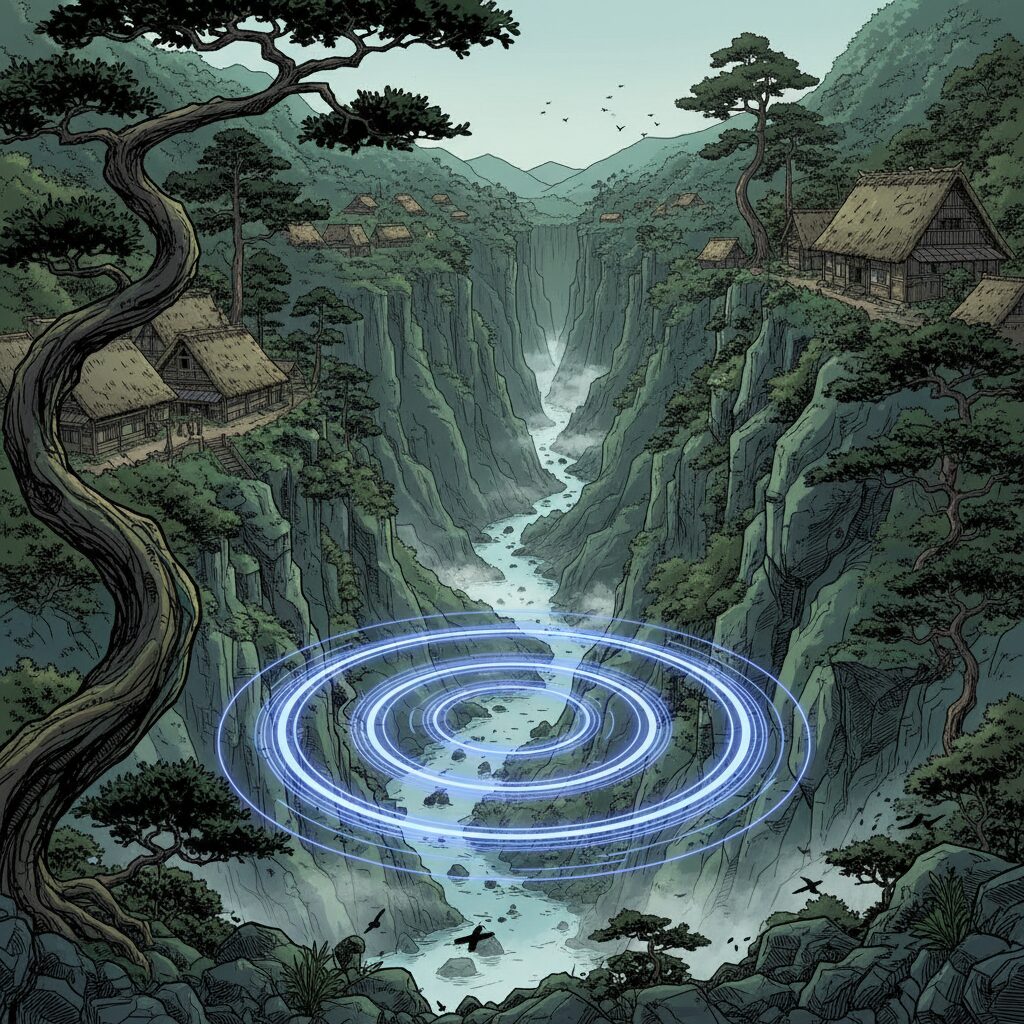
Leaving the Iya Valley feels like emerging from a vivid dream. As you follow the winding roads back toward the train station and the realm of hyper-connectivity, you sense a palpable shift. The silence of the mountains gives way to the buzz of modern life. Yet, the valley remains with you—in the memory of the cold thrill of the vine bridge beneath your feet, the haunting stillness of the scarecrow school, the smoky flavor of river fish, and the breathtaking beauty of a misty gorge at sunrise.
Iya is more than a list of sights; it’s a feeling. It’s a journey that tests you, grounds you, and ultimately rewards you with a connection to a side of Japan—and yourself—you might never have known existed. It proves that in a world moving ever faster, there are still places where time flows like a river, where history murmurs on the breeze, and where the richest adventures lie hidden in the most remote corners. So go ahead, take the road less traveled. The lost world of Iya awaits. You won’t regret it.