Yo, what’s the deal? You’ve landed in Japan. Maybe you just got your international license sorted, picked up a rental, and you’re ready to hit the road. You’ve seen those aesthetic vids online—neon-drenched Tokyo nights, tranquil temples, and, of course, those epic coastal drives. You wanna feel that vibe for real. Someone passes you the aux and tells you to put on some “City Pop.” You tap a playlist, and the first track hits. A slick bassline slides in, followed by a crisp drum machine, some shimmering keyboards, and a voice singing in Japanese, but in a way that feels… familiar. It sounds like a perfect, sun-drenched afternoon in a convertible, even if you’re stuck in traffic. It’s upbeat but kinda sad, nostalgic for a time you’ve never even lived through. You’re cruising down the Shonan coast, the ocean on one side, Enoshima island in the distance, and this music just clicks. It feels like the main soundtrack to a movie you’ve just been dropped into. But what even is this feeling? This impossibly smooth, cool, and kinda melancholic “blue vibe”? It’s not just a music genre; it’s a whole cultural moment captured on wax, a phantom limb of Japan’s most optimistic and extravagant era. This music is a key to understanding a very specific Japanese dream. It’s the sound of a future that never quite happened, and we’re about to break down why it hits so hard, for real.
To complete the coastal aesthetic, consider how the laid-back style of light-washed denim perfectly complements this blue vibe.
The Lowdown on City Pop: More Than Just a Retro Beat
So, before we dive into the deeper cultural aspects, let’s first lock down the basics. What exactly is City Pop? It’s a bit tricky to define since it’s less of a strict genre with set rules and more of a vibe or aesthetic. But if you had to describe it, you’d say it’s a style of Japanese pop music that flourished from the late 1970s through the 1980s. The sound is an eclectic blend. Japanese artists and producers were heavily influenced by Western music, with the resources and technology to both emulate and innovate. You hear the smooth, sophisticated chords of American Adult-Oriented Rock (AOR), the infectious rhythms of disco, the deep grooves of funk, the emotional depth of soul, and even the laid-back feel of West Coast soft rock and Hawaiian tunes. It was a musical cocktail, expertly crafted in Tokyo.
Instrumentation plays a key role—this is where the magic lies. The rhythm sections are incredibly tight. You’ll find punchy, syncopated slap bass lines often taking the lead, pushing the track forward. The drums are crisp, typically a blend of live kits and early drum machines like the LinnDrum or Roland TR-808, creating that clean, polished 80s sound. Layered on top is the harmony. The Fender Rhodes electric piano is a hallmark of City Pop, delivering dreamy, shimmering chords reminiscent of sunlight sparkling on water. Alongside that, there are lush string arrangements, full brass sections with saxophone solos that could move anyone, and a vast array of synthesizers. The Yamaha DX7, introduced in ’83, was revolutionary, bringing iconic bell-like tones and glossy pads that defined the era’s sound.
But the key is in the name: City Pop. This was music born from, and designed for, the metropolis. It captured Japan’s transformation into a global economic and technological giant. The lyrics, melodies, and overall production were aimed at reflecting a sophisticated, urban lifestyle. It wasn’t folk music from rural areas or raw punk energy from underground scenes. This was polished, high-end music meant to be played on premium stereo systems in high-rise apartments or, most importantly, on the top-tier cassette decks of brand-new cars cruising the highway. It was sleek, modern, and unapologetically commercial. It was the soundtrack of a nation confidently coming into its own.
The Bubble Economy: The Engine of the Dream
To truly understand why City Pop sounds the way it does—so incredibly optimistic, so luxurious, so… expensive—you need to grasp the historical context in which it emerged. This music is the sonic embodiment of Japan’s Bubble Economy (バブル景気, baburu keiki). After the devastation of World War II, Japan experienced an economic miracle. Decades of hard work, innovation, and strategic emphasis on manufacturing and technology propelled the nation to become the world’s second-largest economy by the late 1970s. But the 1980s? That was an entirely different scale. It was when the pot boiled over into an all-out speculative bubble.
For a brief, dazzling moment, it felt like Japan was on top of the world. Stock market and real estate prices soared to absurd heights. There was a sense of boundless wealth and endless possibility. Companies were flush with cash, and that money trickled down. Lifetime employment at a major corporation was the ultimate goal, accompanied by perks like enormous expense accounts. Tales from that era are wild: executives taking taxis hundreds of kilometers just for a bowl of ramen, companies purchasing famous Western art and landmarks. There was a national confidence, a swagger, that is almost unimaginable today.
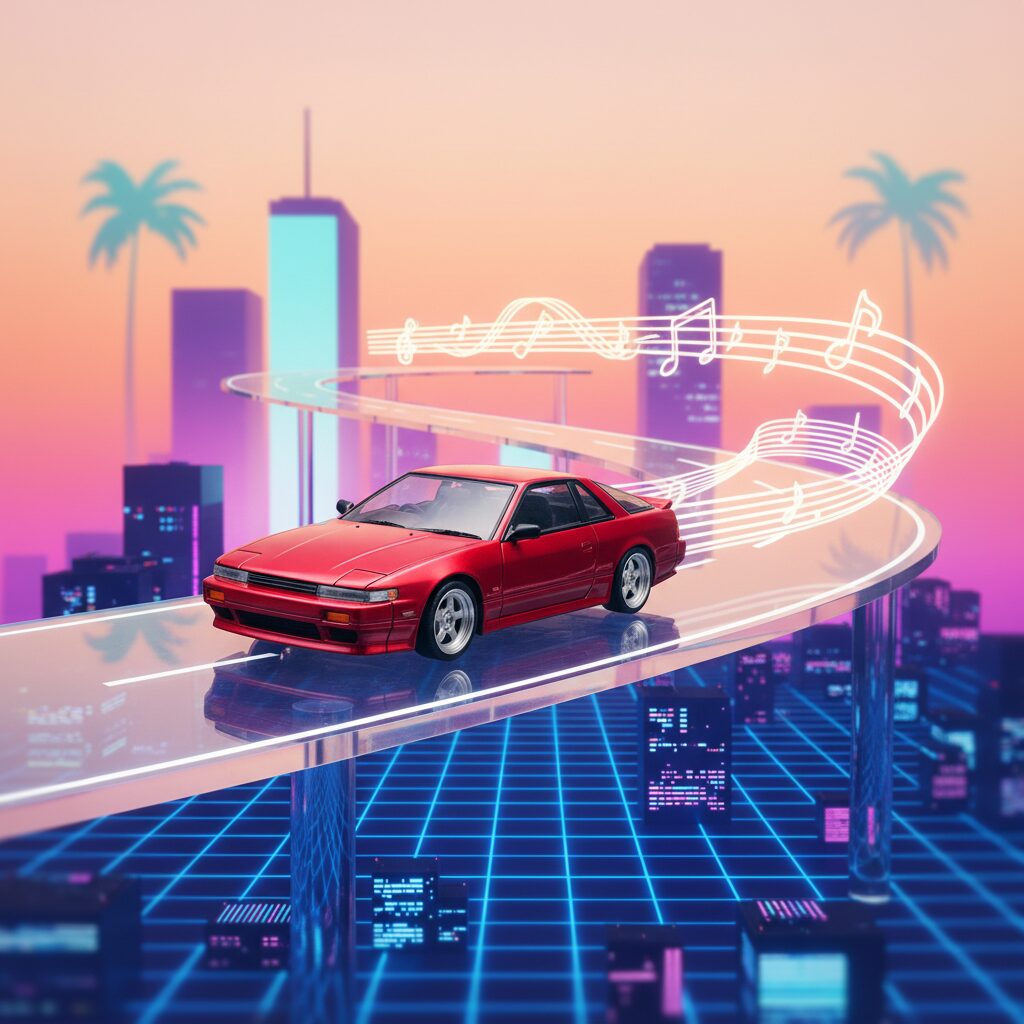
This economic boom completely transformed Japanese society and created the ideal environment for City Pop. A new urban consumer class emerged, with disposable income and a taste for luxury. Here is where technology and music intersect on a grand scale. Japanese electronics companies like Sony, Panasonic, and Kenwood led the world. The Sony Walkman, introduced in 1979, revolutionized music consumption, instantly giving you a personal soundtrack for your life. High-fidelity component stereo systems, or “compo,” became status symbols for the home. And then there were the cars. The 1980s witnessed the rise of the high-tech Japanese automobile, known as “date cars,” like the Toyota Soarer or Nissan Silvia. These vehicles were not just transport from A to B; they were mobile entertainment cocoons, loaded with features like digital dashboards, plush interiors, and crucially, high-end cassette decks and graphic equalizers. What do you need when you have an incredible car stereo? You need incredible-sounding music to play on it. City Pop was crafted for this. The production was flawless. Top-notch session musicians, legendary producers and arrangers, and massive recording budgets were standard. The music was clean, dynamic, and richly layered—perfect for showcasing that new Pioneer system. It was aspirational music for an aspirational era, the sound of a country convinced the party would never end.
The Art of the Vibe: Cover Art and Aesthetics
City Pop’s vibe is not just auditory; it’s a fully immersive visual aesthetic, and the genre can’t be discussed without mentioning its iconic album covers. Long before the music was rediscovered by the YouTube algorithm, cover art was a crucial part of the experience. It served as the visual gateway into the fantasy world the music promised. Artists like Hiroshi Nagai and Eizin Suzuki are as legendary as the musicians for whom they designed. Their work defined the City Pop look, establishing a cohesive visual language that is instantly recognizable.
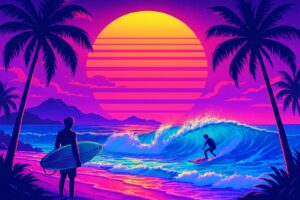
Consider the recurring imagery: endless summer days, pristine swimming pools with no one in sight, sleek and stylized American cars from the 1950s and 60s (like Cadillacs and Chevrolets), and palm trees silhouetted against a setting sun. The colors are vivid and crisp—impossibly blue skies, pastel-colored buildings, and the warm orange glow of twilight. It’s a very specific brand of paradise. Interestingly, this imagery was not a direct reflection of 1980s Japan. Tokyo is a dense, often gray metropolis, and palm trees don’t line every street. Instead, this was a Japanese interpretation of an idealized American lifestyle, especially the breezy, sun-soaked luxury of places like California, Miami, or Hawaii. It was pure escapism. The art promised a world of leisure, wealth, and endless vacation—suggesting that listening to this record was like taking a mini-holiday from the pressures of urban life.
This visual branding was essential. In record stores, the cover had to captivate you instantly. It needed to communicate the album’s mood at a glance. It sold not just music, but a lifestyle. This aesthetic plays a massive role in City Pop’s revival in the internet age. On a screen filled with thumbnails, these clean, geometric, and evocative images stand out. They feel both retro and timelessly modern, perfectly suited for the curated visual realms of Instagram and Pinterest. The art prepares you for the music, setting the scene for the smooth, luxurious soundscape that follows. It’s a flawless marriage of sound and vision, both selling a dream of a perfect, stylish, and carefree world.
Lyrical Escapism: The Stories City Pop Tells
Once you get beyond the slick production and catchy melodies, the lyrics of City Pop songs reveal another dimension of this carefully curated fantasy. Like the album art, the lyrical themes offer a form of escapism, focusing on personal lives and leisure activities of the new urban class. This marked a deliberate shift away from the more socially conscious folk and rock music of the 60s and 70s. The 80s emphasis was inward-looking, centered on romance, fun, and personal experience; hardship, politics, and social commentary were nearly absent.
The city itself emerges as a central character in these songs. Numerous tracks celebrate the magic of the Tokyo skyline at night, the solitude of a high-rise apartment, or the thrill of meeting someone new in bustling districts like Shinjuku or Roppongi. The metropolis serves as a playground, a backdrop for romance and adventure. Love, naturally, is the dominant theme. But it’s a very specific kind of love story: fleeting summer romances, the bittersweet ache of love that can’t last, the thrill of a secret rendezvous, or the melancholy of waiting by the phone for a call that might never come. The lyrics tend to be poetic and evocative rather than straightforward, creating a mood of sophisticated longing.
And then there’s the drive. The car, the highway, and the seaside form an essential trinity in City Pop’s lyrical world. Songs paint vivid imagery of cruising down the expressway at midnight, city lights blurring into streaks. They sing of escaping the concrete jungle for a weekend trip to the coast, wind in your hair, ocean stretching to the horizon. This theme resonated deeply because it was a tangible fantasy for many young Japanese people at the time. Owning a car meant freedom. It meant escaping the rigid structure of work and daily life. The seaside drive was the ultimate expression of that freedom. The lyrics captured that feeling perfectly—the blend of liberation, romance, and a hint of melancholy as the sun sets and the weekend draws to a close. These narratives, set to a soundtrack of smooth grooves, created an ideal loop of aspirational fantasy, depicting a world where the biggest problems were matters of the heart, and the solution was often just a long drive with the right music on the stereo.
The Playlist: Your Sonic Roadmap for a Coastal Cruise
Alright, theory time is done. Let’s dive into the good stuff. You’re behind the wheel, the Pacific Ocean is shimmering, and you need the perfect playlist. This isn’t just any list; it’s a carefully crafted journey. We’ll organize it by time of day, shaping the ideal sonic flow for your seaside escape. Every track here is a certified hit and a vital piece of the City Pop mosaic. Crank it up.
Part 1: Afternoon Escape – Leaving the City Behind
The sun is high, you’ve just escaped the city traffic, and the open road lies ahead. You want energy, optimism, and a beat that urges you to speed up. This is the soundtrack for that first sight of the ocean.
Tatsuro Yamashita – “Ride on Time” (1980)
You’ve got to start with the king. Tatsuro Yamashita is one of City Pop’s founding fathers, a brilliant songwriter, producer, and singer. “Ride on Time” is his ultimate feel-good anthem. From the moment the iconic a cappella intro erupts into a powerful brass fanfare and driving rhythm, you know it’s going to be a wild ride. The song was a huge hit, featured in a Maxell cassette tape commercial starring a young Yamashita himself. The lyrics radiate pure optimism—a call to seize the moment and set your blue heart on fire. The production is incredible, with layered vocals, a killer rhythm section, and a sax solo that will fuel your coastal drive all the way. This isn’t just a song; it’s your drive’s manifesto. Seriously.
Anri – “Last Summer Whisper” (1982)
As you settle into cruise mode, you want something smoother yet still breezy. Anri is the queen of summer-themed City Pop, and this track is pure silk. It’s from her Heaven Beach album and sounds exactly like it. The vibe is sophisticated and relaxed. Gentle Rhodes piano, subtle congas, and a warm walking bassline create a perfect groove. Anri’s voice is effortless and cool. The lyrics carry a hint of nostalgia for a fading summer romance, but the mood is more sweet than sorrowful. It’s the ideal soundtrack for watching afternoon clouds drift by—a mellow, groovy tune that captures the carefree spirit of the era.
S. Kiyotaka & Omega Tribe – “Asphalt Lady” (1984)
The title says it all. Omega Tribe, led by Kiyotaka Sugiyama’s smooth vocals, were masters of the driving anthem. Their entire brand revolved around summer, the sea, and romance. “Asphalt Lady” is a classic car-themed City Pop track. It features a punchy, synth-driven beat and a chorus dripping with 80s gold. The production is slick, with layers of synthesizers, reverberated drums, and a soaring guitar solo. The lyrics tell the tale of chasing a mysterious woman in a sports car down the highway. It’s a bit cheesy, sure, but delivered with so much style and energy that you can’t help but get swept up. This is a windows-down, volume-up vibe all the way.
Part 2: Golden Hour – The Sun Dips Low
The sky turns orange and pink. The light softens, and the mood shifts from lively excitement to romantic introspection. It’s time for smooth, AOR-infused grooves.
Toshiki Kadomatsu – “If You…” (1984)
Toshiki Kadomatsu is a titan of the genre, famous for funky basslines and sophisticated arrangements. He produced and wrote for many artists, but his solo work is top-tier. “If You…” is a lesson in smooth. The groove is hypnotic, built on a sleek bassline and tight drum machine patterns. Kadomatsu’s vocals are cool and controlled, while lush synth pads and jazzy guitar licks fill the track. Listening to it just makes you feel cooler. It’s perfect for that moment when the sun meets the horizon and streetlights begin to glow. Pure coastal cruise magic.
Miki Matsubara – “Mayonaka no Door / Stay With Me” (1979)
You knew this was coming. This song is City Pop for many outside Japan. Thanks to the internet, “Stay With Me” became a viral sensation decades after its release. And deservedly so—it’s a flawless pop tune. Starting with that iconic intro and Miki Matsubara’s powerful, pleading vocals, the arrangement is impeccable, featuring a memorable sax hook, funky bassline, and an unforgettable chorus. Though it has a danceable beat, the lyrics express melancholy—a plea for a lover to stay past midnight. That blend of groovy rhythm and sadness is classic City Pop. It fits perfectly with twilight, the “blue hour,” where day’s joy melts into night’s loneliness.
Junko Ohashi – “Telephone Number” (1984)
Let’s raise the energy just a bit as city lights twinkle on the horizon. Junko Ohashi is an incredible vocalist, and “Telephone Number” is pure funk fire. This track is an absolute groove machine, driven by a killer slap bass and vibrant horn section. It’s a fun, flirtatious song about hoping to get a crush’s number. Unlike the more melancholic tunes, this one shows City Pop’s sophisticated, urban party side. It’s the perfect jam to hype you up for the night ahead, highlighting the genre’s deep disco and funk roots.
Part 3: Night Drive – The Blue Vibe Takes Over
The sun has set. The sky deepens to indigo. You’re cruising beneath the stars, the city shimmering in the distance. The vibe is now fully blue—introspective, melancholic, and beautiful. This is the time for deep cuts and atmospheric gems.
Taeko Onuki – “4:00 A.M.” (1978)
Taeko Onuki is one of City Pop’s most respected and artistically ambitious figures, a former member of the legendary band Sugar Babe with Tatsuro Yamashita. Her music often carries a melancholic, jazzy, and European tone. “4:00 A.M.” is her signature piece, a masterpiece of late-night reflection. The mood is instantly set by lonely Rhodes piano and Onuki’s haunting, ethereal vocals. The lyrics speak to being awake in the lonely pre-dawn hours, thinking of lost love. The arrangement builds gently, with beautiful strings and a soulful, understated guitar solo. This song is the blue vibe—quiet reflection, gazing out at the dark ocean, lost in thought. It’s heartbreakingly beautiful.
Tomoko Aran – “Midnight Pretenders” (1983)
Another track revived by the internet, notably sampled by The Weeknd, “Midnight Pretenders” epitomizes late-night cool. Produced by the legendary Makoto Matsushita, it features a slow, slinky groove, dreamy synth melodies, and an unforgettable sax riff that echoes urban loneliness. Tomoko Aran’s breathy, mysterious voice perfectly suits the lyrics about lovers playing games and pretending after midnight. This song feels like the soundtrack to a stylish neo-noir film, perfect for cruising past hazy coastal town lights. Sad and stylish all at once.
Makoto Matsushita – “First Light” (1981)
Let’s close the drive with an instrumental. Makoto Matsushita, a genius guitarist, producer, and arranger behind many great City Pop works, delivers his solo masterpiece with First Light. The title track is a stunning instrumental AOR piece, driven by smooth, melodic guitar over lush keyboards and a rock-solid rhythm section. Without words, it conveys pure mood—hopeful like the first dawn rays after a long night. It’s the perfect closer for your journey, leaving you in peaceful contemplation as you finally pull over and kill the engine, letting the real ocean waves take over.
The Digital Ghost: Why City Pop Haunts the Internet
So, why are we discussing this music in the 2020s? For decades, City Pop remained a cultural artifact mostly limited to Japan, a relic of a bygone era. However, over the past ten years, it has surged into a global phenomenon, a musical ghost revived through the internet. Its resurgence offers a fascinating case study in internet culture, algorithms, and a shared global nostalgia for a past that most new fans never actually experienced.
The earliest signs of this revival emerged from an unexpected source: Vaporwave. In the early 2010s, this electronic microgenre arose, built on chopping, screwing, and sampling smooth jazz, lounge music, and, unsurprisingly, 80s Japanese City Pop. Vaporwave artists were drawn to City Pop’s polished production and its inherent vibe of corporate, technological futurism. They repurposed these sounds, often with irony or a critique of consumer capitalism, thereby introducing the original material to a fresh, internet-savvy audience.
Then came the YouTube algorithm—this was the pivotal moment. Around 2017, for reasons still unclear, YouTube’s recommendation system began heavily promoting a bootleg upload of Mariya Takeuchi’s 1984 track “Plastic Love” to millions worldwide. Viewers listening to unrelated content suddenly encountered this irresistibly catchy, melancholic Japanese song from the 80s. Comment sections filled with questions like, “How did I get here?” and “Why is this 40-year-old Japanese song so good?” “Plastic Love” became the entry point. Following this, the algorithm, supported by devoted fan channels and curators, helped uncover and share other treasures. Miki Matsubara’s “Stay With Me” enjoyed a similar viral surge on TikTok, connecting the sound to an even younger audience.
Yet, the algorithm alone doesn’t explain the profound emotional bond people have with this music. The attraction lies in a concept called “anemoia”: nostalgia for a time you’ve never experienced. City Pop is the ultimate anemoia trigger. It captures the essence of a very specific era and place—a prosperous, technologically advanced, optimistic 1980s Japan. It offers a vision of the past that seems cleaner, simpler, and more stylish than today’s chaotic world. For many young people now facing economic uncertainty and relentless negative news, the unapologetic optimism and polished escapism of City Pop are deeply appealing. It’s a sonic gateway to a lost future, a dream of a world on the cusp of emergence, and listening to it feels like reconnecting with that forgotten sense of possibility.
Beyond the Nostalgia: Finding the ‘Blue Vibe’ in Modern Japan
After a long drive immersed in these sounds of the past, a question might linger: is that Japan gone forever? Is the “blue vibe” of City Pop merely a museum piece, something experienced only through headphones? Was that entire era of boundless optimism and stylish melancholy just a fluke, a fever dream fueled by a speculative bubble that notoriously and harshly burst in the early 90s, ushering in decades of economic stagnation?
The answer is complex. In many ways, yes, the Japan that created City Pop is gone. The wild, unbridled economic confidence has given way to a more cautious, pragmatic, and arguably more realistic national mood. The futuristic glow of the 80s has settled into the comfortable, lived-in reality of today. You won’t find the exact same cultural energy that gave rise to these songs.
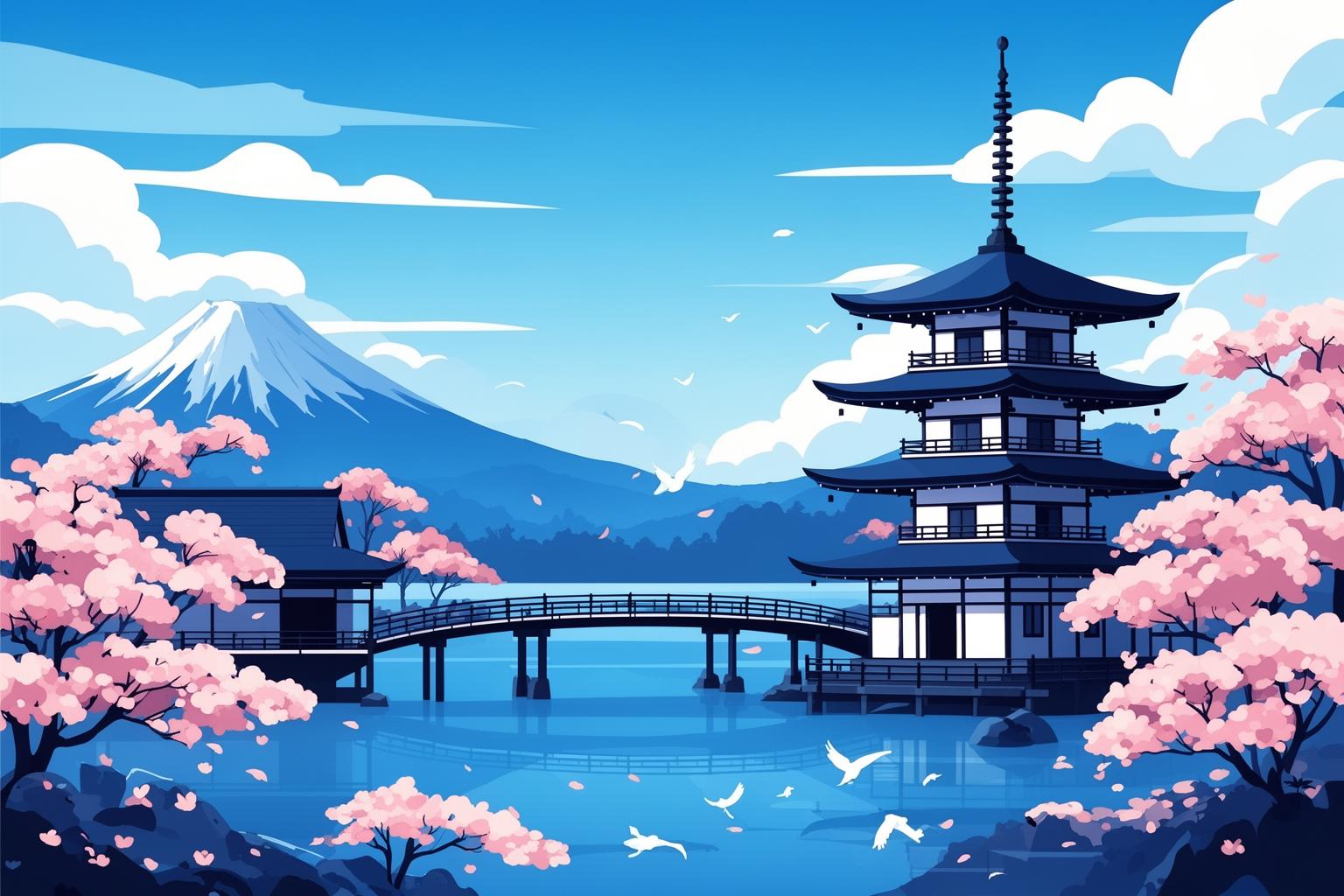
But the core emotions that City Pop embodies? Those remain timeless and deeply rooted in Japanese culture. The appreciation for transient, bittersweet beauty, known as mono no aware, is a prime example. It’s the gentle sadness in the beauty of cherry blossoms, knowing they will soon fall. It’s the feeling when watching a perfect sunset, aware that the vibrant colors are fleeting. This is the emotional heart of the “blue vibe.” It’s the melancholy beneath an upbeat pop tune, the sadness in the saxophone solo, the longing in lyrics about a summer romance ending. That feeling persists. You can sense it standing on a train platform late at night, or when you’re the last person at a quiet bar, or, yes, on a long drive as the day fades.
The desire for escapism, for a brief and beautiful respite from the demands of a highly structured society, remains a potent force. The seaside drive endures as a classic Japanese pastime, a ritual of liberation. You can still cruise down the Izu Peninsula or along the coast of the Seto Inland Sea and see the same dramatic shores and twinkling city lights that inspired these songs. The landscape of that dream still exists.
Ultimately, City Pop serves as a powerful lens. It’s a key that unlocks and sharpens a specific set of feelings that have always been part of the Japanese experience. It gives a name and a sound to that complex blend of joy, freedom, nostalgia, and gentle sadness. It’s not just a retro music genre. It’s a cultural artifact that explains a dream. And while the 1980s have passed, the act of dreaming—looking out at the horizon and feeling a mix of hope and melancholy—is a vibe that will never go out of style. Bet.