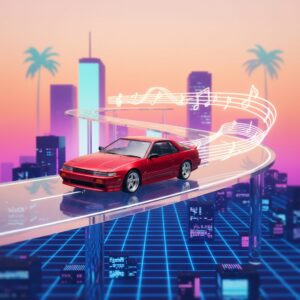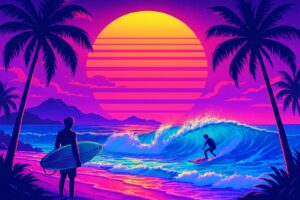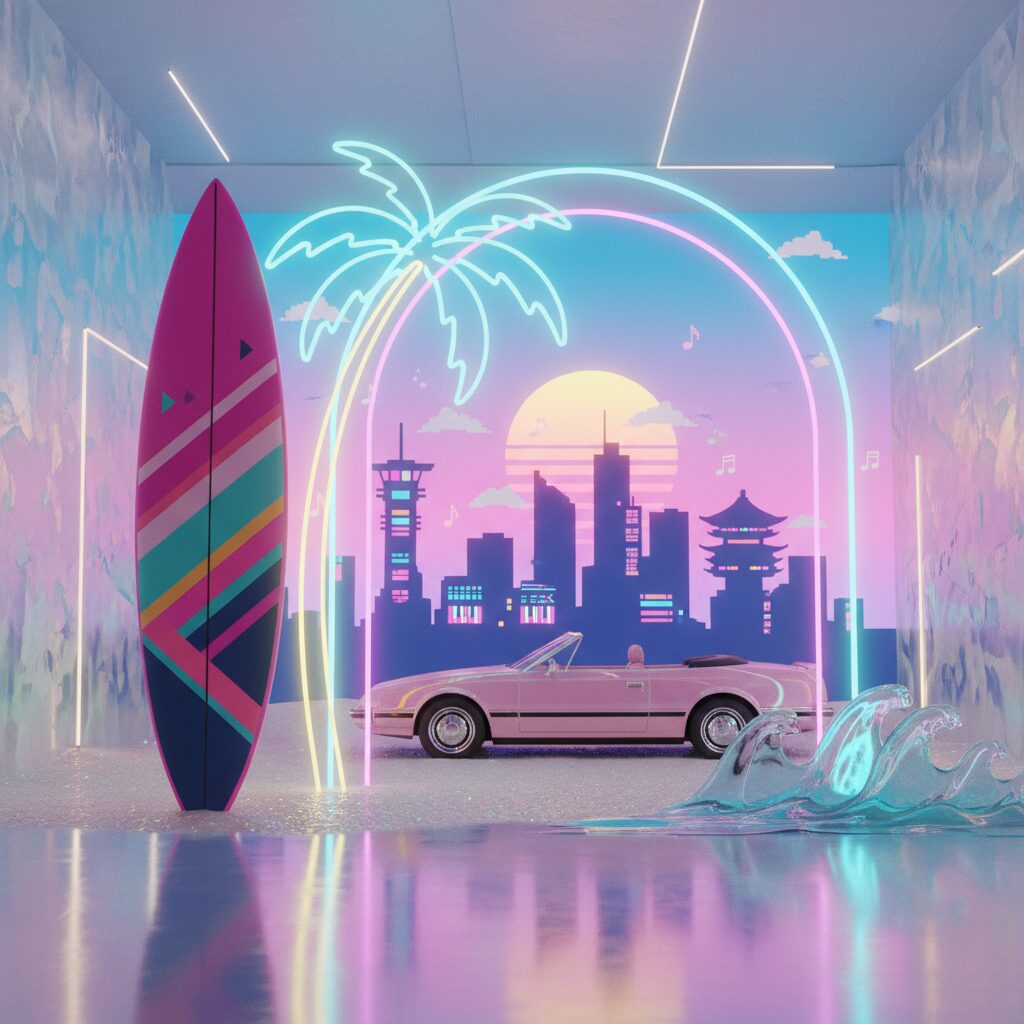
Hey loves, Sofia here! Let’s talk about a vibe. A whole mood. You know the feeling. You’re scrolling late at night, and the algorithm blesses you with a track. It’s Japanese, from like, the 80s. The thumbnail is a pastel dreamscape of a lonely highway curving along a turquoise coast. You hit play, and instantly, you’re not in your bedroom anymore. You’re behind the wheel of a convertible, top down, with a warm, salty breeze messing up your hair. You feel this insane wave of nostalgia for a summer you’ve never lived, in a city you might have only seen in pictures. What is this magic? No cap, you’ve just been pulled into the irresistible slipstream of City Pop. It’s more than just a genre; it’s a time machine on four wheels, a perfectly engineered fantasy of urban escape that feels more real than reality itself. So many of you have asked me, “Sofi, what is the deal with this 80s Japanese music? Why does it feel like I’ve known it my whole life?” And honestly, that’s the million-yen question. It’s a sound so deeply tied to a specific time and place—Japan during its hyper-capitalist ‘Bubble Era’—yet it feels universal. It’s the sound of optimism, of endless possibility, of a future that felt as bright and clean as the album art it came in. Specifically, it’s the soundtrack to the ultimate fantasy: the seaside freeway drive. It’s the ‘Surf & Blue’ vibe, the sonic equivalent of watching the city skyline shrink in your rearview mirror as you chase the sunset along the coast. But why this specific fantasy? Why did a whole generation of Japanese musicians become obsessed with capturing this single, perfect moment? To get it, we have to look past the music and into the heart of a society that was sprinting towards the future, decked out in designer clothes and fueled by ambition. Buckle up, because we’re about to take a deep dive into the sun-drenched, melancholic, and utterly captivating world of City Pop, and figure out why its call to hit the open road still slaps so hard today.
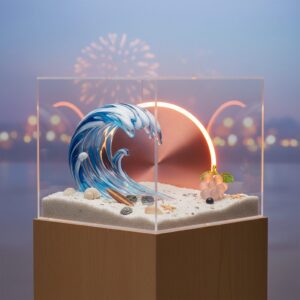
To truly understand this coastal fantasy, you need to explore the real-world inspiration behind it, which is perfectly captured in the iconic Shonan Coast.
The Vibe Check: Japan’s Bubble Economy and the Birth of a Mood
To truly grasp City Pop, you need to understand its context. This music didn’t emerge in isolation; it was the tailor-made soundtrack for one of the most extraordinary economic booms in modern history. We’re talking about Japan in the late 1970s and, most notably, the 1980s. This was the famed “Bubble Economy” (baburu keiki), a time of such unprecedented prosperity that it effectively rewired the country’s entire cultural framework. It was an era when Tokyo’s real estate was said to be worth more than all of California’s, and tales of people using 10,000 yen bills to hail taxis weren’t just anecdotes—they were status symbols. This period marked the ultimate transformation. The nation had risen from post-war devastation to become a global economic powerhouse, and that confidence was absolutely electric. It was a moment when Japan took center stage on the world stage.
From Post-War Hardship to Penthouse Elegance
Consider the generation before: they were shaped by scarcity, rebuilding, and sacrifice. Their children, coming of age in the 70s and 80s, entered a completely different world. They were the first to grow up with abundance, leisure, and the luxury of choice. The national mindset shifted from collective recovery to individual enjoyment. Life was no longer solely about working tirelessly for the company; it was about savoring the rewards of that labor. This shift brought new fashions, new technologies, and new ambitions. It was about crafting a lifestyle that was sophisticated, cosmopolitan, and unabashedly materialistic. This emerging urban class had disposable income, and they sought experiences and goods that mirrored their polished new reality. They wanted to feel modern, stylish, and free. Music, like everything else, had to complement that sleek, high-end image. It had to sound like a penthouse overlooking the city lights, like a perfectly blended cocktail at a luxury hotel bar, like the sensation of boundless possibility.
The American Dream, Reimagined in Tokyo
The aesthetic of this fresh lifestyle was profoundly—and I mean profoundly—influenced by the West, especially the United States. America, and California in particular, symbolized the epitome of cool, relaxed living. It was a dreamland of beaches, big cars, Hollywood glamour, and a laid-back vibe that contrasted sharply with Japan’s traditionally strict and congested urban life. Japanese media and advertising were flooded with this idealized image of Americana. This wasn’t mere imitation; it was a deliberate process of selection and reinterpretation. Japanese creators borrowed elements from American culture—the music, fashion, and architecture—and polished them, removing any roughness to form a more refined, flawless version. City Pop is the sound that embodies this process. It blends American AOR (Adult-Oriented Rock), soul, and funk through a Japanese lens of precision, subtlety, and meticulous craftsmanship. The outcome was a sound that felt both aspirational and intimately familiar, a fantasy of a distant place you could enjoy through your own state-of-the-art stereo system.
Deconstructing the Groove: The Sonic DNA of City Pop
So, what does this economic boom and cultural shift actually sound like? It sounds expensive. City Pop production values were incredibly high. This was the era of large studio budgets, superstar session musicians, and a shared obsession with crafting the perfect, polished sound. This music wasn’t produced in a garage; it was created in cutting-edge studios by absolute professionals. The aim was to develop a sound that was smooth, sophisticated, and effortlessly intricate. It’s a sonic blend, a masterfully woven mix of genres coming together to form something uniquely its own. It’s the kind of music you can play softly at a party and it still sounds fantastic, but if you put on quality headphones and really focus, you’ll discover layers of astonishing musicianship and intricate arrangements that are simply mind-blowing.
More Than J-Pop: A Fusion of Funk, Soul, and AOR
First, let’s clarify one thing: City Pop is not the same as the J-Pop you might associate with the ’90s or today. It’s the more refined, mature older sibling. Its musical roots reach deeply into American genres. You can hear the tight, syncopated rhythms reminiscent of funk bands like Earth, Wind & Fire. You can sense the smooth, melodic sensibility and complex jazz harmonies of AOR groups like Steely Dan and The Doobie Brothers. There’s a significant influence of breezy West Coast soft rock, touches of Philly soul’s lush string arrangements, and even the dancefloor-ready energy of disco and boogie. The Japanese artists and producers behind this music were serious students of these styles. They weren’t merely imitating; they were absorbing these influences and synthesizing them into a fresh form. They merged the groove of funk, the polish of AOR, and the sweetness of pop with a distinctly Japanese melodic sensibility. The outcome is a sound that’s both technically impressive and emotionally resonant—catchy yet complex.
The Anatomy of a Track: Slap Bass, Shimmering Synths, and Breezy Vocals
If you were to construct a quintessential City Pop track from scratch, there are a few essential components you’d need. The foundation is almost always an impossibly tight rhythm section. The bass lines are iconic—often played using a funky, percussive “slap” technique that propels the song forward and makes it impossible not to move. The drumming is precise and clean, locking into a groove that’s both relaxed and driving. Layered atop this, you have the keyboards. The Fender Rhodes electric piano is a defining sound, delivering warm, bell-like chords that feel like sunshine. Then come the synthesizers, such as the Yamaha DX7, which add a shimmering, glassy texture and those signature brass stabs. A true horn section—saxophones, trumpets, trombones—often swoops in to introduce waves of cinematic energy, especially during solos or bridges. The guitar work is clean and polished, frequently featuring jazzy chords and smooth, melodic solos. Floating above it all are the vocals. City Pop singers typically possess smooth, clear voices, delivering melodies often tinged with a sweet sense of melancholy or longing, even when the music itself is upbeat. It’s this combination of elements, this careful layering of sounds, that creates the rich, immersive world of a City Pop song.
The English Garnish: A Sprinkle of “Cool”
One of the most charming and distinctive features you’ll notice is the generous use of English words and phrases sprinkled throughout the Japanese lyrics. Expressions like “I love you,” “Just for you,” or “Summertime sadness” appear unexpectedly. From a contemporary global perspective, this can sometimes seem a bit random or even nonsensical. But back then, it was the height of cool. It was a stylistic choice, a linguistic accessory. English was the language of the American pop songs they admired, and incorporating it into their own music was a way to signal sophistication and a connection to that broader, glamorous world. It wasn’t necessarily about literal meaning; it was about the feel, the phonetic texture, and the cosmopolitan vibe it brought to the track. It was the final flourish on the sonic cocktail, a small touch of the exotic that made the entire fantasy feel more complete.
Main Character Energy: The Freeway as a Cinematic Escape
Now we arrive at the core of the matter. Why the fascination with driving? Why does so much of this music—in its sound, lyrics, and visual style—center around the car and the open road? In 1980s Japan, the car was more than just transportation from point A to point B. It was a symbol. A personal spaceship, a mobile sanctuary of freedom and privacy in an often crowded and conformist society. Driving, especially for leisure, emerged as a powerful new form of self-expression.
More Than a Road: The Highway as a Symbol of Freedom
For a generation living amid Tokyo’s dense urban sprawl, the newly constructed highways and coastal expressways felt like escape routes to a different world. Places such as the Shonan coast, with its beaches and relaxed surf culture, or the scenic drives around the Izu Peninsula became popular weekend getaways. Merging onto the on-ramp and pressing the accelerator was both a literal and figurative departure from the pressures of the workweek. The freeway symbolized modernity, speed, and a direct path to a calmer state of mind. The highway’s architecture—the sweeping curves, tunnels, and bridges spanning the bay—was futuristic and thrilling. Driving along Tokyo Bay, with endless water on one side and the sparkling skyline on the other, offered a deeply cinematic experience. It was an ideal backdrop for a personal movie, and every movie needs its soundtrack.
The Soundtrack to a Scene: Music for Your Inner Film
City Pop was created to fill this space. It was music crafted to amplify this specific cinematic vibe. The driving beat of Tatsuro Yamashita’s “Ride on Time” captures the sensation of acceleration, the world rushing past your window. The shimmering synths in Omega Tribe’s tracks reflect sunlight sparkling on the ocean’s surface. A soaring saxophone solo feels like wind in your hair crossing a long bridge at dusk. The lyrics frequently evoke summer, the sea, the breeze, golden hour, city lights at night, cruising, and rendezvous. This music wasn’t meant just to be played in the car; it was designed to fuse with the driving experience, turning a simple ride into a meaningful, romantic journey. It allowed listeners to feel like the star of their own cool, moody road movie—even when stuck in traffic heading to the beach.
The Car as Your Private Booth
Another major factor was technology. The 1980s marked the golden age of the car stereo. High-fidelity cassette decks, graphic equalizers, and powerful speakers transformed the car’s interior into a private listening booth. It was a personal space under your control, where you could shut out the outside world and immerse yourself in a carefully curated audio environment. The mixtape culture was huge. People spent hours assembling the perfect playlist for different drives—a daytime beach mix, a romantic sunset set, or an energetic nighttime cruising collection. City Pop, with its polished production and dynamic range, sounded amazing on these systems. It was the ideal music to blast with the windows down, creating a personal bubble of cool as you moved through the world. The car became both venue and stage, with the driver as DJ and audience combined.
The Architects of the Dream: Meet the City Pop Pantheon
While City Pop encompassed a wide movement with countless artists, a few key figures emerge as the primary architects of the ‘Surf & Blue’ sound. These are the musicians whose work defined the genre and continues to serve as the gateway for new listeners today. They were not just performers; they were world-builders, crafting complete aesthetic experiences that extended far beyond the music itself.
Tatsuro Yamashita: The King of Coastal Cruising
If there is one undisputed king of City Pop, it’s Tatsuro Yamashita. He is the master, the ultimate craftsman of the genre. A brilliant songwriter, arranger, producer, and vocalist, his work is the gold standard. Yamashita’s music is marked by its incredible complexity, drawing heavily on American pop traditions like Brian Wilson of The Beach Boys and the tight vocal harmonies of doo-wop, reimagined within a funk and soul framework. His albums, especially classics like For You (1982) and Ride on Time (1980), serve as the quintessential driving records. His sound is expansive, layered, and relentlessly optimistic. The production is so pristine you could eat off it. Listening to a Yamashita track is like stepping into a heightened version of summer. The horns are brassier, the harmonies sweeter, and the groove deeper. His music captures the essence of a perfect day with not a cloud in the sky.
Case Study: The ‘For You’ Album Art and Sound
You cannot discuss Tatsuro Yamashita without mentioning the iconic album art that accompanied his music, especially the work of illustrator Eizin Suzuki. The cover of For You is a perfect example. It shows a classic American convertible parked beside a beachside building, framed by palm trees under a flawless blue sky. Noticeably, there are no people in the image. It’s an empty stage, a pristine scene inviting the listener to step in. The art perfectly conveys how the music is meant to make you feel. When you hear the first track, “Sparkle,” with its legendary, instantly recognizable guitar intro, the fantasy comes alive. The song bursts with pure, unfiltered joy. It’s the sonic equivalent of that album cover—a perfect gateway to a world of endless summer and coastal drives. The entire album maintains this mood, crafting a cohesive universe for listeners to inhabit for 40 minutes. It’s a masterclass in setting the tone.
Toshiki Kadomatsu: The Soundtrack for After Dark
If Tatsuro Yamashita embodies the bright, sunlit daytime drive, then Toshiki Kadomatsu is the master of the nocturnal cruise and resort party. His music often carries a harder, funkier edge, infused with stronger disco and boogie influences. Kadomatsu’s tracks are ideal for when the sun sets and city lights flicker on. Albums like After 5 Clash (1984) capture that sophisticated urban nightlife—the energy of heading into the city for a late-night rendezvous. His instrumental album Sea Is A Lady (1987) is another standout, a concept work where each track bears the name of a different beach or coastal spot. It’s pure atmosphere, blending jazz, funk, and fusion to perfectly evoke a warm evening at a seaside resort. Kadomatsu’s contributions added another dimension to City Pop, extending the fantasy from the drive itself to the glamorous destination at journey’s end.
Mariya Takeuchi’s “Plastic Love”: A Viral Anthem of Urban Melancholy
City Pop in the 21st century can’t be discussed without mentioning Mariya Takeuchi, particularly her track “Plastic Love.” Originally released in 1984, the song became an unexpected viral hit in the late 2010s thanks to a bootleg upload on YouTube. Its resurgence brought millions of new, international fans into the genre. What makes “Plastic Love” so enduring? It perfectly captures City Pop’s emotional duality. Musically, it’s an irresistible, danceable track with an infectious groove. Yet the lyrics tell a contrasting story—one of love and loneliness in the modern city, a sense of detachment, and the emotional games played in relationships. It’s a song about dancing through heartache. This juxtaposition of upbeat music with poignant lyrics creates a powerful melancholy, a bittersweet feeling that resonates deeply with listeners today. It proves that even within this sunny, optimistic genre, there was room for complex, mature emotions. Mariya Takeuchi, who is also married to Tatsuro Yamashita, is a phenomenal songwriter herself, representing the sophisticated, emotionally nuanced side of City Pop.
The Extended Universe: Omega Tribe and Anri’s Resort Pop
Beyond the major figures, a whole universe of artists contributed to the ‘Surf & Blue’ sound. Acts like S. Kiyotaka & Omega Tribe embodied what might be called “resort pop.” Their music explicitly revolved around vacation and escapism, with song and album titles referencing tropical locales and cocktails. Produced often by the talented Tetsuji Hayashi, their sound was a smooth fusion of AOR and synth-pop, designed to transport listeners directly to a poolside lounge chair. Similarly, singer Anri achieved massive hits like “Cat’s Eye” and “Kanashimi ga Tomaranai (I Can’t Stop the Loneliness),” blending danceable pop with classic City Pop refinement. Her album Timely!! (1983) is another essential artifact of the era, full of tracks perfect for both driving and dancing. These artists, along with many others, enriched the world of City Pop, proving that the fantasy of urban escape was a powerful and widespread cultural obsession.
Painting the Feeling: The Visual World of Hiroshi Nagai and Eizin Suzuki
The vibe of City Pop is inseparable from its visual identity. The album covers from this era are as iconic as the music itself and played a crucial role in shaping the listener’s experience. These images weren’t just random pretty pictures; they were thoughtfully crafted gateways into the fantasy world of the music. They served as the visual script for the sonic narrative. Two artists, in particular, are credited with creating the definitive look of City Pop: Hiroshi Nagai and Eizin Suzuki.
Blue Skies, Bluer Pools: The Nagai Aesthetic
When you think of a City Pop album cover, you are most likely envisioning the work of Hiroshi Nagai. His style is instantly recognizable and has become synonymous with the genre. Nagai’s paintings are hyper-realistic yet dreamlike, portraying a pristine, sunlit world inspired by the American West Coast. His signature elements appear everywhere: empty swimming pools with sharp, geometric shadows; modern, minimalist architecture; classic American cars; and endless, impossibly blue skies, often featuring a solitary blimp drifting by. Similar to Eizin Suzuki’s work, his paintings rarely include people. This is intentional. The absence of figures makes the scene feel universal, inviting the viewer—the listener—to project themselves into that perfect, tranquil space. His art is clean, calm, and slightly surreal, capturing a feeling of serene, stylish solitude. Viewing a Nagai cover while listening to the music creates a powerful sense of immersion. His art isn’t merely a cover; it’s the destination the music invites you to.
American Nostalgia on a Japanese Canvas: The Suzuki Style
Eizin Suzuki, whom we mentioned alongside Tatsuro Yamashita, had a slightly different but equally influential style. While Nagai’s work is cool and minimalist, Suzuki’s is vibrant, detailed, and animated. His art draws heavily on American pop art and airbrush illustration techniques. His paintings brim with nostalgic Americana: classic cars from the ’50s and ’60s, roadside diners, jukeboxes, vintage gas stations, and couples enjoying a day at the beach. His color palette is bright and bold, featuring vivid primary colors that leap off the cover. His work conjures a romanticized, almost cartoonish vision of a bygone American era. For a Japanese audience in the ’80s, this wasn’t about reproducing reality; it was about capturing the feeling of that culture—the sense of fun, freedom, and romance they associated with it. Suzuki’s art provided the perfect visual narrative for the upbeat, cruising anthems of artists like Yamashita.
It’s Not Just an Album Cover, It’s a Lifestyle Ad
Ultimately, these album covers acted as advertisements for a lifestyle. They were selling a dream. They told you that by buying this record, you were also buying into a world of sophistication, leisure, and cool. In an era before music videos were widespread, album art served as the primary visual element of the music. It had to carry the full weight of setting the mood and telling the story. The art of Nagai and Suzuki succeeded because it perfectly captured the aspirational fantasies of the time. It gave a face to the feeling everyone was chasing: the sensation of a perfect, endless summer day, with the perfect soundtrack playing in the background. This powerful fusion of sound and image is a major reason why City Pop has left such a lasting legacy.
The Echo in the Algorithm: Why We’re All Vibing to City Pop Now
So, that was the 80s. But the story didn’t end there. After the Japanese economic bubble burst in the early 90s, City Pop quickly fell out of fashion. It became viewed as a relic of an embarrassing, extravagant past. The optimistic sound no longer matched the more cynical and economically uncertain reality of the “Lost Decade.” For years, these records gathered dust in discount bins. So how, decades later, did this music find a massive new global audience, many of whom weren’t even alive when it was created? The answer, in one word, is the internet.
The Great Unearthing: YouTube as a Digital Crate Digger
Beginning in the 2010s, something remarkable started happening on YouTube. A few passionate music lovers began digitizing and uploading rare Japanese records from the 70s and 80s. These were tracks unavailable on Spotify or Apple Music, existing only in this gray area of the internet. Then, the YouTube algorithm started working its mysterious magic, recommending these songs to listeners of similar genres like funk, soul, and disco. The iconic, visually striking album art by Nagai and Suzuki served as perfect clickbait. Users would spot a beautiful pastel image, click out of curiosity, and instantly become hooked by the amazing music. The infamous “Plastic Love” upload is the most dramatic example of this phenomenon, but it happened with countless other songs, turning obscure tracks into global cult classics.
Vaporwave’s Ghost: Chopped, Screwed, and Reborn
Simultaneously, a new microgenre called Vaporwave was emerging. Vaporwave artists were intrigued by the corporate, consumerist aesthetics of the 80s and 90s. They sampled music from the era—often smooth jazz, lounge music, and naturally, City Pop—and slowed it down, chopped it up, and drenched it in reverb. This produced a hazy, dreamlike, and often eerie sound that resembled the ghost of a deserted shopping mall. City Pop was a treasure trove for Vaporwave producers. Its sleek, high-quality production and nostalgic vibe made it ideal raw material. This process introduced City Pop’s melodies to a whole new generation of hyper-connected listeners, even if in a warped and distorted form. Many who got into Vaporwave eventually sought out the original, unaltered samples, creating yet another route of discovery back to the source.
A Nostalgia for a Time You Never Knew
So, why does this music resonate so deeply today? I believe it’s because City Pop provides a distinct kind of escapism that is especially appealing in our chaotic present. It’s not just nostalgia; it’s what some call “anemoia”—a longing for a time you’ve never experienced. The world City Pop depicts is clean, simple, and filled with gentle, uncomplicated optimism. It’s a fantasy of a past that was also a future—a time when things seemed to be improving, technology was exciting, and leisure was a meaningful pursuit. In an age of information overload, political unrest, and environmental worry, City Pop’s endless summer allure is more seductive than ever. It offers a sonic safe haven, a four-minute getaway to a perfect, sunlit beach that exists only in our collective imagination. For a moment, that fantasy feels wholly and utterly real.
The Reality Behind the Filter: Unpacking the City Pop Fantasy
Now, for a dose of reality. It’s easy to get swept up in the romance of City Pop and picture 1980s Japan as if it were a Hiroshi Nagai painting. But that misses the point. It’s important to remember that this music was selling a fantasy, not capturing reality. For the vast majority of Japanese people at the time, daily life was far removed from the breezy, leisurely lifestyle portrayed in the music.
The Salaryman’s Weekend Dream
The economic miracle of the 80s was supported by the “salaryman,” the corporate soldier known for grueling long hours, fierce loyalty to their company, and a culture of almost obligatory after-work drinking with colleagues. Most lived with crowded commutes on packed trains, cramped apartments, and overwhelming social and professional pressures. The world of City Pop—the sports car, the seaside resort, the carefree romance—was not everyday life. It was the weekend dream. It was the reward for enduring a grueling 60-hour workweek. That seaside drive was a rare and precious escape from a highly regimented, demanding existence. This backdrop makes the music even more poignant. It wasn’t the soundtrack to an existing reality but the aspirational anthem of the life everyone wished they were living. It was music as a destination, a means of transformation that let a weary office worker feel, even if only for a few hours on a Saturday, like the star of a glamorous film.
An Aspirational Soundtrack for a Nation on the Rise
In many ways, City Pop was a form of national self-care. It was a culture telling itself a beautiful story about who it was and what it could become. After decades of post-war hardship, Japan had “made it.” It was a time of immense national pride and confidence. The country led in technology and manufacturing, and its cities shimmered as symbols of modernity. City Pop was the musical expression of that confidence. It declared that Japan was no longer just an industrial giant, but also a hub of sophisticated, desirable culture. The music’s polished production and global influences mirrored Japan’s new status on the world stage. It was the sound of a nation embracing itself, celebrating its success, and dreaming of an even brighter future. The fact that this dream was built on a speculative economic bubble that would later burst only adds to the bittersweet nostalgia that now colors the music.
The Never-Ending Drive
So, what makes that seaside freeway drive so special? It’s a fantasy of perfect, effortless motion—moving forward, leaving your worries behind, accompanied by a stunning view and the ideal soundtrack. City Pop captured this sensation with such precision and artistry that it has outlasted its original era and place. It forged a sonic and visual language expressing a universal human longing: the yearning for escape, for beauty, for a moment of flawless, breezy freedom. It doesn’t matter if you’ve never driven along the Shonan coast or seen the Tokyo skyline from the Rainbow Bridge. When you play a City Pop record, you are instantly transported there. The genre’s lasting charm lies in its role as a time capsule—not necessarily of an actual past, but of a collective, imagined one. It stands as a tribute to a time when a nation dared to dream in bright, pastel hues, creating a soundtrack so powerful and enticing that the rest of the world is only now catching on, eager to join the journey. The road goes on forever, and the music never stops. No cap.