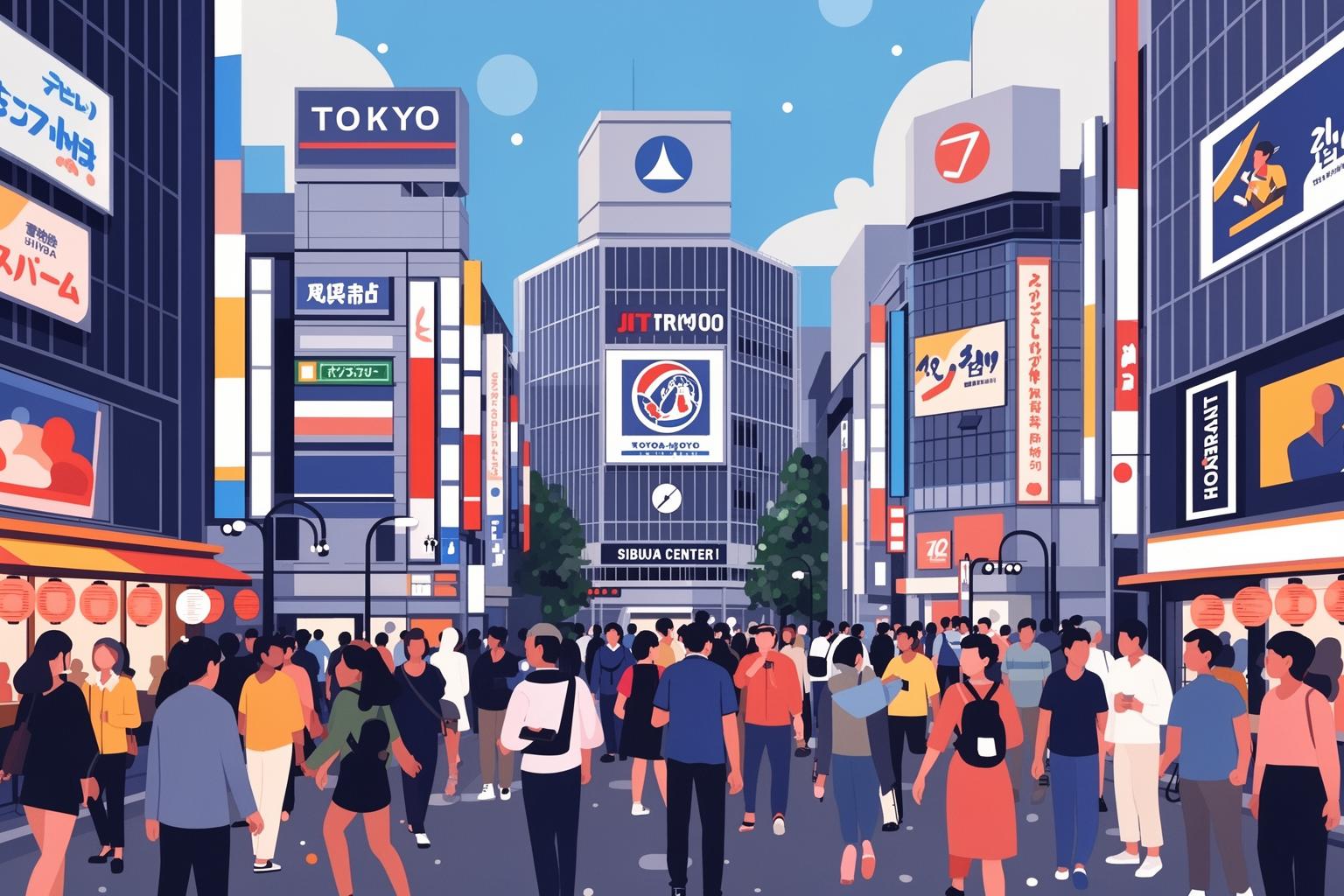
Everyone knows Shibuya Crossing. It’s the money shot, the visual shorthand for Tokyo’s kinetic energy, that sprawling intersection where a thousand people cross at once in a strangely orderly chaos. It’s impressive, sure, but it’s also an overture. The real performance, the place where the city’s cultural pulse can truly be felt, lies just beyond the sea of giant screens and frantic pedestrians. You dive past the Hachiko statue, dodge the selfie sticks, and plunge into a narrow, pulsing artery of a street. This is Shibuya Center-gai, and for decades, it has been Tokyo’s unofficial catwalk, laboratory, and living room for youth subculture.
On the surface, it’s just a pedestrian street crammed with fast-food joints, drugstores, karaoke boxes, and clothing shops blasting J-Pop. But to dismiss it as a mere shopping lane is to miss the point entirely. Center-gai is less about what’s for sale and more about who is doing the shopping. It’s a stage where identities are constructed, paraded, and deconstructed in real-time. It’s where you go not just to see the latest trends, but to understand the subtle shifts in social currency that define a generation. This is the art of people-watching elevated to cultural anthropology. Forget the guidebooks; the real story of Tokyo youth is written every day in the way a teenager cuffs their jeans, the charms they hang from their phone, or the precise angle of their eyeliner as they navigate this concrete river. To understand Center-gai is to understand the performance of identity in modern Japan.
This performance of identity is deeply intertwined with other youth phenomena, such as the social currency of Purikura.
The Mecca of the 90s: When a Street Became a Movement
To truly understand Center-gai, you need to rewind to the 1990s. That decade was its golden era, the time when it secured its legendary status. The Japanese economic bubble had burst, casting a shadow of uncertainty over the nation. The rigid, hierarchical path of the previous generation—lifelong employment at a major corporation—no longer seemed assured. For the youth of the 90s, particularly young women, this shift was not only economic but psychological. If the old rules were broken, why not create new ones? Center-gai became that blank slate.
This was the birthplace of the gyaru phenomenon. Often simply translated as “gal,” the term encompassed a myriad of sub-styles aimed at challenging traditional Japanese notions of beauty and femininity. Where convention demanded pale skin, dark hair, and understated subtlety, the gyaru of Center-gai responded with deep, artificial tans, bleached blonde hair, and a flamboyant rejection of quiet conformity. It was a visual rebellion emanating from the heart of Tokyo.
The Anatomy of a Gyaru
The most iconic group was the kogyaru, high school girls who became the undisputed queens of Center-gai. Their uniform was a deliberate distortion of the standard school uniform. Skirts were hemmed impossibly high, often held up with a special belt beneath the sweater. Instead of traditional black loafers, they wore chunky platform boots that added height and attitude. But the real signature was the loose socks: absurdly long, baggy white socks, often several feet in length, painstakingly scrunched down around the ankles and fixed in place with a special glue called “sock touch.” It was impractical, slightly ridiculous, and absolutely essential. It was a signal to others in the know: I am one of you.
As the 90s progressed, this aesthetic reached its extremes. The tans darkened, the hair lightened, and the makeup grew even bolder. This gave rise to the ganguro (black face) style and the even more dramatic yamanba and manba looks, characterized by raccoon-like rings of white makeup around the eyes and lips, set against dark-tanned skin, neon hair, and outfits clashing with animal prints and hibiscus flowers. From an outsider’s view, it might have seemed jarring or even cartoonish. But it was a powerful statement: they, not society, would define their own beauty. They transformed themselves into living artworks that could be fully appreciated only on the streets where they gathered.
The Technology of Connection
This burst of street style unfolded in a world before the internet as we know it today. There was no Instagram to scroll for inspiration, no TikTok to showcase a new dance. Influence was analog, and proximity equated to power. Center-gai was the physical social network. Trends spread not through algorithms but through direct sight. Spot a girl with a new way of decorating her flip phone, and by the next weekend, hundreds more were copying it.
The essential tools of the era were pagers, or pokeberu (pocket bells), and early, bulky mobile phones. Communication was a cryptic art. Pager messages used numerical codes corresponding to phonetic sounds—a secret language of numbers that parents and teachers couldn’t decipher. It was a private channel for a very public subculture.
Then there was purikura. These photo booths, still popular today, were more than just places to take pictures. They were studios for documenting and sharing style. Friends would squeeze into a booth, take photos, and then spend time decorating them with digital stamps, glittery text, and hand-drawn hearts. The small, sticker-backed photos were cut up and traded like currency, stuck into notebooks, or displayed on the backs of phones. A sheet of purikura served as a visual diary and social calling card—a testament that you were there, part of the scene.
Center-gai in the 90s wasn’t merely a hangout spot. It was a self-contained ecosystem with its own language, aesthetic, and technology. It was where a generation, feeling adrift in a changing Japan, chose to build its own world—one pair of loose socks at a time.
The Street as a Stage: The Architecture of Being Seen
Center-gai’s significance as a subcultural center isn’t a result of chance geography; it’s intrinsically linked to its physical structure. The street itself serves as a perfectly crafted stage for the everyday drama of youth culture. It’s narrow enough to feel intimate and packed, yet long enough to sustain a continuous, flowing procession. This isn’t a broad, open plaza where you can easily lose yourself; it’s a channel, a runway that compels interaction and observation.
Consider the experience of walking down it. You simultaneously become both an audience member and a performer on the stage. The dense crowds keep you in close proximity to others—close enough to notice the unique brand of their sneakers, the charm dangling from their tote bags, or the color of their nail polish. The relatively low-rise buildings lining either side create a sense of enclosure, focusing your attention entirely on the river of people moving both ways. There are no grand monuments or sweeping views to distract you. The main attraction is everyone else.
Points of Observation
Certain locations along the street act as informal viewing platforms. The entrance of a McDonald’s, the steps of a karaoke parlor, or the glass-fronted second floor of a coffee shop become perches from which to watch the parade. From these vantage points, you witness micro-trends emerging in real-time. You might notice three different people wearing the same vintage band t-shirt or see a specific shade of green appearing in a dozen outfits. It’s a game of pattern recognition.
This energy taps into a fundamental aspect of Japanese social life: the interplay between the individual and the group. While Japanese culture is often perceived as group-oriented, subcultures provide a space for alternative forms of belonging. You express your individuality, but by aligning yourself with a particular tribe. Your wild hair or platform boots are not just personal statements; they function as uniforms signaling your membership in the gyaru tribe, the punk tribe, or the streetwear tribe. Center-gai is where you find your people, where your carefully fashioned identity is recognized and validated by others who share the same visual language.
The street’s sensory environment reinforces this theatrical quality. The air buzzes with a cacophony of competing sounds: tinny J-Pop spilling from clothing stores, the rhythmic clang of a pachinko parlor, cheerful jingles from drugstore ads, and the overlapping chatter of hundreds of conversations. Giant video screens flicker overhead, bathing the street in a constant, restless neon glow. The scent of sweet crepes blends with savory ramen and the faint aroma of countless perfumes. It’s a total sensory immersion, a stimulating, occasionally overwhelming atmosphere that heightens the sense of being somewhere significant, somewhere where things are happening.
In this space, even loitering becomes a performance. Groups of kids claim patches of pavement, not necessarily doing much but simply being there. They lean against walls, scroll through their phones, and watch the world go by, all while keenly aware that they themselves are being watched. Their posture, expressions, and the way they carry their bodies are all part of the show. Center-gai, through its very design, fosters and amplifies this culture of public self-presentation.
Center-gai Today: A Living Archive of Youth
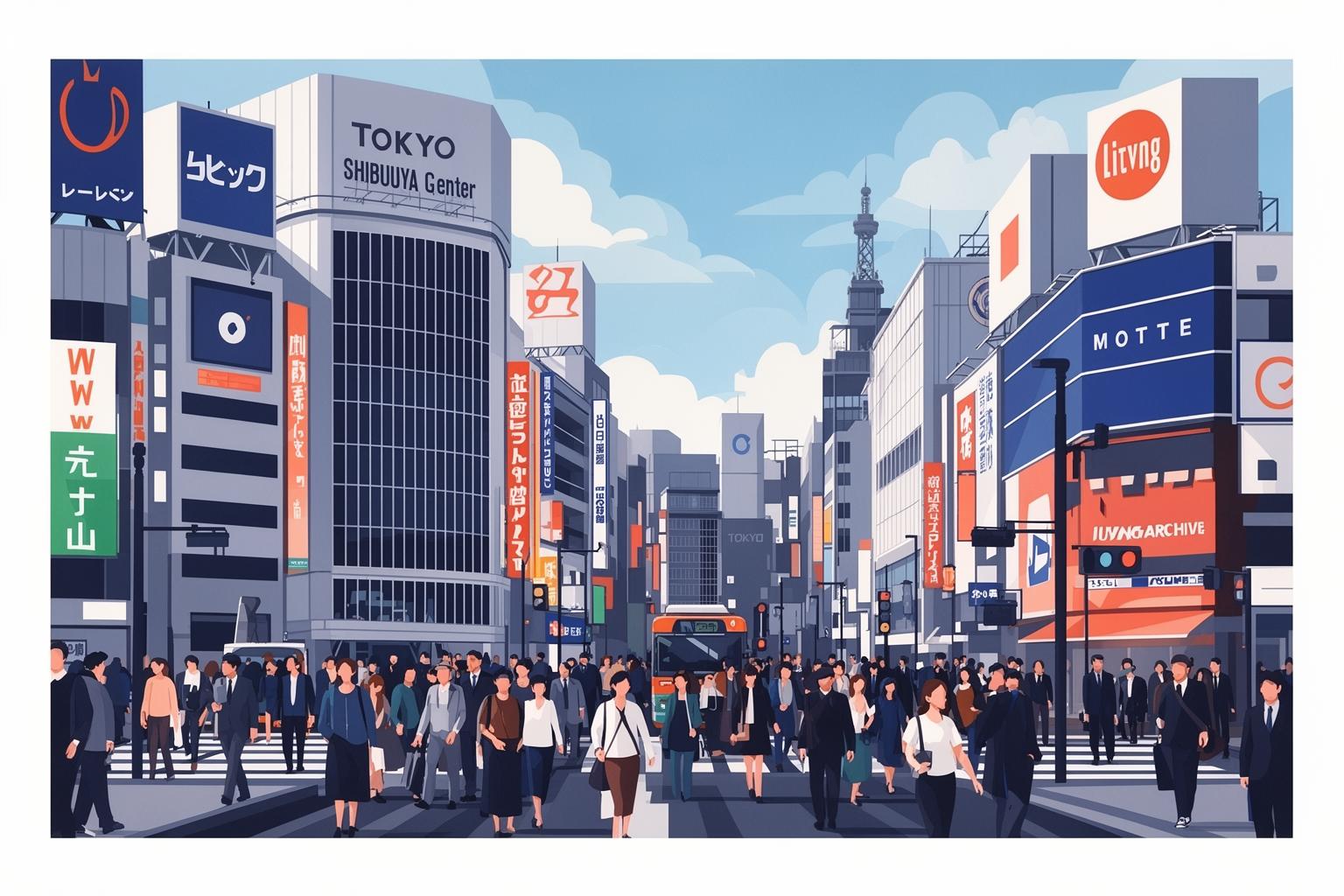
Today’s Shibuya is vastly different from the Shibuya of 1998. The extreme gyaru have mostly vanished, their deep tans and white lipstick replaced by new aesthetic ideals. The world has shifted. Once a novelty, the internet is now the main driver of culture. Trends originating on TikTok in Seoul or Los Angeles can quickly reach Shibuya. So, what purpose does a physical street like Center-gai serve in a hyper-digital age?
Rather than becoming obsolete, Center-gai has adapted. It’s no longer the exclusive trend incubator but has become the ultimate aggregator and remixer. It’s a palimpsest where the spirits of past subcultures mingle with the vibrant energy of the present. The DNA of the 90s gyaru remains evident in the focus on meticulously styled hair and makeup, even if the exact styles have evolved. The DIY rebellious spirit endures, expressed through new forms.
The Rise of Global Streetwear and K-Pop Aesthetics
Strolling through Center-gai today, you’ll encounter a new array of tribes. The leading influence is global streetwear. Brands like Supreme, Off-White, and other premium skate labels blend with Japanese names such as A Bathing Ape and Undercover. Sneakers take center stage, with youths lining up for hours to snag the latest limited-edition releases from Nike or Adidas. This style is more unisex and less overtly gendered than the gyaru era, but the core idea remains: using carefully selected brands and items to showcase cultural literacy and group belonging.
K-Pop is another huge influence. The flawless skin, vibrant hair, and polished, sophisticated looks of Korean idols have set fresh standards for beauty and fashion. Groups of teenagers, both male and female, sport aesthetics clearly inspired by acts like BTS or Blackpink. This includes not only clothing but makeup, hairstyles, and even their poses for photos. Record stores on Center-gai, once strongholds of J-Pop, now dedicate large sections to K-Pop, and cafes buzz with fans celebrating their favorite idols’ birthdays.
The Instagram Effect
Social media hasn’t killed Center-gai; it has merely transformed its role. The street now functions both as a real-world location and a virtual backdrop. People come here not only to live their subculture but to capture and share it online. Everywhere, you’ll find impromptu photoshoots, with friends directing each other to find the perfect shot against graffiti walls or glowing neon signs. The performance is no longer just for passersby; it’s for a global audience of followers.
This shift has also fueled the rise of micro-trends and aesthetic “cores.” Specific looks—whether “cottagecore,” “dark academia,” or other styles born online—may manifest physically on Center-gai for a few weeks before being replaced by the next trend. The street serves as a testing ground for digital aesthetics, offering real-world validation to online identities.
What’s striking is how these diverse influences—90s nostalgia, global streetwear, K-Pop, and countless online micro-trends—blend together. You might spot a girl in a K-Pop-inspired outfit paired with chunky platform shoes paying homage to 90s gyaru style, or a guy clad head-to-toe in American streetwear with his phone adorned with cute anime characters. Center-gai has become a space of synthesis, where a generation raised on the internet physically curates its identity from a global mix of cultural influences. It’s less a single, cohesive scene and more a vibrant, chaotic collage of multiple scenes unfolding simultaneously.
How to Read the Street: A Guide to Trendspotting
People-watching in Center-gai is an art. A casual observer might only notice a crowd of fashionable young people, but if you know what to look for, you can begin to decode the signals and subtle cues that hint at what’s coming next. It’s about seeing beyond the obvious and tuning into the finer details.
Look Down: The Gospel of Footwear
In Tokyo, trends often emerge from the ground up. Footwear serves as a crucial marker of group identity and status. Are the shoes pristine, limited-edition sneakers that look untouched by rain? That indicates the streetwear crowd. Are they chunky, platform Doc Martens or heavy boots? That suggests a punk or goth influence. What about delicate, strappy heels or refined loafers? That points to a more conservative, often Korean-inspired “kireimei” (clean, pretty) style. Don’t just notice the shoe itself; observe how it’s worn. Are the laces tied in a distinctive manner? Are they paired with a specific type of sock? These subtle details carry meaning.
The T-Shirt as Text
Forget basic plain tees. In Center-gai, T-shirts and sweatshirts serve as displays of identity. Is it a vintage tour shirt for a 90s American grunge band? This signals deep knowledge of Western music and a certain thrift-store chic. Is it from a rare, exclusive Japanese streetwear brand? That’s a sign of being a serious insider. Is it emblazoned with an anime or video game logo? That’s a proud nod to “otaku” (geek) culture, which has grown increasingly fashionable. The graphics and text on people’s shirts offer a direct glimpse into their cultural interests.
The Ecosystem of the Bag
Pay close attention to what people carry and, even more so, what hangs from their bags. The simple tote has become a personalized canvas. It might be adorned with enamel pins representing various artists, bands, or causes. You’ll spot clear vinyl “ita-bags” (painful bags) stuffed with merchandise of a favorite anime character — a bold, elaborate show of fandom. Even the way a luxury handbag is carried—casually, as if it’s effortless—is a statement. Look for small plush keychains, acrylic character stands, and custom phone grips. These accessories are the footnotes and annotations to the main outfit, adding layers of meaning and personality.
Beyond Clothing: Hair, Makeup, and Nails
Some of the most significant trends aren’t about fabric at all. Hair is a key signal. Are “wolf cuts” or “hime” (princess) cuts with sharp, face-framing layers common? Do you notice repeating shades of ash-blonde or pastel pink? These trends ripple through salons in Shibuya and Harajuku.
Makeup tells a similar story. Observe the eyes. Is the preference for a subtle, natural look, or bold, graphic eyeliner and vivid eyeshadow? Is the “namida-bukuro” (tear bag) style, which emphasizes puffiness under the eyes to create a youthful look, still in vogue? Nails also serve as a creative surface. Are they long and extravagantly decorated with 3D charms, or short with minimalist, abstract designs? These choices are as intentional and meaningful as selecting trousers.
By training your eye to notice these nuances, you shift from a passive visitor to an engaged observer. You begin to see Center-gai not as a haphazard crowd, but as a complex, self-organizing network of styles — a living archive of youth culture, refreshing itself every minute.
The Unchanging Vibe of a Street in Flux
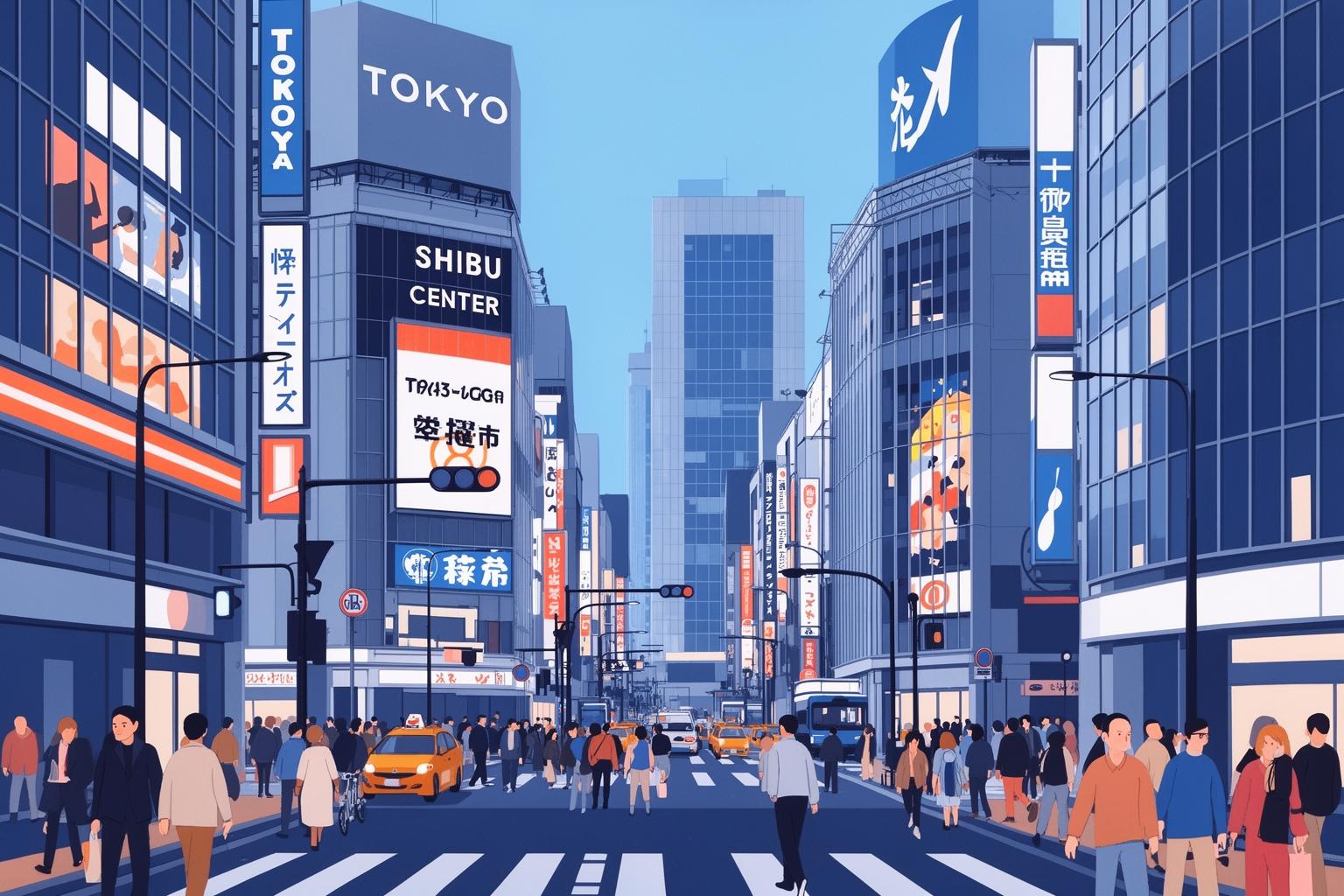
Trends constantly ebb and flow. The gyaru of the 90s paved the way for the streetwear enthusiasts of the 2010s, who now share the sidewalks with today’s K-Pop devotees. What will Shibuya’s youth be wearing five years from now? It’s impossible to predict, but you can be sure they’ll be debuting their styles on Center-gai.
This is the street’s lasting charm. It has stood as the city’s most vital stage for youthful self-expression across generations. It serves as a ritual pilgrimage site for suburban teenagers, a proving ground for emerging designers, and a continual source of inspiration for broader culture. It’s a place that recognizes youth identity as a fluid performance rather than a fixed state. What you wear is more than clothing; it’s a costume for the role you embody today.
Walking down Center-gai means being swept up in that performance. It’s to feel the thrilling, slightly chaotic energy of a place devoted to the ever-present moment. It reminds us that even in a world ruled by digital screens, there remains an irreplaceable power in the physical act of showing up, of seeing and being seen. It’s more than just a street—it’s an idea: the belief that a city’s heart beats loudest where its young people gather to discover who they are, one outfit at a time.