You’ve probably seen the pictures. Girls on the streets of Tokyo in the late 1990s, looking like they just stepped off a spaceship that crash-landed on a tropical beach. Skin tanned to a deep, almost impossible bronze. Hair bleached blonde or silver, teased into voluminous manes. A stripe of white concealer slashing across their eyelids and lips, framed by thick black eyeliner. They wore impossibly short school skirts, baggy socks pooling around their ankles, and teetered on platform boots that looked like architectural models. This was the gyaru. And to an outsider, it was—and still is—a visual shock. It seemed to fly in the face of every stereotype about Japan: the harmony, the subtlety, the quiet conformity. This was none of those things. This was loud, chaotic, and utterly unapologetic.
It’s easy to dismiss it as just another weird fashion trend from a country known for them. But that would be a mistake. The gyaru phenomenon wasn’t just about clothes and makeup. It was a full-blown social rebellion, a declaration of independence by a generation of young women who looked at the future their parents had planned for them and collectively said, “No, thank you.” They weren’t political protestors with signs and slogans. Their protest was written on their faces, in the height of their boots, and in the color of their skin. They were the daughters of the economic miracle, born into a world of presumed stability, only to come of age as that world cracked apart. So, what do you do when the promise of a secure future evaporates? You create your own present. A loud, glittering, sun-tanned present, lived entirely on your own terms. To understand gyaru is to understand a crucial turning point in modern Japanese society, a moment when the youth decided to stop being silent and start shouting, using fashion as their megaphone.
The gyaru’s audacious reinvention of identity mirrors other cultural upheavals, such as manga reshaping urban narratives on public transit, which similarly challenged established norms.
The Birth of the Bronze Age: Origins of a Subculture
To truly understand why the gyaru explosion happened when it did, you need to grasp the mood in Japan during the 1990s. The country was reeling from a shock. The dizzying economic boom of the 1980s, known as the “Bubble Era,” had spectacularly collapsed. This was a period when Tokyo real estate was valued higher than that of the entire United States, and Japanese corporations were acquiring Hollywood studios and iconic New York buildings. The national narrative was one of unstoppable progress. The unspoken deal was clear: study hard, enter a prestigious university, secure a lifelong position at a major corporation, and you would be rewarded with stability, increasing income, and a comfortable middle-class life. But in the early 90s, the bubble burst, causing a steep decline in stock market and real estate values. The ensuing decade, known as the “Lost Decade,” was marked by economic stagnation and social unease that dismantled previous certainties.
Post-Bubble Malaise and the Search for Identity
For young people coming of age during this period, the social contract had been shattered. The promise of lifelong employment—the cornerstone of their parents’ world—disappeared. They witnessed their fathers, once seen as invincible corporate warriors, facing layoffs and insecurity. The path that had once seemed certain suddenly appeared blocked. This sparked a deep sense of disillusionment. If the traditional path to success was no longer attainable, why follow its rules? This crisis was more than economic; it was a crisis of identity. A generation found itself adrift, and in this void, new subcultures emerged, offering alternative identities and communities.
The gyaru ethos arose as a direct response to this malaise. It rejected the core values of the older generation: hard work, sacrifice for the group, and delayed gratification. Instead, gyaru culture embraced the opposite: hedonism, individualism, and living fully in the present. It was a philosophy of consumption, friendship, and fun—a bold declaration of personal happiness amid widespread national pessimism. Rather than saving for an uncertain future, they spent their money on the latest fashion from the 109 building, tanning salon visits, purikura photo booths, and karaoke sessions with friends. It represented a radical redefinition of what it meant to live a meaningful life.
Shibuya as the Epicenter
Every youth movement needs a focal point, and for the gyaru, it was Shibuya—especially the area surrounding the Shibuya 109 building. This cylindrical fashion mall became the cathedral of the gyaru movement. It was more than just a shopping destination; it was a sacred space where the culture was defined, performed, and spread. Stores like Cecil McBee, Alba Rosa, and Me Jane were not just retailers—they were gatekeepers of gyaru identity. Their staff, often charismatic gyaru themselves, became style icons featured in magazines and admired by customers. Shopping at 109 was less about purchasing goods and more about participating in a ritual, joining the scene, and affirming one’s membership in the tribe.
Shibuya was an ideal breeding ground. It was a consumerist hub and a major train junction attracting teenagers from across the Tokyo metro area, with a longstanding association with youth culture. It was a space where young people could escape parental and teacher scrutiny. They gathered at the Hachiko statue, roamed Center Gai’s streets, and made the floors of 109 their clubhouse. This geographic concentration was vital. It enabled styles to evolve quickly, trends to spread rapidly, and a strong collective identity to develop. Being a gyaru meant being from Shibuya.
The Amuro Namie Effect
While economic and social conditions provided fertile soil, the gyaru style’s seeds were arguably sown by one person: Amuro Namie. In the mid-90s, this Okinawan pop superstar was the most influential figure in Japanese youth culture. With her mixed-race background, she defied the traditional image of a Japanese idol. Her naturally sun-kissed skin, long dyed-brown hair, and fashion—both sexy and strong—stood in stark contrast to the cute, submissive kawaii ideal. She paired miniskirts with chunky boots, projecting confident, independent femininity.
A legion of young women, known as “Amuraa,” began meticulously copying her style. They tanned their skin, dyed their hair, and shaped their eyebrows into thin arches. Amuro made tanning fashionable. Prior to her, pale, white skin had been the unchallenged Japanese beauty standard for centuries. Her popularity marked a cultural shift, granting young women permission to embrace a look that was darker, healthier, and unapologetically glamorous. Although she was never a gyaru in the strict subcultural sense, Amuro was the prototype. She provided the visual blueprint—the tan, the hair, the fashion—that the early gyaru took and amplified to much greater extremes.
Deconstructing the Gyaru Look: A Visual Manifesto
To grasp the essence of the gyaru movement, you need to analyze its aesthetic. It was a complex and carefully crafted visual language, where every detail made a deliberate statement. This was not about traditional attractiveness as defined by fashion magazines. Instead, it was about crafting a new, artificial face and body—a powerful mask that both concealed the individual and signaled their loyalty to the group. It represented a rejection of the natural in favor of the hyper-artificial.
The Trinity of Tan, Hair, and Makeup
The most prominent feature was undoubtedly the tan. This was not a subtle, sun-kissed hue from a beach trip. It was a deep, dark, industrial-strength tan, maintained through frequent tanning salon visits. The aim was to achieve the darkest possible shade, culminating in the ganguro (literally “black face”) style. This intense tan was the ultimate defiance of the traditional Japanese beauty ideal of bihaku, or “beautifully white.” For centuries, pale skin signified class, refinement, and femininity. By baking themselves under UV lamps, gyaru were destroying that ideal. They were rejecting the very notion of what it meant to be a beautiful Japanese woman.
Next came the hair. It was almost universally bleached, ranging from orange-blonde to platinum or silver, often accented with highlights or extensions. Big hair was essential. It was teased, curled, and sprayed into voluminous styles resembling a lion’s mane, dramatically framing the face. Like the tan, the bleached hair was a direct rejection of the Japanese ideal of silky, black, straight hair. It was a statement of artificiality and a refusal to be “natural” or demure.
Makeup was the final, vital component that completed the look. It was a modern form of kabuki. The canvas of the deeply tanned face was painted with starkly contrasting light colors. A thick layer of white or pearlescent concealer was applied like a mask around the eyes, extending from eyebrows to cheekbones. White lipstick or concealer was also used to lighten the lips, creating a ghostly, raccoon-like appearance. This pale canvas was then framed with incredibly thick, black liquid eyeliner, dramatic false eyelashes on both upper and lower lids, often adorned with tiny stick-on jewels. The effect was alien and striking. It diminished the natural features and formed a new identity—a gyaru face—instantly recognizable and impenetrable to outsiders.
The Uniform of Rebellion
The gyaru wardrobe was a masterclass in subverting rules. The most powerful symbol of this was their approach to the school uniform. In Japan, the school uniform is a strong emblem of conformity and group identity. The gyaru dismantled this symbol. Skirts were rolled up or permanently shortened to an audaciously short length. Conservative navy or black socks were replaced with ruusu sokusu (“loose socks”), baggy socks held up with special glue, creating a distinctive pooling effect around the ankles. The longer and baggier the socks, the better. These alterations sparked ongoing conflicts with school authorities, a daily act of rebellion in hallways and classrooms.
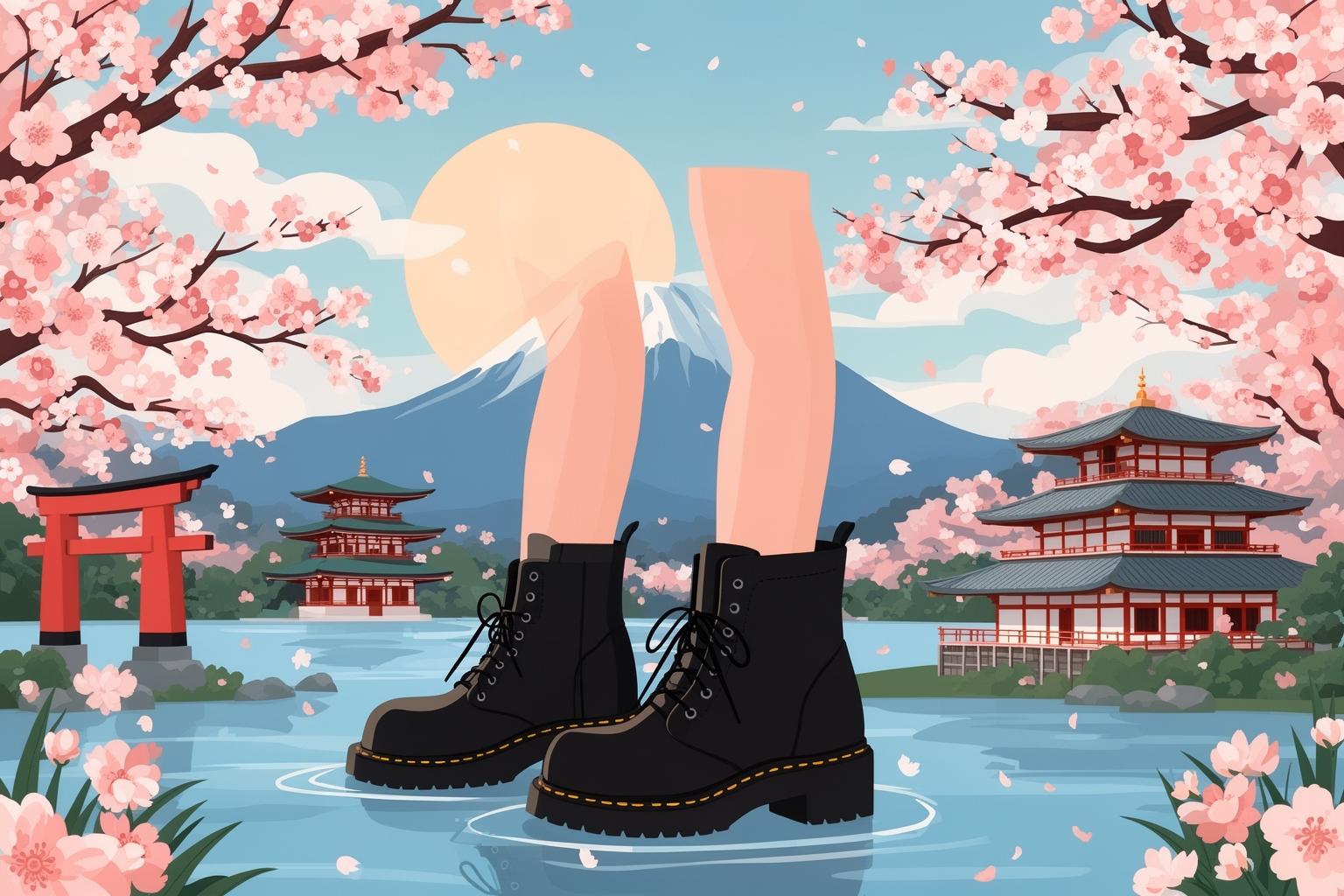
Outside school, the fashion reflected pure ’90s hedonism. Platform boots were essential—some with soles six inches high or more, allowing wearers to tower over others. They were difficult to walk in and impractical but made a bold statement. The look was often completed with brightly colored, often Hawaiian-print clothing from brands like Alba Rosa, tiny tube tops, and a host of accessories—hibiscus flowers in the hair, colorful bracelets, and elaborate nail art. It was a celebration of a tropical, carefree party vibe, a fantasy of California or Hawaii transplanted into Tokyo’s concrete jungle.
The Language and the Tech
Creating an exclusive world wasn’t just about visuals. The gyaru developed their own coded language. Gyaru-moji (“gal characters”) involved breaking down Japanese characters into component parts or substituting them with obscure symbols, making text messages incomprehensible to parents, teachers, or outsiders. It was a clever form of digital cryptography that reinforced group exclusivity.
Technology was central to their social lives. Before smartphones, they mastered the pokeberu (pager), developing complex numerical codes to communicate. The advent of mobile phones with email features dramatically enhanced their ability to communicate and organize within closed networks. They were early adopters of mobile tech, using it to sustain the intense, constant social connections that fueled the subculture. And of course, there was the purikura, the sticker-photo booths that became a cultural institution. These booths allowed them to capture their friendships and looks, creating small, shareable mementos to paste into albums and trade with friends.
The Philosophy Behind the Platform Boots: More Than Just Fashion
It’s easy to glance at the elaborate styles and write off gyaru as superficial or materialistic, but that completely misses the point. The aesthetic served as the medium, not the message. Beneath the layers of foundation and towering boots lay a surprisingly coherent, albeit unwritten, philosophy. It was an instinctive response to the pressures of Japanese society—a grassroots movement for an alternative form of female empowerment.
A Rebellion Against What, Exactly?
The gyaru rebellion was fought on multiple fronts against the expectations imposed on young women in Japan. Chiefly, as we’ve seen, it challenged traditional beauty standards. The ideal Japanese woman had long been the Yamato Nadeshiko—graceful, pale-skinned, modest, and quietly strong, prioritizing her family’s needs above her own. The gyaru was her wild, fun-loving counterpart—dark-skinned, loud, sexually confident, and wholly focused on her own happiness and that of her friends. By deliberately making themselves “ugly” by conventional standards, they broke free from the pressure to conform. They invented their own beauty ideal, one that celebrated the darkest tans and the most outrageous makeup as the highest form of attractiveness.
It was also a revolt against patriarchal expectations. Women were traditionally expected to follow the path of a “good wife, wise mother” (ryosai kenbo), centered on domestic roles and supporting their husbands’ careers. The gyaru subculture, by contrast, was almost exclusively female, a space where female friendships—the bonds within their saakuru or circle—were paramount. While boys were present, they remained peripheral. The culture emphasized girls having fun with other girls, a radical shift from a society that often defined women in male relation.
Lastly, it was a rebellion against the culture of corporate monotony. They rejected the seriousness and self-sacrifice emblematic of the salaryman lifestyle. Their ethos was playful and anti-intellectual, marked by a performative “airheadedness”; gyaru were famously bad at spelling and proud of it. This wasn’t due to a lack of intelligence but a deliberate rejection of the intense academic pressures designed to produce compliant office workers. By valuing fun over study and friendship over career ambition, they carved out a space free from the anxieties haunting adult life.
The Power of the Circle (Saakuru)
One crucial aspect of gyaru is that it was not an individualistic endeavor in the Western sense but deeply collectivist. The group, the saakuru, was everything. This circle of friends provided the validation, emotional support, and safety to live as a gyaru. Walking alone as a ganguro would attract stares and negative judgment, but moving in a group of ten created a powerful, intimidating presence. They formed a tribe, instantly recognizable to one another and presenting a united front to the outside world.
Inside the circle, hierarchies and intense social dynamics often centered around a charismatic leader. Magazines like egg and Cawaii! played a vital role by featuring real-life gyaru and their circles, turning them into micro-celebrities and inspiring girls nationwide. These magazines didn’t showcase professional models but rather the actual girls from the streets of Shibuya. This created a powerful feedback loop: the girls on the street created the style, magazines documented it, and girls in the provinces emulated it, reinforcing the movement. The circle was a self-sustaining ecosystem that allowed the subculture to flourish and evolve, shielded from mainstream society’s disapproval.
The Gyaru Spectrum: From Ko-Gal to Manba
Just as it’s incorrect to view gyaru merely as a fashion trend, it’s equally wrong to see them as a single, uniform group. The term “gyaru” serves as an umbrella encompassing a broad and ever-changing range of styles. The movement was highly dynamic, continuously generating new sub-genres as girls competed to surpass one another and push the aesthetic’s boundaries. While the core identity stayed intact, its expression was always evolving.
Ko-Gal (High School Gal)
The ko-gal were the trailblazers of the mid-90s. The name derives from the Japanese word for high school, koko. Their canvas was the school uniform, and their rebellion focused on how they could personalize it. They mastered the ultra-short skirt and loose sock look. Their tans were comparatively mild relative to what followed, and their hair was usually brown rather than striking blonde. As the first wave, they claimed Shibuya as their home turf and set the stage for the more extreme styles that came after. The media strongly linked them with the morally controversial practice of enjo-kosai or “compensated dating,” which, though not representative of all ko-gal, forever associated the gyaru image with a certain moral panic.
Ganguro (Black Face)
By the late 1990s, the ko-gal style had transformed into the far more extreme ganguro. This is the look most people associate with 90s gyaru. The tan became the focal point, deepening to a dark, intense brown. Hair grew blonder and bigger, and the trademark white “panda” makeup around the eyes and lips became standard. Fashion grew more extravagant, emphasizing bright colors, animal prints, and Hawaiian/surf-inspired brands. The ganguro represented the peak of the gyaru aesthetic’s shock value, a significant escalation from the relatively modest changes of the ko-gal.
Yamanba and Manba
At the dawn of the 2000s, the ganguro style fragmented into even more extreme variations, notably yamanba and its more intense counterpart, manba. The name yamanba references a mountain hag from Japanese folklore, highlighting just how far the look had diverged from traditional beauty standards. The tan darkened to near black. White makeup was applied more thickly, and hair often featured neon or pastel streaks. A defining trait of yamanba was the white makeup placed both above and below the eyes, unlike ganguro, which typically had it only above. Manba pushed this even further, with darker skin, wilder hair, and frequently cartoonish elements like glitter and plastic stickers applied directly to the face. This subculture was at its most theatrical and insular—so extreme it was nearly incomprehensible to outsiders, which was precisely the point. It represented the logical culmination of a decade of aesthetic rebellion.
The Backlash and the Fade: The End of an Era
No subculture, especially one as intense and high-maintenance as gyaru, can endure forever. By the mid-2000s, the extreme manba look had started to disappear from Shibuya’s streets. The decline resulted from a mix of media backlash, the natural aging-out of its original followers, and the inevitable ebb and flow of fashion trends.
Media Hysteria and Moral Panic
Mainstream Japanese society never quite knew how to interpret the gyaru. They were simultaneously objects of fascination, ridicule, and fear. The media frequently depicted them negatively, emphasizing stereotypes of promiscuity, materialism, and anti-intellectualism. Their tenuous association with enjo-kosai further tarnished their image and sparked a moral panic over the perceived decay of Japan’s youth. Seen as a symptom of a troubled society and a generation that had lost direction, this persistent negative framing cemented their reputation as cultural outlaws. It also made it harder for the movement to be viewed as anything but a deviant phase, boxing them in and limiting the style’s potential to evolve in ways acceptable to the mainstream.
The Inevitable Cycle of Trends
Like any fashion-driven subculture, gyaru was ultimately a victim of its own success and the passage of time. The original ko-gal of the mid-90s were in their late twenties or early thirties by the mid-2000s. They had moved on—finding jobs and starting families. Meanwhile, a new generation of teenagers emerged with their own ideas of what was trendy. The extreme manba look, having pushed its aesthetic boundaries to the limit, had nowhere left to go. It began to appear dated, a caricature of a past era. New styles arose as reactions against the gyaru look, and the pendulum swung back toward more natural, pale-skinned aesthetics.
Gyaru culture didn’t vanish completely but transformed. It fragmented into dozens of new sub-styles. Some, like hime-gyaru (“princess gal”), retained big hair and elaborate nails but embraced a hyper-feminine, pink-and-frills look, replacing the tan with pale skin. Others evolved differently, yet the raw, rebellious energy of the 90s was mostly gone. For the most part, the party was over.
A Lasting Legacy
So, what did the gyaru leave behind? More than you might expect. They were a cultural explosion that permanently reshaped the landscape. At the most basic level, they irreversibly challenged and expanded Japanese beauty standards. The notion of tanned skin as beautiful, dyed hair as acceptable, and a more assertive, glamorous femininity—these were battles the gyaru fought and largely won. They created new space for what a Japanese woman could look like and how she could behave.
More deeply, they demonstrated youth agency in a powerful way. In a society that prizes conformity, they proved it was possible to create a vibrant, self-sustaining world on one’s own terms. They showed that girls, often dismissed and underestimated, could lead cultural innovation. Their rebellion was neither intellectual nor political, but a rebellion nonetheless—joyful, defiant, and visually striking refusal to stay silent and conform. Recently, a wave of “Heisei era” nostalgia has inspired a new generation on social media to rediscover the gyaru aesthetic. In those old egg magazine photos, they find a sense of freedom and raw energy that seems missing today.
The gyaru of the 90s were a product of a particular time and place—a moment of economic anxiety and social change. They responded not with despair but with creativity and vitality. They painted their faces, stacked their platforms, and danced through the ruins of the bubble economy, crafting a world for themselves that was brighter, louder, and far more fun than the one offered to them. And that, in itself, is a legacy worth remembering.