If you’ve spent any time on social media in the past couple of years, you’ve seen it. That inverted, downward-facing peace sign, flashed with a casual flick of the wrist. K-Pop idols perfected it, striking the pose in photo cards and live streams. From there, it bled into the mainstream, becoming a staple gesture in TikToks and Instagram selfies around the world. It looks a little coy, a little different—a subtle twist on a universal symbol. But this seemingly new trend isn’t new at all. It’s a ghost.
That simple hand gesture is a direct descendant of one of Japan’s most flamboyant and misunderstood youth subcultures: the gyaru. It’s a resurrected artifact from the loud, rebellious, and unapologetically feminine world of 1990s Shibuya. What we now call the “Gal Peace” was once a small piece of a much larger, more complex identity, a signal among insiders who were deliberately turning their backs on the expectations of mainstream Japanese society. To understand this little pose is to pull on a thread that unravels a fascinating story of rebellion, creativity, and the strange ways culture survives in the digital age. It’s a journey that starts on the crowded streets of Tokyo during a period of economic uncertainty and ends, stripped of all its original context, on your phone screen. Let’s trace it back to the source.
This journey through Japan’s subcultures reveals how trends like the Gal Peace often emerge from specific social contexts, much like how the rise of Japan’s standing bars reflects a shift in social interaction.
What Exactly Was Gyaru?
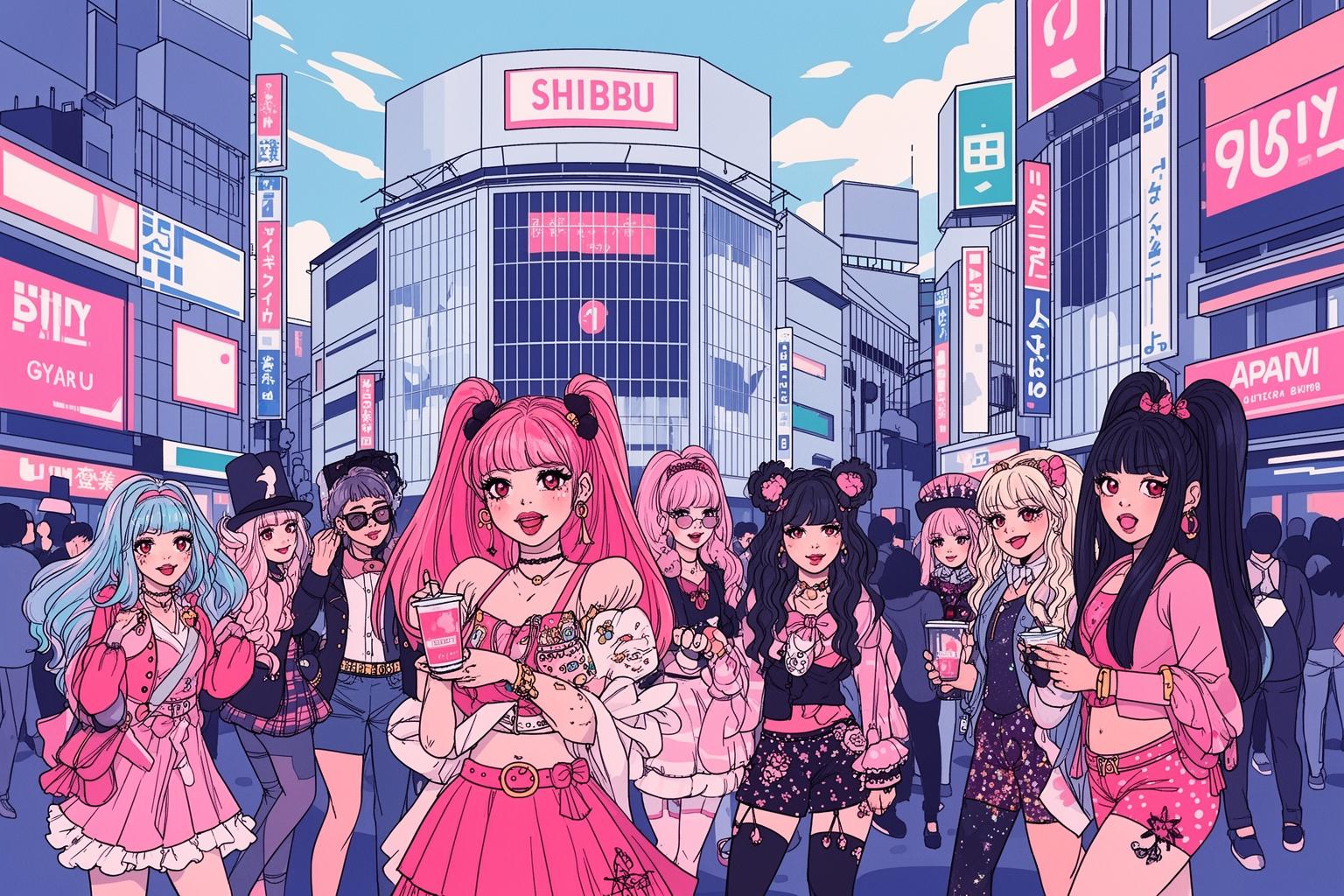
To truly grasp gyaru, you need to understand what it was resisting. Post-war Japan had fostered a very specific ideal for young women: polite, modest, with pale skin and straight, black hair. The aim was to embody a yamato nadeshiko—a “perfect Japanese woman”—who was graceful, demure, and devoted to home and family. The gyaru style was like a Molotov cocktail hurled directly at that ideal. It was a loud, vibrant, and utterly defiant rejection of conformity.
This was more than just fashion; it was a comprehensive aesthetic and philosophical rebellion that erupted from Tokyo’s Shibuya district in the 1990s. The decade itself plays a crucial role. Japan’s “bubble economy” of the 1980s had collapsed, ushering in a long stretch of economic stagnation known as the “Lost Decade.” The promise of lifetime employment and steady prosperity that had defined the previous generation was fading. For many young people, the conventional path of hard study leading to a secure corporate job no longer seemed assured. In this atmosphere of uncertainty, a space opened to question authority and reject the rigid social scripts of the past. Gyaru culture filled that space with glitter, platform boots, and sun-kissed tans.
Beyond the Stereotypes: More Than Just Tanned Skin
The most extreme and iconic image of gyaru, especially for those outside Japan, is the ganguro style. The name literally means “black face,” referring to the deep, dark tans gained from tanning salons, sharply contrasting the traditional Japanese ideal of pale, untouched skin. This look was paired with hair bleached in blonde, silver, or orange shades, dramatic white lipstick and concealer around the eyes, and thick black eyeliner. The ensemble was completed with towering platform boots and brightly colored, often revealing clothing. It was purposely designed to shock.
However, the aim wasn’t necessarily to appear “ugly” by conventional standards. It was about crafting a new, self-defined standard of beauty. It was a way of saying, “Your rules don’t apply to me. I will decide what is beautiful, and I will be as bold and visible as I choose.” This aesthetic served as both armor and a statement of independence. It allowed young women to take control of their bodies and how they presented themselves in a society that often tried to render them invisible or ornamental.
Gyaru culture celebrated a type of hyper-femininity that was assertive rather than passive. It emphasized consumption, leisure, and social life, rejecting the serious, work-focused adult world. Their lives centered around shopping for the latest trends at the iconic Shibuya 109 department store, perfecting makeup, taking photos with friends in purikura booths, and dancing to Eurobeat music in clubs. It was a world created by and for young women.
The Tribes of Shibuya: Not a Monolith
It’s a mistake to view gyaru as a single, uniform style. Like any vibrant subculture, it quickly splintered into numerous sub-genres, each with its own unique codes and aesthetics. This diversity reflects the creativity and energy of the movement.
The earliest form was kogyaru, a blend of kōkōsei (high school student) and gyaru. These high school girls customized their school uniforms by rolling up their skirts to impossibly short lengths, wearing their neckties loosely, and pairing the look with “loose socks”—puffy, oversized socks scrunched down around their ankles. It was a playful subversion of the most regimented symbol of Japanese youth.
From there, styles became more extreme. Ganguro was the deeply tanned look that gained international fame. An even more intense version was yamanba (and its cousin, manba), named after a mountain hag from Japanese folklore. This style took ganguro to the extreme: darker tans, white makeup smeared raccoon-like around the eyes and nose, pastel-colored hair, and a chaotic mix of bright clothing and accessories. It was the subculture at its most theatrical and confrontational.
At the opposite end of the spectrum was hime gyaru, or “princess gal.” This style rejected tans and dark makeup, embracing a hyper-feminine, doll-like look. It focused on big, bouffant hair, frilly pink dresses from brands like Liz Lisa, lace, ribbons, and an obsession with Marie Antoinette-inspired rococo opulence. It was just as high-maintenance and exaggerated as yamanba, but channeled into a different kind of fantasy.
These are just a few branches among many. Each tribe had its own favored magazines, brands, and social codes, yet all existed under the broad gyaru umbrella, united by a shared spirit of exuberant non-conformity.
The Language of the Gal: Gestures, Slang, and Self-Expression
Gyaru culture wasn’t merely a look applied each morning; it was a complete social ecosystem with its own slang, rituals, and non-verbal signals. To be a gyaru meant being fluent in a language impermeable to outsiders, especially adults. This language was shaped not just by words, but also by performance, technology, and carefully designed gestures.
Purikura and Posing: A Culture of Performance
At the heart of the gyaru experience was the purikura photo booth. These were far from the simple four-shot passport machines common in the West. Purikura were intricate little studios enabling groups of friends to take photos and then digitally embellish them with stamps, glittery text, and cartoon backgrounds. The resulting sticker sheets became a form of currency—collected, traded, and pasted into notebooks as tangible records of one’s social life.
These booths served as a central stage for gyaru, where they could capture their painstakingly styled looks and hone their posing skills. Mastery of purikura posing was essential, and the gyaru excelled at it. They developed a full repertoire of gestures aimed at making their faces appear smaller, their eyes larger, and their expressions clearer. Every subtle head tilt, pout, and hand placement was intentional. Within this crucible of photographic self-expression, new posing trends were born and rapidly spread throughout the community.
The performative aspect of the culture also thrived on the dance floor. Many gyaru were passionate about Para Para, a synchronized dance style performed to energetic Eurobeat music. Shibuya clubs hosted Para Para nights where hundreds of gyaru executed complex, choreographed arm movements in flawless unison—a shared ritual that reinforced a sense of belonging unique to their community.
The Birth of the ‘Gal Peace’
Within this highly visual and performative culture, the classic V-for-victory peace sign—long a staple of Japanese photography—began to feel outdated. It was the default pose, associated with one’s parents. To stand out and show membership in this new, fashionable tribe, a fresh gesture was needed. Thus, new poses emerged from purikura booths and the pages of gyaru magazines.
One such innovation was the gyaru pīsu, or “Gal Peace.” The change was simple but impactful: the peace sign was flipped, with the palm facing inward and fingers pointed down. Often held lower near the cheek or chin, the arm was bent. This subtle modification made it cuter, more stylized, and gave it an insider’s flair. Flashing the Gal Peace in photos became a discreet yet unmistakable sign that you were in the know—a true gyaru.
This was just one of many small innovations weaving the subculture’s fabric. Alongside their unique slang (gyaru-moji, a complex texting character system) and distinct fashion codes, the Gal Peace represented a piece of proprietary cultural knowledge, a wordless expression of identity that set those within the vibrant Shibuya scene apart from everyone else.
The Decline and Ghosting of a Subculture
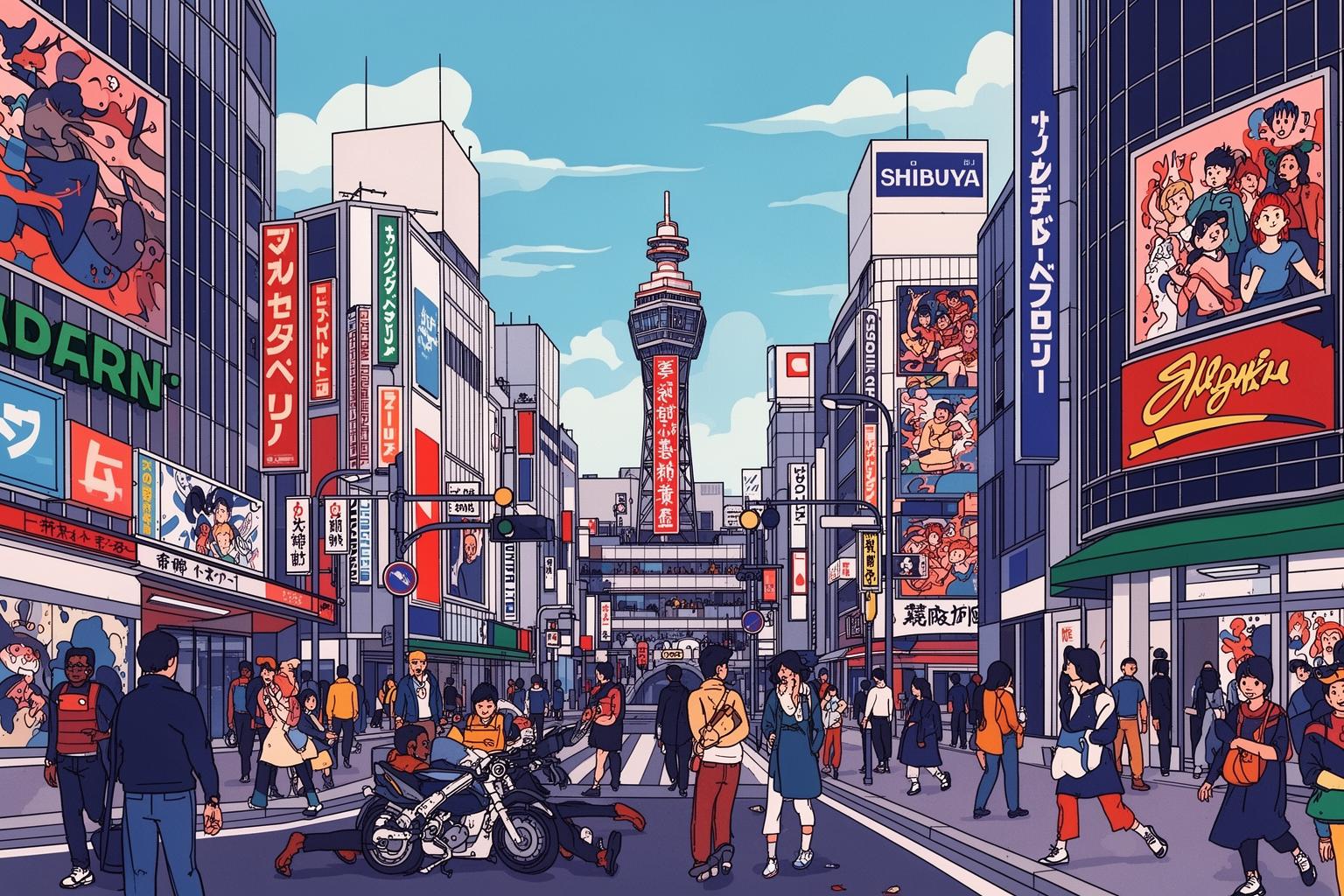
For a solid decade, gyaru appeared to be an unstoppable force in Japanese youth culture. Its influence permeated everything from music and television to fashion and beauty standards. Shibuya 109 was its sanctuary, and magazines like Egg, Popteen, and Ranzuki served as its guides. However, by the late 2000s and into the early 2010s, the gyaru empire began to decline.
Why the Look Faded
No subculture endures forever, and the decline of gyaru resulted from a combination of factors. Fashion is inherently cyclical. The maximalist, high-maintenance gyaru aesthetic gradually gave way to a preference for more natural, understated, and seemingly effortless styles. Meanwhile, Korean pop culture, with its polished and sophisticated fashion, started gaining influence. The heavily tanned look, once a symbol of rebellion, began to seem outdated.
Economic and social pressures contributed as well. The gyaru lifestyle was costly. Frequent trips to tanning salons, intricate nail art, hair bleaching and extensions, and constantly updating a wardrobe demanded significant disposable income, which became increasingly difficult for many young people to maintain. Additionally, mainstream media often portrayed gyaru negatively, reinforcing stereotypes of being unintelligent, lazy, and promiscuous. This persistent stigma eventually eroded its appeal for a new generation of teenagers.
In the end, the original wave of gyaru simply grew older. The pioneers of the 90s entered their late twenties and thirties, and their priorities shifted. While some retained the look, many moved on to different styles and lifestyles. The subculture did not vanish abruptly but gradually lost its critical mass and cultural dominance.
The Digital Afterlife
Yet gyaru did not disappear entirely. Instead, it entered a form of digital hibernation. The culture became a subject of nostalgia and aesthetic fascination online. Former gyaru magazines ceased print publication but continued to maintain an online presence. On platforms like Instagram, Pinterest, and Tumblr, iconic images from the 90s and 2000s were archived and shared. The style became detached from its original context, transforming into a collection of visual tropes—the tan, the hair, the makeup, the loose socks.
This digital preservation laid the groundwork for small-scale revivals. A new generation, discovering gyaru culture online, began experimenting with its aesthetics, leading to the emergence of what some call reiwa gyaru (named after the current Japanese era). This modern interpretation is less a comprehensive lifestyle and more a fashion choice. Followers might adopt certain elements—the makeup style, a particular silhouette—without embracing the full tanning and hyper-social aspects. It’s gyaru as a style to wear rather than a lifestyle to live.
This process of digital archiving kept the flame flickering, albeit faintly. The gestures, poses, and attitudes were all preserved in a vast, informal online museum of J-fashion history, waiting for the right moment to be rediscovered.
The TikTok Resurrection: How a 90s Pose Went Global
For nearly ten years, the Gal Peace remained a relic of subcultural nostalgia, a gesture reminiscent of a 2003 throwback photo. Its rapid and unexpected journey from a Shibuya photo booth to millions of phone screens worldwide was driven by the powerful force of K-Pop.
The K-Pop Connection
The resurgence of the pose on a global scale can be surprisingly pinpointed to one individual: Rei, a Japanese member of the popular K-Pop girl group IVE. In late 2021 and early 2022, Rei began using the inverted peace sign in her photos and videos. Fans took note of the cute, distinctive gesture and affectionately named it the “Rei Peace.”
Thanks to K-Pop’s vast global influence and the passionate nature of its fandom, the pose quickly went viral. Idols from other well-known groups like aespa, Kep1er, and NCT soon adopted it. Once a gesture becomes part of the K-Pop idol culture, it transforms into a shared visual language that fans eagerly replicate in their social media posts. The Rei Peace became the must-have pose for selfies and dance covers alike.
Within just a few months, the pose jumped from K-Pop circles into the wider realms of TikTok and Instagram. Influencers and everyday users, many unfamiliar with K-Pop, started flashing the sign. In this way, it completed its transformation from niche subculture to mainstream trend.
Stripped of Context, Perfect for the Algorithm
Why did this particular gesture break out when so much of gyaru culture remained niche? The Gal Peace was ideally suited to the mechanics of contemporary social media. It’s simple, visual, and instantly reproducible. It requires no special equipment or skill, just a flick of the wrist, making it perfect for a viral trend on platforms like TikTok where imitation and replication drive engagement.
Importantly, the gesture arrived entirely devoid of context. For most new adopters, it bore no relation to 1990s Japan, tanning salons, or a rebellion against societal norms. Its history was erased. It was simply the “Rei Peace,” or more generally, just a cute new way to do the peace sign. This absence of background made it easy to embrace—no complex subculture to understand, no ideology to adopt. It was purely an aesthetic symbol, a piece of floating cultural ephemera.
Its novelty was central to its appeal. It felt distinct enough from the standard peace sign to convey trend-awareness but not so unusual as to alienate. It struck the balance between familiar and fresh, making it an ideal accessory for a digital identity in 2022.
The story of the Gal Peace offers a fascinating and almost poignant example of how culture flows in the 21st century. A gesture born out of a desire for distinction among a specific group of young women in Tokyo lay dormant for years, preserved in the digital amber of the internet. It was then rediscovered, rebranded, and launched into global hyperspace by a cultural phenomenon from a neighboring country, ultimately reaching people unaware of its origins.
Is it unfortunate that the rich, rebellious history of gyaru has been reduced to a single fleeting hand gesture? Perhaps. But there’s another way to see it. The gyaru sought to be noticed. They built their culture around visibility, creativity, and leaving a mark. In a strange, roundabout way, they succeeded beyond their wildest hopes. A tiny fragment of their spirit, a two-fingered symbol of playful defiance, has outlasted their magazines and beloved brands, finding a new life on a global stage. It’s the ghost of a subculture, waving at us from a future they never imagined.