Before you could tap a screen to buy Potions and Poké Balls, there was a real place you could go to stock up for the adventures of the day. It didn’t have a futuristic chime when you entered, but it had something better: the gentle rattle of a wooden screen door, the welcoming scent of sugar and cardboard, and the quiet presence of an old shopkeeper who had seen generations of kids just like you. This place was the Pokémon Mart of our childhood. It was the dagashiya.
At its simplest, a dagashiya (駄菓子屋) is a cheap candy store. The name says it all: da (駄) means futile or low-grade, gashi (菓子) is a snack or sweet, and ya (屋) means shop. These weren’t glittering department store confectionary counters. They were humble, often slightly cluttered shops tucked into quiet residential streets, crammed with colorful, inexpensive snacks designed specifically for children with only a few coins in their pockets. But they were never just stores. A dagashiya was a classroom for a child’s first lessons in economics. It was a community center where friendships were forged over melted chocolate and fizzy candy. It was a safe haven, a third place that wasn’t home and wasn’t school, where you could simply be a kid. For a few precious after-school hours, this was the center of our universe. It was our save point before we had to head home for dinner.
The nostalgic spirit of dagashiya not only awakens childhood delight but also invites you to discover the vibrant oshikatsu scene as another facet of Japan’s ever-evolving culture.
The Currency of Childhood: The 100-Yen Universe
The economic life of a Japanese child in the 80s and 90s centered around a single, powerful currency: the 100-yen coin. Our weekly or monthly allowance (okozukai) was modest, but clenched in a sweaty hand, that silver coin felt like a key to the world. And the dagashiya was the realm where that key unlocked every door.
This was the essential magic of the place. Unlike a typical supermarket where a 100-yen coin might buy you only a single carton of milk if you were lucky, in the dagashiya, it transformed you into a tycoon. Almost everything was priced in wonderfully small increments—ten yen here, twenty yen there, maybe a fifty-yen splurge on a premium item. One 100-yen coin could be divided into an astonishing variety of combinations, a strategic puzzle that occupied our minds as soon as the school bell rang.
Entering was an exercise in agonizing decision-making. The ritual began by grabbing one of the small, woven plastic baskets and setting off on your patrol. You’d weave through the cramped aisles, eyes scanning shelves brimming with treasures. Should you get three 10-yen Umaibō sticks and a 20-yen pack of Kabayaki-san Tarō, leaving 50 yen for the mini-ramen snack? Or was today the day to splurge on the 80-yen chocolate snack with a collectible sticker? This was our first lesson in financial literacy. We grasped opportunity cost not from textbooks, but through the painful choice between fizzy soda candy and a pack of savory squid jerky. We performed complex mental calculations, balancing desire against budgetary limits, ensuring the greatest possible haul for our limited funds.
When the final selection was made, you’d bring your basket to the counter. Behind it, almost always, sat an elderly woman (obāchan) or man (ojīchan). No barcode scanners or digital registers were in sight. You’d carefully count out your coins into their weathered hand or a small wicker tray, and they would count them again, movements slow and deliberate. They were the gatekeepers of this world, and their quiet nod of approval as they handed you your plastic bag of goodies was the final confirmation of your carefully planned purchase. For that brief moment, you were a serious consumer, the master of your own small fortune.
An Arsenal of Edible Wonders: The Dagashi Lineup
What exactly were we buying with such intense focus? The snacks themselves—the dagashi—were a world of textures, flavors, and playful gimmicks. They were designed to be irresistibly appealing to a child’s taste buds, often emphasizing novelty and fun over any sort of nutritional value. These were the items in our stash, the tools we relied on to get through a long afternoon.
The Savory Staples (The “Potions” and “Antidotes”)
These were the dependable, everyday snacks that formed the core of any serious dagashiya haul. They fueled games of tag in the park or long conversations about the latest episode of Dragon Ball Z.
At the top of the hierarchy stood the undisputed champion: Umaibō (うまい棒), which means “delicious stick.” It’s a simple cylindrical puffed corn snack, but its brilliance lies in its vast range of flavors. The classic corn potage—a creamy, sweet flavor adored by all—was just the beginning. There were cheese, mentai (spicy cod roe), salami, teriyaki burger, and dozens more. Wrapped in bright, cartoonish packaging featuring a cat-like character and priced at just 10 yen each, they were the perfect, affordable building blocks for any snack mix.
Another essential was Baby Star Ramen (ベビースターラーメン). This was pure genius: pre-cooked, dried ramen noodles broken into crunchy, bite-sized pieces and seasoned. They came in small packets you could tear open and eat like chips. It offered all the salty, savory satisfaction of instant ramen without the need for hot water. It was the ultimate portable, hassle-free snack, perfect for munching on while walking home from school.
For the more daring, there was Big Katsu (ビッグカツ). This was a child’s version of tonkatsu, the breaded pork cutlet—but it wasn’t pork. Instead, it was a thin, rectangular sheet of pressed fish paste (surimi), breaded, deep-fried, and coated with a sweet and savory sauce. Packaged in a greasy paper sleeve, it had a chewy, uniquely satisfying texture and was utterly addictive. It felt like a proper meal, a substantial snack that gave you a sense of strength.
Completing the savory lineup were snacks like Kabayaki-san Tarō (蒲焼さん太郎), a tiny, postcard-sized sheet of fish paste flavored with soy sauce to mimic grilled eel. Thin, tough, and intensely flavorful, it was a small square of pure umami you could chew on for ages.
The Sugary Payloads (The “Rare Candies”)
Once the savory base was set, the treats came next. These were the items delivering pure, unfiltered sugar highs—the special sweets saved for last.
One of the most iconic was Fue Ramune (フエラムネ), or whistle candy. It was a small, doughnut-shaped, chalky candy, usually flavored like ramune (lemon-lime soda). The hole in the middle was perfectly sized so that if you held it between your lips and blew, it produced a high-pitched, wonderfully annoying whistle. This feature made it a must-have. Every pack also included a tiny, often puzzling plastic toy inside a small box, adding an element of mystery and excitement to each purchase.
Then there was Sakura Mochi (さくらんぼ餅). The name was deceptive—it contained neither cherry blossoms (sakura) nor was it an actual rice cake (mochi). Instead, it consisted of tiny, pink, cherry-flavored gelatin cubes, roughly the size of a fingernail, arranged in a small plastic tray and meant to be eaten with a toothpick. The appeal lay in the delicate, almost ceremonial way you had to eat them, picking up each tiny cube one by one.
For chocolate fans, there was Choco Bat (チョコバット). This was a simple, airy breadstick dipped in a thin layer of chocolate. The real fun, however, came from the packaging. Like a baseball game, wrappers could reveal a “hit,” “home run,” or “out,” with hits letting you claim another Choco Bat for free. It turned snack time into a game of chance.
The Interactive Experience: Toys, Tricks, and Lotteries
Many dagashiya snacks were more than just food; they were an experience. They tapped into children’s love of play, luck, and mild, harmless mischief.
The most thrilling feature in many shops was the kuji (くじ), or lottery system. For 20 yen, you could draw a ticket from a board, each one corresponding to a prize of varying size and quality. Grand prizes were often large, impressive toys or huge bags of candy, while losing tickets still earned a small consolation prize like a piece of gum. The suspense of peeling back paper or pulling a string was often more exciting than the prize itself.
Some snacks required assembly, like Neri-ame (ねりあめ). This was a blob of thick millet syrup served on disposable chopsticks. Your task was to whip it, stretch it, and fold it repeatedly. As you aerated the syrup, its color lightened from brown to opaque white, and its texture softened. It was part treat, part science experiment.
And of course, there were candy cigarettes. Now seen through a more critical lens, they were back then an essential element of childhood role-play. Packaged like real cigarette brands, they came in flavors like cocoa, strawberry, and even a subtle mint. Holding one between your fingers, pretending to puff, allowed kids to mimic the mysterious adult world in a completely harmless way.
The Shopkeeper: The Real-Life Nurse Joy
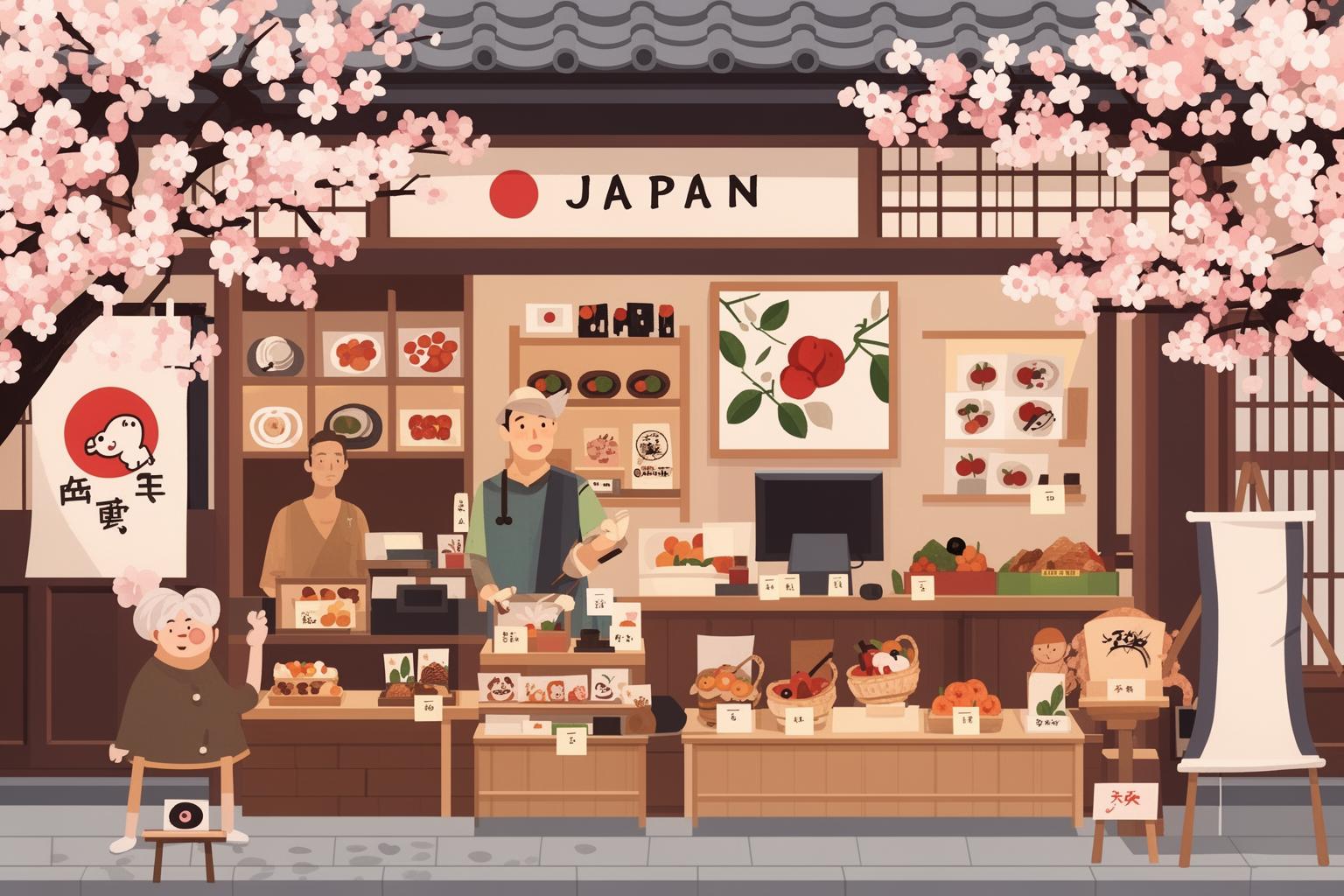
Overseeing this entire realm of cheap thrills and sugary delights was the shopkeeper. They remained the constant, the steady anchor in the turbulent world of after-school energy. In a country that often prizes formal, polite, yet distant customer service, the dagashiya owner stood apart completely. They were a neighborhood institution, a surrogate grandparent to every child who entered their shop.
Typically an elderly woman or man, they would sit on a low stool behind the counter, often watching a small television or fanning themselves in the summer heat. They moved slowly, spoke little, but observed everything. They knew which kids were friends, which had recently fought, and which needed some quiet time after a tough day at school. They were the silent protectors of the neighborhood’s children.
Their role extended far beyond simply making change. They acted as arbiters of playground justice, diffusing disputes with a gentle but firm word. They were keepers of local history, having sold the same treats to the parents of today’s children. They might offer a quiet piece of advice or, if you seemed especially down, slip an extra candy into your bag without saying a word. They upheld the unspoken rules: no shouting, no messes, and be home before the 5 p.m. chime echoed over the town’s loudspeakers.
This relationship was transactional, but also deeply personal. You didn’t only buy candy from them; you checked in with them. Their presence was a source of stability and safety. In the hours between school’s end and parents’ return, the watchful eye of the dagashiya owner ensured the neighborhood children had a safe place to gather. They were the living embodiment of the community’s connective tissue.
More Than a Store: The Third Place for Kids
Sociologists emphasize the significance of the “third place”—a setting distinct from the structured realms of home (the first place) and work (the second place). It serves as a public space for informal social interaction, fostering a sense of community. For adults, this might be a coffee shop, a pub, or a library. For Japanese children of a certain era, the dagashiya was unquestionably their third place.
It was the go-to spot. The question after school wasn’t “What should we do?” but rather “See you at the dagashiya.” Bikes would be dumped in a tangled pile on the pavement outside, with school bags tossed in a corner inside. Children would gather on the steps, on overturned crates, or on the floor, comparing their loot, swapping snacks, and planning the rest of their afternoon.
This was where social life unfolded. It was where you mastered the complex art of negotiation by attempting to trade your savory squid for a friend’s chocolate wafer. It was where you talked about a new video game, analyzed a teacher’s odd habit, or organized a weekend outing to a nearby park. In the corner of some larger shops, there might be a single, ancient arcade cabinet—a dusty, off-brand relic from the early days of gaming—around which kids would huddle, taking turns to conquer its simple yet challenging mechanics.
The dagashiya was a place that belonged to children, largely free from adult oversight. It followed kid logic and kid rules. It was messy, it was loud, and it was entirely ours. In a society often felt as rigid and highly structured, this small pocket of delightful, semi-supervised chaos was vital. It was where we learned to be social beings, beyond the formal boundaries of the classroom and the family.
The Fading Glow: Why the Dagashiya is Disappearing
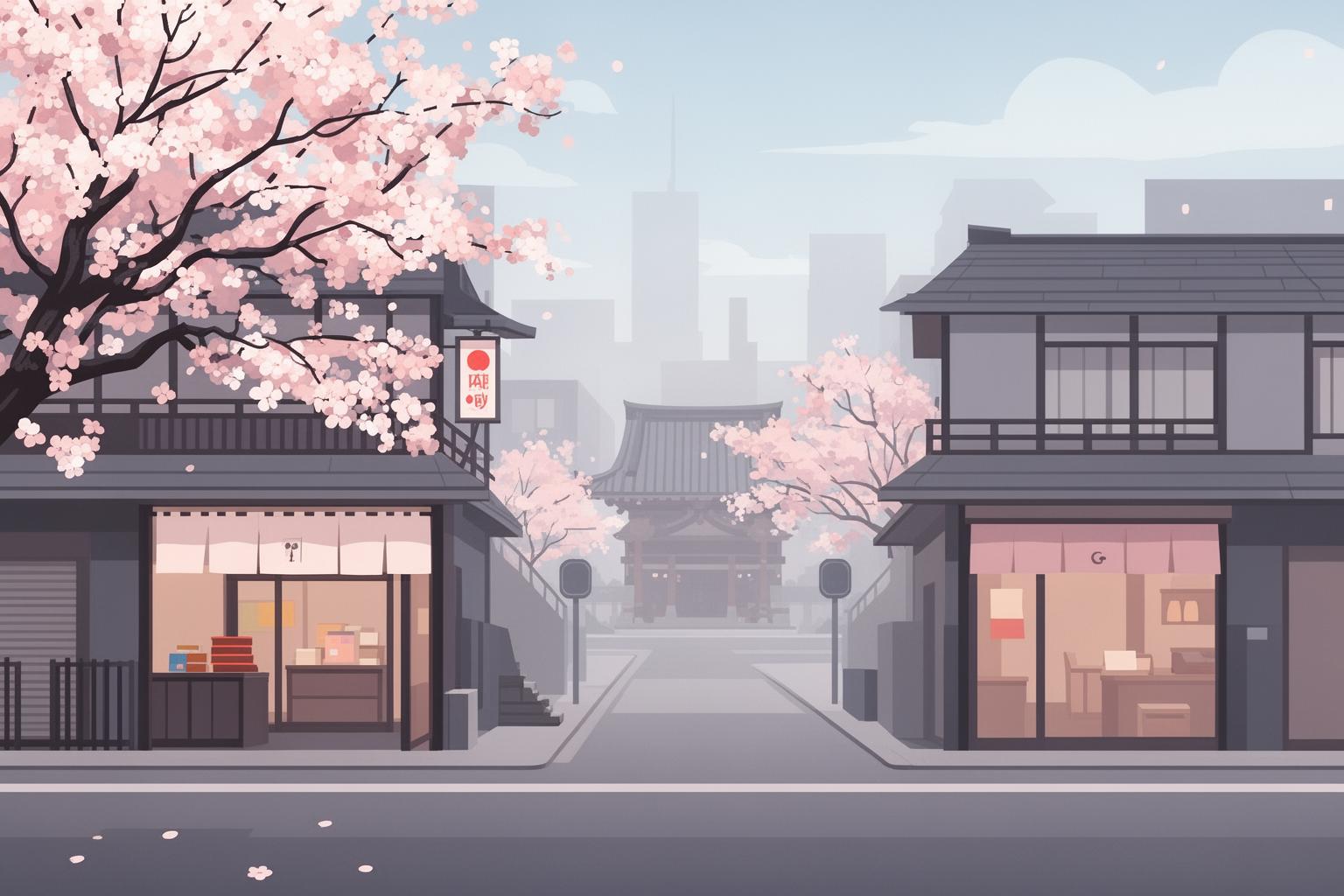
Walking through a Japanese city today reveals the quiet disappearance of these enchanting shops. The once-familiar red and white striped awnings are becoming increasingly rare, and the wooden doors that used to rattle are now shut for good. The decline of the dagashiya is a slow, poignant tale shaped by modernization, demographic changes, and evolving lifestyles.
The Rise of the Konbini
The most noticeable factor is the rise of the Japanese convenience store, the konbini. Chains like 7-Eleven, FamilyMart, and Lawson are marvels of modern retail. They are clean, brightly illuminated, open 24/7, and offer a vast array of high-quality products—from fresh coffee and hot meals to magazines and bill payment services. They also stock snacks.
For children today, the konbini has become the new norm. It’s where they stop for an after-school treat. But the experience is fundamentally different. The konbini is a place of cold efficiency. You pick what you want, pay a uniformed part-time employee who recites a rehearsed script, and leave. There’s no lingering, no friendly obāchan, and no sense of community or belonging. It’s a sterile, transactional environment that serves a purpose but doesn’t nourish the soul. The vast variety and sleek packaging of konbini snacks also make the simple, old-fashioned dagashi seem outdated.
Changing Lifestyles and Demographics
Behind the competition in retail lie deeper social transformations. Japan’s birthrate is among the lowest worldwide, meaning that the main customer base for a dagashiya—children—is steadily shrinking. Neighborhoods that once bustled with children playing outdoors are now quiet.
At the same time, the original generation of dagashiya owners is aging. These shops were never highly profitable; they were labors of love, run by people who valued being part of the local community. Their children, having grown up in a more affluent Japan, have sought careers in cities and show little interest in taking over the small family business. When the elderly owner retires or passes away, the shop often closes permanently.
Parenting styles have also shifted. In an era of heightened concerns about safety and nutrition, many parents prefer their children to come straight home from school or attend organized after-school programs (juku or club activities) rather than linger at a candy store. The idea of unstructured, unsupervised play—which was central to the dagashiya experience—has become increasingly rare.
The Ghosts and the Survivors: Dagashiya in the 21st Century
While the traditional neighborhood dagashiya is becoming increasingly rare, it hasn’t disappeared altogether. Instead, it has evolved, surviving in new forms that evoke our nostalgia for a bygone era.
One familiar version is the “nostalgia play.” These are commonly found in tourist areas like Asakusa in Tokyo or within large shopping centers. They are carefully crafted replicas of old dagashiya, with shelves brimming with every classic snack imaginable. They are bright, clean, and orderly. However, the context is quite different. The main customers are no longer children with 100-yen coins but adults in their 30s, 40s, and 50s, filling their baskets with tastes from their youth. It serves as a museum exhibit of childhood, a place to purchase memories. It’s enjoyable, yet it lacks the vibrant, living spirit of the original.
Far less common is the true survivor. Hidden away on a forgotten side street in an older neighborhood, you might still come across one. Stepping inside as an adult is a powerful, almost spiritual experience. The air is thick with the same sweet, dusty scent. The same faded posters decorate the walls. And behind the counter, an obāchan even older than you remember glances up from her newspaper. Nothing has changed, and yet everything has. You are no longer a child budgeting 100 yen; you are a visitor to your own past.
The Pokémon Mart was a place of healing and preparation, a stop where you could refresh your team and stock up on supplies for the journey ahead. The dagashiya fulfilled that very same role. It soothed the small wounds of a dull school day with sweets and strengthened you for afternoon adventures with friendship. Its gradual disappearance represents more than just the loss of a type of store. It signals the fading of a particular kind of childhood, a particular kind of community. It’s a quiet reminder that sometimes the most important places in our lives aren’t the grandest or most efficient, but the small, humble ones where items cost just 10 yen.