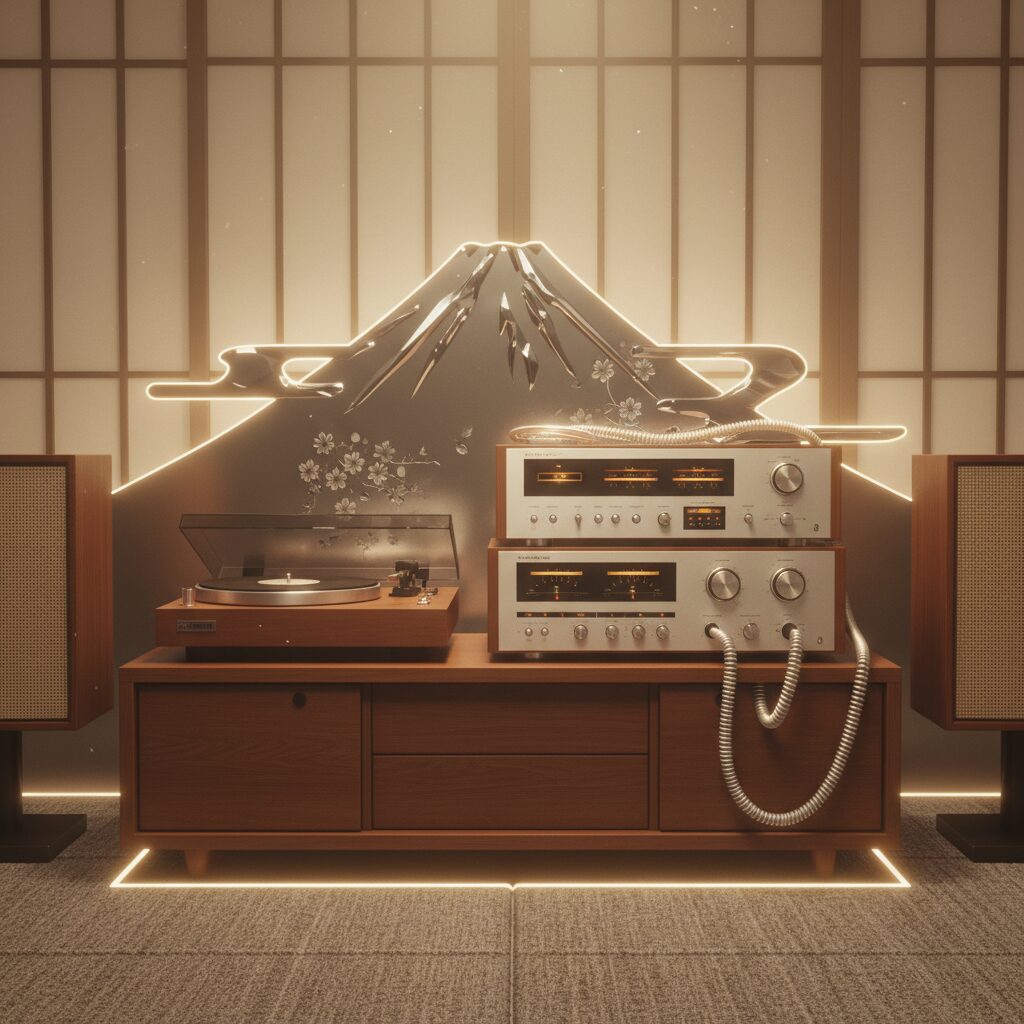
Step out of the electric chaos of a Tokyo street and into the hushed, wood-paneled interior of a classic jazz kissa. The air is thick with the faint, sweet smell of old paper and stale cigarette smoke, a ghost from a bygone era. No one is talking. The patrons—a mix of aging salarymen and intense young men with sharp haircuts—are seated in worn leather armchairs, their attention fixed on a single point at the front of the room. There, like an altar in a shrine, stands the sound system. Towering Tannoy speakers flank a glowing wall of McIntosh amplifiers, their iconic blue meters pulsing gently in the dim light. A record spins on a heavy-duty turntable, the needle tracing grooves cut half a century ago. The sound that fills the room isn’t just loud; it’s tangible. You can feel the resonant pluck of a double bass in your chest, the shimmering decay of a cymbal in the air. This isn’t background music. It’s the entire point.
What drives someone to dedicate their life and livelihood to reproducing the sound of a 1959 Miles Davis recording with this level of fanatical precision? Why would a collector spend the price of a small car on a vacuum tube amplifier from the 1970s when modern equipment offers technically perfect digital reproduction? The answer isn’t just about a love for music or a nostalgia for the past. It’s about a fundamental concept that quietly governs so much of Japanese culture: kodawari.
Translating kodawari is notoriously difficult. Common attempts like “craftsmanship,” “fastidiousness,” or “perfectionism” all fall short because they miss the essential nuance. Kodawari is not about achieving some objective, universally acknowledged standard of “the best.” It is a deeply personal, often obsessive, and unwavering commitment to one’s own specific set of ideals, methods, and details. It’s the ramen master who boils his broth for 17 hours instead of 16, not because customers would notice, but because he believes it unlocks a specific depth of flavor. It’s the denim weaver who insists on using a vintage, inefficient loom because its unique chatter creates an almost imperceptible texture he prizes. Kodawari is a philosophy of process, a form of self-expression disguised as a craft. And there is perhaps no subculture where this mindset is on more vivid, audible display than in the world of Japanese vintage high-fidelity audio.
The meticulous passion driving vintage audio enthusiasts is echoed in the art of solo karaoke performance, where every note is a personal declaration of perfection.
Beyond Perfectionism: Decoding ‘Kodawari’
To understand why a grown man might spend an entire weekend fine-tuning the position of his speakers by just one millimeter, you first need to unlearn the Western concept of perfection. The Western model often suggests a finish line—a flawless state that, once reached, is considered complete. Kodawari, however, has no finish line. It is a continuous, internal quest for a personal ideal. It represents a stubborn dedication to a particular way of doing things, rooted in the belief that these precise details give something its true soul.
This mindset is pervasive throughout Japan, once you learn how to recognize it. It’s evident in the sushi chef who massages an octopus for exactly 47 minutes to achieve the ideal texture. It’s found in the bladesmith who folds steel hundreds of times, following a tradition that surpasses what is structurally necessary for a modern kitchen knife. It’s embodied by the bartender at a Ginza establishment who meticulously carves a perfect ice sphere for your whisky—a process that takes several minutes—because he believes its slower melting rate preserves the spirit’s integrity. In most cases, the difference is subtle, perhaps even imperceptible to the untrained eye. Yet that is irrelevant. The pursuit is not for external approval; it is an internal agreement the creator makes with themselves and their craft.
Kodawari is also deeply personal and sometimes eccentric. Two different coffee masters may hold completely opposing philosophies—one insisting on a light roast to preserve floral notes, the other favoring a dark roast for a rich, bitter body. Both defend their approach with the unwavering conviction of zealots. Neither is wrong. They are simply manifesting their individual kodawari. This is not about market trends or catering to the masses. It is about crafting something that perfectly reflects the creator’s own deeply held aesthetic and philosophical convictions.
This is the key to understanding the audio enthusiast. He is not necessarily striving to build a system that sounds “best” by the numbers on an oscilloscope. He is seeking to build a system that sounds “right” to him. It is his personal sonic philosophy brought to life through wires, tubes, and wood.
The Sonic Sanctuary: Jazz Kissa and Listening Bars
The historical core of this subculture pulses within the walls of Japan’s jazz kissa and listening bars. These spaces are not merely cafes that play jazz; they are sanctuaries devoted solely to the act of listening. Their origins trace back to the post-war era when imported American jazz records were prohibitively costly for individuals to own. Jazz kissa emerged as venues where patrons could pay a modest fee—the price of a cup of coffee—to hear these rare records played on high-quality sound systems.
A strict etiquette quickly took hold. Conversation was either prohibited or kept to a whisper at best. Reading was allowed, but the main focus remained on attentive, reverent listening. The owner, or “master,” served not only as proprietor but as curator and gatekeeper of the experience. He—and it was almost always a he—chose the records, operated the equipment, and established the solemn atmosphere. His kodawari was apparent in every decision: the specific vinyl pressings he sought out, the precise combination of turntable, amplifier, and speakers, and the meticulous acoustic treatment of the room to reduce unwanted reflections.
The equipment itself achieved legendary status. Brands like JBL, Altec Lansing, and Tannoy for speakers, alongside McIntosh, Marantz, and Luxman for amplifiers, became venerated. These were not modest home audio devices; they were massive, professional-grade components, often intended for cinemas or recording studios, repurposed for the unwavering goal of pure audio reproduction. The visual impact was as significant as the sound. The warm glow of vacuum tubes, the imposing size of the speaker horns, and the sheer physical presence of the system all conveyed an intimidating seriousness. This was no mere hobby; it was a dedication.
Entering a place like Jazz Kissa Basie in Iwate, or Eagle in Tokyo, feels like stepping into a time capsule. The master’s system, built and refined over decades, is the focal point. The patrons understand they are visitors within his sonic realm, there to experience music filtered through his unique kodawari—a system embodying his lifelong pursuit of a specific sound.
The Cult of Components: A Quest for Audio Purity
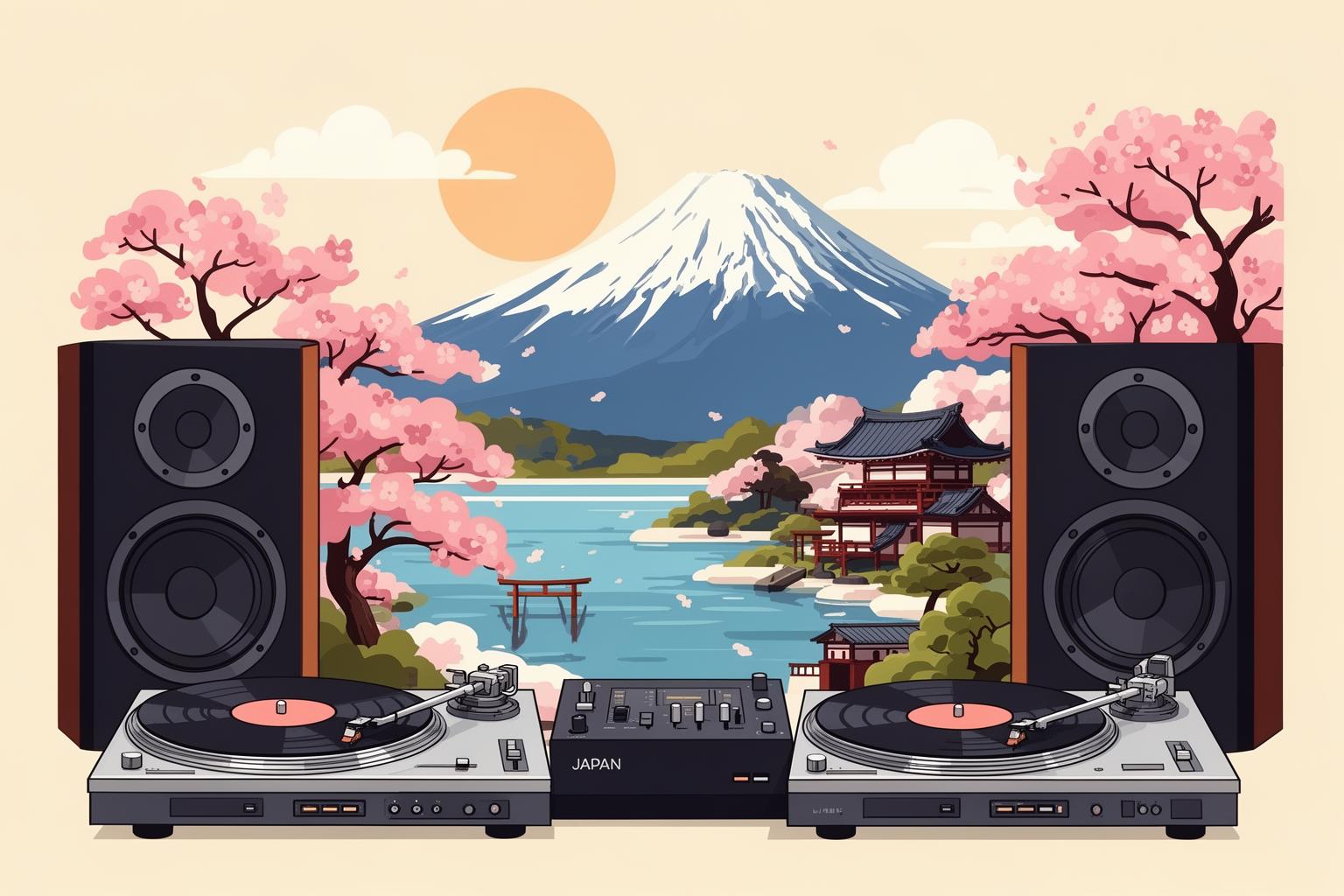
While the jazz kissa served as a public forum for this passion, its most powerful expression lies within the homes of private audiophiles. Japan’s economic boom in the 1970s and 80s coincided with the golden age of analog Hi-Fi, during which Japanese manufacturers led the way. Companies such as Sansui, Kenwood, Pioneer, and Yamaha crafted amplifiers, receivers, and turntables that were engineering marvels. These were not flimsy plastic devices but robust machines featuring brushed aluminum faceplates, satisfyingly chunky knobs, and internally arranged components with artistic precision. This era of manufacturing itself embodied national kodawari—an unwavering dedication to quality, durability, and technical excellence.
The Japanese audiophile’s pursuit is meticulous, focusing on the individual components of a system. Each choice carries philosophical significance. The primary divide is between vacuum tubes and solid-state transistors. Tube amplifiers, utilizing technology dating back to the early 20th century, are valued for their “warm,” “rich,” and “musical” sound. They generate a type of harmonic distortion many find pleasant, adding depth and presence to the music. In contrast, solid-state amps are more accurate, powerful, and reliable, delivering a cleaner, more neutral sound. An enthusiast’s preference between these types reveals his core philosophy: whether he favors romantic musicality or precise accuracy.
This passion reaches an almost microscopic level. Audiophiles will debate endlessly over the sonic traits of various vacuum tube brands—for instance, a Telefunken tube sounds different from a Mullard. They discuss the merits of different turntable drive systems: belt-drive for its isolation from motor noise versus direct-drive for pitch stability. They obsess over speaker cone materials (paper, metal, beryllium?), the purity of copper in speaker cables, and the types of wood used in equipment racks to dampen vibrations.
Building a system is akin to managing a sports team. You can’t simply acquire all the most expensive “star players.” Instead, you must select components with synergy that work together to form a harmonious whole. A bright-sounding amplifier might need pairing with warmer speakers to achieve balance. This process of matching, testing, and continuous tweaking defines the hobby’s essence. The goal is to create a chain of components where every link is a deliberate expression of the owner’s kodawari, all aimed at reproducing sound in a way that touches them emotionally.
Why Vintage? The Warmth of Imperfection
In an era when streaming services provide millions of songs in lossless digital quality, the commitment to cumbersome, decades-old technology can appear puzzling. Why bother with vinyl records that can scratch and warp? Why depend on vacuum tubes that eventually wear out and need replacement? The reason lies in rejecting the notion that technical perfection guarantees emotional fulfillment.
Many audiophiles describe the sound of modern digital audio as “cold,” “sterile,” or “lifeless.” Although a digital file is an almost exact reproduction of the master recording, it lacks the subtle artifacts and colorations introduced by analog formats. These “imperfections”—the gentle compression of magnetic tape, the pleasant distortion of a tube amp, the very physical act of a needle tracing a vinyl groove—are regarded not as flaws, but as vital elements of a more “human” and “organic” sound. The pursuit of vintage gear is a quest for this perceived warmth.
This represents a form of kodawari that intentionally prioritizes feeling over fidelity. It reflects the belief that the engineers of the 1970s, aiming to create the best-sounding equipment possible with the technology available to them, stumbled upon a kind of sonic soul lost in the subsequent digital revolution. A vintage Sansui amplifier is more than just an electronic device; it is a time capsule embodying a specific philosophy of sound reproduction. To own and use it is to engage with that philosophy.
Moreover, this subculture welcomes the challenges of maintaining old equipment. Part of the satisfaction comes from the search itself. Finding a rare turntable in excellent condition or locating a technician skilled enough to recap the capacitors of a 40-year-old amplifier is a triumph in its own right. This dedication to preservation and upkeep is another deep-rooted element of Japanese craft culture. A quality object is not meant to be discarded; it is meant to be cared for, repaired, and handed down. The commitment needed to keep these beautiful machines operational is a testament to the owner’s passion.
The Modern Echo: Kodawari in the Digital Age

Far from disappearing, this subculture is experiencing a revival. A new wave of listening bars has emerged throughout Japan and increasingly around the world. Establishments like Bar Martha in Tokyo’s Ebisu district carry forward the legacy of the original jazz kissa, but with a wider musical range that may include soul, classic rock, and electronic music. The fundamental principles, however, remain intact: a stunning, often vintage, sound system as the focal point, an environment dedicated to attentive listening, and a host with a clear sonic vision.
This Japanese-born passion has spread globally. Listening bars inspired by the kissa concept have opened in London, New York, and other cities, with owners frequently traveling to Japan to acquire vintage equipment and immerse themselves in the culture. The worldwide vinyl resurgence has also renewed interest in the exceptional quality of Japanese-made turntables and cartridges from the 1970s and 80s, now highly prized by collectors internationally.
The modern Japanese audiophile has not entirely rejected technology. Their kodawari has simply evolved. Many now incorporate high-resolution digital players and streaming services into their vintage setups, using a high-quality Digital-to-Analog Converter (DAC) to bridge the new and the old. The objective remains the same: to craft a personalized sonic experience. The tools have merely expanded. This hybrid approach enables them to enjoy the convenience of an extensive digital library while still enveloping the sound in the beloved warmth of their vintage tube amplifier.
The Sound of a Mindset
The passionate world of Japanese vintage audio is more than merely a niche interest for music enthusiasts. It exemplifies the kodawari mindset perfectly and resonantly. This culture prioritizes the process over the product, personal philosophy over popular opinion, and emotional resonance over technical flawlessness.
It centers on the firm conviction that the smallest, incremental details matter most. The selection of one capacitor over another, the exact calibration of a turntable cartridge, the relentless pursuit of perfect harmony among components—this is not madness. Instead, it is a disciplined, fervent quest for a personal ideal. It stands as a quiet testament that some endeavors deserve an extraordinary level of care.
The next time you find yourself deeply moved by the sound of music, listen more intently. Beneath the melody, you may catch the hum of a vintage transformer and the soft glow of a vacuum tube. You might be hearing not just excellent engineering, but a lifetime of dedication—the reflection of a singular, steadfast, and exquisitely stubborn kodawari.