You know the feeling, even if you can’t place it. It’s the sound of a summer night in a city you’ve never visited, in a decade you might not have lived through. It’s the glimmer of taillights on a rain-slicked highway, a lonely saxophone echoing from a high-rise apartment, the clink of ice in a glass at a quiet bar. This feeling, a potent cocktail of nostalgia, optimism, and a gentle, shimmering melancholy, has a name: City Pop. And for the past decade, this largely forgotten genre of Japanese music from the late 1970s and 80s has been resurrected by the internet, captivating millions of listeners around the world who weren’t even born when it was made. It’s a strange and wonderful phenomenon. This isn’t a revival pushed by record labels or a calculated marketing campaign. It’s a genuine, grassroots rediscovery, driven by algorithms and an intangible, universal yearning. So, why this music? Why now? What is it about these breezy, sophisticated sounds from Japan’s bubble economy that resonates so deeply in our chaotic modern world? The answer isn’t just about good tunes; it’s about the phantom limb of a future we were promised but never got, a dream of a past that feels more real than our present.
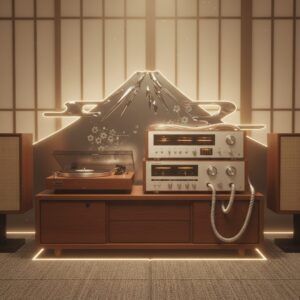
Embracing the reflective mood of City Pop, listeners can also appreciate a similar commitment to sonic excellence found in Japanese kodawari aesthetics, which enhances the genre’s nostalgic allure.
The Soundtrack to a Perfect Past
To grasp City Pop, you first need to understand the world that shaped it. Picture Japan in the 1980s. The post-war economic miracle had reached its peak. The country was flush with cash, a global leader in technology and finance. Tokyo gleamed as a futuristic metropolis. This was not just prosperity; it was an overwhelming surge of national confidence and optimism. A new urban consumer culture was emerging, centered on leisure, ambition, and advanced technology.
This was the environment in which City Pop flourished. It served as the soundtrack for this new lifestyle. It was meant for cruising the Shonan coast in a new Toyota Celica with the windows down. It was designed to be played on a Sony Walkman during train rides, turning commutes into personal movie scenes. It accompanied sipping cocktails in the Park Hyatt’s sky lounge, gazing over the endless city lights. The music was aspirational because the society was aspirational. It was sleek, luxurious, and impeccably produced, reflecting the high-quality electronics and cars that Japan was known for.
The sound itself is a brilliant blend. City Pop isn’t a rigid genre with fixed rules; it’s more of a mood, a sonic palette. It heavily incorporates American styles—AOR (Album-Oriented Rock), soft rock, funk, soul, and disco—but interprets them through a uniquely Japanese perspective. The outcome is something distinctive. You hear the funky basslines of American R&B, the smooth chord progressions reminiscent of bands like Steely Dan, and the breezy feel of West Coast pop, all imbued with a Japanese melodic sensibility often touched by subtle wistfulness.
Behind this sound were some of the world’s finest studio musicians, working in cutting-edge recording studios. The production quality is remarkable, even by today’s standards. Every detail is crystal clear: the sharp snap of the drums, the warm resonance of a Fender Rhodes piano, the tight punch of the horn section, the shimmering sweep of synths. This music wasn’t created in a garage; it was carefully crafted by masters at the height of their skills, backed by budgets unimaginable now. It was, in every respect, the sound of a nation at its peak.
The Architects of the Vibe
While numerous artists contributed to the City Pop soundscape, a few key figures stand as its primary architects, their work laying the foundation of the genre. To discuss City Pop without mentioning Tatsuro Yamashita is like talking about grunge without Nirvana. Often dubbed the “King of City Pop,” Yamashita is a meticulous perfectionist and studio wizard who obsessed over every detail of his recordings. His music, particularly albums like For You (1982), perfectly captures the genre’s bright, summery vibe. Tracks such as “Sparkle” and “Loveland, Island” serve as masterclasses in arrangement, blending intricate vocal harmonies, razor-sharp guitar riffs, and vibrant brass sections into an infectious wave of pure joy. His sound evokes the sonic equivalent of an ideal day at the beach.
His wife, Mariya Takeuchi, holds equal importance, although her rise to global recognition was far more accidental. While a major star in Japan for decades, her song “Plastic Love” (1984) unexpectedly became the anthem of the genre’s internet revival. It perfectly encapsulates City Pop’s hidden depth—a deceptively upbeat, danceable track whose lyrics delve into themes of loneliness and heartbreak amid a superficial world. Takeuchi’s smooth, effortless vocals glide over a groove that is both melancholic and irresistibly danceable. She embodies the soul of the city itself: glamorous on the surface, yet with a complex emotional undercurrent just beneath.
Then there are the artists who shaped the genre’s nocturnal, more reflective mood. Miki Matsubara’s debut single, “Mayonaka no Door / Stay With Me” (1979), is often the first song many non-Japanese listeners encounter. Its iconic intro—a plaintive cry of “Stay with me…” followed by a polished, jazzy arrangement—perfectly expresses a feeling of late-night longing. It’s a song for the lonely hours after the party ends. Similarly, Anri released a series of hits throughout the 80s, like “Last Summer Whisper” and “Shyness Boy,” which blended sophisticated funk with a sense of fleeting romance, her music capturing the bittersweet essence of a perfect summer drawing to a close.
We also cannot overlook the instrumental and fusion aspect of the genre. Bands such as Casiopea and T-Square crafted intricate, high-energy jazz fusion that remained deeply funky and accessible. Their music embodied technological mastery and virtuosity, aligning perfectly with the era’s fascination with high-performance cars and cutting-edge electronics. Together, these artists and many others didn’t just create songs; they built a world. A world of coastal highways, seaside resorts, glittering skylines, and sophisticated romance—and their music was the key.
The Bittersweet Machine: Why It Resonates Now
The most intriguing question is why this music, so closely linked to a particular time and place, has garnered such a passionate global following forty years later. Its appeal extends far beyond merely enjoying old music. It’s connected to a psychological phenomenon called “anemoia”: a nostalgia for a time one has never experienced. City Pop is a powerful trigger for this sensation. It doesn’t sound like the actual 1980s of the West, with their often cheesy synths and gated reverb drums. Instead, it resembles a fantasized version of the 80s—cleaner, cooler, more refined. It’s a past perfected by memory, even if that memory isn’t ours.
However, the emotional core of its appeal runs deeper than just bright, cheerful pop. Interwoven into even the most upbeat tracks is a unique Japanese emotional nuance: setsunasa (切なさ). This term is difficult to translate precisely, but it signifies a bittersweet feeling, a tender sadness or poignancy stemming from the awareness of life’s impermanence. It’s the sorrow of a beautiful sunset, the close of an ideal summer, a fleeting moment of connection. This feeling is evident in chord progressions that resolve with a slightly unexpected, wistful touch. It’s also palpable in lyrics that often depict transient love, fading memories, or a sense of solitude within a busy, indifferent city.
“Plastic Love” exemplifies this perfectly. Its groove is irresistibly catchy, yet the lyrics tell the story of someone repeatedly hurt, treating love as a disposable game. It’s the sound of dancing with tears in one’s eyes. This emotional depth elevates City Pop beyond mere background music. It recognizes that even during a time of remarkable prosperity and optimism, feelings of loneliness, heartbreak, and longing persist. This duality makes it feel profoundly real and relatable, crossing cultural and linguistic boundaries.
For a generation raised on the internet, confronting economic instability, climate anxiety, and social fragmentation, City Pop’s world feels like a lost utopia. It serves as the soundtrack to an era of seemingly boundless possibility, analog simplicity, and tangible luxury. It is escapism, certainly, but an escape into a realm that feels more elegant, hopeful, and emotionally genuine than our own.
The Algorithm’s Ghost
The story of how this music returned from obscurity is distinctly modern. It wasn’t uncovered in dusty record crates by DJs; instead, it was revealed by a ghost in the machine: the YouTube recommendation algorithm. Beginning in the mid-2010s, fans of 70s funk, soul, and disco started noticing something unusual. After their video ended, YouTube would often auto-play a song with Japanese characters in the title and a thumbnail featuring a calm-looking woman from the 1980s. That song was frequently Mariya Takeuchi’s “Plastic Love.”
An eight-minute extended version of the track, uploaded by a fan, became a viral hit. No one is entirely sure why the algorithm fixated on this particular song, but it did. It served as a gateway, a rabbit hole that led millions into a forgotten musical world. The comment sections of these videos turned into virtual communities, with people worldwide collectively asking, “What is this music, and why do I love it so much?”
This digital rediscovery was primed by internet-born genres like vaporwave and future funk. In the early 2010s, these micro-genres were built around sampling, slowing down, and re-contextualizing nostalgic sounds, often drawing from 80s Japanese pop. They adopted the aesthetic of City Pop—its smoothness, melancholy, and futuristic-yet-retro feel—and transformed it into a new art form. This introduced a generation of highly connected listeners to the genre’s core elements, making them receptive to the authentic sound when it eventually emerged.
From there, a devoted online fan community took over. They acted as digital archivists, uploading rare albums that were out of print and unavailable on streaming platforms. They translated lyrics, researched artist histories, and created curated playlists, piecing together the history of a genre largely undocumented in English. This collective effort, a labor of love from a decentralized global fanbase, truly fueled the revival. It was a bottom-up rediscovery, driven by genuine fascination and shared passion.
The Vibe Lives On
Today, City Pop is no longer an obscure secret. Those rare tracks once uploaded to YouTube are now officially available on Spotify and Apple Music, as Japanese record labels have finally recognized the immense international demand. Classic albums are being reissued on vinyl to eager audiences. In Tokyo, entire sections of record stores are devoted to the genre, frequented by both young Japanese locals and visiting foreigners.
Its influence has also permeated contemporary music. You can hear traces of City Pop’s sophisticated chord progressions and funky basslines in the works of artists like Tyler, the Creator, Thundercat, and The Weeknd. A new generation of Japanese artists, such as Fujii Kaze and Awesome City Club, are openly embracing and modernizing the sound for the 21st century. It has been transformed from “oldies” into a timeless and respected element of Japan’s cultural heritage.
So, who is City Pop for? It’s for anyone who appreciates beauty in bittersweetness. It’s for night owls, dreamers, and old souls. It’s for those who meticulously craft playlists for every imaginable mood. It’s for those of us who feel a peculiar sense of loss for a future that the past once promised. The genre’s original audience was the young, urban Japanese professional of the 1980s. Its new audience is a global, digitally connected generation, united not by a shared place or history, but by a shared emotion.
City Pop is more than just a collection of songs; it’s a time capsule that somehow feels more relevant than ever. It captured the height of Japan’s late-20th-century dream, with all its dazzling confidence and quiet, private anxieties. Listening to it today is like receiving a faint radio signal from a bygone era, a message in a bottle conveying a world that was sleek, soulful, and shimmering with a hope that feels both distant and deeply needed. It’s the perfect soundtrack for driving toward a future, while glancing in the rearview mirror at a beautiful, imagined past.