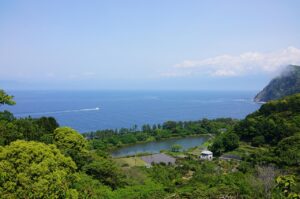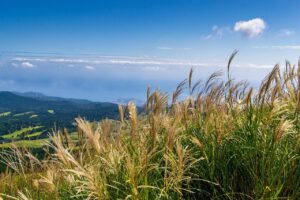
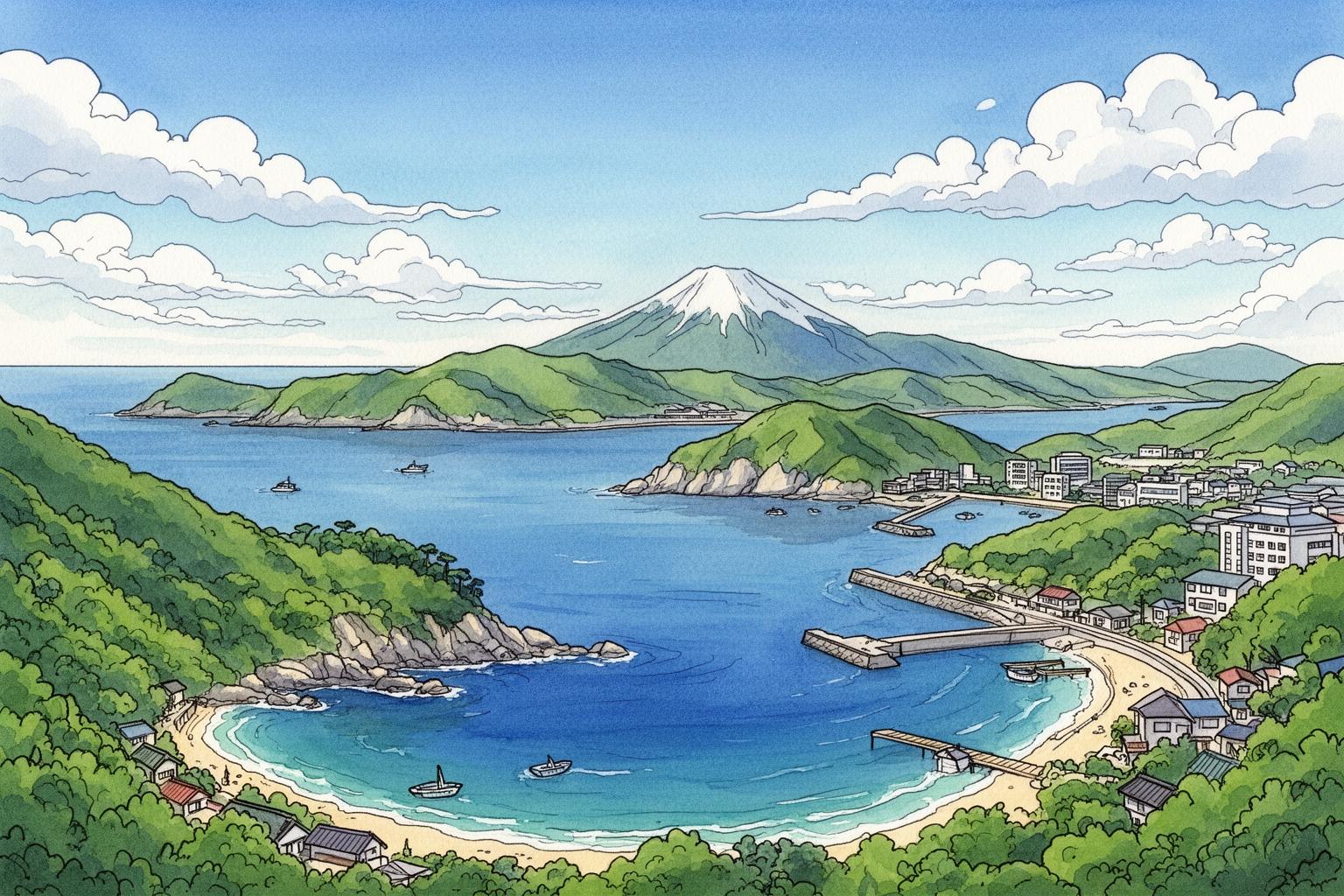
Yo, what’s up, fellow adventurers! Megumi here, coming at you straight from the concrete jungle of Tokyo. As an event planner, my life is basically a high-speed chase of deadlines, bright lights, and non-stop energy. And while I high-key love the city vibe, sometimes a girl’s gotta escape. I’m talking a full-on system reboot—trading the subway’s rhythm for the ocean’s beat, swapping skyscrapers for ancient cliffs. And let me tell you, I found the ultimate escape hatch, a place that’s giving pure main character energy, and it’s ridiculously close to Tokyo. We’re talking about the Izu Peninsula, a legit geological theme park jutting out into the Pacific Ocean. But we’re not doing this the basic tourist way. Nah, we’re ditching the tour buses and crowded trains for something way more epic: the e-bike. Imagine this: you, a sleek electric-assist bike, and miles of dramatic coastline carved by volcanoes millions of years ago. You’re literally riding through time, with the wind in your hair and the raw power of the planet laid out right in front of you. This isn’t just a trip; it’s a full-body experience, a conversation with the Earth itself. Izu is where the Philippine Sea Plate is literally crashing into mainland Japan, creating a landscape that’s so extra, it’s unreal. We’re talking jagged lava cliffs, secret sea caves, pristine white-sand beaches, and panoramic views that’ll have your phone’s camera working overtime. An e-bike is your golden ticket to unlock it all, turning steep coastal roads into a breezy cruise and letting you discover all the hidden gems the average traveler misses. This is the story of how to connect with Japan’s wild heart, one pedal-assisted push at a time. It’s about feeling the story of the land, not just seeing it. So, get ready to roll out, because this Izu adventure is about to change your whole perspective on what a weekend getaway can be. No cap.
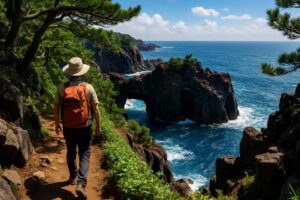
To truly feel the raw power of this volcanic landscape, you can’t miss the dramatic cliffs and sea caves of the Jogasaki Coast.
The E-Bike: Your Ultimate Izu Cheat Code
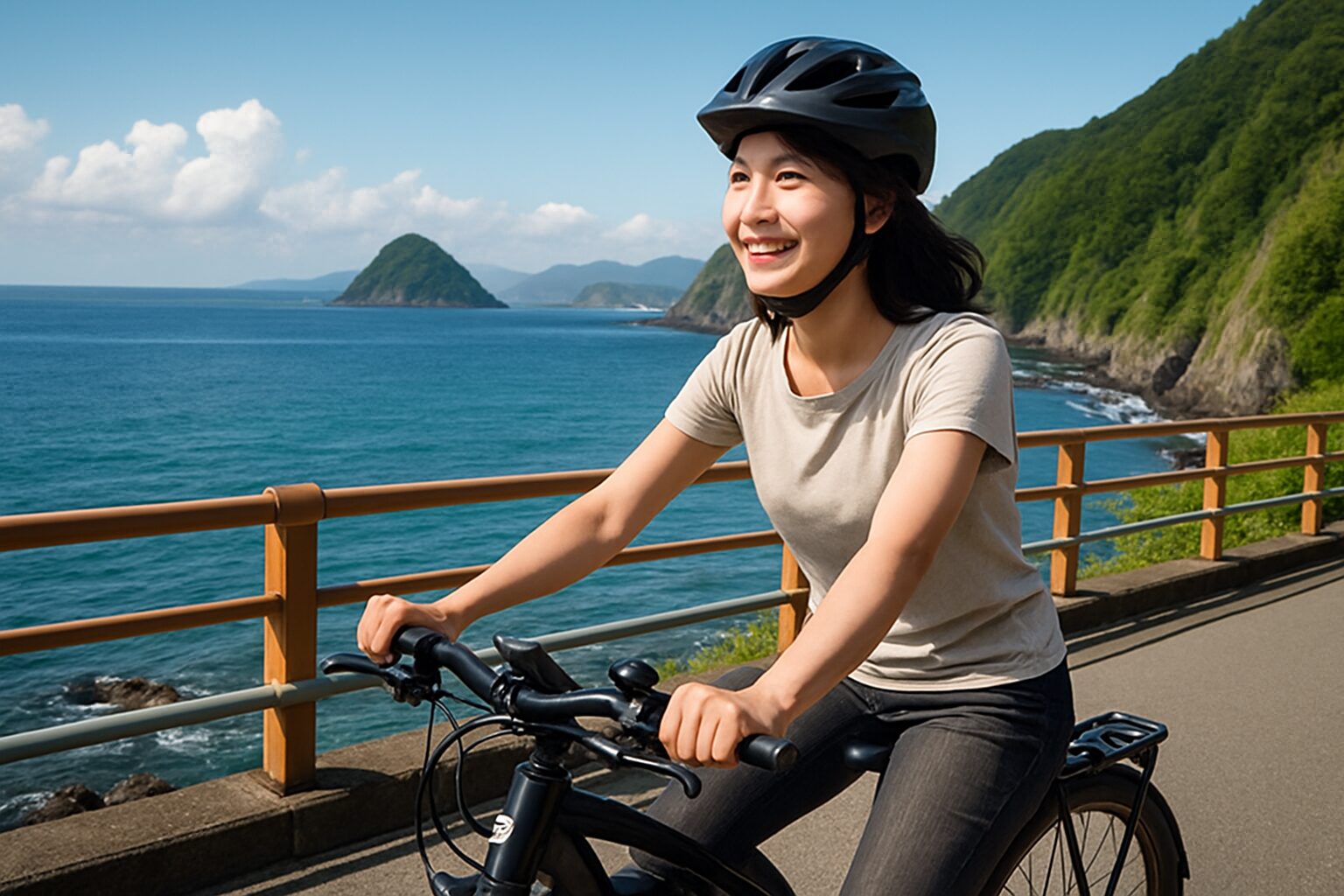
Alright, let’s be honest for a moment. When you glance at a map of the Izu Peninsula, you notice a whole mess of curvy, winding lines hugging the coastline. In reality, those lines represent hills—serious, leg-burning hills that make you question your life choices. I enjoy a good workout, but when I’m trying to take in breathtaking ocean views and explore hidden shrines, the last thing I want is to be gasping for breath, completely defeated by a 15% incline. This is where the e-bike comes in and totally changes the experience. It’s not a scooter or a motorcycle; it’s essentially you but with superpowers. You still pedal, you can still feel the burn if you want, but with every push, a quiet little motor gives you a boost, transforming what would be a brutal climb into a smooth, effortless ride. It’s the ultimate tool for exploring a place like Izu.
Think about it. On a normal bike, you’d be stuck sticking to flatter, less interesting paths, or you’d need the legs of a pro cyclist to tackle the coastline. With an e-bike, the whole peninsula is yours to explore. That stunning overlook that seems impossibly steep? You’ll roll right up to it, arriving not drenched in sweat but as a calm, collected adventurer ready for the perfect photo. The battery-powered assist is your game-changer, leveling the playing field and letting you focus on the journey instead of the struggle. You can cover far more ground without feeling completely wiped out. A 40-kilometer coastal ride that would be a grueling, all-day effort on a regular bike becomes an enjoyable, energizing half-day trip on an e-bike, leaving you plenty of juice to hike down to a hidden beach or relax in an onsen afterwards.
The freedom it offers is totally addictive. Spot a charming little side road leading down to a fishing village? Take it. See a tiny café perched on a cliff? Stop for a coffee. You’re not bound by bus schedules or hunting for parking. Your parking spot is anywhere you can lean your bike. You’re moving at the perfect pace—fast enough to cover good distance, but slow enough to breathe in the salty air, hear cicadas buzzing in the trees, and notice the intricate details of a roadside shrine. You’re fully immersed in the surroundings in a way that’s impossible from inside a car. The soft hum of the motor accompanies the sounds of wind and waves. It’s a low-key, eco-friendly way to travel that feels deeply connected to the nature you came to experience. It makes you feel less like a tourist and more like a part of the landscape. Trust me, once you conquer your first Izu hill without breaking a sweat, you’ll look at your e-bike and get it. It’s not cheating; it’s just traveling smarter.
East Izu: Where Fire Met Water at the Jogasaki Coast
Our journey starts on the eastern coast of Izu, where the peninsula’s volcanic fury is vividly on display. The highlight here is the Jogasaki Coast, which honestly feels like it’s been plucked from a fantasy novel. This entire shoreline was formed roughly 4,000 years ago when nearby Mount Omuro—a perfectly symmetrical, almost cartoon-like volcano—erupted. Molten lava flowed down to the sea, and as it met the cold Pacific waters, it cooled, fractured, and shaped the dramatic, jagged cliffs of dark basalt rock that you see today. Riding your e-bike toward this coast is an experience in itself. Leaving the city of Ito behind, the scenery grows wilder, roads narrow, and the air turns saltier.
When you finally arrive and park your bike, the view is breathtaking. It’s a raw, intense landscape. Forget soft, sandy beaches—this is all sharp angles, deep indigo waters crashing against black rock, and tenacious green pines gripping the cliffs as if for survival. The sound is the first thing to strike you—a steady, rhythmic roar of waves smashing and echoing against the volcanic stone. It’s a powerful, primal noise that humbles you in the best possible way. The main trail here stretches about nine kilometers along the cliff’s edge, though many sections are easily accessible right from the main parking and access points where you leave your bike.
The Kadowaki Suspension Bridge: A Walk on the Wild Side
The absolute must-see, the spot you’ve probably seen all over Instagram, is the Kadowaki Suspension Bridge. This 48-meter-long, 23-meter-high bridge spans a particularly rugged inlet. Walking across it is a vibe all its own. It sways slightly with the wind and the footsteps of others, giving a mild thrill as you look down at the turquoise water surging into the cove below. The view from the middle is breathtaking—you get a sweeping panorama of the jagged coastline stretching out both ways. It’s the perfect place to fully grasp the scale and fury of the eruption that shaped this land. You’re literally standing over a crack in the earth’s fresh skin. This moment calls for full presence—to feel the height, the breeze, and the raw, rugged beauty surrounding you. It’s more than just a photo opportunity; it’s a deeply sensory experience.
Right beside the bridge stands the Kadowaki Lighthouse. It’s worth climbing up to its observation deck. From the top, you’re rewarded with a 360-degree view that’s truly spectacular. You can spot the gentle green slope of Mount Omuro in the distance—the source of all this magnificent chaos. The endless blue Pacific stretches out to the horizon, and on clear days, you can even see Izu Oshima, another volcanic island. This perspective helps piece together the geological story, laying out cause and effect before your eyes. The e-bike ride to reach this spot, weaving through lush forests that suddenly open to stunning coastal vistas, adds to the magic. It feels like you’ve truly earned this incredible payoff—a front-row seat to nature’s greatest show.
The feeling you get at Jogasaki is one of deep respect for the planet’s power. It stands as a testament to destruction and creation happening simultaneously. The sharp, almost hostile rock is softened by the tenacious, beautiful plant life and the mesmerizing rhythms of the water. It’s a place of striking contrasts, and exploring it on two wheels lets you take it all in at your own pace, stopping whenever a view truly captures your soul.
South Izu: Tropical Vibes and Legendary Landings
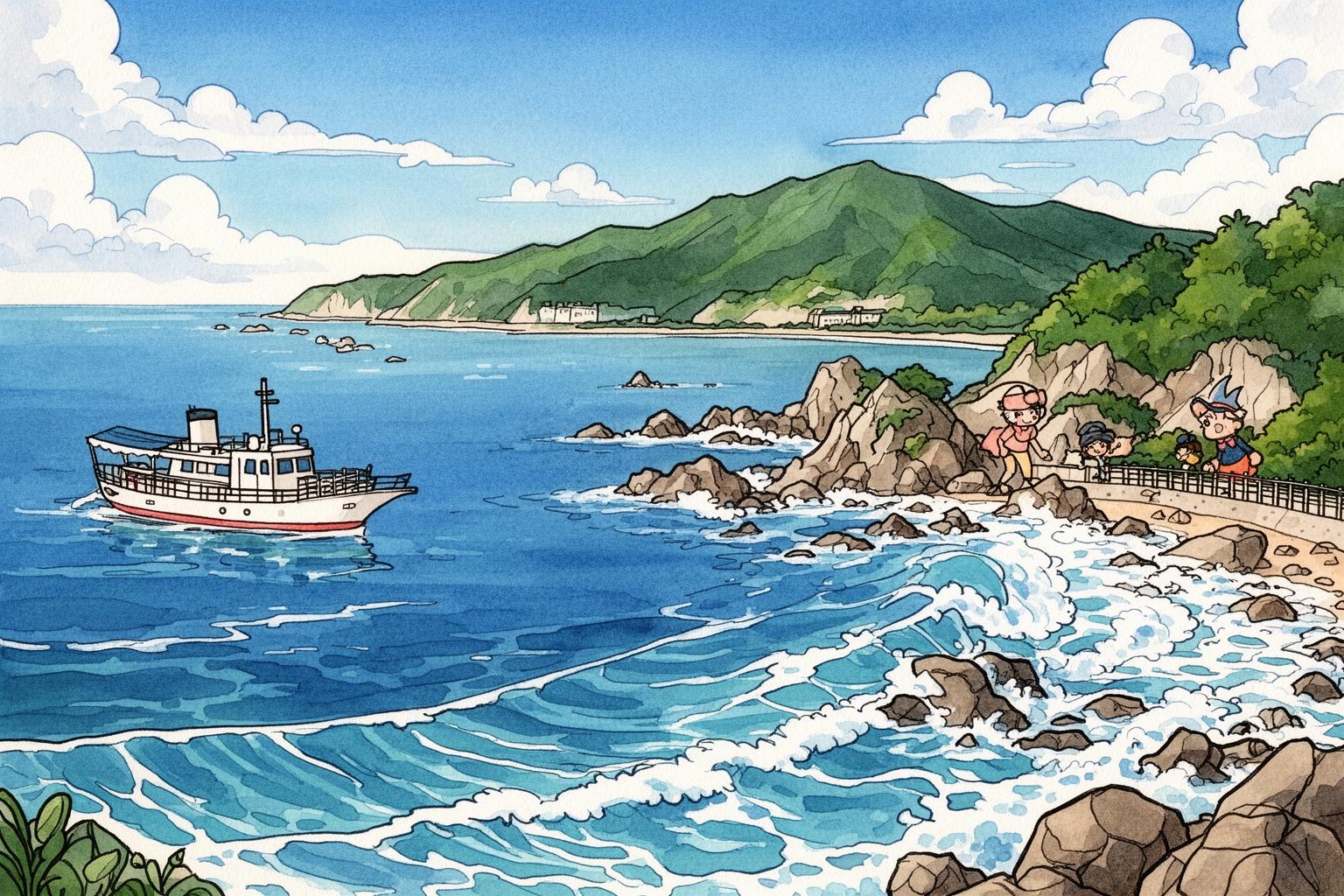
After experiencing the raw, volcanic drama of the east coast, heading your e-bike south feels like switching to a completely different channel. The farther you travel south, the more the atmosphere transforms. The air turns warmer, the vegetation shifts to subtropical, and the coastline softens in places to reveal some of Japan’s most breathtaking white-sand beaches. This is Minamiizu (South Izu), a region where stunning coastal scenery meets an important chapter in Japanese history. Your trusty e-bike is the ideal companion to navigate these landscapes and stories, from rugged capes to the historic streets of Shimoda.
Shimoda: Where Japan Met the World
The main center of South Izu is the port town of Shimoda, a place with significant historical prestige. If you know much about Japanese history, you’ve probably heard of Commodore Matthew Perry and his “Black Ships.” This is where those events unfolded. In 1854, Perry’s fleet arrived in this very harbor, a bold move that ended over two centuries of Japan’s self-imposed isolation and opened its ports to foreign trade. It was a pivotal moment that altered history’s course, and its echoes are felt throughout Shimoda.
Riding through the town on your e-bike is like a moving history lesson. You can pedal along Perry Road, a charming street lined with willows alongside a canal and old stone buildings now housing cozy cafes and boutiques. It’s incredibly picturesque. From there, it’s an easy bike ride to Ryosenji Temple, where the treaty between the U.S. and Japan was officially signed. Now a tranquil spot, standing there sparks your imagination about the tension and monumental significance of those negotiations. With an e-bike, it’s effortless to hop from one historical landmark to another—whether the Shimoda History Museum or the monument commemorating Perry’s landing. You’re not just reading history; you’re moving through spaces where it actually happened.
But Shimoda isn’t only about history. It’s also your gateway to some breathtaking beaches. Just a short, pleasant ride from the town center on your e-bike is Shirahama Beach. The name means “white sand,” and it truly lives up to it. The brilliant white sand contrasts perfectly with the turquoise water and the red torii gate of Shirahama Jinja perched on a nearby promontory—it’s picture-perfect, reminiscent of Okinawa or a tropical island despite being only a few hours from Tokyo. There are other beaches too, like the quieter Tatadohama, popular with surfers, and Kisami Ohama, a beautiful cove with a relaxed, bohemian atmosphere. With an e-bike, you can easily hop between these beaches all day, discovering your own little slice of paradise without worrying about parking.
Geological Wonders: Ryugu Sea Cave and Cape Irozaki
South Izu continues to impress with its geological marvels. A must-visit just a short ride from Shimoda is the Ryugu Sea Cave, a natural wonder shaped by waves relentlessly eroding the cliff’s soft rock. What makes it unique is the cave’s collapsed roof, creating a large open-air skylight. Descending the steps into the cave, you see the sky framed by this opening, but the real enchantment comes when you climb to the top and look down—the opening below forms a perfect heart shape. It’s one of those moments where nature feels romantic and a bit theatrical. This spot is especially popular with couples, and the view is genuinely breathtaking. You see the deep blue water flowing into the cave, as if you’ve uncovered one of Earth’s secrets.
Further south lies the tip of the Izu Peninsula: Cape Irozaki. The ride is spectacular, with winding roads offering breathtaking ocean views at every bend. This is where the e-bike truly excels, making climbs effortless and letting you fully enjoy the scenery. The cape itself is a dramatic promontory of rugged cliffs battered by the Pacific Ocean. At the path’s end stands a pristine white lighthouse and the Iro Shrine, a small, picturesque shrine nestled into a rock recess overlooking the tumultuous water below. Legend says sailors would toss offerings into the sea here, praying for safe voyages. Standing there, with the wind whipping around and an unobstructed 270-degree ocean view, you feel it—like you’re at the world’s edge. The scale, the ocean’s power, and the sheer beauty of this remote, windswept point linger in your memory long after you’ve pedaled away. South Izu is a journey through time—from the slow, powerful shaping of the land to the dramatic turns of human history—and exploring it by e-bike connects you intimately to its rhythm in the most incredible way.
West Izu: The Coast of Golden Sunsets and Hidden Caves
If East Izu represents raw volcanic power and South Izu embodies history and tropical beaches, then West Izu, or Nishi-Izu, is pure, unfiltered romance and mystery. This part of the peninsula is renowned above all for its sunsets. These sunsets aren’t merely beautiful; they offer a spiritual experience. The sun sinks directly into the Pacific, casting the sky in vivid hues of orange, pink, and purple, silhouetting the jagged, distinctive rock formations along the coast. The west coast roads are winding, narrow, and often carved into the cliffside, making for one of the most exhilarating and scenic e-bike rides imaginable. This is the relaxed, artistic, and slightly untamed side of Izu.
Dogashima: Islands of Mystery and a Blue Grotto
The crown jewel of the Nishi-Izu coast is Dogashima. It’s not a single spot but a collection of breathtaking coastal features best explored both by land and sea. The area is famous for its unique white tuff rock islands, sculpted by wind and waves into fantastic shapes. The Sanshiro Islands are the most well-known among them. What makes these special is the “tombolo” phenomenon. At low tide, a land bridge of stone and sand emerges from the sea, connecting the mainland to the islands. You can literally walk across the ocean floor to reach them. Timing this is part of the adventure, making checking tide charts an essential part of your daily routine. It’s magical to see a path appear where just hours earlier there was only water. This experience connects you deeply to the rhythms of the moon and the sea.
However, the true highlight at Dogashima is the Tensodo Cave. Often referred to as the “Blue Grotto of Japan,” it earns this title for good reason. Similar to Ryugu Sea Cave in the south, the roof of this sea cave has collapsed, forming a natural skylight. To visit it, you take a short sightseeing boat cruise leaving from Dogashima port. Your e-bike will deliver you right to the pier with ease. The boat weaves through dramatic rock formations before entering the cave. The moment you glide inside feels magical. Sunlight streams through the circular opening in the ceiling, striking the water and reflecting upward, bathing the entire cave in an ethereal, otherworldly blue glow. The water radiates a surreal luminescence that must be seen to be believed—photos simply don’t capture its essence. The whole experience lasts about 20 minutes, but the memory of that glowing blue cavern will remain etched in your mind forever. It’s a moment of pure, natural wonder.
The Sunset Ride: Chasing the Golden Hour
While Dogashima is a fantastic destination, the true heart of West Izu lies in the journey itself. The coastal road, Route 136, winding along this side of the peninsula, is a cyclist’s dream. With an e-bike, the challenging climbs and descents become a joyous ride. Every turn reveals a new spectacular view of the rugged coastline and the deep blue of Suruga Bay. The best plan is to time your ride for late afternoon. As the sun begins to set, the light softens and bathes everything in a warm, golden glow. This “golden hour” on the West Izu coast is a daily masterpiece.
There are many viewpoints along the way, like the Koganezaki viewpoint, which means “Golden Cape.” The cliffs here are made of rock altered by geothermal heat, giving them a yellowish hue that lights up and glows like gold when touched by the setting sun. It’s a breathtaking scene. Finding a good place to park your bike, sit on a ledge, and watch the spectacle unfold is the ultimate Nishi-Izu experience. You’ll see the sun, a perfect fiery orb, sink below the horizon, followed by the afterglow as the sky bursts into a symphony of colors. The gentle hum of your bike, the soft sea breeze, and a view that seems endless—it’s a deeply meditative and peaceful moment. It’s the ideal, soul-refreshing way to end a day of exploration. Riding back in the twilight, as the last colors fade from the sky, you feel a profound sense of calm and gratitude. West Izu doesn’t just show you a sunset; it lets you become part of it, and there’s no better way to chase that light than on the silent, steady wheels of an e-bike.
Practical Slay: Your Izu E-Bike Game Plan
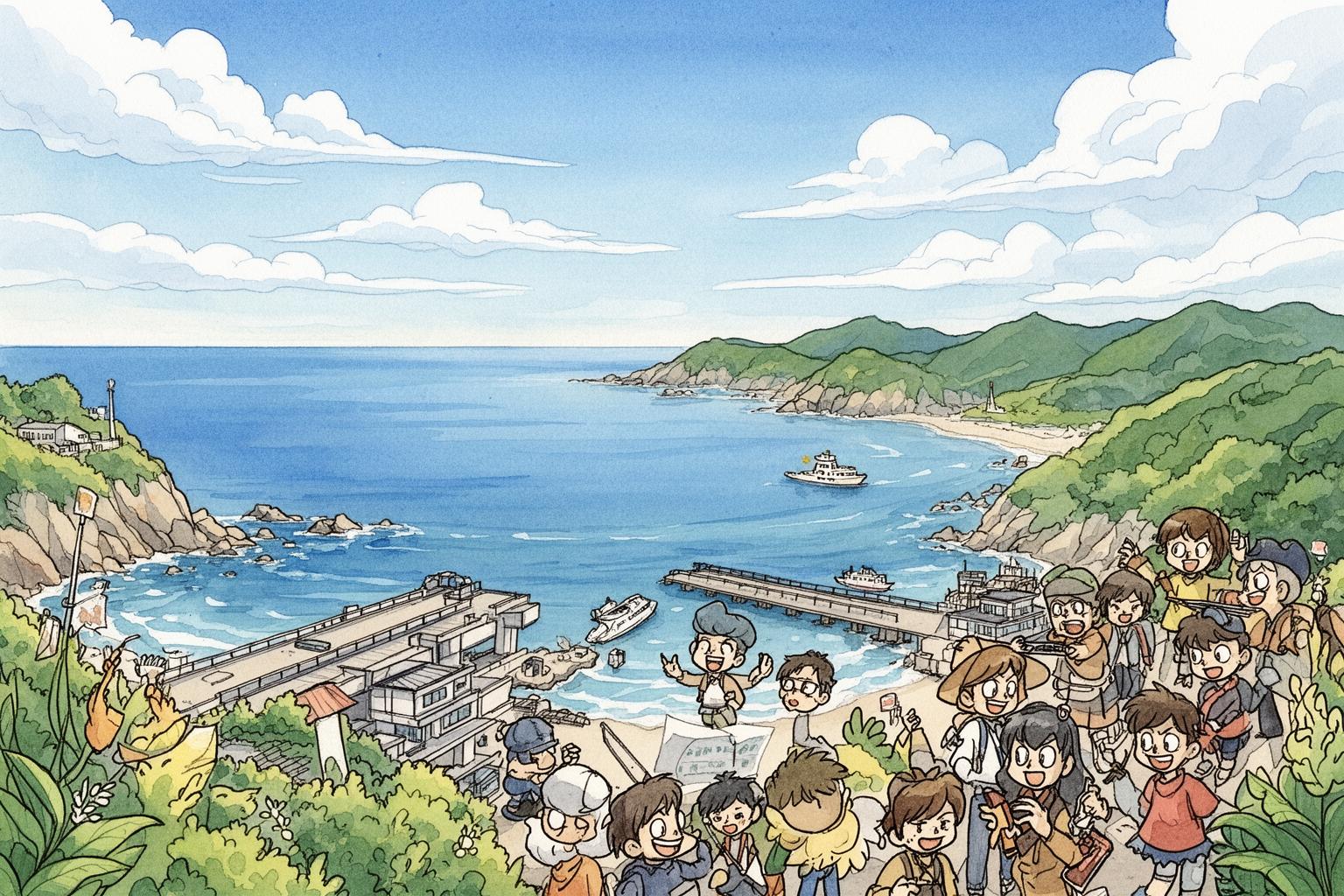
Alright, so you’re sold on the vision: yourself, an e-bike, and the stunning Izu coastline. Let’s break down the logistics so you can turn this dream trip into reality. A bit of planning goes a long way to ensure your adventure is smooth, relaxing, and entirely stress-free. Here’s the scoop on how to get there, where to rent your bike, and what to bring to fully enjoy your Izu experience.
Getting to the Starting Line
Izu’s close proximity to Tokyo is one of its greatest advantages—it’s surprisingly easy to reach. The most common way is to take the Tokaido Shinkansen (bullet train) from Tokyo Station. You have two main entry points depending on which part of the peninsula you want to explore first.
For East and South Izu, take the Shinkansen to Atami Station (a quick 40-50 minute ride). From Atami, transfer to the local JR Ito Line and then the Izu Kyuko Line, which travels down the east coast to the southern tip at Izukyu-Shimoda Station. This train ride itself is a scenic journey, with large windows that provide breathtaking ocean views for much of the trip.
For West and Central Izu, the best route is the Shinkansen to Mishima Station. From Mishima, switch to the Izuhakone Railway, which will take you to the heart of the peninsula, toward Shuzenji—a famous onsen town that makes a great base for exploring the western coast.
Renting Your Electric Steed
No need to bring your own bike. E-bike rentals are becoming widespread throughout Izu, especially near major train stations and tourist areas. The scene is growing, and the bike quality is generally excellent. Rental shops are found in places like Atami, Ito, Izukogen, and especially Izukyu-Shimoda. Many offer top-notch bikes from brands like Giant and Yamaha, with batteries lasting anywhere from 50 to over 100 kilometers on a single charge, depending on the model and how much you use the assist. The staff are usually very helpful, setting you up with the right size bike, a helmet (always wear one!), a lock, and often a map of recommended routes.
Here’s a pro tip: book early, especially if you’re traveling on weekends or national holidays. These bikes are popular! A quick Google search for “e-bike rental Shimoda” or “Izu e-bike tour” will give you plenty of choices. Some shops even offer guided tours, which can be perfect if you’re a bit hesitant about navigating solo. Others might offer delivery service right to your hotel. Rentals usually cost between 3,000 and 6,000 yen for a full day—a fantastic deal for the freedom and fun you get.
Timing is Everything: When to Roll
Izu is great all year, but some seasons are better for cycling than others.
Spring (March-May): Prime time. The weather is comfortably cool, the skies often clear, and you get the bonus of cherry blossoms in early spring, especially the unique Kawazu cherry blossoms that bloom super early in February. It’s beautiful but can be crowded.
Autumn (October-November): My personal favorite season to ride. The summer humidity disappears, the air is crisp and clear, and the autumn foliage in the mountains is stunning. Temperatures are perfect for all-day activity.
Summer (June-August): Hot and humid. Riding midday can be intense. However, it’s ideal for swimming and beach time. If you ride in summer, start early morning, take a long midday break (perhaps at the beach or a café), and ride again later in the afternoon. Also, be prepared for the rainy season in June and potential typhoons in late summer.
Winter (December-February): Don’t discount winter! It’s cold, especially in the mornings, but the air is incredibly clear, offering your best chance for crisp, breathtaking views—sometimes even of Mount Fuji from the west coast. There are far fewer tourists, so the roads are mostly yours. Just be sure to dress in layers!
Pack Smart, Ride Happy
Your packing list doesn’t need to be extensive, but a few essentials will make your ride much more comfortable.
- Clothing: Think layers. Even on warm days, the coastal wind can be chilly. A lightweight, packable windbreaker is a must. Wear comfortable, athletic clothing that allows movement. Padded cycling shorts aren’t essential for a casual day, but they’re a game-changer if you plan to ride all day.
- Footwear: Comfortable sneakers work perfectly.
- Sun Protection: The sun reflecting off the ocean is strong. Bring sunscreen, quality sunglasses, and possibly a cap to wear under your helmet.
- Hydration and Snacks: Always carry water—a bottle cage is usually on rental bikes. Pack some high-energy snacks like granola bars or local rice crackers to keep your energy up between meals.
- Navigation: While getting lost can be fun, having a plan is smart. Your smartphone with Google Maps is your best friend. Bring a portable battery pack to avoid running out of power mid-ride.
- A Small Backpack: To carry all the above, plus your camera, wallet, and a small towel (great for impromptu dips in the ocean or onsen visits).
With these practical tips in place, you’re ready to go. The beauty of an Izu e-bike trip lies in its simplicity. It’s just you, your bike, and the open road—an accessible adventure rewarded with stunning views and an incomparable feeling of freedom.
The Vibe Check: What Izu Really Feels Like
Beyond the epic routes and geological fact sheets, there’s the intangible essence—the actual sensation of being in Izu, the atmosphere, the vibe. And let me tell you, the Izu Peninsula possesses a complex and utterly captivating character. It’s not a single feeling; it’s an entire spectrum of emotions that shift as you cycle from one coast to another. Describing it is like trying to put a song into words. It’s a rhythm you have to experience.
At its heart, Izu feels ancient. This isn’t just old in terms of human history, with its temples and shrines. It’s ancient on a planetary scale. When you stand on the dark, fractured lava of the Jogasaki Coast, you sense the earth’s raw, chaotic energy. It’s a powerful, humbling feeling, a reminder that the ground beneath our feet is alive, breathing, and constantly evolving. You’re not merely admiring a beautiful view; you’re witnessing the direct aftermath of a volcanic eruption. It connects you to a timescale far beyond our own lives, and that’s a deeply profound vibe. It’s wild, untamed, and a little intimidating, but in a way that inspires awe rather than fear.
Then, as you ride, that raw power softens into moments of profound serenity. Cruising on your e-bike along a quiet coastal road in West Izu, with only the sound of the waves and the hum of your tires, becomes a form of meditation. The world simplifies. It’s just you, the motion, and the vast, soothing presence of the ocean. The air tastes clean and salty. You’ll pass through tiny, sleepy fishing villages where life appears to move at a slower, more measured pace. Elderly women tend their gardens, fishermen repair their nets, and cats nap in sunny spots, indifferent to your quiet passage. This is the peaceful, nostalgic side of Izu. It feels like stepping back in time, to a simpler, gentler Japan. The contrast between the wild, powerful geology and the tranquil, quiet human life existing alongside it is what makes the peninsula so captivating.
There’s also a strong sense of freedom and discovery. On an e-bike, you control your own itinerary. You’re not trailing a guide with a flag or adhering to a strict schedule. You become an explorer. That feeling when you round a corner and are greeted by an unexpected, breathtaking view not found in any guidebook—that’s pure magic. The sensation of cresting a hill and knowing a long, sweeping descent with panoramic ocean views lies ahead is pure joy. It’s a physical, exhilarating feeling that lingers. You feel capable, empowered, and completely in harmony with your surroundings. You’re not just a passive observer; you’re an active participant in the landscape.
Beneath it all lies the rejuvenating spirit of onsen culture. Izu is renowned for its hot springs. After a long day of riding, there’s no greater relief than soaking your tired muscles in a natural, mineral-rich hot spring bath, perhaps one overlooking the ocean you spent all day cycling alongside. It’s the perfect conclusion to the day’s adventure. A ritual that heals the body and calms the mind, connecting you to the geothermal energy of the very volcanoes that shaped the landscape. It completes the cycle—the energy that formed the mountains and cliffs now soothes the body that explored them. This is the Izu vibe: a dynamic dance between raw power and deep tranquility, thrilling adventure and peaceful renewal. It’s a place that challenges, inspires, and ultimately, heals you.
More Than a Ride, It’s a Reset
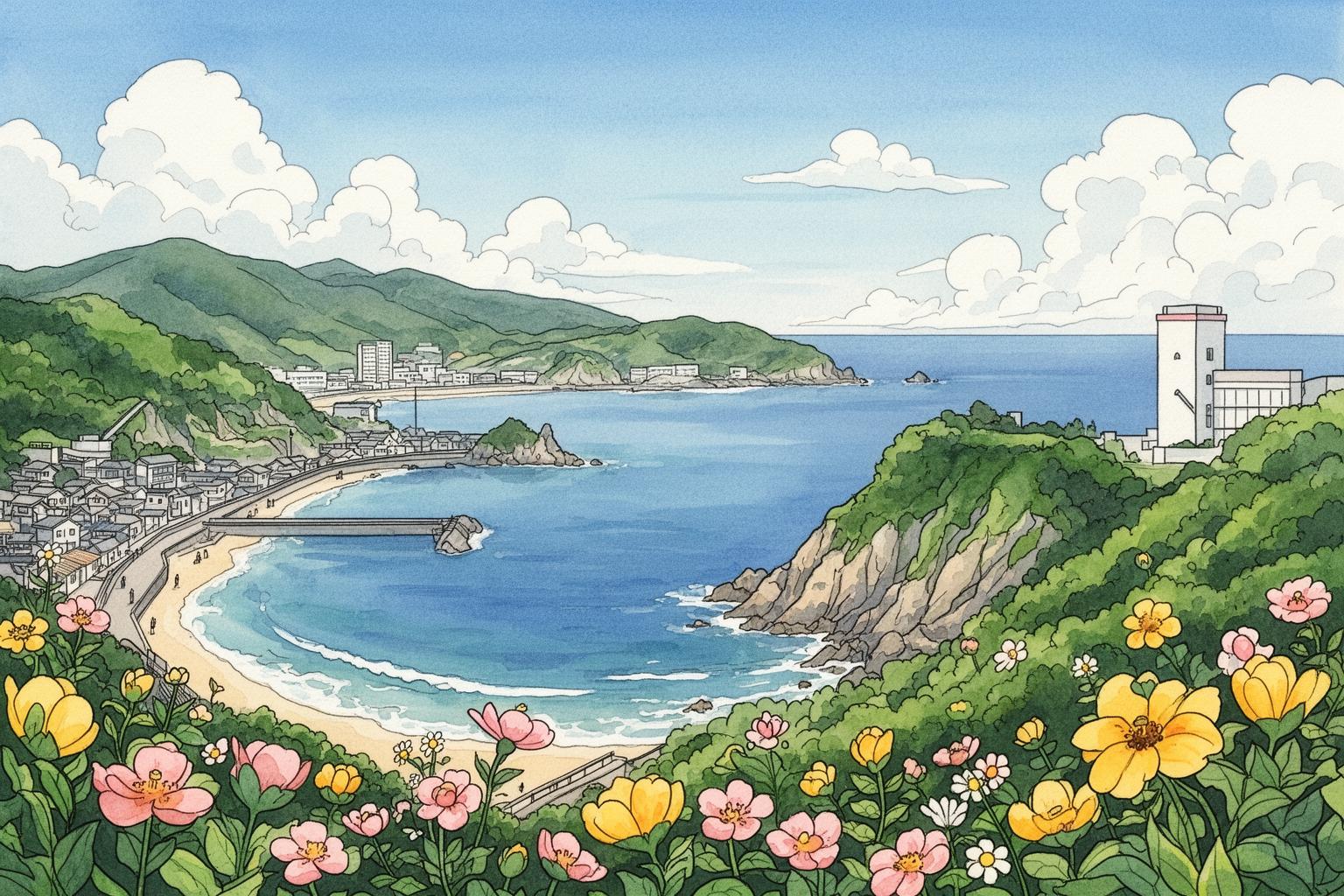
Here it is: the Izu Peninsula, viewed from the best vantage point: the saddle of an e-bike. We’ve traveled from the dramatic, stunning formation of the Jogasaki Coast to the history-rich shores of Shimoda, chasing the golden hour along the romantic, winding roads of the western coast. This isn’t merely a list of sights to see; it’s an invitation to discover a different side of Japan—a side that is raw, authentic, and deeply connected to the natural forces shaping our world.
Leaving behind the hustle of Tokyo for the rhythm of the tides and the gentle hum of an electric motor is more than a vacation. It’s a complete system reset. It’s a reminder of the world beyond our busy schedules and screens. It’s about feeling the burn in your legs on a climb (even with electric assist!), the wind on your face during a descent, and the profound calm of watching the sun set over an endless ocean. It’s about savoring the freshest seafood in a quaint village café and melting away your worries in waters heated by the earth itself.
An e-bike journey in Izu embodies accessibility in its truest form. It makes steep hills manageable. It opens up remote coves. It breaks down the barriers between you and nature, allowing for an immersion that’s rare to find. You finish the day tired but not drained, filled not only with memories but also a tangible sense of achievement and a deeper appreciation for the incredible planet we call home.
If you seek a trip that will truly move you, challenge your body, and soothe your soul, this is it. It proves that adventure doesn’t always mean climbing Mount Everest; it can be as simple as hopping on a bike and following the coastline. So next time the city feels overwhelming, remember Izu is waiting—its ancient cliffs, hidden beaches, and breathtaking sunsets ready to be explored. The open road is calling. Are you ready to answer? Peace out.