Yo, what’s up, world travelers. Shun Ogawa here, dropping in to talk about a place that’s seriously off the grid and straight-up legendary. Forget the neon buzz of Tokyo for a minute. We’re going deep, way out into the Sea of Japan, to a spot where the planet’s raw energy is on full display. I’m talking about the Oki Islands, a remote archipelago that’s not just a bunch of pretty islands; it’s a full-blown UNESCO Global Geopark. This isn’t your average beach vacay. This is a journey into the heart of geological time, a place where you can literally paddle your sea kayak along the cross-section of an ancient volcano. The Oki Islands are where the Earth tells its story, written in towering cliffs, secret sea caves, and coastlines painted in impossible colors. It’s a place that redefines ‘epic,’ where every paddle stroke takes you further back in time. This is adventure with a capital A, a history lesson delivered by waves and wind. It’s about feeling the pulse of the planet under your kayak, a rhythm that’s been beating for millions of years. This is the real Japan, untamed and unforgettable. So, strap in. We’re about to ride the waves of creation.
After experiencing the raw power of the Oki Islands, you can continue your journey into Shimane’s rich culture by sampling the region’s famous Izumo soba.
The Vibe: More Than Just Islands, It’s a Geopark That Slaps

The first thing you need to grasp about the Oki Islands is their unique vibe. It’s unlike anywhere else. The air itself feels ancient. This isn’t a polished, commercialized tourist spot. It’s raw, rugged, and authentic. The archipelago consists of four main inhabited islands, each with its own distinct character. There’s the large central island of Dōgo, and then the three smaller Dōzen Islands—Nishinoshima, Nakanoshima, and Chiburijima—which cluster together in a crescent shape, the remains of a massive volcanic caldera that erupted millions of years ago. The silence here is profound, broken only by the sound of waves crashing against basalt cliffs, the cries of black-tailed gulls, and the whisper of wind through black pine forests. You feel removed from the hustle, yet deeply connected to something far more elemental.
Being a UNESCO Global Geopark is more than just a prestigious title; it’s the very essence of this place. It signifies that the islands possess a geological heritage of international importance. Think of it as a vast, open-air museum where the artifacts are cliffs, caves, and coastlines. The story here is incredible. It spans from the birth of the Sea of Japan, back when this land was still part of the Eurasian continent, to its dramatic volcanic history, and the slow, patient work of erosion. You’re not just looking at impressive rocks; you’re witnessing tangible evidence of planetary forces, a history book written in stone. The locals understand this deeply. They live in harmony with this powerful landscape, their culture and livelihood closely tied to the geology and the sea. It’s a sustainable relationship that has endured for centuries, and you can sense that respect and resilience in the air.
Gearing Up for the Paddle: Your Oki Kayaking Sesh
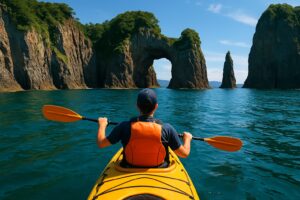
Alright, let’s dive into the main attraction: sea kayaking. This is undoubtedly the best way to take in the Oki Islands’ striking coastlines. From the water, you gain a perspective that’s simply impossible from the shore. You’re eye-level with geological marvels, able to slip into hidden coves and paddle through sea-carved arches that land-based visitors can only imagine. For most, especially first-timers, joining a guided tour is the way to go. The local guides are true legends—paddling pros, geologists, historians, and storytellers all in one. They know these waters intimately—the shifting tides, secret spots, safe routes. They’ll highlight a rock layer and tell you which eruption it came from or share a local folktale about a uniquely shaped sea stack. They manage all the equipment—kayaks, paddles, life vests, everything—so you can fully enjoy the experience.
The best season for paddling adventures is from spring through autumn, roughly April to October. During these months, the Sea of Japan offers clear, calm waters, often glowing turquoise or deep sapphire. Summer brings warm weather ideal for a post-paddle swim, but spring and autumn are the real highlights, with mild temperatures, fewer crowds, and stunning seasonal foliage on the cliffs. A typical tour runs a few hours, either morning or afternoon, beginning with a thorough safety briefing and basic paddling instruction. It’s very beginner-friendly. The pace is easygoing; it’s not a race but an immersion experience. It’s about quietly drifting into a sea cave and hearing the echo of water or pausing your paddle to watch eagles soar above. The feeling of freedom and discovery is incredible.
Paddling into the Earth’s History Book

This is where the truly mind-blowing part begins. As you push off from the shore, you leave the present behind. Each stretch of the coastline narrates a different chapter in the Oki Islands’ turbulent and magnificent creation story. You’re not merely kayaking; you’re tracing the contours of deep time with your paddle.
The Kuniga Coast: A Geological Masterpiece
The undisputed champion of Oki kayaking destinations is the Kuniga Coast on Nishinoshima Island. This stretch is a pure geological spectacle—seven kilometers showcasing nature’s immense power. The highlight is the Matengai Cliff, a colossal rock wall soaring 257 meters straight out of the ocean. Seen from your kayak, it fills your entire field of vision, a humbling sight that makes you feel incredibly small. What’s remarkable is that Matengai isn’t just a cliff; it’s a perfect cross-section of an ancient volcano. The horizontal layers striped across its face are alternating bands of basaltic lava and reddish-brown pyroclastic deposits. Your guide will explain how each band marks a different eruptive phase—a story of fire and fury frozen in time. You can literally see the volcano’s innards exposed.
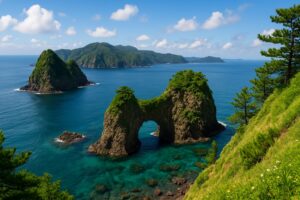
Next, you’ll paddle toward Tsutenkyo Arch, the “Bridge to Heaven.” This massive, perfectly formed sea arch is an erosion marvel. The relentless waves of the Sea of Japan exploited a weakness in the volcanic rock, patiently carving it over millennia and leaving behind this stunning natural bridge. The real thrill comes from paddling right through it. As you glide underneath, the acoustics change, the light shifts, and for a moment, it feels as if you’ve passed through a gateway to another realm. The water beneath you is incredibly clear, revealing the rocky seabed far below. And the caves—the sea caves along the Kuniga Coast are portals to another world. Paddling into a cave’s dark mouth sharpens your senses. The air cools, your voice echoes oddly, and the only light is the shimmering turquoise glow reflecting off the water at the entrance. It’s an experience equally thrilling and meditative.
The Red Cliffs of Chiburijima
Moving to the smallest of the Dōzen Islands, Chiburijima, you’ll discover a completely different but equally breathtaking coastal landscape. Here, the centerpiece is Sekiheki, the Red Cliffs. This dramatic cliff face is made of volcanic scoria and spatter from an eruption around 5.8 million years ago. Over time, the iron-rich rock oxidized, staining the cliffs a deep, rusty red. The visual impact is fiery—vivid red and orange cliffs plunging into a cobalt blue sea, topped with lush green vegetation. It looks like a scene from another planet. Paddling along the base of Sekiheki is a surreal experience, especially late in the afternoon. When the setting sun strikes the cliffs, they burst into flame. The colors become intensely saturated, and the entire coastline seems to glow from within. It’s one of the most photogenic spots in all of Japan, and from a kayak, you have the best vantage point. It’s a moment of pure cinematic beauty etched into your memory.
Life Beyond the Kayak: Oki’s On-Land Culture
While the kayaking in the Oki Islands is truly remarkable, the story of these islands extends far beyond the water’s edge. The culture on land is equally distinctive and captivating, shaped by centuries of isolation and a rich history. For a lengthy period, these remote islands served as a place of exile for political dissidents, including two emperors: Emperor Go-Toba in the 13th century and Emperor Go-Daigo in the 14th century. This arrival of high-ranking nobles from the refined imperial court in Kyoto greatly influenced the local culture. Courtly traditions, arts, and even language gently merged with the rugged, self-reliant way of life of the islanders. Today, you can still sense this rare cultural blend, a mix of rustic charm and subtle elegance. Visitors can explore sites connected to the exiled emperors, such as the Oki Kokubun-ji Temple, and experience the profound, solemn history.
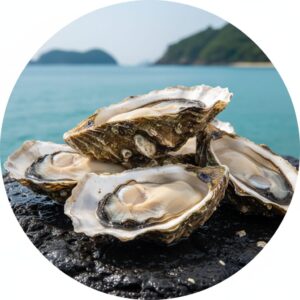
This legacy has also nurtured a fiercely independent and resilient spirit among the Oki residents. Life here has always been challenging, demanding a strong community bond. The locals are exceptionally warm and hospitable, proud of their heritage and eager to share it. The small fishing villages along the coast seem frozen in time, featuring traditional wooden houses and narrow, winding streets. And the local cuisine is not to be missed. After several hours of paddling, you’ll definitely build up an appetite, and the Oki Islands certainly satisfy. The seafood is incredibly fresh—enjoy succulent Iwagaki oysters (rock oysters) in their summer season or savor the local specialty, sazae (turban shell), grilled or served as sashimi. But the offerings don’t stop at seafood; Oki beef is a premium wagyu variety that’s exceptionally tender and flavorful. Pair your meal with some locally brewed sake for the perfect conclusion to an adventurous day.
The Practical Lowdown: Getting There & Getting Around
Reaching the Oki Islands is part of the adventure, given how genuinely remote the area is. But that’s precisely what makes it so special. Your primary options are by air or by sea. There’s a small airport on Dōgo Island, with flights from Osaka (Itami) and Izumo, making it the quickest way to arrive. However, the classic Oki experience is taking the ferry. Ferries leave from two ports on Honshu’s mainland: Shichirui Port in Shimane Prefecture and Sakaiminato Port in Tottori Prefecture. You can choose between the high-speed jetfoil, which gets you to the islands in about an hour, or the larger, slower car ferry. My recommendation? Try the slow ferry at least once. The journey itself sets the mood. Standing on deck and watching the mainland fade into a tiny speck on the horizon gives a genuine sense of departure and arrival. It’s a meditative experience that perfectly readies you for the islands’ peaceful atmosphere.
Once in the archipelago, traveling between the Dōzen Islands (Nishinoshima, Nakanoshima, and Chiburijima) is easy, thanks to a reliable inter-island ferry service. The boats run often, and the trips are short and scenic. To explore the islands themselves, especially the larger Dōgo, renting a car is highly advised. It offers the freedom to discover at your own pace, from dramatic coastlines to tranquil inland forests and ancient shrines. A few tips for first-time visitors: book accommodation, rental cars, and guided tours well in advance, particularly during the peak summer months of July and August. While larger hotels and shops accept credit cards, many smaller inns, restaurants, and businesses only take cash, so be sure to carry enough yen. Lastly, learn a few basic Japanese phrases. Although tourism staff are helpful, simple greetings like “Konnichiwa” (hello) or “Arigato” (thank you) go a long way in building connections with the wonderful local people.
The Echo of the Oki Islands
The Oki Islands are not just a destination you visit; they are a place you truly feel. The experience lingers long after you’ve returned to the mainland. It lives on in the memory of the vastness of Matengai Cliff, the ethereal glow of Sekiheki at sunset, and the serene magic of drifting through a sea cave. Beyond that, it’s the profound sense of connection to the planet. Out there, in a kayak, with only the sea and ancient rock as companions, you gain a new perspective. You realize you are a small part of a much grander, older story. The rhythm of your paddle strokes begins to align with the rhythm of the waves, a timeless pulse that has shaped these islands for eons. A trip to the Oki Islands is a journey to Japan’s edge and to the dawn of time. It’s a paddle through creation itself, an adventure experienced not just through the eyes, but felt deep in the soul. And that is an echo you will carry with you forever.