Yo, let’s talk real for a sec. Picture this: you’re perched on the edge of Japan, the sea breeze is hitting different, and in front of you sits an oyster. But this ain’t your average happy hour oyster. This thing is a beast. It’s huge, it’s plump, and it’s practically shimmering with freshness. You squeeze a drop of lemon, lift the shell, and slurp. A wave of creamy, complex, oceanic flavor hits your palate—it’s briny, it’s sweet, it’s unbelievably rich. This isn’t just food; it’s an entire vibe. This, my friends, is the Iwagaki rock oyster, the undisputed king of summer seafood, and its throne is on the remote and ridiculously beautiful Oki Islands in Shimane Prefecture.
Forget what you think you know about Japan. We’re not talking about the neon glow of Tokyo or the temple runs in Kyoto. This is a journey to the edge of the map, to a place that feels like it’s been kept secret on purpose. The Oki Islands are a wild, untamed archipelago in the Sea of Japan, a UNESCO Global Geopark that’s more about dramatic cliffs and ancient forests than crowded train stations. Getting here is an adventure in itself, a pilgrimage for those who crave something authentic, something raw. And for seafood lovers, the reward at the end of that pilgrimage is the Iwagaki oyster, a delicacy so good it’ll literally ruin all other oysters for you. This isn’t just a snack; it’s the entire reason to make the trip. It’s a culinary quest, a flavor flex you’ll be talking about for years. So buckle up, ’cause we’re diving deep into the world of Oki’s liquid gold.
Welcome to the Oki Islands: Japan’s Best-Kept Secret

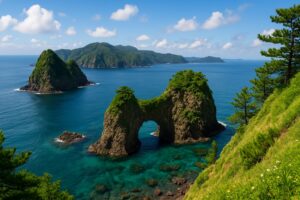
Before we dive back into the main event—the oysters—you need to get a sense of the setting. The Oki Islands aren’t your typical tourist destination. This group of over 180 islands, with four main inhabited ones, feels like an entirely different country. It’s a place where nature still reigns supreme. Picture stunning volcanic coastlines, emerald-green waters so clear you can see all the way to the seabed, and dense forests where ancient cedar trees stand like silent giants. The air itself feels fresher, charged with the sea’s energy. This is a spot to disconnect from the chaos and reconnect with something authentic.
The archipelago is split into two main areas: Dogo, the largest single island, and the Dozen Islands, a trio of smaller islands (Nishinoshima, Nakanoshima, and Chiburijima) nestled inside a collapsed volcanic caldera. Each one has its own distinct character. Dogo serves as the ‘capital,’ hosting the main port, the airport, and more infrastructure, yet it remains incredibly rural and bursting with natural wonders like majestic waterfalls and sacred forests. The Dozen Islands are even more rugged and untamed. Nishinoshima, in particular, is renowned for its Kuniga Coast, a stretch of dramatic cliffs and sea-carved arches resembling something from a fantasy film. You’ll literally see horses and cows grazing casually on cliff edges, completely unfazed by the sheer drops below. It’s an unmistakable vibe.
This entire region is a designated UNESCO Global Geopark for a reason. The geology here tells a tale stretching back millions of years, to when these islands were part of the Eurasian continent. You can literally read the history in the rocky layers, with the volcanic rock’s different colors painting stripes across the cliffs. It’s a place that humbles you in the best way, reminding you of the immense power and artistry of nature. The sensation here is one of deep peace and thrilling adventure, all at once. It’s the kind of quiet that lets you hear your own thoughts, broken only by crashing waves and the cries of seabirds. This untouched environment is not only breathtaking to behold; it’s the very source of the magic we’re here to savor.
The Star of the Show: Leveling Up with Iwagaki Rock Oysters
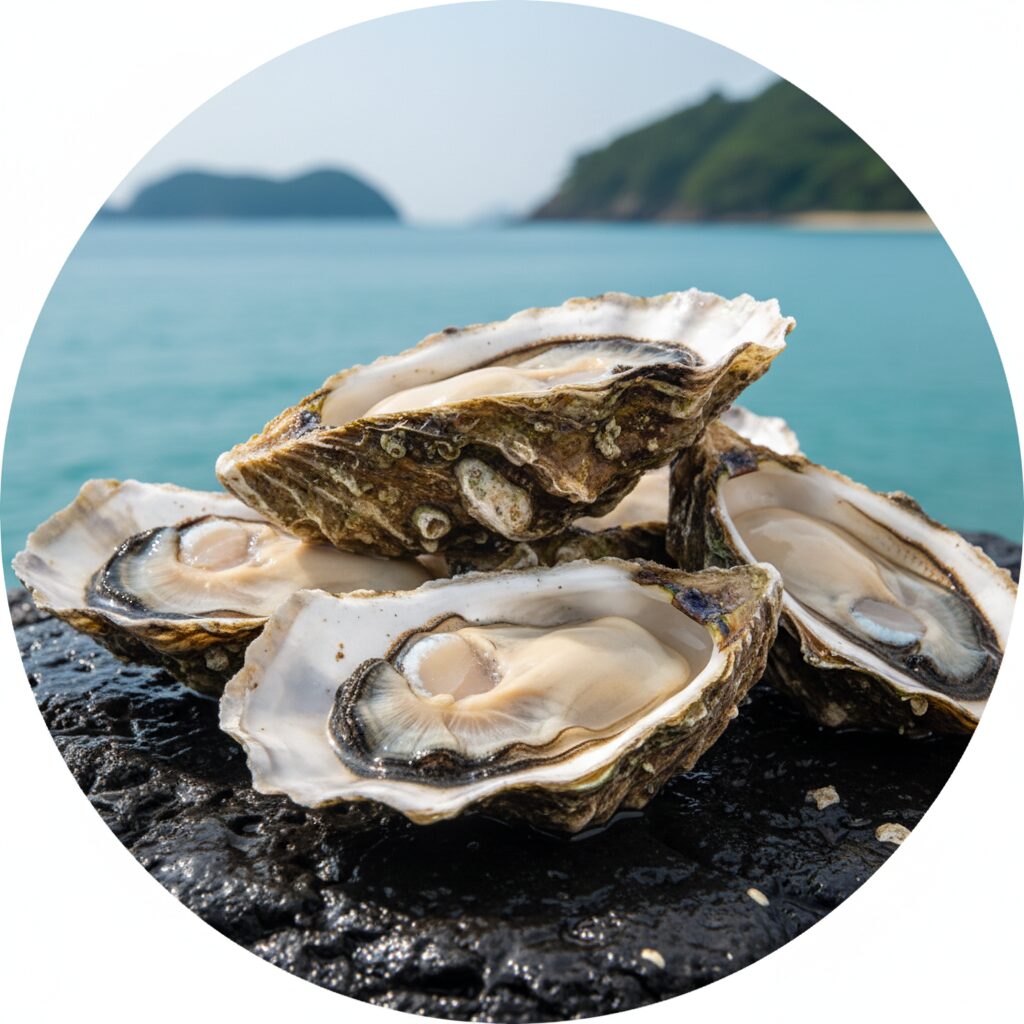
Alright, let’s get started. The Iwagaki oyster. While most people associate oysters with the chilly winter months, the Iwagaki turns that expectation upside down. This is a summer oyster, reaching its prime from late spring through August. Locals have even bestowed upon it a poetic nickname: “Natsuki,” which roughly means “Summer Radiance.” And once you see one, you’ll understand why. These oysters are enormous. Forget the small, delicate oysters you’re used to; an Iwagaki can be as large as your hand. Their shells are deep, rugged, and look as though they’ve been carved by the ocean itself. Opening one feels like discovering a hidden treasure.
And the taste? It’s something else entirely. The flavor is incredibly complex and deeply satisfying. The initial taste is a clean, crisp brininess, the pure essence of the Sea of Japan. Then it melts into a lush creaminess, a rich, almost buttery texture that coats your palate. The finish is a lingering sweetness with subtle mineral hints and a faint note of melon or cucumber. It’s a full journey of flavor in every bite. So rich and meaty, eating one feels more like savoring a steak from the sea than a typical oyster. It strikes the perfect balance between power and elegance.
What makes them so unique comes down to the water. The Oki Islands boast some of the purest ocean waters in Japan. The currents bring a constant supply of nutrient-packed plankton, essentially a superfood buffet for the oysters. Unlike many wild oysters, the Iwagaki here are carefully cultivated. They spend two to three years growing slowly in these perfect conditions, absorbing all that natural goodness. This slow, meticulous process produces an oyster that is not only delicious but also safe to enjoy raw, even during hot summer months. The producers take great pride in their craft, ensuring every single “Natsuki” oyster on your plate perfectly represents the natural bounty of the Oki Islands.
The “Natsuki” Nickname: What’s in a Name?
In Japan, naming seasonal produce with special titles is a significant part of food culture. It’s a mark of respect and a recognition of quality. “Natsuki” isn’t just a marketing term; it’s a brand and a stamp of excellence. Only Iwagaki oysters cultivated in the Oki Islands and meeting strict standards for size, quality, and season earn the right to be called “Natsuki.” It’s a promise that you’re experiencing the true peak of the Iwagaki oyster. The name evokes the feeling of a perfect summer day—bright, lively, and full of energy. It beautifully captures the essence of this summer delicacy, a shining highlight of the season’s culinary delights.
A Taste Test You’ll Never Forget
So, how do you dive in? On the islands, chances to try Iwagaki are everywhere. For your first taste, the best way is raw—nama-gaki. This offers the purest expression of the oyster’s flavor. You’ll find it on menus at numerous local spots, from cozy family-run izakayas to more upscale restaurants. It’s usually served chilled, resting on ice with a wedge of lemon or a splash of ponzu sauce. The satisfying pop when the server shucks it, revealing the glistening, plump meat in its pearly shell—it’s a ritual in itself. Don’t overload it with sauce; a small squeeze of lemon is enough to cut through the richness and bring out the flavors.
But the adventure doesn’t end there. Grilled Iwagaki, or yaki-gaki, is another revelation. Grilling the oysters in their shells intensifies the flavor, adding a smoky sweetness. The juices bubble up, creating a savory broth you sip straight from the shell after enjoying the meat. It’s warm, comforting, and incredibly addictive. Then there’s kaki-furai, or fried oysters. A huge Iwagaki is coated in light, crispy panko breadcrumbs and deep-fried to golden perfection. The outside is crunchy while the inside remains molten and creamy. Served with tangy tartar or tonkatsu sauce, it’s the ultimate comfort food indulgence. Honestly, gather your friends and order them every way possible. Turn it into a full-on feast. This is exactly what you came for, so dive right in.
Your Oki Islands Adventure Map: Beyond the Oyster Bar

As transformative as the oysters are, you can’t spend your whole trip just eating them. (Or can you? No judgment here.) The great news is that the Oki Islands are an absolute playground for outdoor enthusiasts. The landscape serves as your gym, meditation space, and photo backdrop all at once. To truly appreciate the source of the amazing food you’re enjoying, you need to get out and explore.
Nishinoshima: Cliffs, Coasts, and Iconic Views
Nishinoshima is the quintessential example of Oki’s stunning scenery. The main highlight is the Kuniga Coast. You can take a sightseeing boat to get an up-close view of towering cliffs, sea caves, and the famous Tsutenkyo Arch, a massive rock bridge sculpted by the waves. But the ultimate experience is hiking the trail. The route along the top of Matengai Cliff offers some of the most breathtaking coastal views in all of Japan. You’ll be walking atop a 257-meter-high cliff that plunges straight into the turquoise sea, with cows and horses lounging nearby. The contrast between the green pastures, black rocks, and blue water is simply unreal. It’s a challenging hike, but the reward—a stunning view and a sense of achievement—is well worth the effort.
Dogo Island: Culture, Candles, and Ancient Cedars
Dogo, the largest island, offers a different kind of magic. It’s home to Rosoku-jima, or “Candle Island.” This tall, narrow sea stack, when viewed from a sightseeing boat at sunset, looks exactly like a lit candle as the setting sun aligns perfectly with its tip. It’s one of those uniquely Japanese natural wonders that’s both beautiful and a bit quirky. Dogo is also ideal for forest bathing. The island’s interior is covered in dense, ancient forests. You can visit the Dangyo-no-taki waterfalls, a pair of stunning falls cascading down mossy cliffs, or marvel at the Chichi-sugi, a giant cedar tree estimated to be around 800 years old. The history in these quiet, sacred places is palpable. It offers a perfect balance to the wild energy of the coastline.
Nakanoshima & Chiburijima: The Relaxation Spot
The other two Dozen Islands, Nakanoshima (also known as Ama Town) and Chiburijima, provide a quieter, more intimate island experience. Nakanoshima is well-known for its ties to Emperor Go-Toba, who was exiled here in the 13th century. You can visit shrines and cultural sites related to his time on the island. It’s also home to a unique form of bull sumo called Ushitsuki, a traditional event focused more on ceremony and strength than aggression. Chiburijima is the smallest and most peaceful of the four main islands. Its most scenic area is the Akiya Coast, where you’ll find a striking red-rock cliff called Sekiheki. It’s the ideal spot to sit back, relax, and soak in the unhurried rhythm of island life. These islands are perfect for unwinding and enjoying the simple, beautiful pace of a remote community.
The Nitty-Gritty: How to Actually Get to This Paradise
Alright, let’s dive into logistics, since reaching the Oki Islands is all part of the adventure. It takes a bit more effort than hopping on a shinkansen to Kyoto, but that’s exactly what makes it so special. You essentially have two main choices: travel by sea or by air.
The Sea Route: Your Iconic Ferry Voyage
For most visitors, taking the ferry is the preferred option. It truly gives you the feeling of journeying to a distant place. Ferries leave from two ports on the Shimane mainland: Shichirui Port and Sakaiminato Port (which is technically in Tottori Prefecture, right on the border). There are two types of ferries available. The larger, slower car ferries take around 2.5 to 3 hours and offer a relaxed travel experience. You can chill on the deck, watch the mainland fade away, and savor the growing excitement as the islands come into view. Then there’s the high-speed jetfoil, the Rainbow Jet, which crosses the sea in just over an hour. It’s pricier but ideal if you’re pressed for time. Riding the ferry is a quintessential part of the Oki experience; it marks the official shift from the everyday world to island time.
The Sky Route: A Swift Flight
If you’re coming from farther away or want to maximize your time on the islands, flying is an option. Oki Airport, located on the main island of Dogo, offers daily flights from Osaka’s Itami Airport and Izumo Airport in Shimane. The flight is brief and treats you to stunning aerial views of the archipelago as you approach. It’s a convenient choice, though you’ll miss the gradual, immersive sense of arrival that the ferry provides. You’ll need to decide what matters more to you: speed or experience.
Pro Tips for Your Oki Expedition
Visiting a remote destination like Oki requires some insider knowledge. A bit of planning can make your trip smoother and less stressful, allowing you to focus on the important things, such as how many oysters you can actually eat.
Getting Around is Essential
This is non-negotiable: you absolutely must rent a car. Public transportation on the islands is very limited and mainly serves locals rather than tourists wanting to visit multiple scenic spots. Having a car gives you the freedom to explore at your own pace, stop whenever you spot a breathtaking view (which will be often), and access the trailheads and secluded coves that make Oki unique. You can rent a car on each of the main islands, or bring your own on the car ferry. Also, keep in mind you’ll need to use inter-island ferries to travel between the Dozen Islands and Dogo. These run several times daily and offer a scenic mini-adventure on their own.
Pack Wisely, Eat Delightfully
The ideal time for the full Iwagaki oyster experience is from spring to summer (April to August). The weather tends to be pleasant, though it can become hot and humid with occasional rain, so bring layers and a waterproof jacket. Crucially, book everything ahead of time. Accommodations and rental cars are limited and fill up quickly, especially during peak seasons and Japanese holidays. Don’t expect to find a room by just showing up. While credit cards are increasingly accepted, Oki is still rural Japan, and many small restaurants, shops, and guesthouses remain cash-only, so be sure to carry enough yen. Lastly, be adventurous with your food choices. Beyond oysters, Oki offers delicious turban shell snails (sazae), squid (ika), and a variety of local fish. Trust the restaurant owners’ recommendations—they know what’s freshest and best.
The Final Slurp: Why Oki is Worth the Trip
A journey to the Oki Islands is far more than just a simple vacation. It is a full-body sensory experience. It is the feeling of the salty wind on your face as you stand atop a cliff hundreds of meters above the swirling sea. It is the sound of ancient trees murmuring in a sacred forest. It is the warmth of the locals, proud to share their unique home with those who make the effort to visit. And, of course, it is the taste. The unforgettable, mind-blowing flavor of a fresh Iwagaki rock oyster—a taste deeply connected to the pristine environment from which it originates.
You don’t simply eat an Iwagaki oyster; you experience it. You savor the clean, cold currents of the Sea of Japan, the rich minerals of the volcanic seabed, and the patient craftsmanship of those who cultivate them. It is a connection to a place, a moment in time captured within a single, perfect shell. The trip to the Oki Islands is undoubtedly a challenge. It is neither easy nor convenient. But the reward is an adventure that feels truly your own—a collection of memories as rich and satisfying as the oysters themselves. This is the genuine article, a journey for those who seek flavor, crave authenticity, and are unafraid to go the extra mile for a taste of paradise. It is a trip that will linger with you long after the last delicious, briny drop is gone.