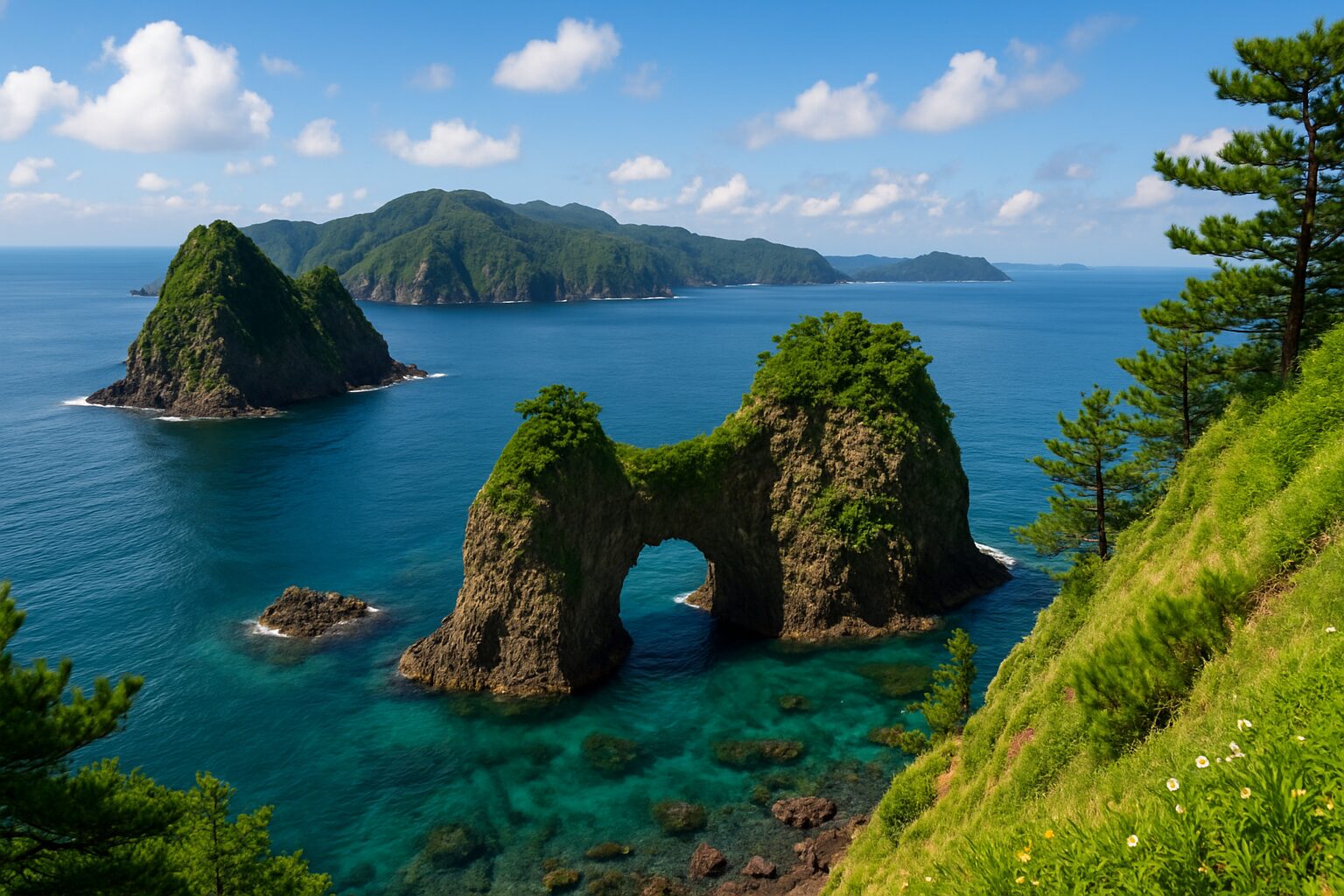
What’s up, world-wanderers? Daniel Thompson here. Let me paint you a picture. Imagine a place where the Earth itself tells you its life story. Not in words, but in colossal cliffs that bleed red, in coastlines carved by ancient gods of wind and water, and in forests so deep and quiet you can hear your own heartbeat. This isn’t some fantasy realm; it’s the Oki Islands, a remote archipelago floating in the Sea of Japan, and honestly, it’s a whole mood. Forget what you think you know about Japan—the neon-drenched cities, the packed temples. Oki is a different beast entirely. It’s raw, it’s real, and it’s a designated UNESCO Global Geopark, which is basically a VIP pass from Mother Nature herself. This isn’t just a trip; it’s a deep dive into geological time, a place where every rock, every cove, and every trail whispers a story of volcanic fury and serene beauty. It’s where Japan’s wild heart beats loudest, and if you’re down to listen, it’ll change your frequency for good. This is a journey to the edge, a photographer’s dream, and an explorer’s soul-food. So, grab your gear, open your mind, and let’s get lost in the epic landscapes of the Oki Islands.
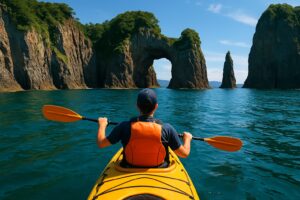
To truly feel the power of these volcanic landscapes, consider sea kayaking along the Oki Islands’ dramatic coastlines.
The Voyage In: Leaving the Mainland Behind
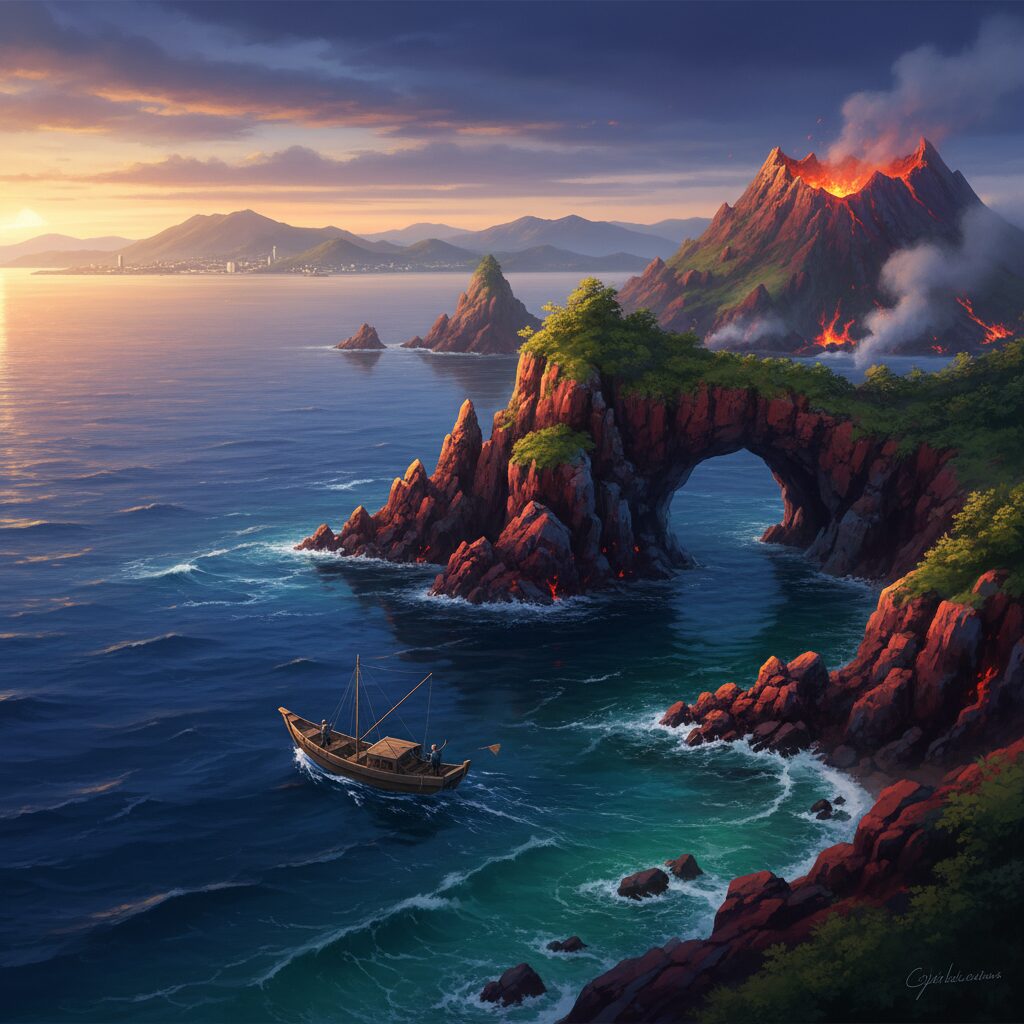
The journey to the Oki Islands begins well before you actually set foot on them. It starts aboard the ferry, slicing through the deep blue waters of the Sea of Japan from the ports of Shichirui or Sakaiminato in Shimane Prefecture. During those few hours at sea, a palpable change occurs. The hazy outline of the mainland fades away, along with the noise and rush of modern life. The air shifts—it becomes sharper, cleaner, and filled with the scent of salt. You spot flying fish skimming across the waves and black-tailed gulls escorting the vessel. This is more than just a means of transport; it’s a decompression chamber. You are deliberately detaching from the familiar. There are two choices: the slower, larger ferry, which has its own charm with tatami mat rooms where you can lie down and watch the ocean pass by, or the faster jetfoil, for those eager to start their adventure quickly. I favor the slow boat. It eases you into the Oki mindset, where time is counted by the tides and the sun’s position, not by the clock. As the first island, Dōgo, appears on the horizon—a rugged, green giant rising from the sea—you realize you’ve arrived somewhere truly unique. The feeling of isolation is not unsettling; it’s freeing. You sense that you’ve reached one of the world’s rare, protected places.
Dōgo Island: The Grand Overture
Dōgo is the largest island of the Oki archipelago and serves as its main hub, housing both the airport and the lively Saigō Port. However, don’t be misled by the word “lively.” The busyness here reflects island life—a calm rhythm of fishing boats setting out at dawn and locals greeting each other by name. It’s the ideal spot to get oriented, rent a car (essential for thorough exploration), and gradually immerse yourself in the Oki lifestyle. Dōgo is a circular island, the remnant of a vast stratovolcano, with an interior that feels like a mystical realm filled with ancient forests and sacred sites, while its coastline showcases stunning erosion artistry.
Chasing the Light at Rōsoku-jima (Candle Island)
If there’s one image that perfectly captures Dōgo’s magic, it’s Rōsoku-jima. This is nature’s masterpiece. Off the northwest coast, a slender, 20-meter-tall sea stack rises from the ocean. Standing alone, it’s striking. But the true spectacle unfolds at sunset. From a precise viewpoint accessible only by sightseeing boat, the setting sun aligns exactly with the tip of the rock. For a few breathtaking seconds, the sun transforms into the flame, and the rock into the candle. The ocean ignites in shades of gold and crimson, creating an almost surreal scene. Capturing this moment is a pilgrimage for photographers. The boat captains are masters at timing and maneuvering the boats to offer everyone that perfect, awe-inspiring view. The atmosphere on board is electric with excitement, followed by a reverent silence as the “candle” ignites. It’s more than just a photo opportunity; it’s a communion of light, stone, and sea. Pro tip: book your boat tour early, especially during summer, as this experience is a must for anyone visiting Oki.
Whispers of the Gods: Dangyō-no-taki Waterfalls
Heading inland on Dōgo feels like stepping into a Studio Ghibli scene. The roads meander through dense forests of towering cedar trees, their canopy filtering sunlight into a gentle, ethereal glow. Hidden within this green refuge is Dangyō-no-taki. More than just a pair of waterfalls, it’s a sacred place radiating serenity. Two cascades—the Odaki (male) and Medaki (female)—flow down a moss-covered cliff into a crystal-clear pool. The sound is a soft roar, a steady, meditative hum. What truly sets this site apart is the Dangyō Shrine, nestled in a niche behind the falls. Visitors can walk behind the curtain of water, feel the cool mist, and offer prayers at the shrine. The air is rich with the scent of damp earth and moss, exuding a deep sense of peace. Here, you sense the profound connection islanders have with nature, where Shinto beliefs are not only practiced but lived within the landscape itself. It’s a place to pause, listen, and embrace the island’s ancient spirit.
In the Presence of a Giant: The Chichi-sugi Cedar
Continuing the theme of ancient marvels, a visit to the Chichi-sugi, or “Father Cedar,” is truly humbling. Estimated to be about 800 years old, this immense tree stands as a living monument. Its trunk is a gnarled, twisted bastion of wood, and its branches, adorned with ferns and moss, stretch out like the arms of a gentle giant. The tree’s unique shape includes numerous stalactite-like aerial roots hanging downward, lending it an almost otherworldly aspect. Standing at its base and gazing up into its vast canopy makes you feel small—a transient visitor in its slow, enduring life. Nearby, a small shrine honors the reverence this tree commands. It’s a vivid reminder that in Oki, nature and spirituality are deeply intertwined. The forest here is silent except for the wind whispering through ancient branches—a sound carrying centuries of stories.
The Dōzen Islands: Journey to the Center of a Volcano
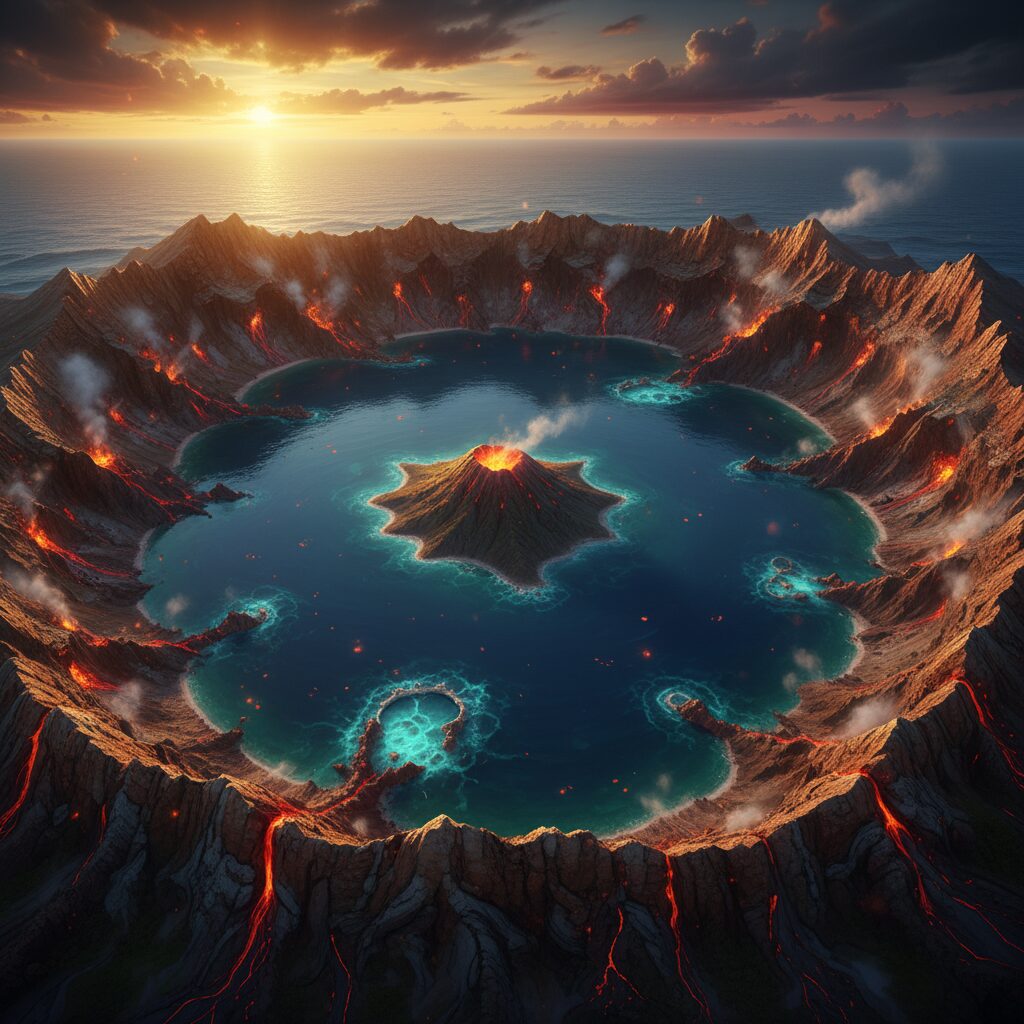
While Dōgo stands as a world of its own, the geological core of the Oki Geopark is actually found in the Dōzen Islands to the west. This trio of inhabited islands—Nishinoshima, Nakanoshima, and Chiburijima—forms the outer rim of a vast, submerged volcanic caldera. Around 5-6 million years ago, a colossal volcano erupted and collapsed, creating this distinctive ring of islands. Traveling between them by inter-island ferry means you are literally sailing across the crater of an ancient volcano. The scale of it is truly awe-inspiring. Each island offers a unique perspective on this remarkable geological narrative, and together they create one of Japan’s most dramatic coastal landscapes.
Nishinoshima Island: Where Giants Walk the Earth
If you have time to visit only one of the Dōzen Islands, make it Nishinoshima. This place is pure, unfiltered drama. It’s home to the Kuniga Coast, a coastline so spectacular it seems like it was crafted by a Hollywood VFX team. This is where the geopark’s trails come to life.
The Maten-gai Cliff and the Kuniga Coast Trail
Prepare to be amazed. The Maten-gai is an impressive 257-meter-high sea cliff, one of Japan’s tallest. It is a sheer wall of dark volcanic rock plunging into the turquoise sea below. The view from the top induces vertigo and is utterly unforgettable. However, the best way to experience it is to hike the trail along its edge. The path takes you from the summit of Maten-gai down a sweeping grassy slope toward the sea and the Tsūten-kyō Arch. The striking feature? The landscape is dotted with wild horses and cattle, grazing peacefully just feet from the steep drop. Seeing these majestic animals set against the immense cliffs and endless ocean is a surreal and profoundly beautiful sight. The wind whips around you, the sound of waves crashing echoes far below, and you feel as if you’re walking on the roof of the world. The scale of everything here completely resets your senses. It’s a place that commands awe and leaves you feeling fully alive.
Passing Through the Gateway: Tsūten-kyō Arch
At the bottom of the hiking trail lies Tsūten-kyō, the “Arch to Heaven.” This magnificent sea arch, shaped by the relentless force of waves, creates a perfect window to the ocean. You can admire it from the shore, where its graceful curve frames the blue waters perfectly. But to truly appreciate it, you need to take a boat. The Kuniga Coast sightseeing cruises are essential. Skilled captains expertly navigate their small vessels right through the arch and into hidden sea caves, whose walls are streaked with vibrant mineral deposits. From sea level, the Maten-gai Cliff looks even more impossibly immense. As you cruise past other uniquely shaped rocks, each with its own name and story, the captain points out geological features and nesting seabirds. It’s an exhilarating experience that offers a fresh perspective on the force that sculpted this breathtaking coastline.
Nakanoshima Island (Ama Town): A Coast of Fiery Hues
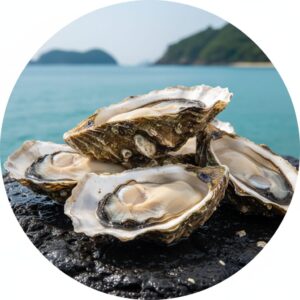
Nakanoshima, also called Ama Town, presents a different volcanic palette. The Akiya Coast is famous for its striking red cliffs, resulting from lava oxidized after erupting in a subaerial environment—essentially, rusted lava. The effect, especially bathed in the warm light of sunset, is breathtaking. The coastline is dotted with small coves and caves, and the most famous feature is a heart-shaped hole in the rock, loved by couples. It’s a softer, warmer beauty compared to Nishinoshima’s stark drama, yet equally geologically intriguing. Nakanoshima also hosts Kinnyamon-jinja, a unique shrine set inside a seaside cave. Legend says an exiled emperor once hid here, and walking through the cave feels like stepping into the island’s mythical past. The island is also known for its premium Oki-gyū beef and fresh seafood, especially the Iwagaki rock oysters, which are a must for any foodie visiting the islands.
Chiburijima Island: A Cross-Section of Creation
The smallest of the Dōzen Islands, Chiburijima, is a tranquil place that holds one of the geopark’s most impressive geological features: Sekiheki, or the Red Cliff. This is not merely a cliff but a textbook example of a volcanic eruption frozen in time. The cliff face is a stunning patchwork of reds, oranges, blacks, and yellows—each color representing different layers of volcanic ejecta, scoria, and lava flows. It is essentially a cross-section of a volcanic cone’s flank. Here, you can literally read the story of an eruption etched in stone. The best time to visit is late afternoon, when the setting sun causes the colors to blaze with an almost unbelievable intensity. For the ultimate vantage point, climb to the summit of Mount Akahage. From there, you get striking 360-degree views of all the Dōzen Islands. You can clearly see their circular formation and fully comprehend that you’re standing on the edge of a vast, ancient caldera. It’s a moment of pure insight, where all the geological puzzle pieces fall into place. The view is humbling—a powerful reminder of the immense forces that have shaped, and continue to shape, our planet.
The Human Story: Exile, Rituals, and Resilience
The Oki Islands are more than just a geological marvel; they possess a rich and occasionally turbulent human history closely linked to their isolation. For centuries, their remoteness made them an ideal place for exile. Two emperors, Go-Toba in the 13th century and Go-Daigo in the 14th century, were banished here after losing political power struggles. This history of noble exiles introduced a touch of Kyoto’s courtly culture to the islands, shaping local arts and traditions that endure to this day.
One of the most distinctive cultural traditions you might encounter is Ushi-tsuki, or bull sumo. This is not the violent sport you might expect. It is a thousand-year-old ritual in which two massive bulls lock horns in a contest of strength and endurance. No winner or loser is declared; the match ends when one bull loses its fighting spirit. It is a spectacle of pure power, a ceremony that honors the bulls and celebrates their significance in the islands’ agricultural heritage. It is a raw, powerful, and distinctly local experience unique to Japan.
Practical Beta for Your Oki Expedition
Planning a trip to Oki demands a bit more advance planning than visiting Tokyo or Kyoto, but that’s part of what makes it special. Here’s what you need to know.
Getting There and Getting Around
Your primary entry points are the ports in Shimane and Tottori prefectures. The ferry remains the traditional option. If you’re pressed for time, you can fly directly from Osaka (Itami) or Izumo Airport to Oki Airport on Dōgo Island. Once on the islands, renting a car is essential if you want the freedom to explore fully. Make sure to book months ahead, especially for travel between April and October. The Dōzen Islands are connected by a frequent and dependable inter-island ferry, which you can board as a foot passenger or with your car. For shorter trips, e-bikes are an excellent choice, allowing you to enjoy the scenery at a leisurely pace.
Best Time to Go
Each season in Oki offers its own unique atmosphere. Spring (April-May) brings lush greenery and wildflowers, with pleasant temperatures ideal for hiking. Summer (June-August) is the high season, great for marine activities like sea kayaking, snorkeling, and swimming in crystal-clear waters. It’s also the prime time to visit Candle Island. Autumn (September-November) features clear skies, comfortable weather, and fewer crowds, making it arguably the best time for serious hiking and photography. Winter (December-March) is suited for the adventurous. The seas can be rough, and some services might be limited, but you’ll be rewarded with dramatic, moody landscapes and a profound sense of solitude.
Island Sustenance and Stays
Oki’s cuisine highlights the best from both sea and land. The seafood couldn’t be fresher—squid, turban shells, and the renowned Iwagaki oysters are outstanding. Oki-gyū beef is a premium wagyu known for its rich taste. Don’t miss the local soba noodles and distinctive seaweed dishes. Accommodations range from cozy, family-run minshuku (guesthouses) and traditional ryokan to more contemporary hotels. Staying in a minshuku is an excellent way to experience local hospitality and enjoy home-cooked meals. My suggestion? Spend at least one night on Dōgo and two nights on the Dōzen Islands (using Nishinoshima as your base) to truly appreciate the area.
A Few Final Tips
- Bring Cash: While major hotels and shops accept credit cards, many small restaurants and local businesses operate on a cash-only basis.
- Pack Layers: The maritime weather can shift suddenly. A waterproof jacket, even in summer, is a wise choice.
- Book Ahead: This cannot be emphasized enough. Ferries, flights, rental cars, and accommodations, especially during peak seasons, should be reserved well in advance.
- Embrace the Pace: Don’t rush your visit to Oki. The islands’ charm unfolds when you slow down. Allow extra time in your schedule. Some of the best experiences come from spontaneously turning down a quiet coastal road.
The Echo of Creation
A trip to the Oki Islands is more than just a vacation; it’s a pilgrimage to the very core of creation. This is a place that sheds the unnecessary and reconnects you with the essential forces of nature. You leave with more than photographs—you leave with a new sense of perspective. You’ve wandered along cliffs forged by fire and shaped by time, felt the spray of waves spanning millions of years, and stood in forests that have silently witnessed human history drift by like clouds. The Oki Islands serve as a reminder that our planet is a living, breathing being, rich with stories, power, and wild, untamed beauty. It’s a place that reaches deep within you and lingers, a quiet resonance that echoes the world’s grand, unfolding tale. Go. Listen. And allow its rhythm to realign your own.