
Yo, what’s the deal? Ever scrolled through your feed and seen these ridiculously good-looking anime characters that are… swords? Yeah, you heard that right. Welcome to the world of Touken Ranbu, or TouRan for the real ones. This ain’t just some gacha game your cousin plays; it’s a full-blown cultural moment that has completely changed how a generation sees Japanese history. It’s a vibe, a lifestyle, and honestly, the sickest travel guide to Japan you never knew you needed. Picture this: legendary katanas, tantōs, and tachi forged centuries ago by master smiths, now personified as a crew of devastatingly handsome warriors called Touken Danshi, or Toudan for short. As the player, you’re the Saniwa, a sage with the power to bring these sword-boys to life. Your mission? To lead your squad, your beloved blades, through time to protect history from a bunch of shadowy villains trying to mess up the timeline. It’s epic, it’s emotional, and it gets you seriously invested in the stories behind these steel artifacts. But here’s the glow-up: the game is your portal. It’s your ticket to a real-life adventure across Japan. Suddenly, a dusty museum exhibit isn’t just an old sword behind glass. It’s him. It’s Kashu Kiyomitsu, waiting for his master. It’s the elegant Mikazuki Munechika, radiating ancient power. Visiting a centuries-old shrine isn’t just a photo op; it’s a pilgrimage to the place where your favorite Toudan’s story unfolded. This guide is your cheat code, your ultimate walkthrough for leveling up your Japan trip from a basic tourist run to a legendary Saniwa quest. We’re diving deep, going beyond the game screen to touch the real history, feel the real vibes, and see the real masterpieces that inspired it all. So grab your Goshuin-cho, charge your phone, and get ready to sortie. Your citadel awaits, and trust me, it’s the entire country of Japan. It’s time to see the places where legends were born and history went down, all while stanning your faves. Let’s go, Saniwa. History is calling.
To truly walk in the footsteps of these legendary blades, consider exploring the secret samurai trails of Kamakura, where history and nature converge.
What’s the Hype? The Touken Ranbu Vibe, Unpacked
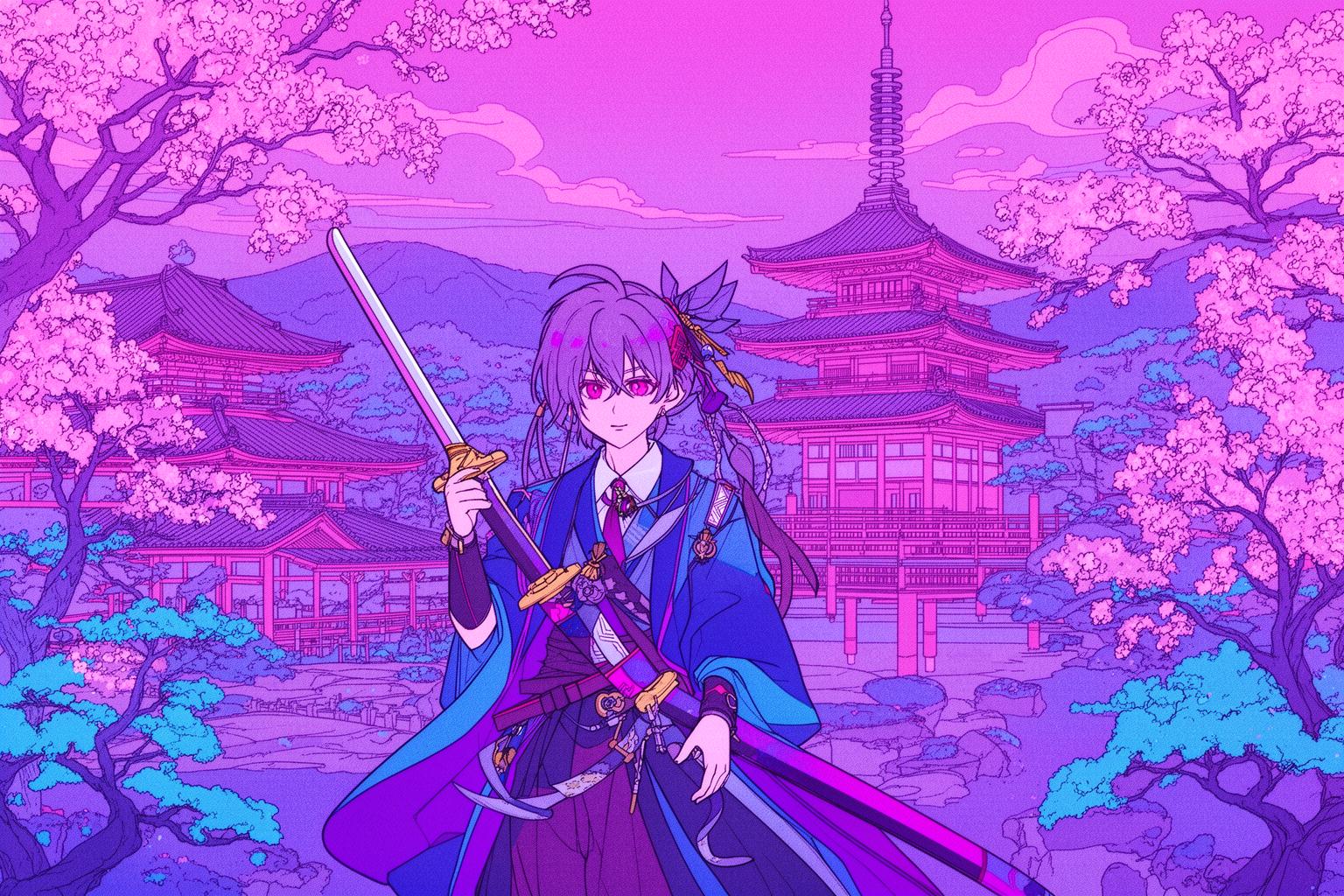
So, you might be wondering, “Okay, interesting concept, but why the immense obsession?” Honestly, the magic of Touken Ranbu goes far beyond just collecting handsome boy JPEGs. It’s a masterclass in making history not only engaging but deeply, personally meaningful. It taps into a very specific human desire to connect with the past, to feel the weight and stories of objects that have witnessed centuries unfold. The game developers, Nitroplus and DMM, didn’t simply invent designs out of nowhere. Each Touken Danshi is carefully crafted based on the real sword’s history, its physical traits, and the legends of its famous owners. A sword passed through many hands might carry a complex, melancholic personality. A blade famed for its incredible cutting power might be portrayed as fierce and confident. A sword tragically lost in a fire might harbor deep-seated trauma. This narrative depth is what draws you in. You’re not just grinding for stats; you’re uncovering the soul of a historical artifact. You’re a Saniwa, the citadel’s master, but also a curator of memories and protector of stories. The game’s main plot has you battling the History Retrograde Army, shadowy figures intent on altering key moments in Japan’s past. This gives your entire journey a strong sense of purpose. Every battle, every repair, every internal affair you manage in your citadel deepens your bond with your Toudan. You hear their stories, observe their interactions, and become fiercely protective of them. This emotional investment is the secret ingredient. It transforms a passive interest into an active passion. Suddenly, you’re not just playing a game; you’re on Wikipedia at 3 AM, falling down a rabbit hole about the Sengoku period because you need to know everything about Heshikiri Hasebe’s time with Oda Nobunaga. You’re researching the Gion Festival in Kyoto to understand the backdrop for the Shinsengumi’s activities, the historical playground of swords like Izuminokami Kanesada and Horikawa Kunihiro. The game becomes a living, breathing textbook that’s actually fun. And this is where the real-world pilgrimage, the seichi junrei, comes in. The urge to bridge the digital and the physical becomes overwhelming. You have to see them. You have to stand where they once stood. Seeing the actual sword in a museum is a profound experience for a fan. You face this silent, beautiful, sometimes scarred piece of steel and perceive not just an object but a companion you’ve fought alongside, a character you’ve grown to love. The quiet, climate-controlled reverence of the museum gallery contrasts with the vibrant, emotional world of the game in your mind, creating a uniquely powerful, almost spiritual feeling. It’s this fusion of history, fantasy, and personal connection that gives Touken Ranbu its special vibe. It’s a community united by a shared love for these stories, a collective effort to rediscover and celebrate a nation’s history, one handsome sword at a time.
The Ultimate Saniwa Pilgrimage: Seeing the Real Steel
Alright Saniwa, this is the main quest. You’ve trained your Toudan in the game, and now it’s time to witness their original forms. But here’s the most crucial intel you’ll ever receive, so pay close attention: sword exhibitions are almost always temporary and rotate regularly. These blades are National Treasures and Important Cultural Properties—they cannot be displayed all the time. Your top priority before booking any flights or trains is to check the official websites of the museums and shrines you plan to visit. They publish their exhibition schedules months in advance. Seriously, check. Double-check. Don’t let your quest end in disappointment because your favorite sword was resting in the archives. With that vital PSA out of the way, let’s talk about the sacred sites where you can honor the real steel.
Tokyo National Museum (TNM): The Final Boss of Sword Collections
If there’s a Mecca for Saniwa, it’s the Tokyo National Museum in Ueno Park. This place is a behemoth—the largest museum in Japan—and its sword collection is, to say the least, extraordinary. It’s the home base for some of the most iconic and powerful swords in the entire game. Entering the TNM feels like stepping into the final stage. The atmosphere is heavy with history. You make your way to the Japanese Gallery (Honkan), and as you near the sword section, the vibe shifts. It grows quieter, more reverent. And then you see them. The star, the legend, the face of the game for many: Mikazuki Munechika. One of the Tenka-Goken (Five Greatest Swords Under Heaven), his name means “Crescent Moon,” referring to the beautiful crescent-shaped patterns (uchinoke) along his temper line. Seeing him in person is surreal. The blade’s elegant curve and profound ancient beauty cannot be captured by photos. You immediately understand why he’s hailed as one of the most beautiful swords ever forged. Created in the Heian period by the legendary smith Sanjo Munechika, his history is linked to Japan’s highest ranks, from the Ashikaga shogunate to the Tokugawa clan. Standing before him, you feel the weight of a thousand years. Also commonly displayed at the TNM is Dojigiri Yasutsuna, another Tenka-Goken, famed for defeating the demon Shuten-doji. His presence contrasts with Mikazuki’s—bulkier, more forceful, a weapon of raw, untamed power. The TNM also holds a vast array of other famous blades. You might encounter Ookanehira, the magnificent tachi as proud and commanding as his in-game persona. Or some of the Awataguchi blades, celebrated for their refined and elegant craftsmanship. The experience is a quiet one. Photography is almost always prohibited in these special exhibits, compelling you to simply be present. You observe other visitors—many undoubtedly fellow Saniwa—standing in silent awe, their faces reflecting admiration and affection. It’s a shared, wordless moment of community. Beyond the swords, the rest of the TNM is spectacular. You can explore samurai armor, priceless pottery, and ukiyo-e prints. Ueno Park itself has a unique vibe, with additional museums, a zoo, and the scenic Shinobazu Pond. During spring, it is one of Tokyo’s prime cherry blossom spots, making it a perfect backdrop for your pilgrimage. Pro tip: arrive early, especially during popular Touken Ranbu-related exhibitions. Lines can get intense. Check their website for ticket details, opening hours, and most importantly, the exhibition schedule. Your quest for the Tenka-Goken begins here.
Kyoto and Beyond: Blades of the Ancient Capital
If Tokyo is Japan’s modern heart, Kyoto is its soul. This city served as the imperial capital for over a thousand years, and its history permeates every temple, shrine, and street corner. It’s no surprise many Touken Danshi have stories deeply rooted here. A pilgrimage to Kyoto is less about one museum and more about journeying through a living historical landscape. Your first stop should be Kitano Tenmangu Shrine. This beautiful shrine honors Sugawara no Michizane, the god of scholarship, but for Saniwa, it’s the home of Onikirimaru, better known in-game as Higekiri of the Minamoto clan. Legend has it this sword severed a demon’s head, and its name, “Beard-Cutter,” refers to its ability to slice through a criminal’s beard without the victim noticing. The shrine itself is stunning, especially during the plum blossom season in February and March, Michizane’s favorite flower. Seeing the sword here, in a place of worship and learning, feels distinct from a museum visit. It connects the blade not just to warriors but to the cultural and spiritual essence of the city. Next, head to Fujimori Jinja, a small yet powerful shrine in southern Kyoto. This site is a must-visit for Tsurumaru Kuninaga fans. Though the original blade is with the Imperial family, Fujimori Jinja displays a renowned replica. The shrine is linked to horses and victory in battle, making it a popular spot for prayers before competitions—or, for Saniwa, before trying your luck in the game’s smithing events. In June, the shrine is famous for its gorgeous hydrangea garden, adding another dimension to your visit. But your Kyoto journey doesn’t stop there. You absolutely must visit Awata Jinja. This shrine is in the Awataguchi district, home to the legendary Awataguchi school of swordsmiths. It’s the birthplace of the style that created royalty like Ichigo Hitofuri and his whole gang of tantō brothers. The shrine is literally a sacred site for blacksmiths and blade enthusiasts. They embrace their Touken Ranbu connection, regularly hosting special events and offering exclusive Goshuin stamps featuring Awataguchi characters. It’s a place where the game and real history feel completely intertwined. While you’re in the region, make a side trip to Nagoya to visit Atsuta Jingu. This is among the most important shrines in Japan and houses one of the Three Imperial Regalia, the sacred sword Kusanagi-no-Tsurugi. Though the Kusanagi is never shown to the public, the shrine’s treasure hall holds another colossal sword: Taro Tachi. Seeing this massive odachi in person is genuinely awe-inspiring. It is ENORMOUS. Its sheer size makes you appreciate the incredible strength required to wield it. The story of its offering to the shrine as a prayer for victory enhances its divine presence. Atsuta Jingu’s grounds are vast and ancient, with colossal camphor trees that seem to have witnessed all of history. It’s a profoundly spiritual place that makes you feel small in the grand scheme, connecting you to the core of Japanese belief and history. This part of your journey is more about atmosphere. It’s about sensing the presence of the Toudan in the very places that forged their legends—from the scholarly aura of Kitano Tenmangu to the divine power of Atsuta Jingu.
More Than Museums: Living the Toudan History

Seeing the swords is one thing—but to truly immerse yourself in the full Saniwa experience, you need to walk the grounds where their masters lived, fought, and died. This is where the stories from the game come alive. You’re no longer just an observer; you become a time traveler, tracing the footsteps of legends. It’s about visiting the castle ruins, temple compounds, and city streets that served as the backdrop for Japan’s most dramatic historical events. Here, you connect with the human side of the swords’ tales—the ambition, loyalty, tragedy, and honor of the samurai who wielded them.
Echoes of the Shinsengumi in Kyoto
For a large portion of the Touken Ranbu fandom, one group stands out above all: the Shinsengumi. The tragic story of this special police force, loyal to the Shogun during the turbulent Bakumatsu period, is legendary. Their swords—Kashu Kiyomitsu and Yamatonokami Yasusada (belonging to the charismatic Okita Soji), Izuminokami Kanesada and Horikawa Kunihiro (the iconic pair wielded by the fierce vice-commander Hijikata Toshizo), and Nagasone Kotetsu (the blade of commander Kondo Isami)—are among the most beloved characters in the game. A trip to Kyoto is incomplete without tracing their history. Your main base of operations is Mibu-dera Temple, the Shinsengumi’s first headquarters. Walking onto the temple grounds feels like stepping back in time—it’s quieter than the main tourist streets of Kyoto. You can visit the Mibu-zuka, a burial mound dedicated to some fallen members, including Kondo Isami. There’s a statue of him and a small museum filled with historical materials. The atmosphere here is somber and deeply respectful. You can almost hear the echoes of swords being trained, the laughter and arguments of young men trying to hold back the tide of history. This is where Kashu might have worried about being loved by his master, and where Yasusada wrestled with his own stability. From Mibu-dera, you can explore the surrounding neighborhood filled with sites related to the group. You can also visit the site of the Ikedaya Inn, where the Shinsengumi famously raided a meeting of anti-shogunate samurai—a pivotal and bloody event that cemented their reputation. While the original building is gone, a monument marks the spot. This journey through Shinsengumi history is emotional. Their story is one of loyalty and fighting for a cause they believed in, even as the world around them changed. Standing in these places, you feel the fierce passion and deep tragedy of Hijikata, Okita, and their comrades, and you understand their Toudan on an entirely new level.
Oda Nobunaga’s Legacy: Fire and Ambition
No figure casts a longer shadow over the Sengoku period than the great unifier, Oda Nobunaga. His ambition was matched only by his legendary sword collection. Many powerful Toudan passed through his hands, including Heshikiri Hasebe, Souza Samonji, and the beloved tantō Fudo Yukimitsu. Nobunaga’s story is central to their identities, but it all ends in fire and tragedy at one place: Honno-ji Temple. The Honno-ji Incident, where Nobunaga was betrayed by his general Akechi Mitsuhide and forced to commit seppuku as the temple burned around him, is one of the most significant turning points in Japanese history. It was a chaotic night that scattered his priceless collection. Souza Samonji was seized by the Akechi forces; Heshikiri Hasebe had already been given to Kuroda Kanbei, and Fudo Yukimitsu was passed to Mori Ranmaru, who died alongside Nobunaga in the flames. Visiting Honno-ji’s site in modern Kyoto is a surreal experience. The temple has been rebuilt elsewhere, now in a bustling downtown area. Still, a stone monument marks the original site. Standing there, surrounded by modern office buildings, you must use your imagination, picturing the flames, betrayal, and the end of an era. Here, you gain a true sense of the trauma and loss embedded in these swords’ histories. You feel Hasebe’s unwavering, almost terrifying loyalty to the master he was separated from, the melancholy of Souza, a beautiful sword passed from one victor to another, and the sorrow of Fudo, forever tied to that tragic, fiery night. This is not a flashy tourist spot but a place for quiet reflection—a pilgrimage for those who want to understand the deep scars left by history on a nation and on the souls of its legendary blades.
The One-Eyed Dragon’s Domain: Date Clan in Sendai
Heading north, you arrive in the domain of another charismatic warlord: Date Masamune, the “One-Eyed Dragon of Oshu.” His style was impeccable, his ambition fierce, and his swords among the coolest in the game—Shokudaikiri Mitsutada, the stoic Ookurikara, and the lively Taikogane Sadamune. To truly connect with their history, you need to visit Sendai, the city Masamune founded. Begin at the Sendai Castle Ruins, also known as Aoba Castle. Perched on a hill overlooking the city, not much of the original castle remains, but an enormous, iconic statue of Masamune on horseback dominates the site. Standing there, you get a palpable sense of his power and vision. You can easily imagine Shokudaikiri and Ookurikara by his side, symbols of his strength. This is the perfect place to feel the pride and flair of the Date clan. The view of Sendai from the castle site is breathtaking, offering a real appreciation for the city he built. Your next stop should be the Zuihoden Mausoleum, the final resting place of Date Masamune and some of his heirs. The architecture is stunning—a riot of color, gold leaf, and intricate carvings in the lavish Momoyama style. It’s a testament to Masamune’s legendary aesthetic sense. A man of culture as well as war, this place reflects that perfectly. The atmosphere is serene and respectful, a beautiful tribute to a larger-than-life figure. A pilgrimage to Sendai offers a different experience from Kyoto—an intimate look at the world of one specific clan and a deep dive into the personality of one of Japan’s most fascinating warlords. By exploring his city, you understand why his swords are so stylish and cool—they directly reflect their master: powerful, sophisticated, and undeniably striking. Don’t forget to try local delicacies like gyutan (grilled beef tongue) and zunda mochi (sweet edamame paste) to complete your Date clan adventure.
The Collab Life: Merch, Musicals, and More
So, you’ve seen the swords and walked the historic sites, but the modern Touken Ranbu experience takes things to an entirely different level of amazing. The franchise is a collaboration powerhouse, frequently launching limited-time events, pop-up cafes, and exclusive merchandise that keep fans buzzing. This is where you can celebrate your love for the Toudan in a tangible, interactive, and often delicious way. It’s a huge part of the joy of being a Saniwa in Japan. One of the biggest phenomena to emerge from the game is the stage productions: the Touken Ranbu Musicals (TouMyu) and the Touken Ranbu Stage Plays (TouSute). Let’s be clear: these aren’t low-budget fan service shows. They are high-quality, spectacular productions featuring incredible actors, stunning costumes, elaborate sets, and genuinely fantastic music. TouMyu emphasizes music and dance, culminating in a full concert where the audience waves penlights for their favorite characters. TouSute leans more towards intricate plotlines and dramatic sword fights. Both are enormously popular, and scoring tickets can be a challenge, often requiring lottery entries. But if you manage to get one, it’s an unforgettable experience. The theater buzzes with electric energy. You’re surrounded by fellow fans, and seeing your favorite swords so vividly brought to life on stage is pure joy. Keep an eye on official websites for show schedules and ticket info if you’re planning a visit. Then there are the collaborations with cafes and restaurants. These pop-ups offer entire menus inspired by the Touken Danshi. You can sip a blue-tinted drink in honor of Mikazuki Munechika or enjoy a dessert referencing Kashu Kiyomitsu’s fondness for cute things. The food often tastes surprisingly good, and each dish comes with exclusive collectibles like coasters or placemats. It’s a fun way to spend an afternoon—taking photos of your themed meal and geeking out with friends. Since these cafes are temporary, following the official Touken Ranbu social media accounts is essential to stay updated. Museums and shrines also join in the fun. When a famous sword goes on display, it’s often part of a collaboration. Museum shops will carry exclusive clear files, acrylic stands, and other merchandise featuring the Toudan. Life-sized character standees may be displayed next to the real swords, creating perfect photo ops. Some shrines offer special Goshuin stamps tied to their associated swords, making your Goshuin-cho (stamp book) a unique and treasured souvenir of your pilgrimage. And of course, there’s the merch hunt. The hotspots are Akihabara in Tokyo and Otome Road in Ikebukuro. Stores like Animate, K-Books, Lashinbang, and Surugaya are treasure troves of Touken Ranbu goods. You’ll find everything from official art books and keychains to rare second-hand items and doujinshi (fan-made comics). Otome Road in Ikebukuro is especially known as a hub for female otaku culture. Exploring these stores is an adventure in itself—they’re packed floor to ceiling with merchandise, and the thrill of digging through bins to find a keychain of your obscure favorite is unbeatable. This vibrant side of the fandom is all about celebrating your passion in the present moment, participating in a living, breathing culture, collecting mementos of your journey, and sharing that excitement with a huge community. It perfectly complements the quiet, historical reverence of visiting the actual swords.
Saniwa Starter Pack: Your Quest Logistics

Embarking on a Touken Ranbu pilgrimage is an epic journey, and every great journey requires preparation. While navigating Japan is quite straightforward, a few expert tips can make your trip from your home base to the historic sites much smoother. Consider this your pre-departure briefing. First and foremost, the golden rule I can’t emphasize enough: always check official sources before heading anywhere. I mean the official museum, shrine, and event websites. Exhibition dates for swords can change. Collaboration cafes have specific reservation systems. Stage play tickets are usually sold through lotteries months ahead. Your best allies on this trip will be Google Translate and a willingness to explore some Japanese-language websites. It takes a bit of effort, but it ensures you won’t arrive only to discover the display you traveled across the world to see ended last week. Next, let’s talk transportation. Japan’s public transit is top-notch. For travel between major cities like Tokyo, Kyoto, and Sendai, the Japan Rail Pass can save you a lot if you’re planning multiple Shinkansen (bullet train) rides in a short time. For getting around within cities, get an IC card like Suica or Pasmo. Load money onto it, then simply tap to ride trains, subways, and buses. This is infinitely easier than buying a paper ticket for every trip. You can get these cards at any major train station, and these days, you can even load them onto your smartphone. Now, on to etiquette, especially at shrines and temples. These are active places of worship, so respect is essential. When entering a shrine, you’ll pass under a torii gate; it’s customary to bow once before going through. Before reaching the main hall, you’ll find a purification fountain called a chozuya. Use the ladle to rinse your left hand, then your right hand. Next, pour some water into your cupped left hand to rinse your mouth (don’t drink from the ladle or spit back into the fountain). Finally, hold the ladle upright to let the remaining water rinse its handle. When praying at the main hall, the typical shrine practice is to bow twice, clap twice, make your prayer, then bow once more. At temples, simply put your hands together quietly and bow. A little respect goes a long way. Photography rules are another key point. Inside museums, especially near National Treasures like swords, photography is almost always strictly prohibited. Signs will be everywhere. Please, for the love of the Saniwa code, honor this. Flashes can damage delicate artifacts over time. At shrines and temples, photos of the grounds are usually fine, but please be mindful around main altars or people praying. What should you pack for your journey? Comfortable shoes are a must—you’ll be walking a lot. A Goshuin-cho is essential for collecting the beautiful calligraphy stamps from shrines and temples; you can purchase one at most large locations. A portable phone charger is a lifesaver—you’ll need it for maps, translation, and maybe even some Touken Ranbu gameplay between stops. Lastly, leave extra room in your luggage. You may think you won’t buy much merch. You’re wrong. You will buy all the merch. Bet. With these details in place, you’re ready to embark on the most rewarding adventure of your fan life.
The Heart of the Forge: Why This Journey Slaps
So, what’s the ultimate takeaway? Why does a journey inspired by a video game feel so uniquely impactful? Because a Touken Ranbu pilgrimage goes far beyond simply checking off spots on a tourist map. It offers an entirely new way to view and experience Japan. It re-enchants the world by layering stories, emotions, and characters onto historical sites and artifacts. It’s the perfect form of narrative-driven travel. Without the game, Mibu-dera Temple is just a quiet, intriguing historical location. But for a Saniwa, it’s a place alive with ghosts and echoes. You can almost picture Kashu Kiyomitsu fussing over his appearance, or Hijikata Toshizo plotting his next move. Without the game, a sword displayed in a museum is a beautifully crafted but ultimately lifeless object. For a Saniwa, that blade carries a soul. You see Mikazuki’s pride, Hasebe’s intensity, Souza’s sorrow. The game provides an emotional key to unlock a deeper, more personal connection to a culture that can sometimes feel distant and inaccessible. It makes history messy, human, and relatable. You’re not just memorizing dates and names; you’re engaging with tales of loyalty, betrayal, beauty, and violence witnessed by these swords. It transforms you into an active participant, a historian-detective piecing together the lives of your favorite characters. This journey also links you to a vast, passionate community. Spotting someone else at a museum exhibit with a Toudan keychain hanging from their bag instantly creates a silent bond. You’re both on the same quest. It’s a shared language, a shared passion that bridges cultural and linguistic divides. You become part of something larger. Ultimately, Touken Ranbu is a gateway. It’s a forge that takes the hard, cold steel of history and molds it into something warm, vibrant, and alive. It invites you to look closer, learn more, and step into the story yourself. So whether you’re a seasoned Saniwa with a fully leveled citadel or a newcomer just starting out, the invitation is open. Come to Japan. Find your swords. Walk their paths. The journey will not only deepen your love for the game; it will fundamentally reshape the way you see history itself. It’s a travel experience that truly, no exaggeration, slaps. Now, go plan your sortie.