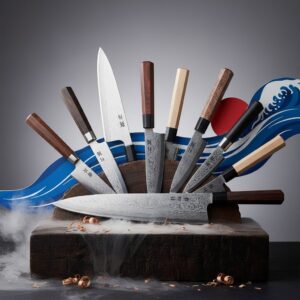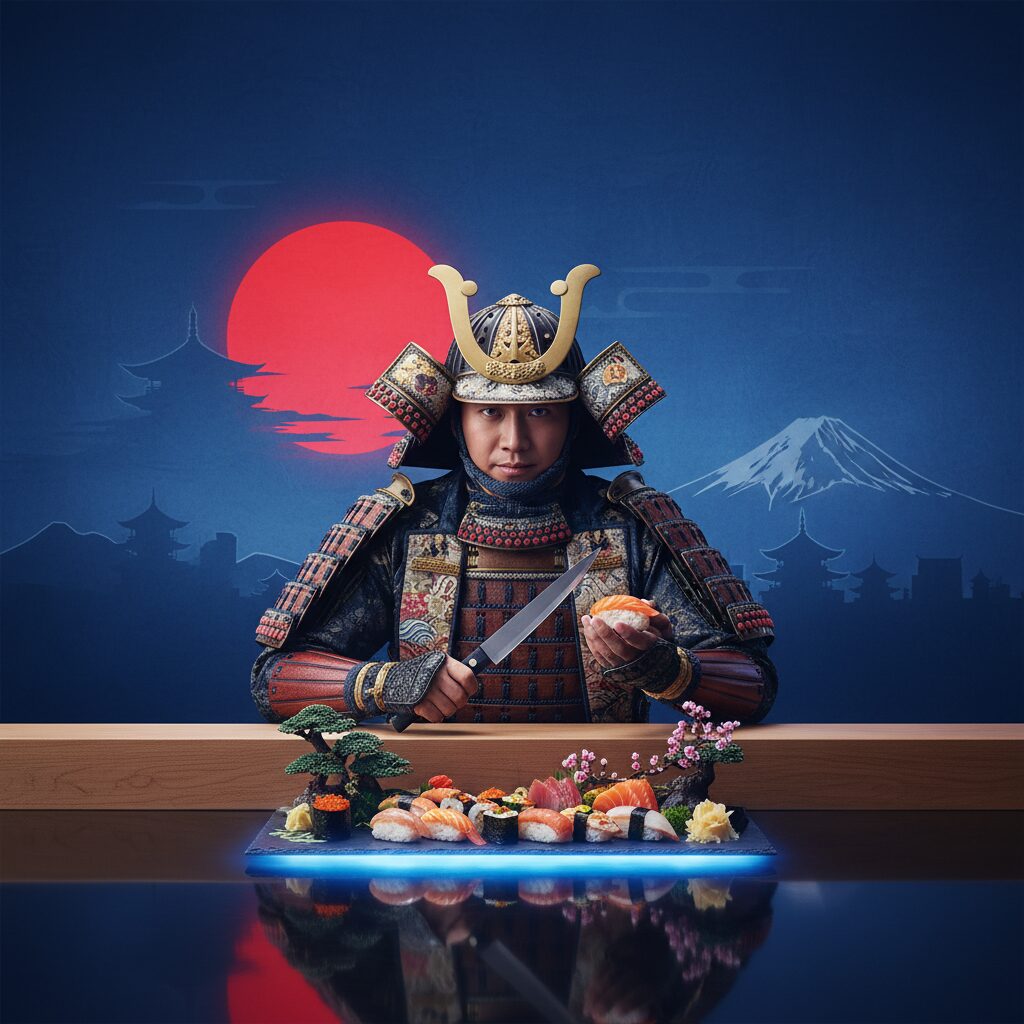
Yo, what’s good? Megumi here, coming at you live from Tokyo. So, let’s get real for a sec. You’ve seen it all over your feed, right? Some chef, looking seriously zen, holding a knife that looks like it was forged by elves. They tap a tomato and it just… falls apart. Clean. No squishing, no drama. Just a perfect slice. And you’re sitting there thinking, “Okay, that’s low-key magic. What is the deal with Japanese knives?” Then maybe you hear someone whisper that the same families who made these culinary lightsabers used to make swords for samurai. And the question hits you: Wait, for real? How do you go from crafting weapons of war to making tools for slicing tuna? It feels like a major plot twist, but honestly, it’s the most Japanese story ever. It’s not about giving up; it’s about pivoting with purpose. It’s about how a nation’s soul, once forged in the heat of battle, found a new, quieter, but just as sharp, way to express itself. This isn’t just a story about knives. It’s the story of how Japan’s master artisans faced a crisis that could have erased their legacy and instead, channeled a thousand years of tradition into something new, something for the kitchen, something that still carries the spirit of the samurai’s blade. We’re about to spill all the tea on this epic glow-up, from the battlefield to the cutting board. It’s a journey, so buckle up.
To truly understand how this warrior spirit continues to shape modern Japan, consider exploring the path of the masterless samurai in our traveler’s guide to the ronin vibe.
The Katana Vibe Check: More Than Just a Sword
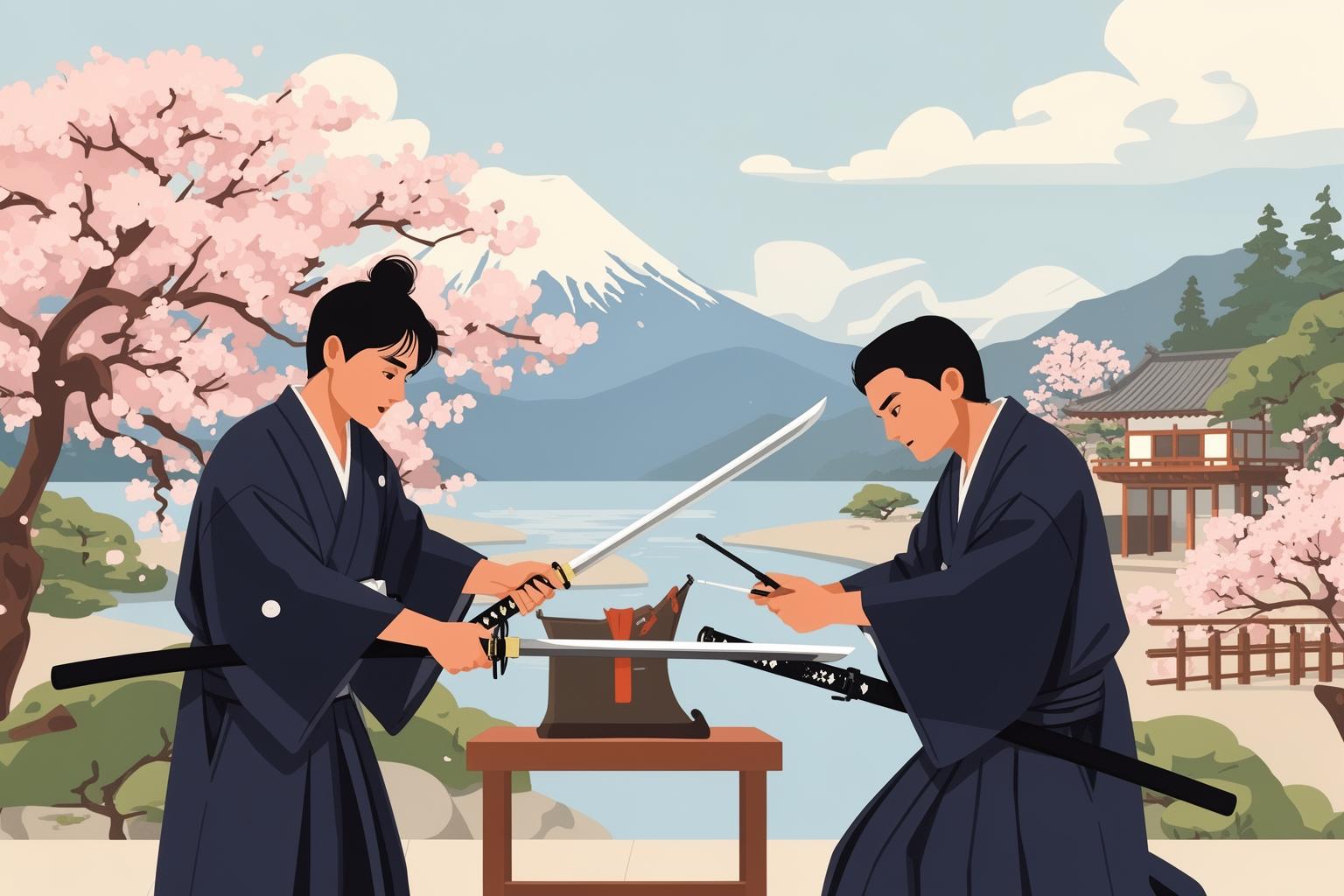
Before we even dive into the knives, we need to talk about the katana. If you think it was merely a sharp piece of metal for fighting, you’re missing the entire point. The katana was, and remains, a cultural icon. It’s the star of Japanese weaponry, an object laden with so much meaning it’s almost overwhelming. For the samurai, this wasn’t just a tool in their arsenal; it was their identity, their honor, and quite literally, their soul forged into steel.
The Soul in the Steel
Truly, the process of making a katana was less about manufacturing and more like a religious ritual. The swordsmith, the katana-kaji, was regarded as a master artisan who almost took on the role of a priest. The forge wasn’t simply a workshop; it was a sacred place, often featuring a kamidana (a small Shinto altar). The smith would undergo purification rites, donning white ceremonial robes and praying for divine guidance to create the perfect blade. This wasn’t a job you clocked in and out of. The smiths infused their entire being, their ki or life force, into every single hammer strike. They believed a blade forged with a malicious or impure heart would be cursed. This profound, spiritual commitment distinguished a katana from an ordinary sword. Each blade was thought to have its own spirit, its own character. It became a partner to the samurai, a silent companion through life and death. This belief transformed the object from a mere weapon into a sacred work of art. The atmosphere was one of complete devotion, a total fusion of the physical and the spiritual. This is the foundation, the starting point for understanding why Japanese blades stand on another level.
The Original Tech: What Made Katanas So Legendary?
Sure, the spiritual aspect is vital, but the katana’s legendary status wasn’t only built on prayer and intention. It was supported by remarkably advanced, almost alchemical technology. The secret begins with the steel itself, called tamahagane, or “jewel steel.” This isn’t something you just order from a catalog. It’s produced in a massive clay furnace called a tatara through a grueling, multi-day process of smelting iron sand with charcoal. The result is not a uniform block of steel but a bloom with wildly varying carbon content. The smiths would painstakingly break this bloom apart and sort the pieces by sight and the sound they made when struck. High-carbon pieces (kawagane) became the blade’s sharp, hard edge, while lower-carbon pieces (shingane) formed the softer, more flexible core or spine. This combination is pure genius.
Next comes the step everyone knows: folding. The smith would repeatedly heat, hammer, and fold the steel back onto itself—sometimes thousands of times. This process, orikaeshi tanren, wasn’t for show. It served two essential purposes. First, it helped to expel impurities from the rustic tamahagane. Second, it created thousands of microscopic layers, evening out the carbon content and building an incredibly resilient internal structure. This is what creates the beautiful, subtle wood-grain pattern on the blade’s surface, the jihada. It stands as a visible testament to the smith’s labor.
But the final, most iconic step is the differential hardening, or yaki-ire. The smith would coat the finished blade in a secret mixture of clay, charcoal powder, and other ingredients, applying a thick layer on the spine and a thin layer along the cutting edge. The blade was then heated to a precise temperature and plunged into water. The thin clay layer on the edge allowed it to cool rapidly, forming an extremely hard steel called martensite. The thick clay on the spine insulated it, causing slower cooling and resulting in a softer, more ductile steel called pearlite. This created a blade with the best of both worlds: a razor-sharp, hard edge that maintained its sharpness, supported by a tough, flexible spine that absorbed shocks without shattering. The visible boundary between these two types of steel is the hamon, the wavy, cloud-like line that is the unique signature of every Japanese sword. This was a technological marvel, a perfect balance of hardness and toughness that swordsmiths elsewhere could only dream of achieving.
The Meiji Restoration: The Day the Music Died for Samurai
You have this entire ecosystem centered around crafting these spiritual and technological masterpieces. A whole class of warrior elites—the samurai—whose identity is rooted in these blades. And generations of swordsmiths whose sole purpose is to serve them. It seems like a system built to last forever. But plot twist: it didn’t. In the mid-19th century, Japan underwent one of the fastest and most radical societal transformations in history, and for the samurai and their swordsmiths, it was an apocalypse.
A New Era, A Big Problem
For more than 250 years, Japan was in self-imposed isolation under the Tokugawa shogunate. Then, in 1853, American Commodore Matthew Perry arrived with his “Black Ships,” forcing the country to open up to the world. This shock triggered the collapse of the shogunate and the 1868 restoration of imperial rule under Emperor Meiji. The new government’s motto was essentially “modernize quickly or be colonized.” This led to rapid industrialization, modernization, and the dismantling of the old feudal class system. The samurai, a warrior aristocracy living off stipends, were seen as an outdated barrier to progress.
The final blow came with the Haitorei Edict of 1876. This law prohibited anyone except the newly established national army and police from wearing swords in public. It was a devastating strike. The two swords—the long katana and the short wakizashi—were the ultimate samurai status symbols. Banning them was more than just a weapons control measure; it was a public announcement that the samurai era had officially ended. Their privileges were revoked, stipends converted to government bonds, and their societal role vanished overnight.
The Swordsmith’s Existential Crisis
Now, imagine you’re a katana-kaji. Your family has crafted swords in places like Seki or Bizen for 500 years. Your life, training, spiritual practice, and social status are all tied to producing katana for samurai clients. Suddenly, your main customer base is legally abolished. Your signature products become illegal to wear. The demand for new swords, which had already declined during the peaceful Edo period, plummeted to nearly zero. This was an existential crisis of immense scale. Thousands of highly skilled artisans found themselves without purpose or market. Many smiths were forced to abandon their craft, becoming farmers, merchants, or factory workers. The centuries-old knowledge was at risk of vanishing forever. The sacred forges fell silent. It was a cultural tragedy, a quiet and sorrowful end to one of the world’s most exquisite craft traditions. The question became not just “what do we sell now?” but “who are we now?”
The Pivot: From Battlefield to Kitchen Counter
But the story doesn’t end there. The spirit of the Japanese artisan, the shokunin kishitsu, embodies resilience and adaptability. Confronted with complete obsolescence, the remaining swordsmiths did what was necessary: they pivoted. They took their profound, almost mystical mastery of steel and redirected it toward everyday tools. It wasn’t a glamorous shift at first. It was driven purely by necessity—a scramble for survival amid a rapidly changing Japan.
Finding a New Purpose in the Everyday
The most natural place to apply their expertise was in crafting other types of blades. The demand for weapons of war had vanished, but the need for practical tools remained steady. Smiths began forging agricultural implements like sickles and hoes. They produced scissors, razors, and carpentry tools. Most importantly, they started making kitchen knives, or hocho. Initially, these were likely simple, utilitarian items, far removed from the artistic heights of the katana. Yet, as Japan modernized, so did its diet and culinary traditions. The opening of the country brought new ingredients and cooking methods. Urbanization fueled the rise of restaurants and a professional chef class. Along with this culinary progression came a growing demand for high-quality, specialized cutting tools. The humble kitchen knife was poised for a major upgrade, and the former swordsmiths were ideally positioned to lead this transformation. They had the skills, the knowledge, and the deep-rooted cultural commitment to perfection.
When a Hocho is More Than Just a Hocho
This is the heart of the story. The finest swordsmiths didn’t simply start producing cheap knives. They infused the soul of the katana into the kitchen. They applied the same rigorous standards and philosophies to the hocho that they once reserved for the sword. The key concept here is kiru, which means “to cut.” For a samurai, a perfect cut was crucial to life, death, and honor. A careless cut was disgraceful. This principle translated seamlessly to cooking. A chef wielding a razor-sharp knife makes a clean cut at the cellular level, preserving the texture, moisture, and flavor of ingredients—whether fish, vegetables, or meat. A dull knife crushes and tears cells, causing oxidation, discoloration, and flavor loss. It’s a sign of disrespect to the ingredient itself. The smiths understood this instinctively. They weren’t just crafting a tool to separate items; they were creating an instrument to maintain the integrity of food. The hocho became a partner to the chef, just as the katana had been to the samurai. It was a tool for transformation, not destruction. The spirit of meticulous dedication and the relentless pursuit of the perfect edge were reborn in a new realm. The forge, once a place of war, became a place of nourishment. This philosophical shift is what makes Japanese kitchen knives so exceptional. They carry the weight and wisdom of an entirely different world within their steel.
The Katana DNA in Your Kitchen Knife
When you pick up a high-end Japanese knife today, you are quite literally holding a direct descendant of the samurai sword. This lineage isn’t just conceptual; it’s tangible, evident in the design, materials, and craftsmanship. The spirit of the katana is right there in your hand—you just need to know where to look.
Single Bevel vs. Double Bevel: The Original Japanese Style
The most direct connection to the katana lies in the blade’s geometry. Many traditional Japanese knives, like the long, slender yanagiba used for slicing sushi and sashimi, or the tall, rectangular usuba for ultra-thin vegetable cuts, have a single bevel. This means they are sharpened on only one side, while the other side is flat or even slightly concave (urasuki). This creates an exceptionally acute edge angle, far sharper than what’s achievable with a typical double-beveled blade. This kataba style is a direct inheritance from the katana, which also featured a primary bevel on one plane. Using a single-bevel knife demands a specific technique; it’s less forgiving but allows for breathtaking precision. It’s why sushi chefs can cut fish so thin it becomes translucent. In contrast, most Western knives (such as German or French styles) are ryoba, or double-beveled, sharpened symmetrically on both sides to form a V-shape. This design is robust and versatile but cannot match the surgical sharpness of a finely crafted single bevel.
Steel Layering: The Damascus Influence
Recall the complex layering of hard and soft steel in a katana? That concept thrives in modern Japanese knives. While some are made from a single piece of steel (monosteel), many top-tier knives use laminated construction. The most common method is san-mai, meaning “three layers.” Here, craftsmen forge-weld a core of extremely hard, high-carbon steel (hagane)—which can attain frightening sharpness but is brittle and prone to rust—between two outer layers of softer, durable, often stainless steel (jigane). The outcome is a blade combining the best qualities: a core delivering an incredibly sharp edge and excellent edge retention, protected by an outer jacket adding toughness, preventing chipping, and resisting corrosion. A beautiful wavy line running parallel to the edge reveals the boundary between the hard core and softer cladding—it’s the modern-day hamon. More intricate versions, often called “Damascus steel,” layer multiple steels to create stunning rippled patterns, paying direct aesthetic homage to the jihada of ancient swords.
The Tang, The Handle, and The Balance
The samurai heritage extends beyond the blade. The knife’s entire construction reflects this lineage. The nakago, or tang—the blade’s extension into the handle—is a crucial feature. In traditional Japanese knives, this is often a concealed or “rat-tail” tang, fitted within a wooden handle, mirroring sword construction. The handles, known as wa-handles, are usually made from lightweight woods like magnolia, often crafted in octagonal or D-shaped designs for ergonomic grip, and are intended to be light and nimble. This results in a knife balanced distinctly blade-forward. This is deliberate, designed for a professional “pinch grip” where the chef holds the blade’s base, offering unmatched control and tactile sensitivity. The focus on perfect balance, ergonomics, and seamless user-tool integration continues the principles crucial to weapon design, where a split-second in handling could determine life or death.
So, Is a $500 Japanese Knife Actually Worth It?
This is the big question, right? You see the prices on some of these knives and your wallet starts to panic. You can buy a knife from a big-box store for twenty bucks that cuts things just fine. So why on earth would you pay hundreds, sometimes thousands, for a Japanese knife? Are you simply paying for hype and a cool story? Or is there something genuine behind it? The answer is… it depends on what you value.
The Real Deal vs. The Hype
When you purchase a high-end Japanese knife, you’re not just paying for the initial sharpness. Almost any new knife is sharp right out of the box. What you’re truly investing in is edge retention. Thanks to the superior quality of the steel (like Aogami Super, Shirogami, or VG-10) and the master smith’s expert heat treatment, a premium Japanese knife holds its incredibly sharp edge for a significantly longer time than a cheaper alternative. This means less sharpening and more time enjoying effortless cutting. You’re also paying for performance. The blend of thin geometry, hard steel, and a razor-sharp edge allows the knife to glide through food with minimal resistance. This isn’t just faster; it makes cooking more enjoyable, precise, and less of a chore. It transforms prep work from a task to a meditative experience. And yes, you’re paying for the legacy. You’re buying a functional work of art, an item with soul, crafted by an artisan embodying centuries of tradition. You’re supporting a craft that nearly vanished but was revived through determination and dedication. For some, that connection and story are invaluable.
The Catch: It’s Really High-Maintenance
Let’s be honest, though. These knives aren’t for everyone. They’re divas. They demand respect and care. Many top Japanese knives are made from high-carbon steel, not stainless steel. This steel can rust. And not just if you leave it in the sink for a week; I mean, if you cut a lemon and don’t wipe the blade within five minutes, it can rust. You have to be vigilant. Wash it by hand (never put it in the dishwasher) and dry it immediately and thoroughly after use. Some people even apply a thin layer of mineral oil for added protection. They’re also brittle. The same hardness that offers exceptional edge retention also makes them prone to chipping. You can’t chop through bones, frozen food, or twist the blade to pry things apart. Dropping one on a tile floor could be disastrous. Finally, sharpening these knives is a skill in itself. Those pull-through sharpeners will ruin the fine edge. You need to learn how to use Japanese water stones, or toishi, to maintain the blade properly. It’s a commitment. A Japanese knife isn’t a tool you can abuse and forget. It’s a relationship. If you’re not ready for that level of care, you might be better off with a more durable, forgiving German knife.
Where the Magic Still Happens: Visiting the Knife Capitals
This remarkable craft is more than just a historical relic; it remains a vibrant, living industry concentrated in several key regions of Japan, many of which were historically renowned for katana production over centuries. Visiting these towns provides a glimpse into the continuous tradition of Japanese bladesmithing.
Seki, Gifu: The Original Blade City
If there is a birthplace of Japanese blades, it is Seki City in Gifu Prefecture. With a history spanning over 800 years, Seki was one of the foremost centers of sword production during feudal Japan. The swords made here were legendary, famed for their practical, no-nonsense durability under the motto, “Unbreakable, unbendable, and incredibly sharp.” When the Haitorei Edict was issued, Seki’s smiths faced devastation but quickly adapted by channeling their exceptional skills into cutlery production. Today, Seki is a modern hub, producing a large portion of Japan’s kitchen knives, from globally recognized mass-produced brands to small, artisanal workshops. Visiting the Seki Traditional Swordsmith Museum offers a firsthand look at this remarkable history of transformation.
Sakai, Osaka: The Professional’s Preference
While Seki is celebrated for its volume and historical significance, Sakai, a city just south of Osaka, is famed as the capital of single-bevel, professional-grade knives. Its tradition began with crafting sharp knives for cutting tobacco leaves in the 16th century, with artisans refining their skills over generations. Today, it is estimated that over 90% of Japan’s professional chefs use knives from Sakai. The city employs a unique guild-like system of specialized, independent craftsmen—one forges the blade, another sharpens and grinds it, and another attaches the handle. This division of labor allows each artisan to attain exceptional mastery in their specific role. A knife from Sakai is truly a tool made by specialists for specialists.
Tsubame-Sanjo, Niigata: The Metalworking Powerhouse
Situated in Niigata Prefecture, the Tsubame-Sanjo region holds a long-standing history as a center for diverse metalworking, from making nails in the 17th century to producing modern high-tech components. Although its swordmaking history is not as ancient as Seki’s, it has become a major force in knife manufacturing. The artisans of Tsubame-Sanjo are renowned for their extraordinary polishing skills and for integrating traditional forging methods with modern industrial technology and innovative steel types. Tsubame-Sanjo represents the forward-looking, innovative side of the craft, continually pushing the limits of what a kitchen knife can be.
The Unbroken Spirit: Why It All Still Matters
So, we come full circle. The journey from the katana to the hocho is far more than just a simple tale of a changing market. It is a powerful story about cultural survival, adaptation, and the enduring spirit of the Japanese artisan, the shokunin kishitsu. This concept involves dedicating one’s entire life to mastering a craft, not for fame or fortune, but purely for the sake of the craft itself. It is a profound, personal, and almost spiritual pursuit of perfection.
The swordsmiths who were forced to abandon their ancestral art did not truly let it go. They passed on its soul. The same unwavering dedication, the same deep understanding of steel, the same respect for the tool and its purpose—these qualities found a new home in the kitchen. The hocho is the contemporary vessel for this ancient legacy. It embodies the profound Japanese cultural belief that even the most humble, everyday tasks can be, and should be, elevated to an art form. Preparing a meal is approached with the same seriousness and quest for perfection as a samurai practicing swordsmanship. There is beauty and honor in performing a simple act flawlessly. When you hold a well-crafted Japanese knife, you are holding that philosophy. You are holding the resilience of artisans who faced the brink of obsolescence and refused to let their heritage fade. They reforged their identity, blade by blade, strike by strike. So next time you watch that mesmerizing video of a knife gliding through a vegetable, remember the story behind the steel. You’re not simply seeing a sharp tool—you’re witnessing the spirit of the samurai, alive and well, not on the battlefield, but at the kitchen counter, still pursuing the perfect cut. And if you know, you know. That’s a legacy that remains sharp as ever.