Alright, let’s get into it. You’ve been scrolling, right? You’ve seen the vlogs, the aesthetic TikToks from Tokyo. And you’ve probably clocked these spots that are tagged as ‘izakaya’ but look nothing like the old-school joints from shows like ‘Midnight Diner’. Instead of cramped, smoky rooms filled with tired salarymen, you’re seeing bright, airy spaces with concrete walls, neon signs, and ridiculously good-looking people sipping on drinks that look more like art projects than cocktails. The food? It’s not just grilled skewers and salty edamame. It’s potato salad with a soft-boiled egg and truffle oil, fancy sashimi carpaccio, and maybe even some fusion pasta thing. The whole vibe is less ‘drown your corporate sorrows’ and more ‘curated night out for the feed’. So you’re probably wondering, what’s the deal? Is this even a real izakaya? Did Japan’s legendary pub culture just get gentrified and Instagram-filtered into oblivion? It’s a valid question, and honestly, the answer is a whole mood. This phenomenon, the ‘Neo-Izakaya’, isn’t just a random trend. It’s a legit cultural shift, a mirror reflecting how Japan’s younger generation is rewriting the social rulebook. It’s the story of how economic realities, social media, and a massive vibe shift gave the humble Japanese tavern a serious, and kinda necessary, glow-up. Before we deep-dive into the why, let’s get you oriented. We’re talking about a movement that’s popping off in neighborhoods across Tokyo and other major cities, places where the new wave of Japanese culture is brewed daily. Peep the map below to get a feel for a hotspot like Ebisu, a district that’s basically ground zero for this evolution.
To explore the roots of this traditional pub culture before its modern transformation, check out our guide to the authentic castle town izakaya scene.
The OG Izakaya Vibe: A Quick Rewind
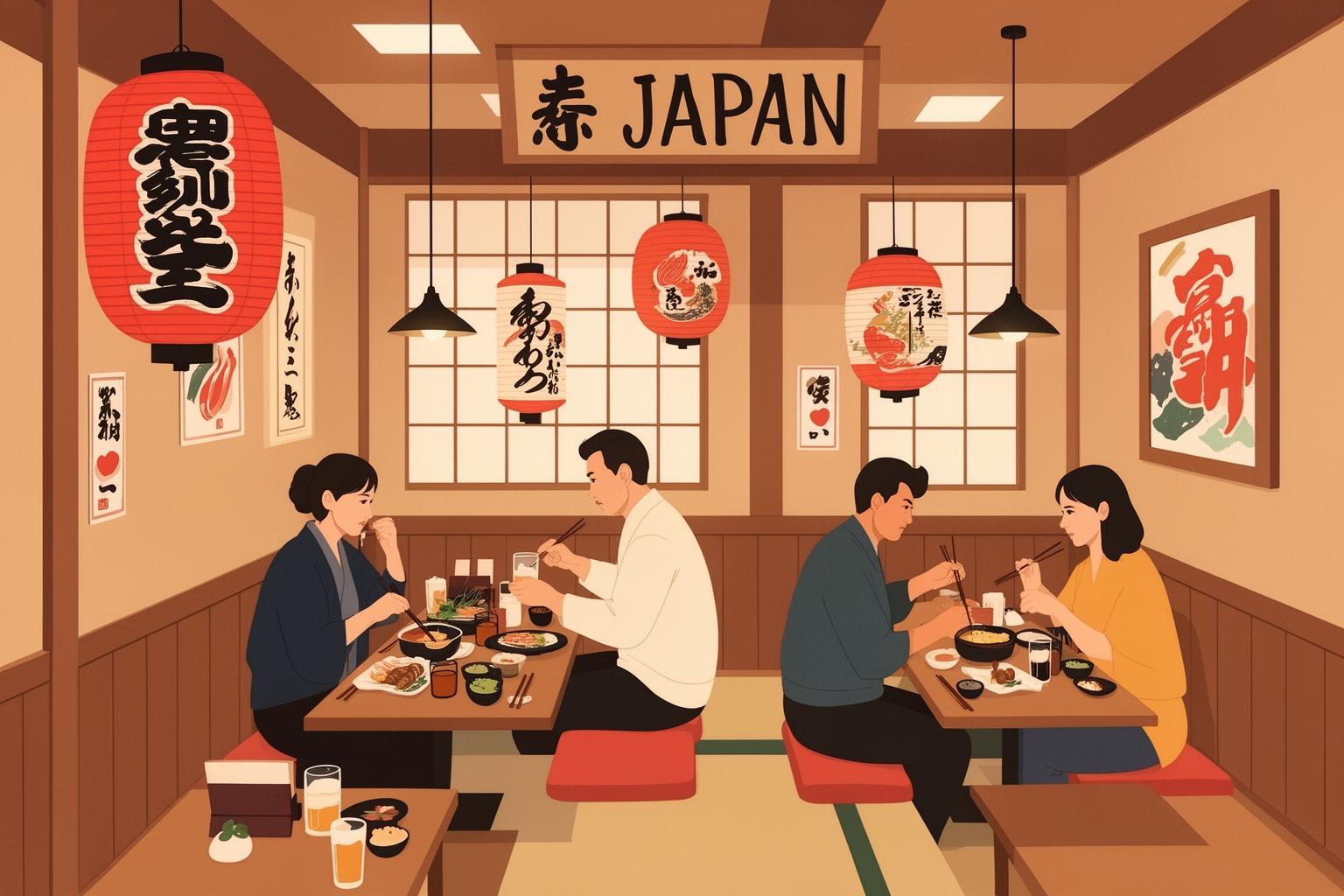
Before we can truly grasp the neo-izakaya, we first need to understand what it’s a “neo” version of. Picture this: the classic Showa-era izakaya, often tucked away in a yokocho, those narrow, atmospheric alleyways. Outside, a red paper lantern, an aka-chochin, glows, signaling that booze and bites await. You slide open a creaky wooden door and step into a wall of sound and smoke. The air is thick with the smell of grilled meat, stale cigarette smoke, and murmuring conversations. It’s loud, cramped, and dimly lit. The clientele is overwhelmingly male, mostly salarymen in work suits, ties loosened, unwinding after a long day at the kaisha, or company. This is their third space—not home, not the office, but a neutral ground for bonding, complaining, and drinking. A lot of drinking. The menu is straightforward and no-frills, designed for soaking up alcohol: yakitori (grilled chicken skewers), karaage (fried chicken), hiyayakko (cold tofu), and edamame. The drinks are simple: massive, frosty mugs of draft beer (nama-biru), cheap sake (nihonshu) poured into small cups, or a simple highball. The service is fast, maybe a bit gruff, but efficient. The whole point of this place isn’t culinary excellence or aesthetic pleasure; it’s a functional social institution. It serves as the pressure-release valve for a society built on rigid hierarchies and long work hours. This is the world of nomikai—obligatory after-work drinking parties where team bonding happens and where you’re expected to drink with your boss. The traditional izakaya was the stage for this uniquely Japanese corporate ritual. It was a space defined by collective identity over individual preference, where function triumphed over form. It was cheap, reliable, and deeply rooted in post-war economic boom culture. This is the baseline, the cultural institution that the neo-izakaya is remixing.
So, What Changed? The ‘Lost Decades’ and a Generational Shift
The shift from the smoky sanctuary of the traditional salaryman izakaya to the stylish neo-izakaya didn’t occur overnight. It reflects significant tectonic changes in Japan’s society and economy over the past thirty years. This transformation is not merely about evolving tastes; it signals a complete rewriting of the social contract for Millennials and Gen Z.
Economic Realities and the Decline of the ‘Nomikai’
Let’s start with money. Japan in the 1980s was an economic superpower. The ‘Bubble Era’ was a time of extravagance, where corporate expense accounts were seemingly limitless. Companies covered expensive `nomikai` gatherings to build loyalty and teamwork. Traditional izakayas flourished in this environment. However, when the bubble burst in the early 1990s, plunging Japan into the ‘Lost Decades’ of economic stagnation, the system began to unravel. The promise of `shushin koyo`—lifetime employment—started to fade. Firms tightened budgets, and lavish expense accounts were among the first to disappear. Suddenly, employees were expected to cover their own after-work drinks. Meanwhile, work styles gradually shifted from rigid hierarchies to more flexible, often precarious, arrangements. Today’s young workers have an entirely different connection to their jobs. They no longer view their company as a surrogate family demanding their entire social life. The notion of compulsory, three-hour drinking sessions with a section chief is, for many, a dreaded ordeal—feeling like unpaid overtime. As a result, the `nomikai` tradition has significantly weakened. Young people just don’t attend anymore; they prefer to spend their own money and time with friends they choose. This left a huge gap in the market. The old izakayas, designed for corporate clients, saw their main customer base shrink and the foundational reason for their existence—the `nomikai`—lose relevance. This paved the way for a new kind of social venue to arise.
The Rise of ‘Cosupa’ and a New Drinking Culture
With company-funded binge drinking on the decline, personal spending choices gained importance. Enter `コスパ` (`cosupa`), a Japanese blend of ‘cost’ and ‘performance.’ But `cosupa` is often misunderstood as merely being cheap. In truth, it’s about maximizing value and satisfaction for the money spent. A young Tokyoite might think, “With 5,000 yen for the night, I could go to a cheap izakaya, drink ten beers, and feel awful tomorrow, or I could visit a nicer place, enjoy two exquisite craft cocktails, share interesting dishes with a friend, and snap great photos.” The latter option represents better `cosupa`. It’s an investment in an experience, not just a transaction for alcohol. This aligns with a broader trend: younger Japanese are drinking far less than previous generations. Binge drinking is no longer the norm. The focus has shifted from quantity to quality. Nights out are more about conversation, ambiance, food, and the overall aesthetic experience. The drink is only one part of this, and it needs to be excellent. This new attitude demanded a different kind of establishment—one that valued customers’ budgets but provided a high-quality, multi-sensory experience. The old ‘cheap and cheerful’ approach no longer sufficed. The new generation sought ‘thoughtful and worthwhile.’
The ‘Grammable’ Revolution: Aesthetics as the Star
Finally, the most potent catalyst was social media. The rise of Instagram and later TikTok radically reshaped what makes a place ‘good.’ In the 2010s, the term `インスタ映え` (`Insta-bae`), meaning ‘Instagram-worthy,’ entered popular use. A venue’s success became tied to its photogenic appeal. The visual story of a place—its décor, lighting, plating, even the color of drinks—became as crucial as food taste or beer price. This shift changed everything. The traditional izakaya—with its dim lighting, cluttered spaces, and simple plating—was fundamentally anti-`Insta-bae.` It was designed for use, not for looking at. In contrast, the neo-izakaya embraces `Insta-bae.` Every detail is crafted with a visual mindset. Will this photo well on social media? Will customers want to post pictures with our signature lemon sour? The venue itself becomes a product. This focus on aesthetics explains the neo-izakaya’s distinctive vibe: minimalist concrete walls that make colors pop, curated playlists, artful neon signs, unique ceramic dishes, and Instagram-ready glassware. It’s a space designed not only for dining but for documentation. For a generation communicating through images, sharing visually striking experiences online is a core social activity. The neo-izakaya understands this profoundly—it’s not just a restaurant, but a content creation studio that happens to serve excellent food and drinks.
Deconstructing the Neo-Izakaya: It’s a Vibe, Not Just a Bar
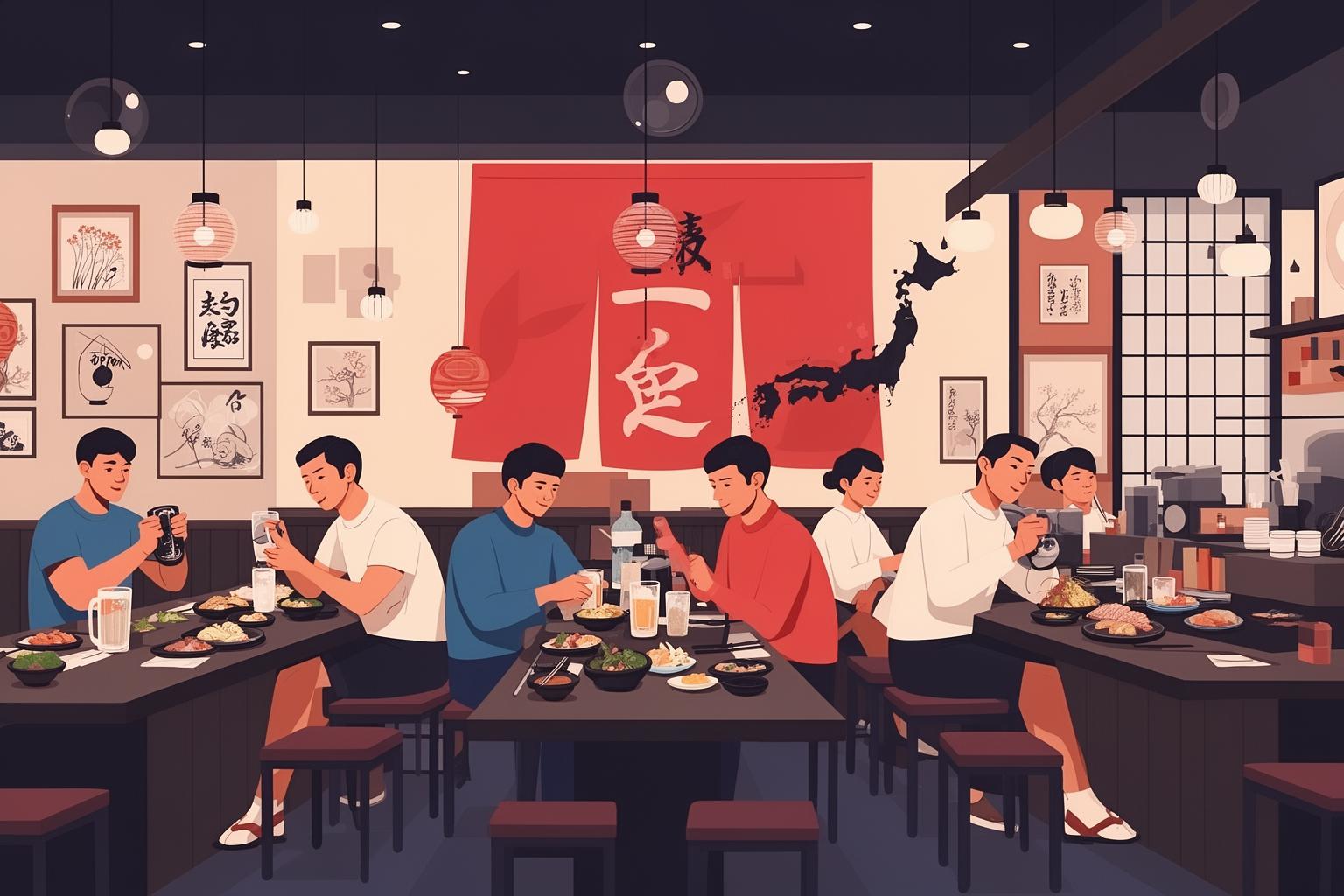
So, we understand why the neo-izakaya exists. But what exactly defines it? It’s a combination of deliberate choices regarding food, drink, design, and social atmosphere that together create a distinctly unique experience. It involves taking the core izakaya concept—casual dining with drinks—and filtering it through a modern lens.
The Menu: Familiar with a Fashionable Twist
The food at a neo-izakaya is one of its most distinctive features. It’s a masterclass in remix culture. The chefs don’t discard the traditional izakaya playbook entirely. Rather, they take the classics and infuse them with a 21st-century flair. It’s about elevating the humble and delighting the palate. Consider potato salad, a staple izakaya side dish. In a traditional setting, it’s a simple, creamy mash. At a neo-izakaya, it might be deconstructed, featuring smoked potatoes, topped with a shiny, perfectly soft-boiled egg (`ajitama`), crispy bacon bits, and a drizzle of truffle oil. It’s still potato salad, but reimagined as the star ingredient. Karaage (Japanese fried chicken) is another staple. Instead of just a soy-ginger marinade, a neo-izakaya might offer multiple versions: one with yuzu-kosho mayo, another with spicy Sichuan chili sauce, and a third with a sweet and sour `nanban` glaze. This respects the classic while adding personal and global flavors. You’ll also notice Italian and French influences skillfully integrated. Classic sashimi might become a vibrant carpaccio, drizzled with olive oil and dotted with pink peppercorns. Instead of simple grilled fish, you could encounter a perfectly cooked sea bream acqua pazza. This fusion is intentional; it reflects the global palate of young urbanites who have grown up with access to diverse cuisines and expect that variety in their casual dining. The aim is to create dishes that are comforting in their familiarity but thrilling in their execution. The food is delicious, visually appealing, and made for sharing on social media.
The Drinks: Expanding Beyond Beer and Nihonshu
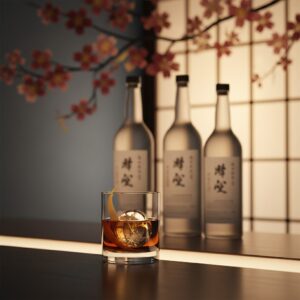
The beverage menu is where the neo-izakaya truly distinguishes itself from tradition. While beer and sake remain available, they no longer reign supreme. The focus shifts to drinks with greater flavor complexity, visual impact, and originality. The hallmark of the neo-izakaya is the evolved `サワー` (sour). The classic sour combines shochu, soda water, and a splash of lemon or lime juice. The neo-izakaya’s version is an extravaganza. Think sours piled high with frozen fruit—strawberries, pineapple, kiwi, mango—forming vibrant, colorful, and highly Instagrammable towers. Some incorporate fresh herbs like rosemary or mint, artisanal syrups, and premium shochu. Each is a signature creation, served in distinctive, often quirky glasses. These drinks are popular for good reason: they’re visually stunning, endlessly customizable, and typically lower in alcohol, appealing to a more moderate drinking generation. Another significant element is natural wine. Offering a carefully curated list of organic, biodynamic, or minimal-intervention wines from across the globe signals a break from mass-market beverages and an embrace of global foodie culture. It communicates sophistication, craftsmanship, and insider knowledge. This transforms the izakaya from a simple pub into a venue with a distinct culinary perspective. You can also find craft gins, small-batch Japanese whiskies, and innovative non-alcoholic options far beyond standard oolong tea or Calpis. The drink menu makes a statement—it sparks curiosity and invites exploration, turning ordering a drink into an experience rather than a routine.
The Space: Goodbye Smoky Back Alleys
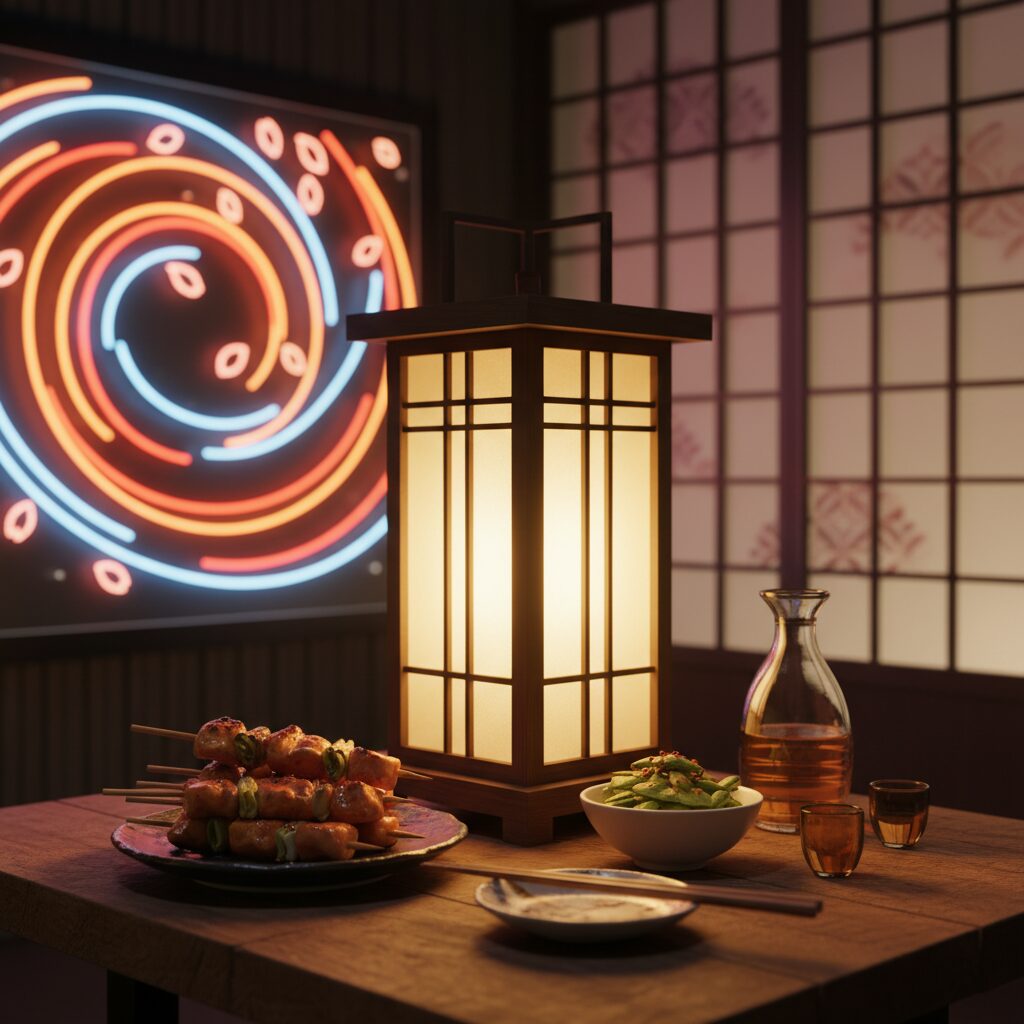
Perhaps the most immediate and visible change is in the physical environment. The neo-izakaya’s design rejects the dark, cluttered, smoke-filled atmosphere of the past. The key words here are clean, minimalist, and intentional. The design often embraces an industrial chic style—exposed concrete walls, polished wood counters, bare Edison bulbs, and accents of brushed metal or black steel. It offers a neutral, almost gallery-like backdrop that highlights the food, drinks, and people. This minimalist aesthetic is also highly practical for social media, as simple backgrounds make for better photos. Air quality is another major improvement. Many neo-izakayas are entirely non-smoking or have strictly separated smoking areas. This was a radical shift for Japanese pubs, traditionally safe havens for smokers. By eliminating smoke, neo-izakayas instantly become more accessible and welcoming to a broader audience, especially young women and health-conscious patrons who previously avoided smoky venues. The layout differs as well, often featuring an open kitchen that turns cooking into entertainment, fostering transparency and connection between chefs and customers. Seating is more varied, mixing counter seats ideal for couples or solo diners with small tables for groups. The overall atmosphere more closely resembles a trendy Brooklyn bistro or Scandinavian café than a traditional Japanese pub. It is bright, comfortable, and designed for lingering and conversation.
The Social Dynamic: Who Goes There Now?
Step into a neo-izakaya on a Friday night, and the crowd looks very different from the traditional salaryman clientele. The patrons tend to be younger, usually in their 20s and 30s, with a more balanced gender mix; groups of women often form a significant share of the guests. You’ll see couples on dates, small groups of friends catching up, and local creatives dropping by for a glass of wine. The atmosphere is lively and vibrant, but less about loud, drunken revelry and more about meaningful conversation. People talk, laugh, snap pictures of their food, and share small plates. The energy is relaxed and social, with less hierarchy and performance. The neo-izakaya serves as a ‘third space’ for a new generation, but its role has shifted. It’s no longer a place to escape the pressures of a strict corporate life; rather, it’s a setting to actively build and enjoy a chosen social life. It’s the backdrop for making memories with friends, celebrating small wins, or having a first date. The space reflects a more individualistic, networked social structure where one’s friend group or online community often matters as much or more than office colleagues.
Real vs. Expectation: Is a Neo-Izakaya a ‘Real’ Izakaya?
This is the big question that sparks debate among foodie enthusiasts and cultural purists alike. When something changes this dramatically, is it still the same thing? Is the neo-izakaya a genuine evolution of Japanese pub culture, or merely a superficial, trend-driven imitation?
The Gatekeepers’ Complaint: “It’s Just a Fancy Cafe!”
The traditionalists’ criticism is easily understood. They may argue that the neo-izakaya lacks ‘soul.’ For them, an izakaya’s authenticity is rooted in its grit, history, and unpretentious nature. The smoke, noise, and slightly sticky counters aren’t defects; they are integral to the experience’s essential character—the `wabi-sabi`. They might view the neo-izakaya’s emphasis on aesthetics as shallow and claim that a place focused on Instagram-worthy appearances has forgotten a pub’s true role: to offer simple, honest comfort. The curated playlists, natural wines, and truffle oil can all come off as performative, overly contrived. There’s a sense that these new establishments are just cafes staying open late and serving alcohol, borrowing the ‘izakaya’ label for unearned cultural prestige without grasping its deeper social purpose. For those raised with the izakaya as a steadfast, unchanging social space, the neo-izakaya can feel like a betrayal and dilution of a treasured cultural tradition.
The Rebuttal: Redefining ‘Tavern’ for a New Generation
But here’s a compelling counterpoint. What is the core spirit of an izakaya? The very name offers insight: `i` (to stay) and `sakaya` (sake shop). It started as a place where you could linger and drink. Over time, it evolved into a casual spot for enjoying drinks, food, and company. Its fundamental role is to serve as a comfortable and welcoming social space. The neo-izakaya, despite its stylistic embellishments, fully embraces this core role for its intended audience. The meanings of ‘comfortable’ and ‘accessible’ have simply shifted. For a young, digitally native urbanite, ‘comfortable’ means a clean, smoke-free environment with good lighting. ‘Accessible’ entails a diverse menu accommodating modern tastes and dietary choices. ‘Social’ includes spaces that support both in-person interaction and online sharing. The neo-izakaya is not a betrayal of izakaya spirit; it’s an essential and direct adaptation. It’s what an izakaya must be to remain relevant in the 21st century—a response to new economic, social, and technological realities. The traditional izakaya suited 1970s Japan perfectly. The neo-izakaya suits contemporary Japan just as well. It reflects modern values: prioritizing experience over possessions, individualism over corporate conformity, and a visual-first approach to communication. To dismiss it as inauthentic is to miss the point—it may well be the most genuine expression of what it means to be young in Japan today.
Where to Find the Vibe: A Cultural Map
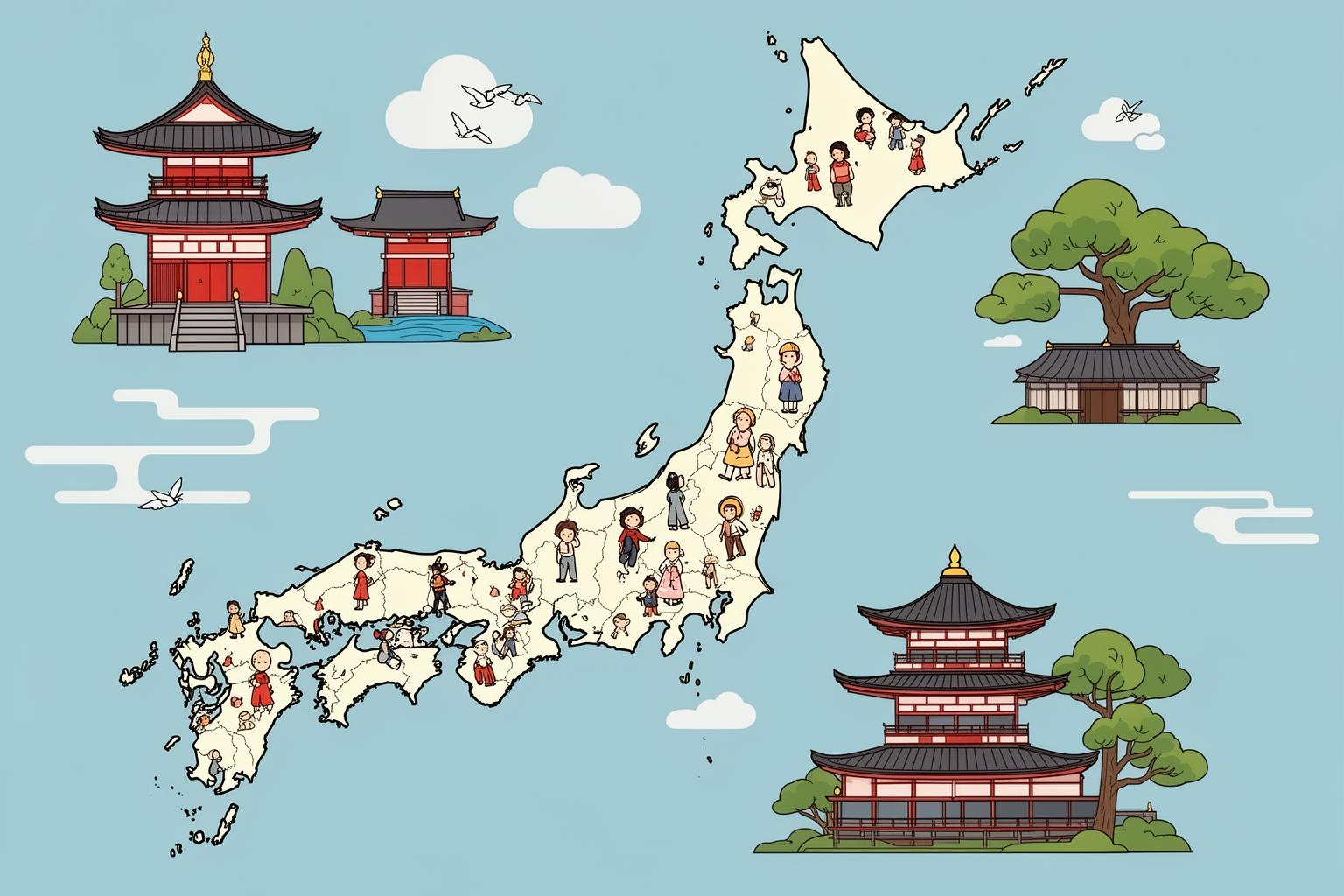
This is not a list of the ‘Top 5 Neo-Izakayas.’ Such a list would overlook the bigger picture. The true insight lies in where these venues are concentrated and why. The distribution of neo-izakayas reveals much about contemporary Japanese urban culture.
The Epicenters: Shibuya, Ebisu, Sangenjaya
It’s no surprise that this trend is most prominent in Tokyo’s trend-setting districts. Shibuya, the enduring hub of youth culture, is teeming with them. Here, neo-izakayas tend to be loud, vibrant, and heavily influenced by the latest visual trends, appealing to the fashion-savvy crowds drawn to the area. Ebisu presents a slightly more mature, refined atmosphere. Known for its dense array of excellent restaurants and stylish bars, the neo-izakayas here often emphasize natural wine or upscale cuisine, attracting young professionals and creatives in their late 20s and 30s. It’s considered the ‘post-Shibuya’ hangout. Sangenjaya, or ‘Sancha’ as locals call it, offers a different vibe: more relaxed with a strong neighborhood feel despite being only two stops from Shibuya. The neo-izakayas here often feel more intimate and experimental, typically run by young owners deeply connected to the local community. These three districts form a golden triangle for the neo-izakaya movement, each providing a unique interpretation of the same core concept and reflecting the subtle cultural distinctions of their neighborhoods.
The Under-the-Radar Gems: Gakugei-daigaku, Kichijoji
However, the movement isn’t limited to major hubs. The real indication that this is a deep cultural shift is the spread into more residential yet still trendy neighborhoods. Take Gakugei-daigaku on the Toyoko Line—a university town with a laid-back, almost bohemian atmosphere. It boasts a thriving community of independent shops, cafes, and increasingly, neo-izakayas. These venues are often smaller, more personal, and serve as genuine neighborhood gathering spots, proving that demand for this pub style extends well beyond trendy centers. Similarly, Kichijoji, consistently ranked among Tokyo’s most desirable places to live, has a lively scene. Located in West Tokyo, it blends artistic sensibilities with suburban life. Neo-izakayas here cater to local residents, families, and students from the nearby art university. The presence of neo-izakayas in these areas shows this isn’t just a passing fad for tourists or fashion enthusiasts. It is becoming a standard, expected feature of Japanese urban life—the new neighborhood local.
The Final Take: More Than Just a Pretty Drink
So, when you come across that image on your feed of a minimalist bar serving a gravity-defying fruit sour and some form of deconstructed izakaya classic, don’t simply brush it off as a superficial trend. Look a bit closer. What you’re witnessing is a cultural record, a snapshot of a society in transition. The neo-izakaya tells the story of a generation wrestling with their parents’ economic legacy, rejecting the rigid corporate frameworks of the past, and creating a new social code in a screen-mediated world. It’s a tale of shifting values—where the quality of an experience outweighs the quantity of alcohol, where aesthetic enjoyment is a goal in itself, and where social life is curated with friends, not controlled by a boss. It’s the izakaya, rebooted for a new operating system. It shows that Japanese culture isn’t a static museum artifact. It’s a living, breathing entity that continuously adapts, remixes, and reinvents itself. The neo-izakaya preserves the core spirit of its predecessor—a place to gather, eat, and drink—but it communicates in today’s language. And that language is visual, individualistic, and unapologetically stylish. This isn’t the death of the izakaya; it’s its evolution. And, honestly, it’s a pretty delicious and photogenic one at that.