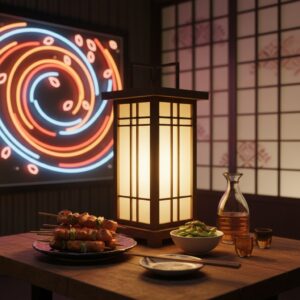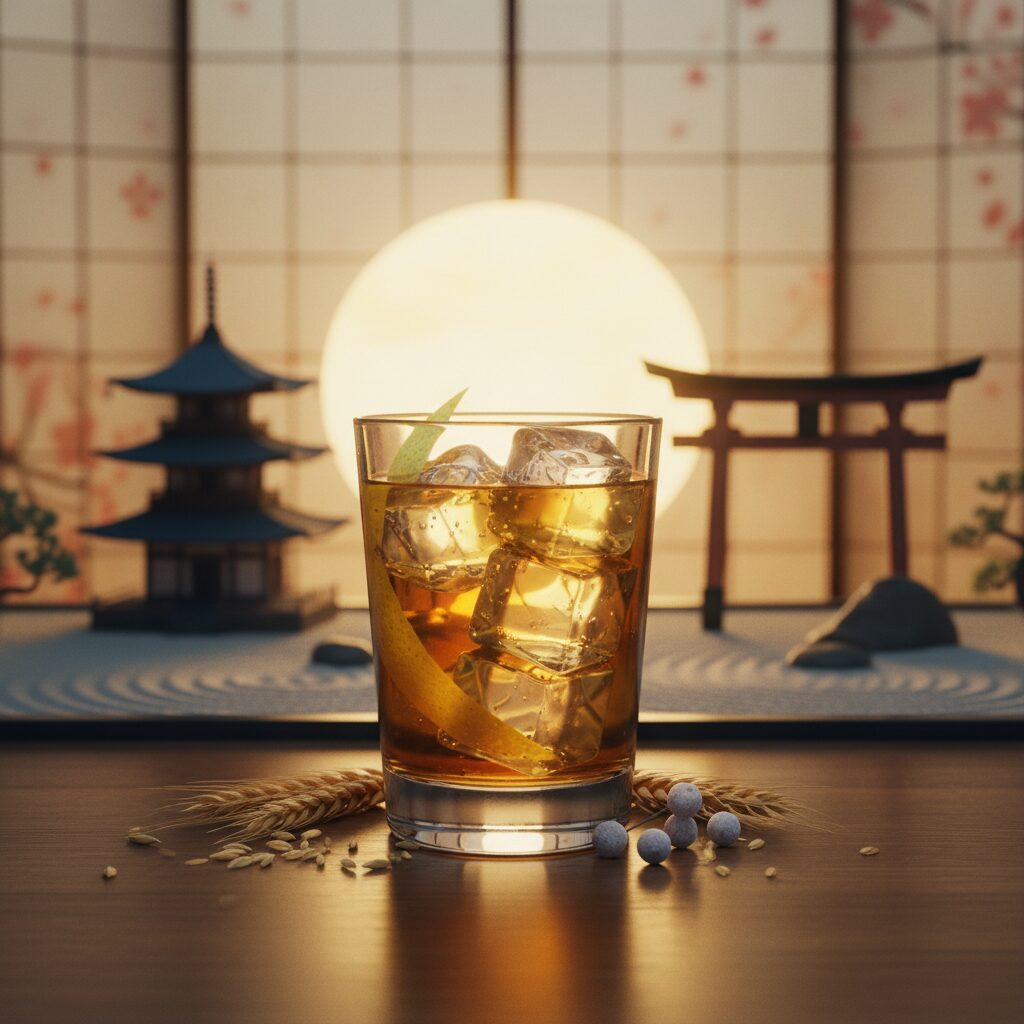
You see it, right? You’re weaving through a maze of neon-drenched back alleys in Shinjuku or Shimbashi, and there it is. A tiny spot, barely a room, glowing warm and amber. It’s packed. Shoulder-to-shoulder, a crowd of people are all standing, not sitting. In their hands, almost universally, is a tall, frosty glass filled with a pale, bubbling liquid. It looks simple. Maybe too simple. You peek in, catch the vibe—a low, contented hum of conversation, the clink of glasses, the sizzle of something on a grill. And you wonder. Why are they all standing? What even is that drink? And why is every single person drinking it? It feels like you’ve stumbled upon a secret ritual, a code you can’t quite crack. You’ve seen the aesthetic on your feed, the hazy, nostalgic photos of these little stand-up joints, but the reality feels… specific. Calculated. It’s not just a bar; it’s a system. And that simple, bubbly drink? That’s the ghost in the machine. That’s the fuel. This isn’t just about grabbing a quick drink. This is about understanding the soul of Tokyo’s grind and the engineered perfection of its release valve. We’re about to spill the tea on why the Japanese Whisky Highball isn’t just a drink, but the absolute, undisputed main character of the modern tachinomi, or standing bar. It’s a story about efficiency, history, and the art of crafting the perfect, low-key buzz for a nation that never stops moving.
To truly understand this engineered social release, one must first crack the code of the modern izakaya.
The Art of Standing Still: Deconstructing the Tachinomi
More Than Just No Chairs
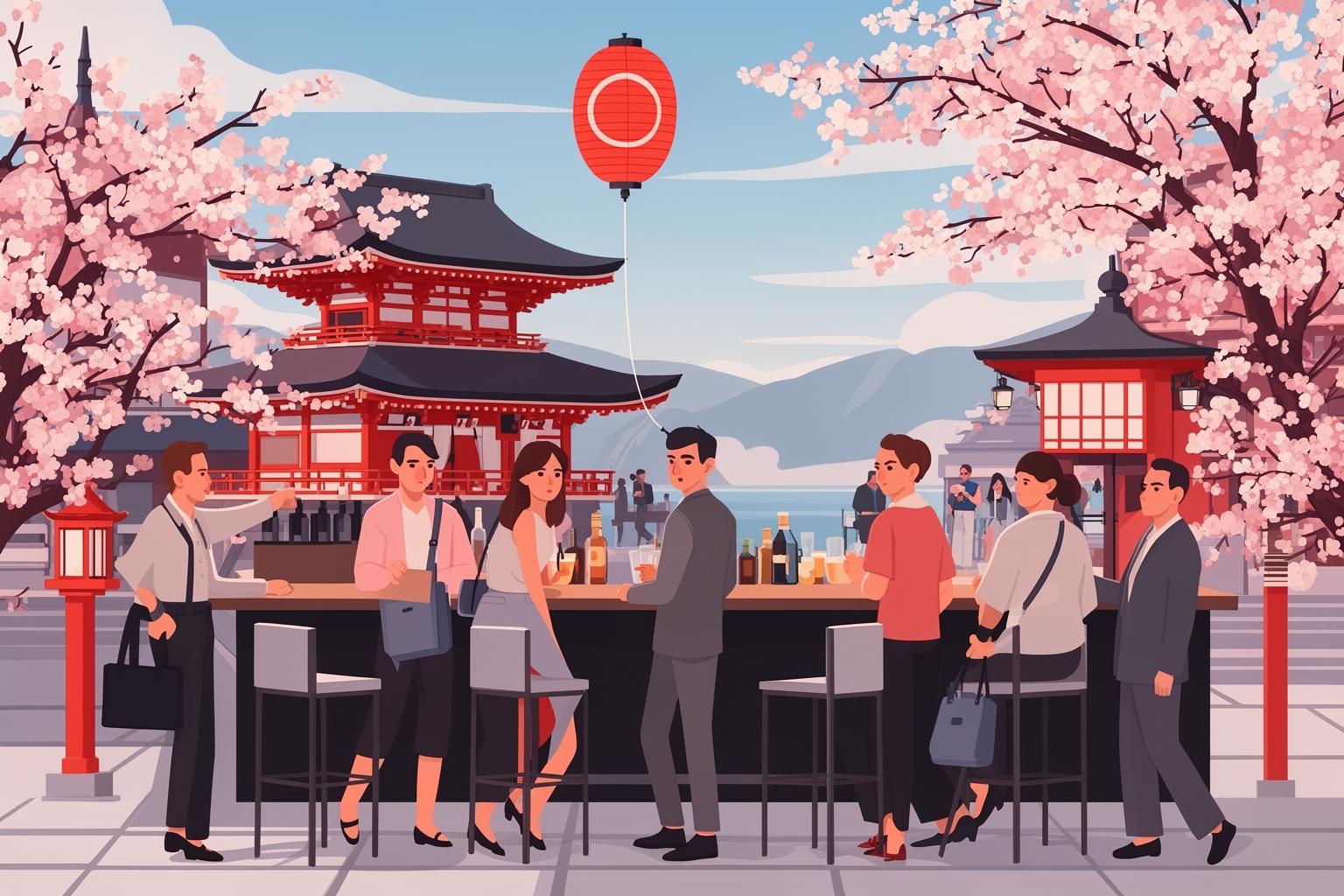
First, let’s be clear: a tachinomi isn’t simply a bar that forgot to bring in chairs. The lack of seating is intentional. It’s a feature, not a flaw. In a city where space is a precious commodity and time the most valuable asset, the tachinomi stands as a brilliant example of social engineering. Standing signifies transience. You’re not settling in for the evening, nor are you there for a lengthy heart-to-heart. You’re making a brief stop. It’s a liminal space, a pause between the structured office routine and the demands of home life. Its design encourages low commitment. You can pop in, have a drink and a skewer of grilled chicken, and leave in fifteen minutes without any awkwardness. Or, you might stay for an hour, chatting with the stranger next to you, all the while knowing that the fluid nature of the setting means no one is tied to a fixed social arrangement. Standing keeps the energy high, the crowd moving, and the business remarkably efficient. It acts as a social airlock where you decompress from the day’s stresses before re-entering your personal world. The absence of chairs isn’t about saving money; it’s a philosophical statement about the space’s purpose. It’s meant for movement and a quick reset, not reclining into comfort and letting time slip away.
A Quick Trip Through Time: From Edo Pit Stops to Salaryman Sanctuaries
The roots of the tachinomi run deep in Japanese culture, tracing back to the Edo period (1603-1868). Along major highways connecting cities, simple stands offered travelers a quick cup of sake and a bite to eat. People stood, refueled, and continued on their way. It was purely functional. The modern version, however, took shape in post-war Japan. As the nation rebuilt and the “salaryman” culture took hold, a new need emerged. These men endured long hours in crowded urban offices followed by exhausting commutes to suburban homes. They needed a place to bridge that gap. The Showa-era tachinomi became that refuge. It was gritty, smoky, and unapologetically masculine. A spot to grab an affordable drink, vent about your boss to colleagues, and fill your stomach with salty fried fare before facing the crowded train ride home. It served as a pressure valve for the demands of corporate life. The aesthetic of these establishments—the dark wood counters smoothed by countless elbows, handwritten menus pasted on walls, and the grizzled “master” behind the counter who knows everyone’s usual order—is now cherished with deep nostalgia, a glimpse into a time of intense economic growth and personal sacrifice. These weren’t fashion-forward hangouts; they were essential havens for the working man.
The Unspoken Rules of the Counter
Step inside a traditional tachinomi, and you’ll sense the unspoken rules at play. This isn’t chaos. There’s a rhythm, a social contract that everyone abides by without words. Rule one: respect the space. You’ll be standing close to strangers, aiming for a comfortable density rather than overcrowding. Keep your bag at your feet and elbows tucked in. Rule two: efficiency matters. Know what you want before making eye contact with the master. Orders are straightforward and service quick. Many spots use cash-on-delivery, where you place your money in a small tray, streamlining the transaction. Lingering is discouraged. When you finish, you move along. The space you occupy is precious, and the tacit agreement is that you’ll clear the way for the next person seeking their brief respite. But efficiency doesn’t mean the place feels cold. Far from it. The counter forms a temporary, fleeting community. You might strike up a brief, friendly conversation with the person beside you—something unlikely to happen on a silent, crowded train. The bar’s master acts as the anchor, quietly orchestrating this flow of brief encounters and maintaining a convivial atmosphere. It’s a delicate balance of intimacy and anonymity, a distinctly Japanese answer to urban solitude.
The Golden Ratio: Why the Highball Conquered Japan
It Wasn’t Always Cool: The Highball’s Rise, Fall, and Triumphant Return
The highball’s ascent to the top of Japan’s drinking culture has been quite a rollercoaster. Whisky first came to Japan in the 19th century, but it was an imported, costly luxury. Shinjiro Torii, founder of Suntory, dreamed of crafting a Japanese whisky tailored to local tastes. After many years of effort, he succeeded, and by the post-war era, Suntory was poised to dominate. They launched chains of “Torys Bars” nationwide, designed to make whisky culture accessible to all. The highball—a simple blend of their affordable Torys or Kakubin whisky and soda—became the star. Marketed as a modern, sophisticated, yet democratic drink, it struck a chord. For a generation, the highball was the drink of choice. But then, attitudes shifted. Through the 1980s and 90s, amid the bubble economy and its collapse, the highball came to seem outdated, dismissed as an “ossan-kusai” (old man’s) drink. Younger drinkers gravitated toward beer, shochu, wine, and elaborate cocktails, pushing the highball to the dusty corners of old-school pubs. Its remarkable comeback began around 2008. Facing a slump in domestic whisky sales, Suntory launched one of Japan’s most brilliant marketing campaigns. Instead of pushing whisky itself, they promoted the Kaku Highball. Featuring the immensely popular actress Koyuki, the ads rebranded the highball from a tired salaryman’s drink to a chic, refreshing, and delicious choice that pairs perfectly with food. They emphasized the message that the highball is the ultimate companion to meals. Bars were equipped with proprietary high-pressure soda dispensers to guarantee ideal carbonation, and specially designed dimpled glass mugs quickly became iconic. This campaign was a masterstroke in cultural revival. It single-handedly made the highball fashionable again for a new generation, transforming it into the ubiquitous powerhouse it is today.
The Anatomy of the Perfect Japanese Highball
To grasp why the highball has such a firm grip on Japan, you need to understand it isn’t just a casual mix of whisky and flat soda from a tap. No, the Japanese highball embodies kodawari—the uniquely Japanese dedication to meticulous detail and the pursuit of perfection in simplicity. The drink hinges on four essential pillars, each non-negotiable.
First, the Whisky. The default and iconic choice is Suntory Kakubin, recognizable by its tortoiseshell-patterned bottle. This isn’t a complex, peated single malt for slow sipping; it was specifically crafted to be the perfect highball base: smooth, slightly sweet, with vanilla and citrus notes, and a clean, quick finish. It’s affordable, consistent, and totally unobtrusive—an ideal canvas.
Second, the Ice. This is vital. A proper highball uses crystal-clear, high-density ice. At top bars, this means hand-carved blocks or long solid spears to fill the glass. Why the fuss? Hard, clear ice contains fewer air bubbles, melting slowly. This keeps the drink cold to the last sip without watering it down or dulling the fizz. It’s the invisible backbone of the drink’s integrity.
Third, the Carbonation. Forget dull, flat soda water. Japanese highballs require intensely sparkling soda, often dispensed under high pressure to maximize fizz. The bartender first chills the glass with ice, pours in the whisky, then gently adds the soda down the side of the glass to protect every bubble. The drink is never stirred vigorously once soda is added; just a gentle lift with a bar spoon is allowed to preserve the powerful, lingering effervescence that tingles the tongue and enhances the whisky’s aroma.
Fourth, the Ratio and Glass. Precision matters. The classic ratio is one part whisky to three or four parts soda, resulting in a refreshing, sessionable drink that isn’t overpoweringly alcoholic. It’s almost always served in a distinctive thin-walled, often handled, pre-chilled mug. The thin glass keeps the drink colder longer, and Suntory’s signature tortoiseshell-dimpled kame-ko mug is now so iconic it has become synonymous with the highball itself. This is not just a drink; it’s a finely engineered piece designed for ultimate refreshment.
Beyond Kakubin: The Highball as a Creative Platform
While the Kaku highball reigns supreme, its resurgence has turned the simple recipe into a gateway for exploring the broader world of Japanese whisky. Bars now offer premium versions. Want a highball crafted with the renowned smoky Hakushu single malt? No problem. How about one made with the floral, fruity Yamazaki? Absolutely. This progression created a tiered appreciation—from everyday Kaku to special-occasion Yamazaki highballs. Then came flavor variations. The highball’s clean profile makes it perfect for infusions. Today you’ll find yuzu, ginger, ume (pickled plum), and even seasonal highballs featuring fresh muddled fruits. This adaptability was key to its conquest. The highball can be the affordable, reliable classic favored by the old-school salaryman, yet also an artisanal, sophisticated craft drink for trendy foodies in new-wave neo-tachinomi bars. This versatility secures its place across generations and cements its status as Japan’s national cocktail.
The Perfect Symbiosis: Where Highball Meets Tachinomi
So here we have the tachinomi, a space designed for speed and fleeting community, paired with the highball, a drink crafted for optimal refreshment and simplicity. Together, they create more than just a bar serving a popular beverage; they form a perfect, self-reinforcing system. This symbiotic relationship enhances both elements, delivering the ultimate urban decompression experience. Here lies the true magic, revealing the deep logic connecting place and drink.
The Economics of Efficiency
Let’s discuss money, because understanding Japan means understanding the economics of daily life. For the tachinomi owner, the business model is tough. With high rent and a tiny space, revenue per square foot must be maximized. The highball is a profitability blessing. The main ingredient, Kakubin whisky, is purchased in large, cost-effective 4-liter bottles. Soda water is inexpensive. Skilled bartenders can prepare a drink in about 30 seconds. There are no costly liqueurs or time-consuming shaking or muddling—just pour, pour, gentle lift, and serve. This enables one bartender to serve a crowded counter quickly, keeping drinks flowing and the cash register busy. This high-speed, high-turnover approach is the only way a small tachinomi can survive and prosper in Japan’s competitive nightlife. On the customer side, the highball is an affordable miracle. Amid stagnant wages, the senbero culture—getting pleasantly tipsy for 1,000 yen (roughly 7-8 USD)—is more relevant than ever. A highball at a no-frills tachinomi can cost as little as 300 or 400 yen. With two drinks and some yakitori skewers, you still get change from your 1,000 yen coin. It delivers a pleasant buzz and moment of relaxation without overspending. This economic harmony between provider and consumer forms the foundation of the highball-tachinomi partnership, making it financially sustainable for all involved.
The “Efficient Buzz”: Engineering the Perfect Social Lubricant
Here lies the core of the matter. Why this particular buzz? After-work drinking in Japan rarely aims for oblivion. It’s about achieving kirikae (切り替え), or “switching over”—a deliberate mental and emotional shift that separates work life from private life. The highball is the most efficient tool for this transition. Its alcohol content is moderate, typically 7-9% ABV, akin to a strong craft beer. It smooths out tension, loosening the tie both literally and figuratively, without dulling judgment or causing severe hangovers. There is a common belief, supported by some research, that carbonation speeds up alcohol absorption, meaning you feel effects faster—a quicker, lighter lift-off compared to beer’s slow, heavy rise. It’s a “clean” buzz: relaxed and sociable, yet sharp. It fosters easy conversation and light camaraderie without the emotional heaviness often found in stronger drinks like straight whisky or rich sake. This functional buzz is engineered to facilitate a smooth transition from workplace stress to the relaxed mindset needed for the commute and evening ahead. It’s not an escape but a recalibration.
A Culinary Masterstroke: The Ultimate Palate Cleanser
Japanese drinking culture is intrinsically linked to food. Drinking is done with food, and pairing is crucial. Again, the highball shines. Tachinomi snacks, or sakana, are bold, flavorful, and crafted to complement alcohol—think yakitori skewers glazed with sweet-savory tare sauce, crispy karaage, salty grilled fish, and rich, hearty simmered beef tendon (motsuni). These intense flavors are often oily or robust. Heavy beer can fill you up quickly, its bitterness clashing with the food. Sake’s complex profile demands careful pairing. The highball is the perfect partner. Its crisp, dry effervescence acts as a palate cleanser, cutting through karaage’s fat, rinsing away tare’s richness, and quenching grilled fish’s saltiness. It’s a neutral reset button between bites, letting you savor each dish as if anew. Instead of competing, it elevates the food by offering a refreshing counterbalance. The subtle sweetness of Kakubin and a hint of citrus from a lemon twist complement the savory tones without overpowering them. Without exaggeration, it’s the most versatile and effective food-pairing drink in Japanese izakayas and tachinomi.
Ritual and Rhythm: The Performance of Simplicity
Never underestimate the Japanese reverence for process and form—kata. Even in casual settings, there’s a deep love for doing things properly and with care. Making a highball in a tachinomi is a small act of performance art—a ritual. Watch the bartender: the glass is filled to the brim with ice; a long bar spoon stirs it rapidly until the glass frosts on the outside. Melted water is strained out. Whisky is poured with precision. The hyper-carbonated soda is gently added at an angle to preserve bubbles. Finally, a subtle lift of the spoon from the bottom completes the sequence—quiet, focused, economical movements. This ceremony elevates a simple mixed drink into something special. It’s a moment of mindful craft, assuring you receive a product made with intention and skill. This rhythm reflects the tachinomi’s own ambiance—a space that is efficient and functional, yet infused with order and care. It’s a comforting ritual marking the start of your brief escape, a mindful pause before the first refreshing sip.
The Neo-Tachinomi: How the Highball Fueled a Revolution
Not Your Grandfather’s Standing Bar
The story doesn’t stop with the smoky, Showa-era bars. The highball’s remarkable resurgence coincided with—and arguably propelled—a rebirth of the tachinomi culture itself. A new wave of entrepreneurs recognized the standing bar’s potential but opted to give it a modern 21st-century makeover. These are the “neo-tachinomi.” You’ll find them in trendy districts like Ebisu, Nakameguro, and Sangenjaya. While the core elements remain—standing, efficiency, affordable prices—the overall approach is entirely transformed. Lighting is bright and chic. Interiors showcase clean lines, concrete, and light wood instead of the traditional dark, smoky finishes. The menus have expanded to include natural wine, craft sake, and inventive, high-quality small plates that go well beyond the usual yakitori and edamame. Who visits these spaces? Everyone. The old gender divide has been fully broken. You’ll see women in groups, young couples on dates, food enthusiasts exploring the offerings, and curious tourists. The neo-tachinomi took the functional skeleton of the traditional model and dressed it up in trendy, inviting attire, becoming a central part of contemporary Japanese urban social life. It turned into a destination itself, rather than just a passing stop.
The Instagrammable Icon
In this new setting, the highball found a fresh life as a social media sensation. Visually, it’s striking. The frosty, dimpled mug, crystal-clear ice, the cascade of tiny bubbles catching the light, and the bright yellow lemon wedge perched on top—it’s incredibly photogenic. Against the well-lit, stylish backdrop of a neo-tachinomi, the highball is pure Instagram gold. It came to symbolize a particular brand of cool, casual, and genuinely Japanese nightlife. Young people, who might once have linked the drink to their grandfathers, now saw it as a fashionable and timeless classic. The endless flood of highball images on social media created a powerful feedback loop: the more people posted it, the more others wanted to try it, and the more bars emphasized serving it. The highball’s visual allure, combined with the new aesthetic of its venues, was a major driving force behind its renewed popularity, securing its place in the modern cultural lexicon.
The Highball as a Gateway
The highball’s success has profoundly influenced Japan’s entire beverage scene. For generations, whisky was intimidating to young people—considered pricey, strong, and something that required expertise to enjoy. The highball shattered these barriers. It presented whisky in a friendly, approachable, and affordable form—the perfect introduction. People started with a simple Kaku highball, developed a liking, and then grew curious: What about a highball with a richer whisky flavor? What does that whisky taste like neat? The highball became a gateway to the broader world of Japanese whisky. It created a new generation of domestic whisky fans, providing crucial support for the industry, especially as international demand and soaring prices made many aged bottles unattainable. By making whisky accessible, the highball not only saved itself from fading into obscurity but revitalized its parent category for a whole new era.
The Takeaway: It’s More Than a Drink, It’s a System
So, when you stand at that counter, frost-covered mug in hand, you’re holding more than just whisky and soda. You’re holding the key to an entire system. The highball in the tachinomi isn’t a random combination. It’s a near-perfect solution to a unique set of Japanese cultural and economic pressures. It reflects a society that values efficiency, precision, and ritual. It answers the challenge of creating a space for social connection that is low-cost, low-commitment, and seamlessly woven into the relentless pace of urban life. It serves as the tool for the crucial kirikae, the mental reset that helps millions navigate the daily grind. The highball’s prominence is not a matter of mere taste, but a triumph of design. It’s affordable enough for a stagnant economy, simple enough for swift service in a tiny bar, refreshing enough to complement any food, and effective enough to deliver the precisely calibrated buzz needed. It appears simple. It tastes simple. But behind that simplicity lies a complex and elegant logic. It embodies the soul of the modern tachinomi because it offers the most elegant, efficient, and delicious answer to the city’s demands. It’s the sound of Tokyo decompressing, one perfectly chilled, perfectly bubbly glass at a time.