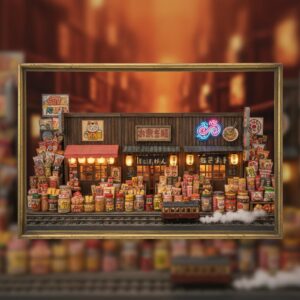
Yo, what’s up. So you’ve definitely seen the pics, right? The ones that hit different on your feed. Super cramped alleyways, hazy with grill smoke, glowing with the vibe of a single red lantern. A bunch of dudes in suits, ties loosened, absolutely crushing beers next to a tiny counter. It looks mad cool, but also, like, a little intimidating. You’re probably wondering, is this whole scene just a vintage filter slapped on for tourists, or is it actually legit? And for real, why does this gritty, slightly grimy aesthetic even exist in Japan, a country that’s basically obsessed with being clean, futuristic, and crazy efficient? It’s a total vibe clash. And that’s the whole point. These alleyways, these yokocho, aren’t just ‘old-school’ photo ops. They’re living, breathing relics of a Japan that had to fight its way back from zero. They’re the raw, unfiltered story of how modern Japan was built, one smoky skewer and cheap beer at a time. This isn’t just about grabbing a drink; it’s about time-traveling to the very soul of the city. Forget what you think you know about polished, perfect Japan. We’re about to dive into the beautiful mess that is the Showa yokocho.
To truly understand this gritty, smoky aesthetic, you need to explore other Showa-era institutions like the world of Showa-era bike gambling.
The Post-War Scramble: Building from the Ashes (Literally)
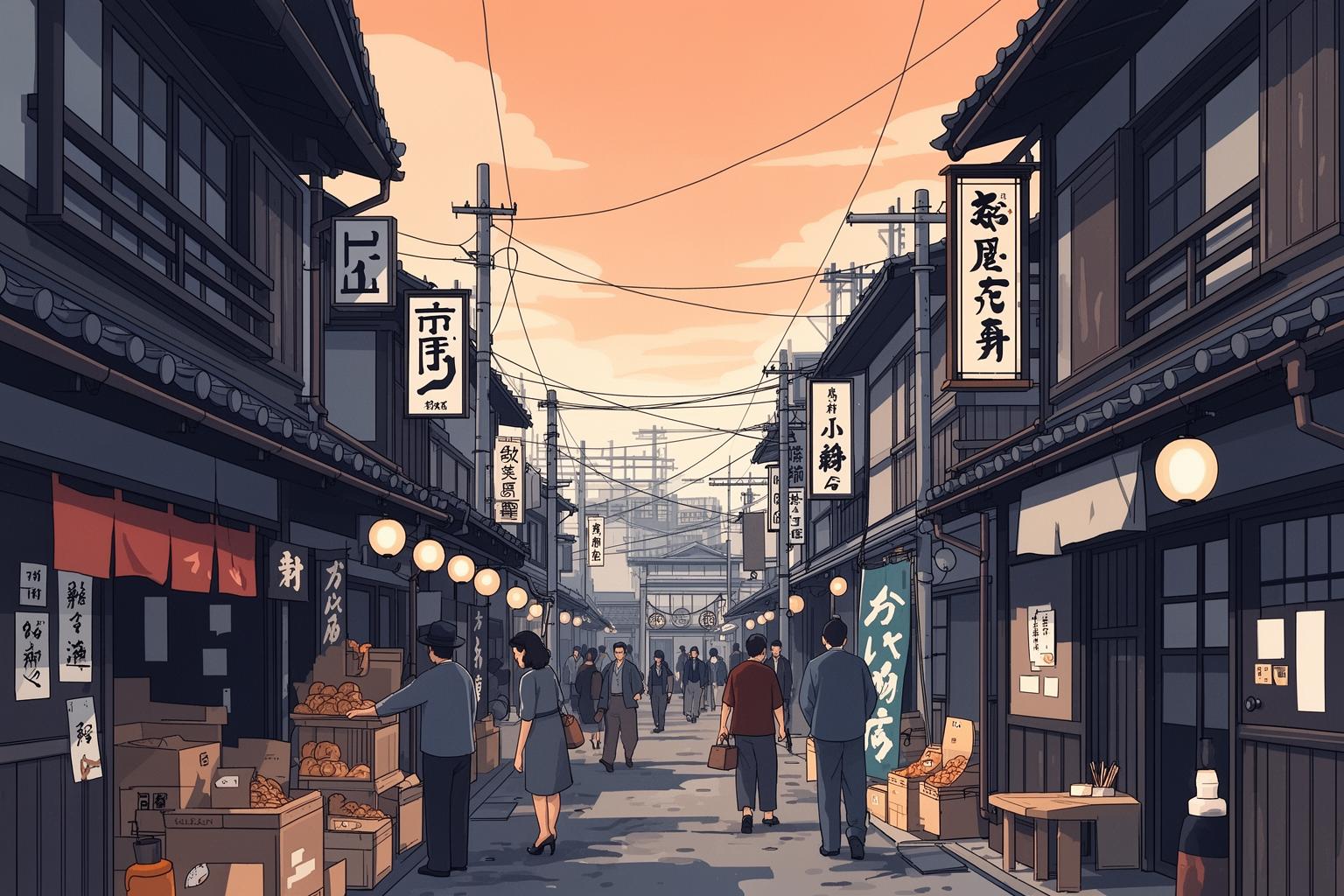
To understand why these yokocho exist, you need to rewind time—way back to post-World War II Japan. The cities, especially Tokyo, were utterly destroyed, reduced to rubble and ruins. People weren’t just broke; they were starving, and the entire system had collapsed. The government and official markets were struggling to recover. But people had to eat and survive. That desperation is the root from which every yokocho sprang.
Enter the yami-ichi, or black markets—the origin of it all. With official channels broken, these spontaneous and illegal markets sprang up like weeds in the cracks of the devastated cities. And they set up shop right next to major train stations, which were the lifeblood of the struggling nation—the only places bustling with movement. Crowds flowed through, making these natural hubs for everything—food diverted from official rations, scavenged goods from the ruins, and questionable booze. It was survival mode, a chaotic and desperate hustle.
Yokocho are narrow, cramped, and oddly arranged because they weren’t planned at all. They were built on scraps of land no one else wanted, squeezed into awkward spaces beside rattling train tracks. The focus was on building fast and cheap, using whatever materials were at hand. This wasn’t an architect’s carefully crafted vision of a “cozy, rustic” alley. It was the physical embodiment of a society just making do. The grit, grime, and sketchy wiring overhead aren’t stylistic choices— they’re the architectural DNA of post-war desperation, 100% authentic and born from real, raw struggle rather than design meetings.
From Black Markets to Boozy Sanctuaries: The “Showa” Transformation
As Japan began to organize itself, these black markets gradually gained legitimacy. The government clamped down on purely illegal activities, and the stalls transformed into small eateries and bars. This marked the emergence of the yokocho we somewhat recognize today, becoming an indispensable part of the cultural fabric of the Showa Era (1926-1989). The term “Showa” is more than just a historical era for Japanese people; it evokes a whole atmosphere. It calls to mind rapid economic growth, a nation lifting itself up by its bootstraps, and a gritty, determined optimism. The yokocho served as the unofficial clubhouses for the men driving this change: the salarymen.
Consider the archetypal salaryman, the corporate warrior in a suit. These men were the backbone of Japan’s economic miracle, working grueling hours to rebuild the country and its businesses. Their lives formed a triangle: home, train, office. The yokocho became their crucial ‘third place.’ It acted as a pressure release valve. It was neither the formal, hierarchical office environment nor the domestic sphere of home. Instead, it was a transitional space where they could be authentic. They could vent about their boss (often while their boss sat beside them, also complaining), drink heavily with colleagues, and decompress before facing the crowded train ride home. It was both a social and psychological necessity.
There’s a perfect Japanese phrase to capture the atmosphere of these places: ningen-kusai. It literally means ‘human-smelling’ or ‘reeking of humanity.’ It describes something messy, flawed, emotional, and unapologetically genuine. In a society like Japan’s, which places great emphasis on maintaining appearances (tatemae), politeness, and social harmony, the yokocho became the designated zone for honne—one’s true feelings and thoughts. The sheer physical closeness of the space made this possible. Sitting shoulder-to-shoulder with the person next to you, anonymity was impossible. This enforced intimacy, which would be a nightmare in most other Japanese social settings, became the key feature. It broke down barriers and allowed people to connect on a raw, human level. It’s the complete opposite of a spacious, impersonal, modern chain restaurant where interaction with others is minimal.
The Anatomy of a Yokocho: Decoding the Sights and Sounds
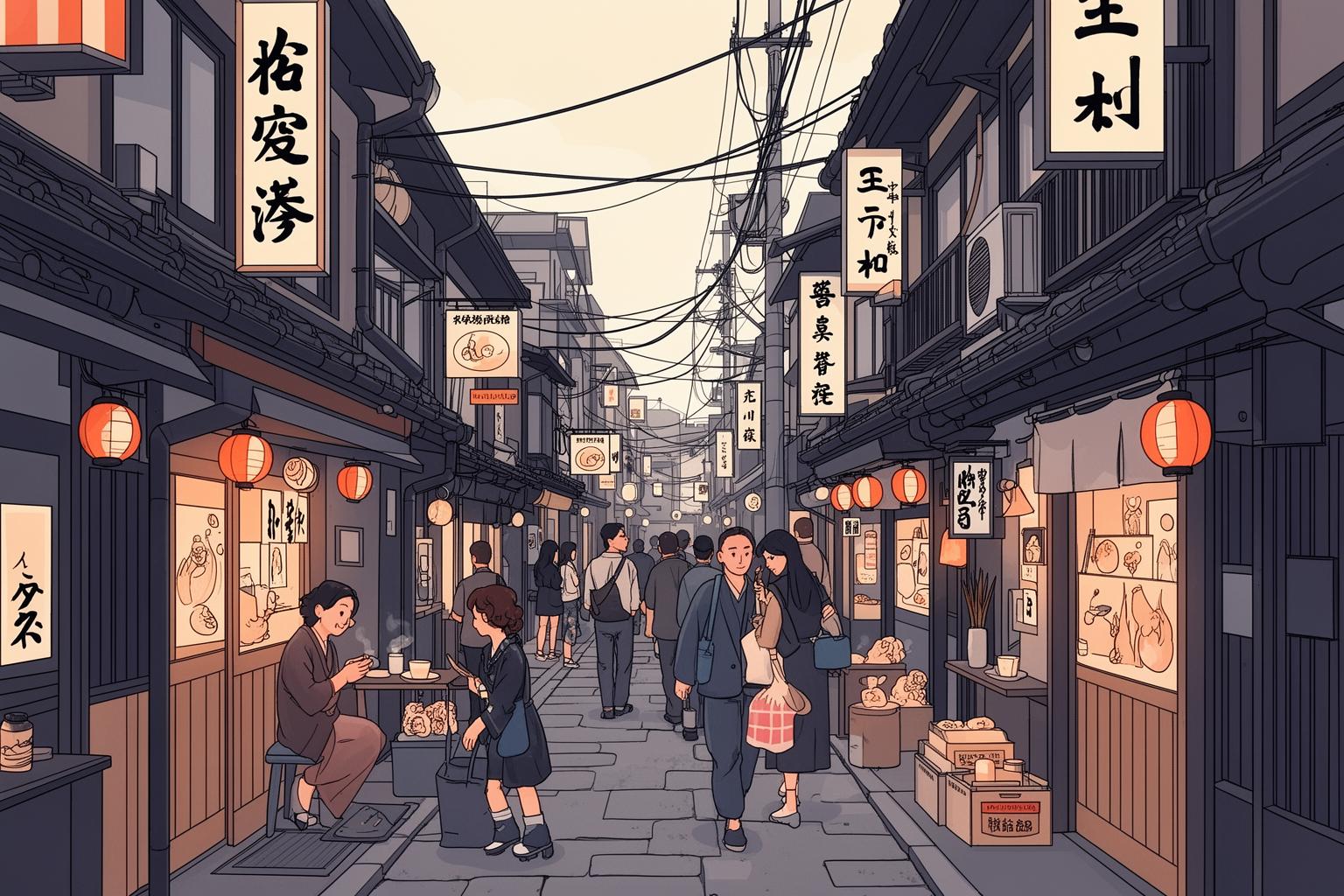
Stepping into a yokocho for the first time can overwhelm the senses. It’s an entire world with its own language and symbols. But once you know what to look for, everything begins to fall into place. It’s a masterclass in practical, no-frills design honed over decades.
The Red Lantern (Akachochin): More Than Just a Decorative Light
The first thing you’ll notice is the akachochin, the red paper lantern. This isn’t just decoration; it’s the original neon sign. A beacon in the dark, it’s a simple yet powerful symbol that shouts, “We’re open. We have drinks. It’s affordable. Come on in.” In the shadowy, unlit alleys of post-war Japan, that single warm red glow meant everything. It promised comfort, food, and a brief escape. Today, it serves the same purpose. It’s the universal signal for a casual, no-nonsense izakaya or bar. It’s an invitation and arguably the most iconic part of the entire yokocho experience.
The Smoke Signals: Yakitori, Motsu, and the Scent of Survival
Then comes the aroma. The thick, savory smoke billowing from tiny doorways isn’t just from cooking; it’s both the menu and the marketing. The dominant scents are yakitori (grilled chicken skewers) and motsuyaki or motsuni (grilled or stewed offal). Why offal? Returning to the post-war era mindset, nothing was wasted. Offal—intestines, liver, heart—was inexpensive, nutrient-rich, and widely available. It was food for survival. Crafting these humble ingredients into tasty, smoky snacks was an artful necessity. That smoke clinging to your clothes isn’t just smoke. It’s the echo of a ‘waste not, want not’ philosophy. It’s the scent of resilience and an instinctive, effective way to draw in hungry, thirsty passersby.
Cramped Quarters, Close Connections: The Counter Culture
Look inside one of these stalls. Most are incredibly small, often just a single counter with six to ten seats wrapping around a tiny kitchen. The shop’s master, the Taisho, is right there, mere inches from you, grilling, pouring drinks, and chatting. This setup is the secret ingredient. It’s not a flaw—it’s the point. It breaks down typical social barriers. You’re part of the action. You talk with the Taisho, and naturally end up chatting with the salaryman or local grandmother beside you. Barriers fade after a few highballs. This close proximity fosters a temporary community every night. It’s a space built for connection, not quiet, private dining. In a vast city like Tokyo where you can go an entire day without speaking to a stranger, this kind of spontaneous human interaction is rare and valuable.
Why They’re Still Here: Nostalgia, Authenticity, and the Backlash Against “Perfect”
It’s almost a miracle these places have survived. During Japan’s wild ‘Bubble Economy’ in the 1980s, cash flowed freely, and the trend was all about being flashy, sleek, and modern. Yokocho were considered somewhat embarrassing—dark, old, and grimy relics of a past everyone wanted to leave behind. People craved chrome, neon, and fancy cocktails, not smoky shacks by the train tracks. Many were demolished to make way for gleaming new buildings.
But when the bubble burst in the early ’90s, everything shifted. The flashy excesses suddenly felt empty. A deep nostalgia for the Showa era quietly returned to the culture. People began to long for the grit, the sense of community, the ‘good old days’ when life felt more authentic and people more connected. The yokocho that had managed to survive were suddenly appreciated in a new way. They weren’t shameful; they became cultural treasures.
For younger generations of Japanese and travelers from abroad, yokocho now symbolize something sorely lacking in modern life: authenticity. We live in a world of perfectly curated Instagram feeds, sterile chain stores, and algorithm-driven experiences. The yokocho is the ultimate remedy to that. It’s wonderfully uncurated. The counters are sticky, the stools wobble, the wiring looks like a fire hazard, and the toilet is likely a daunting hole in the floor. But it’s real. It carries a history you can feel and smell. It hasn’t been sanitized for comfort. That imperfection is exactly what makes it so appealing. It offers a link to something genuine in a world that often feels fake.
Moreover, in an era when urban loneliness is a significant problem, these alleys serve as vital community hubs. They act as living rooms for people living in tiny, impersonal apartments. You have your regulars (jouren-san), the owner who remembers your usual drink, and a rotating cast of characters. It’s a nostalgic reminder of a time when neighborhoods felt like villages, and that’s a powerful attraction.
The Modern Yokocho: A Balancing Act Between Preservation and Disneyland
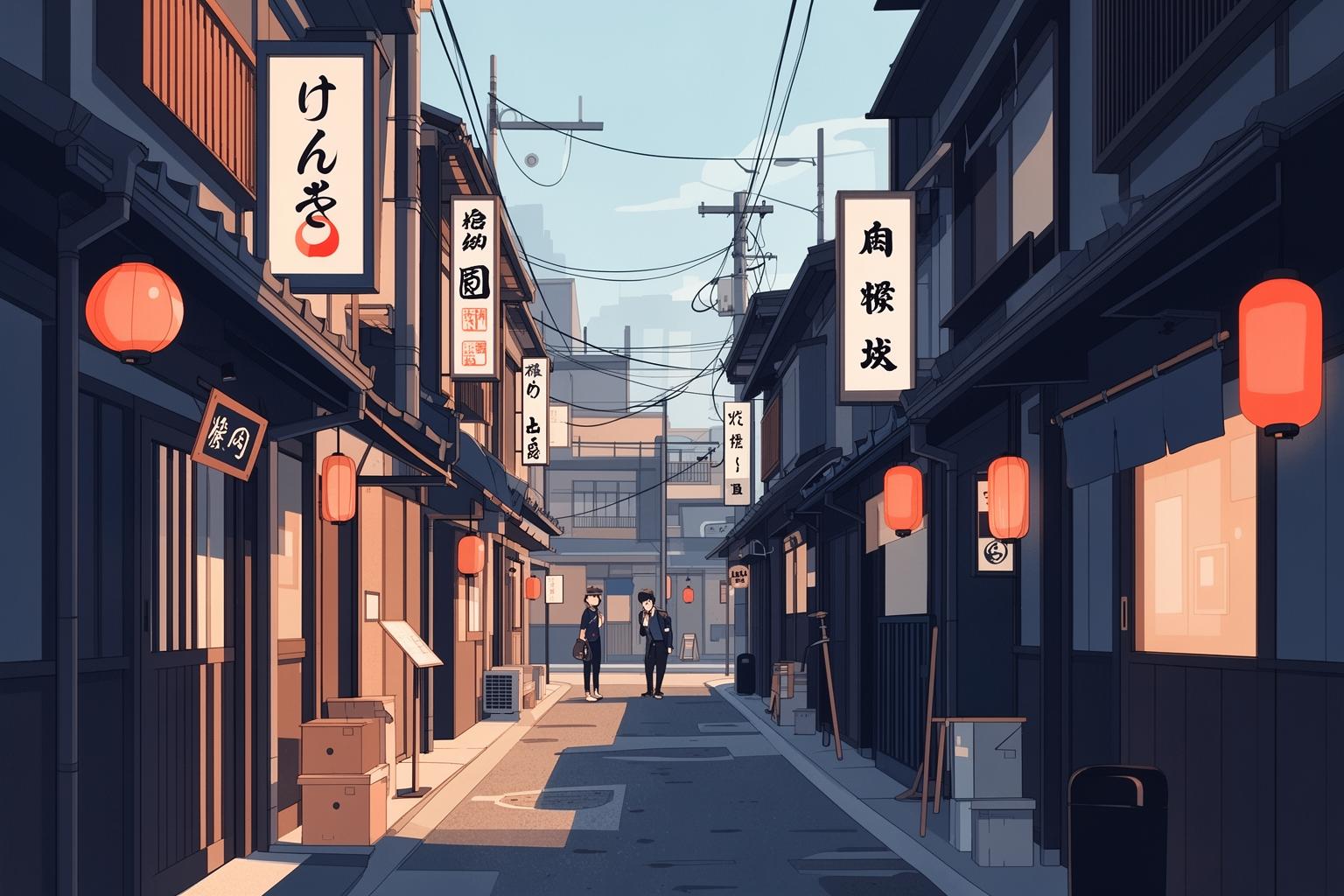
So, let’s be honest. The secret is out. Some of the most famous yokocho, like Omoide Yokocho (“Piss Alley”) in Shinjuku and Nonbei Yokocho (“Drunkard’s Alley”) in Shibuya, have become major tourist attractions. You’re just as likely to be sitting next to an Australian tourist as a local salaryman. English menus are common, and prices may be slightly higher. Does this mean they’re “less authentic”? It’s a complicated issue.
On one hand, yes, the atmosphere can change. It might feel like a performance of “Old Japan” staged for international visitors. But on the other hand, the flood of tourist money is literally what keeps these aging structures standing. It funds the new roof and supports the families who have run the stalls for generations. Without tourism, many of these prime spots would likely have been sold off and replaced by high-rises years ago. So it’s a trade-off: some of the raw, local character is sacrificed for survival.
This surge in popularity has also led to a new trend: the “neo-yokocho.” These are newly built food alleys designed to mimic the gritty Showa-era yokocho. You’ll find them in basement levels of new office buildings or in sanitized spaces under train tracks, like the popular Ebisu Yokocho. They’re fun, clean, safe, and offer a wide variety of food. They capture the aesthetic of classic yokocho—the lanterns, small stalls, lively energy—but lack the history. They’re a curated, theme-park version of the real thing. This raises an interesting question: is it better to have a flawless replica accessible to everyone, or to preserve the messy, inconvenient, and sometimes unwelcoming original? There’s no right answer, but it’s an important distinction to consider.
That said, don’t be mistaken—the genuine, locals-only spots still exist. You just have to go a little further off the main tourist routes. Head to places like Harmonica Yokocho in Kichijoji or venture deep into neighborhoods like Tateishi in Katsushika, and you’ll discover alleys where time truly seems to stand still, where you’ll be the only non-Japanese person, and where the authentic, unfiltered ningen-kusai atmosphere remains strong.
So, Is It Worth It? Navigating a Yokocho Without Feeling Like an Idiot
After all that, you might still be wondering, “Okay, it sounds great, but am I going to feel super awkward just walking in?” The intimidation factor is real. These spots are small, often crowded, and you might feel like you’re crashing a private party. But you’re not. The key is to stay calm and follow the unspoken rules.
First, here’s some cultural insight to put your mind at ease. The entire setup is designed for quick turnover. People come in, have a couple of drinks and a few skewers, then move on. It’s the culture of hashigo-zake, or bar-hopping. So don’t feel pressured to settle in for a long meal. In and out is the way it goes.
When you approach a stall, just take a look inside. If you see an empty seat or two, you’re generally okay to join. A simple nod and a polite “ii desu ka?” (“Is it okay?”) will do. Once seated, your first move is always to order a drink. The magic phrase is “Toriaezu biru” (“Beer for now”). It’s the universal icebreaker. Don’t be surprised if a small dish you didn’t order appears. This is the otoshidai or sekiryo, a small cover or seat charge. It’s not a scam; it’s just how these places operate. Think of it as your ticket to the experience.
When it comes to food, if there’s no English menu, just point to what the person next to you is having or gesture at the skewers on the grill. Be adventurous. And always, always have cash. Most of these tiny, family-run spots don’t accept credit cards.
In the end, visiting a yokocho isn’t just about checking a box on your travel list. It’s stepping into a living museum. It’s a chance to connect with the soul of Japan’s cities—the resilience born from hardship, the importance of community amid anonymity, and the charm of imperfection in a culture that often seeks perfection. It’s about understanding why a society so focused on the future still treasures these smoky, grungy alleys. So go ahead, grab a wobbly stool, order a beer, and soak it all in. You’re not just having a drink; you’re tasting history.