Yo, what’s good? Taro here. Usually, you’ll find me halfway up a mountain, chasing that fresh air and epic scenery. But sometimes, the city grind hits different, and you need a different kind of escape. You need to find your zen not on a peak, but in a plush velvet chair. You’ve probably seen the pics online: a glowing green melon soda with a scoop of ice cream, a plate of ketchup-red spaghetti, a room that looks like your grandpa’s study got a serious glow-up. This is the world of the Showa-era kissaten, Japan’s OG coffee shop. And if you’ve ever walked past one, peered into the dim, smoky interior, and thought, “Wait, why would anyone hang out here instead of that slick, minimalist cafe next door?”—then you’re asking the right question. It’s a total vibe, but it’s a vibe that’s deep-rooted in Japanese culture and history. You’re not just buying a cup of coffee that’s been brewing for hours on a hot plate. You’re buying a ticket to a time machine. You’re renting a pocket of stillness in some of the world’s most chaotic cities. It’s not about the Wi-Fi speed or the latte art. It’s about logging off from the 21st century for a hot minute and just… being. This ain’t your standard grab-and-go coffee joint. This is a destination. A mood. A legit cultural sanctuary. So, let’s get into it. Let’s decode the timeless chill of the kissaten and figure out why these old-school spots are the ultimate spots for finding urban zen.
If you’re captivated by this Showa-era retro vibe, you might also enjoy exploring how it manifests in other aspects of Japanese life, like on the Izu Peninsula drive.
The Vibe Check: Why a Kissaten is Not Just a Cafe
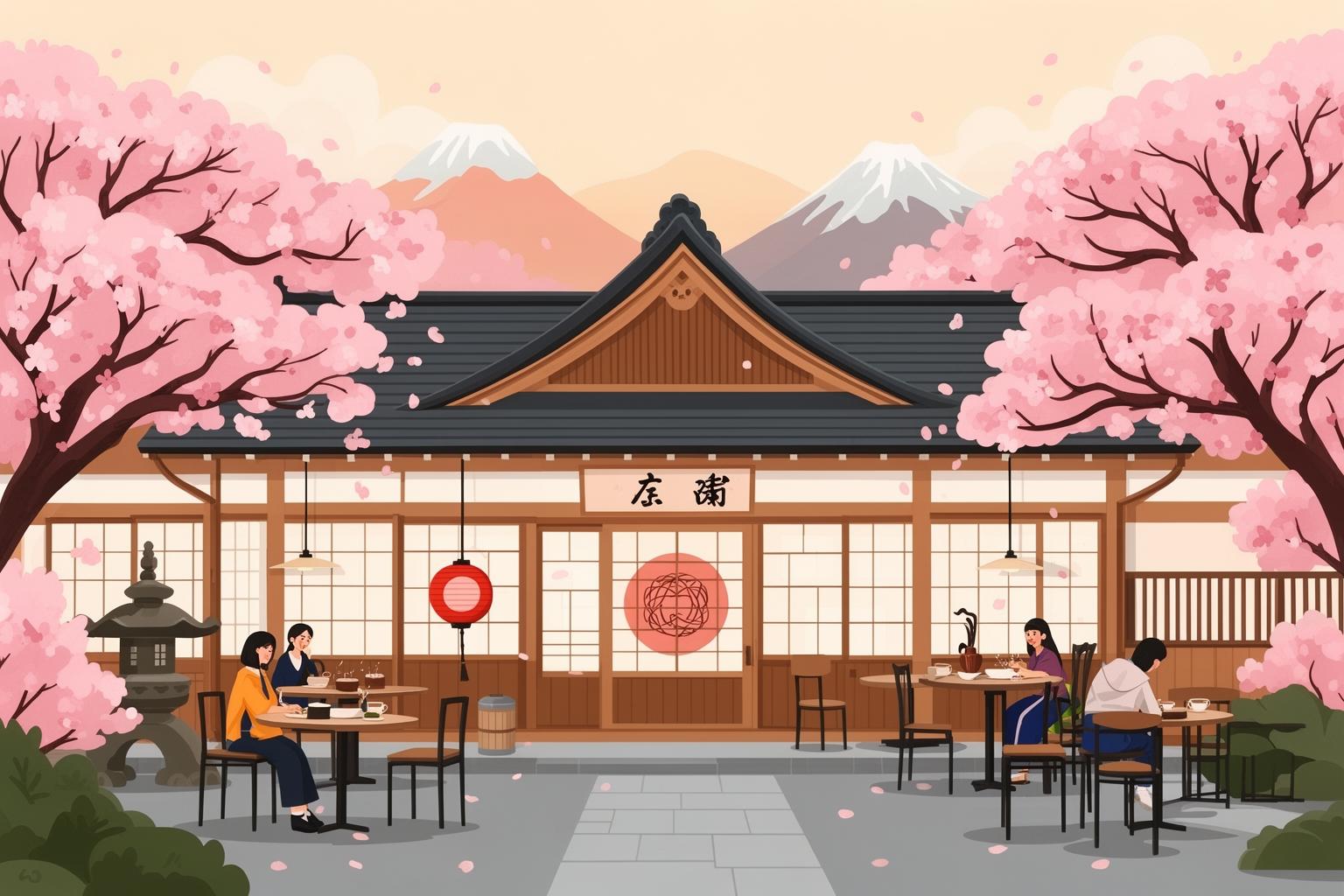
First things first, let’s clarify something. Calling a kissaten a ‘cafe’ is like calling a rugged backcountry trek a ‘walk in the park.’ Technically accurate, yes, but you’re missing the entire essence, the whole experience. The moment you push open that heavy wooden door, often accompanied by a little bell that chimes your arrival, you’re greeted by a sensory overload unlike any modern coffee shop. The air is thick with echoes of countless conversations, the faint, sweet scent of stale tobacco smoke (yes, that’s coming), and the deep, rich aroma of coffee brewed with methods older than your favorite pour-over. The lighting is soft, golden, and emanates from ornate Tiffany-style lamps casting long shadows. The noise and rush of the outside world simply fade away. This isn’t a place built for speed or efficiency—it’s designed for lingering. It’s a deliberate, thoughtful rebellion against the clock.
Journeying Back to the Showa Era
To truly appreciate the kissaten, you need to grasp the Showa Era (1926–1989). It was a turbulent period in Japan, spanning from pre-war militarism and WWII devastation to an astonishing post-war economic boom in the 60s, 70s, and 80s. This was when Japan rebuilt itself into an economic giant. Cities boomed, and the ‘salaryman’—the corporate warrior clad in a suit—became a cultural symbol. Life was grueling, work hours long, and homes often small and crowded. People craved a ‘third place,’ a refuge beyond the rigid office and cramped home. Kissaten rose to meet that need. It was affordable luxury—a place to feel a touch sophisticated, a bit European, without overspending. It was a city living room, a quiet office for writers, a secret rendezvous for lovers, a study haven for students. This all came before the internet or smartphones. If you wanted to meet someone, read a paper undisturbed, or simply pass the time, kissaten was your spot. Every detail—from dark wood paneling to classical music softly playing—was crafted to whisk you away from the urban jungle outside. It was escapism, purchasable for the price of coffee.
‘Jikan ga Tomatta’: The Art of Stopping Time
There’s a Japanese phrase often mentioned with kissaten: ‘jikan ga tomatta,’ meaning ‘time has stopped.’ And truly, that’s exactly the sensation. You sink into a cracked leather booth, the window light filtered through a dusty lace curtain, and you feel transported back to 1975. The clock may tick on the wall, but psychologically, the pressure to be productive or elsewhere just melts away. This is the kissaten’s core offering—not the coffee or food, but the atmosphere. It’s a space that grants you permission to be unproductive. You can sit for two hours with a single cup, reading or lost in thought, and no one will disturb you. No one will slyly wipe your table or ask if you want another order. This concept is foreign to the high-turnover Western chain cafe model, where lingering feels like taking advantage. In a kissaten, lingering is the whole point. The space is a sanctuary from the relentless march of time, a bubble where the pressures of modern life cannot intrude. It’s a form of meditation, a mental reset. That feeling of stepping outside time is what people truly pay for. It’s a rare, precious commodity in the 21st century, and these shops are experts at preserving it.
The Main Players: Meet the Master and the Menu
The soul of any true kissaten lies not just in its decor, but in its people and its dishes. The experience is shaped by two essential elements: the silent, stoic figure behind the counter known as the ‘Master,’ and a fixed, nostalgically specific menu that serves as a culinary time capsule from the Showa era. These are more than just a barista and a list of snacks; they are fundamental archetypes within the kissaten culture, each carrying its own story and cultural weight. Understanding them is crucial to unlocking why these places feel so distinctly unique and unmistakably Japanese. They embody a dedication to craft and tradition that has stood firm against shifting tastes and trends for decades, offering a performance of consistency in a world constantly craving novelty.
The Silent Guardian: The Kissaten ‘Master’
Forget the cheerful, chatty barista who calls you by name on your cup. The person at the helm of a kissaten is the ‘Master’ (pronounced ‘masutaa’ in Japanese). Usually an older gentleman, he is as much a fixture as the dark wood tables and velvet chairs. He moves with quiet, intentional economy. He may rarely smile or speak beyond a gruff ‘irasshaimase’ (welcome) upon your arrival. But don’t mistake his silence for poor service. He is the sanctuary’s guardian. His focus rests on preserving the atmosphere and ritual of his craft. Watch him work: he might be carefully brewing coffee using a glass siphon, turning coffee-making into a silent, bubbling performance. He could be polishing the same set of cups he’s used for decades. His role isn’t to be your friend but to serve as a steady, calming presence—the anchor that holds the entire ‘time has stopped’ atmosphere together. In his dedication lies the essence of ‘shokunin’—the artisan spirit of mastering a craft through years of repetition. He has witnessed generations of patrons come and go, trends rise and fall, yet he endures as a testament to the power of steadfast consistency. His presence offers a quiet promise that this space remains safe, stable, and unchanging.
Fueling the Retro Dream: The Holy Trinity of Kissaten Food
The kissaten menu is a greatest-hits compilation of Showa-era comfort foods. It features dishes unapologetically nostalgic and completely detached from modern culinary fashions. This is ‘yoshoku’—Japanese-style Western cuisine, born in a time when Japan was fascinated by the West but adapted those dishes to local ingredients and tastes. These dishes aren’t aiming for authenticity abroad; they are authentically Japanese in their own cultural way. Among numerous classics, a holy trinity stands out, perfectly capturing the kissaten experience.
The Iconic Cream Soda
This is far more than a drink; it’s a piece of art. A tall, elegant glass filled with bright green Melon Soda, crowned by a scoop of vanilla ice cream resembling a perfect white cloud, topped off with a vivid red, almost cartoonish maraschino cherry. The Cream Soda is pure, unfiltered joy. It evokes childhood and a more innocent era. The flavors are straightforward, sweet, and satisfying, but its real charm is visual. It’s extremely photogenic—a jewel-like creation glowing softly under kissaten lighting. Long before Instagram, this drink was an aesthetic statement. It represents a playful, colorful, and slightly indulgent treat—an affordable luxury meant to brighten a gloomy afternoon. Each sip is a fizzy, creamy burst of nostalgia—even for those who didn’t grow up in Showa-era Japan. It’s a universal emblem of simple pleasures and the undisputed queen of the kissaten menu.
Napolitan: The Ketchup Pasta That Slaps
To the uninitiated, Napolitan might seem a culinary oddity. It’s spaghetti with a sauce that’s essentially ketchup, cooked with onions, green peppers, and slices of sausage or ham—a dish that might make an Italian grandmother weep. But you have to understand: Napolitan isn’t Italian food. It’s a classic yoshoku invention, created in post-war Japan. Legend has it that a chef at Yokohama’s New Grand Hotel, inspired by American GIs eating ketchup-laden spaghetti, crafted a version tailored to Japanese tastes. It quickly became a kissaten and household staple across Japan. It’s ultimate comfort food—sweet, savory, and hugely satisfying. Ordering Napolitan at a kissaten, often served sizzling on a cast-iron plate, is like plugging directly into the spirit of the Showa era. It’s a taste of post-war optimism and inventive adaptation, telling a story about Japan’s culinary dialogue with the West. It’s not fancy, but it absolutely slaps.
‘Morning Service’: The Ultimate Breakfast Hack
One of the best-kept secrets of the kissaten world is ‘Morning Service,’ or simply ‘Morning’ (‘moningu’). This breakfast set, typically available until about 11 a.m., is an unbelievably good deal. The concept is simple: order a cup of coffee, and for a small extra charge—or sometimes free—you receive a full breakfast plate. The classic ‘Morning’ includes a thick slice of fluffy toast (shokupan), a hard-boiled egg, and a small side salad. Simple, but perfect. Here, ‘service’ doesn’t mean customer service; it refers to a little something extra, a bonus, a freebie. Originating in Nagoya, it was conceived as a tactic for kissaten owners to attract early factory workers and salarymen by offering incredible value and building loyalty. The ‘Morning Service’ epitomizes the spirit of Japanese hospitality, or ‘omotenashi,’ in a practical, down-to-earth manner. It’s not just a meal—it’s a cultural institution and a clever life hack for anyone seeking an affordable, deeply satisfying start to their day in Japan.
The Unspoken Rules of the Kissaten Universe
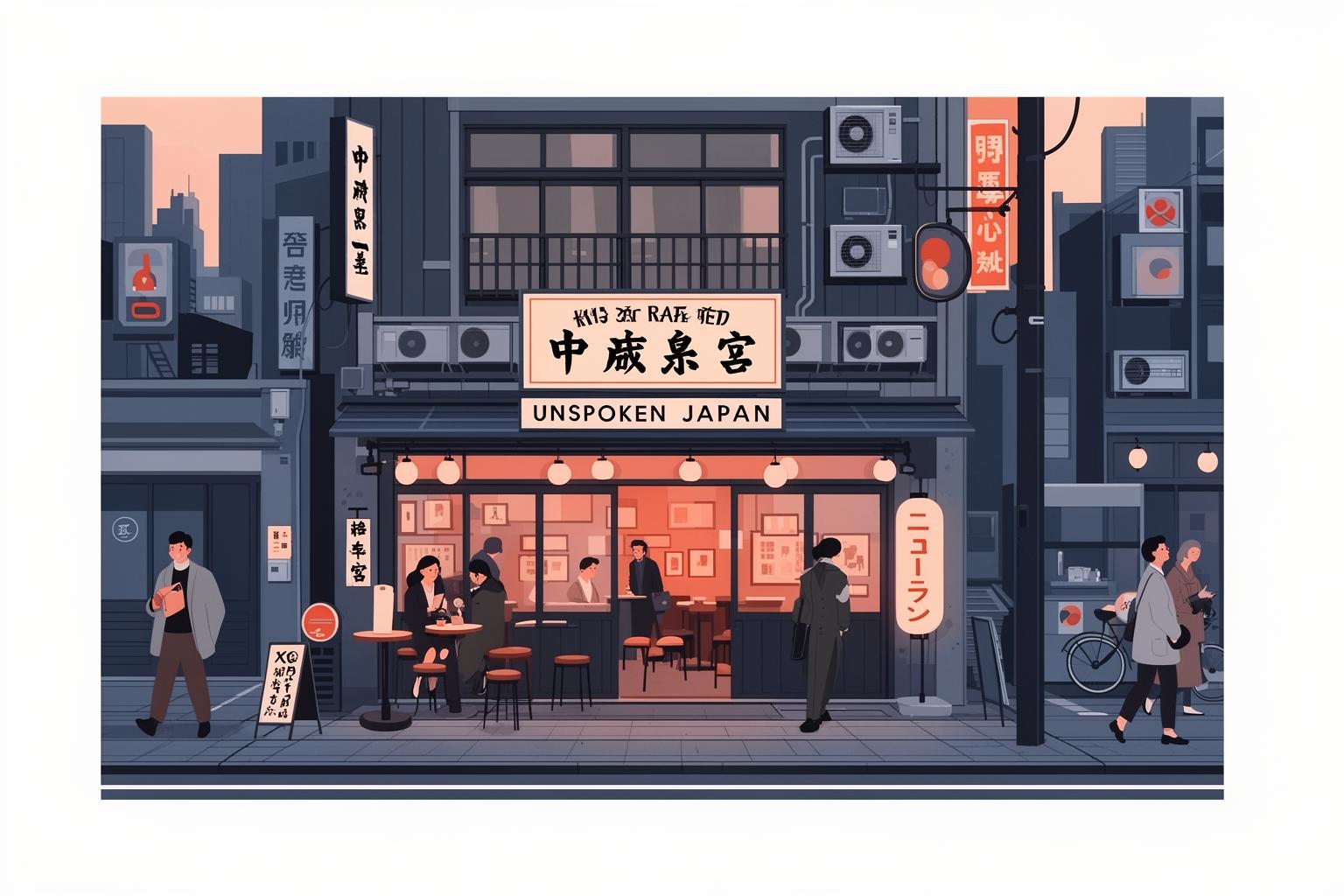
Like any sacred space, the kissaten functions according to a set of unspoken rules and social codes. These aren’t written on a wall; rather, they represent a shared understanding that maintains the venue’s unique atmosphere. To an outsider, it may appear somewhat enigmatic, but once familiar with it, you realize these subtle norms create a relaxing and restorative environment. It’s all about honoring the shared space and the personal bubbles of everyone present. This is where the cultural contrast with a bustling Western café becomes strikingly clear. The social contract in a kissaten hinges on mutual, quiet respect for solitude and the slow flow of time, a collective pact to keep the outside world’s frantic pace at bay.
Solo Mode Activated: The Freedom to Be Alone, Together
Step into any kissaten, and you’ll likely find more than half the customers seated alone. One person might be reading a novel, another poring over a newspaper with pages spread wide. Someone else might gaze out the window, lost in thought, smoke curling from a cigarette. This is one of the kissaten’s primary functions: a socially accepted place to be alone in public. There’s no stigma or feeling of judgment for sitting solo. In a society that often emphasizes the group, the kissaten offers a rare space for sanctioned individualism. Though surrounded by others, there’s an invisible barrier around each table. You can be part of a quietly buzzing human ecosystem without pressure to engage. This ‘alone, together’ phenomenon is deeply comforting. It combines the quiet concentration of a library with the ambient energy of public space, granting permission to simply exist without social performance. It’s a sanctuary for introverts and a peaceful retreat for anyone wanting to escape daily social demands.
The Art of the Long Stay: No One’s Rushing You Out
Perhaps the most important rule in the kissaten universe is this: your single 500-yen cup of coffee buys you the right to your table for as long as you need. Within reason, naturally—but “reason” here is far more generous than you might expect. You can sit for hours, read half a book, or write your dissertation. The Master won’t give you a dirty look. The staff won’t noticeably ask if you’re “all done here.” Their entire business model is focused on providing space, not just a product. This marks a profound departure from the efficiency-driven cafés that need to turn tables rapidly to profit. The kissaten’s model is more subtle, built on regular customers and serving as a reliable fixture in people’s routines. By welcoming long stays, they nurture loyalty and belonging. They become essential parts of their patrons’ daily or weekly lives. So relax, unpack your book, and take your time. The unspoken agreement is that as long as you remain quiet and respectful, the space is yours. This generous offering of time is at the heart of kissaten hospitality.
The Background Music: Why It’s Always Jazz or Classical
The soundtrack of your kissaten experience is as thoughtfully curated as the décor. You’ll almost never hear Top 40 hits or energetic pop; instead, the audio backdrop is nearly always instrumental jazz or classical music, played at a volume that’s noticeable but not intrusive. This choice is deliberate. The music’s purpose is to enhance a sophisticated, calming, and timeless ambiance. Mid-20th-century jazz evokes a sense of cool, urban intellectualism—the sound of smoky lounges and late-night conversations. Classical music lends gravitas and elegance, transforming a simple coffee break into a refined cultural moment. Crucially, neither genre calls for active attention. The absence of lyrics in a familiar language prevents distraction. The music becomes a textured silence, a sonic blanket that muffles the outside world, helping you sink deeper into your thoughts. Some kissaten, known as ‘meikyoku kissa’ (masterpiece music cafés), go further still, featuring high-end audio systems and demanding silence to appreciate the music as the main focus. Yet in most shops, the music simply exists as a constant, soothing companion to your quiet time.
Decoding the Aesthetic: It’s All in the Details
Every element inside a kissaten is part of a carefully crafted fantasy. The aesthetic is not merely ‘old’ or ‘outdated’; it represents a deliberate, curated style that reveals much about the aspirations and dreams of mid-20th-century Japan. It’s a blend of Western luxury, interpreted through a Japanese perspective, creating a look both familiar and distinctly unique. Understanding the reasons behind the dark wood, velvet seats, and dim lighting is to grasp the psychological role these spaces played. They were not just serving coffee; they offered an ambiance—a refuge from the everyday into a world that felt more elegant, worldly, and comfortable. This design language tells a story, reflecting post-war Japan’s yearning for sophistication and comfort.
Velvet, Dark Wood, and Dim Lighting: A European Dream
The classic kissaten interior is a harmony of rich textures and deep hues. Walls are often paneled with dark, polished wood. Chairs and booths are upholstered in plush, deep-colored velvet, typically burgundy, forest green, or royal blue. Tables may feature marble tops, and light fixtures tend to be ornate, brass, or stained glass. What does it all amount to? A romanticized vision of a European salon or a traditional Viennese coffeehouse. During the Showa era, as Japan’s economy flourished, so did its fascination with Western culture. For most people, traveling to Europe was an unattainable dream, but they could experience a fragment of that fantasy in their local kissaten. The design choices were meant to evoke a sense of history, permanence, and high class. The dim lighting wasn’t just about conserving electricity; it created a cozy, intimate, womb-like space encouraging quiet conversation and reflection. It was a stage set for a more thoughtful, elegant version of oneself. Entering a kissaten was like stepping into another world—one deliberately crafted to feel more luxurious and established than the rapidly evolving city outside.
Ashtrays and Ambiguity: The Deal with Smoking
Addressing the elephant in the room: the smoke. For many visitors, the most striking aspect of a traditional kissaten is that smoking often remains allowed. Ashtrays are visible on every table, and the subtle, sweet scent of tobacco is part of the room’s aroma. While Japan has tightened anti-smoking laws in recent years, many small, independently owned spots like kissaten received exemptions. To understand why, one must recall their history. Kissaten emerged in an era when smoking was widespread—an ordinary part of daily life, especially for the salarymen who formed their core clientele. Coffee and a cigarette was a customary ritual, a brief pause in a busy day. For many traditional kissaten and their long-time patrons, this bond is unbreakable. The kissaten was a sanctuary for smokers as much as for readers or thinkers. Though this is changing—with many newer or renovated kissaten now smoke-free or with designated areas—the classic, time-capsule venues often keep their smoky haze. It’s a vestige of a bygone era, a detail that enhances the feeling of stepping back in time, even if it may be challenging for today’s health-conscious visitors. It is an authentic, if sometimes inconvenient, part of the ‘jikan ga tomotta’ experience.
The 21st-Century Comeback: Why Showa is the New Cool
In a world dominated by minimalist aesthetics, oat milk lattes, and free high-speed Wi-Fi, you might assume the humble, smoky, and technologically outdated kissaten would be nearing extinction. For a while, it appeared that way. Many closed as their owners aged and corporate coffee chains took over every street corner. Yet something unexpected happened. The kissaten didn’t just survive; in many respects, it’s thriving. A new generation—one that never experienced the Showa era—is now seeking out these spots. What was once considered old-fashioned and dusty is now embraced as ‘retro,’ authentic, and cool. This revival is not merely about nostalgia; it’s a deliberate response to the pace and pressures of modern digital life. In all its analog charm, the kissaten offers something the modern world has largely forgotten: a genuine space to disconnect and engage in deep, uninterrupted thought.
‘Showa Retro’ and the Instagram Effect
Ironically, a major driver of the kissaten revival has been the very digital medium it seems to oppose: social media. The ‘Showa Retro’ aesthetic is hugely popular on platforms like Instagram. The jewel-toned cream sodas, the carefully plated Napolitan pasta, the vintage décor—it’s all incredibly photogenic. Young people flock to these spots to capture perfect retro photos, sharing the vibe with their followers. While it may begin with a quest for an Instagram-worthy shot, it often ends with a true appreciation for the experience itself. You might visit for the ‘gram, but you stay for the relaxed atmosphere. The visual appeal serves as an introduction, bringing a new audience to the unique, slow-paced charm of the kissaten. This digital exposure has given many old shops a fresh lease on life, transforming them from quiet neighborhood fixtures into sought-after destinations. It’s a fascinating paradox: the most cutting-edge platforms are helping to preserve these beautiful analog time capsules.
An Antidote to Modern Life
Beyond appearances, the deeper reason for the kissaten’s resurgence is its role as a potent antidote to the burnout and overstimulation of 21st-century life. We live in an era of constant connectivity, productivity hacks, and the pressure to always be “on.” Our minds are exhausted by endless notifications and rapid context switching. The kissaten offers a radical alternative: a place where doing nothing is the primary activity. There’s no Wi-Fi to lure you in. Power outlets are scarce. The environment discourages frantic multitasking. It compels you to slow down, pick up a physical book, have a phone-free conversation, or simply sit and let your thoughts wander. For younger generations raised in a digital-first world, this analog experience can be revelatory. It’s a form of digital detox, a way to reclaim your attention span. What might be seen as “flaws” from a modern business standpoint—its slowness, inefficiency, and lack of connectivity—have become its greatest virtues.
Finding Your Own Urban Zen
So next time you find yourself in a Japanese city, look beyond the bright lights of chain coffee shops. Seek out a side street, spot an old-fashioned sign with peeling paint, and push open that heavy wooden door. Don’t expect the world’s best coffee or the fastest service. Expect instead to find a pocket of peace. Order a cream soda. Watch the Master at work. Listen to jazz playing softly from an old speaker. Sink into a velvet chair and just breathe. Let the feeling of ‘jikan ga tomatta’—time standing still—wash over you. Amid the relentless urban grind, the kissaten remains a stubborn, beautiful sanctuary. It’s more than a coffee shop; it’s a living museum, a meditation hall, and a much-needed refuge for the modern soul. It offers a unique kind of peak experience—a moment of pure, unadulterated, timeless chill. In today’s world, that vibe is worth more than anything.