Yo, what’s the deal? Ryo here, ready to take you on a wild ride. When you think of 1980s Japan, what pops into your head? Maybe it’s the neon-drenched streets of Tokyo from ‘Blade Runner,’ the birth of Nintendo, or businessmen in slick suits making crazy money during the economic bubble. That’s all legit, for sure. But underneath that polished, high-tech surface, a whole different vibe was brewing. A raw, rebellious energy was exploding on the streets, styled with sky-high hair, decked out in battle-ready uniforms, and living by a code all their own. This wasn’t your mainstream, polite Japan. This was the era of the Yankī. Forget everything you think you know about Japanese conformity, because we’re about to dive headfirst into a subculture that was all about being loud, proud, and unapologetically different. These weren’t just troublemakers; they were a full-blown cultural phenomenon, a backlash against the rigid expectations of society. They created their own world with its own fashion, rules, and rituals. It was a scene that was both intimidating and fascinating, a uniquely Japanese take on teenage rebellion that has left a massive mark on the country’s pop culture, even to this day. So, crank up the rockabilly, get ready to learn the art of the perfect pompadour, and let’s peel back the layers on the unforgettable, in-your-face world of the 80s Yankī. It’s gonna be a trip, for real.
To fully immerse yourself in the era’s soundtrack, explore the perfect 80s J-Pop playlist for your next adventure.
The Birth of the Yankī: More Than Just a Bad Attitude
So where did this entire scene originate? You have to understand, the Yankī vibe didn’t just materialize out of nowhere. It was a blend of various influences, emerging from the remnants of post-war Japan and amplified by the strange energy of the 1980s economic boom. It was a complex mix of rebellion, tradition, and imported cool that formed something completely new and uniquely Japanese.
From Post-War Wounds to Bubble Era Boldness
Let’s take a step back. After World War II, Japan was undergoing massive transformation. The old systems had collapsed, and a new democratic society was taking shape. Amid this turmoil, the first wave of post-war youth rebellion appeared. These were the ‘bancho,’ the tough school gang leaders who controlled the corridors with authority. They had their own style and code of honor. This was the original blueprint for the Yankī. Then, something else entered the picture: American culture. Through films, music, and magazines, a new rebel icon emerged – the greaser. Think James Dean in ‘Rebel Without a Cause’ or Elvis Presley’s rock ’n’ roll swagger. Japanese teens saw the leather jackets, the slicked-back hair, the defiant attitude, and they were captivated. The very name ‘Yankī’ is believed to have come from how kids in Osaka’s ‘Amemura’ (American Village) dressed in bold American-style fashion. But they didn’t just imitate it; they adapted it into something uniquely their own. Fast forward to the 1980s. Japan had become an economic powerhouse. Everyone was expected to study hard, enter a prestigious university, and become a loyal ‘salaryman’ at a large corporation. It was a pressure cooker of conformity. The Yankī acted as a release valve, a rebellion against this neat, predictable, and, to them, dull future. Often from working-class origins, these kids felt excluded from the economic boom and saw no place for themselves on the corporate ladder. So, they built their own world, where respect wasn’t earned through grades, but through courage, loyalty, and killer style.
Defining the Vibe: What Exactly Did ‘Yankī’ Mean?
It’s important to clarify: ‘Yankī’ doesn’t just mean ‘Yankee’ like an American. In Japan, the term took on an entirely new meaning. It became slang for a delinquent youth, a troublemaker, someone who openly defied social conventions. But it wasn’t just about being ‘bad.’ Being a Yankī meant belonging to a tribe. It meant having a crew, your ‘nakama,’ who had your back no matter what. It was about a shared look, a common language, and a set of values that stood apart from mainstream society. You might wonder, were these guys just gangsters? It’s a bit more complicated. The Yankī subculture occupied a gray area. They weren’t usually part of organized crime groups like the Yakuza, but they weren’t exactly innocent either. Their world centered on turf battles with rival school gangs, flaunting their customized bikes, and maintaining an aura of defiance. For some, it was just a phase, a way to release teenage frustration before settling into a conventional career. For others, unfortunately, it could be a pathway into the darker world of the Yakuza, who often recruited from the toughest Yankī circles. But for the vast majority, the Yankī identity was a potent form of self-expression, a way to assert their existence in a society that wanted them to be silent and compliant. They were creating their own space, on their own terms, one can of hairspray at a time.
The Yankī Style Bible: A Head-to-Toe Breakdown
Alright, let’s dive into the most exciting part: the look. The Yankī aesthetic was more than just fashion; it was a bold declaration of rebellion against subtlety. It was loud, complex, and meticulously designed to showcase toughness and defiance. Every detail, from the tips of their hair to the soles of their shoes, was a deliberate piece of a larger uniform that loudly proclaimed their identity and crew affiliation. This wasn’t simply getting dressed; it was donning armor.
The Crown of Rebellion: The Regent & The Punch Perm
Hairstyles were paramount in the Yankī world. They were the most visible emblem of defiance—the first thing anyone would notice. You couldn’t be a true Yankī without a seriously committed hairstyle. It demanded time, dedication, and an industrial amount of hair products. This wasn’t a mere choice; it was a lifestyle.
The Mighty Regent (Riizento)
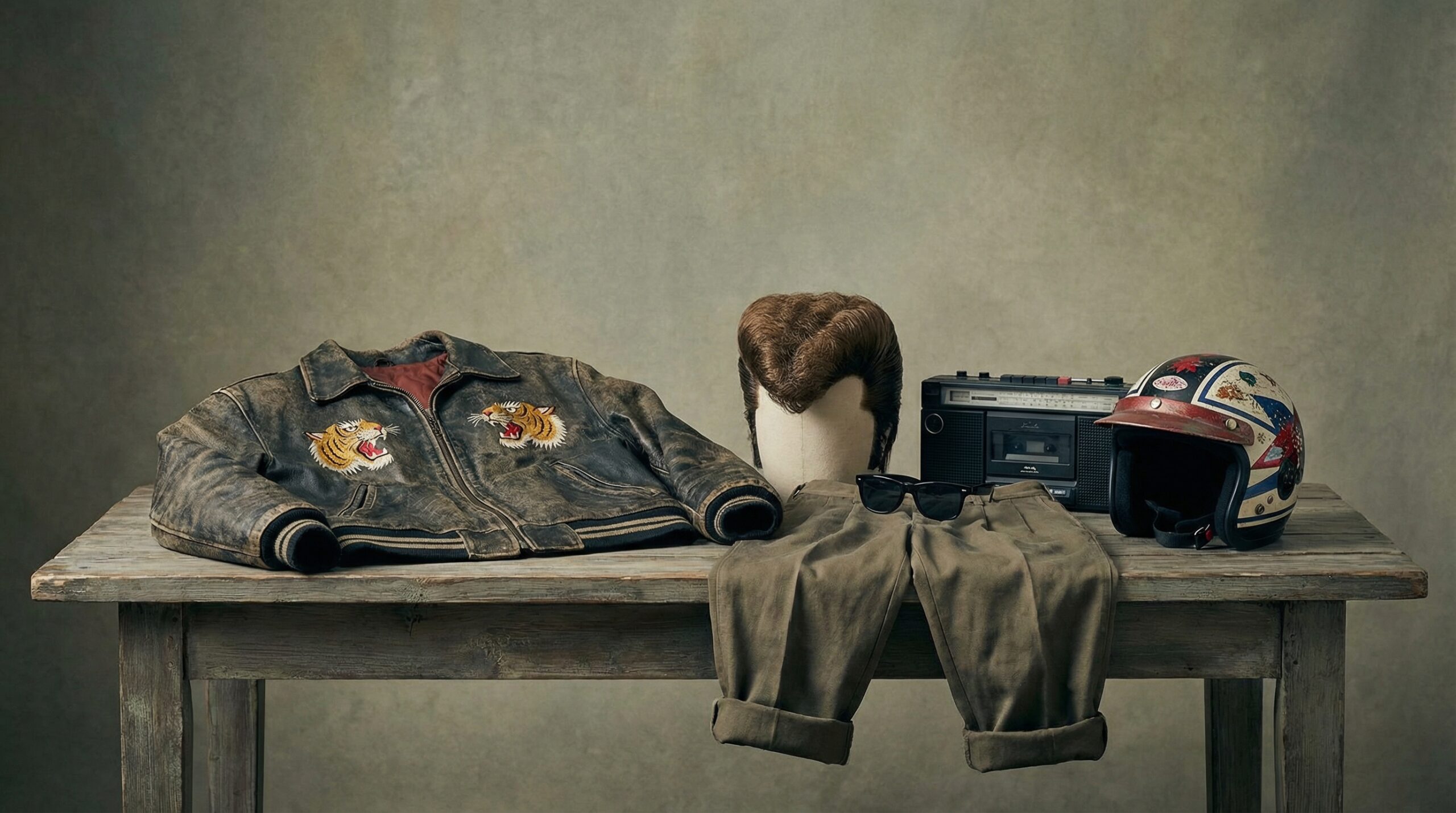
The undisputed king of Yankī hairstyles was the Regent, or ‘Riizento’ as pronounced in Japanese. It paid direct homage to 1950s American rockabilly icons but amplified to an almost exaggerated level. At its core, the Riizento featured a massive, curled pompadour at the front, swooping up and back like a crashing wave. The sides were slicked back tightly, often forming a ‘ducktail’ at the back. Perfecting the Riizento was an art—it required growing one’s hair out, immense patience, and a powerful blow dryer. But the true secret was hairspray—entire cans of super-hold spray to make the pompadour defy gravity. It had to be firm and immovable, a hair helmet strong enough to resist a high-speed bike ride or, if necessary, a fight. The height and shape of the pompadour were a great source of pride and status. The bigger and more flawless your Riizento, the more respect you earned. It was a raw, unfiltered statement: ‘I don’t care about your rules, and my hair proves it.’
The Legendary Punch Perm (Panchi Paama)
If the Riizento was the rockabilly-inspired rebel look, the Punch Perm was its tougher, more intimidating counterpart. The ‘Panchi Paama’ consisted of extremely tight, short curls sitting close to the scalp, giving the hair a coarse, brillo-pad-like texture. It was severe, intimidating, and unmistakably linked to delinquent culture and, at its most extreme, the Yakuza. Getting a Punch Perm was a rite of passage for some, notoriously painful due to the strong chemicals and hot curling irons applied directly to the scalp. The process was a test of endurance, but the result was a rugged, low-maintenance hairstyle that immediately marked you as someone not to be trifled with. Unlike the high-maintenance Riizento, the Punch Perm was permanent and tough, requiring no daily styling. It was a commitment. Yankī often shaved lines or patterns into their hair to enhance the perm, adding another layer of personal expression and intimidation. This look wasn’t about “rebel without a cause” style; it meant serious danger.
The Uniform of a Generation: Tokkōfuku & Gakuran Hacks
Clothing was as critical as hair. Yankī style centered on two pillars: the semi-official gang uniform called the ‘tokkōfuku,’ and heavily altered school uniforms. Both challenged authority and showcased allegiance.
The Battle Garb: Tokkōfuku
The ‘tokkōfuku’ is likely the most iconic piece of Yankī fashion. The name translates to ‘Special Attack Uniform,’ directly referencing World War II Kamikaze pilot uniforms. This association imbued the garment with a dramatic sense of do-or-die passion and twisted nationalist pride, repurposed for rebellious ends. These were not mere jackets but wearable manifestos. Usually, a tokkōfuku was a long, flowing coat resembling a military trench coat, paired with oversized, baggy trousers known as ‘bontan.’ But the true magic lay in the embroidery—elaborate, colorful kanji characters and symbols covered the entire jacket and sometimes the pants. This embroidery formed its own language, featuring the gang’s name and logo, the wearer’s rank or nickname, and powerful, poetic slogans. Phrases like ‘Tenjō Tenge Yuiga Dokuson’ (天上天下唯我独尊), a Buddhist saying meaning ‘I alone am the honored one in heaven and on earth,’ were popular. Other motifs proclaimed loyalty to the crew, paid tribute to Japanese spirit, or offered farewell messages to mothers, building up a tragic hero image. The rising sun flag was another common, though highly controversial, symbol. Commissioning a tokkōfuku was a serious investment, often crafted by specialized embroidery shops, costing a fortune. It was proof of dedication and status within the gang. When a group of Yankī appeared fully decked in tokkōfuku, it was a powerful and intimidating sight.
School Uniforms, But Make It Rebellious
When not wearing their tokkōfuku, Yankī rebelled by deconstructing the ultimate symbol of Japanese conformity—the school uniform. The standard black, high-collared ‘gakuran’ for boys and ‘sailor fuku’ for girls became canvases for defiance. For boys, the goal was to distort the silhouette to look anything but studious. This led to two major jacket modifications: the ‘tanran,’ cropped short to mid-torso for a tougher, brawler-like effect, and the ‘chōran,’ lengthened to trench-coat proportions for a more dramatic and imposing look. Pants were equally important; traditional straight-leg trousers gave way to ‘bontan,’ pants extremely wide at the thigh tapering sharply at the ankle, or ‘dokan,’ wide-leg straight pipes. Girls, known as ‘sukeban’ (delinquent girls), followed their own codes. Their skirts, instead of the typical knee length, extended all the way to the ankles—a clear rejection of the “cute” compliant schoolgirl image. They often shortened their sailor tops to reveal a bit of midriff, swapped ribbons for colored scarves, and carried their school bags flattened (‘pesshanko-kaban’), showing disdain for books. These modifications sparked daily clashes with school authorities, who conducted inspections, but for Yankī and sukeban, being caught and punished was part of the game—a badge of honor.
Accessories and Finishing Touches: The Devil’s in the Details
Beyond hair and clothing, a variety of accessories completed the Yankī look, each loaded with meaning and intended to intimidate or identify.
Face It: The Mask & The Eyebrows
Long before the global health craze, the white surgical mask was a staple of Yankī attire. They wore it for several reasons. First, it added anonymity, partially obscuring their faces and giving them a more menacing, mysterious air. Second, it helped conceal their youth—a 15-year-old boy could appear older and more threatening with half his face covered. It also served to hide their identity from police or rivals. Another facial alteration was the eyebrows. Many Yankī, male and female, shaved off their natural brows and redrew them as thin, sharp, often angry-looking lines, lending their faces a perpetually severe, aggressive expression that warned they were always ready for a fight. Though a small detail, it transformed their whole demeanor.
Footwear, Bags, and More
Footwear choices carried weight as well. Popular were ‘sentō-gutsu,’ or ‘battle shoes,’ sharply pointed leather dress shoes that looked stylish but could also be used for kicks if necessary. Others favored simple sandals—’zōri’ or ‘setta’—worn even in cold weather to demonstrate toughness. As mentioned, the school bag was crucial. Yankī always used thin, flat leather briefcases; a bulky textbook-filled bag was for nerds (‘gariben’). True Yankī or sukeban intentionally flattened their bags by sitting on them, riding over them with bikes, or soaking and pressing them under heavy weights. The resulting ‘pesshanko-kaban’ was often decorated with stickers from favorite bands or gang logos. Finally, more overt signs of power appeared in weapons like wooden practice swords (‘bokutō’) or metal baseball bats. Not for sports, these were tools of intimidation and dispute resolution—clear signals that the bearer was not to be trifled with.
The Yankī Code: Unwritten Rules of the Asphalt Jungle
Being a Yankī wasn’t just about appearance; it involved adhering to a strict, unwritten code of conduct. This social system was rigid, hierarchical, and demanded absolute loyalty. Often, the street’s rules held more weight and were more rigorously enforced than those of mainstream society. Grasping this code is essential to understanding the Yankī mindset. It was a world founded on respect, reputation, and the ever-present threat of violence.
The Hierarchy of Respect: Senpai-Kōhai Dynamics Taken to the Extreme
At the heart of Yankī social structure lay the ‘senpai-kōhai’ relationship. This senior-junior dynamic permeates Japanese society—in schools, firms, and clubs—but within the Yankī world, it reached an extreme level. Your ‘senpai’ (senior) was anyone older than you or who had joined the gang before you. Respect for them had to be absolute and unquestioned. A senpai’s word was final. ‘Kōhai’ (juniors) were expected to speak with honorific language to their seniors, run errands, buy snacks or cigarettes, and essentially be at their beck and call. This even included taking blame or punishment for a senpai’s actions. In a fight, the kōhai stood at the front lines, proving their bravery and protecting their seniors. In return, a good senpai would look after their kōhai, guide them, offer protection, and defend them from rival gangs. However, this protection was contingent on unwavering loyalty. Disrespecting a senpai was the gravest offense and was met with swift, often harsh, punishment. This strict hierarchy offered a sense of order and belonging for youths feeling alienated from mainstream society. Though harsh, it forged exceptionally strong bonds within the crew.
The Art of the Squat: Yankī-zuwari and Its Significance
One of the most iconic images of the Yankī is their characteristic posture: the ‘Yankī-zuwari,’ or Yankī squat. Often seen in manga or anime, it involves squatting on the balls of the feet with knees spread apart and elbows resting on the knees, a cigarette hanging from the mouth. This wasn’t merely a comfortable way to sit. The Yankī squat was a potent form of non-verbal communication—a way of asserting territorial claim. When Yankī squatted outside a convenience store or in a park, they were marking the area as theirs. It projected an air of casual alertness and latent threat. They weren’t relaxed sitting on benches; they were low to the ground, balanced, and ready to spring into action at any moment. It also symbolized defiance. In a culture that values proper standing or sitting, this street-level posture was inherently rebellious. It said, ‘This is our territory. We reject your benches and etiquette. We set our own rules.’ This simple physical gesture captured the entire Yankī attitude of existing outside societal norms.
Communication Breakdown: The Language of the Streets
Yankī spoke in a distinctive, rough-edged dialect that set them apart from polite society. They used coarse, aggressive pronouns and verb endings. Instead of the polite ‘watashi’ for ‘I,’ they favored the harsher ‘ore’ or even more aggressive ‘oraa!’ When addressing others, they employed confrontational terms like ‘temee’ or ‘kisama’ instead of the standard ‘anata.’ Their speech was laced with slang and often delivered in a challenging tone. A vital part of this communication was ‘menchi kiru,’ literally ‘to cut a glare,’ referring to a prolonged, hostile staring contest. Making eye contact with a Yankī could be taken as a challenge. If they chose to ‘menchi kiru,’ you faced a choice: look away and appear weak, or hold their gaze and accept the challenge, likely provoking a verbal dispute or physical fight. It was a high-stakes game of chicken fought with the eyes. This, combined with their intimidating posture and style, created a palpable aura of menace. Their language and body language reinforced their presence and dared anyone to challenge their dominance. This form of communication was tailored for a world where reputation meant everything and any sign of weakness could be deadly.
Life on the Edge: The Yankī Lifestyle
The daily life of a Yankī was worlds apart from that of a typical high school student. It centered around the crew, the territory, and the thrill of living outside the law—a lifestyle defined by loyalty, conflict, and a relentless pursuit of excitement. From the roar of illegally modified motorcycles to the glow of arcade screens, this was their domain.
The Ride or Die Crew: Bōsōzoku and the Call of the Modified Engine
Although not all Yankī were ‘Bōsōzoku,’ the two subcultures were closely connected. Bōsōzoku, meaning ‘violent speed tribes,’ represented the motorcycle-riding faction of the Yankī world. Their bikes were prized possessions, heavily customized to be as loud and eye-catching as possible, just like their uniforms. These modifications were extreme: installing ‘shūgōkan,’ exhaust pipes stripped of mufflers to produce a deafening roar; handlebars bent into absurdly high ‘oni-handoru’ (demon handles); seats raised to form high backrests; and wild paint jobs featuring rising sun motifs, kanji slogans, or gang logos in flashy, sparkling colors. The Bōsōzoku lifestyle was less about racing and more about making an impression. Their signature activity, ‘shūdan sōkō’ (mass riding), involved huge convoys taking over streets late at night, weaving dangerously through traffic, running red lights, and revving engines to create an overwhelming noise. The objective was to provoke the police and the public, declaring their presence in the most disruptive way possible. These rides often ended in clashes with rival gangs or confrontations with law enforcement, making it an extremely risky and illegal pursuit. For Bōsōzoku, the bike was more than transportation; it was an extension of their rebellious spirit—a steel horse carrying their defiance into the night.
Hangouts and Territories: From Convenience Stores to Mountain Passes
Yankī culture was fiercely territorial. Each gang had its ‘shima’ (island, or territory), and crossing into another crew’s shima could result in a severe beating. Their lives revolved around a few key locations. The front of a local convenience store (‘konbini’) was a classic hangout, where they would squat for hours, smoking, chatting, and observing the world. It served as semi-neutral ground to gather before rides or confrontations. Game arcades were another favored spot, especially in the 80s, offering places to kill time, showcase skills, and recruit new members. Local parks, often at night, became venues for secret meetings, dispute settlements, or simply drinking and causing trouble. For Bōsōzoku, winding mountain roads (‘tōge’) and major highway rest areas were sacred grounds—places to flaunt riding prowess, challenge rivals, and savor a sense of freedom away from crowded urban streets. The territorial battles were constant and brutal. Graffiti tagging gangs’ names marked boundaries, and any sign of disrespect or intrusion could ignite a ‘kettō’ (duel) or full-scale brawl involving dozens of members armed with bats, pipes, and chains. Your territory was your home, and defending it with your life was expected.
The Sukeban Story: The Girls Who Ruled the School
It’s a huge misconception to think the Yankī world was exclusively male. A powerful and fearsome female counterpart existed: the ‘sukeban,’ which means ‘delinquent girl’ or ‘boss girl.’ Sukeban were not simply girlfriends of male Yankī; they formed their own all-female gangs with strict hierarchies, territories, and codes of honor. In their own way, sukeban culture was a potent feminist statement. In a society that expected girls to be cute, quiet, and submissive (‘kawaii’ and ‘burikko’), sukeban were the exact opposite—tough, independent, and violent. Their style purposefully rebelled against the schoolgirl ideal: wearing their sailor fuku skirts down to their ankles as a symbol of maturity and defiance, often permed hair, minimal makeup aside from thin, plucked eyebrows, and projecting an aura of toughness. Yet, they were far more than a fashion statement. Sukeban gangs were highly organized and engaged in the same activities as male gangs—turf wars, shoplifting, and fighting. Their weapons were often more discreet than baseball bats, frequently including bicycle chains, razor blades (sometimes concealed in their mouths), or yoyos with metal chains replacing the strings. Notorious for their brutal fights, their reputation rivaled that of any male Yankī gang. The sukeban became a major pop culture icon in the 70s and 80s, starring in their own genre of ‘pinky violence’ films and popular manga. They embodied a raw, violent form of female empowerment that outright rejected the patriarchal norms of the era.
The Echoes of Rebellion: Yankī Legacy in Modern Japan
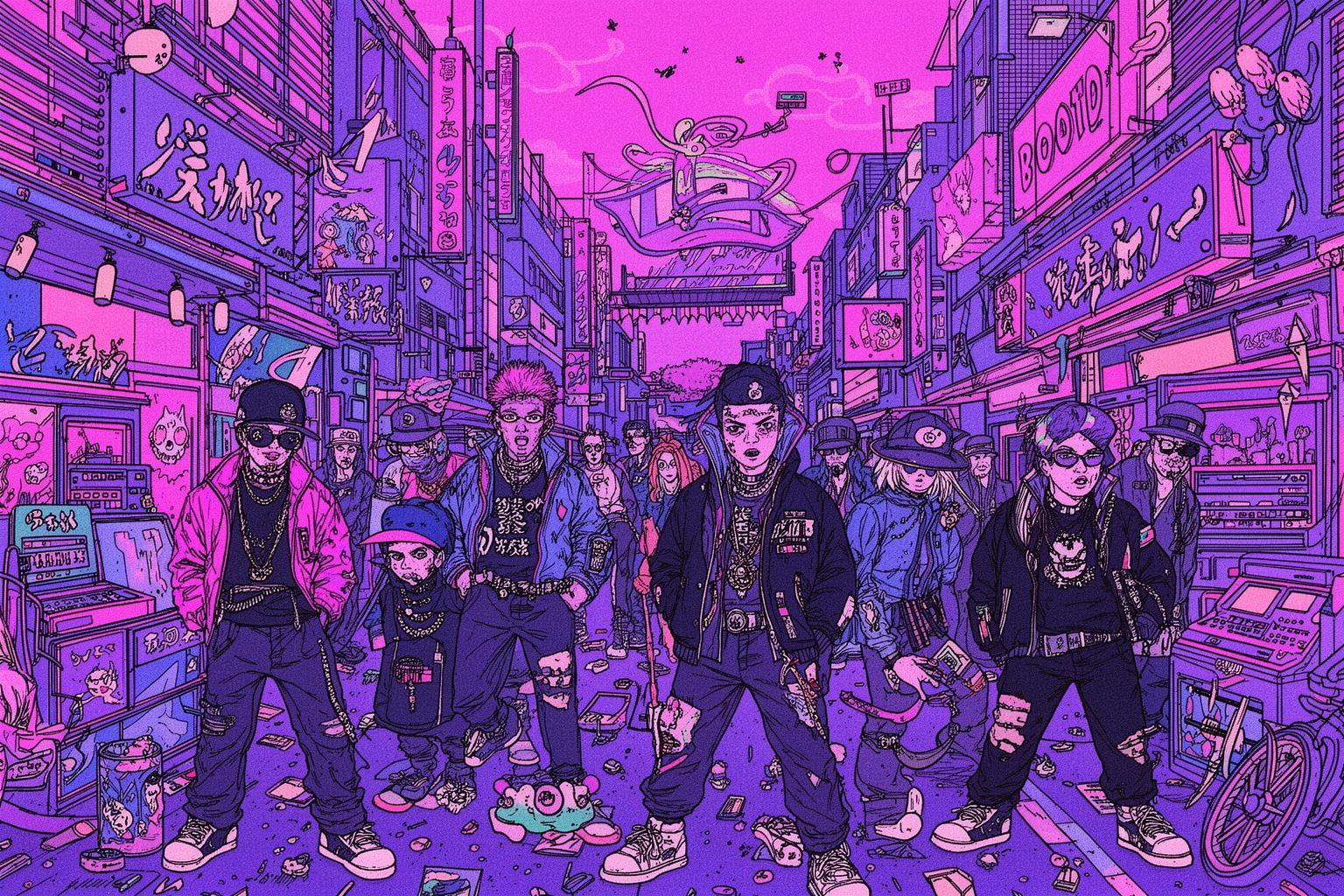
The golden age of the classic 80s Yankī may have ended, but its spirit remains very much alive. Though pompadours and punch perms have largely disappeared from the streets, the cultural impact they sparked still resonates in modern Japan. The Yankī archetype – the rebellious yet kind-hearted individual fiercely loyal to their friends – has become a lasting symbol in Japanese pop culture, with its aesthetics and values continuing to shape fashion, media, and even social interactions today.
From the Streets to the Screen: Yankī in Manga, Anime, and Film
One of the greatest legacies of the Yankī is their immortalization in media. Manga and anime, in particular, embraced the Yankī character. Series like ‘Kyou Kara Ore Wa!!’, ‘Shonan Bakusozoku’, and ‘Rokudenashi Blues’ perfectly captured the blend of comedy, intense action, and heartfelt friendship that defined the subculture. The Yankī in these narratives were often depicted as misunderstood heroes who, despite their rough appearances and love for fighting, adhered to a strong personal code of honor. Later, hugely popular series like ‘Slam Dunk’ featured Hanamichi Sakuragi, a classic red-haired Yankī who channels his rebellious spirit into basketball. The teacher in ‘Great Teacher Onizuka’ (GTO), a former Bōsōzoku leader, uses his street smarts to reach troubled students. More recently, the blockbuster ‘Tokyo Revengers’ reignited the Yankī and Bōsōzoku aesthetics, bringing them back into the mainstream and introducing them to a new global audience. These stories romanticize key Yankī values: unbreakable bonds with your ‘nakama’ (crew), fighting for honor, and standing up against injustice, even if it means breaking the rules. The Yankī became a stock character, a beloved archetype embodying a passionate, rebellious form of Japanese masculinity and camaraderie.
The Fading Pompadour: Where Did the Yankī Go?
So, if they were such a major phenomenon, where did the classic Yankī disappear to? Their decline in the late 1990s and early 2000s was the result of a perfect storm of factors. Japan’s economic bubble burst in the early 90s, and the carefree, optimistic spirit of the 80s vanished. The downturn made a delinquent lifestyle less appealing and sustainable. Simultaneously, police cracked down more harshly on Bōsōzoku and youth gangs. Laws were adjusted to facilitate the arrest of large biker groups, and schools enforced stricter uniform policies. Youth culture itself shifted. Rebellion moved away from the loud, confrontational Yankī style toward subcultures like Shibuya’s ‘gyaru’ and ‘gyaru-o,’ which focused more on fashion, music, and consumerism rather than gang conflicts. The internet and mobile phones also transformed how young people connected, replacing the need for physical crews hanging out on street corners with digital communities. The classic Yankī style simply began to feel outdated. Their rockabilly-inspired looks gradually fell out of step with the emerging hip-hop and rave scenes.
Neo-Yankī and Modern Traces
However, the Yankī spirit never fully vanished—it just evolved. Today, the term ‘mairudo Yankī’ (mild Yankī) describes young people, often in rural or suburban areas, who share some of the old Yankī values—strong loyalty to local friends and community, a preference for flashy, customized items like elaborately decorated vans and VIP-style sedans, and a general skepticism toward Tokyo’s elite urban culture. Though they may lack punch perms or tokkōfuku uniforms, they embody a continuation of the same mindset: valuing local connections and a particular rebellious pride over mainstream achievement. The aesthetic lives on in unexpected forms as well. The ‘sukajan,’ embroidered souvenir jackets originally from post-war Yokosuka and favored by Yankī, have become global high-fashion items. The love of tough, workwear-inspired clothing and customized vehicles persists. Most importantly, the central theme of the Yankī narrative—the power of friendship and finding belonging in a small, loyal tribe—remains one of the most enduring and powerful stories in Japanese culture. Though the last pompadour may have been combed out, the rebellious cry of the Yankī still echoes loud and clear.