You just had the session of a lifetime. It’s not an exaggeration. The snow wasn’t just deep; it was otherworldly. You’ve seen the videos, you’ve heard the hype about “Japow,” but feeling that bottomless, weightless powder billow over your head is a core memory now. The adrenaline is still buzzing through your veins as you clomp back to your accommodation in your ski boots, exhausted and deeply satisfied. You push open the door to your lodge, a place probably called something like “White Dream Pension” or “Chalet Alpina,” and BAM. You’re hit with it. The vibe. It’s not the sleek, modern, glass-and-steel alpine aesthetic of Whistler or the rustic-chic luxury of Aspen. No. You’ve just stepped through a portal directly into 1987. The air is thick with the faint, not-unpleasant scent of kerosene heaters, tatami mats, and something else… nostalgia. The carpets are a shade of orange or brown you thought was retired from public life. The walls are covered in dark wood paneling. Over in the corner of the communal lounge, a hulking CRT television sits beneath a dusty, plastic-covered karaoke machine. You drop your gear and wonder, what is going on here? How can a place with such futuristic, world-beating snow be so aggressively, unapologetically… old? This isn’t just about a lack of renovation. This is a deliberate preservation of a specific moment in time. The jarring disconnect between the epic nature of the mountains and the dated charm of the lodge isn’t a flaw in your Japanese ski trip. It’s one of the most authentic cultural experiences you can have. To get it, you need to understand that you’re not just sleeping in a room; you’re sleeping inside the ghost of Japan’s greatest economic party, and its long, lingering hangover.
This deliberate preservation of a specific moment in time is a phenomenon you can also explore in Japan’s retro arcade hideouts.
The Ghost of the Bubble Economy: When Skiing Was the Ultimate Flex
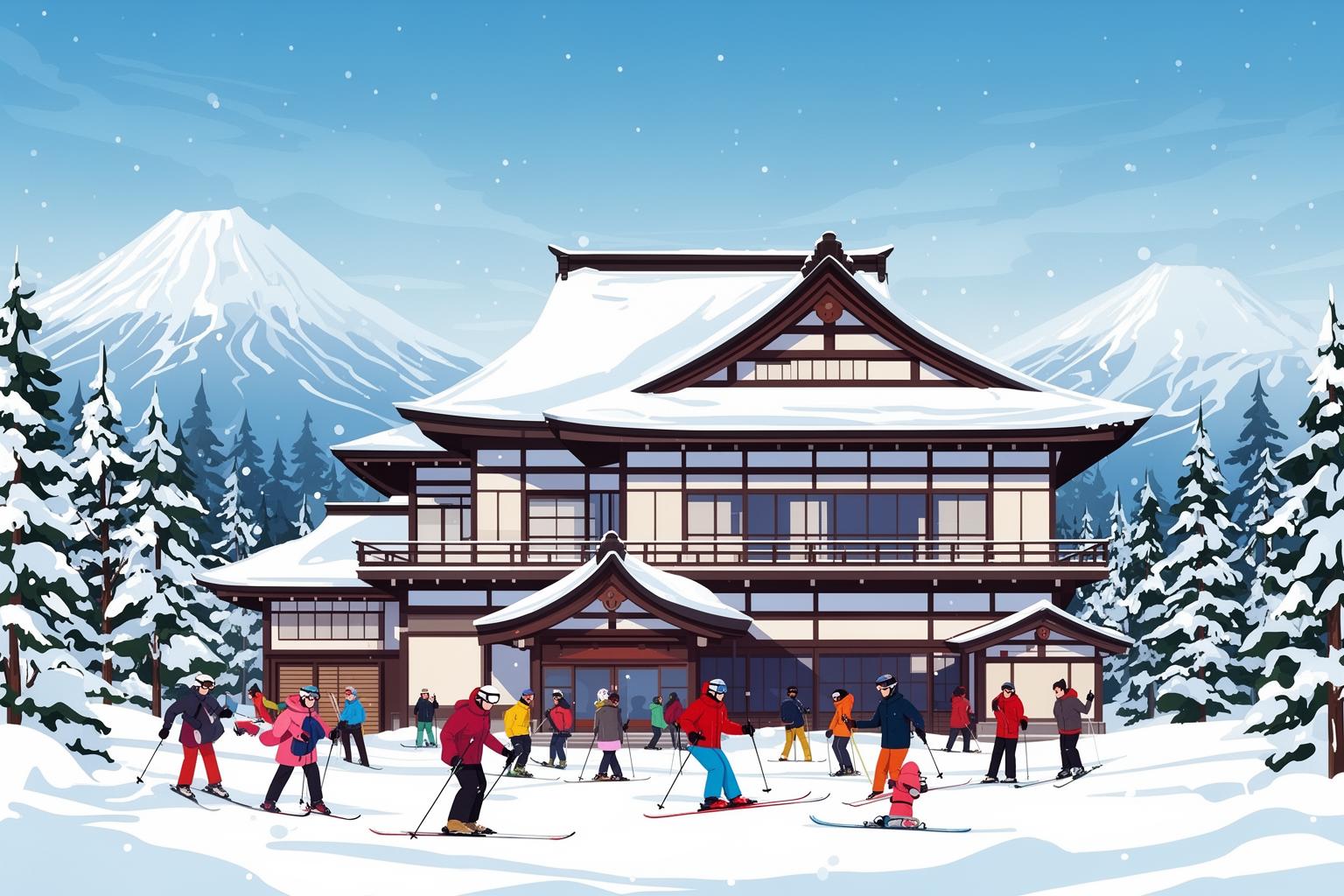
To grasp the shag carpet beneath your feet, you need to rewind to a time when Japan was at the pinnacle of global dominance: the 1980s. This era marked the height of the nation’s post-war economic miracle, a period so flush with cash it’s known as the “Bubble Keiki,” or Bubble Economy. The Nikkei stock index was soaring to unprecedented levels, Tokyo real estate was infamously expensive, and Japanese corporations were snapping up global assets like they were collecting Pokémon cards. For the average Japanese citizen, this meant unprecedented disposable income and an insatiable desire for leisure. In winter, the ultimate symbol of cool and status was skiing.
Japan’s Economic Miracle and the Leisure Boom
Skiing in 1980s Japan was more than a sport; it was a cultural phenomenon, a lifestyle statement. It represented an escape from the strict confines of corporate city life and an embrace of a glamorous, Westernized ideal of freedom, romance, and conspicuous consumption. Young urbanites would pile into their brand-new, state-of-the-art 4WD vehicles—a status symbol in itself—and drive for hours to the mountains of Nagano, Niigata, or Hokkaido. It was a kind of pilgrimage. This huge domestic demand sparked a construction boom on a massive scale. Entire mountainsides were reshaped. Hundreds of ski resorts, complete with extensive lift systems, were constructed from scratch. To accommodate the influx of skiers, thousands of hotels, inns, and especially “pensions” and “lodges” popped up in nearby villages. They were built rapidly and designed to capture the exact spirit of the time. These designs weren’t meant to be timeless; they were meant to be trendy, right now. They physically embodied the boundless optimism and overflowing wealth of the Bubble Era. Each lodge was a wager on a future where the party never ended and the snow—and money—kept falling indefinitely.
“Watashi wo Ski ni Tsuretette”: The Movie That Defined a Generation
You can’t discuss the Japanese ski boom without mentioning the 1987 film Watashi wo Ski ni Tsuretette (literally, “Take Me Skiing”). This movie was not just a box office success; it became a cultural touchstone that captured the ski fantasy for an entire generation. The story is a classic romantic comedy about a stylish group of city dwellers seeking love and adventure on the slopes. But its influence went far beyond cinema. The film was a masterstroke in product placement and lifestyle marketing. It set the trends. The vibrant, high-tech skiwear from brands like Phenix and Goldwin became the must-have look. The expertly synchronized skiing by the characters set the ideal standard. The soundtrack, brimming with synth-heavy hits from Yumi Matsutoya, was adopted as the official anthem of Japanese winter. Most significantly, it solidified the ski trip as the ultimate romantic escape. Securing a date to go skiing became a major social aspiration. The movie’s atmosphere—a blend of adrenaline-fueled adventure, cozy fireside conversations, and heartfelt confessions under snowy skies—was what everyone aimed for. The lodges you stay in today? They are the real-life sets of that national fantasy, intentionally designed as backdrops for countless real romantic comedies, perfectly fulfilling the expectations set by that iconic film. The slightly cheesy, overwhelmingly earnest romanticism of that era is literally embedded in their architecture.
Anatomy of a Showa Ski Lodge: It’s a Feature, Not a Bug
When you check into a classic Japanese ski lodge, it’s easy to mistake its quirks for flaws—the low ceilings, shared bathrooms, and fixed meal times. However, these aren’t signs of neglect but intentional design choices shaped by the cultural and economic context of their era. Understanding the lodge’s structure uncovers a deeper narrative about Japanese society’s aspirations and priorities during its 20th-century heyday. The experience is deliberately distinct from a Western hotel model—and that’s precisely the point.
The “Pension” Model: A Taste of Europe in the Japanese Alps
First, consider the word you encounter frequently: “pension” (ペンション). This is not a native Japanese term but a loanword adopted to conjure the image of a cozy, family-run European guesthouse or inn. For Japanese travelers in the 1980s, just beginning to explore abroad en masse, “Europe” symbolized sophistication and charm. Building a “pension” in the Japanese mountains was a way to bring that exotic, aspirational fantasy home. This explains the sometimes puzzling architectural features—the faux-Bavarian timber framing on a Nagano building, the vaguely Swiss-chalet-style roofs, and the European-inspired names like “Chalet Mont-Blanc,” “Pension Edelweiss,” or “Hotel Tyrol.” All were designed to create an immersive experience, a brief escape from Japan into the dream of the European Alps. These lodges were almost always built, owned, and run by a single family. The people checking you in are likely descendants of the original couple who invested their life savings to realize their European dream during the Bubble era. This isn’t a corporate chain but a living family legacy. The model emphasizes warm hospitality over impersonal professionalism—the owner might also be the chef, ski-tuner, and shuttle driver. It’s an intensely personal enterprise handed down through generations.
The Material Culture of the Showa Era
The lodges’ specific aesthetic elements serve as a perfect time capsule of late Showa Era (the reign of Emperor Hirohito, 1926-1989) interior design. Every material and layout choice reflects a story.
Wood Paneling & Faded Carpets
Today, dark wood paneling and thick-pile carpets in burnt orange, avocado green, or mustard yellow might seem outdated. But in the 1970s and 80s, these were the epitome of modern, cozy, and luxurious design in Japan. This style marked a departure from the stark minimalism of traditional Japanese homes. It felt warm, substantial, and Western—a nod to a rustic mountain cabin, a comforting refuge from the cold. The fact that these elements haven’t been replaced by sterile white drywall and laminate flooring isn’t just due to budget constraints; they remain functional, helping retain warmth and muffle noise. For the owners, this original look is integral to the lodge’s identity—changing it would erase its soul.
The Communal Atmosphere: Onsen, Tatami Rooms, and the “Drying Room”
One of the biggest culture shocks for Western visitors is the focus on communal spaces. Unlike the North American approach, which favors self-contained condos with private kitchens and living areas, Japanese ski lodges emphasize shared experiences. The highlight is often the onsen or large communal bath (o-furo). Soaking shoulder-to-shoulder with strangers after a day on the slopes is a non-negotiable part of the ski ritual—a place to warm your bones, relax sore muscles, and casually socialize. Similarly, meals are usually served in a large communal dining hall (shokudo), often a tatami-mat room where everyone gathers at low tables. There’s no menu—you all eat the same hearty, home-cooked set meal at once, typically a nabe (hot pot) or sukiyaki. This fosters a sense of group identity and shared experience. Then there’s the often-overlooked drying room (乾燥室, kansoushitsu)—a dedicated, often intensely warm and slightly musty-smelling space where everyone hangs wet jackets, gloves, and boots. It’s a brilliant example of pure functionality; bringing damp, smelly gear into your personal living area is unthinkable. The drying room is a sacred space of collective pragmatism. This whole arrangement reflects a group-oriented society, a remnant from a time when company outings and university ski clubs traveled in large groups.
The Relics: Vending Machines, Karaoke, and Retro Arcade Games
Finally, there are the technological relics scattered throughout. Hallways are lined with glowing vending machines (自動販売機, jidouhanbaiki) offering an astonishing range of drinks: hot and cold canned coffee, sweet milk teas, unique sodas like Calpis and Melon Fanta, and of course, beer. These machines aren’t new additions; they symbolized cutting-edge convenience in the 80s. In a corner of the dining hall or lounge, you might spot a karaoke machine, often covered in plastic and seemingly untouched for years, yet its presence remains essential. Karaoke was the premier evening entertainment during the boom. If you’re lucky, you might even find a single, carefully preserved arcade cabinet from the early 80s—think Pac-Man or Space Invaders. These weren’t just amenities but state-of-the-art entertainment, enduring as monuments to what was once the height of fun during Japanese skiing’s golden age.
The “Lost Decades”: Why Everything Froze in Time
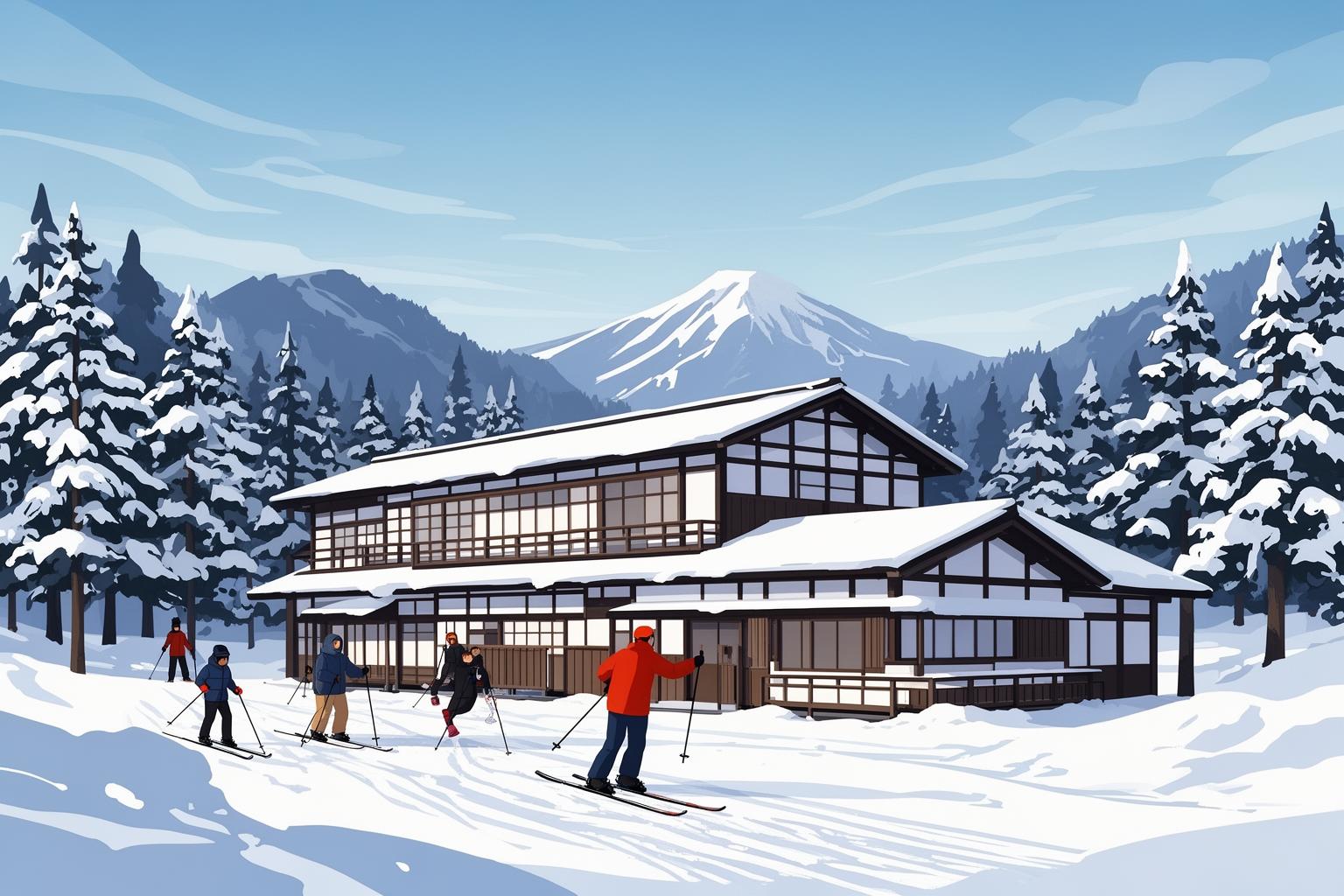
If these lodges were constructed during the height of a massive economic and cultural boom, why do they still look exactly the same forty years later? The answer is straightforward and harsh: the party ended. The economic bubble that financed the creation of this entire winter wonderland didn’t merely deflate; it burst spectacularly, plunging Japan into a long period of economic stagnation known as the “Ushinawareta Nijūnen,” or the “Lost Two Decades” (which some now argue is closer to three).
The Bubble Bursts, The Party Ends
In the early 1990s, the Tokyo stock market crashed, and the real estate market collapsed. The seemingly endless supply of easy money disappeared overnight. Companies tightened their spending, bonuses were cut, and the culture of extravagant corporate expenditures vanished. For the average Japanese family, discretionary income dried up. What had once been a must-do social ritual—a trendy weekend ski trip—became an unjustifiable luxury. The domestic ski population, which had peaked at nearly 18 million in the early ’90s, began a sharp and steady decline. The ski resorts and lodges built to accommodate large crowds were suddenly half-empty. The 4WD vehicles stopped arriving. The lively, bustling ski towns fell silent. The music from Watashi wo Ski ni Tsuretette faded, replaced by the sound of the cold mountain wind.
The Economics of “Just Enough”: Maintenance Over Renovation
For the thousands of family-run pensions and lodges, this was an existential threat. Their business model depended on the boom continuing indefinitely. When it stopped, their focus shifted from growth and expansion to mere survival. There was absolutely no capital available for major renovations. Upgrading the decor, adding en-suite bathrooms, or expanding rooms became a financial fantasy. The new economic reality demanded a pragmatic philosophy of maintenance. As long as the roof didn’t leak, the onsen boiler worked, and the rooms were clean, it was deemed sufficient. This mindset ties deeply into the Japanese cultural concept of “mottainai” (もったいない), a profound regret about waste. Why discard a perfectly functional—if unfashionable—carpet? Why replace durable, well-crafted Showa-era furniture? This was not just about frugality; it was about respecting resources. Beyond the economic crash, Japan’s demographic shift—a rapidly aging population and declining birthrate—meant the pool of young domestic skiers shrank each year. For a lodge owner in their 60s or 70s, taking on a large loan to renovate for a dwindling clientele made no sense. The logical decision was to maintain the status quo, keeping the time capsule perfectly sealed.
The Rise of “Japow” and the Inbound Shock
Just as many of these ski towns were on the verge of becoming ghost towns, a new and unexpected lifeline appeared: international skiers. Over the past two decades, word of Japan’s incredibly light and abundant powder snow—Japow—spread globally through films, magazines, and the internet. A new wave of visitors, mainly from Australia, North America, Europe, and other parts of Asia, began to arrive. This influx of “inbound” tourism saved many resorts. Yet it also created the profound cultural disconnect that visitors experience today. Foreign skiers arrived with expectations shaped by their home resorts, seeking craft breweries, a variety of restaurant options, lively après-ski scenes, and modern accommodations with king-sized beds and private bathrooms. Instead, they found perfectly preserved relics of Japan’s 1980s ski boom: villages silent after 5 PM, set-menu dinners served promptly at 6:30 PM, and cozy but dated rooms run by aging owners who often spoke little English. The very qualities that make these lodges feel so strange and anachronistic to outsiders are the direct result of the economic and demographic forces that left them untouched for decades—just as the rest of the world was discovering them.
Re-evaluating Retro: From Dated to Authentic
For years, the common external perspective was that these old lodges presented a problem to be addressed. The belief was that with sufficient investment, they could be demolished or renovated to align with modern, global standards. However, a fascinating shift in viewpoint has recently taken place. Among younger Japanese people and an increasing number of discerning international visitors, the aesthetic of these lodges is being reconsidered. What was once viewed as “outdated” is now appreciated as “retro.” What seemed like a defect is now recognized as a sign of authenticity.
The Shift in Perspective: “Showa Retro” as an Aesthetic
The term you’ll now hear is “Showa Retro” (昭和レトロ). This trendy aesthetic movement finds beauty, nostalgia, and a soulful quality in the designs and culture of the mid-to-late Showa Era. For a new generation of Japanese who didn’t experience the Bubble era, this period symbolizes a kind of golden age—a time of analogue warmth, economic optimism, and quirky, unpretentious style. It contrasts sharply with the clean, minimalist, and often sterile aesthetic of the present day (commonly called “Heisei,” the era that followed). That musty lodge isn’t failing to be a modern hotel; it’s succeeding brilliantly as a Showa-era pension. It functions as a living museum. Its persistent refusal to change is exactly what makes it so cool. This atmosphere can’t be faked. A “retro-themed” hotel can’t replicate this genuine feel, because the authenticity comes from the accumulated dust of decades, the faded patches on the carpet worn by countless footsteps, and the genuine memories embedded in its wood-paneled walls.
What You’re Really Paying For
So, when you reserve a room in one of these classic lodges, it helps to rethink what you’re actually purchasing. You’re not booking a bed in a generic, interchangeable hotel room that could exist anywhere in the world. You’re booking a portal. You’re paying for an experience of deep cultural immersion. The value isn’t in the thread count of the sheets or the number of television channels. It lies in the home-cooked breakfast prepared by the family that runs the place—often featuring local mountain vegetables and homemade pickles. It’s in the genuine, unpretentious hospitality of the owners, who might share stories from the resort’s heyday. It’s in the slightly lumpy but surprisingly warm futon laid out on the tatami floor. It’s in the shared cultural ritual of the evening onsen. You step out of the globalized, homogenized 21st century and into a very specific, authentic piece of Japanese history. It’s a rare chance to experience a place shaped by a boom, preserved by a bust, and now rediscovered for its unique, accidental charm.
Embracing the Quirks
My advice is to lean into it. Don’t resist the charmingly quirky vibe of your Showa ski lodge. Embrace it. Drink the oddly named canned coffee from the vending machine. Learn the complex etiquette of the onsen. Eat the mysterious, delicious dishes served at dinner, even if you can’t identify all the ingredients. Try to have a conversation with the elderly owner using a translation app. Let the experience be what it is, not what you expect it to be. Japan’s snow is, without doubt, some of the best on the planet. It’s a natural wonder. But the true, unforgettable magic of a Japanese ski trip comes when you realize that the epic powder outside and the retro time capsule inside are not separate things. They are two sides of the same coin. The lodge provides the cultural context that makes the memory of the snow linger forever. It answers the question, “Why is Japan like this?” Because history here isn’t torn down. It simply gathers a new layer of dust and waits patiently for you to discover it.