Yo, what’s up? Megumi here, live from Tokyo. My job is basically to plan events that slap, but on my days off, I’m all about chasing a certain vibe. And lately, the vibe I’ve been on is this deep, kinda moody, vintage blue. You’ve probably seen it on your feed. The shot of a quiet, sun-bleached seaside town in Japan. An old-school café with velvet seats. A vending machine humming on a lonely road at dusk. It’s aesthetic, for sure. But here’s the thing that gets me, and maybe it gets you too: Why does so much of Japan feel… stuck? Not ancient, like Kyoto’s temples, but stuck in a very specific, slightly faded, not-so-distant past. It’s like the whole country hit pause sometime in the 80s and just… kept the decor. People call it “retro,” but that doesn’t quite capture the feeling, does it? It’s not a theme park. It’s real life, just layered with this heavy sense of `natsukashii`—that’s our word for a kind of bittersweet nostalgia. To really get it, you can’t just scroll through pics. You gotta hit the road. That’s why I’m taking you on a drive down the Izu Peninsula, a jut of land just a couple hours from Tokyo that’s basically a living museum of this exact mood. We’re gonna cruise the coast, feel that blue, and unpack why this retro-ness isn’t just a style choice; it’s the ghost of a dream Japan is still trying to figure out. It’s a whole trip, and low-key, it explains a lot about this place. Let’s roll.
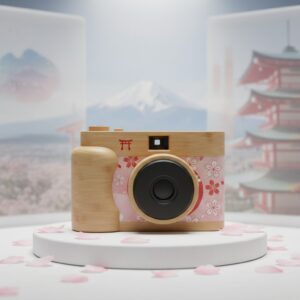
This nostalgic, slightly faded aesthetic is perfectly captured by the grainy, imperfect photos from a Japanese disposable camera.
The Ghost of the Bubble Economy: Unpacking “Showa Retro”
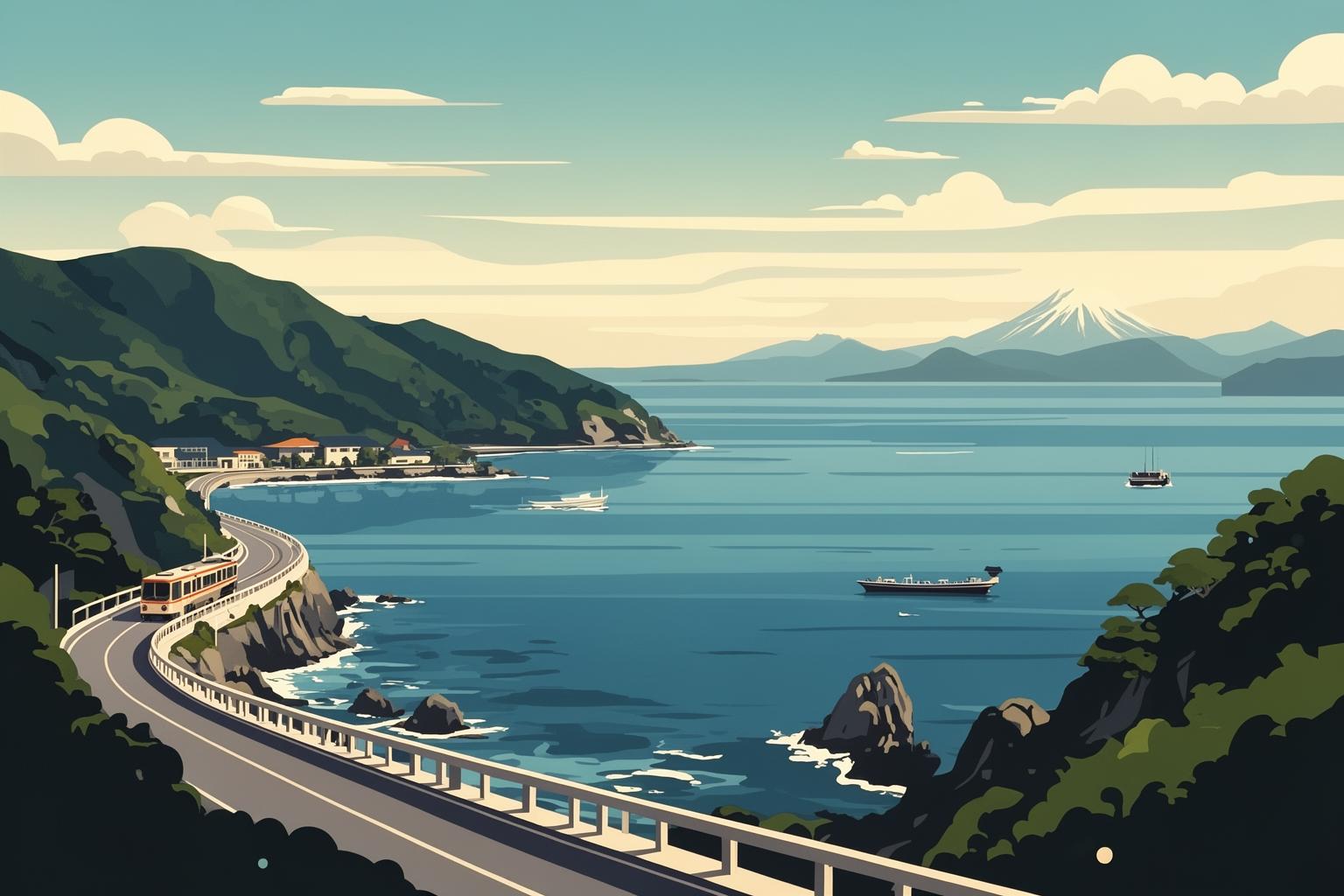
Before we even turn the key, we need to clarify one thing. The “retro” atmosphere that envelops Izu and countless other places across Japan has a name: Showa. More precisely, late Showa. It’s a term you’ll hear often, but what does it really mean? It’s not merely a design trend; it’s the reverberation of an entire era, the cultural backdrop of modern Japan. Understanding it is essential to unlocking the vintage blue mood of the peninsula. It’s the tale of a massive, champagne-fueled celebration, the harsh hangover that followed, and how the scenery froze in time just as the music stopped.
What Exactly Is Showa?
Technically, the Showa Era refers to Emperor Hirohito’s long reign, from 1926 to 1989. But when people nostalgically mention “Showa retro,” they’re not talking about the pre-war years. They focus on a very specific period: the post-war economic miracle, roughly from the late 1950s to the late 1980s. This was Japan’s transformation. The country rose from post-war devastation to economic superpower status at an astonishing pace. This era is etched into the national memory as a time of unwavering optimism. The core belief was simple: life was improving, and tomorrow would be better than today. Companies offered lifelong employment, salaries were rising, and the future seemed bright and boundless. It was Japan’s “Mad Men” era, its mid-century modern boom, but with a unique Japanese flavor.
The aesthetic of this period is what you encounter throughout Izu. It’s an intriguing mix of Western influence and Japanese sensibility. Think of the architecture of roadside cafes, or `kissaten`: often with dark wood paneling, ornate light fixtures, and plush, velvet-covered chairs in burgundy or forest green. This wasn’t mere imitation of American diners; it was about crafting a luxurious, almost cinematic escape from everyday life. The typography on old signs is another clear clue—bold, slightly rounded fonts with a futuristic, space-age vibe, promising a new world of convenience and leisure. The color palette was distinctive too: muted oranges, avocado greens, mustard yellows, and, naturally, a spectrum of blues, from the pale blue of plastic home appliances to the deep navy of a new family sedan. This was the visual language of progress. It was a time when owning a car, a color TV, and an air conditioner—the “Three Sacred Treasures” of the post-war era—represented the ultimate middle-class dream. The entire country collectively strove for this vision of prosperity and modernity, building a landscape that reflected this shared ambition.
Then the Bubble Burst… And Time Stood Still
This remarkable boom peaked in the late 1980s with what’s now called the “Bubble Economy.” It was pure economic frenzy. Stock market and real estate prices skyrocketed to absurd levels; at one point, the land beneath Tokyo’s Imperial Palace was said to be worth more than all of California. Companies flush with cash splurged on everything from art acquisitions to creating sprawling, extravagant resorts in places like the Izu Peninsula. These weren’t just hotels; they were grand monuments to corporate confidence. Massive complexes featured multiple restaurants, large banquet halls, bowling alleys, and golf courses, all built with the expectation that the golden era would continue indefinitely.
Then, in the early 1990s, it didn’t. The bubble burst dramatically. The stock market crashed, real estate values collapsed, and the country entered a period of economic stagnation known as the “Lost Decades.” The boundless optimism of the Showa era vanished, replaced by deep uncertainty and anxiety. The party was over. This crucial moment is when time began to freeze in places like Izu. The colossal resorts and tourist facilities constructed at the bubble’s peak suddenly became white elephants. Funds for renovations and upgrades dried up. With no new major developments underway, the existing landscape was preserved like amber. Hotels, souvenir shops, roadside attractions—they all turned into unintentional time capsules of the late 1980s.
So when you drive through Izu and spot a grand hotel with a slightly faded facade or a sign with peeling paint, it’s not necessarily a sign of neglect or failure in the Western sense. It’s a physical scar from a national economic trauma. It results from either a conscious or unconscious choice to maintain rather than replace. This is a vital distinction. In many Western cultures, “old” often means “bad” or “needs replacing.” In Japan, there is a greater tolerance for, and even appreciation of, things that show their age. This frozen-in-time quality has paradoxically become the main attraction. For the older generation, it serves as a direct portal back to their youth, a tangible reminder of that hopeful Showa spirit. For younger generations like mine, who never lived through the bubble, this aesthetic is captivating. It feels more authentic, more genuine than today’s sleek, minimalist, and often soulless designs. It’s texture, it’s story. It’s the visual proof of a dream so powerful it physically reshaped the country, and a bust so profound that those dreams were left to weather and fade in the salt-laced air.
Cruising the Coastline: Where the Road Tells the Story
A road trip through Izu is less about traveling from Point A to Point B and more about experiencing time travel. The road itself tells a story, winding you through different chapters of Japan’s modern history. Every town, lookout point, and crumbling concrete tetrapod along the shore narrates tales of the nation’s ambitions, shifting social structures, and its ties to the outside world. As you trace the coastline, with the deep blue Pacific on one side and lush volcanic hills on the other, you’re literally driving through the physical embodiment of the Showa dream and its lingering legacy.
Atami: The Faded Glamour of a Company Retreat Destination
Your first major stop after leaving the greater Tokyo area is likely Atami, and Atami has a distinctive atmosphere. As you descend the winding hills into the city, you’re met by a dense cluster of hotels and apartment buildings clinging to the mountainside, overlooking the bay. It feels like a once-glamorous seaside resort—a Japanese Monte Carlo that has seen better days. And that’s precisely what it is. During the high-growth Showa years, Atami was the undisputed king of domestic tourism, serving as the premier destination for two very specific and uniquely Japanese types of trips: honeymoons and the `shain ryoko`, or company trip.
The `shain ryoko` might seem unfamiliar to those outside Japan. It wasn’t merely a corporate benefit; it was a core part of Japanese work culture during an era defined by lifetime employment. The company functioned as a family, and these trips—often involving heavy drinking, communal baths in the onsen (hot springs), and elaborate banquets—were meant to strengthen loyalty and group harmony. Entire industries, and towns like Atami, were built to support this cultural tradition. The hotels were large for a reason: they were designed to host hundreds of employees from a single company simultaneously. They feature massive banquet halls, multiple karaoke rooms, and extensive onsen facilities—monuments to a collectivist work culture that has mostly vanished today.
Driving through Atami now is a surreal experience. You see imposing hotels from the ’70s and ’80s standing alongside sleek, minimalist cafes and art galleries reflecting a recent push to revive the city. The contrast is striking and intriguing. Some of the old giants still operate, their lobbies radiating a faded splendor—the faint scent of old cigarette smoke lingering in the carpets, slightly outdated furnishings, and souvenir shops selling the same trinkets they have for decades. Others stand abandoned, their empty windows staring out at the sea like vacant eyes. Walking through Atami feels like navigating the ruins of a very specific social system. The decline of lifetime employment and the shift toward individualistic work styles led to the demise of large-scale `shain ryoko`. Atami lost its core clientele and has been striving to reinvent itself ever since. The city’s architecture is a testament to a vanished social contract, making it the perfect gateway into Izu Peninsula’s vintage blue melancholy.
Ito and the Rise of the “Family Car” Dream
Continuing south from Atami, the road clings more tightly to the coast. This stretch, approaching the town of Ito, tells the tale of another important Showa-era development: the rise of mass motorization and the “my car” dream. While Atami was often accessed by train for large group trips, southern Izu became the playground of the new Japanese middle-class family with their shiny new Toyotas or Nissans. During the 1970s and ’80s, car ownership became an attainable symbol of success and freedom as the government built a network of modern highways and families eagerly set out to explore.
The Izu Peninsula, with its scenic coast and numerous natural attractions, became the ideal weekend getaway from Tokyo. A whole ecosystem of roadside attractions emerged to serve this new class of motorists. Here you find quirky, wonderfully odd venues: oddly focused museums dedicated to subjects like cats or teddy bears, slightly eccentric theme parks with quirky mascots, and countless roadside cafes, or `kissaten`, each with its own distinct personality. These places were rarely created by big corporations; most were small, family-run businesses expressing their owners’ passions.
Stopping at one of these `kissaten` is a must for the Izu experience. You settle into a cracked vinyl booth amid the aroma of coffee and years of conversations. The menu feels like a time capsule. You’ll find items like Cream Soda (a bright green melon soda topped with vanilla ice cream), Napolitan spaghetti (a uniquely Japanese dish with ketchup, onions, and sausage), and `anmitsu` (a traditional dessert of agar jelly with sweet bean paste). These comfort foods have nourished generations of Japanese families, evoking childhood memories of road trips. The experience contrasts sharply with a modern, efficient Starbucks. It’s unhurried. The owner might be an elderly lady who’s run the place since 1978. The pace invites you to disconnect and simply soak in the atmosphere. These small establishments embody the heart and soul of Showa roadside culture—they represent dreams of individual enterprise and the simple joy of family outings, dreams realized on the newly paved roads of a prosperous nation. Many are disappearing, making the remaining ones precious relics of a more hopeful, less hurried era.
The Blue of Jogasaki and the Timeless Natural World
Further down the eastern coast, the human-made landscape of hotels and cafes gives way to one of nature’s most dramatic exhibitions: the Jogasaki Coast. Here, the volcanic origins of the Izu Peninsula are strikingly evident. Jagged cliffs of dark basalt rock plunge into the intensely deep blue Pacific. This isn’t a soft sandy beach but a raw, powerful coastline sculpted by ancient lava flows. The contrast between the timeless, fierce beauty of this place and the fleeting, fading human structures you’ve passed is central to the Izu experience.
At the famous Kadowaki Suspension Bridge, which spans a cove between two cliffs, the wind rushes around you and waves crash on the rocks below, giving a profound sense of perspective. This moment reflects a deep Japanese aesthetic called `mono no aware`, often translated as “the pathos of things.” It is a gentle sadness or heightened awareness of life’s impermanence. The beauty of cherry blossoms, for instance, is made more poignant by the knowledge that they will soon fall. On the Jogasaki Coast, this feeling is intense. The grand Showa-era hotels in Atami, once seemingly permanent and powerful, reveal themselves as fragile and transient against this million-year-old coastline. Peeling paint, rust stains, and dated designs aren’t just signs of decay—they mark time’s passage. They gain beauty through their imperfections and vulnerability. This interplay between the man-made and natural, the ephemeral and eternal, gives Izu’s “vintage blue mood” its deep resonance. It’s not simply nostalgia for a past era, but a meditation on time itself, with the sea and volcanic rock standing as stoic, silent witnesses.
Shimoda: Where History Gets Complicated
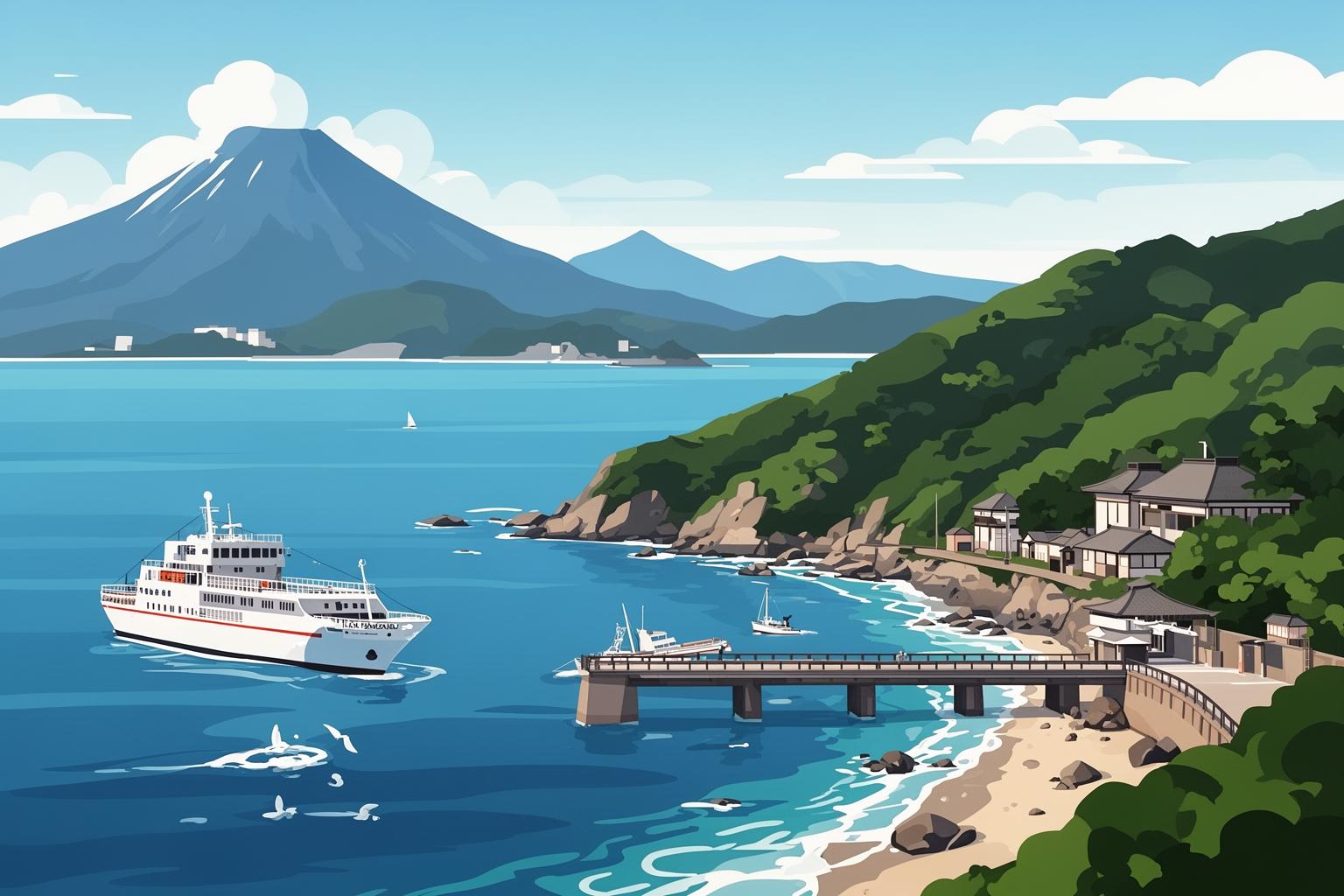
By the time you arrive at the southern tip of the peninsula and enter the port town of Shimoda, the atmosphere shifts once again. The hazy, sunlit nostalgia of the Showa boom fades, revealing a much deeper, more intricate layer of history. While Atami and Ito tell tales of Japan’s 20th-century prosperity, Shimoda tells the story of how modern Japan itself began. The “vintage” here dates not from the 1980s but from the 1850s. And the “blue” isn’t merely the color of the ocean; it represents a profound and painful national transformation. This quiet fishing town was the backdrop for one of the most pivotal and traumatic events in Japanese history.
More Than Just a Beach Town: The Perry Encounter
For over 200 years, from the 17th until the mid-19th century, Japan remained in a state of self-imposed isolation known as `sakoku`. The ruling shogunate had nearly sealed the country off from the outside world, prohibiting most foreign trade and travel. Then, in 1853 and again in 1854, an American naval squadron commanded by Commodore Matthew Perry sailed into Japanese waters. These were not friendly diplomatic visitors but heavily armed steamships, dubbed the “Black Ships” (`kurofune`) by a frightened Japan. Perry’s mission, supported by the threat of overwhelming military force, was to pressure Japan into opening its ports to American trade. He selected Shimoda as one of the first ports to be opened.
The psychological shock of this event cannot be overstated. It marked the end of Japan’s long isolation, shattered by a technologically superior foreign power. It was a national humiliation that sparked a period of intense crisis and reflection, eventually leading to the fall of the samurai-led shogunate and the rapid, frenzied modernization of the Meiji Restoration in 1868. This Shimoda encounter set Japan on the path to becoming the country it is today, with all its complexities, contradictions, and its enduringly complicated relationship with the West.
Wandering through Shimoda now, this history feels vividly alive. You can walk along Perry Road, a charming canal-lined street where the American delegation once strolled. You can visit Ryosen-ji, the temple where the final treaty negotiations were held. The town is not a flashy historical theme park; it remains a quiet, working port where this world-changing history is woven into the local fabric. The atmosphere here carries a weight of a different kind of past. It connects the historical dots in a way that’s difficult to grasp in Tokyo. The Showa era’s enthusiastic adoption of Western trends—ranging from cars to fashion to food—can be seen as a long-term response to the shock of the Black Ships. This encounter created a dynamic known as `gaiatsu`, or “foreign pressure,” which has repeatedly influenced Japanese history ever since. It is a pattern of reacting to, absorbing, and ultimately adapting outside influences on Japan’s own terms. This entire complex narrative began right here, in this calm, blue bay.
The “Retro” Layer Cake
So, as you finish your drive and reflect on the journey, you realize the Izu Peninsula is like a historical layer cake, and your road trip is slicing through it. The deepest, oldest layer is the land’s raw volcanic nature. Above that lies the foundational layer of Shimoda and the forced opening to the West—a moment that defined the nation’s modern trajectory. Then comes the thickest, most conspicuous layer: the glittering, optimistic, yet ultimately fragile stratum of the Showa economic miracle, complete with grand hotels, quirky roadside attractions, and the powerful nostalgia it still inspires. Finally, there’s the thin topsoil of the present day—the attempts at revitalization, young entrepreneurs opening new cafes, and travelers like us seeking to uncover the stories embedded in the landscape.
The “vintage blue mood” of Izu, then, isn’t a single feeling but a chord made up of multiple notes. There is the crisp, elemental blue of the Pacific Ocean and sky. There’s the melancholic, slightly faded blue of Showa-era dreams and the economic hangover that followed. And there’s the deep, historical blue of the Perry encounter—a bruise on the national psyche that has never fully healed. This is why Japan’s “retro” is more than a mere aesthetic. It’s not just an Instagram filter. It is the visual record of the nation’s turbulent, complicated, and fascinating journey through modernity. Driving through Izu, you’re not just seeing old buildings; you’re witnessing ghosts of past futures and the remnants of a powerful collective dream. It’s definitely a vibe—but it’s also a history lesson you can feel in your bones, one that explains why Japan is the way it is today: a country perpetually negotiating its relationship with its past against the backdrop of an unchanging, impossibly blue sea.