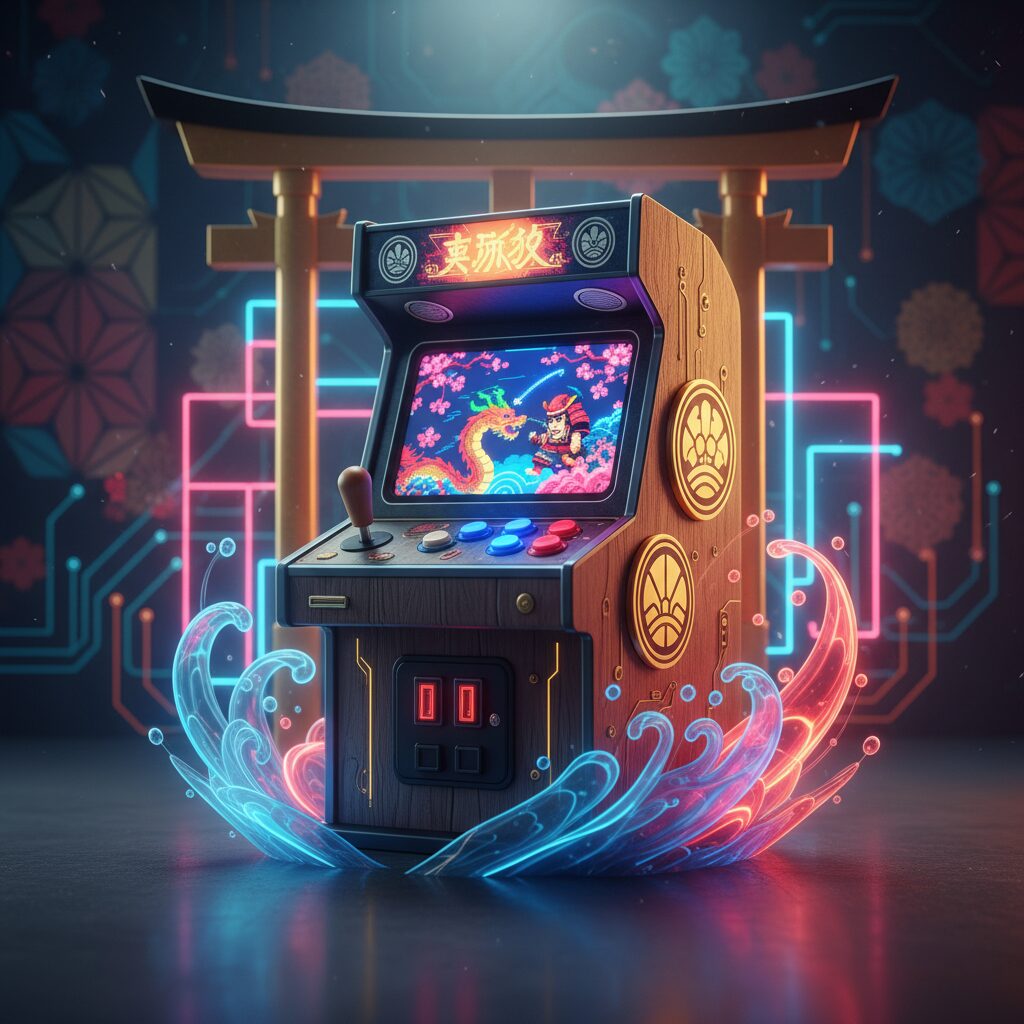
Yo, let’s get one thing straight. You’ve seen the pics, you’ve watched the vlogs. Japan’s arcades, right? A sensory explosion of neon-drenched, super-kawaii chaos. Floors packed with the latest rhythm games, insane UFO catchers stacked with plushies bigger than your head, and rows of pristine cabinets running the newest anime fighters. It’s loud, it’s clean, it’s aggressively cheerful. And yeah, that Japan totally exists. It’s a vibe, for sure. But it’s not the whole story. It’s the glossy, polished surface of a much deeper, grittier, and infinitely more fascinating world.
What if I told you there’s another kind of arcade? A parallel dimension hiding in plain sight. You won’t find these places on the main drags of Akihabara, brightly lit and begging for tourist traffic. Nah, you gotta look for them. Tucked away on the second floor of a non-descript building in a sleepy suburb, down a narrow staircase that smells of stale ramen and damp concrete, behind a door with a faded, hand-painted sign. You push it open and the vibe shift is instant. The air gets thick. It’s dark, like a perpetual twilight zone lit only by the ghostly glow of CRT monitors. The sound isn’t the high-pitched J-Pop of the modern arcades; it’s a discordant symphony of 8-bit laser blasts, the chunky ‘shoryuken!’ from a vintage Street Fighter II cabinet, and the relentless, hypnotic clack-clack-clack of a thousand plastic buttons being hammered by phantom hands. The air tastes of ozone and, until recently, decades of lingering cigarette smoke. This isn’t just an arcade. This is a hideout. A time capsule. A glitch in the matrix of hyper-modern Japan, teleporting you straight into a 90s cyberpunk flick. You half expect to see a rain-slicked Harrison Ford nursing a drink in the corner. So the real question isn’t where these places are, but why they still exist. In a country obsessed with the new, the clean, and the efficient, why do these grimy, beautifully decaying sanctuaries for forgotten games not just survive, but command a fiercely loyal following? What does their stubborn existence tell us about the real, uncurated soul of Japan, far from the tourist-friendly facade?
This stubborn, nostalgic yearning for a tangible past is part of a broader cultural phenomenon, much like Japan’s enduring fascination with retro cream soda.
Beyond the Kawaii Facade: The Birth of the Japanese Arcade
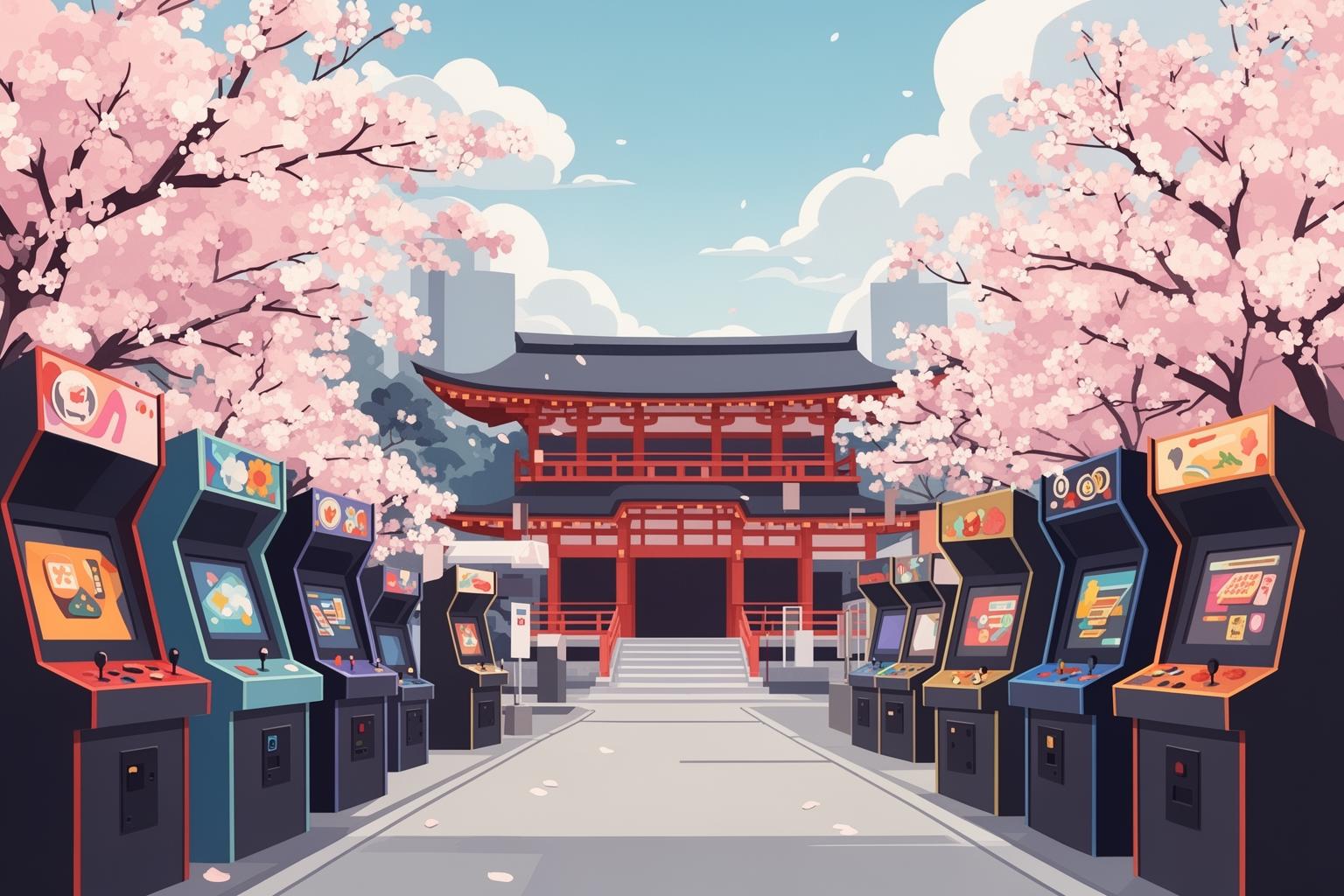
To truly understand why these retro arcades, or ‘gēsen’ as they’re known in Japan, carry this distinct ‘underground hideout’ vibe, you need to rewind the tape. It hasn’t always been this way. The entire scene didn’t simply emerge as a gritty, hardcore refuge for gaming experts. Its origin story is much more wholesome, and its development perfectly reflects Japan’s post-war social changes.
From Department Store Rooftops to Urban Caves
Picture post-war Japan in the 1950s and 60s. The country was rebuilding, and a new consumer culture was blossoming. The centers of this new world were massive department stores called ‘depāto’. And the best spot in the depāto? The rooftop. These weren’t empty patios but miniature amusement parks—Ferris wheels, small rides, food stalls, and among them, the earliest arcade games. These were simple electro-mechanical machines—light gun games, driving simulators that were basically toy cars on moving belts. It was a family-friendly scene: bright, sunny, and wholesome. The arcade was a treat, a reward for well-behaved kids while their parents shopped. It was deeply tied to an optimistic, family-focused vision of modern life.
Then, in 1978, a spaceship came down from the sky and changed everything—or rather, a fleet of them. Taito released Space Invaders, which wasn’t just a hit but a massive social phenomenon, sparking a nationwide shortage of 100-yen coins. This was the Big Bang. Gaming was no longer just children’s fun on rooftops; it became a challenge, a competition, a skill, and highly addictive. The demand was so overwhelming that dedicated venues appeared to accommodate rows upon rows of Space Invaders machines. These were the first real ‘Game Centers.’ They moved off the family-friendly rooftops into street-level buildings, often in less glamorous neighborhoods where rent was cheap. The atmosphere shifted immediately. The sunlight vanished, replaced by the glow of screens. The crowd changed too: it grew less family-oriented and more focused on teenagers and young adults, attracted by the challenge and the new social environment.
The “不良” (Furyo) Hangout: Moral Panic and Its Legacy
With the arrival of the 80s and arcade hits like Donkey Kong, Pac-Man, and the first fighting games, the scene gained a certain reputation. In the West, arcades also sparked a ‘moral panic,’ but in Japan, this was intensified by a culture that highly values social order and conformity. The Japanese school system was, and remains, extremely strict, with students spending long hours in class and at ‘juku’ (cram schools), all aimed at upholding a hierarchical, group-focused society.
Arcades represented the opposite. They were spaces to escape this pressure. Inside the gēsen, grades didn’t matter, nor did social rank. The only thing that counted was skill. Could you achieve the high score? Could you defeat the player next to you in Street Fighter? It was a pure meritocracy, which was intoxicating for a generation feeling stifled by expectations. Naturally, this attracted the ‘furyo’—delinquents and rebels. Kids skipped school to hang out at arcades, which became zones free from parental and educational control. Society began to view arcades as dark, seedy places where good kids went to get corrupted. This perception—a ‘moral panic’—left a lasting imprint on their physical and cultural identity. Operators obviously couldn’t promote “skip school here!”, so arcades leaned into their slightly illicit aura. They stayed tucked away in back alleys, with unassuming entrances. The interiors remained dim and enclosed, creating a sanctuary shielded from outside judgment. This legacy forms the foundation of the clandestine feeling you sense today. That dark, somewhat intimidating atmosphere wasn’t initially a stylistic choice; it was a survival tactic born from social stigma.
The Anatomy of a Retro “Gēsen”: Decoding the Neo-Tokyo Vibe
Entering a genuine retro arcade is a full-body experience. It’s an intense sensory bombardment, but in the most exhilarating way. Every aspect—from the noise to the scent to the specific hardware—forms a part of a broader cultural mosaic. To an outsider, it might look like just a noisy, dimly lit room filled with old video games. Yet to those familiar, it’s a deliberately, if unintentionally, curated space, where every element has a story to share.
The Sensory Overload: Deliberate Mayhem?
In Japanese society, especially in public places like trains and cafes, a baseline of quiet respect and order prevails. You don’t speak loudly; you don’t disrupt others. The retro gēsen shatters that norm and burns the rulebook. It creates a sanctioned pocket of chaos, and that uninhibited release is a key part of its charm.
The Wall of Sound
The soundscape is the initial onslaught. It’s not merely loud; it’s a rich, layered tapestry of digital noise. The iconic ‘wocka wocka’ of Pac-Man competes with the booming announcer in Marvel vs. Capcom 2. High-pitched, frantic tunes from a shmup like DoDonPachi merge with the deep thud of Tekken’s kicks. Above all this is the essential soundtrack: the mechanical symphony of players. The sharp, rhythmic clicks of Sanwa joysticks hitting their gates and the furious drumming of fingers on oversized buttons. This is a sound of intense concentration and physical exertion. This cacophony isn’t a flaw in design; it’s the arcade’s beating heart. It creates an energetic bubble that shields you from the silent, orderly outside world. Here, loudness is the language of passion.
The Smell of Nostalgia
Let’s be honest, the scent of an old-school gēsen isn’t universally appealing. It’s a strong, distinct aroma. For decades, the dominant note was stale cigarette smoke. Before stricter indoor smoking bans, these arcades were often thick with haze. That smell was part of the identity—the image of the committed player, cigarette dangling, one hand on the joystick, the other flicking ash onto a brimming tray. Mixed with the faint electric tang of ozone from dozens of warm CRT monitors and the musk of a poorly ventilated space filled with focused, slightly sweaty people, it became the authentic aroma of the Japanese arcade. It stands in stark contrast to the sanitized, air-freshened feel of modern mall arcades. It’s an unmistakable scent that declares, “This place isn’t for tourists; it’s for us.” Though the smoke has mostly vanished, its ghost lingers as a nostalgic echo.
The Perpetual Twilight
The lighting—or often the lack of it—is fundamental to the hideout vibe. Windows are either absent or blacked out, making the time of day irrelevant. Whether it’s a bright afternoon or the dead of night, the interior atmosphere remains steady. The primary sources of light are the game screens themselves, casting a vibrant, ghostly glow on players’ faces. Overhead lighting is sparse, usually just a few humming fluorescent tubes that seem to absorb more light than they emit. This endless twilight isn’t just practical—it reduces screen glare and enhances focus. Psychologically, it’s far deeper. It conjures a liminal space, a pocket universe where outside rules and pressures don’t apply. Stepping inside means leaving behind your daily life, your job, your responsibilities. You cease to be a student or salaryman; you become a pilot, a fighter, a god within the digital realm.
The Machines Themselves: Treasures and Sacred Objects
The hardware is the altar where the community worships. These aren’t simply old machines; they are finely tuned instruments, and their unique designs and functions are central to why the arcade experience can’t be fully reproduced at home.
Candy Cabinets and CRT Devotion
Forget the bulky wooden cabinets you might recall from Western arcades. The classic Japanese arcade setup is the ‘candy cab’—sleek, sit-down cabinets made of plastic or metal, often brightly colored, from companies like Sega (Astro City series) and Taito (Vewlix). The sit-down design matters because it encourages longer, more comfortable sessions. It frames arcade gaming not as a casual pastime but as disciplined practice. It’s a workstation built for the serious player.
And then there’s the screen—the CRT, or cathode-ray tube, monitor. To most, it’s outdated tech, heavy and inefficient. To the hardcore arcade community, it’s a holy relic. Why? Two words: input lag—or rather, its absence. CRTs have almost zero lag, meaning actions respond instantaneously on screen. This is vital for genres like fighting games and shmups, where split-frame timing can mean the difference between winning and losing. Modern LCD or OLED screens, despite their clarity and color, inherently introduce processing delay. Playing on a CRT offers a fundamentally different, more responsive experience. Moreover, the distinctive pixel rendering, with scanlines and phosphorescent glow, is how purists believe these games were meant to be viewed. Maintaining these aging, often fragile monitors is a priority for arcade owners—a technical devotion that defines the retro scene.
The Cult of Shmups and the Fighting Game Community
While various genres can be found, the true essence of retro arcades rests on two pillars: shoot ‘em ups and fighting games. There’s a reason for this. These genres demand precision, execution, and community. Shmups, particularly the bullet hell or danmaku sub-genre, flood the screen with countless projectiles, forcing players to navigate tiny ships through impossibly intricate patterns. It’s less about reflexes and more about mastering a lethal, high-speed dance requiring hundreds of hours of practice.
Fighting games, from classics like Street Fighter II to complex titles like Guilty Gear, are digital martial arts. They require deep system understanding, flawless combos, and the psychological skill of reading opponents. Both genres thrive in the arcade environment. High-quality joysticks and buttons provide tactile feedback and precision often missing from home controllers. Most importantly, the arcade fosters community—where you watch the masters, learn new strategies, and challenge a real opponent sitting mere feet away. The tension, rivalry, and shared passion—that’s the magic absent from online matchmaking.
More Than a Game: The Unspoken Rules of the Arcade Society
So you’ve discovered one of these places. You’ve navigated the dim staircase and acclimated to the sensory overload. Now you stand at its core, observing the players. And you might notice something odd. For a space so bursting with energy and passion, it’s surprisingly quiet. People aren’t shouting or trash-talking. They barely speak at all. This is where the cultural gap often surprises Western visitors. It can seem cold, isolating, even antisocial. But it’s not. What you’re witnessing is a complex social ecosystem, governed by its own unique, unspoken language.
The Lone Wolf and the Silent Community
The default style of interaction in a Japanese arcade is respectful silence. Each player is immersed in their own world, engaged in a private, intense struggle with the machine or opponent. The atmosphere is one of deep, personal focus. This reflects a broader cultural norm in Japan, where sharing public space doesn’t automatically mean socializing. You can be surrounded by others yet remain in your own bubble, and that’s perfectly accepted. The community exists, but it’s not loud or boisterous. It’s quiet, founded on mutual respect for the shared passion.
Communication is subtle and non-verbal. The most common and important gesture is lining up for a machine. If someone is playing a popular game you want to try, you don’t tap them on the shoulder. Instead, you approach and place a 100-yen coin on the cabinet’s control panel or bezel. That’s it. You’ve reserved your spot. You’ve silently said, “I’m next.” Then you step back and watch, not only waiting but studying the current player’s tactics. It’s a mark of respect and a chance to learn. After a match, winners don’t gloat, and losers don’t complain. There may be a barely noticeable nod exchanged—a quiet recognition of a good game—before the next coin drops and the cycle recommences.
The “Galaxian” and the Gatekeeper: Archetypes of the Gēsen
Spend enough time in these arcades and you begin to recognize the recurring figures—the archetypes that shape this ecosystem. There’s the “Galaxian”—a term for a god-tier player, often an older man who’s been mastering the same game for decades. Their movements are impossibly fluid and precise, their hands a blur over the controls. They play with zen-like calm, effortlessly dispatching challengers. They speak little, but their presence elevates the entire arcade. Watching them play is like witnessing a master calligrapher at work.
Then there’s the chain-smoking salaryman, suit jacket loosened and tie undone, stopping by after a tough day at work to relieve stress on a game from his youth. He’s no pro, but he’s revisiting a part of his past, finding a brief escape before the long commute home. You’ll also see high school students in uniforms, astonishingly skilled at the latest fighting games, their quick reflexes giving them an edge. Holding this whole world together is the arcade owner or manager—the most vital archetype of all. These individuals are not merely business owners; they are curators, technicians, historians, and community leaders. They hold the arcane knowledge needed to repair 30-year-old circuit boards and recalibrate failing CRT monitors. They run weekly tournaments, maintain order, and serve as gatekeepers of this sacred space. Their dedication is what keeps these places from fading away.
Why Pay 100 Yen When You Can Play for Free at Home?
This is the ultimate question for the skeptic. We live in an era of perfect home emulation. You can download nearly any arcade game ever created and play it on your computer for free. Online multiplayer is seamless. So why would anyone choose to visit a cramped, smoky room and pay 100 yen (about a dollar) for a single three-minute game? The answer is straightforward yet profound: it’s about the “ba” (場所).
“Ba” is a Japanese concept roughly translating to “place” or “atmosphere,” but it goes much deeper. It’s the unique feeling and social dynamic generated by a particular physical environment. The retro arcade’s “ba” is irreplaceable. It’s the sensation of the specific Sanwa joystick in your hand, the hum of the CRT monitor, the presence of fellow enthusiasts equally passionate, the weight of history resonating in the room. Playing online is convenient but disembodied. You can’t see their hands, feel their tension, or share that silent nod of respect after a tight match. The arcade provides a physical, high-stakes, low-latency setting for these games as they were meant to be played. It’s like the difference between watching a cooking show and tasting the food. The home version is a good imitation, but the arcade is the authentic, sensory experience. It’s a pilgrimage. You pay the 100 yen not just to play, but for the privilege of participating in the “ba.”
A Tour Through the Glitch: Where to Find the Real Neo-Tokyo
So, where do you plug into this matrix? Although many iconic venues have sadly shut down, the spirit of the retro gēsen remains vibrant if you know where to search. These aren’t just travel guide entries; they serve as case studies, each highlighting a different aspect of this unique subculture.
Mikado (Takadanobaba, Tokyo): The Fighting Game Mecca
If the retro arcade scene has a global capital, it’s likely Mikado. Spread across two locations in the student-filled neighborhood of Takadanobaba, Mikado feels less like an arcade and more like a living, breathing institution. It’s a loud, chaotic, and utterly magnificent temple devoted to the art of fighting games. The sheer concentration of cabinets is staggering. You’ll find multiple versions of every Street Fighter ever made, rare SNK titles, and obscure 3D fighters you’ve probably never heard of. But Mikado’s renown is built on its community. The skill level here is astronomical, making it a place where legends are born. They hold nightly tournaments streamed on Twitch to a worldwide audience, turning local champions into international icons. Visiting Mikado is like a martial artist visiting the Shaolin Temple—a dojo to seriously hone your skills against the best. The air hums with competitive energy. It is the raw, unfiltered core of Japan’s fighting game culture.
Natsuge Museum (Akihabara, Tokyo): The Time Capsule
Just steps away from Akihabara’s bright, modern mega-arcades, a small elevator whisks you back in time. The Natsuge Museum (short for ‘Natsukashii Ge-mu,’ meaning ‘Nostalgic Games’) stands in stark contrast to Mikado. It’s a tiny, cramped, and lovingly curated space that feels more like a collector’s passion project than a business. The focus here isn’t competition but preservation. The machines mostly date from the late ’70s and early ’80s—the golden era of arcade gaming. You’ll see pristine versions of Space Invaders, Donkey Kong, and other foundational classics. The owner is a true historian, painstakingly maintaining these vintage machines. Playing here offers a different vibe—a quieter, more reflective experience. It’s interactive archaeology. This place embodies the Japanese concept of ‘mono no aware’—a tender appreciation for the beauty of transient things. It’s a museum where you’re encouraged to touch the exhibits—a beautiful, functional shrine to gaming’s origins.
The Hidden Gems of Den-Den Town (Osaka): A Different Flavor
Tokyo doesn’t hold a monopoly on retro arcades. Venture south to Osaka’s Den-Den Town, the city’s version of Akihabara, and you’ll discover a scene with its own unique character. Arcades like Ko-Hatsu may lack Mikado’s international fame, but they remain crucial to their local communities. The atmosphere in Osaka often feels a bit rougher, louder, and less formal than Tokyo’s. This mirrors Osaka’s broader cultural reputation for being more direct, boisterous, and down-to-earth. Players are often more vocal, and the ambiance is less reverent and a bit rowdier. It’s a vivid reminder that Japan is not a single entity. Even within a niche subculture like retro gaming, regional identities stand out, delivering an experience that is different yet equally authentic.
The Ghost of Warehouse Kawasaki: A Hyper-Real Simulacrum
No discussion of the Neo-Tokyo arcade aesthetic is complete without honoring a legend, even a fallen one. Anata no Warehouse in Kawasaki, which shut its doors in 2019, was something extraordinary. It wasn’t a naturally evolved retro arcade—it was a multi-million dollar, meticulously crafted theme park of a retro arcade. Both inside and out, it mimicked a decaying, rust-streaked slice of the infamous Kowloon Walled City. The attention to detail was astonishing—fake grime, flickering lights, carefully recreated props. Inside this stunning dystopian environment was an impressive collection of retro and modern games.
Warehouse Kawasaki embodies a fascinating facet of modern Japanese culture: the art of simulacra, the skill to transform an organic, chaotic aesthetic into a polished, safe, consumable experience. It raises a profound question about authenticity: what was more ‘real’—an authentically old, slightly grimy arcade that developed its character over decades, or this perfect, hyper-real recreation capturing that very essence? The closing of Warehouse Kawasaki was a significant loss, but its legacy remains a vital reflection on the tension between preserving genuine history and curating an idealized version of it.
The Final Credit: Is This World Fading Away?
It would be irresponsible to portray a thriving scene without some qualification. The reality is that these cherished, authentic spaces are increasingly rare. They are engaged in a tough battle against the forces of the modern world on multiple fronts, and all too often, they are losing. The neon glow of these retro havens is, in many areas, beginning to flicker.
The Pressures of the Modern World
The challenges are many. Skyrocketing urban real estate prices make it extremely difficult for these thin-margin businesses to stay afloat. The hardware itself is a ticking time bomb; 40-year-old circuit boards fail, and supplies of replacement parts and skilled technicians are becoming scarce. The original generation of players is growing older, and although younger generations are discovering these games, the player base is smaller than it used to be. The nationwide ban on indoor smoking, while unquestionably beneficial for public health, also unmistakably changed the classic, gritty atmosphere of the gēsen and drove away some longtime patrons. And, naturally, the global pandemic was a severe blow, forcing closures and disrupting the core of a business model that depends on people gathering in close quarters.
A Legacy in Pixels and Code
So, what’s the ultimate takeaway? Are these places merely sad, fading relics? Absolutely not. To think so misses the entire point. These arcades are more than just businesses offering entertainment. They are community hubs. They are living museums. They are dojos for a digital martial art. In an era when so much of our interaction is filtered through screens and algorithms, these arcades stand as a powerful reminder of the lasting importance of physical space and human connection. They provide a tangible counterpoint to the frictionless, optimized, and often sterile experience of contemporary life.
They embody a distinctly Japanese way of cultivating a subculture: with unwavering dedication, deep specialized knowledge, and a quiet passion that endures for decades. They are a beautiful, stubborn glitch in the otherwise seamless program of modern Japan. They are a pocket of the past that has defiantly refused to be updated, a Neo-Tokyo refuge that’s real, not just the stuff of cinematic fantasy. Every clack of a joystick, every 100-yen coin dropped into a slot, is a small act of resistance against the relentless passage of time. And for as long as they survive, they offer a rare, unfiltered window into the true, wonderfully complex soul of this country. It’s a vibe you can’t download, an experience you have to feel. And it’s absolutely worth the price of admission.