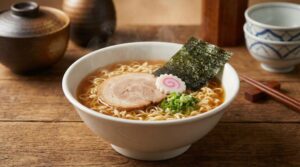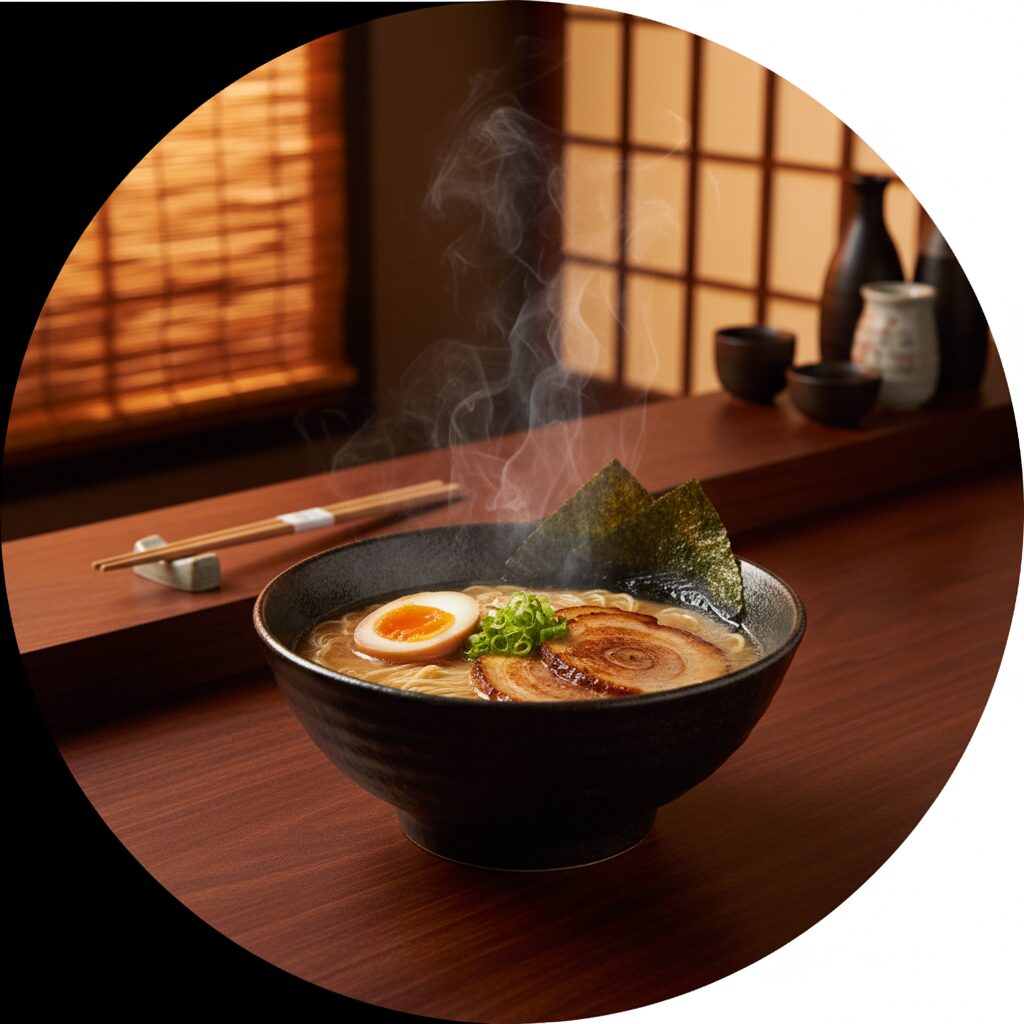
Yo, what’s good? Hiroshi here, your local guide to the real Japan. So you’ve seen it, right? Scrolling through your feed, you stumble upon a video from Tokyo or Osaka. It’s a tiny, steaming ramen shop, maybe ten seats max, all crammed along a single, worn wooden counter. Everyone’s hunched over their bowls, a wild symphony of slurping echoing off the walls, the only real conversation being the rhythmic clatter of the master’s ladle against a giant, simmering pot. You see a line of serious-looking locals snaking out the door and down the alley, and you think to yourself, “What is the deal? Why would anyone wait an hour in the cold just to eat in a closet with a bunch of strangers?” It’s a totally legit question. In a world where dining is increasingly about the ‘experience,’ the ambiance, the Instagrammable decor, and the space to chill with your crew, these places feel like the complete opposite. They feel… intense. Inhospitable, even. But here’s the secret, the thing you absolutely gotta get: this isn’t a bug in the system, it’s the entire feature. This isn’t just a restaurant; it’s a ritual. It’s a hyper-focused, beautifully efficient cultural phenomenon born from a specific time, a specific place, and a specific mindset. It’s about way more than just grabbing a quick bite. It’s about finding a rare moment of pure, unadulterated focus in the middle of overwhelming urban chaos. It’s about a unique kind of public privacy we can call ‘intimate anonymity.’ So, for a minute, forget everything you know about Western dining etiquette. To truly get why these counter-only joints are the absolute, unfiltered soul of Japan’s food scene, you have to decode the vibe, understand the system, and learn to embrace the silence. It’s a whole different level of tasty, a whole different way of being. Let’s dive deep into the steam and figure out why slurping shoulder-to-shoulder with strangers is one of the most authentic, and frankly, most fire Japanese experiences you can possibly have.
To truly appreciate this unique atmosphere, you should also explore the world of Michelin-starred ramen temples.
The Vibe Check: More Than Just ‘Old,’ It’s a Showa-Era Time Capsule

First things first, let’s clear something up. When we say these places have a “Showa-era vibe,” it’s not just a trendy or aesthetic way of saying they’re old and a little rundown. That kind of description subtly disrespects the legacy these places embody. The Showa era, which spanned from 1926 to 1989, was a dramatically turbulent time for Japan. It encompassed the extremes of pre-war militarism, the catastrophic destruction of World War II, and an incredible economic rebound known as the Japanese economic miracle. This era essentially shaped the modern Japan you see today, with all its contradictions and complexities. So when you slip under a faded noren curtain and enter a ramen-ya that seems untouched since 1975, you’re not just walking into a dusty old shop. You’re stepping into a living artifact of that relentless spirit. It’s a time capsule holding the essence of the salaryman, the blue-collar worker, the everyday person who fueled Japan’s remarkable comeback. Back then, ramen wasn’t delicacy to be savored—it was sustenance. A quick, cheap, and deeply satisfying reward after a grinding 12-hour workday. The shops were designed for these workers, reflecting their realities and needs. They stand as monuments to an era that valued efficiency, substance, and affordability above all else.
Reading the Room: The Aesthetics of Pure Function
Take a closer look next time you visit one. The counter is likely a single, thick slab of wood—maybe zelkova or cypress—worn impossibly smooth and dark from decades of elbows, quick conversations, and the bottoms of countless ceramic bowls. It’s marked and stained with history. The stools are simple to the point of austerity—backless, often a bit unstable, sometimes even bolted to the floor. They’re not made for lounging; they’re designed to position you perfectly before your bowl, facilitating straightforward, focused noodle consumption. That’s it. Cast your eyes to the walls. They’re probably plastered with greasy, yellowed paper menus featuring dish names in bold, confident calligraphy. You might spot old beer posters with retro hairstyles or a signed shikishi board from a local celebrity or sumo wrestler who visited decades ago. No interior designer crafted this space—this is an aesthetic of accumulation, of layers of time, smoke, and wear built up naturally. It’s the complete opposite of the minimalist, sterile Muji-style Japan often featured in design magazines. This is raw, unvarnished, lived-in authenticity. The lighting is usually dim and moody, coming from a few bare incandescent bulbs or a flickering fluorescent tube, creating an atmosphere that’s both intimately warm and slightly grimy. It’s real. Chances are you’ll see a small, old-school CRT television precariously perched on a shelf, probably showing a Giants baseball game or a nightly news broadcast everyone collectively ignores. It’s not for entertainment; it’s part of the sonic wallpaper, a familiar, comforting hum that fills potential silence. Every detail of this setup shouts one message loud and clear: function over form. The shop’s sole purpose is to deliver a perfect, steaming bowl of ramen from kitchen to stomach as efficiently as possible. Everything else is just background noise. This unwavering dedication to one goal is, in its own way, a profound expression of Japanese beauty—a concept called shibui: a simple, subtle, and unobtrusive beauty that reveals its depth and character over time, growing richer with age and use.
The Master’s Domain: Respect the Stage
At the heart of this universe, the sun around which everything orbits, is the master—the taisho. He (and it usually is a he, which opens up another cultural conversation for another time) is often a silent, almost formidable presence. He’s not performing stoicism; he’s genuinely, intensely focused. Clad in a simple white kitchen jacket and often wearing a hachimaki (headband) to keep sweat at bay, he moves with a practiced, rhythmic grace that borders on meditation. Every motion is precise and efficient, refined by decades of repetition. The way he shakes the water from freshly boiled noodles with a sharp snap—the yu-giri—the delicate flick of his wrist placing a perfect slice of chashu pork atop the bowl, the careful, reverent ladling of broth—it’s a performance. He’s not there to be friendly or chatty. He won’t ask about your day or where you’re from. His silence isn’t rudeness; it’s the highest form of respect for his craft and for you, the customer. The entire shop is his stage, his domain, his dojo. The counter serves as a sacred barrier between his creative world and your consuming one. By minimizing conversation, he preserves the integrity of his process. He’s juggling multiple orders at once, timing noodles precisely for several customers simultaneously, ensuring each bowl that reaches the counter is as flawless as the last. Your quiet reverence is your part of the unspoken pact. You’re not merely a customer; you’re an audience member witnessing a fleeting, delicious culinary performance. The exchange is beautifully simple: you offer him your money and full attention, and he provides a bowl of ramen that embodies his life’s work. This relationship rests on a deep, wordless mutual respect for the food, far surpassing any superficial small talk.
The System: Why It’s All About Focus and Flow
So you get the vibe, but how does it actually function? From the outside, it might seem chaotic, yet these shops run with an almost supernatural efficiency. It’s a well-oiled system designed to maximize flow and minimize friction. Every aspect of the experience, from ordering to paying to leaving, has been refined over decades. It’s a dance, and once you learn the steps, you become part of the rhythm. The goal is straightforward: feed everyone quickly and happily without disrupting the delicate harmony of the space. It’s a microcosm of Japanese society, where individual actions are often guided by a shared understanding of how to keep things running smoothly for the group. This isn’t about rigid rules enforced by a grumpy owner; it’s about a collective, unspoken agreement.
The Ticket Machine (Shokkenki) – Your First Gatekeeper
Often, your initial interaction won’t be with a person but with a machine: the shokkenki, or meal ticket vending machine. For first-timers, this device can be quite intimidating. It’s a wall of buttons covered in Japanese characters, flashing lights, and pictures of ramen that all start to blend together after a few moments of panicked staring. But this machine is not your enemy. It’s a brilliant piece of social engineering, a gatekeeper designed to streamline the entire dining process. Consider what it achieves. First, it completely removes the need for the chef or staff to handle money. This is huge. It’s more hygienic and, more importantly, allows the master to remain fully engaged in his cooking rhythm without being distracted by payments or making change. Second, it standardizes the ordering process. There’s no back-and-forth, no questions about substitutions, no confusion. You press a button, get the ticket, hand it over. Done. This drastically speeds up the entire flow, which is essential when there’s a line of hungry customers outside. Third, for non-Japanese speakers, it’s actually a godsend. Most modern machines display photos, and some even offer English buttons, turning a potentially difficult language barrier into a simple act of pointing and pressing. The shokkenki is the first step in depersonalizing the service in favor of ultimate efficiency. It sets the tone: this interaction is transactional, and the main event is the food. It’s a form of hyper-efficient, hands-off hospitality that prioritizes the product over the small talk.
The Counter – A Stage for the Solo Diner
The counter itself is the heart of the system. Its design is deliberate. By seating everyone in a single line, facing forward, the layout naturally discourages large, boisterous groups and lengthy conversations. You’re not facing friends; you’re facing the stage. Your focus is directed toward the master and, ultimately, the bowl he places before you. This setup is a haven for the solo diner, a common figure in Japan’s urban environment. In a society that respects individual time and pursuits, even in public spaces, the ramen counter offers a perfect, judgment-free zone to simply exist and eat. It’s a physical expression of a social comfort with being alone in a crowd. Here, you encounter the unspoken principle of mokushoku, or “silent eating.” While this term gained prominence during the pandemic for health reasons, its essence has long existed in these hardcore ramen shops. The focus is meant to be on the ramen. You are there to savor the texture of the noodles, the depth of the broth, and the tenderness of the pork. The symphony of slurps you hear isn’t considered rude or bad manners. On the contrary, slurping signals enjoyment. It also serves a practical function: aerating the noodles and broth to enhance flavor and aroma, and cooling the piping-hot noodles just enough for you to eat them quickly at their peak texture without burning your mouth. It’s an auditory appreciation, a silent way to communicate satisfaction to the master.
The Rules of the Game: Unspoken Etiquette
Successfully navigating these spaces requires understanding the unspoken rules, the invisible script that everyone else seems to know. It’s not about being uptight; it’s about collective respect. Rule number one: Don’t linger. This is not a café. You’re not paying rent for the seat; you’re paying for the bowl of noodles. Once you finish your last slurp, it’s time to leave. This isn’t staff being rude or rushing you out. It’s about being considerate of the hungry people waiting behind you. The entire business model relies on steady customer turnover. By leaving promptly, you help keep the system flowing. Rule number two: Keep your world to yourself. That means no loud phone calls, no watching videos with sound, and keeping conversations with a friend to a quiet minimum. The space is tiny, and sound travels. The general atmosphere is one of shared, quiet focus, and loud chatter breaks that vibe. It breaches the unspoken social contract. Rule number three: A small gesture goes a long way. When you finish, it’s common courtesy to take your napkin and give your spot at the counter a quick wipe. Sometimes, locals place their finished bowl on the higher part of the counter, making it easier for the master to collect without reaching over. These are not mandatory, but small gestures of respect and help for the busy chef. It’s your way of acknowledging that you’re a guest in his domain. These rules aren’t meant to be restrictive or stressful. They act as social lubricants that allow a dozen strangers to share a tiny space harmoniously. It’s a beautiful, functional microcosm of Japanese social harmony, or wa, in action.
The Psychology of Intimate Anonymity
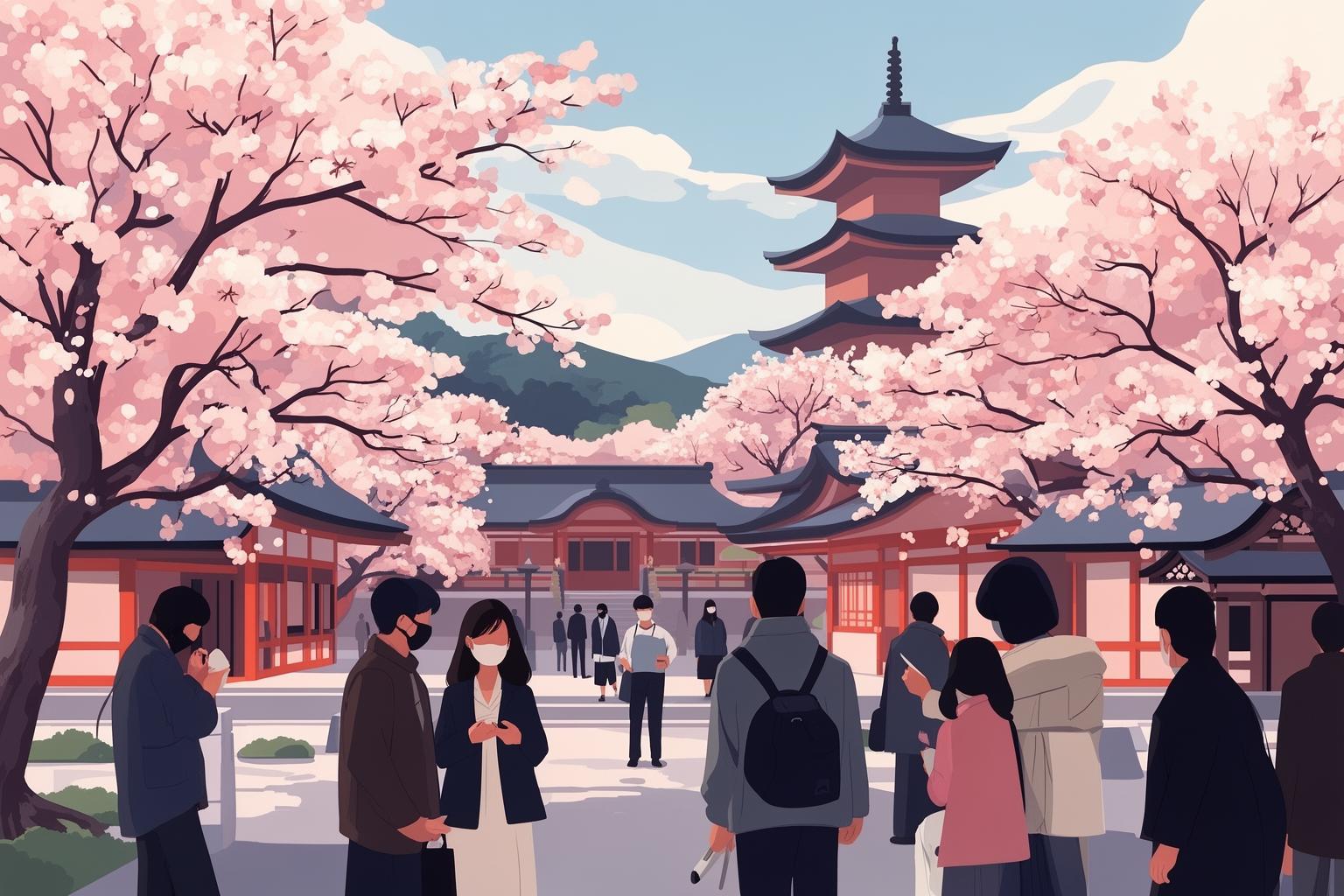
We’ve covered the history and mechanics, but the real question—the one that gets to the core—is why. Why does this experience resonate so deeply with so many Japanese people, while feeling so strange yet captivating to outsiders? The answer lies in the distinctive psychological environment these shops create: a state of intimate anonymity. This paradox perfectly reflects a key aspect of life in a Japanese megacity. On one side, you are physically closer to a stranger than you might be to a family member at your own dinner table. You can feel the warmth of their arm, hear their breathing, and smell their cologne. It’s an intensely intimate physical space. Yet, on the other side, you are completely, utterly alone. There’s no expectation of social interaction—no eye contact, no small talk, no acknowledgment beyond the basic courtesy of respecting each other’s space. This blend of intense physical closeness and total social distance creates a protective bubble. You are enveloped by the ambient energy of others, sharing a deeply satisfying sensory experience—the steam, the aroma of pork broth, the sounds of slurping—while remaining entirely in your own world. There is no pressure to engage socially, to perform, or to be “on.” For the typical Tokyo office worker, who spends their day navigating complex social hierarchies, attending meetings, and joining obligatory after-work drinks, this is a meaningful release. It’s a brief, sacred escape from the unrelenting social demands of work and life. In the ramen shop, for fifteen minutes, you are simply a person eating a bowl of noodles. Nothing more, nothing less.
This idea is a richer, more focused expression of a skill every Tokyoite learns: maintaining personal mental space despite a total lack of physical space. Consider the crowded morning commute on the Yamanote line. A train car packed with hundreds of people, all standing shoulder-to-shoulder, yet it remains almost completely silent. Everyone retreats into their own bubble—their phone, a book, music, or just their thoughts. They’ve perfected the art of being together, yet alone. The counter-only ramen shop takes this urban survival skill and elevates it into a comforting ritual. It provides a structured, safe, and socially accepted way to be an anonymous individual within the collective. It’s a refuge from the sensory and social overload of the city, a place where the world shrinks to the size of a single ceramic bowl. You enter, focus, eat, leave, and re-emerge into the city’s chaos feeling centered, satisfied, and recharged. It’s therapy in a bowl.
Is It for You? Managing Expectations vs. Reality
Alright, real talk. After all this, you might be thinking, “This sounds incredible,” or maybe, “This sounds like my worst nightmare.” Both reactions are totally valid. The key to enjoying the counter-only ramen experience is managing your expectations and knowing what it is—and what it’s not. If you and your four friends want a place to have a long, leisurely dinner, catch up, and laugh loudly, this isn’t the spot, chief. If you’re hoping to chat deeply with the chef, hear his life story, and snap a selfie, it probably won’t happen. The potential for a mismatch in expectations is huge, and many foreign visitors get it wrong here. They mistake efficiency for rudeness, silence for unfriendliness, and focus for a lack of hospitality. This isn’t “bad service”; it’s a different kind of service. In the West, good service often means performances: smiles, attentive chatter, constant check-ins. Here, service is delivered through the product itself. The master’s dedication is the service. The service lies in the speed, the consistency, and the face-meltingly delicious quality of the ramen. It’s in the clean counter, the easily accessible water, and the flawlessly organized condiments. The service lies in crafting an environment where you can have a perfect, uninterrupted moment with your food. The value proposition is totally different. You’re not paying for ambiance or conversation. You’re paying for a masterfully created bowl of food, served at lightning speed in a space ruthlessly optimized for that single purpose. It’s pure, unfiltered ramen worship. So, is it worth it? Absolutely—if you go in with the right mindset. Go for the food. Go for the unique cultural experience. Go for a moment of focused, delicious solitude. Don’t go expecting a TGI Fridays. Think of it less like a restaurant and more like a high-performance pit stop for your body and soul. Get in, get your tune-up, and head back out.
Finding Your Bowl: A Philosophical Approach

By now, you’re likely not searching for a simple “Top 5 Ramen Shops in Tokyo” list. That’s basic, and you’ve moved beyond it. You realize that the journey and the discovery are integral parts of the experience. So instead of handing you a list of names, let me offer you a set of tools—a philosophical approach to finding your own perfect bowl. First, trust the queue. The gyoretsu, or line, is the most honest and reliable restaurant review throughout Japan. If you spot a line of locals—office workers on lunch break, students, elderly couples—waiting patiently outside an unassuming shop, join that line. Something exceptional is happening inside. Don’t be daunted by it; view it as a seal of quality from those who know best. Second, look for the classic signs. The red lantern, or akachochin, hanging outside is a timeless signal that a humble, traditional eatery is open and welcoming. The noren, the fabric curtain over the doorway, is another crucial indicator. Passing beneath it feels like entering another world, leaving the city’s noise behind. It symbolizes the boundary between the outside (soto) and the intimate inner space (uchi) of the shop. Third, explore the in-between spaces. The best shops rarely reside on main, glamorous streets. Seek them out tucked away in narrow alleys (yokocho), nestled beneath the rumble of elevated train tracks, or hidden on backstreets in salaryman districts like Shinbashi in Tokyo or Fukushima in Osaka. These places have thrived for decades not through marketing, but because they are genuinely outstanding. Finally, be bold. Some of the most rewarding experiences await in places that seem a bit intimidating from the outside. The entrance might be grimy, the curtain worn, and the interior dimly lit. But move past that hesitation. The ticket machine is your ally. The master respects your presence, even in silence. Other customers are too absorbed in their own bowls to notice you. The experience is the essence. The cramped space, the silent master, the chorus of slurps from anonymous neighbors—it’s all part of the package. This is your opportunity to savor a slice of Japan far removed from polished, tourist-friendly main streets. It’s a taste of something authentic, something soulful, something that will linger long after the broth’s flavor fades.