You’ve probably seen it scroll past on your feed. A brightly lit, squeaky-clean factory floor. Gleeful faces huddled over empty styrofoam cups, wielding colorful sharpies with intense concentration. A conveyor belt carrying these personalized creations to be filled with a puff of steam, a cascade of freeze-dried toppings, and finally, sealed into an almost comically puffy, transparent bag. This is the My CUPNOODLES Factory at the Cup Noodles Museum in Japan. It’s a vibe. It’s peak content. And on the surface, it looks like a fun, slightly bizarre, and ultimately frivolous way to spend an afternoon. A whole museum… for instant ramen? It’s a question that hangs in the air, smelling faintly of chicken broth and corporate marketing. Is this just another piece of Japan’s quirky puzzle, a tourist trap wrapped in a kawaii bow? Or is there something deeper going on here? The answer is a resounding ‘yes.’ This experience, in all its pop-art glory, is not just about making a snack. It’s a masterclass in the philosophies that built modern Japan. It’s a story of grit, relentless innovation, and a concept of ‘serious fun’ that explains so much about this country. Forget what you think you know about cheap student food. We’re about to deconstruct the cultural code sealed inside that styrofoam cup.
To truly understand this deep-seated cultural connection, consider how the experience taps into a powerful sense of instant ramen nostalgia.
The Ghost of the Black Market: Ramen’s Gritty Origin Story
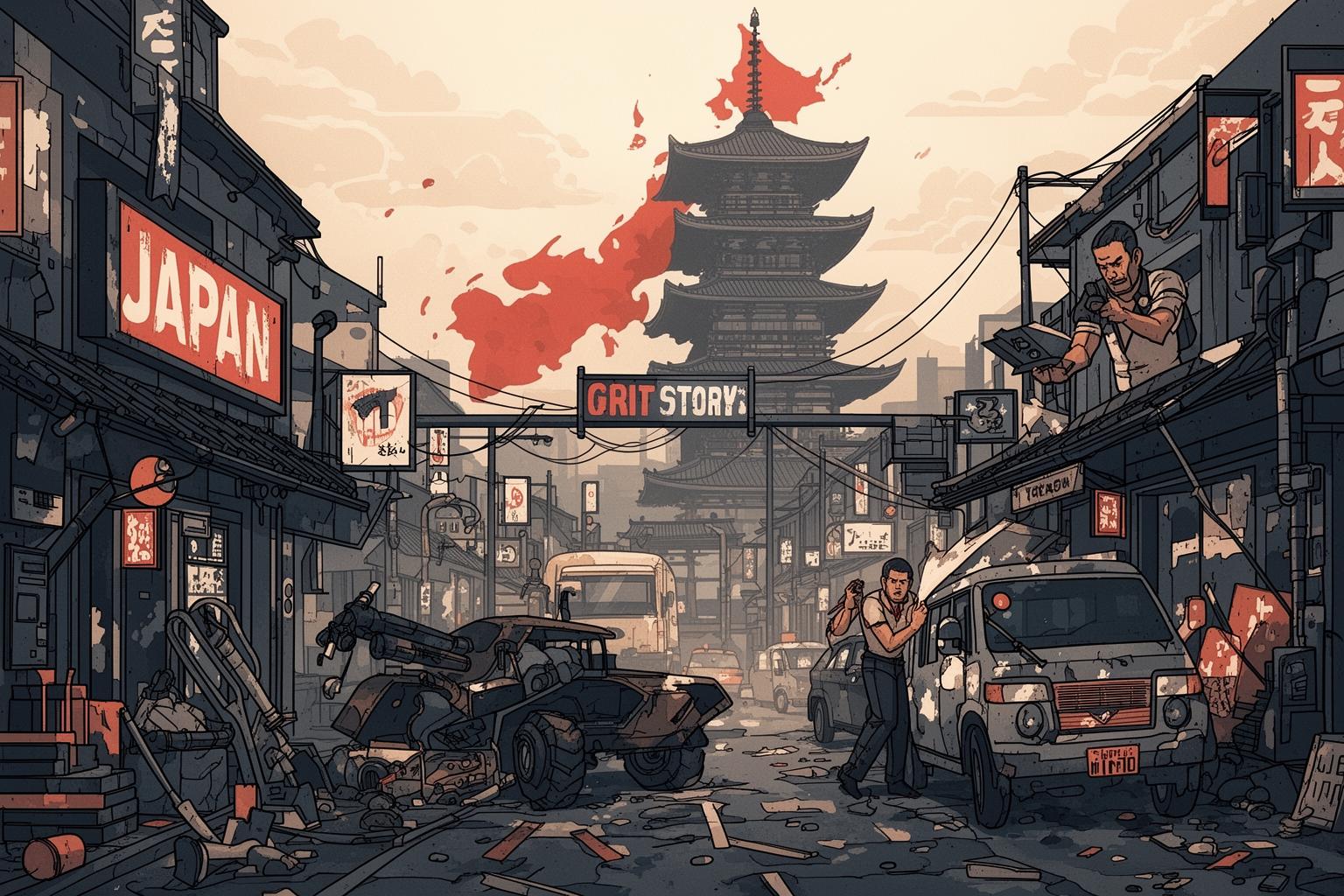
To understand why Japan venerates instant ramen to the extent of creating a museum for it, you need to rewind beyond the neon glow of today and step back into the monochrome hardship of the immediate post-war period. This story doesn’t begin in a sleek R&D lab; it begins amidst the ruins. Japan in the late 1940s and 1950s was a country struggling with severe scarcity. Food was the central, wrenching concern. The government rationed supplies, and American aid, mostly wheat flour, was distributed to make bread—a food unfamiliar to the traditional Japanese palate. The real activity, the authentic flavor, unfolded in the shadows—in the black markets. There, amid desperation, you could find ramen stalls secretly serving steaming bowls of noodle soup. For many Japanese, the sight of long, patient queues winding toward these stalls was about more than hunger. It represented resilience, a quiet return to a familiar, comforting taste in a world turned upside down.
This was the scene observed by a man named Momofuku Ando. Ando was neither a chef nor a food scientist but a Taiwanese-Japanese entrepreneur who had faced a series of failed ventures. Most importantly, he was an astute observer. He noticed the lines. He sensed the deep, collective yearning for ramen. And he identified the inefficiencies. He asked a simple yet revolutionary question: could quality ramen be made so convenient that it could be prepared anywhere, by anyone, using only hot water? This was more than a business idea. It was fueled by a powerful, almost philosophical belief born from the hardship he witnessed: “Peace will come to the world when all its people have enough to eat.” For Ando, solving the ramen challenge was a direct path toward addressing global hunger. It may sound lofty, even somewhat improbable, but this earnest, mission-driven ethos forms the foundation of the entire instant noodle empire.
Success didn’t come overnight. His initial experiments in the small, makeshift shed he built in his backyard in Ikeda, Osaka, were failures. He tried numerous methods to preserve cooked noodles—salting, smoking, drying—but none worked. The breakthrough moment, now legendary in Japanese business lore, came from watching his wife, Masako, cook tempura. As she dropped battered vegetables into hot oil, they sizzled, and moisture evaporated quickly, leaving a crispy, preserved morsel. The idea clicked: flash-frying. By flash-frying a block of seasoned, steamed noodles, he could dehydrate them almost instantly, creating microscopic pores on their surface. When hot water was added later, it would rehydrate the noodles through these pores, cooking them from the inside out. It was a brilliant insight, born not in a corporate boardroom but from a domestic observation. In 1958, he launched his creation: Chikin Ramen. It was a block of pre-seasoned noodles, packaged in cellophane. Initially a luxury item, more expensive than fresh ramen from a stall, its promise of shelf stability and ultimate convenience was undeniable. It marked the start of a food revolution, and that backyard shed is now the revered, recreated centerpiece of the museum. It stands as a reminder that this global phenomenon began with one man, a profound social need, and a flash of tempura-inspired genius.
The Unseen Blueprint: How ‘Kufu’ and ‘Kaizen’ Built the Noodle Empire
As you walk through the Cup Noodles Museum, you’ll inevitably come face-to-face with the “Instant Noodles History Cube.” This floor-to-ceiling glass display showcases an astonishing collection of instant noodle packages, ranging from the original Chikin Ramen to the thousands of variations that followed. It’s definitely an Instagram-worthy moment, but it also serves as a physical timeline of two concepts essential to understanding Japanese industry and, by extension, Japanese society: kufu and kaizen.
Kufu (工夫) is a word without a perfect English equivalent. Often translated as ‘ingenuity’ or ‘creative device,’ it more accurately describes a mindset—a spirit of devising clever solutions, tinkering, and scheming toward elegant fixes. Momofuku Ando’s invention of instant noodles was an act of pure kufu. He didn’t invent noodles or frying but creatively combined existing principles in a novel way to solve a particular problem. Kufu is a highly valued virtue in Japan: the spirit of the backyard inventor, the small factory owner repurposing a machine, or the chef finding new uses for traditional ingredients. It embodies resourcefulness and the belief that there’s always a smarter way to do something.
However, kufu is only the starting point. The marathon is driven by kaizen (改善), more widely recognized globally and often translated as ‘continuous improvement.’ Kaizen is the philosophy that everything—a product, a process, a system—can and should be improved incrementally, forever. It’s a process of evolution, not revolution. The journey from Chikin Ramen in a bag to the iconic Cup Noodles exemplifies the kaizen story. Ando’s invention was successful in Japan, but when introduced to America in the 1960s, he encountered challenges. He observed American supermarket managers breaking up his noodle blocks, placing them in coffee cups, and pouring hot water over them because they lacked ramen bowls or chopsticks. This was another moment of sharp observation: the issue wasn’t the noodle but the entire user interface. This insight led to a series of kaizen-driven innovations:
- The Container: He needed a vessel that was heat-resistant, waterproof, and easy to hold. After extensive experimentation, he settled on a tapered, expanded polystyrene cup, which insulated heat, maintained stability due to its shape, and was lightweight and inexpensive to produce.
- The Noodle Placement: He engineered a way to suspend the noodle cake in the middle of the cup—a small but brilliant innovation called chūkan hoji (中間保持). This protected the noodles during shipping and allowed hot water to circulate evenly beneath for perfect cooking every time.
- The Lid: A simple paper lid, lightly glued, kept the contents clean and trapped the steam needed for cooking.
- The Utensil: Since Americans used forks, the product was designed to be eaten with a fork—no chopsticks required.
Cup Noodles was born in 1971. It wasn’t a brand-new invention but a radical refinement of the original concept. It became a complete, self-contained meal system. This is kaizen in action. The museum doesn’t celebrate just one big idea; it honors fifty years of small, obsessive, user-focused improvements that followed. The History Cube is not merely a product archive—it’s a visual testament to a national business philosophy. It teaches us to view innovation not as a sudden flash of genius but as a slow, patient, and never-ending process of refinement.
Your Own Personal Assembly Line: The Genius of ‘Controlled Creativity’
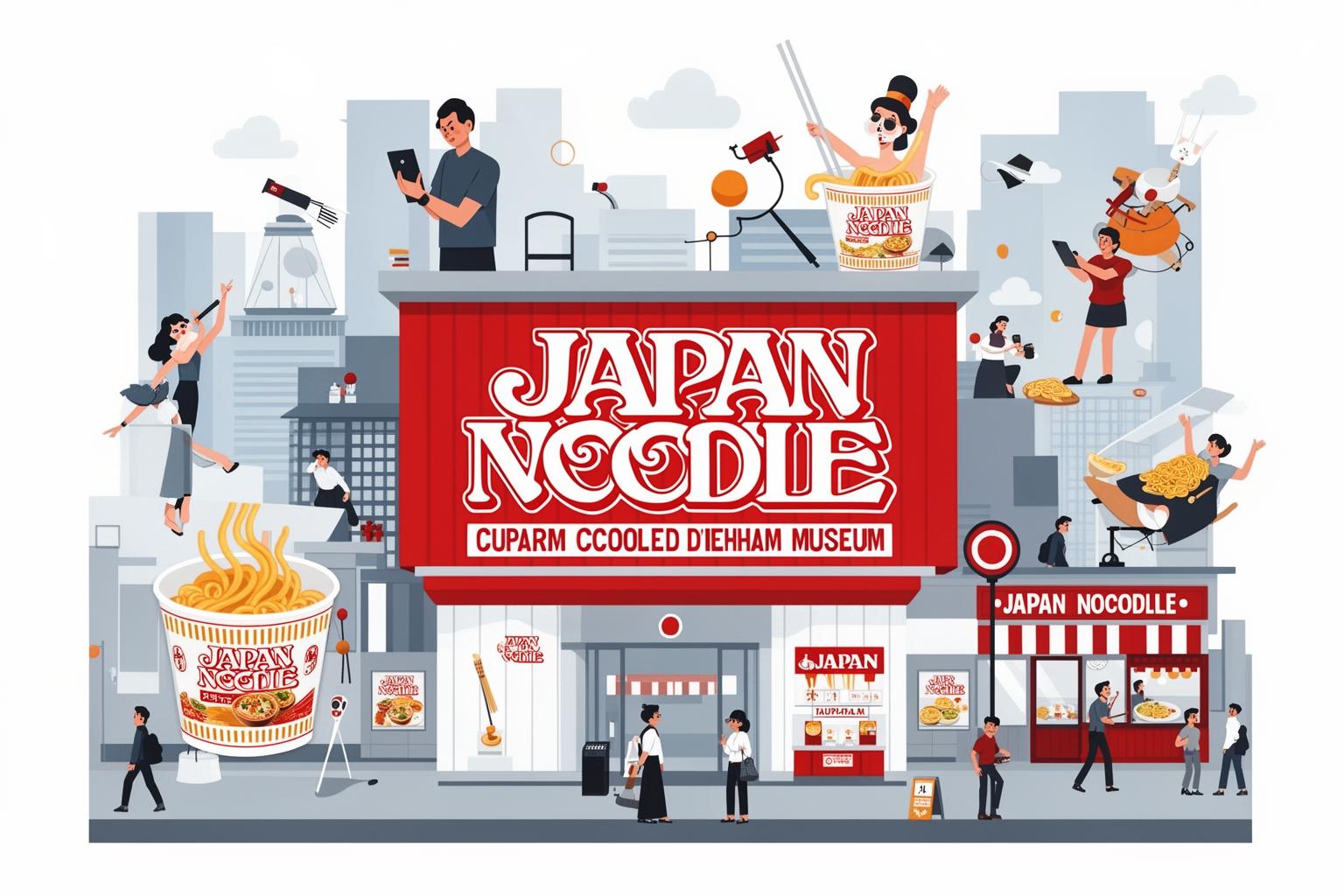
Now, let’s return to the main attraction: the My CUPNOODLES Factory. For a few hundred yen, you receive a blank canvas—an empty, pristine cup. This is your moment to become the creator. Sitting at a small, colorful table, you design your own packaging. Then, you proceed to the factory line, a miniature replica of the real production line, where you select one soup base from four options and four toppings from a dozen choices. You watch as your creation is sealed, shrink-wrapped, and finally placed inside that futuristic air-cushion bag. The experience feels personal, unique, and deeply satisfying. Yet, what’s truly unfolding here is a masterclass in what might be called “controlled creativity.”
This experience brilliantly exemplifies a common pattern in Japanese consumer culture. You are given the impression of complete creative freedom, but within a carefully constructed and limited framework. This isn’t a criticism but rather the essence of its brilliance. You cannot fail. You won’t end up with an unpleasant-tasting cup of noodles. The flavor bases are formulated to complement all toppings. Portion sizes are fixed. The process is standardized. The system is designed to guarantee a successful, positive outcome for every participant, every time.
The idea of creativity within a defined structure, or a ‘form’ (kata 型), is deeply rooted in Japanese culture. Consider traditional arts: in ikebana (flower arranging), flowers aren’t placed randomly; you learn specific schools with established rules on angles, spacing, and balance. Creativity is expressed through personal interpretation within that structure. In martial arts, you practice kata—pre-set sequences of movements—repeatedly until perfect. The My CUPNOODLES Factory is, in its own pop-culture fashion, a form of kata. The steps are fixed: Design, Choose, Seal. Options are limited. Your creativity is channeled only into the one aspect that doesn’t influence the core product: decorating the cup. It’s a safe space for self-expression.
This method accomplishes two things at once. First, it makes the experience accessible to everyone. Whether you’re five or eighty, you can participate and feel a sense of achievement. There’s no skill barrier. Second, it’s remarkably efficient from a business standpoint. It’s mass personalization on a production line. The illusion of bespoke creation is delivered at the speed and scale of mass production. This philosophy explains much about Japanese consumer products, from bento boxes with predetermined side dishes to customizable planners filled with curated stickers and inserts. It’s not about unlimited freedom; it’s about offering satisfying, guided options that empower consumers without overwhelming them or disrupting the system. It’s the joy of personalization, perfectly packaged and systematized.
The ‘Kawaii’ Catalyst: Making Corporate History Adorable
Let’s talk about the vibe. The entire museum is relentlessly cheerful. Primary colors, cartoonish fonts, and the omnipresent Hiyoko-chan (the brand’s little yellow chick mascot)—it all screams kawaii, or ‘cute.’ This is more than mere decoration. The use of cuteness is a deliberate and powerful cultural tool in Japan, and the museum is a prime example of its role.
In many Western contexts, ‘cute’ is often reserved for children’s things. In Japan, kawaii is a broader, more influential aesthetic. It acts as a social lubricant. Cuteness makes things approachable, disarming, and non-threatening. A complex industrial process? Make it cute. A serious safety warning? Illustrate it with a cartoon animal. A corporate history museum dedicated to a multi-billion-dollar food product born from post-war hardship? Make it super cute. The kawaii aesthetic serves as an emotional gateway. It removes the sterile, intimidating feel of a “corporate museum” and reframes it as a “fun day out.” It turns an industrial philosophy lesson into a playground. Sitting down with felt-tip pens to doodle on a cup is a deliberately childlike activity designed to dissolve adult inhibitions and evoke nostalgic, uncomplicated joy. This blending of a serious, world-changing invention with a light, playful, and cute presentation is quintessentially modern Japan. It allows gravity and whimsy to coexist. The museum sees no contradiction between honoring Momofuku Ando’s solemn commitment to end world hunger and having visitors draw a smiley face on a cup. Both are valid parts of the same story.
The Final Flourish: Why the Packaging Is the Point
Your personalized cup noodle is complete. It’s sealed with a foil lid and shrink-wrapped. But the experience isn’t finished. The final step is arguably the most theatrical and culturally meaningful. You take your cup to a station where you insert it into a plastic bag; with a whoosh of air, the bag inflates into a taut, pillowy cushion around your creation, complete with a red string for carrying over your shoulder. This is the ‘Air Package,’ and it’s far more than a gimmick to protect your cup during the trip home.
This last step acknowledges the deep cultural significance of packaging (hōsō 包装) in Japan. Packaging is never just a container; it is an integral part of the product and a reflection of the giver’s care and thoughtfulness. Think of the elaborate wrapping of department store gifts or the beautiful boxes encasing even simple sweets. Wrapping and presentation are forms of communication. The Air Package excel at this. It is functional, yes, but its primary purpose is psychological. It transforms your 500-yen cup of noodles from a disposable snack into a precious object. It becomes a trophy. You’re not just carrying food; you’re carrying a treasured souvenir—a tangible memory of your creative experience. This clever final touch elevates the entire process, making you proud of what you made and ensuring you carry that positive brand association all the way home. It perfectly embodies the Japanese approach to service and experience design: every single step, even the very last, is an opportunity to add value, delight, and a touch of ceremony.
A PR Stunt with a Soul: The Real Takeaway
So, after all this, is the Cup Noodles Museum simply an exceptionally sophisticated and effective piece of corporate propaganda? Yes, absolutely it is. Let’s be honest about it. It’s a shrine built by Nissin Foods to honor its own invention. Its purpose is to create a strong, positive, and lasting emotional connection between you and their brand. Every element, from the laudatory films about Momofuku Ando to the gift shop offering Hiyoko-chan merchandise, is designed to reinforce that bond.
However, dismissing it as only that is to be cynically overlooking the bigger picture. The museum succeeds—and is genuinely cherished by both the Japanese public and tourists—because it’s not merely selling a product. It’s telling a story that resonates with deeply rooted Japanese cultural values. It celebrates a post-war success story, a tangible example of the innovative spirit (kufu) and relentless refinement (kaizen) that revived the nation’s economy. It provides a form of satisfying, structured creativity that feels both playful and productive. It uses the charming power of kawaii to make its corporate narrative approachable and enjoyable. And it displays obsessive attention to detail, down to the packaging, signaling quality and care.
The Cup Noodles Museum is not worth visiting just to take home a quirky-flavored souvenir. It’s worth visiting because it’s one of the most accessible and entertaining classrooms on modern Japanese culture you could ever find. You enter thinking you’re just there to play with your food. You leave with your own personalized noodle cup, yes, but also with a much deeper understanding of the historical struggles and cultural philosophies that have shaped Japan’s approach to innovation, business, and even enjoyment. The real flavor you take away is the sudden realization that in Japan, the story behind a simple cup of instant noodles can be as complex, savory, and fulfilling as the soup itself.