Yo, what’s up. It’s Hiroshi. So, you’ve seen the videos, right? The TikToks, the travel vlogs. Rows of gleaming plushies, people lining up for hours, the whole nine yards. You’re probably thinking, “Okay, it’s a store for a video game, I get it.” But then you actually go, especially during a new game drop like for Scarlet & Violet or the next big thing, and the vibe is… off. It’s not what you expect. It’s not loud. It’s not a party. It’s quiet, intense, and feels weirdly… stuck in time. Like you just time-traveled back to 2012, and everyone’s clutching a Nintendo 3DS, even though they’re holding Switches. The air is thick with this earnest, almost sacred energy. You look around and wonder, “Why is this so serious? Why does it feel like a ritual instead of a retail experience?” That’s the real question, isn’t it? It’s a culture shock hiding in plain sight, wrapped in a Pikachu mascot. This isn’t just about hype culture or consumerism, though that’s part of it. What you’re sensing is a complex web of social rules, historical baggage, and a uniquely Japanese way of engaging with fiction that turns a simple store into something more. It’s a physical manifestation of a digital world, governed by unwritten rules that prioritize harmony over hype. To get it, you have to look past the merch and decode the atmosphere. This is the deep dive on why a Pokémon Center launch feels less like a product release and more like a modern-day pilgrimage. No cap, it’s a whole different level of fandom, and we’re about to unpack why.
This unique atmosphere is part of a broader cultural tendency to preserve specific eras of digital nostalgia, a phenomenon explored in our article on why Japan can’t let go of the Game Boy glow.
Not Just a Store: The Pokémon Center as a “Sacred Space”
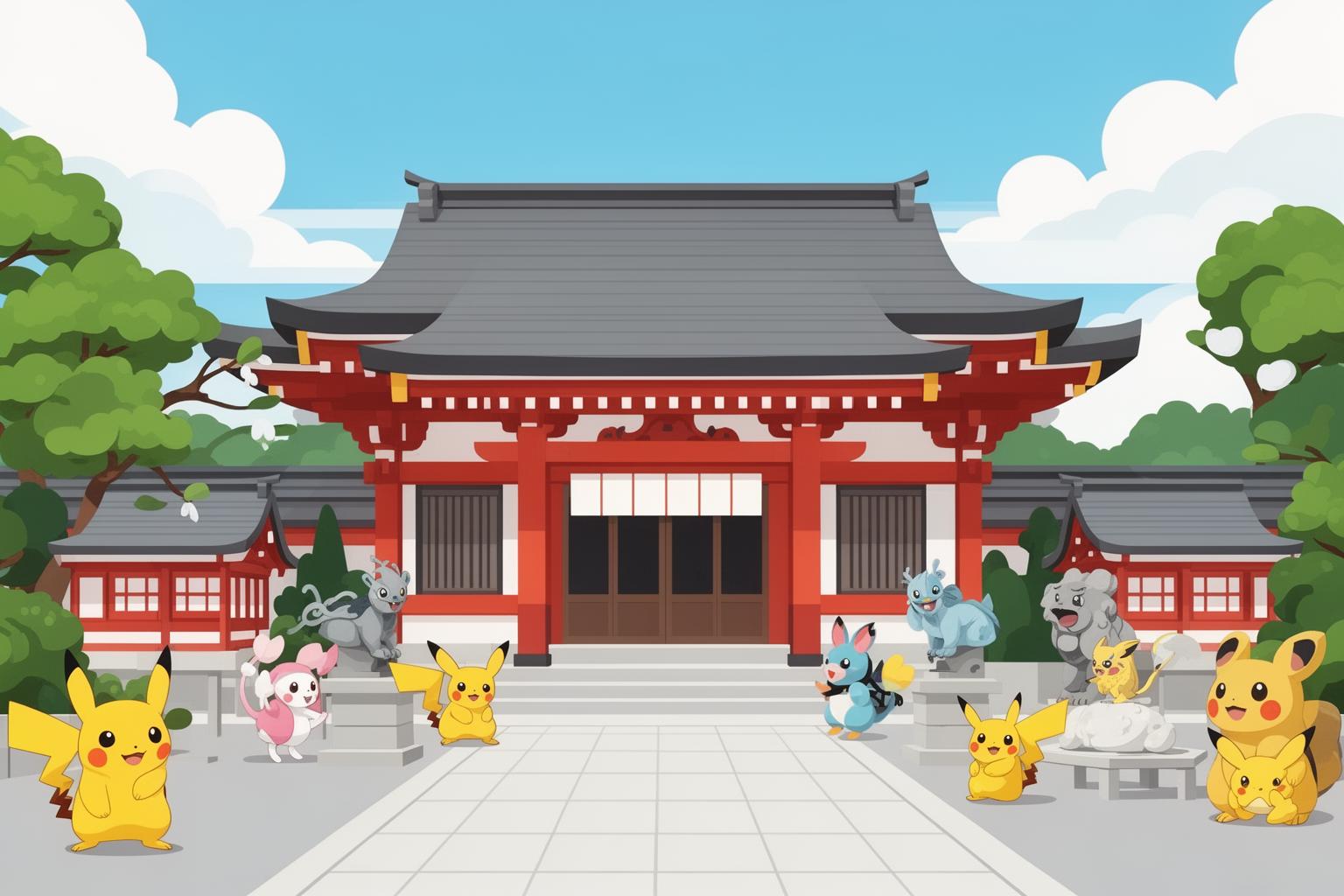
The first thing you need to understand is that on launch day, the Pokémon Center stops being a typical retail space. It transforms into something else entirely. Think of it less as a GameStop and more like temple grounds during a festival. People aren’t simply there to make a purchase; they are there to participate in an event. This shift in purpose shapes the entire social dynamic inside and begins even before you step through the door.
The Unspoken Rules of the Queue
The line. Ah, the famous Japanese queue. You’ve seen photos of it—perfectly straight, eerily quiet. From the outside, it looks like a quintessential Japan stereotype: the land of politeness and order. But it goes much deeper than mere politeness. This orderly behavior is the physical manifestation of a core cultural concept: meiwaku (迷惑).
Meiwaku doesn’t have an exact English equivalent. The closest translations are “bother,” “nuisance,” or “annoyance,” but it carries a much more weighty meaning. The fundamental aim of public life in Japan is to avoid causing meiwaku to others. It is a social contract that keeps a high-density society running smoothly. It explains why people don’t talk on their phones on trains, why they line up so precisely, and why they take their trash home with them. It’s a constant, subtle awareness of how you affect those around you.
In the Pokémon Center queue, meiwaku is the underlying operating system in everyone’s mind. Talking loudly on your phone? Meiwaku. Saving a spot for a large group of friends arriving later? Big meiwaku. Spreading your belongings out and taking up too much space? Again, meiwaku. The silence isn’t awkward; it’s a shared expression of respect. Everyone in line has the same goal: to get the new game or limited-edition plushie. They recognize that the most efficient and pleasant way to reach this goal for all is to minimize individual disruptions. It’s a silent, mutual agreement to maintain group harmony. Personal excitement comes second to the smooth flow of the collective experience. This is a major contrast to many Western cultures, where individuality and self-expression often take precedence. At a Western game launch, you might expect cheering, loud chatter, and a party-like vibe. Here, the energy is internalized. The excitement remains, but it simmers quietly within each person.
Then there are the staff. They aren’t merely retail workers; they are crowd control specialists, executing their roles with the seriousness of air traffic controllers. They hold up signs, speak in calm, measured tones, and use highly polite Japanese (keigo). They bow. They guide you with white-gloved hands. This is not just for appearances. Their professionalism elevates the entire event, signaling to everyone present: “This is an important and orderly occasion. We will treat this property and event with respect, and we expect you to do the same.” They are the guardians of the store’s atmosphere, ensuring the seamless transition from the chaotic outside world into the controlled inner sanctum of the Pokémon Center. Their formality underscores that this is more than shopping; it’s a formal event requiring appropriate decorum.
The “Atmosphere” Check: Reading the Air in Fandom
This brings us to the next vital concept, a refined level of social navigation in Japan: kuuki wo yomu (空気を読む), literally “reading the air.” It’s the subtle, instinctive skill of perceiving the social situation and adapting your behavior without anyone having to say a word. It’s about sensing the unspoken mood, the implicit rules, and the overall vibe. Failing to do this—being kuuki yomenai (or “KY”)—is a harsh social judgment, implying you’re dense, clueless, or indifferent to group harmony.
The Pokémon Center on launch day is a masterclass in kuuki wo yomu. Everyone reads the air with remarkable precision. This “air” blends reverent excitement, quiet anticipation, and a shared understanding of unspoken norms. You don’t loudly boast about the shiny Pokémon you caught, nor shout critiques of the game’s new mechanics while waiting in line. You express your excitement softly to the friend beside you or through your carefully decorated ita-bag adorned with pins of your favorite character. The expression is present but channeled into forms that don’t disrupt the collective kuuki.
This heavily contributes to the “awkward” or “serious” vibe outsiders might sense. It’s not a lack of joy, but a different way of experiencing and expressing it. The joy is communal, not performative. It lives in the shared silence, the mutual understanding that everyone here gets it. You’re all part of the same tribe, taking part in the same ritual. This shared context is so powerful that overt communication isn’t needed. You can stand silently in line for two hours beside a stranger and still feel a bond. You’re both there for the love of the game, and that alone is enough. This quiet, shared passion creates a specific nostalgic warmth, reminiscent of an older, more analog sense of community—one built on physical presence and mutual understanding rather than loud, digital affirmation.
The 2010s Aesthetic: Why Nostalgia is a Product
That sensation of being caught in a time warp is no coincidence. The entire experience is deliberately crafted, whether consciously or not, to evoke a very particular kind of nostalgia rooted in the late 2000s and early 2010s. This period marked the golden age of portable, social gaming in Japan, and the Pokémon Center serves as a living museum preserving the emotions tied to that era. It’s not only about the games themselves but also about how they were played and the culture that grew around them.
The Endurance of Physical Media and Merchandise
In an era dominated by digital downloads and cloud gaming, Japan’s fixation on physical media can seem puzzling. People still queue up to buy a physical cartridge for a game they could easily download from home. Why? Because the physical item holds significance. It’s a tangible piece of the world you cherish. It stands as proof of purchase, a trophy, and a part of a collection.
This collector’s mentality is deeply embedded in Japanese culture. It’s evident in the tradition of gacha (capsule toys), where the excitement of a random pull and the urge to complete a set are strong drivers. It’s also seen in the practice of collecting goshuin, beautifully calligraphed stamps obtained at temples and shrines as a record of one’s pilgrimage. Collecting is a ritual in itself—it’s about the search, the acquisition, and the gratification of curating a personal anthology of your passions.
The Pokémon Center epitomizes this mindset. The sheer amount and diversity of merchandise is astonishing. It’s not just about Pikachu and Charizard. The offerings include plushies, acrylic stands, clear files, hand towels, and even cookies featuring obscure, middle-evolution Pokémon that might have appeared for only a brief moment in a single anime episode. This isn’t an indiscriminate marketing tactic; it’s a strategic effort to cater to the deep, specific love fans hold for their favorite monsters. The aim is to ensure that no matter how niche your favorite Pokémon is, there’s a piece of physical merchandise for you to claim and prove your devotion.
This is where the concept of gentei (限定), or “limited edition,” becomes significant. Gentei is one of the most potent terms in Japanese marketing. “Pokémon Center Tokyo DX Exclusive,” “Launch Day Commemorative Item,” “Available Only This Weekend”—these labels turn a simple product into a time-sensitive mission. It’s not merely a keychain; it’s a keychain that confirms your presence. You made the pilgrimage. You took part in the event. The gentei item becomes a tangible anchor for the memory of that experience. It acts as a status symbol within the community, a subtle nod to fellow fans that says, “I was there for the Sun & Moon launch, too.” This emphasis on exclusive, physical goods underscores the relevance of the physical location. You can’t replicate this experience by clicking “download” at home. You have to show up.
The “Analog” Digital Experience: StreetPass and its Legacy
To truly grasp the 2010s atmosphere, we need to discuss the Nintendo 3DS and its standout feature: StreetPass. For those unfamiliar, StreetPass was a passive connectivity system. You’d put your 3DS in sleep mode, carry it around, and whenever you came near someone else with a 3DS, your devices would automatically exchange data in the background—your Mii avatars would visit each other’s plazas, you’d collect puzzle pieces, and gain bonuses in various games.
StreetPass was a phenomenon in Japan unlike anywhere else. The reason is straightforward: population density and an exceptional public transit network. Millions of people pack into cities like Tokyo and Osaka, all riding trains. A daily commute could yield dozens, sometimes hundreds, of StreetPass interactions. It gamified public space, transforming the crowded anonymity of the subway into a silent, digital community. When you saw the little green light blinking on your 3DS, you felt a small thrill—an unseen connection made. You didn’t know the person, but you knew they were a fellow gamer, a fellow traveler sharing this blended digital-physical world.
Pokémon games on the DS and 3DS integrated these features seamlessly. You could trade Pokémon, battle, and swap items wirelessly with nearby players. The Pokémon Center served as a hyperactive hub for this activity. On launch weekends, the airwaves would buzz with data. TheStreetPass chime would ring continuously. It was a physical hotspot for a digital network.
Although the Switch lacks a direct StreetPass equivalent, the feeling it inspired remains. Gathering in a physical space for a digital event continues this tradition. People bring their Switches to the Pokémon Center, engaging in local trades and Tera Raid Battles. They recreate that fleeting, anonymous community StreetPass once fostered. Surrounded by fellow enthusiasts, all connected in the same virtual world while sharing the same physical space, one experiences the essence of 2010s nostalgia. It recalls a time when digital community felt local and tangible, before social media became a vast, often impersonal forum. The Pokémon Center on launch day is a reserved, protected place where that older, quieter form of community still thrives.
The “Worldview” is Everything: Understanding Sekai-kan
So we have the social dynamics and nostalgic technology. But what brings everything together? What creates such a cohesive and immersive experience? The key lies in a concept essential to understanding Japanese pop culture: sekai-kan (世界観).
While sekai-kan literally means “worldview,” in the realms of anime, manga, and games, it refers to something more precise. It encompasses the complete aesthetic, lore, and emotional tone of a fictional universe. It includes the internal logic, art style, music, character relationships—everything that makes the world feel consistent and authentic. For Japanese creators and fans, preserving the sekai-kan is crucial. It’s about maintaining the integrity of this immersive bubble.
Preserving the Immersive Bubble
The Pokémon Center is a prime example of applied sekai-kan. From the moment you step inside, you’re meant to feel transported from our world into the Pokémon universe. The background music features a continuous loop of iconic game soundtracks. Giant screens display animated clips rather than commercials. Staff might greet you with “Alola!” or another region-specific phrase. The floor-to-ceiling statues of Legendary Pokémon serve not just as decoration but as monumental symbols reinforcing the world’s scale and grandeur.
Every element is carefully designed to keep the magic intact. You won’t see third-party ads inside, nor hear pop music playing over the speakers. The branding is meticulously—and almost obsessively—consistent. To a Western observer, this might seem like extreme brand control, and it is, but its purpose is not purely commercial. It’s an act of respect: respect for the world Game Freak created, and respect for the fans who have poured so much time and emotion into it.
This dedication is what makes the experience feel so genuine. There is no irony here, no knowing nod to the audience. The Pokémon Center operates with the sincere belief that, while inside, the Pokémon world is real and deserves to be treated with reverence. Any break in the illusion—any intrusion of the ordinary outside world—would shatter this respect for the sekai-kan. This contrasts sharply with some Western fan spaces, which often embrace parody, memes, and a more self-aware, ironic take on the source material. In Japan, especially within official settings, the dominant approach is one of sincere, unambiguous appreciation. That earnestness is the essence.
The Fan as a “Resident” of the World
This steadfast devotion to sekai-kan fundamentally alters how fans relate to the franchise. Fans aren’t simply consumers; they see themselves as temporary residents or visitors within that world. They develop a deep, personal connection to its locations and characters.
Viewed this way, the entire launch day experience becomes clearer. The long lines aren’t just about purchasing a game—they represent a pilgrimage to a gateway where the Pokémon world intersects with our own. Buying a plush isn’t merely a transaction; it’s akin to acquiring a relic or artifact from this beloved realm. Staff aren’t mere salespeople; they act as gatekeepers, the NPCs of a real-life Pokémon Center, guiding your journey.
This explains the almost reverent atmosphere. Outsiders might wonder, “Why do so many adults take a children’s game so seriously?” but they miss the cultural context. Within the Pokémon Center, everyone agrees to suspend disbelief collectively. They accept that, for these few hours, the world is real, important, and deserving of their respect and quiet devotion. It’s this shared, voluntary immersion that creates the place’s distinctive and powerful ambiance. You’re not just inside a store in Ikebukuro; for a fleeting moment, you’re a Pokémon Trainer standing in a real-life Pokémon Center, and that feeling is truly magical—and worth the wait.
The Economic and Social Backbone of Otaku Culture
Alright, so we’ve outlined the social norms and the artistic philosophy. But let’s be honest—at the end of the day, The Pokémon Company is a business, and the Pokémon Center exists to generate profit. A substantial profit. However, the way it achieves this is distinctly Japanese and deeply connected to the structure of modern fandom, broadly known as otaku culture.
The Influence of the “Oshi” and Dedicated Spending
To grasp the economics, you need to understand the concept of the oshi (推し). The word literally derives from the verb “to push” or “to endorse.” Your oshi is your number one, your absolute favorite character, idol, or—in this case—Pokémon, whom you wholeheartedly support. And “support” is the crucial term here.
Having an oshi is a far more active and engaged state than merely “having a favorite.” In otaku culture, supporting your oshi implies a sense of responsibility to help them succeed, primarily through financial means. This concept originated in idol fandom, where fans purchase multiple copies of a CD to boost its chart ranking and demonstrate the depth of their devotion. This behavior has since permeated every corner of anime and game fandom.
This is the economic engine behind the Pokémon Center’s merchandise strategy. The business model doesn’t focus on every visitor buying one Pikachu plush; rather, it depends on the deep, dedicated spending of a core fanbase who will purchase every single item featuring their oshi. That’s why the variety is so extensive. They know there’s a fan whose oshi is, for example, Wooloo, and that person will buy the Wooloo plush, the Wooloo keychain, the Wooloo socks, and the Wooloo ballpoint pen. The goal is to provide devoted fans with as many opportunities as possible to spend money in support of their chosen favorite.
When you see someone at the Pokémon Center carrying an ita-bag—a backpack or tote covered in clear windows to showcase a vast collection of pins, badges, and keychains—you’re witnessing a public declaration of their oshi. It’s a shrine to their favorite. This isn’t just a fashion choice; it’s a core part of their identity within the fandom. It signals loyalty and dedication. The Pokémon Center serves both as the supplier for these shrines and the temple where they can be proudly displayed among fellow enthusiasts. The economic model and cultural expression are intimately linked.
From Social Outcast to Economic Powerhouse: A Brief History of “Otaku”
Discussing this requires some background on the term otaku (オタク) itself. Nowadays, the term is often used internationally simply to mean “a big fan of anime/manga.” But in Japan, its history is far more complex and, for a long time, carried a distinctly negative connotation.
The term emerged in the 1980s as a pejorative label for obsessive fans who were viewed as socially awkward, reclusive, and strange. A moral panic in 1989 cemented this negative image in the public mind, and for decades, being called an otaku was a source of shame. Interests like anime, manga, and video games were private pursuits. Spaces for these hobbies were often small, rundown, and tucked away in backstreets of places like Akihabara.
But then, a shift happened. Beginning in the late ’90s and exploding in the 2000s, anime and manga became some of Japan’s biggest and most influential cultural exports. The world embraced this culture. Domestically, the economic power of this once-maligned group became undeniable. The otaku market was worth billions. And with economic might came cultural recognition.
The modern Pokémon Center is a direct outcome of this societal transformation. It’s clean, bright, family-friendly, and situated in prime locations inside huge, mainstream shopping malls like Sunshine City in Ikebukuro. It stands in complete contrast to the old, hidden-away hobby shops. It’s a corporate-approved, publicly celebrated space for a passion that was once pushed underground.
This history adds an essential layer of meaning to the atmosphere. The quiet, respectful, and orderly environment isn’t just about meiwaku; it also reflects a collective desire to protect this space. For veteran fans, a place like this would have been unimaginable 20 or 30 years ago. The earnestness and seriousness partly express a profound gratitude for having a legitimate, welcoming place to celebrate their hobby without shame. They are determined not to ruin it. They aim to prove that their community deserves this beautiful, mainstream space. This historical context infuses the entire experience with a subtle sense of gratitude, contributing to its unique, almost reverential vibe.
So, Why Does It Feel So… Different? The Final Vibe Check
Let’s bring it all together. You step into the Pokémon Center on the day a new game is released. It’s crowded yet quiet. It’s exciting but orderly. It feels modern and fresh, yet deeply, curiously nostalgic. Why?
It’s not just one thing. It’s the product of various cultural forces—social norms, historical context, consumer habits, and artistic philosophies—all converging and crystallizing into a single, unified experience.
It feels different because of meiwaku. The instinct to avoid disturbing others turns what could be a chaotic crowd into a silent, harmonious line, transforming a potentially stressful moment into a calm, meditative one.
It feels different because of kuuki wo yomu. The shared skill of “reading the air” fosters a powerful, unspoken sense of community. The excitement is internalized and shown in subtle ways, creating an atmosphere of intimate, shared passion rather than loud, performative fandom.
It feels different because of the focus on physical, gentei items and the legacy of StreetPass. This roots the digital hobby in the physical world, making the act of showing up in person meaningful and turning the store into a hub for a tangible, local community.
It feels different because of the deep respect for sekai-kan. The careful preservation of the Pokémon world’s immersive bubble elevates the store from a simple retail space to a liminal place—where fiction and reality merge, demanding a certain reverence.
And it feels different because of the economic and cultural systems of oshi and otaku culture. It’s a space built for and by a community that has fought for its legitimacy, where spending money is an act of devotion and the entire experience celebrates a once-marginalized passion.
The 2010s Pokémon Center vibe isn’t just a clever marketing tactic meant to evoke retro feelings. It’s the natural outcome of a uniquely Japanese approach to community, commerce, and culture. It’s a throwback to a more analog way of being a fan, one that values physical presence, collective harmony, and sincere devotion over digital noise. It can seem intense, unusual, and even somewhat exclusive from the outside. But once you grasp the unwritten rules and cultural source code, you can appreciate it for what it is: a beautifully orchestrated ritual for the modern age. And honestly? It’s giving main character energy to an entire generation of fans. And that’s the tea.