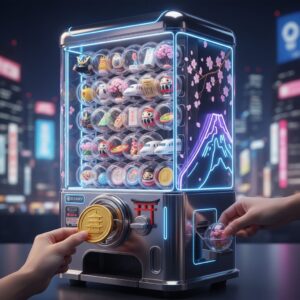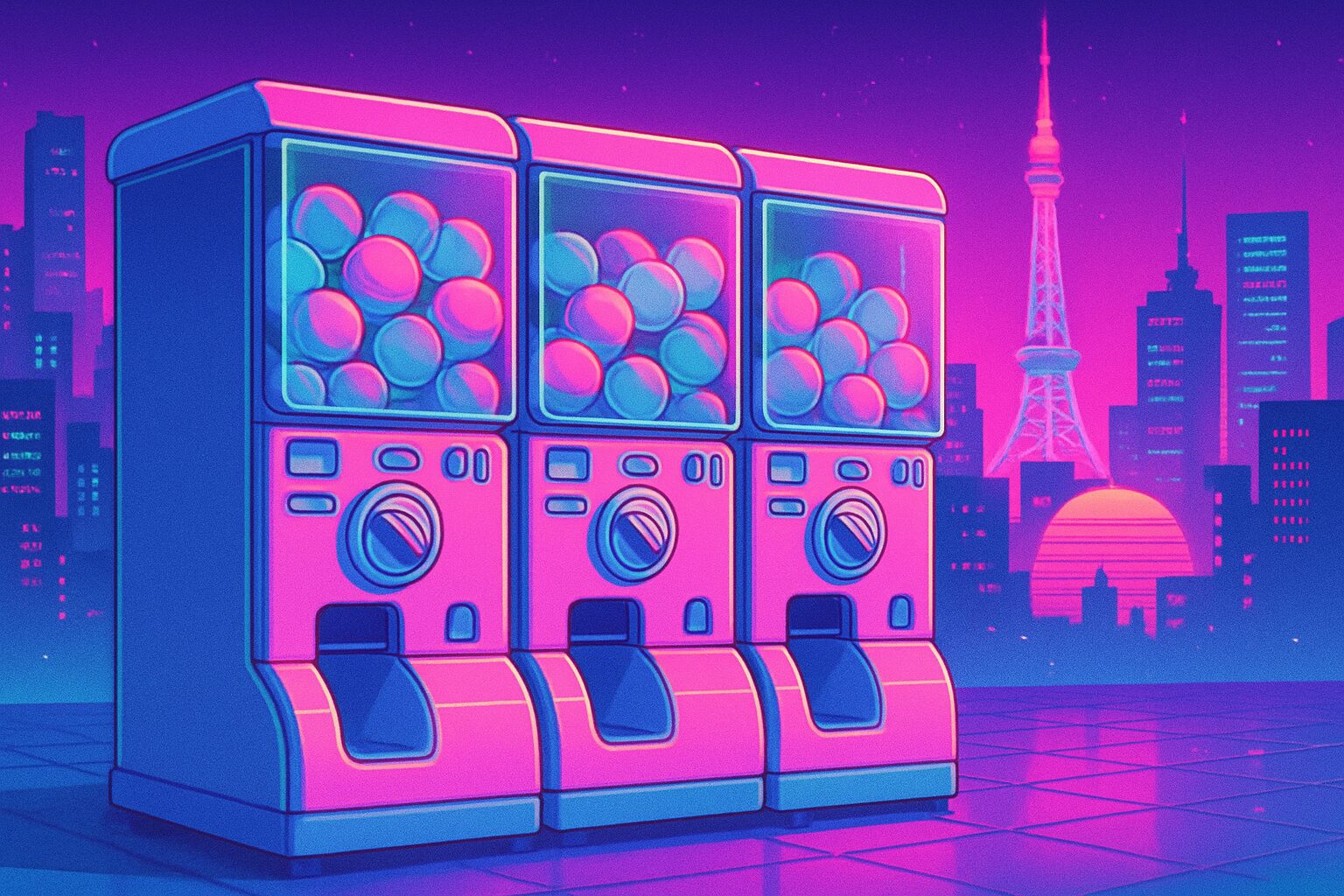
Yo, what’s the vibe? Let’s talk about a feeling. It’s that electric buzz you get when you’re on the verge of something epic. For a generation, it was the thrill of stumbling upon a rare Pokémon in the tall grass, the screen flashing, the battle music kicking in. Your heart does this little flip-flop. Now, imagine that exact feeling, but instead of a digital creature, it’s a tangible treasure, a perfectly crafted miniature masterpiece, locked away inside a little plastic sphere. Welcome, my friend, to the absolutely addicting universe of gachapon. This isn’t just about getting a toy from a vending machine; it’s a full-blown cultural phenomenon, a treasure hunt that’s happening on basically every street corner in Japan. It’s a quest fueled by a hundred-yen coin and a whole lot of hope. The sound itself is iconic, a language understood by every kid and adult here: the heavy gacha-gacha of the crank turning, followed by the satisfying pon as your destiny drops into the collection tray. You’re not just buying a product; you’re buying a chance, a moment of pure, unadulterated suspense. And the epicenter of this thrilling hunt, the place where gachapon dreams are made and crushed and made again, is undoubtedly Tokyo’s electric heart, Akihabara. It’s a concrete jungle where walls aren’t just walls; they’re mosaics of gachapon machines, each one a portal to a different, miniature world. This is your safari, and the hunt is on.
This nostalgic thrill for collectible treasures echoes the magic of exploring Japan’s retro candy shops, where every corner holds a potential surprise.
The Gachapon Glow-Up: From Sidewalk Distraction to Collector’s Paradise
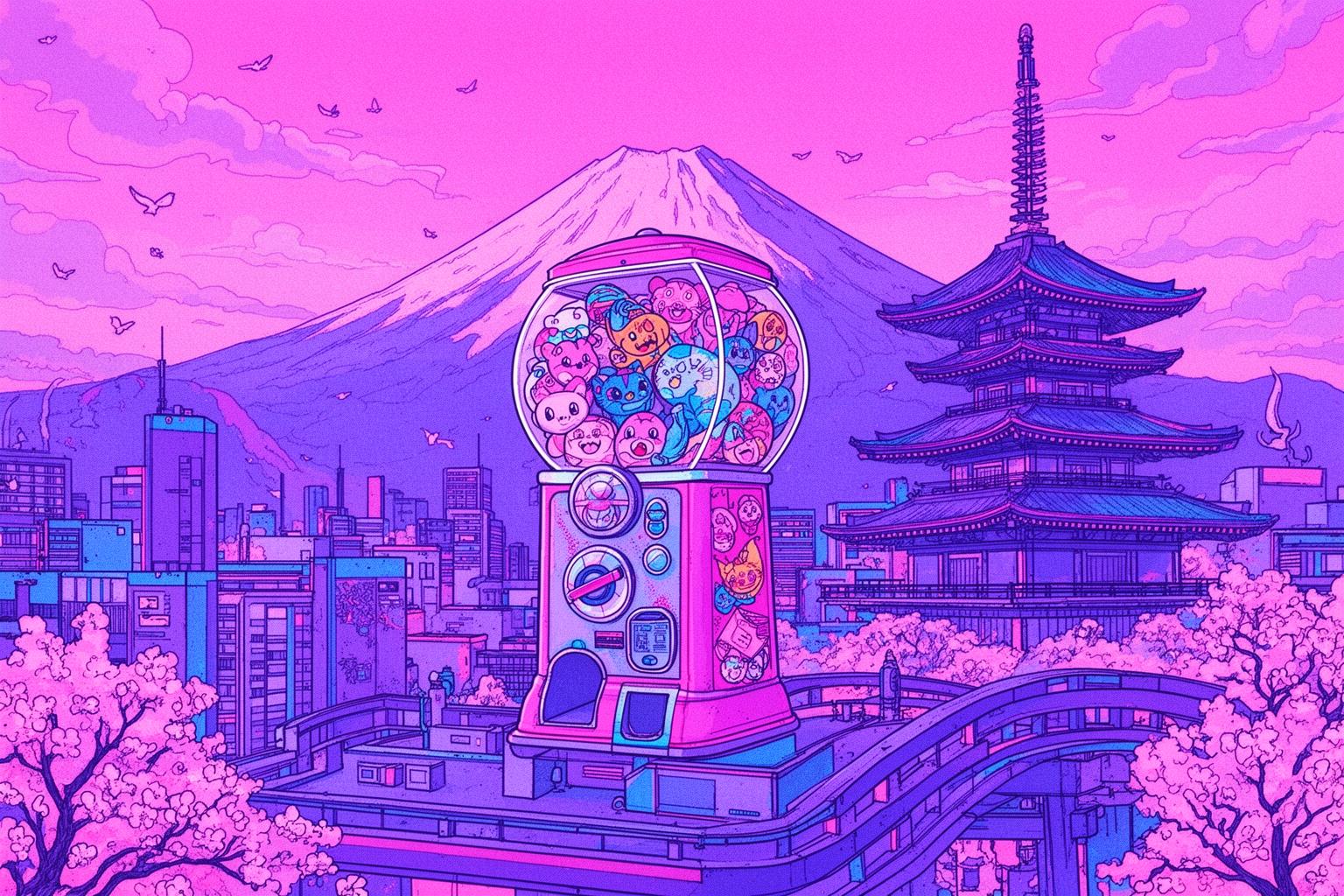
Before you plunge headfirst into the world of plastic orbs, you need to appreciate the history behind it. The entire gachapon scene didn’t just appear suddenly. It has deep roots, a true glow-up story. Imagine it beginning in the 1960s, a straightforward idea brought over from the U.S. but given a distinctly Japanese flair. At first, these were simple machines stationed outside candy stores, handing out cheap plastic toys to kids with a few spare coins. But this is Japan—a culture that can transform anything into an art form—and gachapon was no exception. Throughout the 80s and 90s, coinciding with the anime and manga boom, the quality soared. The toys grew more elaborate, the franchises more iconic. Suddenly, it wasn’t just kids who were interested. Adults, driven by nostalgia and the rising otaku culture, began viewing them as genuine collectibles.
The term itself, gachapon or sometimes gashapon, is pure sound poetry, an ideal example of Japanese onomatopoeia. Gacha or gasha mimics the mechanical crank’s noise—the clunky, resistant sound your hand makes as it turns the mechanism. And pon is the satisfying final thud of the capsule dropping into the tray. It’s the sound of possibility coming to life. The shift from simple pastime to collector’s haven is all about the astonishing, mind-boggling variety. We’re not just talking about the newest anime characters, though there are thousands of those. We mean everything imaginable—and then a thousand things you never could have. Hyper-realistic models of deep-sea isopods? Check. Tiny, exquisitely detailed replicas of mid-century modern furniture? Absolutely. A series of cats wearing quirky fruit hats? Naturally. Miniature Buddhist statues, tiny public restroom signs, historically accurate samurai helmets, photorealistic bread models—the list goes on endlessly, growing stranger and more wonderful the deeper you explore. This wild diversity is the culture’s lifeblood. It guarantees there’s a gachapon set for every single person, regardless of how niche their tastes may be. The core mechanic, however, is what turns it into a real quest. Most series feature five to eight different items. You drop your coins in, turn the crank, but you never know which item you’ll get. It’s a lottery. And within each set, there’s almost always a secret “rare” piece—the shiny Pokémon of the gachapon universe. That’s the hook. The urge to complete the set, the burning need to find that one elusive item, is a powerful drive. It transforms a simple purchase into a game of chance, a challenge against odds. It’s why you’ll see grown adults in business suits, quietly dropping coin after coin into the machine, their faces locked in intense focus. They’re not just buying toys; they’re chasing the thrill.
Welcome to the Arena: Navigating the Gachapon Jungle of Akihabara
Entering a dedicated gachapon store for the first time is a full sensory onslaught in the best way imaginable. Picture stepping into a library where every book has been replaced by towering rows of gachapon machines—that’s the vibe. The air buzzes with a unique soundtrack: the steady, rhythmic clack-clack-clack of cranks turning, the gentle rattle of plastic capsules, and the collective sighs of excitement and groans of disappointment. The visual impact is even more overwhelming. Walls, from floor to ceiling, are lined with these machines, each adorned with vibrant posters showcasing the treasures inside. It’s a kaleidoscope of colors and characters, a vivid snapshot of the entire spectrum of Japanese pop culture. The atmosphere is charged, almost reverential. Visitors move intentionally, scanning the walls like art critics in a gallery, searching for that one particular series that resonates with them. This isn’t a chaotic arcade—it’s a hunter’s paradise.
While gachapon machines can be found everywhere in Japan—airports, train stations, supermarkets, even ramen shops—there are sacred places that serve as meccas for serious collectors. Akihabara, known as Tokyo’s Electric Town, is the spiritual heart. The iconic Akihabara Gachapon Hall is a must-see. It’s not glamorous; it’s somewhat cramped, a bit gritty, and packed wall-to-wall with machines. This original spot feels like it’s run by true enthusiasts, for true enthusiasts. The density of machines is staggering, with over 500 crammed into a modest space. They offer the latest releases along with older, rare finds. The turnover is rapid, so the selection is always fresh.
For a completely different experience, head to Ikebukuro and visit the Gashapon Department Store inside the Sunshine City complex. This venue holds the Guinness World Record for the most capsule toy machines in one place. We’re talking over 3,000 machines. It’s the polar opposite of Gachapon Hall’s cozy chaos—bright, spacious, sleek, and meticulously organized. It feels like an Apple Store dedicated to gachapon. Wide aisles, clearly designated zones for different genres, and an overall polished, family-friendly vibe. It’s a fantastic spot to get a sense of the vast scale of today’s gachapon industry.
But the hunt doesn’t end in dedicated stores. Don’t overlook major electronics retailers like Yodobashi Camera or Bic Camera. These multi-level giants usually feature an entire floor or massive sections devoted to toys and hobbies, where you’ll find a gachapon wonderland. The Yodobashi in Akihabara, for example, boasts a sprawling gacha zone that rivals many specialty shops. It’s an excellent one-stop shop if you’re also after other otaku goods. Another great and convenient location is Tokyo Gashapon Street, tucked away in the labyrinthine underground mall beneath Tokyo Station. This long corridor lined with hundreds of machines is ideal for killing time before a train departure. It tends to focus on popular character merchandise, perfect if you’re chasing items from well-known anime or gaming franchises.
Using the machines is incredibly simple, but there’s a ritual to it. First, you need coins. Most machines accept 100-yen coins, with prices from 200 yen for basic items up to 500 yen for premium, highly detailed figures. Some newer deluxe machines can even cost as much as 1,500 yen and require a special token system. Your first task is to find the change machine, which is always available in any sizable gachapon area. These machines break down your 1,000-yen bills into a delightful cascade of shiny 100-yen coins. That clinking of fresh change signals the start of your adventure. Insert the required number of coins, take a deep breath, and turn the crank. There’s a slight resistance, a mechanical tension—and then… pon. Your prize drops. Don’t rush. Take a moment to savor it.
The Art of the Hunt: Strategies for a Legendary Gachapon Run
Going on a gachapon spree without a plan is like entering the Safari Zone without any Poké Balls. You need a strategy, a mindset. This is the art of the hunt. Your first step should always be scouting. The urge to use your fresh coins on the first machine you see is strong—resist it. Circle the entire store. Walk the aisles and scan the displays. Notice what’s new, what’s trending, and what’s just downright odd. The pictures on the machines act as your field guide, showing the full set of possible prizes. Take note of the ones that truly call to you. Sometimes machines will have “sold out” (売り切れ – urikire) signs on some items, which can hint at what’s hot right now.
Once you’ve pinpointed your targets, understand the “Shinkansen” strategy. The gachapon world moves at bullet train speed. Series are constantly retired and replaced with new ones. The lineup you see today might be entirely different next week. This creates urgency. If you spot a series you love, don’t hesitate. Don’t think, “I’ll come back later.” Later might be too late. That machine could be replaced tomorrow by a series featuring hamsters in tiny race cars. This fleeting nature adds to the thrill, making your finds feel more special and urgent. Seize the gacha!
Although turning the crank is a solo act, there’s a subtle community spirit in the gachapon world. Many larger stores have “capsule stations” or lounges—areas with tables and chairs where you can sit, open your prizes, and assemble those that require it. This is also where you’ll find capsule recycling bins. It’s good etiquette to unbox your finds here and dispose of empty shells rather than wandering off with a bag of bulky plastic orbs. In these spaces, you might witness quiet trading drama: someone with a duplicate sighs and places it on a community trading shelf; another shopper spots it, gets excited, and swaps it with one of their own duplicates. It’s a beautiful, unspoken system of mutual benefit. You’re all in this together, battling the whims of random number generation.
Finally, here’s the most important practical tip: budgeting. Gachapon is dangerously addictive. The cost feels low—a few hundred yen, the price of a drink—but it adds up alarmingly fast. The phrase “just one more try” is a siren song that has emptied many wallets. Before getting your change, set a firm budget for your spree. “I will only spend 2,000 yen today.” Treat it like gambling. Consider it money you’re willing to lose in pursuit of joy. Stick to your limit. When it’s gone, the hunt’s over for the day. This discipline will save you regret and make the treasures you do collect feel even more rewarding.
Beyond the Plastic Ball: What Gachapon Says About Japanese Culture

Okay, so getting tiny toys is fun. But if you look more closely, gachapon is like a miniature reflection of Japanese culture itself. It’s a key that opens the door to a deeper understanding of the national mindset. The most obvious link is the profound appreciation for miniaturization and kawaii (cuteness). This isn’t a new idea. Consider traditional arts like bonsai trees, which encapsulate the grandeur of nature in a small pot, or netsuke, intricately carved miniature sculptures that were both functional and beautiful. Gachapon represents the modern, pop-culture embodiment of this long-standing aesthetic. There’s a deep cultural satisfaction in seeing a complex object—a vintage camera, a bowl of ramen, a famous statue—perfectly recreated in miniature form. And the kawaii element is everywhere. It’s not just about making things cute for children. In Japan, cuteness is a respected aesthetic for all ages. It provides visual comfort and adds a touch of softness and joy to the strict routines of daily life. A cute keychain hanging from a salaryman’s briefcase isn’t viewed as unprofessional; it’s a small expression of individuality.
Then there’s the gamification of everyday life. Japan has a talent for turning ordinary activities into fun games. You see it in stamp rallies at train stations, elaborate point card systems at every store, and certainly in gachapon. Buying a small collectible could be a simple transaction. But where’s the excitement in that? By introducing chance and randomness, the entire experience becomes something else. It turns into a challenge, a game against the machine. This adds an element of thrill and emotional engagement that a straightforward purchase could never provide. You’re not just a buyer; you’re a player.
Perhaps most revealing is how gachapon honors niche interests and the concept of kodawari. Kodawari is a Japanese term without a perfect English equivalent, but it essentially means an uncompromising, passionate pursuit of perfection, detail, and specificity. It’s the spirit of a master craftsman dedicating a lifetime to perfecting one thing. You see this spirit in the extreme specificity of many gachapon series. It’s not just “insects”; there’s a series focused on the life cycle of the Japanese rhinoceros beetle, crafted with painstaking scientific accuracy. It’s not just “food”; there’s a series representing different regional miso soups, each with unique, identifiable ingredients. This celebration of the niche embodies a deep respect for all hobbies and expertise. It conveys that any interest, no matter how obscure, deserves to be studied, perfected, and immortalized in miniature plastic. Finally, the constantly rotating, limited-edition nature of the series reflects another traditional Japanese aesthetic: an appreciation of ephemerality, or mono no aware. This is a gentle sadness over the transient nature of things, the realization that beauty is heightened because it is fleeting. Like cherry blossoms that bloom gloriously for a week before disappearing, a gachapon series you love might only be available for a month or two. This temporary availability makes the hunt more meaningful and the reward more precious. You’ve captured a small piece of a moment in time.
Gachapon for Every Taste: Finding Your Ideal Capsule
One common misconception about gachapon is that it’s all just anime figures for otaku. While that represents a large portion of the market, the reality is far richer and more diverse. There truly is a gachapon for every type of person, every vibe.
Are you a foodie? Prepare to be amazed. The world of miniature food gachapon is a masterpiece. We’re talking about impossibly realistic replicas of Japanese cuisine, known as shokuhin sampuru. These aren’t just vaguely food-shaped lumps of plastic. You’ll find tiny bowls of ramen where each noodle is distinct, the slice of chashu pork has a realistic fat-to-meat ratio, and the soft-boiled egg boasts a perfect, glossy yolk. Miniature sushi sets on tiny wooden boards have plastic fish with a translucent quality that mimics the real thing. Companies like Kaiyodo and Bandai excel at this craft, producing collectibles as much miniature sculptures as toys. You can assemble an entire tiny kitchen, complete with a miniature rice cooker, a tiny gas stove, and a pantry stocked with miniature brand-name sauces and condiments.
Maybe you’re more into art history. Gachapon has you covered. It’s common to find series created in partnership with major museums. You can collect miniature versions of famous artworks. Imagine owning a tiny, detailed replica of the Venus de Milo or Rodin’s “The Thinker.” There are series dedicated to famous woodblock prints by Hokusai and Hiroshige, enabling you to possess a tiny, three-dimensional incarnation of “The Great Wave off Kanagawa.” There are even gachapon featuring traditional Japanese pottery, historical artifacts, and architectural models. It’s like having a tiny, curated museum right on your desk.
But honestly, a huge part of the fun lies in the weird and wacky. The world of bizarre and surreal gachapon showcases Japanese creativity at its wildest. This is where you find items that make you laugh out loud in the store. A classic example is the “Shakurel Planet” series, where every animal—from lions to pandas to meerkats—has an enormous, protruding chin, like a rugged movie star. Why? No reason. It’s just hilarious. Then there’s the beloved series of cats wearing things: cats in fruit hats, cats with bunny ears, cats dressed as chefs. You’ll find “Onigiringu,” rings where the gemstone is a hyper-realistic Japanese rice ball. There are gachapon of people bowing at extreme angles to apologize, tiny foldable shopping carts, or a popular series of pigeons seen online. This is gachapon at its most anarchic and joyful, a celebration of the absurd that’s impossible not to love.
And sometimes, gachapon can even be… practical? Believe it or not, there’s a growing category of functional gachapon. You can get tiny, foldable eco-bags that fit perfectly inside a capsule, handy for impromptu convenience store trips. There are animal-shaped “cable bites” that protect your phone’s charging cord. Some gachapon dispense tiny pouches, clever screen wipes, or even lens caps for your phone’s camera. It’s the perfect blend of Japanese practicality and the fun of the gacha lottery.
Pro-Tips for the First-Time Gacha Trainer
Alright, you’re set to enter the arena. You’ve got your budget, you’ve got your targets. Let me equip you with a few final pro-tips to make sure your first gachapon hunt becomes legendary. First and foremost, let’s cover logistics: coin is king. We’ve established this, but it bears repeating. Always keep 1,000-yen bills handy for the change machines. If you’re in a bind and can’t find one, a regular drink vending machine is your go-to; buy a 130-yen drink with a 1,000-yen bill, and you’ll get a shower of coins back in change. It’s an essential survival skill.
Now, onto a piece of gachapon folklore: the weight trick. You might notice seasoned hunters gently lifting or tilting a machine, trying to gauge the weight of the capsules inside to guess which character they might receive. Is it real? Mostly, no. The differences in weight are usually so slight it’s impossible to tell. But it’s part of the ritual, the lore of the hunt. Feel free to try it for fun, but absolutely avoid shaking or banging the machines. That’s a major breach of gacha etiquette. Respect the machine, and it might reward you with good fortune.
To get ahead of the hottest new releases, watch for signs that say 新発売 (shinhatsubai), meaning “new release.” Most stores dedicate a section to these newest arrivals, and that’s where the biggest buzz is. If you want to collect what’s trending right now, start there. It’s also where you’ll likely find other hunters gathered, giving you a real-time pulse on the gacha zeitgeist.
Eventually, it will happen. You’ll be hunting for that one rare item in a set of six, and on your fourth try, you’ll get a duplicate. The dreaded kabu. Your heart will drop a little. Don’t let it discourage you! This is a fundamental and unavoidable part of the gachapon experience. Every seasoned hunter has a stash of duplicates. Embrace it. See it as an opportunity—a future gift for a friend, a potential trade, or just an extra to keep at the office. Getting a duplicate is a rite of passage. It means you’re truly in the game.
Finally, remember to look beyond the big-name stores in the city centers. Gachapon machines are everywhere. Keep your eyes open wherever you go. The machines at a rural train station or a highway service area might offer unique, region-exclusive charms you won’t find in Tokyo. Some of the best finds come from happy accidents. Let your gacha sense guide you, and don’t hesitate to explore off the beaten path. Your collection will be all the more unique and memorable because of it.
The Afterglow of the Hunt

There’s a quiet ritual that unfolds at the end of a successful gachapon hunt. You return to your hotel room or apartment, pockets heavy with your plastic bounty. You spread them all out—a colorful army of tiny treasures across the table. Each capsule you pop open delivers a final, miniature thrill. You piece together the small parts, admire the intricate paintwork on a figure no bigger than your thumb, and arrange your new collection. These aren’t just souvenirs; they are trophies. Each one holds a tangible memory of a specific moment. That tiny, grumpy-looking shiba inu? You got it from a random machine outside a temple in Kyoto. That ridiculously detailed slice of cake? It was your first-ever pull at the Gachapon Department Store. The rare anime character you spent way too much money trying to obtain? That’s the story of your epic battle against probability in Akihabara.
In the end, the comparison to Pokémon hunting feels perfectly fitting. You didn’t simply buy something off a shelf in a store. You went on an adventure. You explored, strategized, took a chance, and ultimately “caught” them all—or at least, those destined for you that day. It’s a low-stakes, high-reward thrill that captures a unique kind of magic. The charm of the gachapon world is that it’s constantly evolving. By the time you return to Japan, an entirely new universe of tiny, wonderful, and quirky treasures will be waiting to be discovered. The hunt is never truly over. And you wouldn’t want it any other way.