

Alright, let’s spill the tea. You’ve done your first tour of Japan. You crushed the Shibuya Scramble, got your zen on in Kyoto’s bamboo groves, and maybe even slurped down some life-changing ramen in a packed, steamy alleyway. Your camera roll is popping, your friends are jealous, and you’ve got the basics down. But now, as you scroll through your feed planning round two, you keep seeing this place. Enoura Observatory. It’s all clean lines, grey stone, a crazy-looking stage jutting out over the ocean, and… well, not much else. It looks minimalist, epic, and, let’s be real, kind of empty. You see the pics, and the question hits: “Is that it?” Is it worth the shinkansen ride and the kinda boujee ticket price just to stand on some rocks and stare at the sea? In a country famous for its delightful, overwhelming chaos, why is one of its most hyped modern attractions a celebration of… nothingness? That, my friends, is the billion-yen question. And the answer is a whole vibe, a deep dive into the Japanese soul that’s way more profound than another temple visit. Enoura isn’t just an art installation; it’s a full-on cultural download. It’s designed to rewire your brain and make you understand why, in Japan, the most powerful statements are often the quietest. It’s less of a tourist spot and more of a cosmic alignment you can walk through. So, if you’re ready to level up your understanding of Japan from a curious tourist to a legit insider, stick with me. We’re about to decode the meaning behind the minimalism and figure out why this ‘empty’ space might just be the fullest place you’ll visit.
The Sugimoto Vibe: Decoding the Artist’s Obsession with Time

Before you even consider purchasing a ticket, there’s one thing you need to understand: Enoura Observatory isn’t a museum or gallery as you might typically expect. It is the physical embodiment of one man’s lifelong passion, and that man is Hiroshi Sugimoto. Grasping his vision is essential to fully experiencing it. If you enter without any background, it’s merely impressive architecture. But if you know his story, it transforms into a dialogue with time itself. It’s like the difference between hearing a song in an unfamiliar language and reading its translated lyrics—suddenly, all the emotion and meaning come alive.
More Than Just a Stunning Sight: Who is Hiroshi Sugimoto?
Hiroshi Sugimoto isn’t simply an architect with a striking commission. He’s a true icon in contemporary art, but his medium isn’t paint or clay—it’s time. For decades, his most renowned work has been his photography, particularly the “Seascapes” series. Imagine this: he travels worldwide, sets up his large-format camera on a cliff or shore, and takes long-exposure shots of the ocean meeting the sky. The horizon line is always perfectly centered. No boats, no people, no land—just water and air. His aim? To capture a scene that a primitive human thousands of years ago could have seen just the same. It’s a photograph of time itself, a visual record of eternity. This concept is fundamental. Enoura Observatory is what happens when that two-dimensional photograph of time is expanded into a three-dimensional, fully immersive experience. Sugimoto isn’t just showing you a picture of the sea anymore; he’s created a platform for you to stand on and become part of that timeless seascape. He’s also a passionate history and science enthusiast, an antique collector, and collaborator with brands like Hermès and Dior. He merges profound scholarly knowledge of Japanese history and ancient traditions with a razor-sharp, contemporary aesthetic. This blend makes Enoura feel both ancient and futuristic simultaneously. Every stone, every pane of glass, every rusted metal sheet serves a purpose, layered with history and artistic intention. It’s not random minimalism; it’s deliberate, intellectual, and deeply philosophical. Sugimoto is playing a long game, crafting a work of art fundamentally about the planet’s timeline, rather than our fleeting human one.
The Reason for the Emptiness: Ma and Yugen
So, why all the empty space? To Western eyes, accustomed to maximalism where value often equals density and detail, the vast, silent expanses of Enoura can seem puzzling. But this is where you need to engage your cultural understanding. The emptiness is intentional. It represents a concept called Ma (間). Ma doesn’t mean ‘nothing’; it means ‘interval,’ ‘gap,’ or ‘pause.’ It’s the silence between notes in a symphony that gives the music its rhythm and power. It’s the unpainted space on a scroll that directs your eye to a single elegant brushstroke. It’s the meaningful pause in a conversation that carries more significance than words. In Japan, this negative space is regarded as an active, essential element. At Enoura, Sugimoto uses Ma as his chief medium. The wide stone pathways aren’t merely for walking; their length and openness compel you to slow down, become aware of your footsteps, the sea breeze, and the vastness of the air around you. The carefully framed ocean views are impactful not only because of the sea itself but also because of the expansive, uncluttered sky and the solid, unembellished stones surrounding you. You are situated within Ma, and in that quiet interval, you begin to notice details you might otherwise overlook. This leads to another, even more profound concept: Yugen (幽玄). This is one of those Japanese words famously difficult to translate. It refers to a profound, mysterious, and subtle beauty that evokes an emotional response too deep and vast for words. It’s not about grand, flashy spectacle. It’s the feeling evoked by watching mist drift over mountains or seeing the moon partially shrouded by clouds. It’s an awareness of the universe’s immense, beautiful complexity, and your own small place within it. Enoura is a generator of Yugen. When you stand in the stone tunnel and realize it’s precisely aligned to capture the sunrise on the winter solstice, you aren’t just thinking, “Impressive engineering.” You’re meant to feel a sudden, deep connection to the earth’s orbit, to the ancient humans who revered the sun, to the cosmic clockwork of the universe. That shiver down your spine? That’s Yugen. And it’s a sensation you can only experience when given the time and space—the Ma—to let it resonate.
A Walk Through Time: How Enoura Plays with Your Perception
Visiting Enoura is unlike strolling through a typical art gallery where you merely observe objects hanging on walls. Instead, the entire complex itself is the artwork, and you become an active participant. It is a carefully choreographed journey crafted to alter your perceptions of time, space, and perspective. Every structure serves a distinct purpose, playing a role in this grand, silent performance. The experience goes beyond simply viewing the sights; it is about immersing yourself in the profound, underlying ideas that Sugimoto has meticulously embedded into the very stone and glass of the site. Let’s explore the principal elements of this architectural drama.
The Solstice Light Worship Tunnel: Alignment with the Cosmos
One of the first significant structures you encounter is the 100-meter-long gallery. At first glance, it appears as a long, dark tunnel with one side open to the sea, framed by a series of weathered stone walls. Yet, its true purpose is that of a celestial calendar. The entire structure is precisely aligned so that on the morning of the winter solstice—the darkest day of the year—the rising sun sends an exact beam of light down the full length of the gallery. It is a breathtaking moment of architectural and astronomical harmony. But why go to such lengths? This is not merely an impressive spectacle. It taps directly into the foundation of Japanese spirituality. Ancient Shinto beliefs, Japan’s indigenous religion, are deeply animistic and centered on reverence for nature and its cycles. The most revered deity in the Shinto pantheon is Amaterasu Omikami, the sun goddess. Seasonal changes, rice planting and harvesting, and the rhythm of life itself were, and in many ways still are, governed by the sun. By constructing this “Light Worship” tunnel, Sugimoto creates a modern shrine to this ancient tradition, reminding us of a time when humanity was closely connected to the cosmos, when the winter solstice marked a profound moment of death and rebirth, of the sun’s power returning to the earth. Standing inside that tunnel, even on an ordinary day in April, you can sense the gravity of this intention. The darkness sharpens your focus, the sea air fills your lungs, and your gaze is drawn toward the horizon, awaiting a celestial event. It instills a sense of patience and reverence that is nearly impossible to find in our fast-paced contemporary world. The walls, made from Oya stone, a volcanic tuff traditionally used in storehouses, impart an earthy, ancient atmosphere, while the opposite side features large glass panels—a distinctly modern element. This ongoing dialogue between old and new, dark and light, solid and transparent, enriches the experience.
The Summer Solstice Observatory: Framing the Infinite
If the winter solstice tunnel emphasizes being grounded and focused, its summer counterpart invites you to float in the infinite. This is the iconic 70-meter cantilevered gallery that extends from the cliffside, seemingly suspended above Sagami Bay. Walking onto it is a unique experience. The floor below is solid stone, yet the final 37 meters have no visible support. The platform ends with a wall of glass, placing you literally walking into the sky. On the morning of the summer solstice, the longest day of the year, the sun rises directly from the tip of this platform. You become the sole witness to the sun’s emergence from the sea. This structure exemplifies a classic Japanese aesthetic principle known as shakkei (借景), or “borrowed scenery.” In traditional Japanese garden design, the garden does not conclude at its physical boundary; rather, it incorporates the extended view—a distant mountain, a cluster of trees, the sky—into its overall composition. The garden’s creator “borrows” the background to make their creation feel larger and more harmonized with nature. Sugimoto has taken this subtle, centuries-old idea and applied it with boldness. He has produced the most daring possible frame for the grandest borrowed scenery imaginable: the Pacific Ocean and the rising sun. The observatory itself is not the primary focus; it functions as a viewing device—a tool that guides you into a sublime connection with the natural world. It removes all distractions until only you, the sea, the sky, and the horizon line remain—the very subjects of his “Seascapes” photographs. In essence, you are walking into one of his artworks.
Beyond a Stage: The Noh Connection
Adding yet another layer of profound meaning, the design of this cantilevered observatory is modeled on the dimensions and proportions of a traditional Noh (能) stage. Noh is a form of classical Japanese musical drama performed since the 14th century. It is slow, minimalist, and symbolic. The stage itself is regarded as a sacred space—a bridge between the human world and the realm of spirits, gods, and ghosts. Traditionally, a Noh stage includes a bridgeway (hashigakari) along which actors make their entrances and exits. By basing his observatory on this sacred design and directing it toward the horizon—a place of infinite possibility and mystery—Sugimoto makes a powerful philosophical statement. He has created a stage for a cosmic drama, a space where humanity can encounter the eternal. The play enacted is the rising sun, the changing tides, the passage of time. Standing there, suspended between heaven and earth, you are both performer and spectator. It is an intensely theatrical and spiritual experience, rooted in centuries of artistic tradition yet profoundly contemporary.
The Stone, the Rust, and the Moss: Wabi-Sabi in Practice
Now, let’s discuss the materials. Enoura is not a place of polished marble or spotless white walls. It is a symphony of texture, age, and imperfection. The pathways are made from massive stones that once formed the foundation of Kyoto’s old streetcar system. The walls incorporate stones sourced from the ruins of 16th-century castles. Metal fixtures frequently show rust, bearing the marks of the salty sea air. The glass is a special optical kind, the same used in high-end camera lenses, providing an unbelievably clear view. This deliberate material choice embodies another key Japanese aesthetic: wabi-sabi (侘寂). Often misunderstood as simply a rustic or shabby-chic style, wabi-sabi is a profound worldview centered on embracing transience and imperfection. It celebrates the beauty found in things that are impermanent, incomplete, and unconventional—such as a cracked teacup, a moss-covered stone, or a fading autumn leaf. The Enoura Observatory stands as a living monument to wabi-sabi. Sugimoto has selected materials bearing rich histories. These stones have witnessed centuries of transformation, carrying memories of old castles and bustling city streets. By incorporating them, he is not merely recycling but layering time itself. Moreover, the entire observatory is designed to age and evolve. Rust will deepen, moss will spread, and stone will weather from wind and rain. Unlike Western museums that frantically preserve their art in climate-controlled and unchanging environments, Enoura embraces its impermanence. It is beautiful precisely because it is subject to the forces of time, not despite them. This is a radical and quintessentially Japanese perspective on art and permanence.
The Teahouse and the Practice of Presence
Among the most striking and conceptually rich locations in the complex is the Uchoten Teahouse. From afar, it appears as a simple glass cube perched precariously on a stone wall. Upon closer view, it reveals itself as a modern reinterpretation of a historically significant 16th-century teahouse. The original, designed by the legendary tea master Sen no Rikyu, was said to be portable—a space of profound tranquility that could be assembled wherever needed. Sugimoto’s version, crafted from optical glass held together with intricate wooden joinery, elevates this idea of tranquility by making it transparent. The Japanese tea ceremony (Chadō [茶道]) is far more than just drinking matcha; it is a highly ritualized practice—a form of moving meditation in which every gesture, from folding the silk cloth to whisking the tea, is deliberate and meaningful. The ceremony’s ultimate goal is to achieve pure mindfulness—being fully present and appreciating the simple act of sharing a bowl of tea. By situating this ritual of intense inward focus within a wholly transparent box, Sugimoto creates a compelling paradox. You are meant to concentrate on the intimate details of the ceremony while simultaneously being exposed to the vast, overwhelming panorama of sea and sky. It offers a commentary on the human condition: the challenge of finding inner peace and a singular point of focus amidst the chaos and immensity of the universe. The space is both intensely private and openly public—a sanctuary without walls. It may be the most poetic and challenging structure on the entire site, perfectly encapsulating the tension between human consciousness and the vastness of nature.
Is It Worth It? The Practical and Philosophical Verdict
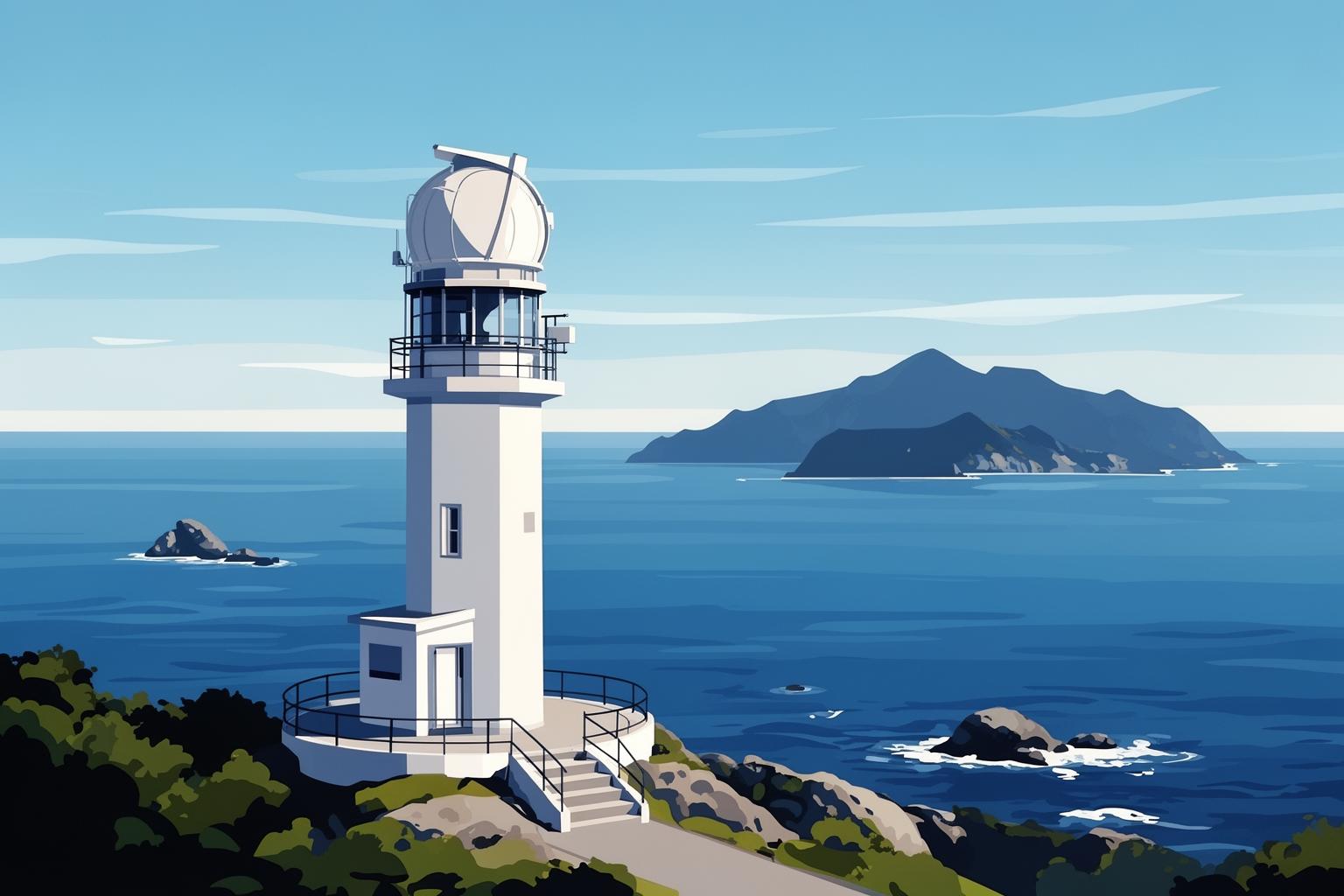
Alright, we’ve delved deeply into the philosophy, but the practical question still stands: with limited time and budget on your second trip to Japan, should Enoura Observatory be on your itinerary? Is it really worth the journey, the expense, and the strict booking rules? The answer, much like the site itself, isn’t simply yes or no. It depends entirely on what you seek. This isn’t a spot for a casual afternoon visit; it’s a destination that requires intention.
The Instagram vs. Reality Reality Check
Let’s be honest: this location is a dream come true for photographers. The lighting, the lines, the textures, the breathtaking views—your camera will have a blast. Every perspective is a composition masterpiece. So yes, you’ll capture some of the most striking, high-concept photos of your entire trip. The reality matches Instagram, if not surpasses it. However—and this is important—if your sole goal is snapping pics for social media, you’ll miss the deeper meaning and may leave feeling disappointed. The real value of Enoura lies not in the images you capture but in the moment you finally put your phone down. This is where the observatory’s strict operational rules matter. You can’t just drop by; you must reserve a time slot well ahead. The number of visitors allowed at once is tightly controlled. Why such rigidity? To preserve the atmosphere. They carefully curate your experience to avoid it turning into a crowded, noisy tourist spot. They create the Ma, the space, for genuine connection with the art and nature. This reflects the classic Japanese hospitality philosophy, omotenashi—an anticipatory, wholehearted service. Here, the service isn’t a hot towel, but the gift of curated silence and solitude. They encourage you to slow down, breathe, and reflect. If your travel style is a fast-paced hunt for photo ops, Enoura may feel restrictive. But if you embrace its rhythm, it will be profoundly enlightening.
A Different Kind of Luxury: Investing in Emptiness
The ticket price isn’t trivial, and factoring in travel time from Tokyo—a train to a smaller station followed by a shuttle—it’s a significant commitment. You might think, “For this cost, I could visit a theme park or a giant museum with thousands of exhibits!” And you’d be right, but you’d be comparing apples and oranges. At Enoura, you’re not paying for quantity of sights but for the quality of experience. You’re investing in meticulously maintained emptiness, silence, and the intellectual and emotional space it offers. In today’s world of constant digital noise and sensory overload, true silence and uncluttered views are the ultimate luxury. Think of it less as an entrance fee and more as a ticket to a three-hour mental spa. It’s a forced digital detox, a meditative retreat crafted by one of the world’s great artists. Seen this way, the price starts to make a lot more sense. You’re buying a rare chance to recalibrate your senses and engage with the world on a deeper, elemental level.
Ami’s Recommended Travel Plan: How to Connect with Enoura
If you’re ready to take the plunge, here’s how to experience it fully. First, aim for a weekday. Fewer visitors mean a richer experience. Second, don’t fear imperfect weather. Clear, sunny days are beautiful, of course. But imagine the drama of the cantilevered stage vanishing into dense fog, or raindrops tapping on the glass teahouse roof. A moody, overcast day can intensify the Yugen factor, offering a distinct but equally powerful ambiance. Check the forecast to prepare, but don’t cancel just because it’s not perfectly sunny. Entry is timed, with a generous window of a few hours. Make full use of it. Start with a quick walk to get your bearings and snap essential photos. Then put the camera away and take a slower second loop. Find a bench. Sit. Gaze at the horizon. Listen to waves crashing on the rocks below. Feel the sun or breeze on your skin. The goal is not to see everything, but to feel something. Finally, integrate your visit into a broader themed journey. Pair your trip to Enoura with nearby Odawara, where you can explore its beautifully reconstructed castle for a historical contrast to Enoura’s modernism. Or head up to the mountains of Hakone for a restful night at a traditional ryokan with an onsen hot spring bath. Frame the whole excursion as a retreat from the city, a deep dive into Japanese nature, history, and aesthetics. Enoura should serve as the philosophical heart of the trip, not just a brief stop.
Final Thoughts: The Art of Noticing
So, we return to our original question: why is this “empty” place so significant? What does it reveal about Japan? Enoura Observatory stands as the ultimate antidote to the sensory overload of modern Japanese life. It offers the necessary exhale after Tokyo’s frantic inhale. It serves as a powerful reminder that the culture behind anime, crowded commuter trains, and neon-lit cityscapes also holds a profound, enduring respect for silence, nature, and reflection. It shows that these two aspects are not contradictory; they are complementary, a perfect representation of yin and yang. Visiting Enoura is not a passive experience. The place demands your full attention. It is an exercise in the art of noticing. Sugimoto has designed a magnificent, beautiful mechanism with one simple purpose: to make you aware. Aware of the slow arc of the sun across the sky. Aware of the ancient history embedded in a single stone. Aware of the exact line where the sea meets the sky. Aware of your own breathing, your presence in this particular moment and place. It doesn’t shout for attention with bright colors or loud noises. Instead, it waits patiently for you to quiet your mind enough to perceive its subtle, profound message. For the second-time traveler seeking to understand Japan beyond the surface, Enoura is essential. It is a tangible thesis on Japanese philosophy, aesthetics, and spirituality. You don’t just see it; you experience it on a cellular level. And that sensation—that serene, cosmic confirmation—is the most valuable souvenir you could ever bring home.
