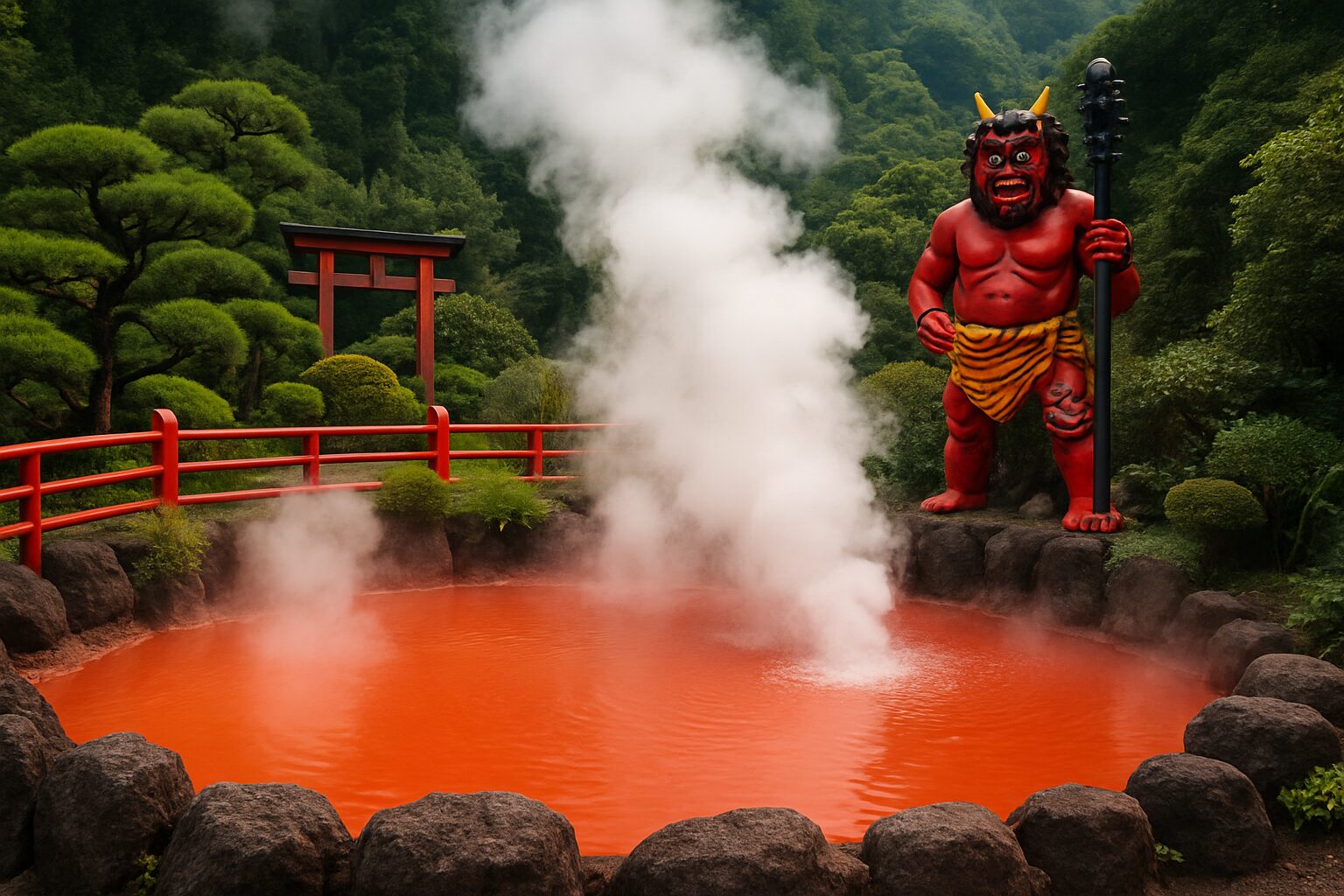
Yo, what’s up, world travelers! Hiroshi Tanaka here, your local guide to the spots in Japan that are straight-up fire. Today, we’re dropping into a place that’s literally smoking—Beppu, in Oita Prefecture on the island of Kyushu. Forget what you think you know about quiet temples and serene gardens for a second. We’re about to take a walk on the wild side, through a landscape so wild, so steamy and colorful, the old-timers looked at it and said, “Yeah, that’s gotta be hell.” But trust me, this is one hell you’ll be dying to get into. This is the Jigoku Meguri, the “Hell Tour” of Beppu, and it’s an experience that’s beyond epic. It’s a full-on sensory assault of volcanic power, where the Earth is basically showing off, venting steam and boiling water in pools of insane colors. We’re talking cobalt blues, blood reds, and murky greys, all bubbling up from the planet’s core. This isn’t just some tourist trap; it’s a raw, unfiltered look at the geothermal chaos that makes Japan one of the most dynamic places on Earth. It’s a showcase of nature’s awesome, slightly terrifying power, and it has shaped the culture of this city for over a thousand years. So, get ready to have your mind blown and your senses sizzled. This tour is a whole mood, a journey that’s part science lesson, part art installation, and 100% unforgettable. Peep the map below to get your bearings, because we’re about to dive deep into the steam.
If you’re fascinated by this raw volcanic power, you’ll definitely want to explore more of Kyushu’s fiery landscapes by hiking the Kuju Mountains.
What’s the Deal with Beppu, Anyway? The Onsen Capital Vibe Check
Before diving into the hells themselves, it’s important to understand the context. Beppu isn’t just some random town with a few hot springs. Honestly, this place is the undisputed heavyweight champion of onsens worldwide. The sheer volume of hot spring water gushing from the ground here is second only to Yellowstone National Park across the globe. That’s incredible. Throughout the city, you’ll notice plumes of steam rising from vents, drains, and pipes, as if the entire city is breathing. This steam, known as ‘yunoke,’ is Beppu’s lifeblood. It powers the onsens, heats homes, and is even used for cooking. This remarkable geothermal activity is due to the city’s location, nestled between the sea and two very active volcanoes, Mount Tsurumi and Mount Garan. For centuries, this power was both revered and feared. People gazed at these boiling, barren landscapes and could only imagine the underworld. These were places of legend, where tales of demons and tortured souls were born. However, as time passed, and with the onset of the Meiji era and the growth of tourism, visionaries like Kumahachi Aburaya recognized the potential. He was a forward-thinking businessman who helped transform Beppu from a simple hot spring retreat into a major tourist destination, famously declaring, “If you’re going to the mountains, visit Fuji. If you’re going to the sea, visit the Seto Inland Sea. And if you’re going for hot springs, come to Beppu!” He played a key role in promoting the Jigoku Meguri, turning these once-feared landscapes into a must-see attraction. So, as you stroll around, remember you’re walking on ground pulsing with untamed energy—a place that has captivated and terrified the Japanese imagination for centuries.
The Jigoku Meguri Lowdown: Your Epic Quest Awaits
Alright, let’s dive into the details. The Jigoku Meguri is a tour of seven stunning hot springs, known as “hells.” These aren’t for bathing—seriously, don’t even consider it, as some reach nearly 100°C (212°F). They’re meant solely for viewing and marveling at their breathtaking spectacle. The seven hells are officially recognized as National Places of Scenic Beauty, so you know they’re authentic. They are divided into two main areas: five are grouped closely in the Kannawa district, making them easy to walk between, while the other two are a short bus or car ride away in the Shibaseki district. The best way to explore is to purchase the Jigoku Meguri combination ticket, which grants access to all seven hells at a discounted rate and is valid for two days, so there’s no need to rush. Paying for each one separately will cost you much more—take my word for it. Expect to spend at least half a day on this journey. Each hell is distinct, with its own colors, features, and atmosphere. It’s not just about admiring colored water; it’s about experiencing the diverse expressions of Beppu’s geothermal power. You’ll witness peaceful beauty, violent bubbling, and even a geyser that erupts every thirty minutes. This is not a passive visit—it’s an adventure. So, put on comfortable shoes, grab your camera, and let’s start this pilgrimage.
Let’s Dive In: The Kannawa Area Hells
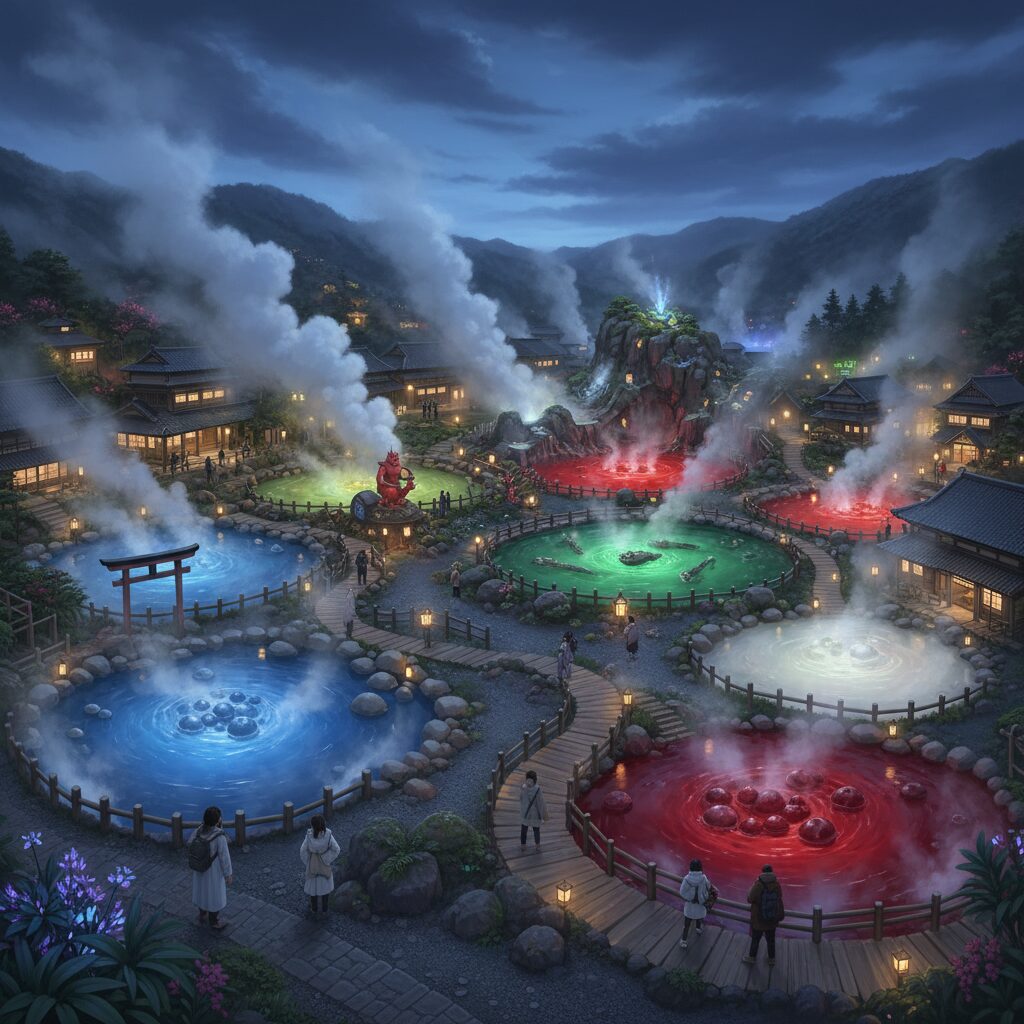
The Kannawa area is the heart of the action. You can easily spend a few hours exploring these five hells, all located within a 10-15 minute walk of each other along a well-marked path. The air here carries a faint sulfur scent, with steam constantly rising from the ground, making you feel as if you’ve stepped onto another planet.
Umi Jigoku (Sea Hell): That Cobalt Blue Glow
First up is the reigning king of the hells, Umi Jigoku. Once you see it, you’ll instantly understand why. This isn’t just any blue—it’s a striking, almost unnatural cobalt blue that appears to glow from within. The vast pond, steaming at a scorching 98°C, is framed by a beautifully maintained garden, creating a striking contrast between peaceful nature and raw geothermal energy. The color is naturally caused by iron sulfate in the water, a bit of nature’s chemistry magic—not artificial dye. Thick, white steam clouds drift off the surface, sometimes so dense on cool days that the far side disappears. It’s hypnotic. But Umi Jigoku offers more than its main pond. On the property is Akaike Jigoku, a smaller hell with a reddish-orange hue, offering a vivid color contrast. You can also stroll through a large greenhouse warmed by the hot spring’s steam, home to giant Amazonian water lilies (Victoria amazonica) robust enough to support a small child. The sight is surreal. Before you leave, don’t miss trying onsen tamago (hot spring eggs) and jigoku-yaki purin (hell-steamed pudding), cooked using natural steam and tasting incredible. The ashiyu (foot bath) fed by the spring water is a perfect spot to soak your feet while gazing at the Sea Hell—a quintessential Japanese experience.
Oniishibozu Jigoku (Shaven Head Hell): The Original Mud Bath
A short walk from Umi Jigoku brings you to a completely different scene: Oniishibozu Jigoku. This hell centers around mud pools, where gray thermal mud bubbles up, each bubble forming a smooth dome before popping with a satisfying ‘plop’. The name is fitting—the smooth grey mud bubbles resemble the shaven heads of Buddhist monks (bozu), while ‘Oniishi’ refers to the area’s name. This site focuses less on dramatic colors and more on texture and sound, creating a hypnotic experience. The rhythmic bubbling is strangely calming, a sharp contrast to its ‘hell’ label. It feels ancient and primal, like witnessing the Earth slowly taking shape. Heat radiates powerfully from the ground. Like Umi Jigoku, Oniishibozu has its own ashiyu to relax and soak in the atmosphere. Nearby is ‘Oni no Ibiki’ (Demon’s Snore), a powerful steam vent roaring at 100°C. Standing close, you can feel the intense force of steam escaping from deep underground—a humbling reminder of the power beneath your feet. This hell is more subtle than Umi Jigoku, but its understated, meditative nature makes it a must-see.
Kamado Jigoku (Cooking Pot Hell): The Ultimate Jigoku Sampler
Prepare yourself, as Kamado Jigoku is like a theme park of hells all in one place. If you’re pressed for time and can visit only one hell, some say this should be it because it showcases a bit of everything. Its name comes from an old legend where locals cooked offerings for the guardian deity of Kamado Hachimangu Shrine using 90°C steam from the hell. Interactive and fun, this hell is divided into six distinct areas, or ‘chome,’ each with unique features. You’ll find a mud hell similar to Oniishibozu, a dazzling blue pond rivaling Umi Jigoku, and even a milky white pond. One turquoise pond intriguingly changes color when smoke is blown over it; staff often perform demonstrations explaining the science behind this in an entertaining way. This showmanship makes Kamado Jigoku a favorite among visitors. The real highlight, however, is the food and drink experience—you can drink the onsen water (around 80°C, so be cautious!), inhale the healing steam, and sample a variety of hell-steamed delicacies. Offerings include onsen tamago, soy-sauce flavored eggs, steamed pork buns (butaman), and stone-baked pizza. The jigoku pudding here is legendary. Fully embracing its ‘cooking pot’ theme, Kamado Jigoku is a feast for both eyes and palate.
Oniyama Jigoku (Monster Mountain Hell): Seriously, There Are Crocs
Now for a surprise twist: touring the hells, you expect boiling ponds and steam vents, but here you find a crocodile farm. Oniyama Jigoku, also called ‘Wani Jigoku’ (Crocodile Hell), is home to around 70 crocodiles and alligators thriving in geothermal-heated pools. It’s without question the most bizarre and unexpected of the seven hells. Established in 1923, it was Japan’s first successful crocodile breeding facility using hot spring heat. The steam here is fiercely powerful, billowing from beneath a small hut with mind-boggling force. This energy keeps the reptiles warm year-round. Watching these prehistoric creatures laze in steamy waters is a wild sight. Feeding shows several times daily are both thrilling and impressive as the crocs lunge for their food. A small museum area shares the facility’s history, including a giant preserved crocodile named ‘Ichiro,’ who lived over 70 years. Is it a bit random? Absolutely. Is it an unforgettable part of the Jigoku Meguri? Definitely. It showcases the creativity of Beppu’s residents, who looked at this geothermal resource and thought, “Crocs belong here.”
Shiraike Jigoku (White Pond Hell): A Zen Garden with a Twist
After the energetic Kamado and the reptilian chaos of Oniyama, Shiraike Jigoku offers a peaceful change of pace. This is the most tranquil and traditionally beautiful of the Kannawa hells. Its name means ‘White Pond Hell,’ with water that is a milky, bluish-white. This opaque color comes from boric acid crystallizing as temperature and pressure drop when the water surfaces. The effect is serene and painterly. The pond is surrounded by a stunning traditional Japanese garden, featuring perfectly pruned trees, stone lanterns, and a small elegant bridge. It feels less like a hell and more like a secret fairy tale garden—a perfect spot to relax, sit on a bench, and soak in the scenery. But, true to the Jigoku Meguri’s unpredictable nature, there’s a surprising twist: inside a greenhouse, also warmed by the hot spring, dwell piranhas—the infamous flesh-eating fish from the Amazon. This quirky addition perfectly captures the Beppu experience—stunning natural beauty paired with wonderfully unexpected oddities.
A Quick Ride to Hell (The Shibaseki Area)
Once you’ve conquered the five hells of Kannawa, it’s time for a short trip to the Shibaseki district, about 2-3 kilometers away. Catching a Kamenoi bus is the way to go—the number 16 or 26 bus will get you there in roughly 10 minutes. These final two hells stand right across from each other and provide some of the most dramatic views on the entire tour.
Chinoike Jigoku (Blood Pond Hell): Japan’s Oldest, Red-Hot Icon
If Umi Jigoku is the king, Chinoike Jigoku is the ancient emperor. It’s the oldest of Beppu’s hells, referenced in texts from over 1,300 years ago. The name “Blood Pond Hell” is no exaggeration—the vast pond is a startling, vivid shade of red. It looks like a scene from a horror movie, but it’s simply geology showing off. The intense color comes from the high concentration of acidic iron and magnesium oxides in the clay at the pond’s bottom. At 78°C, it’s not the hottest of the hells, but it might be the most visually striking. The contrast of red water, white steam, and green mountains creates a breathtaking scene. For centuries, red clay from this pond has been used to make “Chinoike Ointment,” a skin remedy still sold in the gift shop and among Beppu’s top souvenirs. There’s a large ashiyu here too, so you can soak your feet while reflecting on this ancient, bloody-looking landscape. A small hiking path leads up a hill behind the pond, offering a fantastic bird’s-eye view. From there, looking down at this boiling red pool, it’s easy to see why ancient people saw it as a gateway to the underworld. It’s powerful, historic, and absolutely a must-see.
Tatsumaki Jigoku (Spout Hell): Nature’s Powerhouse
Just across the road from the ancient Blood Pond Hell is the explosive force of Tatsumaki Jigoku. This geyser is seriously impressive. What sets “Spout Hell” apart is its reliable and frequent eruptions. Every 30 to 40 minutes, it shoots a column of boiling water and steam more than 30 meters into the air—that’s taller than a six-story building! Each eruption lasts 6 to 10 minutes, making it one of the most consistent and easy-to-watch geysers in the world. To shield visitors from the boiling water that sprays out, a large stone roof covers the spout. Visitors gather on stone bleachers, and the anticipation is palpable. You can hear the rumbling and hissing underground as pressure builds, and then, with a roar, it bursts forth. It’s a raw, thrilling display of Earth’s power. The wait time is posted at the entrance so you can plan your visit accordingly. Since it’s right next to Chinoike Jigoku, a good tactic is to check the eruption schedule at Tatsumaki first. If there’s a wait, you can visit Blood Pond Hell and return just in time for the show. It’s the perfect explosive finale to your Jigoku Meguri tour.
Fueling Your Hell Tour: It’s All About That Jigoku Mushi
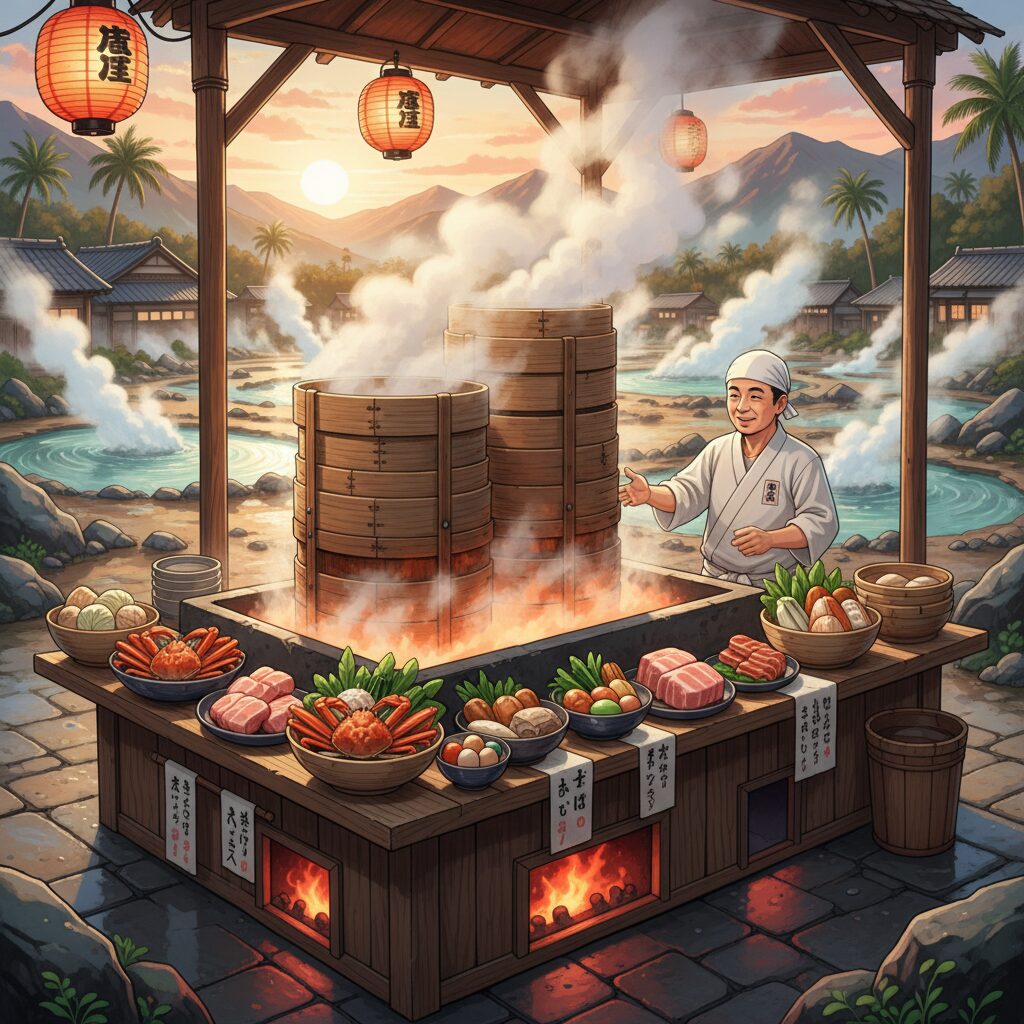
A tour of the ‘Cooking Pot’ and other hells isn’t complete without sampling the cuisine they inspired: Jigoku Mushi, or hell-steamed food. This represents the ultimate Beppu culinary experience. This cooking method has been used for centuries in the Kannawa area, utilizing natural geothermal steam at 100°C to prepare food. The process is simple yet ingenious. Ingredients—seafood, pork, chicken, eggs, and a variety of vegetables—are placed on bamboo trays and lowered into a stone steam chamber known as a ‘jigoku-gama.’ The high-temperature steam quickly cooks the food, sealing in its natural flavors and nutrients while removing excess oils. The outcome is remarkably healthy and incredibly flavorful. A subtle hint of sulfur from the steam adds a distinct savory touch you won’t find elsewhere. The best place to enjoy this experience firsthand is at Jigoku Mushi Kobo Kannawa, a dedicated facility where you select your ingredients from a ticket machine and then cook them yourself in the steam chambers (with staff assistance, of course). It’s a highly enjoyable, hands-on experience. You put on thick gloves, lift the heavy steamer lid, and are greeted by a massive cloud of steam. It’s both a meal and a spectacle. The steamed sweet potatoes, mushrooms, and pork buns are absolutely delicious. Paired with local ponzu or salt, it’s a true taste of Beppu’s essence. Don’t miss this—it’s as vital to the Beppu experience as the hells themselves.
The Pro-Gamer Guide to Conquering the Hells
Alright, you’re excited and ready to dive in. Here are some expert tips to help you make your Jigoku Meguri a seamless success.
Navigating Around: The Beppu Transit Overview
Beppu is very easy to get around. If you’re arriving from another city, you’ll most likely land at JR Beppu Station. From there, the city’s bus system, run by Kamenoi Bus, will be your go-to option. To reach Kannawa, where the first five hells are located, exit Beppu Station from the west side and catch bus number 2, 5, 7, or 41. It’s about a 20-minute journey to the ‘Umi Jigoku-mae’ or ‘Kannawa’ bus stops. The buses run frequently and are user-friendly, even without Japanese skills. There are also sightseeing buses known as the ‘Jigoku Meguri Bus Course,’ which offer guided tours, but exploring on your own lets you enjoy more freedom. As noted, the first five hells in Kannawa are within walking distance. To get from Kannawa to Shibaseki for Chinoike and Tatsumaki, take bus number 16 or 26. If you’re driving, free parking is available at all seven hells, which is a major convenience.
Ticketing Basics: Don’t Miss the Pass
I’ll say it again: get the combination pass. It’s called the ‘Jigoku Meguri Ken’ and can be purchased at any of the seven hells’ entrances. In 2024, the pass costs 2,200 yen for adults. A single entry ticket to one hell is 450 yen, so if you plan to visit five or more, the pass saves you money. Visiting all seven makes it an especially great deal. The pass is a neat little booklet that you can get stamped at each hell, making it a memorable keepsake. Don’t try buying single tickets unless you’re absolutely sure you only want to visit one or two locations. The pass is definitely the best option.
Timing is Key: Best Time to Tour
You can enjoy the Jigoku Meguri all year round, with each season offering its own charm. Spring brings cherry blossoms, summer offers lush greenery, autumn displays beautiful foliage, and winter can sometimes add a light snow dusting, creating an amazing contrast with the steam. Weekdays tend to be less crowded than weekends or national holidays. To avoid large crowds, aim to start your tour early in the morning when the hells typically open (usually around 8:00 AM). Tour groups generally begin arriving mid-morning. The entire tour, including travel between areas, usually takes 3 to 4 hours depending on your pace and how long you spend at each spot. A smart itinerary is to visit the Kannawa hells in the morning, enjoy some Jigoku Mushi for lunch, then explore the Shibaseki hells in the afternoon. Also, be sure to check the eruption schedule for the Tatsumaki geyser to time your visit just right.
The After-Party: What’s Good After Jigoku?
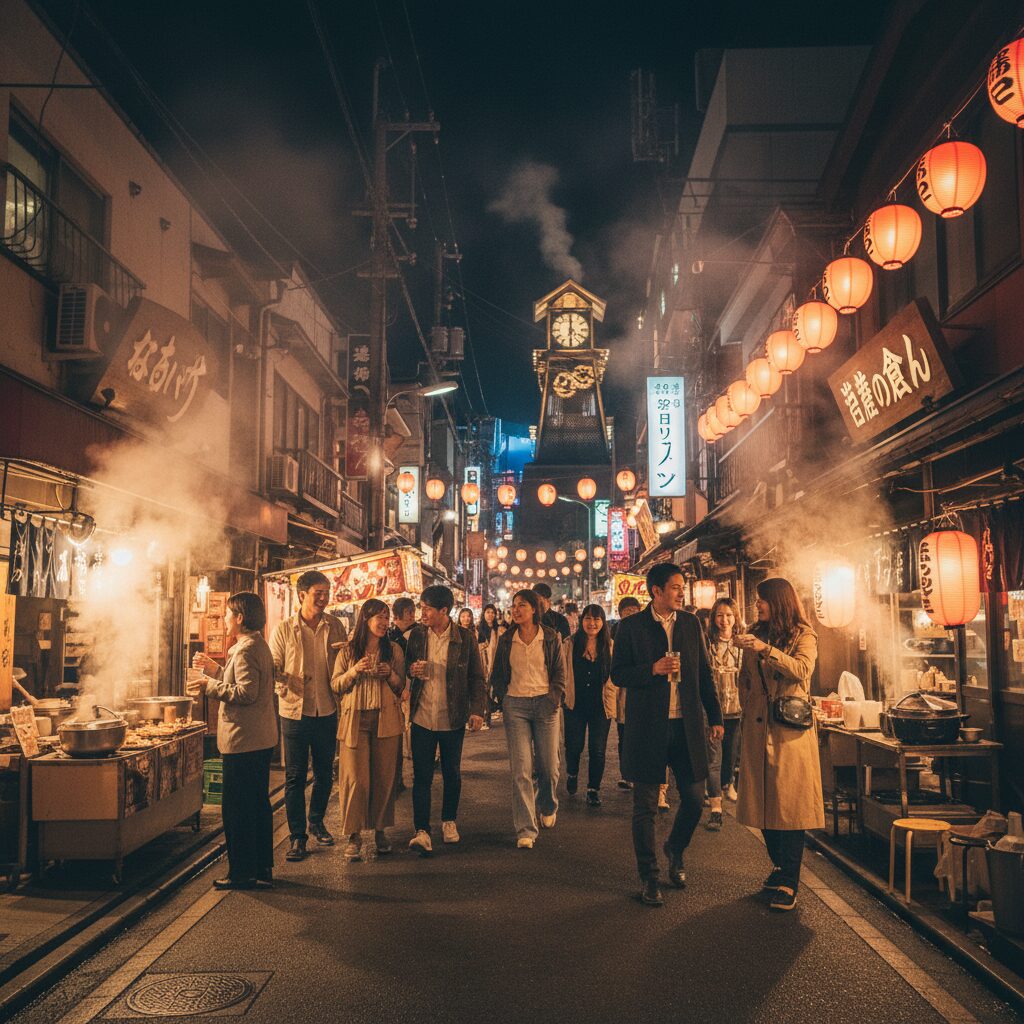
So, you’ve seen the hells—now what? The best part about Beppu is that there’s so much more to explore. After a day of admiring boiling water, it’s time to actually soak in some. Head to one of Beppu’s iconic public onsens. Hyotan Onsen is an excellent choice, offering a wide variety of baths, including a steam bath and a waterfall bath. For a more traditional, rustic experience, visit Takegawara Onsen, known for its stunning wooden architecture dating back to 1879. It’s also famous for its sunamushi (sand baths), where you’re buried up to your neck in volcanically heated sand—an incredibly soothing experience. For an amazing view, take the Beppu Ropeway to the top of Mount Tsurumi. On a clear day, the panoramic sight of the city, the bay, and steam rising from every corner is truly breathtaking. Exploring the narrow, steamy backstreets of the Kannawa district is an adventure in itself, offering small inns, food stalls, and a genuine feel of old-world Beppu. The city truly comes alive once you’ve experienced its fiery core.
A Final Word from Your Guide
Touring the Hells of Beppu is one of those travel experiences that stays with you. It’s strange, it’s amazing, it’s stunning, and it’s slightly intimidating. It offers a direct link to the powerful volcanic forces that have shaped not only this landscape but the entire culture of Japan. You’re not merely a tourist viewing a sight; you’re witnessing the Earth breathing, boiling, and putting on a show that’s been going on for millennia. The Jigoku Meguri is a journey far beyond what its name implies. It’s a trip through a vibrant, living ecosystem of color, steam, and sound. It’s a taste of cuisine prepared by the planet itself. It’s a reminder that even in places named after the underworld, there’s an incredible amount of life and beauty to discover. So come to Beppu, take the tour, and embrace the heat. It’s a side of Japan that’s raw, real, and absolutely electrifying. You won’t regret it. Peace out.