What’s good, fellow history buffs and wanderlusters? James Walker here, and today we’re deep-diving into a place that’s pure fire, an island that’s been living in Japan’s shadow but has a story so extra, it deserves its own series. We’re talking about Sadogashima, or Sado Island. Bet. Sitting off the coast of Niigata in the Sea of Japan, this spot is a whole mood. It’s got this wild, dual-identity thing going on. On one hand, it was the ultimate treasure chest for the shoguns, a literal island of gold that bankrolled an empire. On the other, it was Japan’s most notorious spot for exile, where emperors, artists, and political rebels were sent to be ghosted from the mainland. That clash, that mix of immense wealth and profound sorrow, created a culture that’s just built different. Sado isn’t just a pin on a map; it’s a living, breathing chronicle of triumph and tragedy, a place where the echoes of the past aren’t just whispers, they’re a full-blown taiko drum performance shaking you to your core. It’s where rugged, untamed nature smacks right up against some of the most refined and spiritual arts in all of Japan. You feel the weight of history here, but it’s not a drag. It’s electric. It’s a vibe shift that’ll have you rethinking everything you thought you knew about Japan. So, buckle up. We’re about to explore the lore of an island that is, no cap, one of Japan’s most legendary and slept-on destinations.
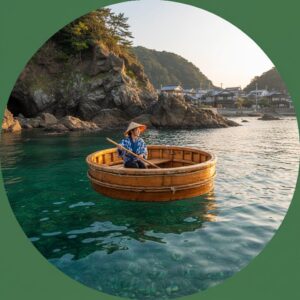
To truly experience Sado’s unique coastal culture, you must try riding the island’s iconic tarai-bune tub boats.
The Gold Rush Vibe: Diving into Sado Kinzan

Alright, let’s cut to the chase. The main reason Sado gained fame on the historical stage was one thing: gold. At the center of it all, the absolute heart and “mothership,” is the Sado Kinzan Gold Mine. This isn’t just any hole in the ground; it served as the financial powerhouse of the Tokugawa Shogunate for nearly 300 years. The staggering amount of wealth extracted from these mountains is truly mind-blowing. Visiting today feels like stepping into a time machine with two very distinct eras, both of which are a must-see.
First is the Sodayu-ko course, guiding you through Edo-period tunnels. Check this out: the entire path is lit by lanterns, and as you walk through the cold, damp corridors, you encounter life-sized animatronic miners. It’s a bit eerie but utterly fascinating. These figures illustrate the entire process, from the grueling labor of chipping rock with hand tools to children bailing water out of tunnels bucket by bucket. It offers a raw, unfiltered glimpse into the human toll behind that gleaming treasure. You can almost hear the clinking of chisels and the labored breaths of the workers. The atmosphere is heavy—a genuine tribute to the endurance and suffering of those who toiled here, many of whom were homeless people brought in from the mainland and forced into labor. It’s a somber yet essential part of the mine’s history. You leave with deep respect for the relentless effort it took to build a nation’s wealth.
Next, switch gears to the Doyu-ko course, which highlights the mine during the Meiji era and beyond. This is the industrial upgrade. Hand tools give way to pneumatic drills; tunnels are wider, and you even see tracks for trolley cars that hauled ore out of the mountain. The energy here is completely different—one of modernization and mechanical power. This section shows Japan’s rapid transformation from a feudal society into an industrial giant. You witness the machinery, vast processing plants, and the sheer scale of operations. The undeniable highlight is the Doyu no Wareto—a literal peak of the mountain split in two as if cleaved by a giant’s axe. This V-shaped scar in the landscape resulted from a massive open-pit mining effort and has become the iconic symbol of the mine and of Sado itself. Standing before it, you’re struck by the immense human ambition to literally reshape the earth in pursuit of treasure. It’s an epic photo opportunity that radiates “main character energy.”
After exploring the tunnels, the museum lays out the mine’s full 400-year history, complete with dioramas and artifacts. For the grand finale, you can try lifting a real, solid gold bar worth millions of yen. It’s surprisingly heavy and a fun way to physically connect with the vast wealth this place generated. This entire experience isn’t just a history lesson; it’s a sensory journey into the dark, glittering heart of Japan’s past.
Island of Exile: Where the Elite Got Ghosted
Before Sado became famous for its gold, it was notorious for something entirely different: exile. This wasn’t an ordinary penal colony. Sado was reserved for high-status individuals who had fallen out of favor with those in power. We’re talking about deposed emperors, disgruntled nobles, revolutionary monks, and brilliant artists. Being exiled to Sado was a political death sentence—a one-way trip to a remote, rugged island designed to silence and isolate the most influential voices of the era. But here’s the twist: these elite exiles didn’t simply vanish. They brought their refined culture with them, colliding with the island’s rustic folk traditions like a tidal wave, creating a cultural fusion unique to Sado.
Let’s discuss some notable figures. First, there’s Emperor Juntoku, who was banished after attempting to overthrow the Kamakura shogunate in the 13th century. He spent two decades on the island, composing poetry filled with longing for his Kyoto home. You can visit the site of his modest imperial residence, where the atmosphere is rich with a melancholic nobility. His presence infused the island with the elegant court culture of the capital, sowing the seeds of classical arts in this remote place.
A few decades later, a major figure arrived: Nichiren Daishonin, founder of the Nichiren school of Buddhism. He was a fiery preacher whose teachings were considered dangerous by the authorities. His exile to Sado was intended to break his spirit, but it had the opposite effect. Despite enduring harsh conditions in a dilapidated hut at Tsukahara Sanmaido, he wrote some of his most important texts there. His time on the island was marked by intense spiritual trial and intellectual creativity. Visiting sites associated with him, such as Myosen-ji Temple, one can feel his fierce, unyielding spirit. He didn’t merely survive—he flourished, and his powerful teachings took root among the islanders.
This tradition of exile endured for centuries, with each new arrival adding another layer to Sado’s cultural tapestry. The most significant of these later exiles was Zeami Motokiyo, the undisputed master of Noh theatre. He essentially wrote the definitive guide on Noh, shaping it into the deeply spiritual and aesthetic art form known today. When exiled to Sado in his old age, he brought this highest form of Japanese theater with him. This cultural transplantation explains why Sado now boasts an astonishing number of Noh stages—over thirty, more than any other region of its size in Japan. The nobles brought poetry, the monks brought philosophy, and the artists brought performance. This legacy of exile transformed a place of punishment into an unexpected sanctuary for high culture, creating a community that both understood and cherished these refined arts. It’s a beautiful paradox: an island of isolation became an incubator for connection through art.
The Beat of the Island: Kodo Drums and Mystical Noh
That remarkable history of exile and local resilience has brewed into profoundly powerful artistic expressions that form the heartbeat of Sado today. To truly sense the island’s essence, you must immerse yourself in its sound and stagecraft, beginning with a rhythm that can literally shake the ground beneath your feet.
The Kodo Taiko Drummers: A Force of Nature
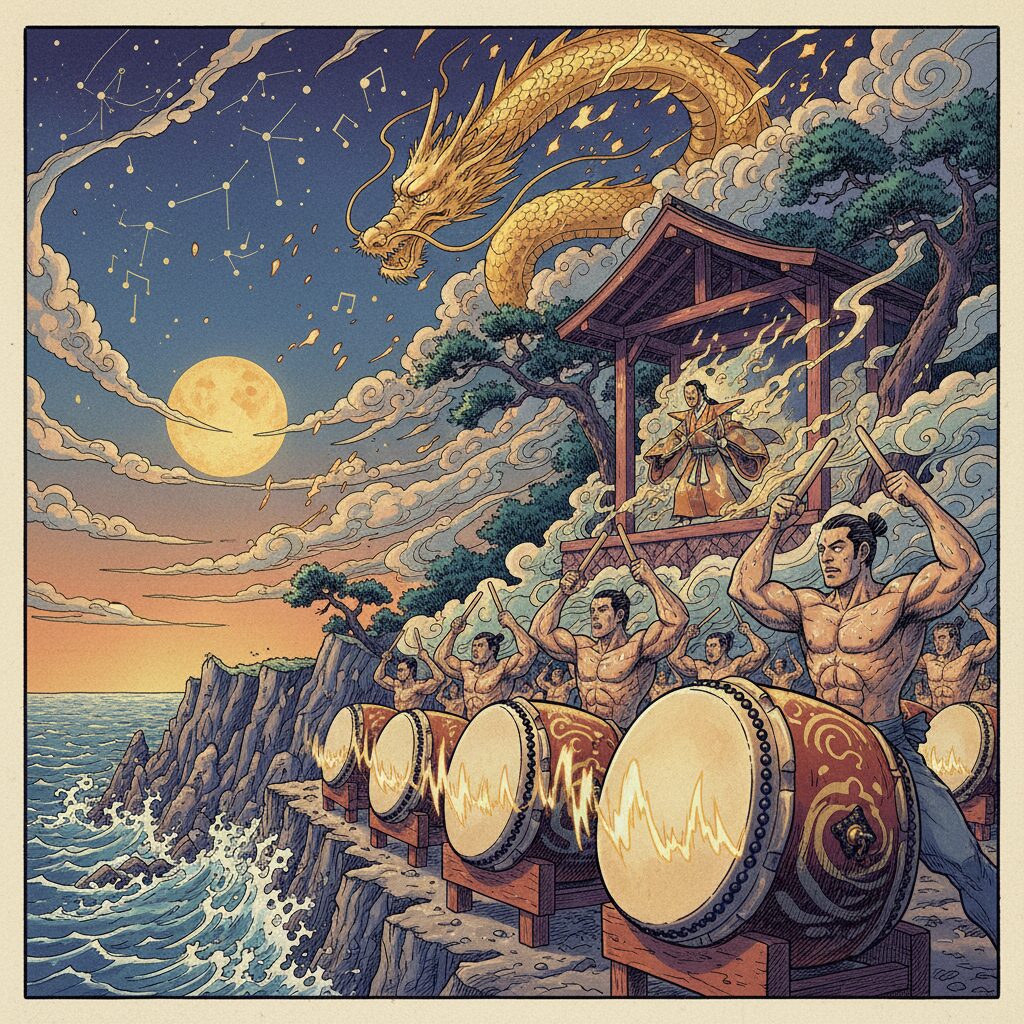
You haven’t truly experienced drumming until you’ve heard Kodo. Period. This isn’t your neighborhood parade’s drumline. Kodo is a world-renowned, professional taiko drumming troupe that calls Sado its home and inspiration. Their name carries dual meaning: “heartbeat,” the primal source of all rhythm, and “children of the drum.” Their philosophy revolves around living and training as a community, channeling Sado’s raw, powerful spirit into their music. Their performances feel less like concerts and more like seismic events. The deep reverberations of the massive o-daiko drum aren’t just heard—they’re felt deep in your bones, connecting you to something ancient and immense. The drummers execute their craft with athletic, almost martial discipline, delivering a full-body performance of strength, grace, and extraordinary stamina. It’s pure, unfiltered energy that’s utterly captivating.
While they tour worldwide, Sado remains their true home. Visitors can explore Kodo Village and the Sado Island Taiko Centre (Tatakokan), where you can even join a workshop to try your hand at drumming. It’s far more challenging than it appears, offering a profound appreciation for what these artists achieve. The pinnacle of the Kodo experience, however, is the annual Earth Celebration. Every August, Kodo hosts this extraordinary music festival, inviting artists from across the globe to collaborate and perform. For three days, the island pulses with music, dance, and an electrifying atmosphere. It’s a pilgrimage for music lovers and a testament to Sado’s standing as a global cultural nexus.
Noh Theatre: Ghosts on a Moonlit Stage
Shifting from Kodo’s thunderous energy, we enter the subtle, ethereal realm of Noh theatre. Thanks to Zeami’s exile, Sado became a stronghold for this ancient art form. Although Noh may seem slow and opaque to newcomers, witnessing it on Sado offers the ideal introduction. Many of the island’s Noh stages are outdoors, framed by ancient trees and Shinto shrines. Performances frequently unfold at night, illuminated by bonfires (takigi Noh), which infuse the entire experience with a mystical, atmospheric quality. The masked actors’ slow, deliberate movements, the chorus’s hypnotic chanting, and the haunting flute notes create a trance-like ambiance. You don’t merely watch a Noh play; you step into its world. The narratives often recount tales of ghosts, gods, and warriors drawn from classical Japanese literature. Even without understanding the language, the emotional intensity is unmistakable. It’s a spiritual encounter—a meditation through performance. Catching a local show at a shrine like Daizen-jinja, with its traditional stage, offers a rare chance to see this art form preserved in its purest form—a direct connection to the island’s most famous and creative exile.
Sado’s Scenery is Bussin’: Beyond the History Books
While Sado’s history takes center stage, its natural scenery is equally captivating. The island is stunning, featuring a dramatic coastline, lush forests, and quaint villages that seem straight out of a fairy tale. Renting a car is essential here, as you’ll want to stop every few minutes to take in the breathtaking views.
Shukunegi: The Village Constructed from Ships
Nestled in a small cove at the southern tip of the island, Shukunegi is a village you absolutely must visit. This is no artificial tourist spot; it’s a living community with a history literally embedded in its walls. During the Edo period, Sado was a key hub on the Kitamaebune shipping route. Wealthy shipbuilders and sailors in Shukunegi dismantled their large wooden cargo ships at the end of their service, repurposing the timber to construct their homes. Walking through Shukunegi’s narrow, maze-like alleys—so tight you can touch both sides—you’re surrounded by dark, weathered wooden houses that feel like they belong in a Ghibli film. The entire village is a masterclass in recycling and expert carpentry. You can tour several houses, such as the Seikuro-ke and the Sankaku-ya (Triangle House), to admire the exquisite craftsmanship up close. It’s a wonderfully preserved glimpse into Japan’s maritime heritage.
Tarai-bune: Riding in a Tub Boat
Just near Shukunegi, at the port of Ogi, you’ll discover one of Sado’s most iconic and quirky attractions: the tarai-bune, or tub boats. These are exactly what their name suggests—large wooden tubs used as boats. Originally built so local women could navigate rocky, narrow coves to gather seaweed, abalone, and other shellfish, today you can take a ride in one, steered by a woman dressed in traditional clothing who expertly paddles you around the bay with a single oar. At first, bobbing around in a giant washtub might feel a little silly, but it’s an incredibly fun and unique experience. The water is crystal clear, and it offers a peaceful, charming way to enjoy the coastline. It’s one of those quintessential Sado experiences you have to try for the ‘gram.
The Dramatic Coastline: Senkakuwan Bay and Onogame
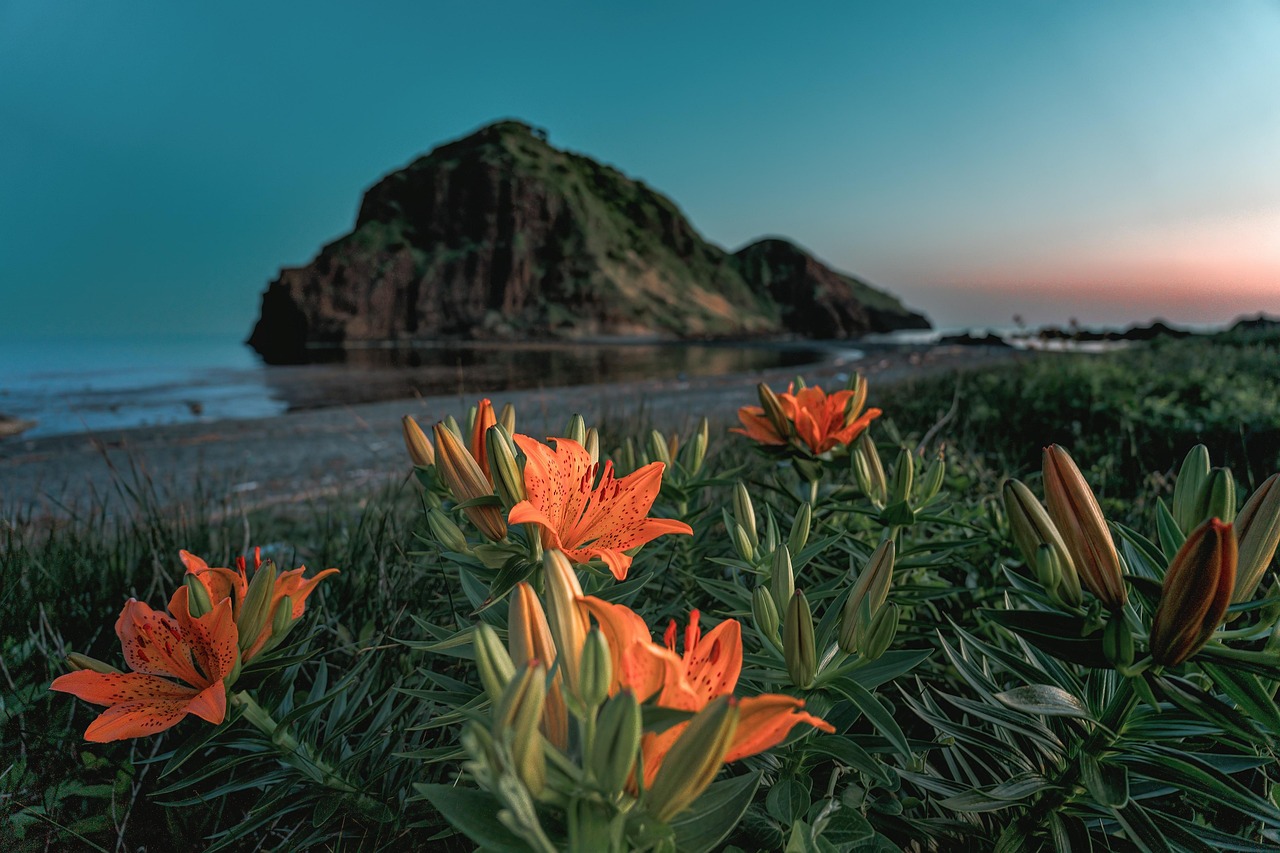
Prepare yourself for breathtaking coastal vistas. The northwestern shore of Sado lies within a quasi-national park, showcasing some of the island’s most stunning landscapes. Senkakuwan Bay consists of five small inlets famed for their steep cliffs and turquoise waters. Often compared to Norway’s Hardangerfjord, it’s a strikingly rugged place. You can take a glass-bottom boat tour to see the magnificent rock formations and marine life beneath. Further north, two massive rock formations command the scenery: Onogame and Futatsugame. Onogame is a towering 167-meter-high monolith extending into the sea, known for its fields of yellow daylilies that bloom in early summer. Futatsugame, meaning “Two Turtles,” features two large rocks offshore from a pristine, clear-water beach that’s been voted one of Japan’s finest. The hiking trails here offer panoramic views of the Sea of Japan that are truly awe-inspiring.
The Flight of the Toki: A Tale of Renewal
Sado’s natural beauty also tells a remarkable story of conservation. The island is the last wild refuge of the Toki, or Japanese Crested Ibis. Once common throughout Japan, this exquisite bird with its delicate pink-tinted feathers was hunted nearly to extinction. By the early 21st century, it had vanished from the wild in Japan. However, a painstaking captive breeding program on Sado, supported by birds brought in from China, has brought the Toki back from the brink. You can visit the Toki Forest Park to see these graceful birds up close and learn about the extraordinary efforts to save them. Witnessing a Toki soaring over Sado’s rice paddies is a truly special sight—symbolizing the island’s commitment not only to preserving culture but also protecting nature itself.
Get Your Grub On: Sado’s Local Flavors
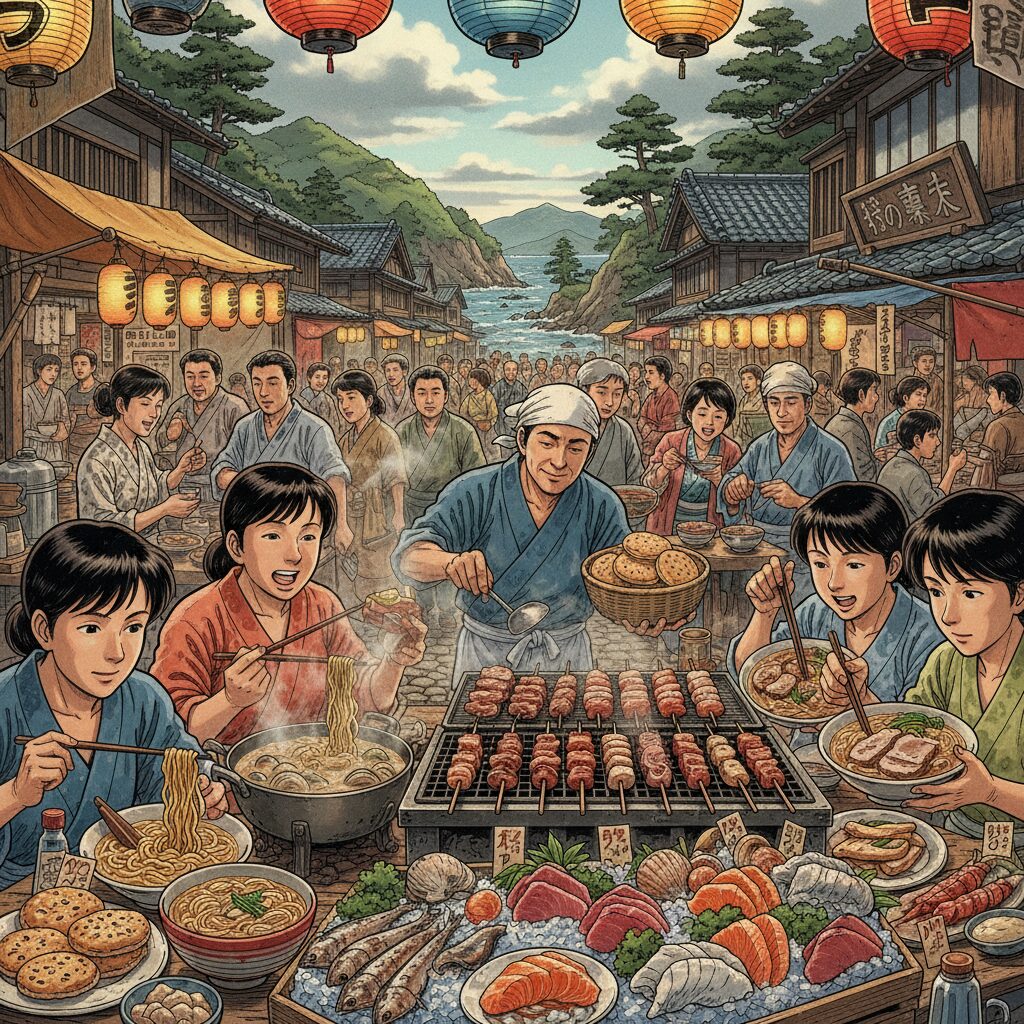
Exploring Sado is sure to work up an appetite, and fortunately, the island’s food scene is absolutely outstanding. With its fertile soil and the abundant Sea of Japan at its doorstep, Sado is a haven for food lovers. It’s all about fresh, local, and seasonal ingredients.
Unsurprisingly, the seafood here is exceptional. The winter yellowtail, or Kan-buri, is legendary—rich, fatty, and melts in your mouth. You can enjoy it as sashimi, grilled, or in a hot pot—it’s all divine. Squid (ika) is also a specialty, especially in summer. At night, fishing boats with bright lights dot the horizon, attracting the squid to the surface. You can even find ika somen, where the squid is sliced into thin noodles, offering a super fresh and delicate treat. Oysters, abalone, and sazae (turban shell) are plentiful and delicious as well. Visiting one of the local seafood restaurants near the ports is essential—just point to what looks good in the tank, and you’re in for a feast.
But Sado isn’t only about seafood. The island produces some of Japan’s finest rice, including the premium Koshihikari variety. This high-quality rice, combined with the island’s pure, clean water, creates ideal ingredients for sake. Sado hosts several craft sake breweries producing top-tier sake. The most famous is Hokusetsu Brewery, whose sake is so highly prized that it is exclusively supplied to the world-renowned Nobu restaurants. You can visit their brewery shop to sample and purchase a bottle. Tasting the local nihonshu is the perfect way to toast your Sado adventures.
For the more adventurous eaters, seek out local delicacies like igonesuri, a gelatinous seaweed dish with a unique, savory flavor. And don’t forget the local fruits. Sado is famous for its Okesa persimmons, incredibly sweet and juicy in autumn, as well as apples and le poire pears. The food on Sado is honest, unpretentious, and deeply connected to both the land and sea. It’s the kind of soulful, satisfying cuisine that makes a trip unforgettable.
The Lowdown: Getting There and Getting Around
Alright, let’s get into the logistics. Since Sado is an island, getting there and getting around takes a bit of planning—but trust me, it’s well worth it.
Making the Journey
Your entry point to Sado is Niigata City on Honshu, Japan’s main island. From Niigata, you’ll board a ferry operated by Sado Kisen. You have two primary options. The quickest is the Jetfoil, a hydrofoil that crosses the sea in about an hour and docks at Ryotsu Port, Sado’s largest town. It’s passenger-only, so it’s best if you’re traveling light. The more leisurely and budget-friendly choice is the car ferry, which takes about two and a half hours but offers a true cruise experience. You can bring your car onboard, enjoy decks where you can step outside, feel the sea breeze, and feed the seagulls following the boat. This ferry also lands at Ryotsu Port; however, there’s a smaller ferry that goes to Ogi Port in the south, which may be handy depending on your plans.
Exploring the Island
Here’s the truth: Sado is large. It’s the sixth-largest island in Japan, and public transportation is limited. Though buses exist, they run infrequently and don’t reach every spot you’ll want to visit. To fully embrace the island’s freedom and beauty, you’ll need your own vehicle. Renting a car is highly recommended. Rental agencies are available at both Ryotsu and Ogi ports. Make sure to book early, especially during busy periods like summer and Golden Week, as vehicles can be in high demand. Driving on Sado is a joy—the roads are well-kept, traffic is light, and the coastal routes are stunning. Having a car lets you chase sunsets, uncover hidden beaches, and linger at that fascinating temple you just came across.
Best Time to Visit and Useful Info
Sado can be visited year-round, with each season offering its own unique charm. Summer (June-August) is peak season, with warm weather ideal for beaches, hiking, and the famous Earth Celebration festival. It’s also the busiest time, so book early. Autumn (September-November) is wonderful, with mild temperatures, clear skies, and beautiful fall colors, especially along scenic drives. It’s also harvest season for rice and persimmons. Spring (March-May) features cherry blossoms and blossoming fields, symbolizing renewal. Winter (December-February) can be tough, with cold winds and heavy snow, especially in the mountains. Some attractions may reduce hours or close, but seafood like the rich yellowtail is at its best. For first-timers, late spring or early autumn is likely the ideal window.
A few final pointers: Bring enough cash. While major hotels and shops accept credit cards, many smaller eateries, guesthouses, and stores operate cash-only. Don’t expect a lively nightlife—Sado is about savoring nature, culture, and a gentler pace. Above all, embrace the island’s slower rhythm. That’s part of its charm. It’s a place to unplug from the hustle and reconnect with something deeper.
Sado Island is so much more than a destination on a map. It’s a rich, layered story written in gold veins, rugged cliffs, and the pulse of taiko drums. It’s an island where the spirits of emperors and artists linger, where the power of nature meets the resilience of its people and culture. It’s a place that gets under your skin and stays with you long after you’ve returned to the mainland. It’s a hidden gem, a true adventure for those who want to discover a different side of Japan—wild, soulful, and profoundly beautiful. So go ahead, catch that ferry. A whole world of legend and beauty awaits. It’s a vibe you have to experience—you really, truly have to be there.