Yo, what’s the deal? You’ve scrolled the feeds, right? You’ve seen the Japan that gets served up on a platter: the serene temples shrouded in mist, the neon-drenched cyberpunk streets of Shinjuku, the perfectly crafted bowls of ramen that look more like art than food. It’s clean, it’s cute, it’s efficient. And it’s all true, kinda. But it’s also a meticulously curated highlight reel. It’s the public face, the polished profile pic. But what about the weird, grainy, slightly out-of-focus candid shots from the back of the family album? What about the stuff that doesn’t fit the slick ‘Cool Japan’ narrative? That’s where the real flavor is, fam. I’m talking about a specific, strange, and honestly, kinda cursed vibe: the world of retro Yokai trinkets, specifically the occult-obsessed wave that crested in the 1970s. This isn’t about the cute, cuddly Totoro-esque spirits. Nah, this is about the grotesque, the bizarre, and the gloriously tacky. It’s about hunting for souvenirs that feel less like mementos and more like haunted artifacts. You pick up a cheap, plastic monster with mismatched paint, and you get this weird buzz, a sense that this little thing is a key to a different Japan, a weirder, grittier reality simmering just beneath the surface. You’re probably thinking, “Why is Japan so obsessed with ghosts and monsters, and why does the old stuff look so… funky?” That’s the real question. It’s not just about collecting weird junk; it’s about understanding the cultural static, the historical feedback loop that produced these wonderfully strange objects. It’s a journey into the uncanny valley of Japanese pop culture, a deep dive into an era when the nation was collectively freaking out over everything from spoon-bending psychics to Nostradamus and channeling that anxiety into a tidal wave of gloriously schlocky, occult-flavored ephemera. So, let’s get into it. Let’s go digging in the cultural crates and figure out why these kitschy cryptids still slap so hard.
To understand this deep-seated cultural fascination with the supernatural, it’s worth exploring the eerie phenomenon of kamikakushi in rural Japan.
The Vibe Check: What Even Is 70s Yokai Kitsch?
So, before we dive in, we need to get on the same wavelength. When I say ‘70s Yokai kitsch,’ what image comes to mind? If you’re imagining elegant woodblock prints of long-necked women or a Studio Ghibli soot sprite, you’ll need to rethink that. This style is something completely different. It’s like the cultural equivalent of a fuzz pedal on a bass guitar—distorted, loud, and a bit gritty. It’s an aesthetic from a bygone era that somehow feels both futuristic and deeply ancient at the same time. It’s a paradox in plastic form.
Beyond Ghibli and Geishas
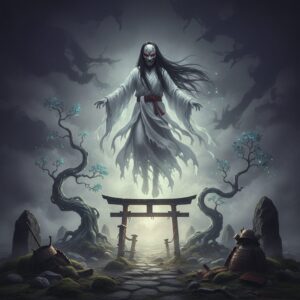
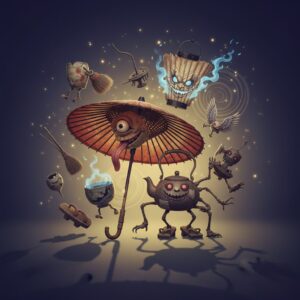
First of all, let’s clear something up: Yokai aren’t simply ‘Japanese monsters.’ That’s like calling the entire Marvel Universe ‘some guys in tights.’ The term covers a vast range of supernatural beings from Japanese folklore. They can be ghosts (Yurei), demons (Oni), shapeshifting animals (like the Kitsune fox or Tanuki raccoon dog), or even inanimate objects that have come to life after a hundred years (Tsukumogami). They may be malevolent, mischievous, or even bring good luck. Their origins run deep, rooted in the animistic beliefs of ancient Japan, where every mountain, river, and oddly shaped rock might house a spirit. For centuries, these tales were local legends, campfire stories, and subjects of scholarly works and art scrolls. They explained the unexplainable—a sudden illness, strange forest noises, the fear of drowning—and were tightly woven into everyday life, mapping the anxieties of a pre-industrial society.
But the Yokai of the 70s are different. They’ve been filtered through new anxieties, shaped by a modern mass-media machine. They’re less about fearing the natural world and more about fearing the unnatural world rapidly emerging. The 70s versions are loud, colorful, and often aimed at children. They’re folk legends repackaged as pop culture products, and through that transformation, something beautifully strange emerged.
The 70s Occult Boom: A Perfect Storm
To truly grasp why this imagery looks and feels as it does, you have to understand the intense environment of 1970s Japan. The country was still basking in the success of its post-war economic miracle. Cities were booming, technology was advancing at a dizzying pace, and optimism was high. But beneath this glossy surface was a deep cultural unease. What did it mean to be Japanese in a hyper-modern, Westernized world? Old traditions felt distant, yet a new identity hadn’t fully formed. Society was searching for a soul, and it found itself exploring some very strange places.
This existential quest created a void filled by a nationwide occult boom. It swept through all levels of society, sparked in the early 70s by a perfect storm of media hype and public fascination. One major spark was Uri Geller, the Israeli psychic famed for bending spoons with his mind. His televised appearances in Japan were a sensation. People were glued to their screens, enthralled. It opened a door in the collective imagination: if this was possible, what else might be? Suddenly, everything paranormal was fair game.
This wasn’t a niche interest; it was mainstream. TV shows devoted to ghost stories, psychic phenomena, and UFO sightings dominated the airwaves. Magazines for all ages—from serious journals to kids’ manga anthologies—were filled with articles about ESP, prophecies, and cryptids. Nostradamus’ prophecies, especially, sparked a frenzy with Ben Goto’s 1973 bestseller The Great Prophecies of Nostradamus, selling 1.1 million copies and predicting doom in 1999. This wasn’t mere entertainment; for many, it felt like urgent truth amid a world spinning out of control. This cultural climate was perfect for a Yokai revival. These native paranormal beings became Japan’s homegrown X-Files. Old folklore was dusted off and given a groovy, psychedelic facelift for primetime.
The Aesthetic: Groovy, Grimy, and Gloriously Guro
The style of this era’s creations is unmistakable. It’s a direct reflection of its time, both technologically and culturally. Printing methods of the 70s, especially for inexpensive mass-market items like manga magazines, trading cards, and candy wrappers, had a distinct character. Colors were often garish and oversaturated, bleeding beyond outlines. Registration was sometimes off, creating a blurry, dreamlike effect. Paper was cheap and pulpy. This was intentional—it gave the art a raw, immediate, and slightly unhinged feel.
The art style embraced the psychedelic and the grotesque. It drew heavily from the underground manga (‘garo’) scene, which explored surrealism, horror, and social critique. This often incorporated elements of ero-guro-nansensu—a pre-war artistic movement celebrating the erotic, the grotesque, and the nonsensical. In the 70s, this was reborn. Yokai weren’t just eerie; they were frequently depicted as visceral, fleshy, and deeply disturbing. Think less charming folk tale and more B-movie horror poster or prog-rock album cover. Colors clashed, perspectives warped, and the creatures genuinely monstrous. It’s a visual language designed to grab you by the collar and yell in your face. It’s anything but subtle—and that’s exactly what makes it so compelling. It’s the raw id of a culture in transition.
Reading the Runes: The Symbolism Behind the Spooks
Alright, so we’ve set the tone. But the truly fascinating part—the reason this stuff is more than just eye-catching junk—is what it symbolizes. These tacky trinkets serve as tiny cultural artifacts, embedded with the hopes, fears, and anxieties of their era. Picking one up and studying it closely is like an act of divination—you can glimpse the fortunes of a past age in the cheap plastic and garish paint.
Yokai as Social Commentary
Yokai have always reflected society. In earlier times, the Kappa, a river-dwelling imp that drowns children, served as a very real and practical warning: beware of dangerous river currents. It was a monster, yes, but also a public service message. An Oni, a hulking, ogre-like demon, could symbolize anything from a terrifying natural disaster to the abstract concept of evil itself. They were a flexible metaphor, a means to personify the fears people held most deeply.
In the 1970s, this metaphorical power intensified to mirror contemporary anxieties. The post-war era dramatically transformed Japan’s landscape. Industrialization surged ahead, often disregarding environmental consequences. This led to pollution-themed monsters in pop culture, like Hedorah, the Smog Monster, featured in the 1971 Godzilla film. Although technically a Kaiju, Hedorah tapped into the same vein of anxiety reviving Yokai. The fear was no longer just of deep rivers or dark forests; it was about chemical waste dumping into bays, smog choking cities. The monsters adapted alongside evolving fears.
This period also saw the rise of a new category: the urban legend Yokai, or Toshi Densetsu. The most notorious is Kuchisake-onna, the Slit-Mouthed Woman. The tale, which exploded in popularity in 1979, tells of a woman wearing a surgical mask who asks children if they think she’s beautiful. If they answer no, she kills them. If yes, she removes the mask to reveal a mouth slashed from ear to ear and asks, “How about now?” before attacking. This story triggered genuine social panic, with police increasing patrols and schools sending children home in groups. But why then? The story reflects multiple contemporary fears: mistrust of strangers in growing anonymous cities, anxieties about cosmetic surgery and beauty standards, and a general unease with an increasingly complex world. The Kuchisake-onna wasn’t an ancient spirit from a mountain pass; she was a modern monster born from the urban jungle.
Shigeru Mizuki: The GOAT of Yokai
You simply cannot discuss the popularization of Yokai in the 20th century without honoring the grandmaster, Shigeru Mizuki. Without exaggeration, he is the most pivotal figure in bringing Yokai from obscure folklore into mainstream awareness. His work in the 1960s laid the groundwork for the 70s boom.
Mizuki’s life was as remarkable as his stories. He grew up captivated by local ghost tales told by an elderly neighbor. During World War II, he was sent to the brutal front in New Guinea, where he contracted malaria, witnessed horrific atrocities, and lost his left arm—his drawing arm—in an Allied bombing raid. He had to relearn drawing with his right hand. This experience deeply influenced his worldview. He saw the horrors humans could inflict and found the world of Yokai comparatively peaceful and profound. For him, Yokai weren’t simply monsters; they were a diverse community of beings, a part of the natural world that modern humanity had forgotten.
His best-known work, GeGeGe no Kitaro, started as a manga in 1960 and became a hit anime in 1968. The story follows a young Yokai boy, Kitaro, who fights to maintain peace between the human and Yokai worlds. It was groundbreaking. Mizuki resurrected hundreds of obscure Yokai from old encyclopedias and folktales, giving them distinct personalities and designs. He created a coherent universe for them. His art style was unique—cartoonish and expressive characters set against nearly photorealistic backgrounds. This blend of whimsy and gravity, simplicity and complexity, made his work captivating. He made Yokai accessible to everyone, especially children. His work established a national lexicon for these creatures. Before Mizuki, children might know one or two local legends; after him, every kid in Japan recognized Kitaro, Medama-oyaji (his eyeball father), and Nezumi Otoko (the rat man). This shared knowledge formed the foundation of the 70s occult boom.
From Sacred Scrolls to Cheap Plastic
The transformation of a Yokai from centuries-old legend to a 70s trinket is a fascinating tale of commercialization. It involves converting something once imbued with spiritual meaning or genuine fear into a consumable product. This is key to understanding the ‘kitsch’ element. Kitsch is art or design considered tacky due to excessive gaudiness or sentimentality, but sometimes enjoyed ironically or knowingly. And man, 70s Yokai merchandise was gloriously, unapologetically kitsch.
Consider the Nue, a terrifying chimera with a monkey’s head, tanuki body, tiger legs, and a snake tail, reputed to cause illness and misfortune. In an Edo-period scroll, it’s a fearsome, awe-inspiring beast. In the 1970s, that very creature became a two-inch, poorly molded, glow-in-the-dark figure from a 20-yen gachapon (capsule toy) machine. The awe was replaced with cheap thrills. Spiritual dread gave way to the urge to collect the entire set. This transformation isn’t necessarily negative; it’s simply a different way to engage with folklore. It democratized the monsters. You didn’t have to visit a museum to see them; you could own a pocket-sized fluorescent version for a candy bar’s price. This mass production—the cheap plastic, sometimes sloppy paint, bright primary colors—is the very essence of the 70s occult aesthetic.
The Hunt: Where to Find These Cursed Relics
Alright, theory time is done. You’re excited, you catch the vibe, and you want to discover some of this strange stuff for yourself. The good news is, these artifacts still exist. The bad news is, you won’t just find them casually at an airport gift shop next to the Tokyo Banana cakes. You have to hunt. You need to visit places where time feels a bit sticky, where layers of pop culture history stack so thick you can almost see the strata. This is the urban archaeology part of the quest.
The Holy Grail: Nakano Broadway
If there’s a ground zero for this kind of search, a spiritual hub for all things niche and nerdy, it’s Nakano Broadway. From outside, it looks like any other slightly aged shopping arcade. But once you step inside and take the escalator past the ground-floor grocery stores and pharmacies, you enter another world. It’s a four-story maze devoted to otaku culture, but it’s not just about the newest anime. It’s a living museum. Each tiny, closet-sized shop acts as a hyper-specialized portal into a distinct subculture or era.
The atmosphere is overwhelming in the best way. The ceilings are low, the lighting fluorescents, and every inch of space is filled with merchandise. The air is thick with the scent of old paper, plastic, and dust. You’ll pass shops dedicated solely to vintage movie posters, stores selling only idol memorabilia from the 80s, and then you’ll find it: a Mandarake or a Showa-era toy specialty shop. Inside, glass cases are stacked from floor to ceiling, packed with forgotten treasures. This is where you’ll encounter ’70s Yokai. You’ll see sofubi (soft vinyl) figures from Bullmark and Popy, still in their original packaging, their colors as vivid as they were fifty years ago. You’ll find binders full of Menko cards and bromide photos featuring obscure horror movie monsters. This isn’t a shopping mall; it’s a dense, searchable archive of pop culture history. You could spend an entire day here and barely scratch the surface. This is the pilgrimage.
Jimbocho: The Bookworm’s Haven
While Nakano Broadway is for toys and physical objects, Jimbocho is where you go for the source material. This is Tokyo’s famous book town, a district packed with dozens of new and secondhand bookstores. The real magic happens when you step off the main street into the dusty, cramped aisles of the older shops. You’re hunting for the paper ephemera that fueled the occult boom.
What you want are magazines and manga from that time. Seek back issues of Shonen Magazine or Shonen Sunday from the late ’60s and ’70s. These weekly anthologies powered the cultural engine for a whole generation of kids, often filled with spooky Yokai tales and features on paranormal phenomena. You might also find specialized occult magazines like Mu, still published today, which are treasure troves of UFOs, conspiracy theories, and cryptid sightings. Even more thrilling are the mooks (magazine-books) from that era. These inexpensive one-off publications focused entirely on topics like “The World’s Scariest Ghosts” or “A Complete Guide to Japanese Yokai.” The covers alone are masterpieces of 70s graphic design, featuring vivid illustrations and bold typography. Finding one is like uncovering the textbook for the entire aesthetic—a blueprint that toy makers and animators worked from.
Flea Markets and Forgotten Corners
For the truly daring hunter, the best finds often come from the most unexpected spots. Big antique markets like the Oedo Antique Market at the Tokyo International Forum or flea markets at shrines like Hanazono in Shinjuku are a gamble, but the potential rewards are huge. Here, you’re not dealing with curated collector shops; you’re digging through boxes of miscellaneous junk from someone’s garage or attic. It’s mostly old pottery, kimonos, and rusty tools, but occasionally, you strike gold.
This is where you might find a worn board game based on GeGeGe no Kitaro, a set of Yokai-themed karuta cards, or a strange, unlicensed plastic monster you can’t identify. These items have a history. They’re not mint-condition collector’s pieces; they’re artifacts that were actually played with, used, and loved by a kid fifty years ago. They possess an aura that pristine items in glass cases can’t match. The thrill of the hunt here is unmatched. Most days, you’ll come away with nothing but dusty fingers, but the day you find that one perfect, bizarre piece of ’70s weirdness makes it all worthwhile.
The Artifacts: A Field Guide to Weirdness
So you know where to look. But what exactly are you searching for? The world of 70s Yokai kitsch is extensive and diverse. It spans from inexpensive paper goods to bulky vinyl toys. Here’s a quick guide to some classic artifact types you might come across on your quest.
Menko Cards and Dagashiya Ephemera
Before video games and the internet, one of the main amusements for kids was affordable items purchased at the local dagashiya, or traditional candy store. These shops were a paradise, filled with cheap sweets and toys. A key element of this culture was the Menko card. These were small, thick cardboard cards, typically round or rectangular, featuring images of popular characters—baseball players, sumo wrestlers, and, of course, monsters and Yokai. The game involved trying to flip your opponent’s card by slamming your own card down next to it. But playing was almost secondary to collecting. The art on these cards perfectly captures the 70s aesthetic. The printing is crude, the colors are wild, and the monster designs are often wildly exaggerated. Finding a stash of these is like discovering a lost deck of tarot cards from a strange, forgotten dimension.
The Plastic Fantastic: Popy and Bullmark
In the realm of vintage Japanese toys, a few names dominate, and for the 70s, Popy and Bullmark reign supreme. These companies were masters of sofubi (soft vinyl toys). While best known for their incredible work on characters like Godzilla, Ultraman, and Mazinger Z, they also created a broad range of Yokai and original monster figures. The style is iconic. The sculpts are sometimes a bit crude but full of personality. What really distinguishes them are the colors—bright blues, shocking pinks, metallic greens—often applied in seemingly random sprays. A classic Bullmark monster might be molded in bright red vinyl with silver and blue spray paint highlights. It exists nowhere in reality but makes a huge visual impression. These toys weren’t designed as realistic models; they were vibrant, durable playthings meant to ignite a child’s imagination. Today, they are regarded as pop art masterpieces, with collectors paying a premium for them, though you can still occasionally find a worn yet beloved one at the bottom of a box at a flea market.
Cursed Records and Spooky Soundtracks
Don’t forget to check the record bins! The 70s occult craze had its own soundtrack, just as strange and wonderful as the visuals. You can find LPs featuring ghost stories, often narrated by famous actors with eerie sound effects and unsettling music. These are remarkable artifacts, with album covers often stealing the spotlight. They typically showcase terrifying paintings or dramatic photos that perfectly capture the horror mood of the era. You can also hunt for soundtracks to horror anime and tokusatsu (live-action special effects) shows from the period. The theme songs are often ridiculously catchy, and once again, the album art is a treasure trove. Scoring a 7-inch single for a show like Akuma-kun or Dororon Enma-kun is a top find for any enthusiast of this aesthetic.
So, Why Does This Vibe Still Slap?
So we’ve delved deeply. We’ve explored history, aesthetics, and hunting grounds. But the final piece of the puzzle is this: why does this stuff still resonate? Why, in the hyper-digital 21st century, are we so captivated by these crude, analog artifacts from half a century ago? It’s more than mere nostalgia for a time we never lived through. It’s something deeper.
The Retro Boom and Nostalgia Cycles
On one level, it reflects a global trend. In a world dominated by sleek, algorithm-driven perfection, there’s a strong appeal in things that are imperfect, tangible, and handcrafted. The slightly misaligned printing on a Menko card carries a texture and warmth that a digital JPEG can never reproduce. This fascination with analog aesthetics appears everywhere—from the revival of vinyl records and film photography to digital art movements like vaporwave, which deliberately draws on the ‘lost futures’ imagined in the 80s and 90s. The 70s Yokai kitsch is an even earlier, rawer iteration of this. It’s a ‘hauntological’ experience—haunted by the future people in the 70s envisioned, one filled with psychics, aliens, and ancient monsters living alongside modern life. Collecting these artifacts is a way to connect with that forgotten timeline.
The Uncanny Valley of Japanese Culture
But the true reason this material captivates, the answer to the fundamental question—“Why is Japan like this?”—is that it reveals a layer of culture often invisible to outsiders. International perceptions of Japan tend to get trapped in a binary: the ancient, traditional Japan of temples and Zen gardens, or the ultra-modern, tech-savvy Japan of bullet trains and anime. This 70s occult memorabilia fits neither category neatly. It’s the messy, awkward, and deeply authentic middle ground. It’s the product of a nation wrestling with its identity amid rapid change. Traditional folklore collides head-on with modern mass media, commercialism, and global anxieties. The outcome is something strange, contradictory, and utterly distinctive.
Hunting for these kitschy relics isn’t just an eccentric shopping spree. It’s a form of cultural archaeology. Every strange plastic monster or garishly printed magazine uncovered is a clue—one piece of a puzzle that helps form a richer, more nuanced understanding of what Japan truly is. It reveals that beneath the polished, harmonious surface lies a profound and enduring affection for the weird, the grotesque, and the inexplicable. It’s a reminder that the country’s most fascinating stories aren’t always housed in museums or guidebooks but tucked away in the dusty, forgotten corners of second-hand toy shops. And that’s a feeling you can’t buy at the airport.