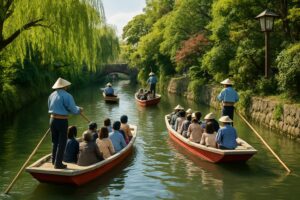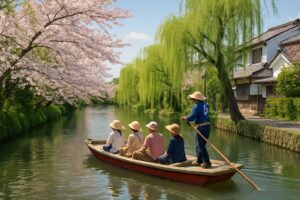
Yo, let’s talk about a place that’s straight-up out of a movie set, a spot so chill and drenched in history it feels like you’ve time-slipped. I’m talking about Yanagawa, a city in the southern part of Fukuoka Prefecture in Kyushu, Japan. Forget the neon chaos of Tokyo for a hot minute; this ain’t it. Yanagawa is the Venice of Japan, but with a low-key, soulful vibe that’s all its own. It’s a labyrinth of tranquil canals, weeping willows dipping their branches into the water, and little wooden boats, called ‘donkobune,’ poled along by boatmen who sing traditional songs. It’s a whole mood. But beyond the epic scenery, there’s a culinary legend that draws foodies from across the globe. This town is the undisputed kingdom of unagi, or freshwater eel. And trust me, the unagi here isn’t just food; it’s an art form, a legacy, a flavor experience that will rewire your brain. It’s the kind of meal you’ll be telling your friends about for years, no cap. We’re diving deep into the culture, the history, and the pure, unadulterated deliciousness of Yanagawa’s eel cuisine. Get ready to float, feast, and feel the soul of this incredible canal town. It’s a full-on sensory journey, and you’re about to get the inside scoop.
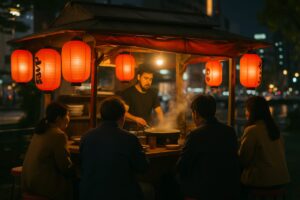
After immersing yourself in the soulful canals of Yanagawa, be sure to explore the vibrant yatai street food scene that Fukuoka is famous for.
The Vibe: Slow-Mo in the Water Capital

Stepping into Yanagawa feels like pressing pause on modern life. The entire city moves to a different rhythm. Instead of the roar of traffic, the main soundtrack is the soft splash of a sendo’s (boatman’s) pole against the water, the whisper of willow leaves, and the faint echo of a traditional song. The air is fresh, earthy, and carries subtle hints of water and history. The canals, called kawabata, serve as the city’s lifeblood, weaving through neighborhoods, beneath stone bridges, and alongside the backyards of old samurai homes. This elaborate system of waterways wasn’t designed for tourists; it functioned as a moat and irrigation network for the old Yanagawa Castle, shaping the town’s structure and way of life for over four centuries. That history isn’t confined to museums—you can sense it in the weathered wood of historic buildings and the moss-covered stone walls lining the canals. Yanagawa invites wandering and intentional getting lost. You might find yourself on a narrow path, a canal on one side and a traditional house with a meticulously maintained garden on the other, feeling as though you’ve uncovered a hidden corner of Japan. The atmosphere is profoundly tranquil, urging you to slow your pace, take in your surroundings, and simply be. It’s not about rushing from one attraction to the next; it’s about soaking in the ambiance, watching sunlight filter through the trees, and allowing the gentle flow of the water to set your day’s rhythm. This peaceful, almost meditative essence is the true charm of Yanagawa, providing the perfect setting for the culinary journey ahead.
Unagi 101: More Than Just Grilled Eel
Alright, let’s dive into the main event: the legend—Unagi. If you’ve tried eel elsewhere in Japan, you’ve likely experienced kabayaki, where the eel is charcoal-grilled while being basted in a sweet and savory soy-based sauce called tare. It’s absolutely delicious. But Yanagawa boasts its own signature style, a dish so iconic it’s practically synonymous with the town: Unagi no Seiro-Mushi. This is a total game-changer, making a pilgrimage here essential for any serious foodie.
So, what exactly is seiro-mushi? The name literally means ‘steamed in a wicker basket,’ which is central to the method. It begins much like kabayaki: the eel is deboned, skewered, and grilled perfectly. But then, the process takes a unique turn. Instead of serving the eel over plain rice, there’s a two-step ritual. First, rice is cooked with the restaurant’s secret, closely guarded tare, infusing every grain with smoky, sweet, umami-rich flavor. This seasoned rice is then placed into a rectangular red lacquer steam box called a seiro. The grilled eel fillets are layered on top, and the entire box is steamed. This final steaming makes the eel incredibly tender, almost melting in your mouth, while allowing the flavors of the eel and sauce to deeply meld into the rice, creating a harmonious dish bursting with flavor. The dish is typically garnished with finely shredded egg crepe (kinshi tamago), adding color and a subtle textural contrast. When the steaming lacquer box arrives at your table and you lift the lid, the aromatic steam is pure bliss. It’s a gentler, moister, and profoundly flavorful experience than typical grilled unagi. This is comfort food that is at once rustic and highly refined. This is the Yanagawa way, and once you’ve tasted it, you’ll understand why this town is the unagi capital.
The Sauce is the Boss: The Secret of Tare
You can’t discuss unagi without honoring the tare. This sauce is the soul of the dish, and in Yanagawa’s historic eel restaurants, or unagiya, the tare is a treasured legacy. Many of these places have been around for centuries, maintaining a ‘master sauce’ pot that has never been fully emptied. Every day, they replenish this pot with fresh ingredients—soy sauce, mirin, sake, sugar—while the aged sauce, rich with flavors from countless eels grilled over the years, serves as the base. This technique, known as tsugitashi, yields a sauce with a depth and complexity impossible to replicate with a new batch. It’s a culinary heirloom passed down through generations of eel masters. The exact recipe remains top secret, fiercely guarded by the families. When you savor unagi in Yanagawa, you’re not just eating a meal—you’re tasting history, sometimes centuries’ worth, in every bite.
The Culinary Quest: Hunting Down Yanagawa’s Top Unagiya

Selecting an unagi restaurant in Yanagawa can feel overwhelming due to the abundance of legendary spots. You really can’t go wrong, but a few places are revered as sacred grounds for eel enthusiasts. Each offers its own unique history, atmosphere, and subtle twist on the classic seiro-mushi.
Ganso Motoyoshiya: The Origin Story
If you want to savor history itself, head to Ganso Motoyoshiya. This is the original, the OG spot. Founded over 300 years ago during the Edo period, it’s the very restaurant credited with inventing seiro-mushi. The story is that the founder sought a way to keep the eel warm for customers, leading to the idea of serving it in a steaming box. The rest is history. Dining here feels like stepping back in time. The building is a traditional masterpiece, with beautiful tatami rooms overlooking a classic Japanese garden. You remove your shoes, sit on the floor, and fully absorb the ambiance. Their seiro-mushi sets the standard by which all others are judged. The eel is fluffy and rich, the rice perfectly seasoned, and the tare has a deep, smoky complexity that only 300 years of continuous use can develop. It’s not just a meal; it’s a cultural experience. Expect a wait, as this place is world-famous, but it’s worth every moment.
Wakamatsuya: The People’s Champion
Wakamatsuya is another major player in the Yanagawa unagi scene, established in 1860. Situated near the canal boat boarding area, it’s a popular spot. While they respect tradition, their flavor profile is often described as slightly more refined and approachable. The restaurant itself is stunning, blending modern and traditional design with breathtaking views of the canal. Their seiro-mushi is a masterpiece. The eel is grilled to a slight crisp before steaming, creating a fantastic texture that’s tender yet has a subtle bite. The sauce is lighter and sweeter than some others, making it perfect for first-timers. The presentation is flawless, and the overall experience feels polished and elegant. Private rooms are available, ideal for special occasions or more intimate meals. Wakamatsuya shows that history and innovation can coexist beautifully.
Rokkyu: The Local Favorite
For a spot that’s more of a local secret, Rokkyu is an excellent choice. It may not have Motoyoshiya’s international reputation, but for many Yanagawa residents, it’s the go-to place. The atmosphere is casual and welcoming, but the quality is top-notch. Their unagi is famously plump and flavorful. The tare has a distinct, robust character that locals swear by. Here, you’ll find families who have been returning for generations. One of the highlights is the rice, always cooked to perfection and able to absorb the sauce without becoming mushy. It’s an honest, straightforward, and incredibly delicious take on seiro-mushi that offers a genuine taste of local life.
Eating at any of these unagiya is an investment. A proper unagi meal isn’t cheap, but it’s an affordable luxury and an unforgettable experience. A pro tip: opt for lunch. It’s often a bit less crowded, and the sunlight streaming into the traditional dining rooms creates a magical atmosphere.
The Main Attraction: Gliding on the Donkobune
Your Yanagawa adventure isn’t complete without experiencing kawakudari—punting down the canals on a donkobune. This is the quintessential Yanagawa activity, and it’s pure magic. You board a long, flat-bottomed boat, sit on cushions, and let your sendo guide you through the city’s watery streets. These boatmen are true legends. Dressed in traditional attire with a conical straw hat, they propel the boat using a single long bamboo pole, skillfully navigating the narrow waterways.
But they’re more than just boat operators; they’re storytellers, singers, and your personal guides to the city’s soul. As you glide along, they’ll point out historical landmarks, explain the purpose of old water gates, and share local folk tales. Often, they’ll break into a traditional Yanagawa boat song, their voices echoing beautifully over the water. It’s a hauntingly beautiful experience. The journey takes you under dozens of bridges—some so low that everyone on board must duck down flat. It’s all part of the fun. You’ll pass lush gardens, historic buildings like Tachibana-tei Ohana, and see the city from a perspective impossible to get on foot. The full course lasts about 70 minutes and covers several kilometers, providing a thorough tour of the town’s charm. It’s relaxing, fascinating, and stunningly scenic. In winter, the boats are even equipped with kotatsu—low tables with heaters underneath and thick blankets to trap the warmth. You can stay cozy while drifting through a quiet, wintry landscape. It’s comfort at another level.
Exploring the Land: Beyond the Canals

Once your boat ride concludes, Yanagawa offers much more to discover on solid ground. The town is compact and ideal for exploring on foot.
Tachibana-tei Ohana
This site is a must-see. Ohana was the residence of the Tachibana clan, the feudal lords who governed the Yanagawa domain for centuries. It’s not a single building but an impressive complex featuring a grand Western-style mansion from the Meiji era, a traditional Japanese audience hall with tatami rooms, and a stunning garden called Shoto-en, designed to evoke the famous coastal scenery of Matsushima Bay. Visitors can explore the rooms, now a museum showcasing the Tachibana family’s treasures, including samurai armor, exquisite furniture, and historical documents. The garden is a masterpiece itself, with over 280 black pines and a large pond. You could easily spend hours admiring the craftsmanship and imagining the history that took place within these walls.
The Legacy of Hakushu Kitahara
Yanagawa is also the birthplace of Hakushu Kitahara, one of Japan’s most renowned modern poets and creators of children’s songs. His works are deeply connected to the landscape and atmosphere of his hometown. You can visit his birthplace, now a memorial museum, which is a beautifully preserved merchant house from the Edo period offering insight into his life and the inspirations behind his poetry. Even if you’re not familiar with his work, visiting the museum enriches your understanding of Yanagawa’s cultural heritage. Many songs sung by the sendo on the canal boats were penned by him.
Wandering the Samurai District
Near the former castle grounds, you’ll find streets that still retain the ambiance of the samurai era. Though most of the castle has vanished, the moats (the canals) remain. You can stroll along paths once traversed by samurai, admiring the traditional architecture and walled residences. It’s a quiet, evocative part of town ideal for a tranquil afternoon walk.
A Town for All Seasons
Yanagawa’s charm changes with the seasons, making it a place worth visiting time and time again.
Spring is truly spectacular. From mid-February to early April, Yanagawa celebrates the Hina Matsuri Sagemon Meguri. While it’s the Girl’s Day festival, Yanagawa elevates it to an extraordinary level. Throughout the town, homes and shops showcase intricate arrangements of sagemon—handmade decorations featuring symbols of good luck like cranes, turtles, and rabbits, all suspended around a central ball. These vibrant displays are accompanied by traditional Hina dolls, adorning the entire town and creating a festive, highly photogenic setting.
Summer brings lush, vivid greenery. The willows are dense, and the canals offer a refreshing respite from Kyushu’s heat. The chirping of cicadas provides a quintessential Japanese summer soundtrack as you drift along by boat. It’s the perfect season to savor iced matcha in a traditional café after enjoying an unagi feast.
Autumn is cool and pleasant, with the trees lining the canals beginning to display their autumn colors. The crisp, clean air makes it ideal for walking. This quieter season is perfect for those seeking to absorb the tranquil atmosphere away from festival crowds.
Winter, as noted, is the season of kotatsu boats. Drifting down the canal, warm and snug beneath the heated blanket, offers a uniquely cozy and romantic experience. The town is peaceful, and the stark, serene beauty of the winter landscape holds its own captivating appeal.
The Practical Playbook: Getting There and Around

Reaching Yanagawa is surprisingly straightforward, especially from Fukuoka City, the largest metropolis in Kyushu.
Access from Fukuoka
The most convenient way is by train. From Nishitetsu Fukuoka (Tenjin) Station, you can board the Nishitetsu Tenjin Omuta Line. The Limited Express train takes about 50 minutes to arrive at Nishitetsu Yanagawa Station. It’s a direct, comfortable, and scenic journey. Many travelers purchase a combo ticket at Tenjin Station that includes both round-trip train fare and a discounted ticket for the canal boat ride. This option is both convenient and budget-friendly.
Getting Around Yanagawa
Upon arrival at Yanagawa Station, the main boat departure point is either a short walk or a quick taxi ride away. The best way to explore the town is on foot, as the area around the canals and historic sites is compact. After the boat ride, which is usually one-way, a free shuttle bus runs from the disembarkation point back to the vicinity of the station or the main boat launch, so you won’t need to worry about the return trip.
First-Time Visitor Tips
- Wear comfortable shoes. You’ll be doing quite a bit of walking, and some paths may be uneven.
- Carry cash. While major restaurants and shops accept credit cards, many smaller, family-owned places and vendors only take cash.
- Reserve in advance for popular unagi restaurants, especially on weekends or holidays. Your hotel can assist with making reservations.
- On the boat, you will sit on the floor, so wear comfortable clothing. Don’t forget your hat and sunscreen in the summer, as the boats are open-air.
A Final Thought
Yanagawa is more than just a day trip; it’s a complete immersion. It’s a place that captivates all your senses—the sight of the willows, the sound of the flowing water, the gentle motion of the slow boat, and of course, the unforgettable flavor of seiro-mushi. It’s a town that proudly preserves its traditions while welcoming visitors with quiet elegance. It reminds us that some of the most meaningful travel experiences come from slowing down, drifting along, and savoring the moment. Whether you’re a dedicated foodie seeking the ultimate unagi, a history enthusiast, or simply someone in search of a beautiful escape, Yanagawa delivers. It’s a piece of authentic, timeless Japan that will capture your heart and leave you longing for canals and steaming eel long after you’ve left.