Yo, what’s the deal? You think you know Japan? You’ve seen the pics—the Shibuya Scramble, a thousand glowing lanterns in Kyoto, maybe even that big Buddha chilling in Kamakura. And yeah, that Japan is legit, a whole vibe. But what if I told you there’s another Japan? A Japan that’s quieter, older, and a little bit wild. A Japan that doesn’t scream at you with neon but whispers through rustling leaves and creaking wood. I’m talking about the forgotten corners of the archipelago, the places where the gods and monsters of old still hang out. We’re going on a deep dive into the world of abandoned and neglected shrines—the raw, unfiltered sanctuaries where local myths and legendary yokai are still the main characters. This isn’t your standard-issue travel guide. This is a quest for the soul of the land, a trip back in time where every moss-covered stone and faded prayer tablet has a story to tell. It’s about chasing a feeling, a supernatural static in the air that you just can’t get in the big city. It’s about finding the places where the veil between our world and the spirit world is paper-thin. So, if you’re down to trade the Shinkansen for a muddy path and the city lights for a canopy of ancient cedars, then you’re in the right place. We’re about to explore the real hidden Japan, a place that’s heavy with history, magic, and some seriously mysterious energy. Let’s get it.
To truly feel this ancient magic, consider a journey to the legendary region of Tono, the mythical heartland of Japan’s yokai.
The Vibe Check: What’s it Really Like in a Forgotten Shrine?

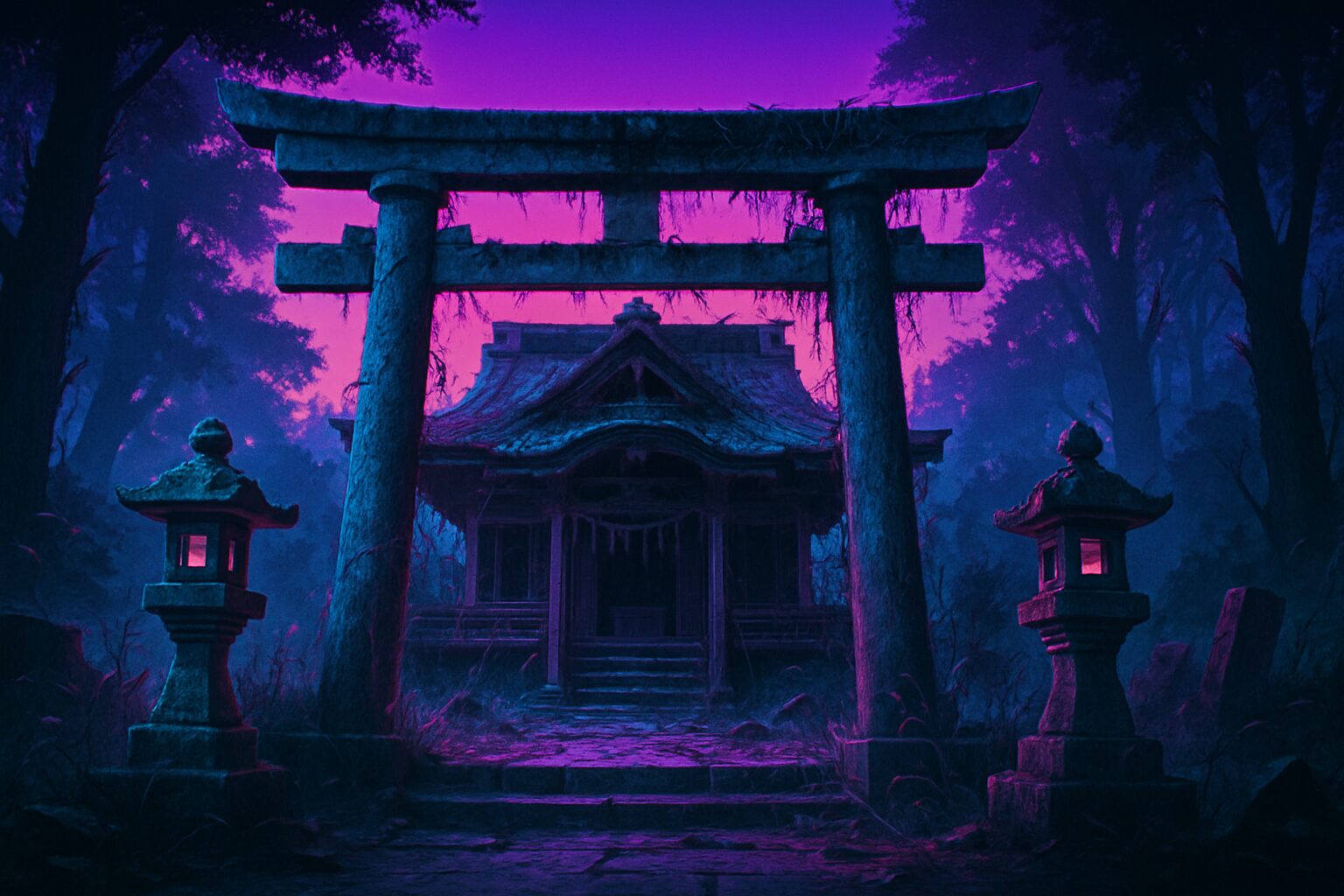
Before you even consider lacing up your hiking boots, you need to grasp the atmosphere. Stepping onto the grounds of a neglected shrine isn’t like visiting a tourist attraction. The shift in vibe is immediate and complete. The moment you pass through the weathered, often leaning torii gate, the modern world slips away. It’s a fully immersive sensory experience, and honestly, it’s incredible. The first thing that strikes you is the silence—not an empty silence, but a dense, weighty quiet filled with the sounds of the forest. You hear the buzz of cicadas in summer, a relentless, electric hum that seems like the very heartbeat of nature. You hear the rustle of leaves, which might be the wind—or something else. The air itself feels different—cooler beneath the thick canopy of cedar and cypress trees, carrying the scent of damp earth, decaying leaves, and the faint, sweet perfume of moss. It’s a primal aroma, one that tells of centuries of growth and decay—a cycle this little shrine has quietly witnessed forever.
Then you start to notice the details. Visually, it’s a masterclass in wabi-sabi, the Japanese aesthetic of finding beauty in imperfection and impermanence. Everything is beautifully crumbling. Stone lanterns (toro) are blanketed in a thick, velvety carpet of green moss, their paper screens long since rotted away, leaving only the stone framework. The komainu, the guardian lion-dog statues, are often eroded by acid rain and time, their fierce snarls softened into gentle, almost mournful expressions. Their stone manes might be cracked, with a small fern defiantly growing from a crevice in their backs. The offering hall (haiden) might be leaning, its wooden planks warped and gray. The roof, once pristine thatch or elegant tile, has become a wild garden of moss, weeds, and small saplings. You might notice faded ema, small wooden prayer plaques, hanging forlornly, their painted wishes bleached into illegibility after countless seasons of sun and rain. It’s a scene filled with profound melancholy, but it’s not depressing. It’s peaceful. It feels like you’ve stumbled upon a place that has transcended human concerns—a place slowly and gracefully being reclaimed by the nature from which it was born.
But the real clincher, the thing that makes these places so addictive, is the feeling. It’s an undeniable presence. You feel watched—not in a creepy horror-movie sense, but in a profound, spiritual way. It’s the sense that the kami, the Shinto deity enshrined there, is still present. Or maybe it’s the yokai, the spirits of the land, who have taken up residence now that most humans have left. It feels like being a guest in a very old, very sacred home. The energy is palpable. Sometimes it feels curious, sometimes indifferent, but it always feels ancient. You find yourself moving slower, speaking in hushed tones without even realizing it. You’re not just observing old things; you’re communing with the layers of history, belief, and folklore soaked into the very soil beneath your feet. It’s a spiritual reset button, a reminder that we’re just a tiny part of a much bigger, much older story. This vibe, this deep, resonant feeling of connection to something unseen and eternal, is the ultimate reason to seek out these places. It’s a high no city can provide.
Yokai 101: The OG Spirits of the Land
Alright, let’s dive into the residents. When a shrine is forgotten by people, it doesn’t mean it’s empty. In fact, that’s when the real celebration begins for the yokai. What are yokai? A simple translation would be ‘monster’ or ‘ghost,’ but that’s a huge oversimplification. It’s like calling all music just ‘noise.’ Yokai encompass the full range of supernatural phenomena, embodying the unexplainable. They are the personification of nature’s power, human emotions, and the strange occurrences that happen when no one’s watching. They can appear as terrifying demons, playful tricksters, benevolent spirits, or even inanimate objects that have come to life after a hundred years. They are an essential part of Japan’s spiritual fabric, arising from a blend of Shinto animism—the belief that everything possesses a spirit—and Buddhist cosmology, all shaped by centuries of local folklore.
In the deep, quiet forests surrounding a forgotten shrine, the yokai community thrives. These are their ancestral homes. Walking along the overgrown path, you are treading through their living room. One of the most common spirits you might ‘sense’ are the Kodama—tree spirits. In ancient forests, especially near sacred sites, certain venerable trees are believed to host a Kodama. They are the source of echoes in the mountains; a sound that repeats itself is thought to be the Kodama’s voice. Guardians of the forest, they are generally peaceful but become seriously angered if their home is disrespected. Feeling an unexpected chill on a warm day or hearing an unexplainable sound near a massive, gnarled tree? That could be a Kodama making its presence known. They represent the soul of the forest itself, a silent yet potent force.
Then there are the A-listers, the yokai everyone’s familiar with and fond of: the Kitsune. These are the fox spirits, and they are profound. Kitsune are highly intelligent, powerful shapeshifters often linked to Inari, the Shinto god of rice, sake, and prosperity. That’s why you see so many fox statues at Inari shrines, even the small, crumbling ones found on hillsides. Kitsune can be benevolent divine messengers bringing good harvests and fortune, but they can also be serious tricksters, capable of creating illusions, possessing humans, and causing chaos for their own amusement. An old legend says that when the sun shines while it’s raining, it signals a Kitsune wedding. At a forgotten Inari shrine, you might find dozens of small fox statues, covered in moss, their stone faces appearing to hold ancient secrets. The energy around these places is often playful yet powerful, reflecting the dual nature of the Kitsune.
If you venture higher into the mountains, you enter the domain of the Tengu. These legendary mountain goblins are often depicted with long noses or beak-like faces, sometimes with wings. Tengu are masters of the mountains—skilled martial artists, powerful sorcerers, and protectors of the wild. Originally seen as demons of war, their image softened over time. Today, they are often regarded as stern but righteous guardians of the Dharma (Buddhist law) or as powerful mountain spirits who test monks and warriors. They are said to dwell deep in the mountains, especially in cedar and pine trees. A forgotten shrine on a high mountain pass? That’s prime Tengu territory. The atmosphere there feels different—sharper, more intense. There’s a sense of being watched by a stern but fair overseer. Offerings—often sake or rice—are sometimes left at the base of particularly large trees. Crossing into a Tengu’s domain unprepared is a grave mistake. Show respect, and they might allow you to pass through their realm unharmed. Understanding these beings goes beyond spooky stories; it’s about appreciating the Japanese reverence for nature in all its forms—beautiful, dangerous, and utterly magical.
The Quest: How to Find These Hidden Gems (Respectfully)

Alright, so you’re convinced. You want to discover one of these enchanting, moss-covered spots. How do you go about it? This is where it gets tricky, because these places aren’t listed on any tourist map. You can’t just search “abandoned shrine” on Google Maps and get directions. That’s not how it works. The search itself is part of the journey. It’s a modern-day pilgrimage that demands a completely different mindset. The first and most important rule is to go deeply rural. I mean truly off-the-beaten-path, the `inaka`. You need to leave the Golden Route (Tokyo-Kyoto-Osaka) and venture into areas where time seems to slow down. Think of the mountains of the Kii Peninsula, home to the ancient Kumano Kodo pilgrimage trails. Or the mystical island of Shikoku, with its 88-temple circuit winding through remote villages. Or head north to the Tohoku region, a place rich in folklore and rugged natural beauty. These are regions where depopulation has left a mark, where old traditions endure, and where nature quietly waits at the edges of civilization to reclaim what once was hers.
Your best visual clue is the `torii` gate. In Japan, torii gates signify the entrance to sacred ground. They’re everywhere. While the famous torii are bright vermilion and carefully maintained, the ones you want to find are often weathered stone or worn wood, standing almost shyly by the edge of a forest beside a country road. You’ll pass dozens of them. Most will lead to well-kept community shrines. But occasionally, you’ll spot one that feels… different. The path behind it may be overgrown. The gate itself might be leaning a bit precariously. This is your invitation. This is your starting point. Following these forgotten trails is an act of faith. You don’t know what you’ll find — it could be a tiny, single-room `hokora` (a small shrine) with a lone stone statue, or a larger, crumbling complex of buildings. The mystery is the essence. Let your curiosity and intuition lead you.
Digital maps are handy, but for this kind of adventure, you need to go old school. When you’re in a rural town, stop by the local town hall (`yakuba`) or a small community center. They often have detailed local maps, made for residents, not tourists. These maps usually mark every shrine and temple in the area, no matter how small. Point to a few in remote spots and ask about them. This brings you to the ultimate hack for finding these places: talk to the locals. Especially the older generation. Your high school Japanese won’t be enough here; you need genuine curiosity and respect. Learn a few key phrases. For example, `Kono hen ni, daremo ikanai furui jinja wa arimasu ka?` (Are there any old shrines around here that nobody visits?). An old farmer in his field or the grandmother running the tiny local candy shop are living archives of local knowledge. They’ll tell you about the shrine up the next mountain, where the `tanuki` (mischievous raccoon dogs) are said to roam at night. They’ll give you stories, not just directions. This human connection transforms your visit from simple sightseeing into a true cultural experience. Their memories and tales are the real treasure. Be polite, patient, and ready for some wonderful conversations.
Shrine Etiquette: Don’t Be That Guy
This is the most important part of the entire guide, so pay close attention. Discovering a forgotten shrine is a rare privilege, not an entitlement. These are not tourist spots or playgrounds for urban explorers to vandalize. They are sacred spaces, plain and simple. Even if it appears that no one has visited in fifty years, the site still holds spiritual significance and must be treated with reverence. The one absolute, non-negotiable rule is: never force entry. If a gate is locked, a rope blocks the path, or there’s a ‘No Trespassing’ sign (`tachi-iri kinshi`), turn back—no exceptions. This indicates that the owner or local community does not want visitors. Respecting this boundary is the bare minimum; attempting to bypass it is not only deeply disrespectful but potentially illegal.
Second, the golden rule of the outdoors applies here with added spiritual weight: leave no trace. Take nothing but photos, leave nothing but footprints. Be mindful of those footprints—avoid trampling delicate moss or unstable wooden floors. The aim is to move through the shrine like a ghost, observing without disturbing. Although it may be tempting to take a fascinating shard of a statue or antique pottery, resist the urge. Everything within the shrine forms part of a greater whole, and removing even a small piece is like tearing a page from a priceless book. Certainly, don’t leave any litter—not a single gum wrapper. Pack it in, pack it out. If you want to go a step further, bring a small bag and collect any trash you find. This simple act of kindness is an offering of respect to the `kami` of the shrine.
Third, demonstrate respect through your behavior. Even in a rundown shrine, basic etiquette applies. When passing through the `torii` gate, pause briefly and give a slight bow—you are entering a divine realm. When approaching the main hall, even if it’s just a shell of a building, it is customary to offer a brief prayer: bow twice, clap your hands twice, silently say your prayer, then bow once more. If there’s an offering box (`saisen-bako`), leaving a small coin—especially a 5-yen coin, considered lucky—is appropriate. These small gestures show that you understand and honor the shrine’s purpose. You are not merely a tourist; you are a visitor acknowledging the sacredness of your host’s home. Keep your voice low, avoid loud conversation, and embrace the silence. This is not a place for victory selfies but for quiet reflection.
Finally, and this should go without saying, prioritize your safety. These shrines are forgotten for a reason: they are often remote and unmaintained. Paths can be slippery and dangerous, and wooden structures may be rotten and unstable. You also share the area with wildlife. In rural Japan, this means being cautious of `suzumebachi` (giant hornets), `mamushi` (venomous pit vipers), and in some regions, bears (`kuma`). Make noise as you walk; a bear bell on your backpack is advisable. Wear sturdy, closed-toe shoes and long pants. Inform someone of your general plans for the day and be prepared for little or no cell service. This advice is not intended to scare you but to prepare you. Showing respect also means taking responsibility for your own safety so you don’t become a burden on the local community. Respect the place, respect the spirits, and respect the real dangers of the wilderness.
A Case Study: The Deep Folklore Vibe of Tono, Iwate

To bring all of this to life a little more vividly, let’s focus on a specific location. We’re not heading to an ‘abandoned’ site, but rather to a place where the air is so rich with folklore that every shrine, river, and mountain seems plucked straight from a legend. Welcome to Tono, a small city in Iwate Prefecture nestled in the heart of the Tohoku region. Undoubtedly, Tono is the capital of Japanese folklore. Its legendary reputation was solidified in 1910 with the release of Tono Monogatari (The Legends of Tono), a collection of local folktales, myths, and supernatural stories compiled by Kunio Yanagita, the father of Japanese folklore studies. This iconic book transformed Tono into a living museum of the yokai and kami we’ve been discussing.
Visiting Tono feels like stepping into the pages of that book. The landscape itself—a basin encircled by rolling mountains and dotted with traditional magariya farmhouses featuring distinctive L-shaped roofs—exudes an ancient, mystical atmosphere. The feeling here is not one of neglect but of preservation. The locals take immense pride in their folkloric heritage. Yet, you can still sense that ‘forgotten shrine’ vibe in the spaces between the main sites. One well-known spot is Kappabuchi, a small, modest pool in a gentle stream behind Jokenji Temple. This pool is reputedly the legendary home of the kappa, mischievous water spirits who favor cucumbers and are notorious for their sometimes-dangerous tricks. Visitors and locals alike leave cucumbers on the bank as offerings, a tradition that remains very much alive. Sitting by the stream amid lush greenery, it’s easy to imagine a kappa or two peeking up at you from beneath the water’s surface. The air buzzes with a sense of possibility.
Jokenji Temple itself is a true treasure. Flanking the entrance are dozens of komainu statues, each crafted by a different local stonemason generations ago. Their expressions range from fiercely protective to almost comical. Many are blanketed in thick moss, their details softened by time. They seem less like official guardians and more like a quirky gathering of local spirits watching over the temple. Further into the Tono area, you can explore the Gohyaku Rakan, a collection of 500 small stone statues representing Buddha’s disciples, each bearing a unique facial expression. Over the years, nature has worked its magic on them; moss and lichen cloak many, some partially reclaimed by the earth, their serene, sorrowful, or joyful faces emerging from the green. It feels like you’ve stumbled upon a secret assembly of ancient stone spirits. Hiking the trails in the mountains surrounding the Tono basin will inevitably bring you past tiny, unnamed hokora and weathered stone markers—silent testaments to the deep-rooted beliefs of those who have lived and worked this land for centuries. Tono teaches us that folklore isn’t just history; it is a living, breathing part of the landscape, and every corner holds a story waiting to be discovered. It’s the perfect place to learn how to see and sense the unseen world present throughout rural Japan.
Gear Up for Your Mythical Journey
Alright, adventurer, let’s get down to logistics. Exploring the Japanese countryside to uncover these hidden gems requires more preparation than a typical day trip in Tokyo. Your equipment can make or break your experience, ensuring you remain safe, comfortable, and respectful. First, your footwear is non-negotiable: you need sturdy, waterproof hiking shoes or boots. You’ll be traversing uneven, often muddy and slippery trails. A twisted ankle can quickly ruin your day and might even necessitate a rescue in areas without phone reception. Leave your fresh sneakers behind; this calls for something with ankle support and strong grip. For clothing, opt for layers and full coverage. Long pants and long-sleeved shirts are essential, even in summer, as they guard against scratches from dense vegetation, sunburn, and, most importantly, insect bites. Japan’s forests are home to persistent bugs, including ‘suzumebachi’ (hornets), ‘abu’ (horseflies), and in humid spots, ‘yamabiru’ (land leeches). Wearing lighter colors is often advised since it makes it easier to see ticks.
Your backpack is your lifeline. Its contents should be suited to the duration and remoteness of your hike, but some essentials apply to any trip. Water is paramount; bring more than you expect to need. Dehydration is a real hazard, especially during Japan’s famously hot and humid summers. Pack high-energy snacks like nuts, dried fruit, or onigiri (rice balls) from a local convenience store. A reliable map is vital. While phones with offline maps (such as Maps.me or Google Maps offline) are helpful, a physical paper map is a crucial backup for when your battery runs out. And speaking of batteries, a portable charger is a must-have. Also include a small first-aid kit with antiseptic wipes, bandages, and blister treatments. Insect repellent is essential, and if you’re venturing into known bear habitat, bring a bear bell. This small bell jingles as you walk, alerting bears to your presence and preventing surprises that could provoke aggression.
Timing your trip can greatly affect your experience. Spring (April-May) and autumn (October-November) are arguably the best seasons. The weather is mild, humidity is lower, and the scenery is at its peak. Spring features blooming cherry blossoms—even in remote areas—and vibrant fresh greenery as the forests revive. Autumn showcases stunning ‘koyo’ (autumn foliage), painting mountain landscapes in blazing reds, oranges, and yellows, creating an incredibly magical setting for moss-covered old shrines. Summer (June-August) can be oppressively hot and humid, with peak insect activity and typhoon season. Winter (December-February) offers beautiful snow-covered landscapes wrapped in serene silence but brings significant risks. Trails can become icy and hard to see, access roads might close, and the chance of being stranded rises sharply. Unless you are an experienced winter hiker, it’s best to stick to the shoulder seasons for these deep-country adventures. Preparation is a form of respect—respect for yourself and for the powerful nature you’re about to enter.
More Than Just Ruins: The Soul of Inaka Japan
As you spend more time discovering these forgotten places, you’ll begin to realize that you’re witnessing something far deeper than mere picturesque decay. These shrines stand as silent monuments to a profound demographic shift sweeping across Japan: kaso, or rural depopulation. For decades, younger generations have been leaving their small mountain villages and farming communities in search of economic opportunities and excitement in the big cities. As the older generations pass on, these villages gradually empty, leaving behind houses, schools, and, of course, shrines. There is simply no one left to sweep the paths, repair the roofs, or hold the annual festivals that once formed the vibrant heart of the community. A forgotten shrine is not just old; it is a symptom of a vanishing way of life.
This brings an additional layer of poignant beauty, a sense of mono no aware, to your exploration. This classic Japanese concept reflects a gentle sadness or pathos about the fleeting nature of things. It is the bittersweet feeling you experience when watching cherry blossoms fall, fully aware of their impermanence. Standing within a crumbling shrine, you are encountering mono no aware at its most powerful. You witness the inevitable, graceful triumph of nature over human effort. You see the slow, quiet end of a community’s spiritual core. It is a deeply moving experience that connects you not only to Japan’s ancient past but also to its current struggles. It cultivates empathy and a deeper appreciation for the communities still striving to hold on, to maintain their traditions amid the relentless tide of modernity.
Yet, it is not all sorrow. These places also embody a remarkable resilience. The kami enshrined within, according to Shinto belief, are part of nature itself—the spirit of the mountain, the river, the great tree. In a sense, as the human-made structures decay and are reclaimed by the forest, the shrine simply returns to its most elemental form. The human element fades, but the divine, natural presence remains—perhaps even stronger and more vivid without the distractions of human ritual. This connects to another essential Japanese aesthetic: yugen. Yugen lacks a direct English translation but signifies a profound, mysterious, and subtle grace. It is about what is sensed but unseen, an awareness of a hidden, otherworldly beauty. Discovering a moss-covered fox statue half-buried in leaves, its stone face smiling enigmatically in the dappled sunlight—that is yugen. It is the feeling that you are perceiving a tiny glimpse of a much deeper reality. Exploring these shrines, then, becomes more than a search for yokai; it transforms into a meditation on time, impermanence, and the enduring power of the sacred in a world that is ever-changing. You are not merely a ruin hunter; you are a witness to the slow, beautiful, and heartbreaking dance between humanity, nature, and the divine.
Final Thoughts: Your Own Monogatari
Here it is: the key to a hidden Japan, just off the main road and just over the next hill. This journey isn’t about ticking boxes or snapping Instagram shots of famous spots. It’s about embracing the unknown, getting a little lost, and opening yourself to the quiet magic that still lingers in the Japanese countryside. It’s a challenge, no doubt. It demands patience, respect, and a willingness to step far beyond your comfort zone. You’ll face bugs, bad weather, and the frustration of a path that leads nowhere. But the rewards are priceless. The feeling of finally pushing through the last patch of overgrown brush to discover a clearing with a silent, moss-covered shrine is pure discovery—a secret shared only between you and the forest.
You become part of a long tradition of pilgrims, monks, and wandering poets who sought wisdom and enlightenment not in grand temples, but in the solitude of nature. Each forgotten shrine you uncover adds a new chapter to your own monogatari, your personal legend. These stories aren’t only found in old books; they are written every day by the wind in the pines, the call of a distant hawk, and the silent gaze of a stone statue. This is the real, deep Japan. It’s not always easy or comfortable, but it’s always genuine. It will change how you see the country—and perhaps even how you view the world. So go ahead, get that rail pass, but use it to reach the places in between. Find your path, listen to the whispers in the trees, and discover the stories the spirits have waiting for you. The other Japan is calling. Bet on it.