Yo, what’s good, world? Li Wei in the house, ready to spill the tea on one of Japan’s most iconic and, let’s be real, most baffling cultural exports: the vending machine. And nah, we’re not talking about your basic can of Coke or a sad little bag of chips. We’re diving headfirst into the deep end, the wild side of Japanese jidohanbaiki—the world of hot ramen from a dusty box, artisanal soup broth in a bottle, and yeah, even bugs in a can. You’ve probably seen the pics on social media, the viral videos that make you go, “Japan is on another level.” But the real question, the one that keeps you up at night, is why? Why does a country known for its meticulous, Michelin-starred cuisine also sell entire hot meals from a glowing, humming machine on a random street corner? Is it just for the memes? Is it a high-tech flex? Or is there something deeper going on? Lemme tell you, the answer is a whole mood. It’s a story about history, hustle, and a national obsession with convenience that’s so extra, it’s basically art. This ain’t your average travel guide; this is a cultural deep dive. We’re about to decode the matrix of these culinary curiosities and figure out what they say about Japan itself. So buckle up, fam. We’re going on a tour of the real Japan, the one that exists between the flashing lights of Shibuya and the serene temples of Kyoto. It’s a journey into a world of automated eats that’s equal parts nostalgic, futuristic, and straight-up weird. Let’s get it.
If you think automated meals are wild, wait until you experience the sheer chaos of Japan’s wildest game shows.
The Vending Machine Origin Story: More Than Just Convenience
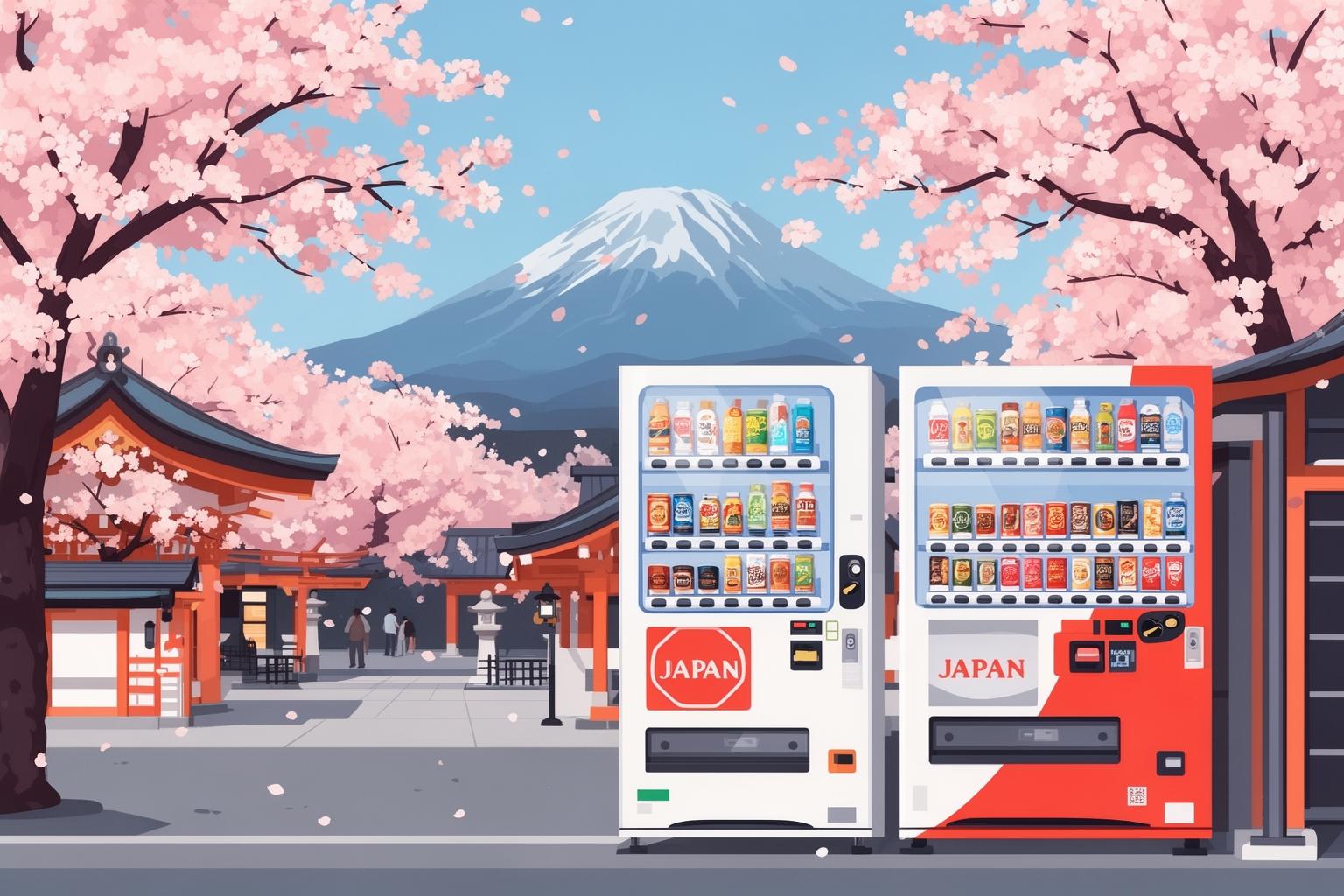
Before we even begin to unravel the madness behind a hot noodle vending machine, we need to rewind the tape. The entire jidohanbaiki phenomenon in Japan isn’t a recent tech-bro fantasy; it’s a concept deeply embedded in the nation’s post-war identity crisis and its subsequent economic rise. The story truly begins in the 1950s and 60s, a time of explosive growth. Japan was rebuilding, working tirelessly, and transforming itself into an economic powerhouse. Cities expanded, factories operated around the clock, and a new class of urban office workers—the iconic salaryman—emerged. This created a perfect storm of social and economic factors that made vending machines not just a novelty, but a vital necessity.
First, there was a significant labor shortage. With everyone focused on rebuilding and innovating, there simply weren’t enough people to staff shops and restaurants at all hours. Demand for goods and services soared, but human resources were limited. Enter the humble vending machine: an indefatigable, non-complaining worker capable of operating 24/7 with no holidays or overtime pay. It was the ultimate efficiency hack for a nation obsessed with maximizing productivity. It filled a crucial gap in the service economy, ensuring that a factory worker finishing a late shift or a truck driver on a long haul could still get a hot drink or quick snack at 3 AM.
Next is Japan’s social fabric. Let’s be honest, leaving unattended money-filled machines on the street is unthinkable in most countries. In Japan, however, exceptionally low crime rates and a high-trust society make it possible. There was, and still is, a collective respect for public property. Vandalism is rare. This fundamental sense of public safety created a secure environment where businesses could confidently invest in deploying thousands of these machines nationwide, from Tokyo’s busiest intersections to remote mountain passes. This trust goes both ways; consumers also believe the products inside will be safe, fresh, and exactly as advertised. It’s a social contract expressed through a vending machine.
Lastly, there’s the pure economics of it. Japan is densely populated, and urban real estate is notoriously costly. Renting even a small storefront is a huge financial burden. A vending machine, by contrast, occupies about one square meter. It allows businesses to set up points of sale in high-traffic areas at a fraction of the cost of a traditional shop. It is a low-overhead, high-efficiency business model perfectly suited to the economic landscape. This explains why they are ubiquitous: tucked into alleyways, lined up outside office buildings, and standing watch on quiet residential streets. They are physical embodiments of a society that values efficiency, safety, and maximizing limited space. They’re not just vending drinks; they stand as silent tributes to the very principles that powered Japan’s economic miracle.
Beyond the Basics: Decoding the “WTF” Meals
Alright, so we’ve uncovered the reasons behind the vast number of vending machines. However, that doesn’t clarify the jump from a simple can of green tea to a steaming, full bowl of kitsune udon. Here, we move beyond logistics and step into the territory of culture, nostalgia, and highly specialized marketing. The quirky food vending machines aren’t uniform; they exist along a spectrum. On one side, there are relics from a past era—mechanical dinosaurs lovingly maintained to serve a taste of history. On the other, there are ultra-modern, gourmet options reflecting the evolving tastes and lifestyles of contemporary Japan. To truly understand, you need to analyze them category by category. Each one reveals a different story about the nation’s relationship with food, technology, and time itself.
The Hot Meal Machines: A Taste of Nostalgia
This category receives the most admiration online, and understandably so. We’re talking about famed retro machines that dispense hot soba, udon, ramen, and even toasted sandwiches. Encountering one feels like a glitch in the matrix. These aren’t sleek touchscreen devices; they are often clunky, faded, and weathered, equipped with chunky plastic buttons and old-school Nixie tube displays counting down the seconds. This look isn’t a defect; it’s the essence. These machines serve as time capsules, delivering a direct hit of Showa-era (1926–1989) nostalgia.
The Vibe and the Why
These machines were the original 24/7 fast food, created before convenience store chains dominated the scene. They thrived in places that never slept but couldn’t support a full-fledged restaurant: highway rest areas (michi no eki), long-distance ferry terminals, and rural drive-ins. Their audience was the blue-collar engine of Japan’s economic boom: truck drivers, factory workers, and traveling salespeople. For them, a hot bowl of noodles from a machine at 2 AM wasn’t a novelty but a lifeline—a moment of warmth and sustenance on a long, solitary journey.
Using one is a ritual. You drop coins into the machine with a satisfying clunk, press a large, slightly sticky button worn from decades of use, and then the magic unfolds. A Nixie tube glows orange, starting a 25-second countdown. Whirring and sloshing sounds emerge from inside the machine’s mysterious innards. Then, a small door opens, revealing a steaming plastic bowl of noodles. The taste? It won’t win any Michelin stars. The noodles may be soft, and the tempura slightly soggy from steam, but it’s undeniably comforting—warm, savory, and deeply satisfying in that simple, unpretentious way. It’s the culinary equivalent of a warm hug on a cold night.
The Culture Within the Machine
This type of food fits squarely within a cherished Japanese culinary category called B-kyu gurume, or “B-grade gourmet.” It celebrates cheap, hearty, and tasty food without the pretension of haute cuisine—food for the people. These machines are the ultimate embodiment of that ethos. What’s even more fascinating is that many of these retro vending machine spots aren’t large-scale corporate operations but passion projects run by small business owners deeply proud of their craft. They often prepare key ingredients—the broth, chashu pork for ramen, tempura fritters—by hand daily. They are the unseen chefs, mechanics, and curators of these edible museums. Maintaining these aging, intricate machines is a true labor of love, requiring specialized knowledge to repair parts long out of production. Visiting places like the famous vending machine haven at a used tire shop in Sagamihara isn’t just about trying an odd meal—it’s paying homage to a vanishing piece of Japanese cultural history. It’s a pilgrimage to the heart of B-grade gourmet.
The Dashi Vending Machine: Seriously, Just Broth?
Next, we shift from retro to downright practical. Picture walking through a quiet Japanese neighborhood and stumbling upon a vending machine filled not with drinks, but tall, elegant glass bottles. Inside each bottle is a clear, amber liquid and an entire grilled flying fish. Your first thought might be, “What on earth is this?” You’ve just found the dashi vending machine—one of the most culturally specific and, to outsiders, baffling vending machines in existence. Who needs artisanal soup stock on the go? The answer: every Japanese home cook.
The Logic of Liquid Gold
To grasp this machine’s purpose, you must appreciate dashi’s absolute, non-negotiable importance in Japanese cooking. Dashi is the fundamental savory broth base for thousands of dishes—miso soup, noodle broths, simmered vegetables, hot pots, and more. Comparable to chicken or beef stock in Western cuisine, dashi is arguably even more essential, providing the subtle, savory umami that defines Japanese food. Traditionally, making dashi involves carefully steeping kombu seaweed and dried bonito flakes (katsuobushi), taking time and care.
Here the vending machine plays its role—not selling cheap instant powder, but high-quality, pre-made, artisanal dashi, often from a respected local producer specializing in soy sauce or miso. The grilled flying fish (ago) in the bottle isn’t just decoration; it signals ago-dashi, a dashi variety known for deep, refined flavor, with the fish itself evidencing authentic ingredients. This machine is a modern Japanese household’s ultimate hack: after a long workday, you want to prepare a proper, delicious meal but lack time to make dashi from scratch. So, you stop by the neighborhood dashi vending machine, grab a bottle of liquid gold, and you’re set. It’s a flawless blend of tradition and convenience.
A Hyper-Local Masterpiece
Unlike retro food machines serving travelers, the dashi machine exclusively targets locals. It’s a brilliant example of a business attuned to its community’s needs. Local producers leverage their quality reputation to create a 24/7 sales channel without the cost of a storefront—a direct-to-consumer model woven into daily Japanese life. This shows that vending machines aren’t just impulse-buy devices but are embedded in the domestic economy and the very act of home cooking. It asserts that speed needn’t sacrifice quality—a core principle of modern Japanese culinary philosophy, bottled.
Insect Cuisine: The Elephant in the Room
Now, let’s tackle the creepy-crawly vending machines: cans of crickets, water scorpions, and diving beetles, waiting for a daring buyer. This is the stuff of viral videos, cementing the “Weird Japan” stereotype in many minds. It’s the ultimate WTF moment. While these machines do exist, it’s vital to view them in perspective—they do not represent mainstream Japanese cuisine.
Shock Value vs. Reality
In truth, these machines are exceedingly rare and aren’t found on typical street corners. They mainly appear in tourist-heavy, novelty-driven areas like Tokyo’s Akihabara or quirky souvenir shops. They’re gimmicks—designed to generate buzz, be photographed, and serve as dares for groups or YouTubers chasing outrageous content. They are marketing tools masquerading as food choices. Most Japanese people have never eaten vending machine insects and find the idea just as strange.
That said, a kernel of historical truth underpins this gimmick. Entomophagy—the practice of eating insects—has roots in certain landlocked mountainous areas, like Nagano Prefecture. When fresh seafood was scarce, insects such as inago (rice grasshoppers) and hachinoko (bee larvae), simmered in soy sauce and sugar, provided valuable protein. These dishes were born from rural necessity. Some older generations may still regard them as nostalgic delicacies, or chinmi.
The Modern Interpretation
Today’s vending machine insect offerings are an entirely different entity. They take a niche, regional tradition and repackage it for a global audience—playing on history but stripping away its original context. They also tap into the global conversation about sustainable protein, positioning insects as eco-friendly, futuristic food. But let’s be frank: the primary motivation is shock value. It’s the culinary equivalent of a haunted house—you pay for a safe thrill. Should you try it? If truly curious about entomophagy, go ahead. But don’t confuse it with everyday Japanese culture. It’s an outlier, an exception receiving disproportionate attention. It’s best seen as a clever marketing stunt and a quirky, slightly gross tourist trap.
From Apples to Pizza: The Modern Evolution
While retro and novelty machines steal the spotlight, the real innovation in Japan’s vending machine world lies in its modern evolution. The spirit of automated service continually adapts to new technologies and consumer needs. Today, the variety of vending machine offerings is staggering and often reflects a surprising dedication to freshness, quality, and gourmet experiences. This new generation of machines proves that jidohanbaiki is not just a relic but an innovative force shaping Japan’s future.
The Rise of Fresh and Gourmet
One notable trend is vending machines selling fresh produce. Machines offering perfectly chilled, pre-sliced apples in bags promote healthy snacking. Some train stations feature Dole machines vending single bananas in plastic cases. In rural areas, this merges with the tradition of unmanned farm stands (mujin hanbaijo), where local farmers set up refrigerated vending machines selling eggs, vegetables, or rice around the clock—modern, secure honor-system stands.
The COVID-19 pandemic accelerated another major trend: restaurant-quality frozen foods. When dining options became limited, many restaurants turned to vending machines to remain open, selling frozen versions of signature dishes. This trend exploded and endured. Now, outside famous ramen shops, you can buy frozen kits replicated perfectly with their noodles, broth, and toppings. Frozen gyoza, curry, delicate cakes, and parfaits also come from vending machines. This is revolutionary—not about generic meals but obtaining specific, high-quality culinary experiences from renowned local restaurants, at your convenience and without human interaction.
The Technology and Trust Behind It
This evolution is enabled by Japan’s advances in food packaging and freezing technologies. Flash-freezing preserves flavor and texture remarkably well, and packaging often allows microwaving the meal in its container. Crucially, this trend depends on the deep trust we discussed earlier—people believe the ramen from the machine outside a famous shop is authentic. Restaurants stake their reputations on every frozen meal sold, reinforcing a powerful quality bond. These modern machines epitomize the vending machine philosophy: ultimate convenience combined with uncompromising quality, adapting a century-old concept to today’s challenges.
The Psychology of the Button: Trust, Automation, and the Human-less Transaction
To truly understand Japan’s fascination with vending machines, we must look beyond the food and delve into the cultural mindset. Purchasing from a machine in Japan carries unspoken social nuances and psychological comforts. This transaction aligns seamlessly with several fundamental aspects of Japanese society: trust, a preference for efficiency, and sometimes, a wish to avoid complicated social interactions. Pressing that button is more than just making a purchase; it’s an affirmation of a particular lifestyle.
At the core is trust. Japanese consumers approach food vending machines with an implicit confidence that often surprises outsiders. There’s no concern over expired, contaminated, or counterfeit products. This trust rests on several foundations. Japan enforces some of the strictest food safety and sanitation regulations globally, and these are rigorously upheld. Yet, it goes beyond regulations—it’s rooted in corporate responsibility and the profound cultural importance of a company’s reputation. A brand’s name, whether a giant corporation like Suntory or a small local dashi producer, is its most precious asset. Selling substandard or unsafe products would bring shame and a devastating loss of face (mentsu), often considered worse than financial damage. The vending machine itself represents a promise from the company, and consumers trust this promise will be honored. The unspoken deal is: “We will deliver a flawless product, every time.” This assurance enables people to confidently buy anything from raw eggs to a complete meal from an unattended box.
Next is the appeal of an automated, human-free transaction. In a culture that highly values harmony and avoiding conflict or imposing on others, a simple, predictable exchange can offer relief. There’s no need for small talk, no risk of awkward moments, no complicated etiquette to manage. The machine doesn’t judge you for purchasing ramen at 6 AM or a sweet crepe late at night. The process is straightforward, efficient, and emotionally neutral. This doesn’t imply Japanese people are antisocial; rather, it reflects a cultural appreciation for streamlined interactions that minimize social friction. This principle is evident in the ticket machines (kenbaiki) outside many ramen shops, where customers buy meal tickets in advance to bypass complex ordering and payment at the counter. The vending machine exemplifies this desire for a smooth, frictionless experience, allowing a moment of pure, uncomplicated consumerism without any social obligations.
Lastly, there’s a subtle yet powerful psychological gratification in the mechanical process itself—often referred to as the “Gachapon Effect.” Gachapon are ubiquitous capsule toy machines in Japan. There’s an innate thrill in turning the crank (gacha) and waiting for the toy to drop (pon). Food vending machines tap into this primal feedback loop similarly. You insert your money, make your choice, press the button, and receive a physical product with a satisfying clunk. It’s a small, self-contained narrative with a guaranteed happy ending—a predictable moment of joy in an unpredictable world. This brief dopamine boost, combined with the trust and social ease of the transaction, makes the vending machine an incredibly appealing and enduring feature of the Japanese environment. It’s a perfect system, a beautifully designed machine for living that dispenses not only food but also a sense of order and comfort.
Is It Worth It? A Real-Talk Guide for Travelers
So, you’re planning a trip to Japan, and your mind is filled with images of strange and fascinating vending machine meals. The big question is: should you actually go out of your way to try them? Is it truly an authentic cultural experience or just overrated tourist gimmickry? The answer, like much of Japan, is: it depends. The key is to manage your expectations and know what you want. Here’s the real deal on how to approach your vending machine food adventure.
If you’re after that retro charm—the hot udon, toast sandwiches, curry rice from a machine that’s been running for decades—then yes, it’s absolutely worth it. But you have to approach it with the right mindset. You’re not searching for gourmet cuisine. You’re on a pilgrimage. You’re engaging in a form of edible time travel. The aim is the experience itself: discovering those remote, often slightly worn vending machine corners, feeling the history in the clunky buttons, and enjoying a simple, warm meal steeped in nostalgia. These locations, like the Sagamihara spot or places in Gunma Prefecture, are living museums. They are a rare, vanishing piece of Showa-era culture. Treat it as a cultural journey, and it will be unforgettable. The food is secondary to the story and atmosphere. It’s about the journey, not just the destination (or the digestion).
What about the more modern, practical machines, like those selling artisanal dashi or restaurant-quality frozen ramen? For most tourists, these are better suited for observation than participation, unless you have kitchen access in an Airbnb. You probably won’t pick up a bottle of soup stock to use back at your hotel. Still, they’re worth noticing. When you see a machine vending frozen gyoza from a well-known local restaurant, it tells a compelling story about business innovation and local life. It offers a real-time snapshot of contemporary Japanese consumer culture, showing how tradition and technology merge in fascinating, practical ways. So even if you don’t buy from them, watching and understanding these machines provides deeper insight than another temple visit might.
And finally, the novelty machines. The insect cans. The strange canned bread. My honest tip? Skip them, unless you’re a content creator hunting for clickbait. These are tourist traps, plain and simple. They don’t genuinely represent Japanese food culture, and the product is often overpriced and unimpressive. Spending your yen on a can of crickets is like judging American cuisine by the deep-fried butter at a state fair—a caricature. Instead of blowing money on a gimmick, spend that 1000 yen on a bowl of life-changing ramen from a real chef in a tiny shop nearby. Your taste buds—and your wallet—will thank you.
The bottom line: Japanese vending machine food isn’t one single thing. It’s a rich, diverse ecosystem. Seek out the retro machines for a taste of history. Observe the modern ones for a cultural lesson. Laugh at the novelty ones—but save your money for Japan’s true culinary treasures. The magic isn’t just in what’s inside the box; it’s understanding why the box exists.
So, as you roam Japan’s streets, lit by the glow of countless vending machines, look closer. Don’t just see a convenient drink dispenser. See a story. Each machine is a small, glowing link in a vast chain of history, technology, and culture. They’re silent storytellers, whispering tales of post-war ambition, relentless efficiency, a society built on trust, and a love of food that takes weird and wonderful forms. From the humble can of coffee that powered generations of salarymen to the artisanal dashi that forms the base of a family dinner, these machines are more than metal boxes. They’re a reflection of Japan itself—sometimes nostalgic, sometimes futuristic, always efficient, and endlessly fascinating. They are Japan in a can, literally. So go ahead, drop in your coin, and press the button. You’re not just buying a snack; you’re buying a piece of culture. Stay curious, fam.