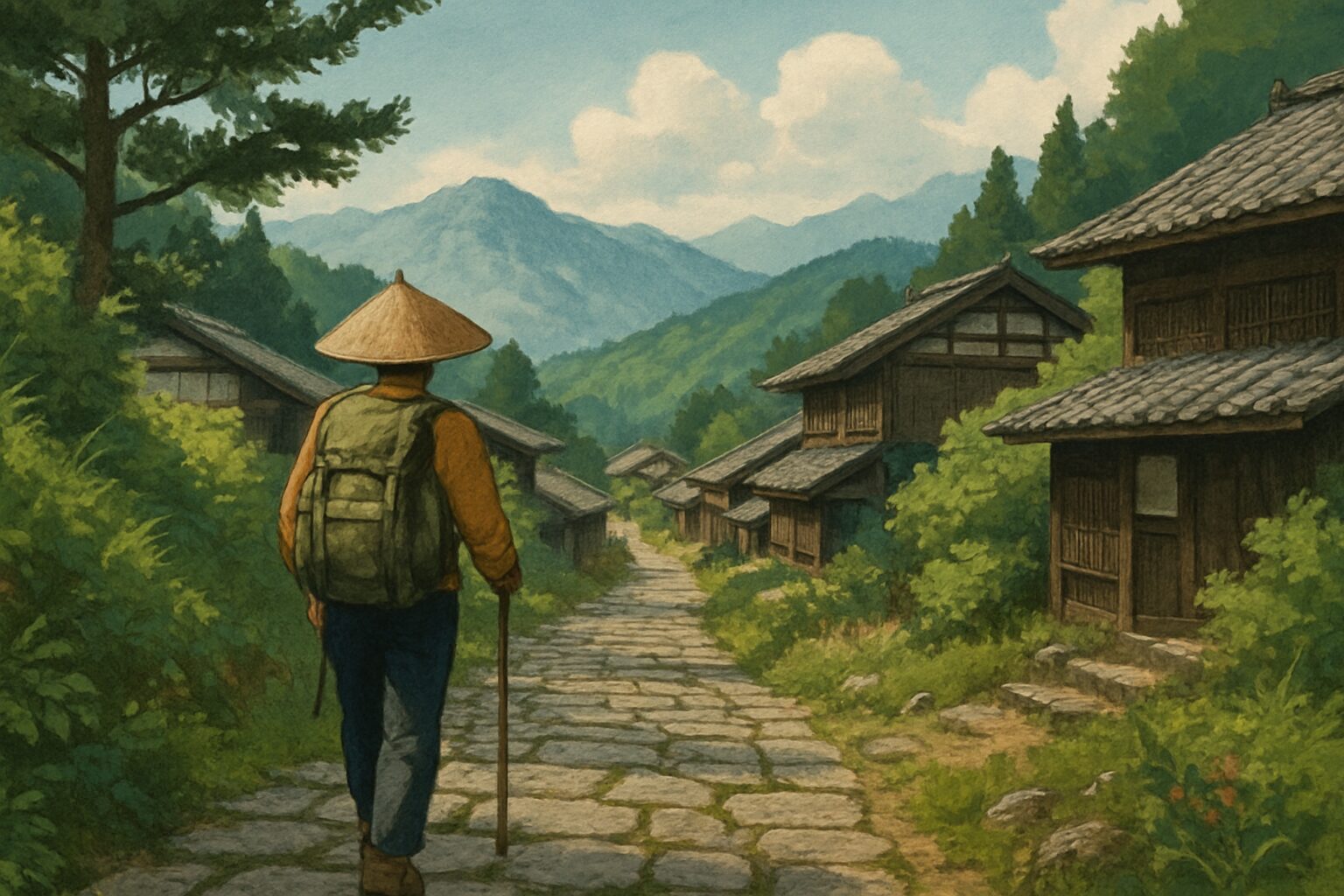
Yo, what’s up, fellow travelers! Emily here, your guide to all things delicious and epic in Japan. Today, we’re ditching the neon glow of Tokyo and the packed temples of Kyoto for something a little different. We’re about to step back in time, literally, onto a path that whispers tales of samurai, merchants, and wandering monks. I’m talking about the Nakasendo trail, an ancient highway that slices through the heart of Japan’s mountainous spine. This isn’t just a hike; it’s a full-on time machine experience. Imagine walking on the same stone paths that feudal lords and their retinues trod centuries ago, passing through perfectly preserved post towns where the clip-clop of geta sandals on wood feels more natural than the hum of a car. The Nakasendo, particularly the stunning stretch through the Kiso Valley, is where you find the soul of old Japan, nestled among cedar forests and rushing mountain streams. It’s a place to slow down, breathe in the scent of cypress, and connect with a rhythm of life that’s been all but lost in the modern world. So, lace up your comfiest shoes, pack your sense of wonder, and let’s hit the road. This journey is about more than just getting from point A to point B; it’s about savoring every step, every view, and every bowl of noodles along the way. It’s an adventure that engages all your senses and leaves an indelible mark on your soul. Prepare to be completely captivated by the serene beauty and profound history that awaits on this legendary trail.
If you’re looking for a different kind of luxury after your historic hike, you might be surprised to learn that Tokyo now boasts the world’s most expensive luxury hotels.
The Soul of the Samurai Road: What is the Nakasendo?
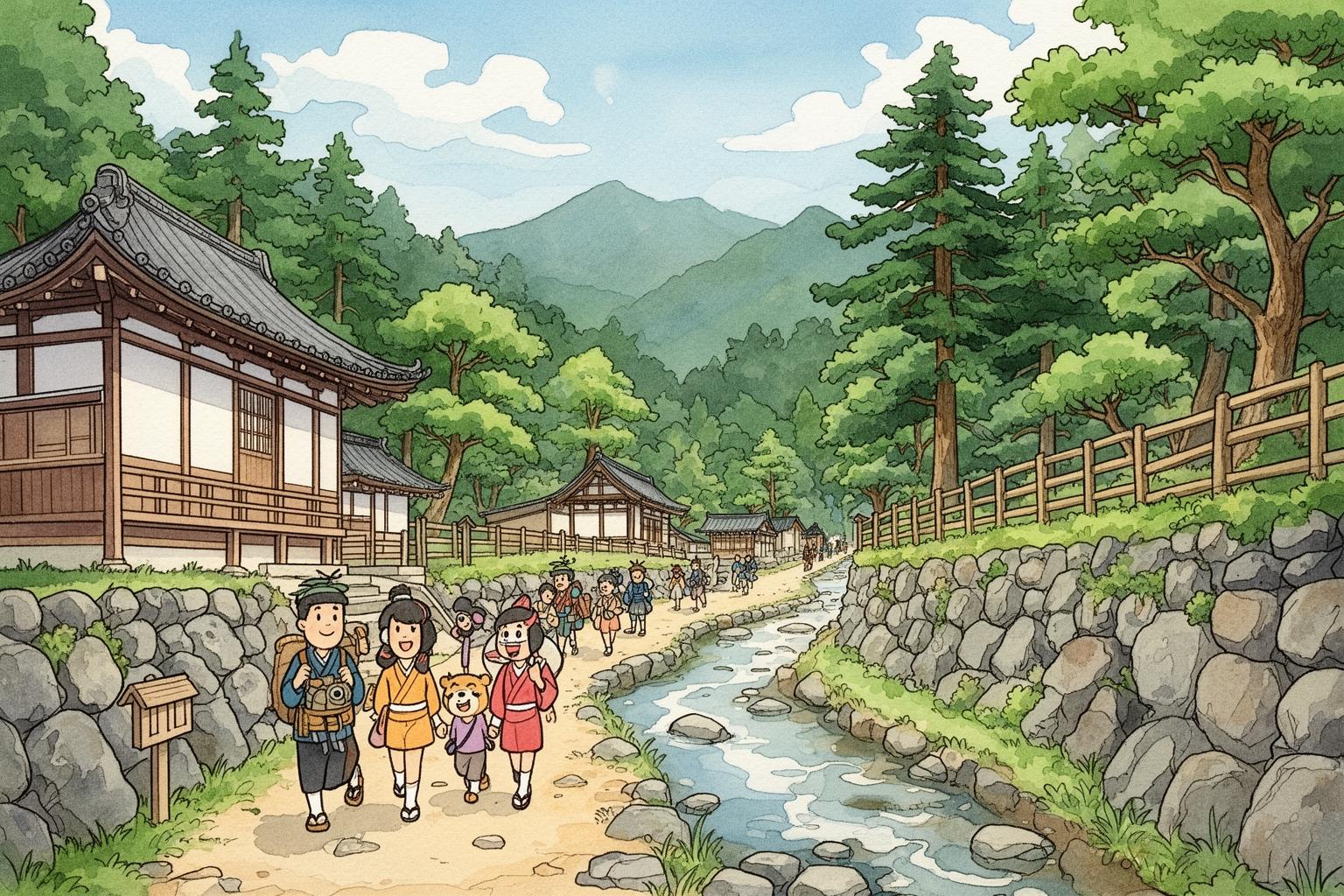
Before we delve into the details of the hike, let’s first set the historical context. The Nakasendo was not just any ordinary mountain path. During the Edo Period, spanning the 17th to 19th centuries, Japan was unified under the Tokugawa shogunate. To maintain strict control over the country, they established five major highways, known as the Gokaido, radiating from their capital, Edo (modern Tokyo). The Nakasendo was one of these vital routes, linking Edo with the imperial capital Kyoto. Its name literally means “Central Mountain Path,” an apt description. Unlike its more famous coastal counterpart, the Tokaido, which often faced flooding and required risky ferry crossings over rivers, the Nakasendo carved a path through the rugged interior of Honshu, Japan’s main island. Though longer and more demanding, it was a dependable route.
This trail was essential to the nation. It was traveled by a steady stream of people from all social ranks. The most significant travelers were the daimyo, powerful feudal lords who, under the system called sankin-kotai, were obliged to spend alternate years in Edo serving the shogun. Their massive processions, sometimes numbering in the thousands with samurai retainers, porters, and officials, were a common sight. Yet it wasn’t reserved for the elite alone. Merchants transported goods like silk and sake, pilgrims journeyed to sacred sites, and couriers hurried with official messages. To accommodate this constant flow, a network of 69 post towns, or shukuba, was established along the route. These towns served as the service stations of their time, providing inns, teahouses, and stables. They became bustling centers of commerce and culture, and it’s these beautifully preserved towns that make traveling the Nakasendo today so enchanting. Walking this trail is to follow in the footsteps of history itself, feeling the echoes of centuries of travel beneath your feet.
Stepping into the Kiso Valley: The Heart of the Trail
The full Nakasendo extends over 500 kilometers, and although some determined adventurers tackle the entire path, most visitors concentrate on its most stunning and well-preserved segment: the Kiso Valley. Nestled in the mountains of Nagano and Gifu prefectures, the Kiso Valley feels like a hidden slice of Japan untouched by time. Its pristine state is deeply tied to its history. Once under the control of the Owari clan, the valley’s dense forests were a source of great wealth, especially the prized hinoki cypress used for constructing castles, temples, and shrines. To safeguard this resource, the shogunate imposed strict forestry regulations. The “Kiso Goboku,” or five sacred trees of Kiso—hinoki, sawara, asunaro, kouyamaki, and nezuko—were banned from being cut. The punishment for cutting even a single branch was reputedly harsh, encapsulated in the phrase “one tree, one head.” This stringent conservation, originating from feudal governance, inadvertently preserved the breathtaking, untouched landscape we see today.
Upon entering the Kiso Valley, the atmosphere changes. The air grows crisper, cooler, carrying the unique, refreshing aroma of cypress and damp soil. The soundscape is filled with the gentle flow of the Kiso River, the chirps of hidden birds, and the rustling of leaves in the breeze. A deep, immediate sense of calm settles in. The modern world’s noise and haste feel miles away. Here, the Nakasendo comes alive—not as a static exhibit, but as a vibrant, living landscape. The trail meanders through ancient, primeval forests, opens onto vistas of terraced rice fields, and leads straight into post towns that seem lifted from a Hokusai woodblock print. This is the Japan people imagine discovering: a place where nature and history coexist in perfect harmony.
The Classic Hike: Magome to Tsumago
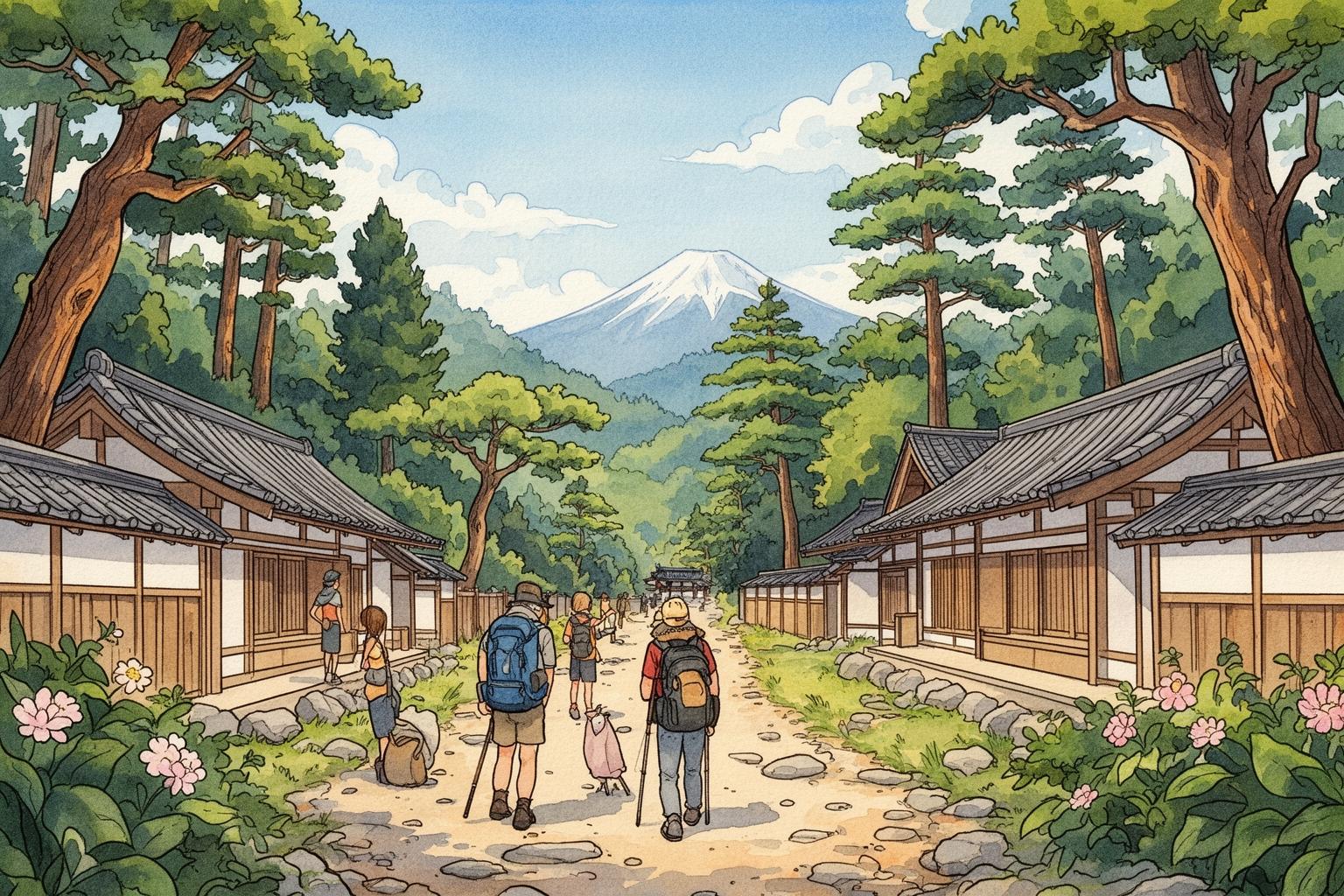
If you only have time for one section of the Nakasendo, make it this one. The approximately eight-kilometer stretch between the post towns of Magome-juku and Tsumago-juku is the most renowned and accessible part of the trail, offering an ideal one-day hiking experience. It captures everything that makes the Nakasendo special: stunning scenery, historical landmarks, and two of the most beautifully preserved towns in Japan. The hike itself is not overly demanding and can be completed in about three to four hours at a relaxed pace, leaving ample time to explore the towns at both ends. It’s a journey that values the destination as much as the path itself.
Starting in Magome-juku: A Town on a Hill
Your adventure typically begins in Magome-juku, a town with a distinctive character. Unlike the flat layouts of many post towns, Magome is built on a steep incline, its main street a beautifully restored stone-paved path that ascends the hillside. This gives it a dramatic and highly photogenic charm. As you walk, you’re flanked by dark-wood buildings with latticed windows, their overhanging eaves nearly touching above the narrow street. Waterwheels spin slowly in the canals alongside the path, their gentle creaking providing a constant, soothing soundtrack to your exploration. The town feels vibrantly alive.
Take your time here. The buildings now house a delightful mix of small shops selling local crafts, souvenirs, and—most importantly for food lovers—their snacks! The must-try is gohei-mochi. This isn’t your typical soft, round mochi; it’s a slab of pounded rice skewered, coated in a thick, rich sauce made from miso, walnuts, and sesame, then grilled over an open flame. The result is a savory, sweet, smoky, slightly nutty treat that’s perfect fuel for the hike ahead. You’ll find it being grilled at several storefronts, and the aroma alone is irresistible. For a cultural fix, visit the Toson Memorial Museum, dedicated to the notable Meiji-era writer Shimazaki Toson, born here, whose novel Before the Dawn vividly portrays life in the Kiso Valley during a time of great change.
Before setting off on the trail, a practical tip: use the luggage forwarding service. Drop your larger bags at the tourist information office in Magome, and they’ll be transported to your accommodation or the tourist office in Tsumago. This service is a game-changer, letting you enjoy the hike with just a small daypack—your shoulders will thank you. Most choose to hike from Magome to Tsumago, as it involves more downhill walking, making it a bit easier.
On the Trail: Forests, Bears, and Teahouses
Leaving behind the lively charm of Magome, you step onto the trail and are soon enveloped by forest. The path consists of packed earth and stretches of original ishidatami, the rugged stone paving laid centuries ago to help travelers on steep slopes. Walking on these worn, mossy stones is humbling, a tangible link to the countless travelers before you. The forest is majestic, dominated by towering cedar and cypress trees whose canopies filter sunlight into a soft, dappled green light. The air is cool, carrying the scent of pine and rich earth. It feels incredibly peaceful.
Along the way, you’ll see signs warning of bears (kuma) and come across large bells mounted on posts. These are bear bells (yoke-suzu), meant to be rung loudly as you pass to alert any nearby bears to human presence. Though encounters are extremely rare, ringing the bells has become part of the hike’s ritual. The cheerful clang echoes through the silent forest, adding a unique and memorable touch. It’s a reminder that you are a guest in a wild, ancient environment.
You’ll pass several points of interest, including the Odaki-Medaki waterfalls, a pair of cascades known as the Male and Female falls. They tumble into a clear pool, and the sound of rushing water offers a refreshing break from the forest’s quiet. A bit further on, you’ll reach perhaps the trail’s highlight: a lovingly maintained traditional teahouse, or tateba-chaya. This is not a commercial business but a rest stop run by local volunteers. Upon arrival, you’ll be welcomed inside the rustic wooden building, often warmed by a crackling central hearth (irori). You’ll be offered a free cup of hot tea and maybe a piece of candy. It’s a pure example of Japanese hospitality (omotenashi). Sitting there, sipping tea and chatting with the friendly volunteers and fellow hikers from around the world, is an experience that will linger long after your hike ends.
Arriving in Tsumago-juku: A Living Museum
As the forest thins, you’ll catch your first views of Tsumago-juku. If Magome charmed you, Tsumago will transport you to another era. This town has made extraordinary efforts to preserve its Edo-period atmosphere. In a pioneering act of historical preservation in the 1970s, the residents of Tsumago pledged to protect their heritage with the motto: “we will not sell, we will not rent out, we will not destroy.” The result is a town that feels like a living museum. Modern conveniences like telephone poles and power lines are completely hidden, letting the historic streetscape shine. The silence here feels different, deeper, as if the town itself holds its breath to maintain its past illusion.
Your first stop should be a stroll down the main street. The architecture is remarkable. The town houses two meticulously restored inns, the Honjin and the Waki-Honjin. The Honjin was the primary inn reserved for high-ranking guests such as daimyo, while the Waki-Honjin catered to travelers of somewhat lower status. Both can be toured, offering fascinating insights into Edo-period travel hierarchy and daily life. The Nagiso Town Museum, located in the old Waki-Honjin, is also well worth a visit to deepen your understanding of the area’s history.
But Tsumago’s true magic reveals itself in the evening, after the last tour buses leave. This is why I wholeheartedly recommend staying overnight in a local minshuku (family-run guesthouse) or traditional ryokan. As dusk falls, paper lanterns glow outside wooden buildings, casting a warm, gentle light on empty streets. The town becomes profoundly quiet, and walking along the darkened street, dressed in the yukata provided by your inn, you can almost hear the whispers of the past. It’s an immersive, unforgettable experience that connects you to the spirit of the Nakasendo in a way that a simple day trip never could.
Beyond the Golden Route: Exploring More of the Nakasendo
While the Magome-Tsumago hike remains the main attraction, the Kiso Valley and the broader Nakasendo region offer so much more. For those with extra time and a spirit of adventure, extending your journey can lead to even deeper discoveries. The trail is not just a single segment but a long, winding narrative with many chapters, each offering its own unique character and charm.
Narai-juku: The Town of a Thousand Inns
Further north along the trail lies Narai-juku, a town that provides a different yet equally captivating experience. If Tsumago is a perfectly preserved miniature, Narai is its larger, more expansive counterpart. It was one of the richest post towns on the Nakasendo and is the longest, stretching over a kilometer. Known as “Narai Senken,” meaning “Narai of a Thousand Houses,” its nickname reflects its size and affluence. The main street here is broader and straighter than those in Magome or Tsumago, lined with an impressive array of large, elegant Edo-period buildings that once housed numerous inns, teahouses, and shops.
Narai has a slightly more vibrant, bustling atmosphere. It is especially renowned for its lacquerware, known as Kiso shikki. For centuries, artisans in this area have crafted exquisite bowls, trays, and chopsticks using local wood and traditional lacquering methods. Visitors can tour workshops, observe the artisans at work, and purchase beautiful, functional art pieces to take home. For dedicated hikers, Narai is also the starting point for one of the most challenging and historically notable sections of the trail: the Torii Pass. This steep mountain crossing leads to the neighboring post town of Yabuhara and was once considered one of the toughest parts of the entire Nakasendo route. Conquering it rewards hikers with a true sense of achievement and spectacular views at the summit.
Kiso-Fukushima and the Checkpoint
Situated between Tsumago and Narai is the larger town of Kiso-Fukushima. Though it has modernized more than the smaller post towns, it played a critically important role on the Nakasendo. It was the site of the Fukushima Checkpoint, or sekisho. This was one of only four major checkpoints along the entire trail, a heavily guarded barrier under direct control of the shogunate. Its purpose was to monitor the movement of people and goods, and it was known for its strict enforcement. The main functions were to prevent unauthorized firearms from entering Edo (“iri-deppo”) and to stop the wives and children of daimyo, who were essentially held as political hostages in the capital, from fleeing (“de-onna”). Visitors can explore the reconstructed checkpoint, Fukushima Sekisho-ato, and view displays of weapons and tools used by the guards. It provides a sobering reminder of the shogunate’s tight control over the country and adds depth to one’s understanding of the trail’s history.
A Taste of the Trail: Culinary Delights of the Kiso Valley
As a food enthusiast, I can’t discuss a region without exploring its cuisine. The food of the Kiso Valley is rustic, hearty, and deeply connected to its mountainous surroundings. We’ve already mentioned the delightful gohei-mochi, but there is much more to discover. Nagano Prefecture, where much of the Kiso Valley is located, is famous for its buckwheat, so trying the local soba noodles is a must. They are often served simply, either hot in broth or cold with dipping sauce, allowing the nutty, earthy flavor of the buckwheat to take center stage. For a truly local specialty, seek out sunki soba, which is topped with sunki-zuke, a distinctive type of red turnip pickle fermented without salt, giving it a unique sour taste.
Another mountain specialty is hoba miso. This rustic dish features a special miso paste, often combined with wild mushrooms, green onions, and other mountain vegetables, spread onto a large dried magnolia leaf (hoba) and grilled over a small charcoal brazier right at your table. The leaf imparts a subtle smoky aroma to the miso, which becomes bubbly and caramelized. You then scoop up the delicious mixture with rice. It’s interactive, aromatic, and incredibly comforting. The region is also known for its chestnuts, and in autumn, you can enjoy kuri kinton, a delightful sweet made from mashed and sweetened chestnuts. Pair any of these dishes with a glass of local sake, and you’ll have the perfect Kiso Valley meal.
Planning Your Nakasendo Adventure: Practical Guide
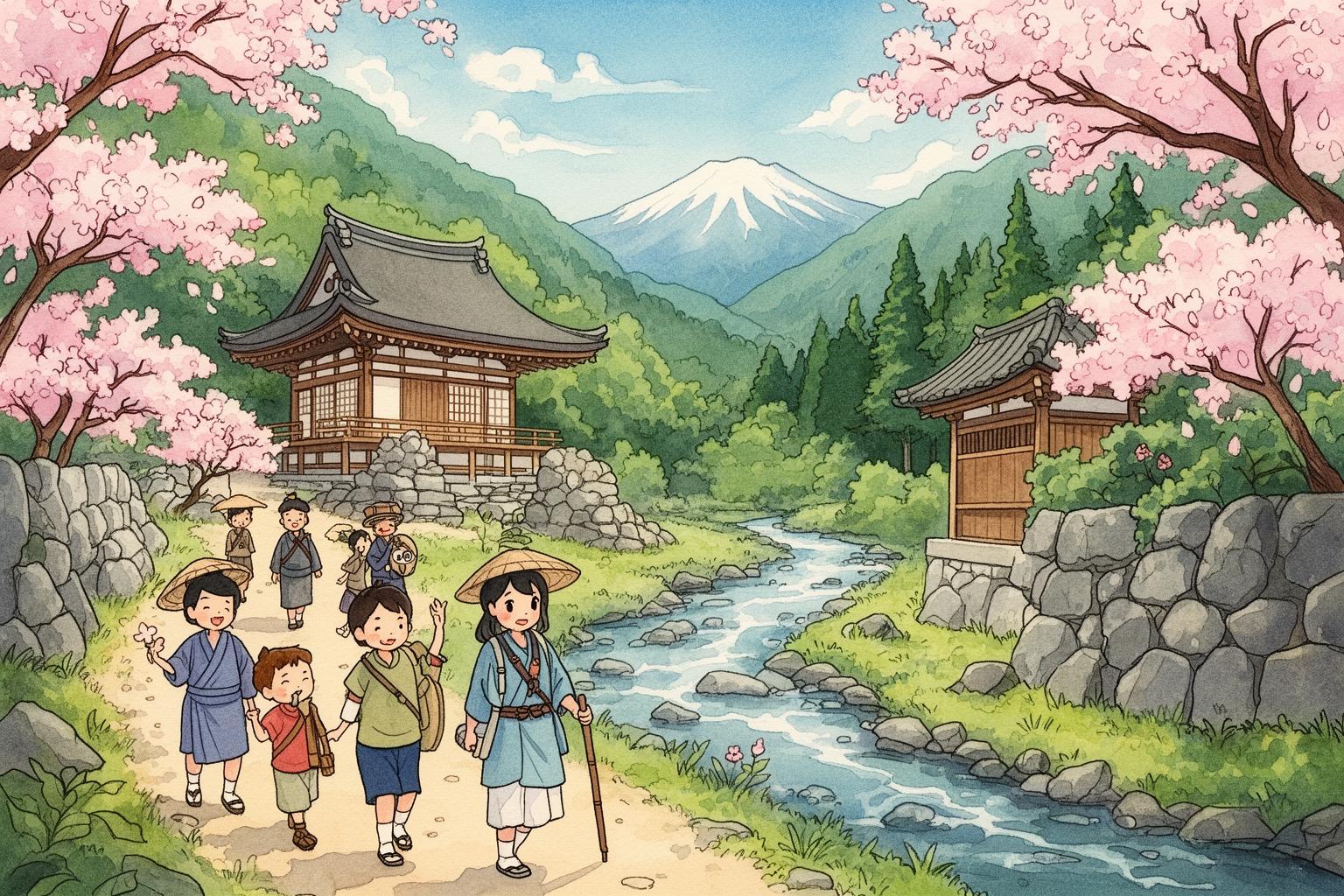
A bit of planning goes a long way in making sure your Nakasendo trip is as smooth and enjoyable as possible. The good news is that despite its remote atmosphere, the Kiso Valley is surprisingly accessible. Here’s a guide to the essentials.
When to Go: A Trail for Every Season
The Nakasendo trail can be hiked throughout the year, with each season offering a unique experience. Autumn, from late October to mid-November, is widely regarded as the best time to visit. The temperatures are cool and comfortable for hiking, and the valley bursts into a stunning array of fall colors, with mountainsides glowing in fiery reds, bright oranges, and golden yellows. Since it’s peak season, be sure to book accommodations well in advance.
Spring, from April to May, is another excellent choice. The weather is mild, with the trail adorned with cherry blossoms and other spring flowers, and fresh green leaves emerging on the trees. Summer (June to August) showcases lush, vibrant greenery but can be hot, humid, and rainy, so prepare with rain gear and insect repellent. Winter offers a completely different charm, with the trail and towns often blanketed in snow, creating a serene, magical, and very peaceful landscape. However, winter hiking requires proper cold-weather gear and waterproof boots, and some smaller inns and shops may be closed.
Access and Transportation
The easiest way to reach the Kiso Valley is by train. The JR Chuo Main Line runs from Nagoya to Nagano, stopping at several key stations that serve as gateways to the trail, including Nakatsugawa (for Magome), Nagiso (for Tsumago), as well as Kiso-Fukushima and Narai for their respective towns. From Tokyo, take the Shinkansen to Nagoya and transfer to the Chuo Line. The entire journey is covered by the Japan Rail Pass.
Once in the valley, local buses connect the train stations to the post towns. For example, from Nakatsugawa Station, a bus will take you up to Magome, and from Nagiso Station, a bus can take you to or from Tsumago after your hike. Buses may run infrequently, so it’s best to check schedules beforehand at the local tourist information center. And it bears repeating: use the luggage forwarding services between the main post towns. They are efficient, reliable, and make the hiking experience much more pleasant.
What to Pack and Wear
Although the Magome-Tsumago trail isn’t a challenging mountain climb, you are still hiking in mountainous terrain. The most important item to bring is a pair of comfortable, sturdy walking shoes with good traction. Sneakers may suffice if the weather is dry, but hiking shoes or trail runners are preferable, as the stone paths can be slippery when wet.
Dress in layers, as the weather can change rapidly and it may be cool in shaded forests even on warm days. A light fleece and a waterproof/windproof jacket are essential regardless of the season. Also, carry a small daypack with the essentials: a refillable water bottle, snacks, sunscreen, a hat, and a small first-aid kit. Don’t forget cash! While larger hotels and some shops in bigger towns may accept credit cards, many small inns, teahouses, and shops along the trail are cash-only.
Accommodation: From Simple Inns to Historic Ryokan
To fully immerse yourself in the Nakasendo atmosphere, staying overnight in traditional Japanese accommodations is a must. You have several options. A ryokan is a traditional inn that usually offers a more luxurious experience, often featuring elaborate multi-course kaiseki dinners and beautifully designed rooms. A minshuku is a family-run guesthouse, providing a simpler, more intimate, and often more affordable stay, where you’ll likely enjoy a home-cooked meal with the family and other guests. Both types offer tatami-mat rooms, futon bedding, and shared bathing facilities—sometimes with a natural hot spring (onsen). Staying in either is a cultural experience and one of the highlights of a trip to the Kiso Valley. Booking ahead is essential, especially during popular seasons, and reservations can often be made online through various booking sites or the local tourist association’s website.
Embracing the Journey: Final Thoughts and a Gentle Nudge
A journey along the Nakasendo trail is far more than just a walk through the woods. It is a pilgrimage into the essence of Japan’s history and culture. It offers a chance to step away from the hectic pace of modern life and reconnect with something deeper and more peaceful. The true charm of the Nakasendo isn’t only in the sweeping views or the beautifully preserved towns; it lies in the small, quiet moments—the cool forest air brushing your skin, the distant toll of a temple bell, the taste of spring water from a bamboo pipe, the warmth of a stranger’s kindness in a teahouse, and the delicate wooden joinery of a centuries-old building.
My best advice is to take your time. Don’t hurry from one photo spot to another. Savor the towns. Sit on a bench and simply watch the world pass by. Pause on the trail to listen to the forest’s sounds. Let the rhythm of the path lead you. This is where you’ll discover the Japan you’ve been seeking—not in the bustling cities or famous temples, but here, on this tranquil mountain road, where every stone and tree holds a story. So go ahead, take that first step. The trail awaits.