
Take a local train an hour out from the electric canyons of Shinjuku or the dense, tiled heart of Kyoto. Get off at a small station where the air feels a little softer. Walk past the last rows of houses, and you’ll find yourself in a landscape that feels neither truly urban nor completely wild. You might see a small, terraced rice paddy climbing a hill, its edges impossibly neat. Beyond it, a dark grove of bamboo, and then a managed forest of mixed hardwood trees, sunlight dappling the floor in a way that feels intentional, almost curated. You’re not in the deep, untamed wilderness. You’re in a satoyama.
The word itself is a perfect map of the concept: sato (里) means a village or inhabited area, and yama (山) means mountain or hill. Satoyama is the borderland, the gentle zone of human-nature collaboration that has defined rural Japan for centuries. It’s a mosaic of woodlands, grasslands, streams, ponds, and rice fields, all managed by human hands to create a sustainable, cyclical source of life. This isn’t “nature” as a Westerner might conceive of it—a pristine wilderness to be preserved and kept separate from humanity. This is a landscape as a partner. It’s a living, breathing artifact, a physical library of a pre-industrial relationship with the earth that is still visible on the fringes of Japan’s hyper-modernity. Yet, this intricate world, the very scenery that defines the nostalgic Japanese heartland, is quietly disappearing. To understand satoyama is to understand a fundamental piece of the country’s soul, and to witness its decline is to watch a chapter of history fade from the land itself.
The enduring charm of rural Japan finds a kindred spirit in the traditional shōtengai where community history quietly persists amidst the changing landscape.
A Landscape Woven by Hand
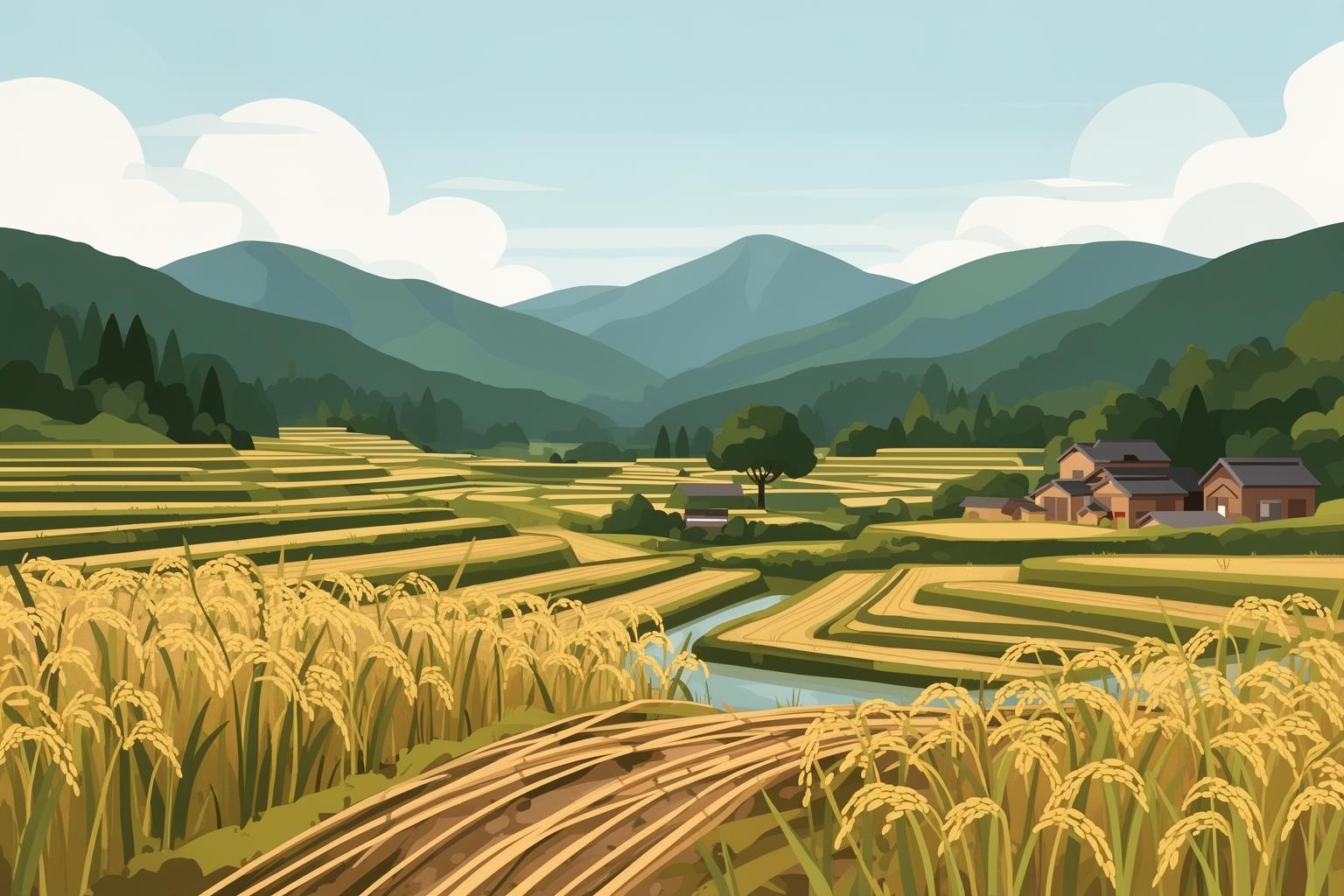
At first glance, a satoyama might seem like just pleasant, hilly countryside. However, it is a carefully crafted system where every element serves a purpose, refined over generations. It’s not a single type of environment but rather a complex puzzle of interconnected habitats, each meeting the needs of the local village while supporting one another.
More Than Just a Forest
Forget the notion of a dense, homogeneous forest. The woodlands at the core of the satoyama, called zōkibayashi (雑木林), are typically mixed deciduous forests featuring trees like oak and chestnut. For centuries, these woods provided Japan’s primary fuel source. Instead of clear-cutting, villagers practiced rotational harvesting known as coppicing, cutting trees to the stump and allowing straight shoots to regenerate quickly. This method guaranteed a continuous supply of firewood for cooking and heating, as well as charcoal used for everything from pottery firing to steel forging. Regular cutting kept the canopy open, letting sunlight reach the forest floor and encouraging a diverse undergrowth of plants and flowers.
Nearby, carefully tended bamboo groves thrived. Bamboo was an incredibly versatile resource essential to daily life, used in building scaffolding, fences, baskets, tools, and even harvested as an edible crop in the spring as takenoko (bamboo shoots). Adjacent grasslands (kayaba) were maintained to provide thatch for roofs and fodder for livestock. Scattered throughout the landscape were interconnected ponds and reservoirs (tameike), with water channeled through an intricate network of canals to irrigate vital rice paddies (tanada), often arranged in beautiful terraced cascades down the hillsides. Every element was interwoven; the health of the forest directly influenced the purity of the water feeding the rice paddies.
The Logic of a Closed Loop
What made the satoyama system so resilient was its perfectly cyclical logic. It was a closed-loop economy of energy and nutrients, born out of necessity and profound ecological insight. Fallen leaves from the coppiced woodlands were carefully gathered and transported to the fields, where they served as karishiki, a natural fertilizer that enriched the rice paddy soil. This compost was vital for sustaining harvests year after year without exhausting the land.
Water management within the system was remarkably sophisticated. The forests functioned as natural sponges, absorbing rainfall and gradually releasing clean water into streams and ponds that irrigated the fields. This regulation prevented both floods and droughts, providing a reliable water supply for the rice crops. Biodiversity was not an abstract ideal but an integral part of the system. The ponds cultivated carp and loaches for food, while the forest floor yielded mushrooms and edible wild vegetables (sansai). The grasslands supported insects essential for pollinating crops. This wasn’t environmentalism rooted in ideology; it was sustainability born from sheer, practical ingenuity. The villagers weren’t aiming to “save the planet.” They were striving to survive the winter. In doing so, they shaped a landscape that was highly productive and bursting with life.
History Written on the Land
Satoyama is more than a smart agricultural system; it serves as a tangible record of Japan’s history. Walking through one feels like exploring a museum, where living trees, ancient water channels, and the very contours of the land are the exhibits. This landscape sustained the nation before the era of oil and electricity.
The Engine of Pre-Modern Japan
Throughout most of Japanese history, the energy driving civilization came from these carefully managed hillsides. The charcoal produced in satoyama kilns was exceptionally high quality and essential to industry. It powered the great kilns of pottery towns like Bizen and Shigaraki and fueled the forges that crafted legendary swords. The magnificent castles and temples of Kyoto were constructed with timber selectively harvested from these forests. The daily lives of everyone, from farmers to shoguns, directly depended on the resources provided by the satoyama. The landscape’s character was molded by these demands. For example, regions known for iron production grew vast pine groves, as pinewood charcoal was crucial for smelting. Textile areas managed trees that supported insects needed for producing specific dyes. The satoyama reflected local culture and economy, creating a landscape uniquely tailored to its community. Village life followed not a clock, but the seasonal demands of this environment: when to cut wood, rake leaves, clear irrigation channels, and plant rice.
A Byproduct of Beauty: Biodiversity Hotspots
One of the most remarkable results of the satoyama system is that ongoing human intervention fostered far greater biodiversity than untouched old-growth forests. The mosaic of habitats—sunny woodlands, open grasslands, wetlands, and ponds—offered niches for a vast variety of species. In contrast, dense, dark cedar plantations are biological deserts. The open, sunlit floor of a coppiced forest allows numerous wildflowers to thrive, which in turn support specific butterflies and bees. The clean, slow-moving waters of irrigation systems provided ideal breeding grounds for fireflies and dragonflies. Ponds hosted frogs, newts, and the mythical-looking Japanese giant salamander. Satoyama proved that human activity need not harm the environment; when practiced with deep knowledge and a long-term outlook, it can actually enhance it. The richness of life was a direct outcome of the landscape being actively and wisely managed. It flourished not despite human presence, but because of it.
The Aesthetics of Intimacy and Use
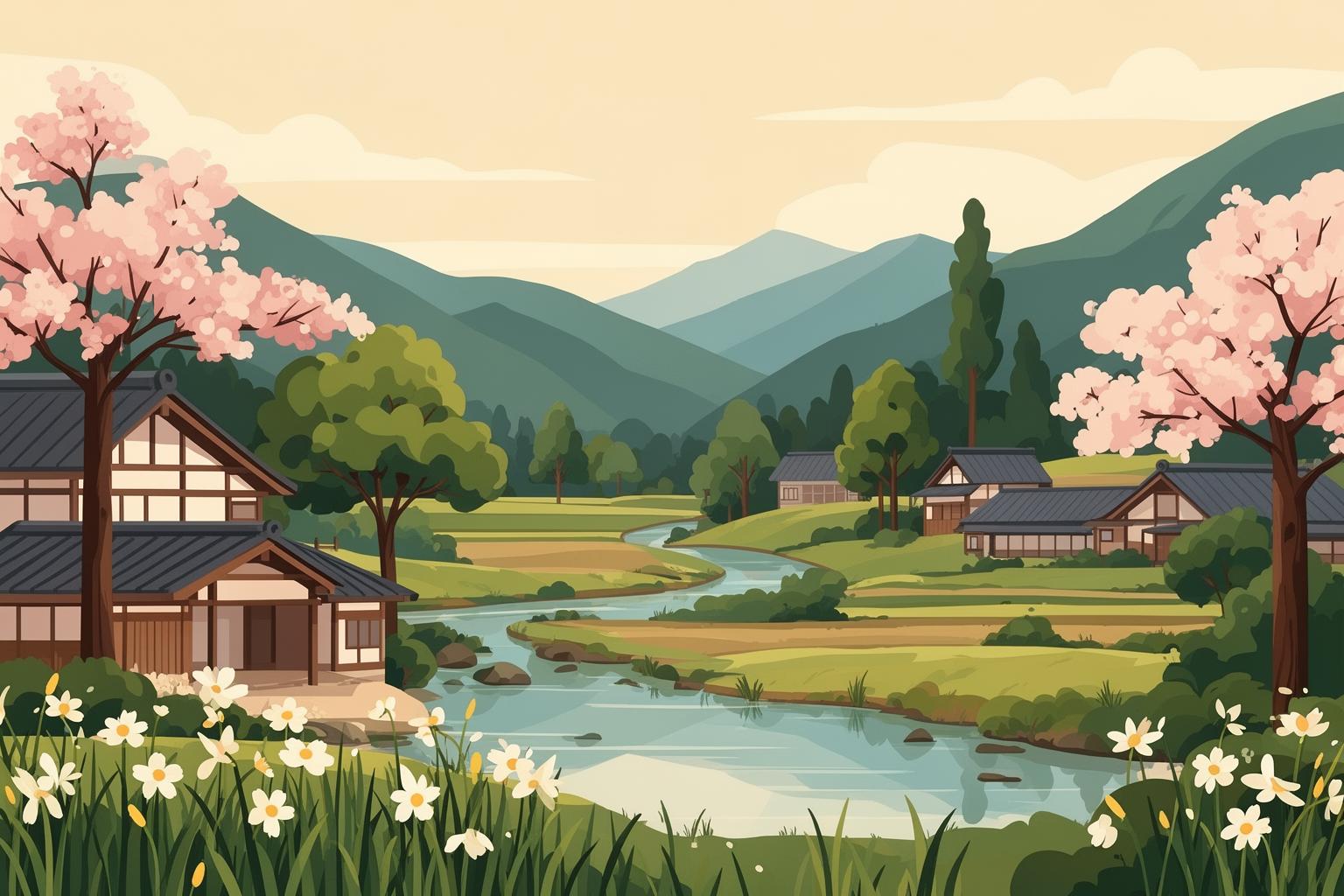
As someone who dedicates their days to contemplating art and form, I find the beauty of the satoyama deeply moving. It lacks the overwhelming, sublime grandeur of Japan’s towering mountains or the striking, rugged coastline. Instead, its aesthetic is softer, more intimate, and closely connected to its purpose. It is a beauty defined by function.
Finding Form in Function
There is an undeniable artistry in the satoyama, though it is an unconscious artistry born out of utility. The graceful curve of a terraced rice paddy is not an arbitrary design; it is the most effective way to retain water and prevent erosion on a steep slope. The steady, rhythmic pattern of a coppiced forest, with clusters of fresh growth, reflects a cycle of harvest and renewal. The way a small village shrine sits perfectly nestled within a protective grove of trees feels both spiritually and practically right. This aesthetic harmonizes with core Japanese principles like wabi-sabi, which finds beauty in imperfection, humility, and the visible evidence of human hands. In the satoyama, one sees the quiet dignity of things made with purpose, shaped by generations working in harmony with the land. It is a designed landscape, yet its designer was not a single artist; rather, it is the accumulated wisdom of a community spanning a thousand years.
The Landscape of the Japanese Soul
This scenery is etched deeply into Japan’s cultural memory. It is the archetypal furusato (故郷), the nostalgic ideal of one’s hometown. For millions of Japanese living in sprawling megacities, the image of satoyama—rice fields, forested hills, and the sound of evening cicadas—embodies a collective yearning for a simpler, more connected past. It provides the backdrop for countless folktales, where spirits such as kappa and tanuki dwell in the ponds and woods on the village’s edge. This connection is perhaps most famously captured in modern culture by the Studio Ghibli film My Neighbor Totoro. The entire world of that film lovingly portrays a satoyama landscape. It is a place where children roam freely, where nature holds gentle mysteries, and where the boundary between the human and spirit realms feels thin and permeable. The film’s lasting impact stems from its ability to evoke this deep, shared cultural image of the satoyama as a place of safety, wonder, and belonging. It is history transformed into myth, a physical space that now occupies a vast realm in the national imagination.
The Fading of the Green Border
Though deeply rooted in culture and ecological wisdom, the satoyama is facing a crisis. Across Japan, these complex landscapes are being abandoned, gradually losing the unique character that once defined them. This decline is not due to a single dramatic event but rather a slow, quiet breakdown driven by profound societal changes in Japan.
The End of an Economic Era
The greatest impact came from the post-war economic boom. In the 1950s and 60s, Japan experienced a rapid energy revolution. Fossil fuels—oil, gas, and coal—became cheap and widely available. Kerosene and propane stoves replaced charcoal braziers and wood-fired kitchen stoves. Chemical fertilizers, mass-produced and easy to use, took the place of the labor-intensive practice of gathering and composting forest leaves. Concrete emerged as the preferred material for reinforcing riverbanks and irrigation channels. Within a few decades, the vital economic connection linking villages to their surrounding satoyama was broken. The forest no longer served as a fuel source. The grasslands were no longer required for thatch. Almost overnight, the entire practical foundation of the system vanished. The daily and seasonal tasks of maintaining the landscape ceased to be essential for survival and became a burdensome chore.
A Society in Motion
Concurrent with this technological shift was a sweeping social transformation. As Japan’s industries flourished, young people left rural areas en masse seeking education and employment in growing cities. Rural villages began to empty, their populations aging rapidly. The satoyama system depended on communal labor. Maintaining forests, clearing canals, and replanting rice paddies required many hands working together. As populations shrank and aged, there was simply insufficient manpower to sustain these efforts. The transfer of knowledge between generations—the subtle, unwritten wisdom of land management—was disrupted. A landscape shaped over a millennium began to fall apart in less than a single generation.
The Paradox of Neglect
When a satoyama is deserted, it doesn’t merely “return to nature” in a pristine, beautiful way. The ecosystem, co-created with human intervention, falls into disorder. Without regular cutting, coppiced woodlands become dark and overgrown. Invasive species like bamboo often spread uncontrollably, forming dense, impenetrable thickets that smother all other plant life. Grasslands vanish beneath scrub, taking with them the unique wildflowers and insects that relied on open habitats. Biodiversity plummets. Water channels clog with silt, and ponds fill with decaying leaves. The clear, managed boundary between the village (sato) and mountain (yama) disappears. This has led to new challenges, notably increased human-wildlife conflict. Wild boars and bears, displaced as their deep mountain habitats shrink and the satoyama buffer zones become unmanaged and overgrown, venture farther into suburban areas searching for food. The dissolution of this historic landscape is creating distinctly modern problems.
A New Life for an Old Landscape?
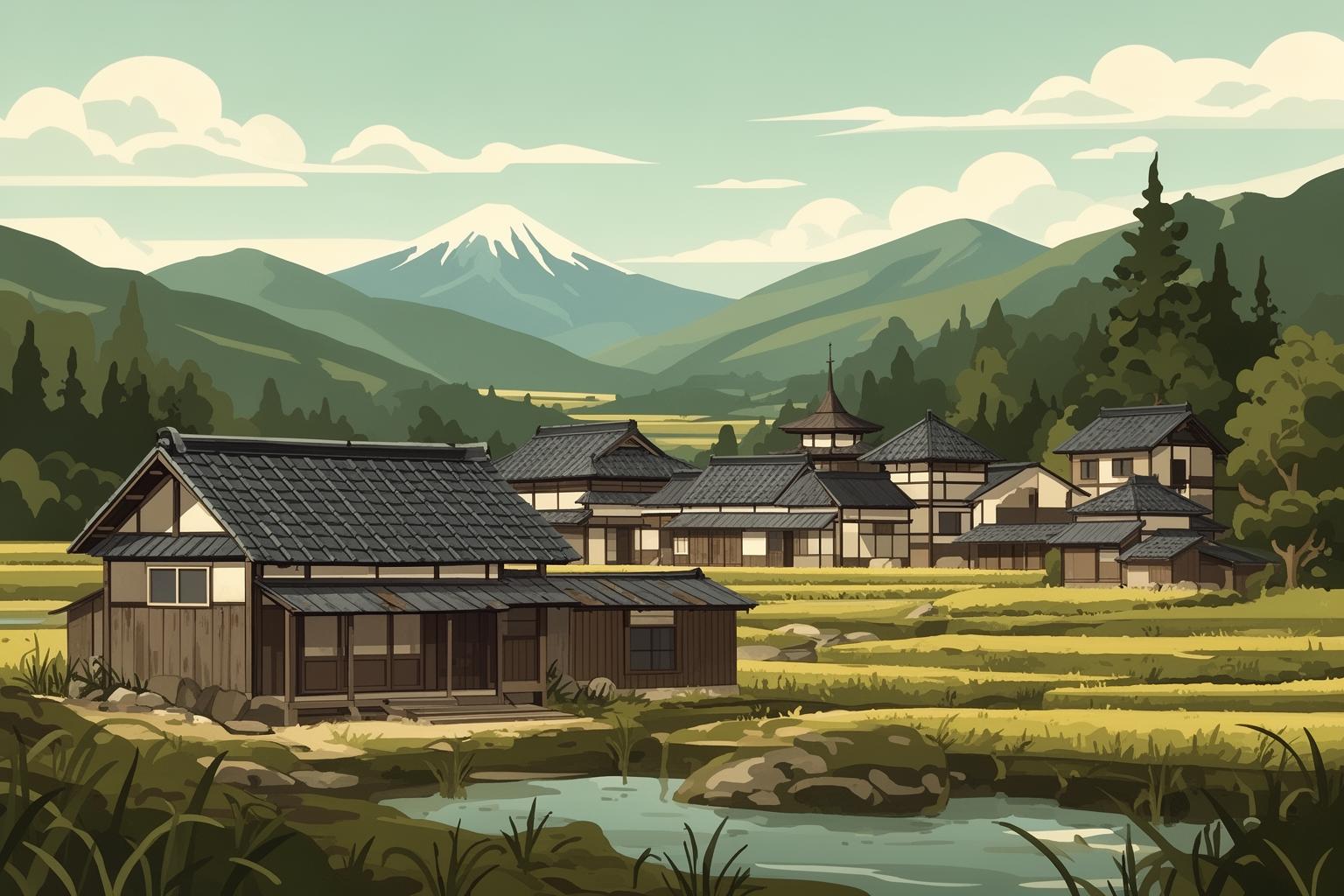
Just as the satoyama seems destined to become a subject only found in history books and nostalgic anime, a new movement is emerging to preserve it. This revival doesn’t aim to revert to a pre-industrial era, but rather to discover a new, 21st-century value for these landscapes.
Conservation Through a Fresh Perspective
The current effort to protect satoyama is fueled by a different set of motivations: ecological conservation, cultural heritage, and a desire among urban residents to reconnect with nature. Throughout the country, non-profits and volunteer groups collaborate with local governments to restore and manage abandoned satoyama. On weekends, groups of city residents—families, students, office workers—contribute their time to clear underbrush, maintain hiking trails, and take part in traditional farming workshops. For them, the satoyama provides both recreation and a tangible link to their heritage. It serves as a classroom, a gym, and a place for quiet reflection all at once. This new relationship is founded not on economic necessity, but on a deliberate choice to preserve the landscape for its environmental and spiritual significance.
The Concept of Satoyama Capitalism
Others are exploring ways to build sustainable economies centered on the satoyama. Known as “Satoyama Capitalism,” this approach aims to utilize the unique resources of these areas within a modern marketplace. This could involve developing upscale eco-tourism, where visitors stay in traditional farmhouses and experience the countryside’s seasonal rhythms. It might include producing premium organic rice, vegetables, or sake, branded with the story of the pristine satoyama environment they originate from. Niche products such as artisanal charcoal—once a household necessity—are now finding new demand among high-end restaurants and outdoor enthusiasts. The objective is to create a modern economic cycle that provides local communities with a financial incentive to once again act as guardians of the land.
A Place for the Future
The future of the satoyama remains uncertain amid powerful forces like demographic shifts and urbanization. Yet its lasting significance as both a symbol and a living ecosystem offers a profound lesson. It stands as a tangible counterpoint to the notion that human progress must inevitably result in environmental degradation. It reminds us that there are alternative ways to live with nature—not as a resource to exploit or a wilderness to isolate, but as a dynamic partner sharing an existence. For a world wrestling with sustainability challenges, the satoyama is not merely a relic of Japan’s past. It is a quiet, leafy, and deeply relevant piece of history we can still walk through today, offering a powerful model for a more integrated future.