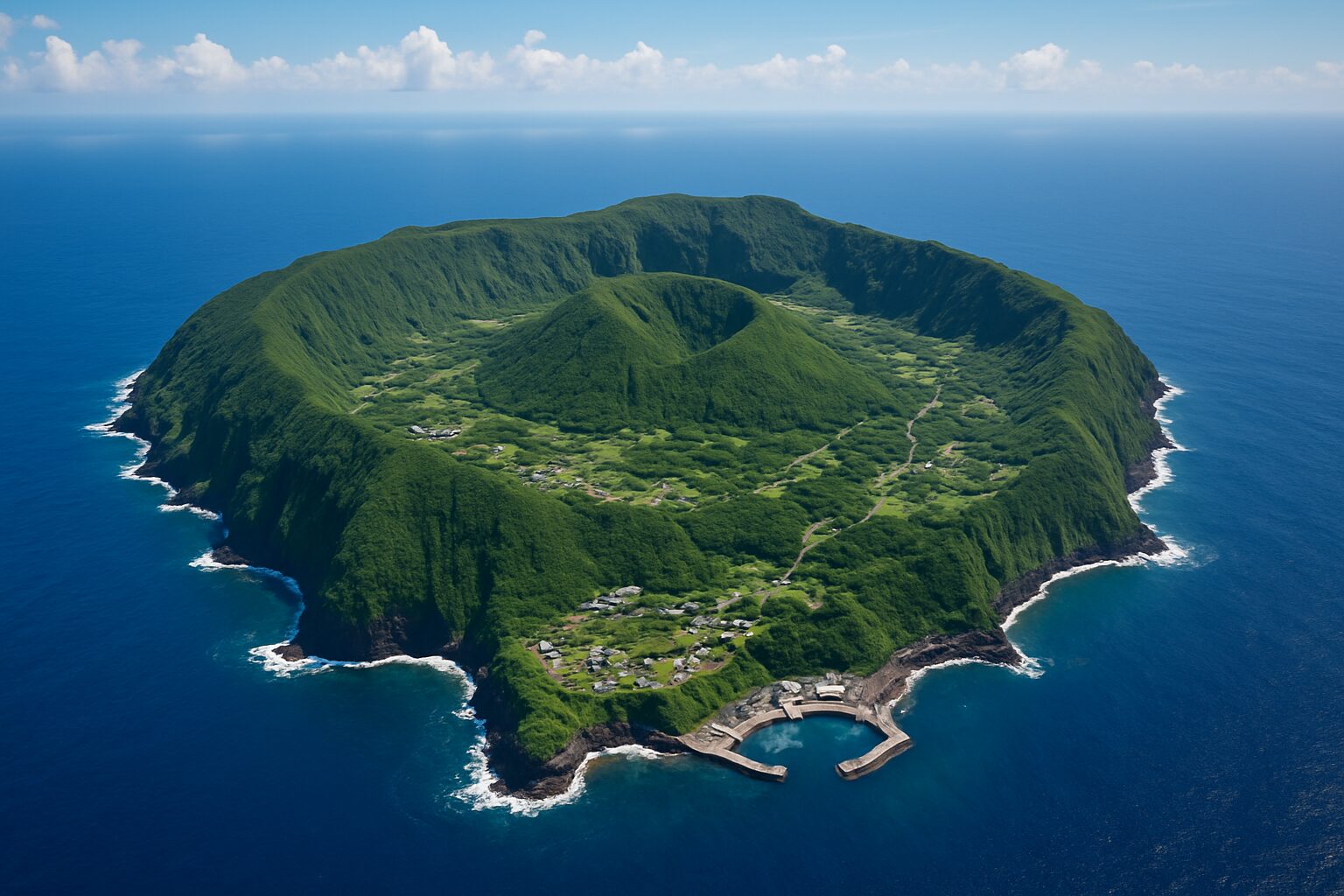
Ever felt that itch? That deep-seated pull to just… disappear? Not in a spooky way, but to find a place so removed from the frantic beat of modern life that your own pulse slows to match the rhythm of the tides. In a world that’s been mapped, tagged, and reviewed to death, there’s a stubborn allure to the truly remote. We’re talking about a place that laughs in the face of your meticulously planned itinerary, a destination where nature still holds the veto vote. That place is Aogashima. Dropped like a geological jewel in the vast, churning expanse of the Philippine Sea, some 358 kilometers south of Tokyo, it’s not just an island; it’s a living, breathing paradox. Officially part of Tokyo, it feels like another planet entirely. It’s the most remote, most isolated inhabited island in the entire Japanese archipelago. Getting there is a quest. Staying there is an experience. And leaving? Well, it changes a part of you. This isn’t your typical weekend getaway. This is an expedition to the heart of what makes travel a true adventure—a journey to a double-volcano island where fewer than 170 souls call a giant crater home. It’s raw, it’s real, and it’s unapologetically wild. So, if you’re ready to trade the buzz of Shibuya for the hum of the earth’s core, let’s dive into the legend of Aogashima.
If you’re planning your first trip to Japan, be sure to also read our essential guide for first-time visitors to help prepare for your adventure.
The Vibe Check: What This Lost World Actually Feels Like
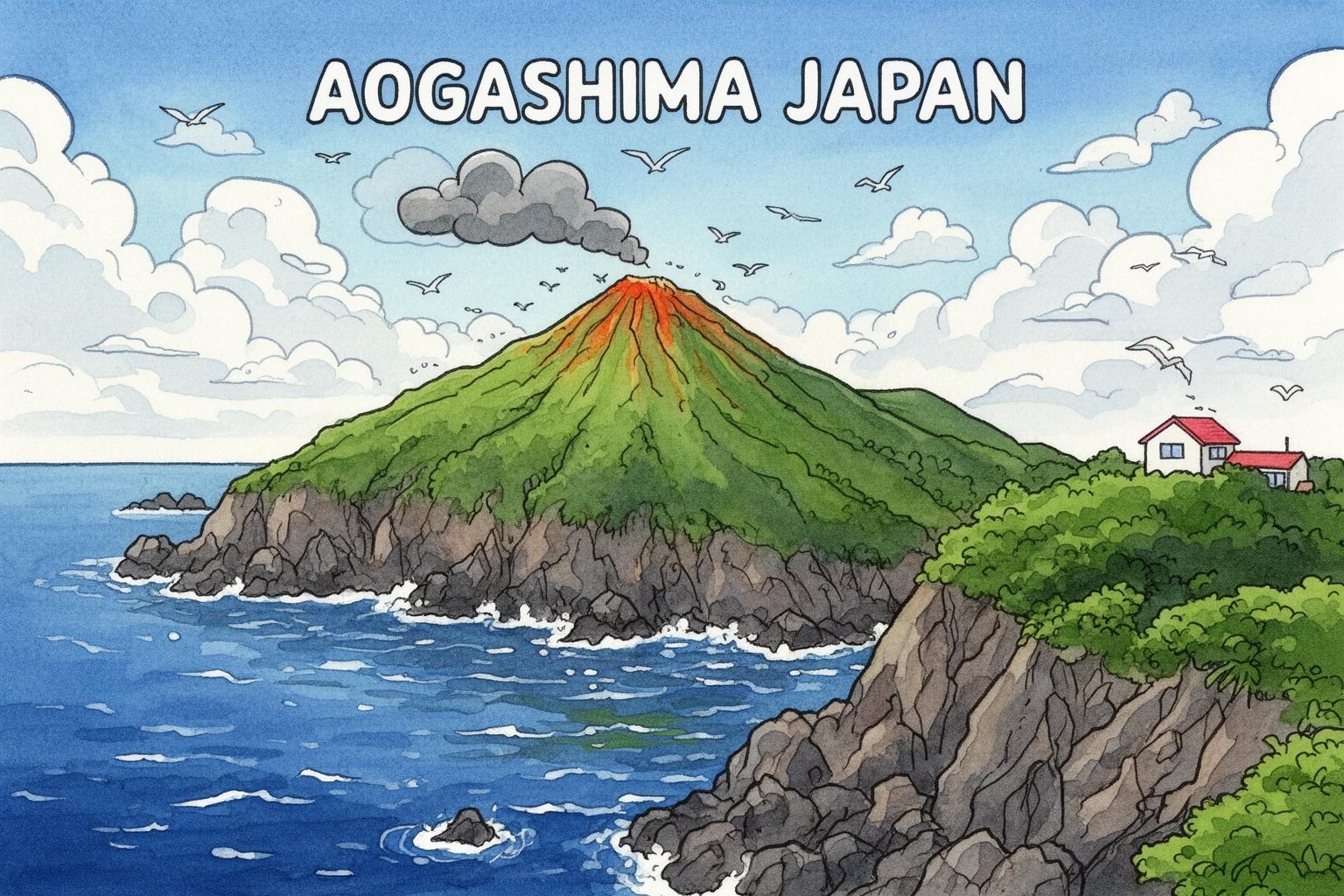
Stepping onto Aogashima feels like entering another dimension. The air itself seems different—thicker, purer, and charged with a primal energy humming just beneath your awareness. The first thing you notice is the silence. It’s not an empty silence but a deep, layered stillness. The constant noise of the city, the endless digital buzz, all just melts away. What remains is the rhythmic crash of waves against the sheer black cliffs of the port, the whisper of wind through dense subtropical foliage, and the faint, almost inaudible hiss of geothermal steam escaping from the earth. As a photographer, I’m fascinated by light and atmosphere, and Aogashima offers a masterclass in both. The light here boasts an otherworldly clarity, untainted by pollution, making the island’s interior greens almost painfully vivid and the surrounding ocean blues incredibly deep. Yet, it’s the atmosphere that truly enchants. There’s a palpable sense of isolation that is both humbling and freeing. You become acutely aware of your smallness, a tiny speck on a volcanic rock surrounded by a vast sea. This isn’t loneliness but a profound connection to the planet’s raw power. The island is dominated by its geography, with the volcano always present. Its steep caldera walls surround you, constant reminders of the colossal forces that shaped this land. It cultivates a deep respect for nature, an understanding that you are a guest, subject to its moods. The weather can shift suddenly, fog rolling in to swallow the landscape whole, the sea raging and completely cutting you off from the outside world. This unpredictability strips away the illusion of control we cling to daily. It compels you to be present, to adapt, simply to exist. The community, though small, is remarkably resilient and welcoming, a testament to generations who have endured this challenging environment. There’s a quiet strength in their daily lives, a sense of interdependence rare in the wider world. You won’t find flashy tourist spots or vibrant nightlife. The island’s entertainment is the dramatic spectacle of its own existence: shifting clouds, fiery sunsets, and a canopy of stars emerging at night. It feels like a place that has preserved its ancient secrets, a corner of the world that time, in its relentless advance, has respectfully chosen to bypass.
The Main Event: Journey into the Heart of the Double Volcano
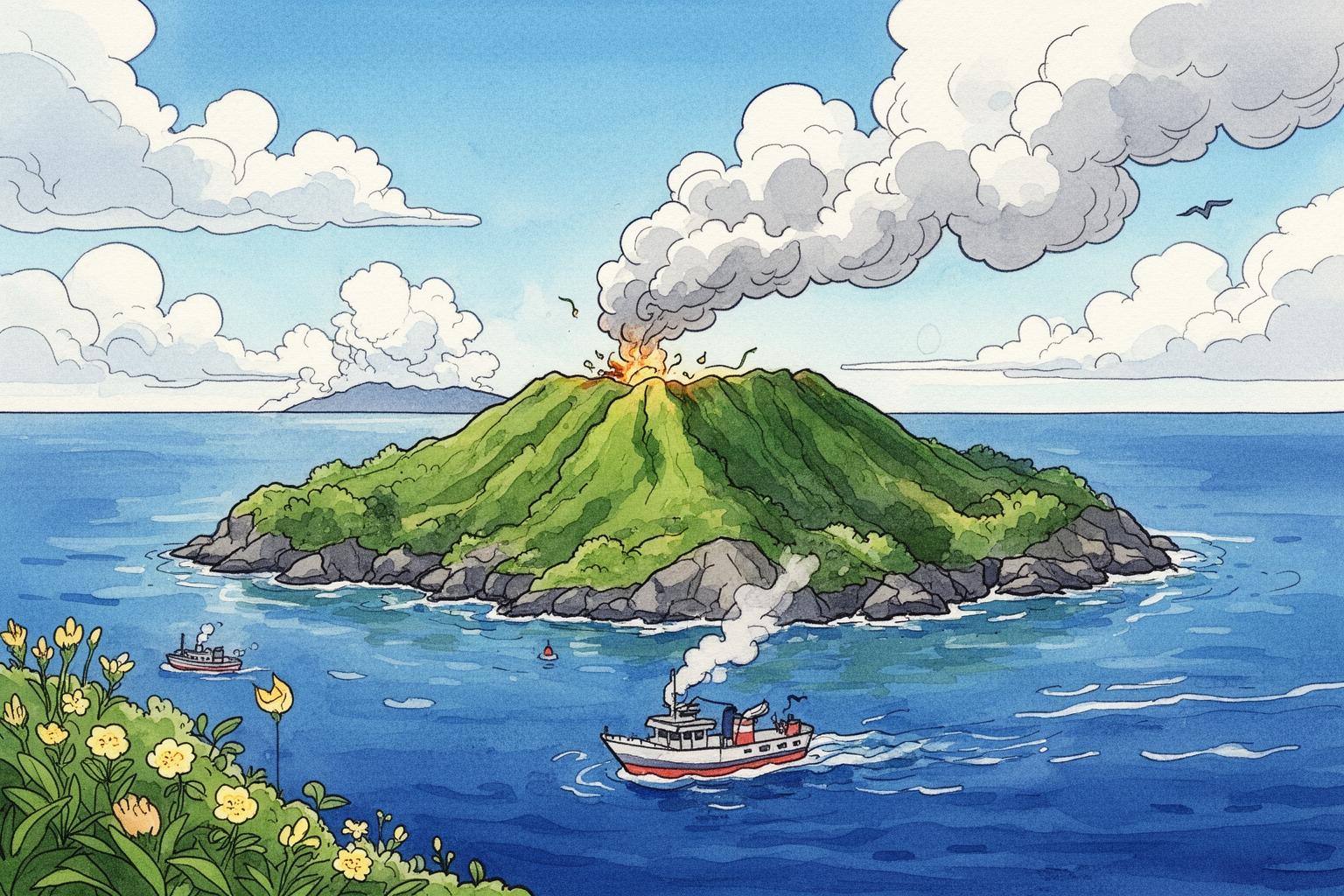
Aogashima’s defining characteristic, its very essence, lies in its extraordinary geology. While it is a volcanic island, calling it that is like calling a whale a fish. It is a nested caldera—a volcano within a volcano—a geological wonder that seems plucked from a fantasy novel. The entire island forms the rim of a vast outer crater, named Ikenosawa, approximately 1.5 kilometers in diameter. Rising from the center of this larger basin is a perfectly shaped, smaller inner cone called Maruyama. This iconic, almost cinematic landscape is what makes the treacherous journey here worthwhile. Descending into this immense natural amphitheater is a deeply spiritual experience. Most journeys begin at the island’s highest point, a lookout on the outer rim known as Otonbu Peak. From this perch, 423 meters above sea level, the island spreads out before you in a breathtaking panorama. You see the full circle of the outer caldera, its walls blanketed with thick, lush greenery. Below, nestled at its heart, is the steaming, diminutive peak of Maruyama. The village where most islanders live is nestled on the caldera floor, resembling a tiny toy settlement guarded by towering green walls. This perspective warps your sense of scale and leaves you awestruck. From Otonbu Peak, a winding road and several hiking trails lead down into the Ikenosawa caldera itself. The descent feels like a pilgrimage, a slow immersion into another realm. The temperature shifts, the air grows heavy with the scent of sulfur and damp earth, and the sounds of the outside world fade away, replaced by the crater’s own symphony. Walking on the caldera floor is surreal—you stand on cooled lava from an ancient eruption, surrounded by the steep, imposing cliffs of the outer crater. It evokes a profound feeling of containment and protection. The centerpiece of the inner landscape is, of course, Maruyama. A trail allows you to hike around and up this inner cone. The climb is fairly easy but rich with sensory impressions. You pass hissing fumaroles—vents where volcanic gases and steam escape with a powerful, primordial hiss. These steam vents, locally called ‘hingya’, serve as a constant, visceral reminder that the volcano is not dead, only dormant. In some spots, the ground is warm to the touch, and the air thickens with the distinctive, sulfurous scent. Reaching Maruyama’s summit offers yet another perspective, gazing back at the towering walls of the Ikenosawa crater that now encircle you entirely. You see the thriving ecosystem inside this natural fortress: small farms, a geothermal sauna, a salt factory—all powered by the volcano’s latent energy. It is a perfect, self-contained world, a microcosm of resilience and adaptation. The hike is not simply a physical exertion; it is a geological and historical narrative told in the language of rock, steam, and tenacious vegetation.
Life Inside the Crater: The Island’s Steaming Heartbeat
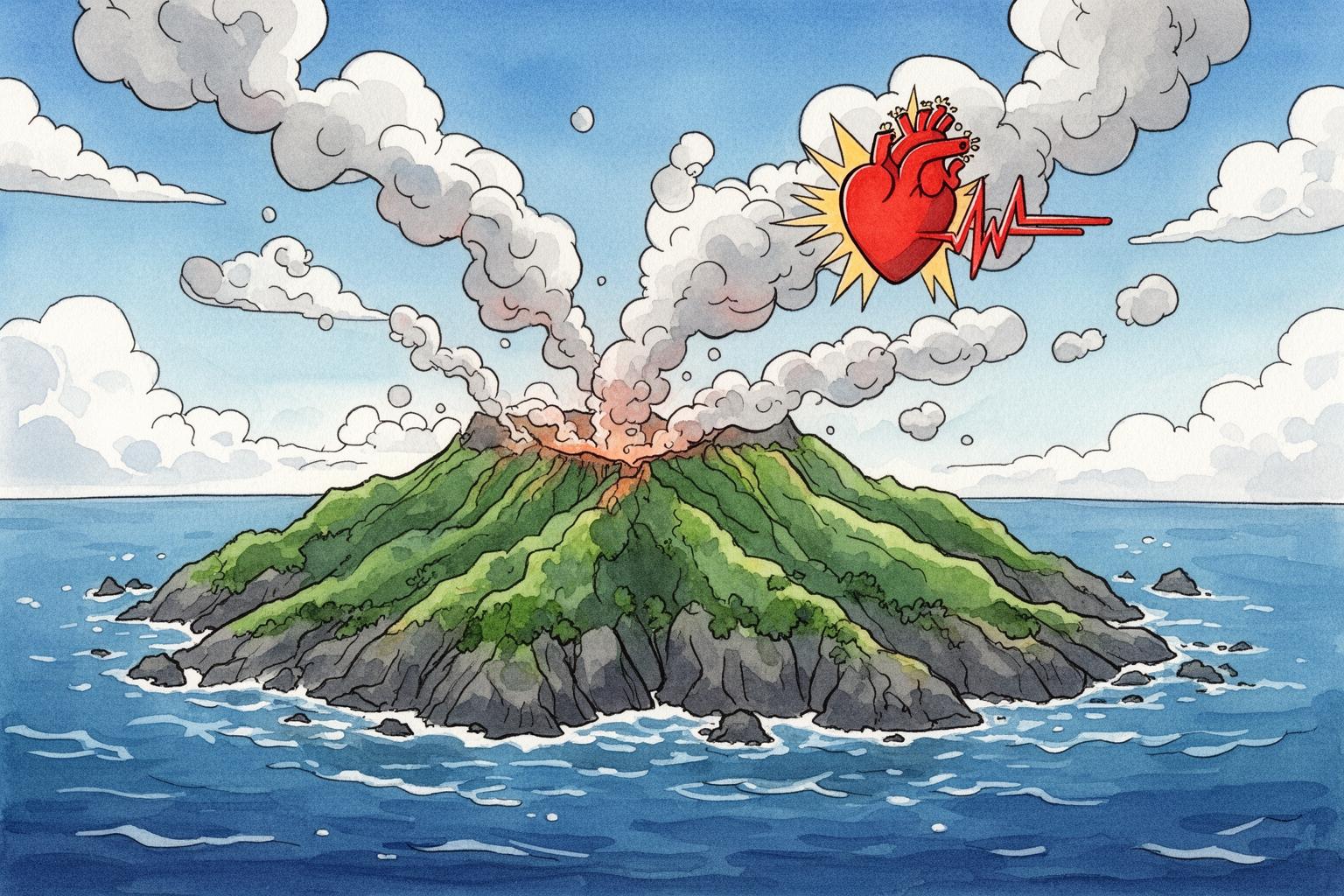
To truly grasp Aogashima, you must experience life on the caldera floor, where the community has harnessed the volcano’s vast power to develop a unique and sustainable way of living. This isn’t merely a settlement; it’s a living testament to human ingenuity confronting overwhelming natural forces. At the heart of this volcanic lifestyle is the Fureai Community Spa, better known simply as the sauna. But this is no ordinary spa. It’s fueled entirely by geothermal steam venting directly from the volcano. Upon entering the simple, rustic building, you’re immediately wrapped in warm, mineral-rich steam. It functions as a public bathhouse, a community hub, and a kitchen all at once. Locals gather here not only to relax and bathe in the naturally heated waters but also to cook. Outside the sauna, large open-air geothermal steamers stand ready. Residents bring net bags filled with eggs, sweet potatoes, and other vegetables, placing them over the vents to prepare meals using the free, endless energy bubbling up from beneath. Sampling a ‘geothermal egg,’ slow-cooked in sulfurous steam, is an essential Aogashima ritual. The yolk turns creamy and rich, while the white develops a subtle, smoky flavor that is utterly unique—a true taste of the volcano. Just a short stroll from the sauna lies another striking example of this synergy: the Hingya Salt Factory. Here, the same volcanic steam heats seawater, causing it to evaporate and leave behind pure, mineral-rich sea salt. The process is gradual and natural. Seawater is pumped from the deep, pristine currents of the Kuroshio Stream flowing past the island. It is then trickled down a tower of bamboo branches, allowing some evaporation in the open air. The concentrated brine is transferred to a large cauldron in a steamy workshop, where it’s slowly heated by geothermal vents until beautiful, flaky salt crystals form. The result is ‘Hingya no Shio’ (Salt of the Steam Vents), a prized product celebrated for its rich, mellow flavor. Visitors can observe the entire process and purchase a bag of this extraordinary salt—a perfect, tangible souvenir embodying the island’s elemental power. Life here is shaped by the volcano. Steam provides heat, cooking, and industry. The fertile volcanic soil supports the growth of shiitake mushrooms and the local ashitaba plant. There’s a strong sense of self-sufficiency. This is not just eco-conscious living; it’s about survival and tradition—a lifestyle born from necessity and honed over generations. It’s a place where the boundary between humanity and nature is beautifully and powerfully blurred.
Celestial Swag: Aogashima’s Mind-Blowing Night Sky
After the sun sets below the horizon, painting the sky with fiery shades of orange and purple, Aogashima readies itself for its second act. As darkness fully falls, the island unveils one of its most stunning secrets: a night sky so clear and brilliant that it feels as if you could reach out and touch the cosmos. In a country as densely populated and brightly lit as Japan, experiencing true darkness is a rare luxury. Aogashima, isolated in the vast ocean and home to a tiny population, has virtually no light pollution. This makes it one of the very best locations in the entire nation for stargazing—an unofficial ‘Dark Sky Park,’ if not formally designated as one. On a clear, moonless night, the spectacle begins. The sky is not just filled with stars; it becomes an overwhelming, three-dimensional tapestry of celestial light. Stars invisible from the city emerge in their full splendor, and constellations you thought you knew are suddenly nestled among countless other pinpricks of light. The highlight is the Milky Way. Seen from Aogashima, it is not a faint, cloudy band but a vibrant, textured river of light—a galactic superhighway spanning the entire dome of the sky, so bright and detailed that you can see its dark dust lanes and glowing nebulae with the naked eye. It’s an awe-inspiring and humbling sight, reconnecting you to the vastness of the universe in a way city dwellers have long forgotten. Shooting stars streak across the darkness frequently, while satellites silently glide across the star fields. The sheer number of visible stars can be disorienting at first, a brilliant chaos that gradually resolves into familiar patterns. Finding the perfect spot for this celestial show is simple. You can drive up to the Otonbu Peak lookout for a panoramic view or just find a quiet spot away from the few village streetlights. Lying on your back in the middle of the caldera, surrounded by the dark silhouette of the crater walls with that incredible sky above, is an experience bordering on the mystical. For photographers, Aogashima is a paradise for astrophotography. The stable sea air and absence of pollution enable incredibly sharp images. Even a basic camera on a tripod can capture breathtaking shots of the Milky Way. But you don’t need a camera to appreciate the experience. It’s about being present, letting your eyes adjust to the profound darkness, and allowing the vastness of the universe to wash over you. It serves as a powerful reminder of our small place in the grand, beautiful cosmos—a memory that will stay with you long after you’ve returned to the bright lights of civilization.
The Aogashima Flavor Trip: Volcanic Sips and Ocean Bites
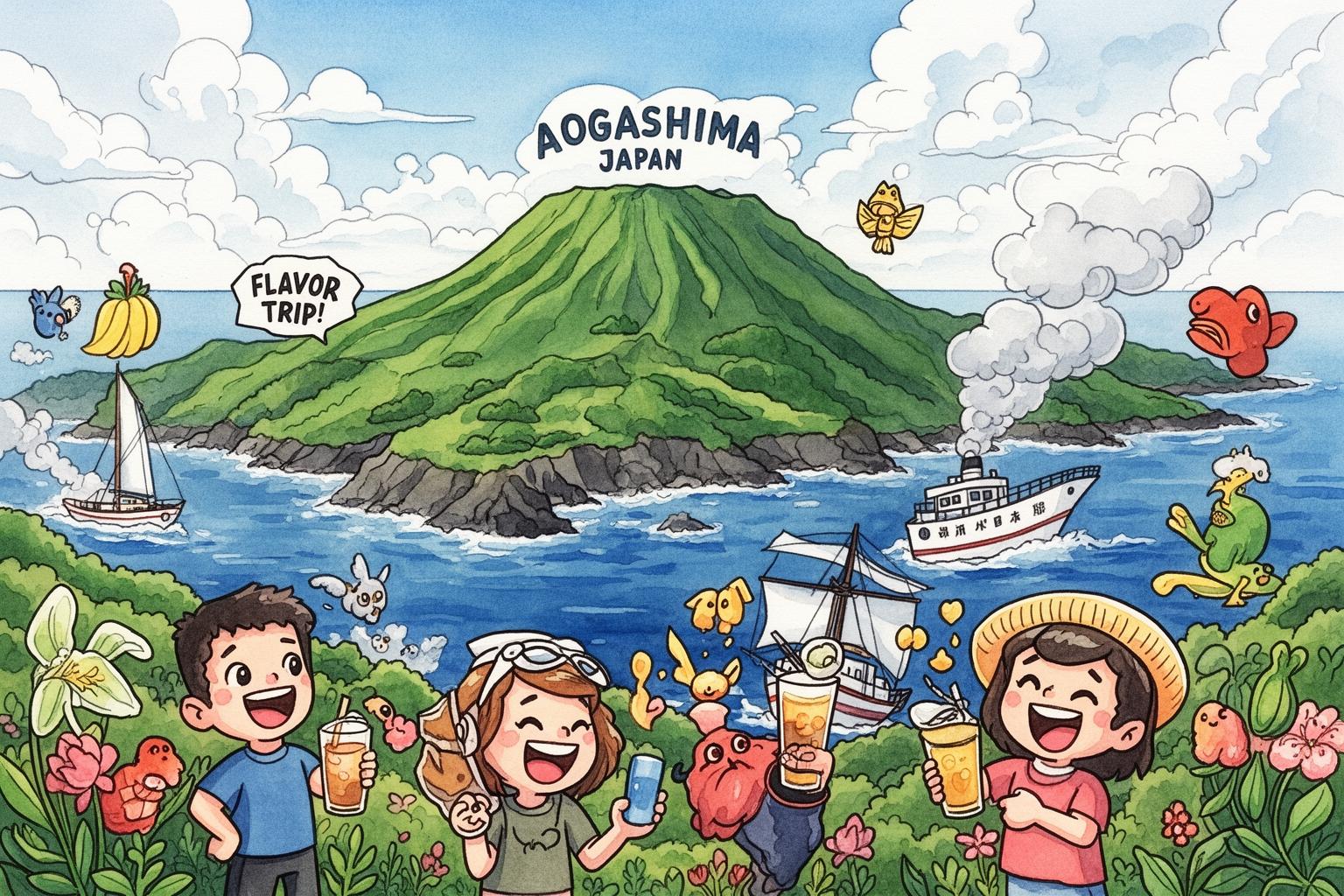
The island’s distinctive geography and isolation have nurtured a unique culinary culture as unforgettable as its landscapes. Aogashima’s cuisine directly mirrors its environment: simple, hearty, and deeply tied to both the ocean and the volcano. The undisputed star of the island’s food scene is its shōchū. This isn’t just any shōchū; it’s the legendary spirit known as Aochu. Crafted by the Aogashima Shuzo Distillery, it stands in a category of its own. Unlike typical shōchū made from barley, rice, or sweet potatoes, Aochu is primarily distilled from sweet potatoes but uses wheat koji for fermentation—a rare combination. The entire production process is steeped in tradition, with techniques passed down through generations. The outcome is a potent, clear spirit with a strong, earthy aroma and a surprisingly smooth, slightly sweet finish. At about 35% alcohol, it commands respect. Sharing Aochu with the locals in one of the island’s few izakaya (pubs) is a true rite of passage. It’s commonly served mixed with water (mizuwari) or on the rocks and pairs flawlessly with local dishes. Due to its extremely limited production, Aochu can’t be found anywhere else in the world. It is, in essence, the island’s spirit in a bottle. The ocean provides the other half of Aogashima’s culinary identity. The waters around the island teem with life, thanks to the powerful Kuroshio Current. The signature catch is tobiuo (flying fish), often served as sashimi or lightly salted and grilled. Another local favorite is me-dai (Japanese butterfish), a flavorful white-fleshed fish. You’ll also encounter dishes featuring limpets and other shellfish gathered from the rocky shores. Islanders have inventive ways to preserve their catch, such as making kusaya, a fermented and dried fish with an intensely pungent aroma, an acquired taste but a true delicacy of the Izu Islands. Beyond the sea, the land offers its own distinctive ingredients. The volcanic soil is incredibly fertile, perfect for growing vegetables. One common example is ashitaba, a green leafy plant whose name means “tomorrow’s leaf,” because it’s said that if you pick a leaf today, a new one will grow by tomorrow. It has a unique, slightly bitter flavor reminiscent of celery or angelica and is used in a wide range of dishes, from tempura to stir-fries and even noodles. Of course, there are ingredients cooked using the geothermal steam vents known as hingya. Steamed sweet potatoes, taro root, and eggs absorb subtle minerals and sulfur from the volcanic steam, resulting in flavors that can’t be replicated anywhere else. Dining on Aogashima isn’t about Michelin stars; it’s about authenticity. It means eating food caught, grown, or distilled just steps from your table, prepared using methods refined over centuries of isolation. It’s the purest taste of place.
The Gauntlet: Navigating Your Way to Aogashima
Reaching this remote world is not for the faint-hearted. The trip to Aogashima is an adventure in itself, serving as a test that separates casual tourists from truly dedicated explorers. There are only two ways to reach the island, both completely dependent on the notoriously unpredictable weather and ocean conditions. This uncertainty is an essential part of the Aogashima experience, so your first and most important tip is to allow extra days in your travel schedule. Avoid booking a flight from Tokyo the day after you plan to leave Aogashima—that’s a sure way to run into trouble. The first option is by sea. The passenger ship, Aogashima Maru, departs from Hachijojima, the larger island to the north. This means you must first fly or take an overnight ferry from Tokyo to Hachijojima. From there, the Aogashima Maru makes its daily three-hour journey to Aogashima. However, locals nicknamed it the “roulette ship.” The crossing involves open, often rough seas, and Sanbo Port on Aogashima is notoriously challenging to enter, surrounded by sharp cliffs. The ship is frequently canceled due to high waves, sometimes for days or even weeks at a time. During winter, the cancellation rate can exceed 50%. If you opt for this route, be prepared for unexpected changes. Check the shipping company’s website regularly for updates. The second option, which is more reliable but also more competitive, is by air. Tokyo Ai-Land Shuttle runs a helicopter service, also from Hachijojima. The flight is a scenic 20-minute hop with spectacular aerial views of Aogashima’s double crater on approach. This seems like the perfect solution, but there’s a catch: the helicopter is tiny, seating only nine passengers per flight, with just one flight daily. Tickets go on sale one month in advance and sell out almost instantly, especially during peak season. Booking requires calling the reservation center by phone, so some Japanese language skills or assistance from a friend or your accommodation host may be necessary. Despite the higher cost, the helicopter has a much better operational record than the ferry, making it the preferred choice for most visitors. Getting around the island itself is another matter. Aogashima is small, but its terrain is very steep. While you can walk within the main settlement in the caldera, reaching the port or scenic lookouts on the outer rim requires a vehicle. The island has one rental car service, and booking a car in advance is absolutely essential. There are no taxis and no public transportation. The journey to Aogashima demands patience, flexibility, and a bit of luck. It’s a modern pilgrimage that rewards those who persevere with an unforgettable experience. The difficulty in reaching the island is exactly what preserves its unique, untouched character.
Traveler’s Field Guide: Essential Intel for Your Quest
Successfully planning a trip to Aogashima hinges on thorough preparation and accepting the island’s limitations. This isn’t a place where you can simply arrive and figure things out as you go. Here’s the essential information you need to ensure your journey is smooth and respectful of the local community. First, accommodation: there are no hotels on Aogashima. Your only choice is to stay at one of the few family-run guesthouses called minshuku. These provide an intimate and authentic experience, often including home-cooked breakfast and dinner made with local ingredients. Reservations must be made well in advance, usually by phone, and having some knowledge of Japanese is highly beneficial. Your minshuku host will be your lifeline on the island—a vital source of local insight who can often assist with car rentals and other logistics. They embody the heart of Aogashima hospitality. Next, money: bring cash—plenty of it. There are no ATMs on the island. While accommodations might accept credit cards if arranged beforehand, most other transactions require cash. The post office is the only financial facility, and its hours are limited. Calculate your expected expenses—accommodation, car rental, food, drinks, and souvenirs—and bring extra funds in case bad weather strands you for several additional days. Supplies on the island are limited. There is one small general store, Juuichiya Shoten, which stocks basic groceries, snacks, and drinks. It’s a charming shop but not a supermarket. If you need specific medications, toiletries, or specialty foods, you must bring them from the mainland. The same applies to gear: sturdy hiking shoes, rain gear (as the weather changes rapidly), a flashlight for nighttime walks, and a portable battery charger for your devices are essential. Connectivity is unreliable. Some mobile carriers offer service in parts of the village, but don’t expect fast or consistent internet. Some minshuku may provide Wi-Fi, but it’s often slow. Consider this a blessing—an ideal opportunity for a digital detox. Take the chance to disconnect from the outside world and connect with your surroundings. Finally, timing is crucial. The best periods to visit are generally spring (April-May) and autumn (October-November), when the weather is milder and seas calmer, slightly improving ferry reliability. Summer offers warmer weather but brings typhoon risks that can halt all transport for days. Winter brings the clearest skies for stargazing but also the roughest seas and the highest rate of transport cancellations. Whenever you visit, flexibility is key. View your itinerary as a flexible plan rather than a fixed schedule. The island follows its own rhythm, governed by the wind and waves. Accept this, and you’ll be rewarded.
A Final Word: The Echo of the Island
Leaving Aogashima is a peculiar, bittersweet experience. Whether you leave on the exhilarating updraft of the helicopter or the rocking deck of the ferry, you’ll find yourself glancing back at that emerald-green volcanic cone shrinking into the vast blue of the Pacific, and a part of you will feel as though you’re leaving home. This island does more than simply captivate you with its dramatic scenery; it penetrates your soul. The profound silence, the warmth of the community, the awe-inspiring power of the volcano, and the boundless canopy of stars—these elements leave an unforgettable impression. You arrive as a visitor, a photographer, a tourist, but you depart as a storyteller, carrying the island’s echo within you. The greatest memento from Aogashima isn’t the volcanic salt or the bottle of Aochu you carefully packed in your luggage. It’s the renewed perspective it offers. It’s the vivid reminder that there are still places in the world that remain wild and untamed, places that demand respect and reward patience. It’s the realization that the most memorable journeys are often the ones that don’t unfold exactly as planned. Aogashima is a challenge, a gamble, a beautiful question mark on the map. But for those who answer its call, it provides a profound and unforgettable revelation about the world and about themselves.