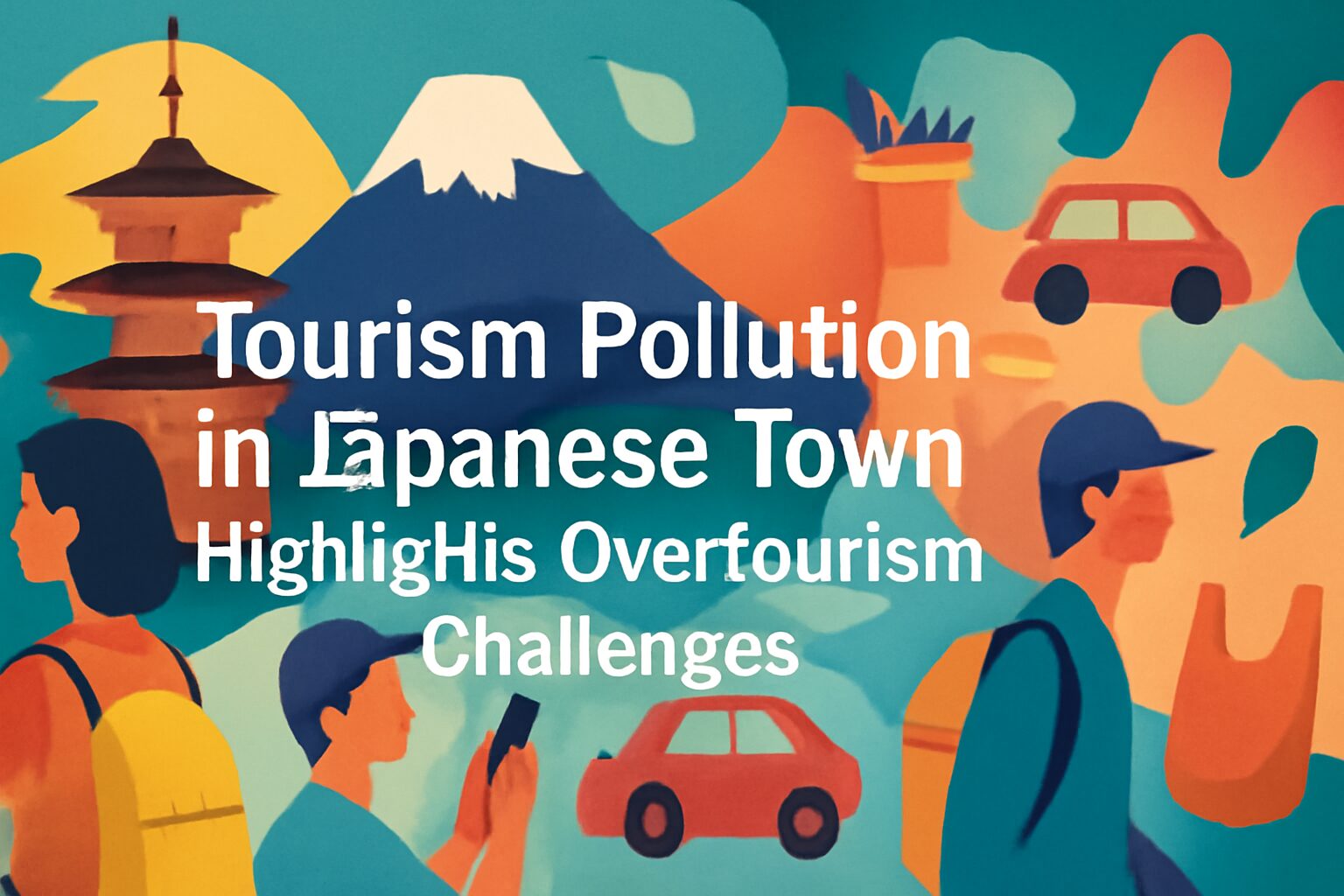
A picturesque town at the foot of Mount Fuji has become the latest symbol of Japan’s struggle with overtourism, as a surge in visitors drawn by social media fame creates what locals are calling ‘tourism pollution.’ The situation in Fujiyoshida, Yamanashi Prefecture, offers a stark look at the unintended consequences of Japan’s booming tourism industry and raises critical questions about its future.
The Viral View and its Unwanted Side Effects
Fujiyoshida offers a uniquely Japanese vista: a classic street scene with traditional buildings, crowned by the majestic Mount Fuji in the background. This view, particularly from a spot near a popular convenience store, has become a viral sensation on platforms like Instagram, drawing hordes of international tourists eager to capture the perfect shot.
However, this newfound fame has come at a cost to the community. Residents report a constant stream of problems, including:
- Traffic Congestion: Tourists often stand in the middle of busy roads to take photos, blocking traffic and creating dangerous situations.
- Littering: An increase in visitors has led to more trash being left on the streets and in private areas.
- Trespassing: In search of unique angles, some tourists have been found entering private properties without permission.
The disruption to daily life became so severe that local officials made the difficult decision to cancel the town’s annual cherry blossom festival. The move was a preventative measure to avoid exacerbating the overcrowding and further straining local resources.
Background: Japan’s Tourism Boom by the Numbers
The issues in Fujiyoshida are not isolated; they are a symptom of Japan’s rapid and successful tourism recovery. Fueled by a significantly weak yen, which makes Japan an incredibly affordable destination, the country is experiencing a massive influx of foreign visitors.
According to the Japan National Tourism Organization (JNTO), the number of international visitors has rebounded dramatically since the country fully reopened its borders. In March 2024, Japan welcomed over 3 million visitors in a single month for the first time ever. For the full year of 2023, the country saw over 25 million tourists, recovering to about 80% of the pre-pandemic levels of 2019.
The Japanese government is actively encouraging this growth. Its latest tourism plan aims to surpass the 2019 peak of 31.8 million visitors by 2025 and sets an ambitious long-term goal of attracting 60 million international tourists by 2030. While economically beneficial, this policy puts immense pressure on popular destinations that are often ill-equipped to handle such volumes.
Future Outlook: The Search for Sustainable Tourism
The case of Fujiyoshida serves as a critical warning. As Japan pursues its tourism goals, it faces a crucial turning point: how to balance economic growth with the well-being of local communities and the preservation of the very attractions that draw visitors in the first place.
Potential Impacts and Solutions
- Spreading the Problem: Without intervention, similar “tourism pollution” incidents are likely to erupt in other popular, yet smaller, destinations across Japan, such as Kyoto’s historic districts or the scenic streets of Kamakura.
- Shift Towards Management: The focus may shift from pure promotion to active management. This could involve implementing measures like visitor caps, reservation systems for popular sites, or the introduction of local tourist taxes. The city of Hatsukaichi in Hiroshima, for instance, has already introduced a visitor tax for those traveling to the famed Miyajima Island.
- Promoting Dispersion: A key strategy will be to encourage tourists to explore lesser-known regions of Japan. This would help alleviate pressure on “golden route” cities like Tokyo, Kyoto, and Osaka, and spread the economic benefits more evenly across the country.
- A Call for Quality over Quantity: The ongoing challenges may force a nationwide conversation about prioritizing high-value, sustainable tourism over simply maximizing visitor numbers. This involves attracting tourists who stay longer, spend more, and engage respectfully with local culture and communities.
The situation in Fujiyoshida is more than a local news story; it is a microcosm of a national challenge. Japan’s ability to navigate this complex issue will determine whether its tourism boom can become a sustainable success or a cautionary tale of a paradise loved to death.