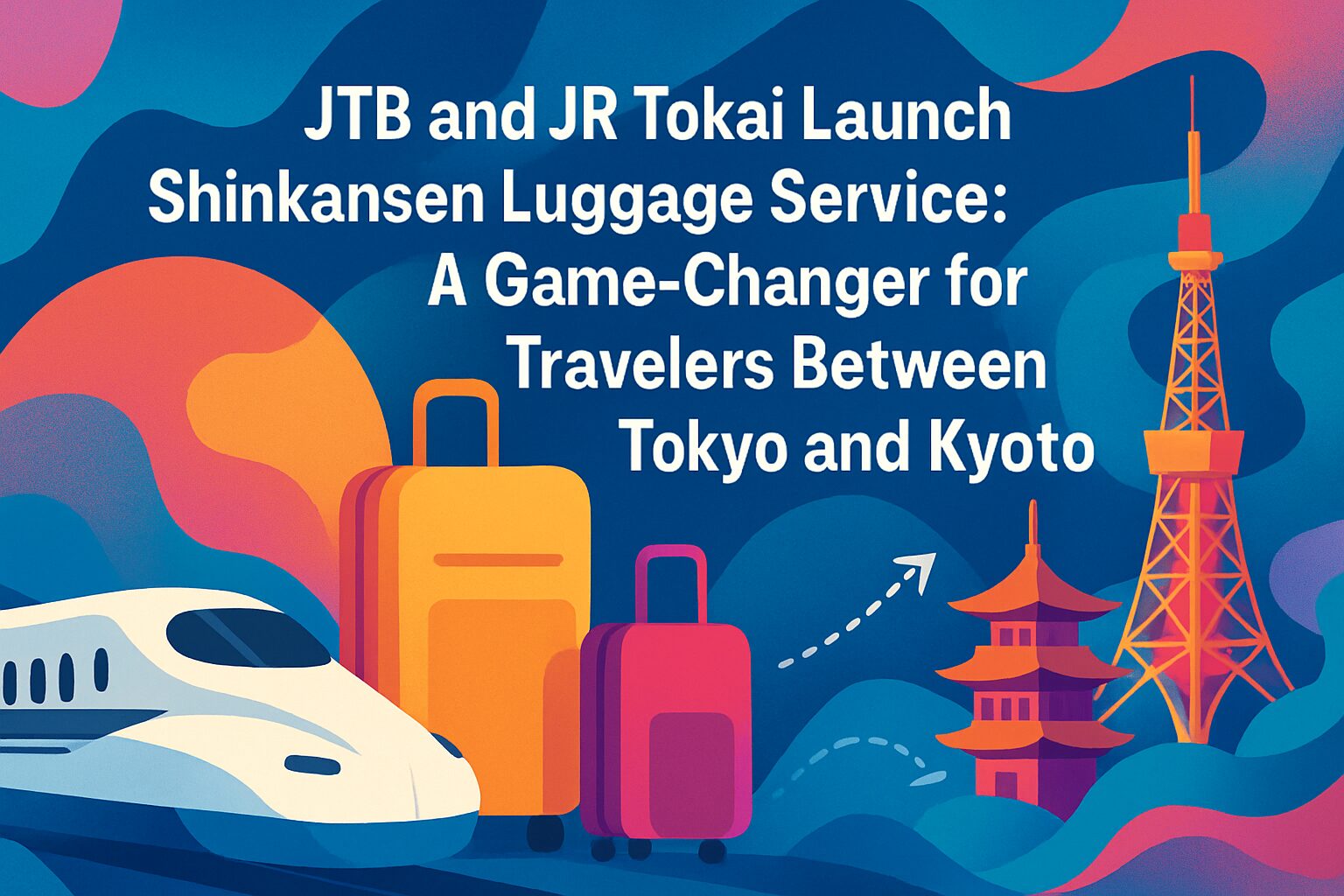
A new partnership between JTB, Japan’s largest travel agency, and Central Japan Railway Company (JR Tokai) is set to revolutionize travel on one of the world’s busiest high-speed rail corridors. The two companies have launched a same-day luggage delivery service for travelers on the Tokaido Shinkansen, connecting the bustling metropolises of Tokyo and Kyoto. This initiative directly addresses one of the most common challenges faced by international tourists: navigating Japan’s immaculate but often crowded public transport system with bulky suitcases.
The Growing Challenge of Luggage for Inbound Tourists
Japan is experiencing an unprecedented tourism boom. According to the Japan National Tourism Organization (JNTO), over 25 million foreign visitors arrived in 2023, and the numbers for 2024 are on track to surpass pre-pandemic records. While this influx is a boon for the economy, it has highlighted an infrastructural challenge: luggage logistics.
Travelers, often with large suitcases packed for long-haul trips, can find it difficult to manage their belongings in busy train stations and on packed trains. This issue became more pronounced in May 2020 when JR companies introduced a mandatory reservation system for “oversized baggage” (with total dimensions between 161 cm and 250 cm) on major Shinkansen lines, including the Tokaido Shinkansen. While designed to ensure safety and space, the rule can be a source of stress for tourists unaware of the system or those who fail to secure a reservation.
Existing luggage delivery services, known as “takkyubin,” are highly efficient but typically offer next-day delivery. The new JTB and JR Tokai service fills a crucial gap by providing a “same-day” solution, allowing travelers to enjoy their travel day completely hands-free.
How the New Luggage Service Works
The service is designed for simplicity and convenience, allowing travelers to explore their destination city immediately upon arrival without the burden of their bags.
Key Service Details:
- Route: Between designated counters at Tokyo Station and Kyoto Station.
- Process: Travelers can drop off their luggage at a JTB service counter in the morning at their departure station.
- Timeline: For example, luggage dropped off by 11:00 AM in Tokyo can be picked up at the corresponding counter in Kyoto after 4:00 PM on the same day.
- Benefit: This allows for a full afternoon of sightseeing, dining, or business meetings before checking into a hotel. The luggage is securely transported on the Shinkansen network, ensuring a swift and reliable transfer.
This “hands-free travel” model is a significant upgrade to the tourist experience, transforming a potentially stressful travel day into a seamless part of the adventure.
The Future Impact on Japan’s Tourism
This initiative is more than just a convenience; it represents a strategic enhancement of Japan’s tourism infrastructure.
An Enhanced and Accessible Travel Experience
The immediate impact will be a vastly improved travel experience. Tourists will no longer need to struggle with heavy bags on escalators, through ticket gates, or into limited overhead storage on the train. Families with children, elderly travelers, and visitors with mobility issues will find this service particularly beneficial, making Japan’s “golden route” more accessible than ever. It frees up valuable time, enabling tourists to visit an extra museum, enjoy a leisurely lunch, or simply soak in the atmosphere of their new surroundings.
A Potential Nationwide Model
The Tokyo-Kyoto route is a critical test case. If successful, this model could be expanded to other major Shinkansen destinations, such as Osaka, Nagoya, and Hiroshima. It could also inspire other railway operators, like JR East and JR West, to launch similar services on their respective networks, potentially creating a nationwide hands-free travel grid. This would solidify Japan’s reputation as a global leader in hospitality and thoughtful service design, a core component of its “omotenashi” culture.
Ultimately, the JTB and JR Tokai partnership is a forward-thinking solution to a modern travel problem. By leveraging the speed and reliability of the Shinkansen, it not only eases congestion but also elevates the quality of the journey itself, ensuring that a visitor’s first and last hours in a city are as enjoyable as the rest of their stay.