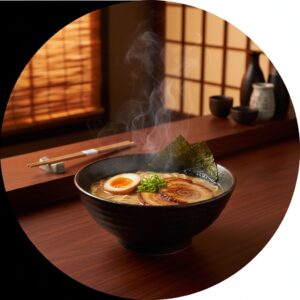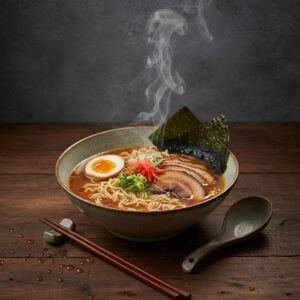
There’s a certain magic that hums in the Tokyo air, a current of energy that flows from ancient temples to Blade Runner-esque skyscrapers. But for many, the true soul of this metropolis is found not in its grand vistas, but in the humble, steaming confines of a ramen-ya. It’s a ritual, a comfort, a culinary cornerstone of Japanese life. The rich, marrow-deep perfume of a simmering tonkotsu broth, the rhythmic slurping of diners hunched over their bowls, the swift, precise movements of the master behind the counter—this is the ramen experience etched into the global consciousness. For decades, this experience has been intrinsically tied to pork, chicken, and seafood; a celebration of nose-to-tail cooking where animal products formed the very foundation of its profound flavor. But Tokyo, a city in constant, graceful evolution, is rewriting its most famous recipe. A quiet, delicious revolution is underway, bubbling up from the city’s most innovative kitchens. This is the story of plant-based ramen, a movement that’s not merely an alternative, but a stunning re-imagination of a classic, signaling a healthier, more inclusive, and incredibly flavorful future for Japan’s most beloved noodle soup. It’s a testament to the city’s ability to honor tradition while fearlessly rocketing towards the future, proving that the deepest umami can indeed spring from the earth. Get ready to dive into a Tokyo where green is the new gold, and the future of comfort food is simmering in a pot of plant-powered perfection.
The Soul of a Nation in a Bowl: Understanding Traditional Ramen

To truly grasp the brilliance of plant-based ramen, one must first pay homage to its predecessor. Traditional ramen is a realm of complexity, an intricate interplay of four essential elements that chefs dedicate their lives to mastering. It is much more than noodles in soup; it is a carefully crafted masterpiece where every component holds a vital role. Appreciating this foundation highlights the immense challenge and remarkable creativity behind the vegan ramen movement. This is not simply about omitting meat; it’s about reconstructing a cathedral of flavor from the ground up, guided by a completely different set of principles.
At the core of every exceptional ramen lies the broth, the soul of the bowl. This is where regional distinctions and philosophical nuances of ramen come to light. Perhaps the most renowned is Tonkotsu, a specialty from Kyushu. This broth is pure culinary alchemy, created by boiling pork bones for hours—sometimes days—at a relentless, rolling boil. This process breaks down collagen, marrow, and fat, producing a rich, opaque, creamy liquid that coats the palate with deep, savory richness. Its color ranges from pearly white to deep ivory, while its aroma is primal and comforting. Then there’s Shio ramen, meaning ‘salt,’ the oldest style, featuring a delicate and balanced broth. Typically made with chicken or pork bones and a variety of vegetables simmered gently, the soup is clear, pale, and allows the subtle flavors of dashi—usually made from kombu seaweed and dried fish flakes—to shine through. It is elegant and refined. Its more robust counterpart is Shoyu, or soy sauce ramen, the most common style in Tokyo. Here, the clear chicken or pork broth is seasoned with a hearty soy sauce tare, resulting in a dark, translucent brown soup with a sharp, savory, and aromatic flavor that is both familiar and deeply satisfying. Lastly, there is Miso ramen, originating from the chilly northern island of Hokkaido. This style uses a rich pork and chicken broth enriched with fermented soybean paste (miso), delivering a complex, nutty, slightly sweet broth that is hearty and opaque, perfect for warming up during harsh winters.
Next is the Tare, the ramen chef’s secret weapon. This concentrated seasoning liquid is poured into the bowl before the broth. It’s where the chef’s unique character shines through. It might be a shio tare made from various salts, mirin, and sake, or a shoyu tare aged with a secret blend of herbs and aromatics. The tare provides the primary salty and umami punch, transforming the base broth into a finished soup—it’s the broth’s soul.
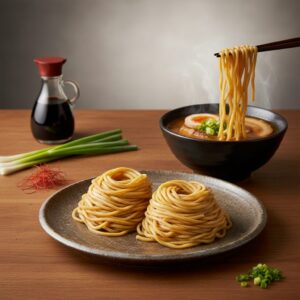
The noodles, or Men, are far from an afterthought; they represent a science of their own. Made from wheat flour, water, salt, and crucially, kansui—an alkaline mineral water—they have a unique springiness, chew, and color that distinguish them from udon or soba. Their shape and thickness vary depending on the broth they accompany. Thick, wavy noodles pair with rich miso broths, offering more surface area to hold the soup. Thin, straight noodles are classic for the thick Hakata tonkotsu, designed to be slurped quickly while retaining their texture. The craft of noodle-making is so esteemed that many renowned ramen shops either make their own or have exclusive agreements with master noodle artisans.
Finally, the Toppings complete the experience, adding layers of texture and flavor. The undisputed star is Chashu, slices of fatty pork belly rolled, tied, and simmered for hours in a sweet and savory blend of soy sauce, mirin, and sake until fall-apart tender. Then there’s the Ajitsuke Tamago, a seasoned soft-boiled egg with a perfectly jammy yolk and whites infused with marinade flavor. Other classics include Menma (fermented bamboo shoots with a satisfying crunch), crisp sheets of Nori (seaweed), finely chopped Negi (scallions) for fresh sharpness, and sometimes bean sprouts or wood ear mushrooms. Each ingredient is carefully prepared and arranged, crafting a harmonious and visually stunning final dish. This is the tradition that plant-based ramen both honors and, in its way, redefines.
A New Wave of Flavor: Why Tokyo is Embracing the Green Revolution
The seismic shift towards plant-based cuisine in Tokyo’s ramen scene did not occur overnight. It is the delicious outcome of several cultural and social currents converging at an ideal moment. While Japan boasts a rich history of vegetarianism, particularly through shojin ryori, the refined Buddhist monk cuisine, mainstream dining has traditionally been dominated by meat and fish. The recent surge in vegan ramen marks a notable evolution in the nation’s palate and priorities.
One of the key drivers has been a rising health consciousness among the Japanese population. In a country renowned for longevity, there is a constant emphasis on diet and well-being. People are increasingly aware of the benefits of including more plant-based meals in their diets, seeking lighter, cleaner alternatives to traditionally rich dishes without compromising on flavor. Plant-based ramen perfectly meets this desire, offering the comforting satisfaction of a classic bowl but often with fewer calories and less saturated fat, leaving diners feeling revitalized rather than weighed down.
Another major catalyst was the lead-up to the 2020 Tokyo Olympics. The arrival of international athletes, tourists, and media introduced a global array of dietary needs and preferences to the city. Astute restaurateurs saw a significant opportunity to cater to the growing number of vegetarian and vegan visitors eager to experience authentic Japanese culture, including its most iconic foods. This encouraged chefs to innovate, deconstructing their beloved ramen and reconstructing it without animal products to ensure no one was excluded from the quintessential Tokyo dining experience. What began as a way to accommodate tourists quickly gained a passionate local following, proving there was already demand just waiting for supply.
Moreover, there is the unyielding spirit of Japanese craftsmanship and innovation. For a Tokyo chef, the challenge of creating a plant-based broth that can rival a 12-hour tonkotsu is not a limitation but an irresistible creative puzzle. It represents an opportunity to showcase skill, explore new ingredients, and push the boundaries of what ramen can be. They approach it with the same meticulous attention to detail and pursuit of perfection, or kodawari, that characterizes Japanese culinary arts. This is not about crafting a pale imitation; it is about forging a new genre of ramen that stands on its own as equally valid and delicious.
Finally, the historical precedent of shojin ryori must not be overlooked. This ancient Buddhist practice has perfected the art of drawing out profound depth of flavor from vegetables, tofu, and seaweed for centuries. It mastered the concept of umami long before it became a global sensation. Modern chefs are now tapping into this rich tradition, applying age-old techniques for making dashi from kombu and shiitake mushrooms, while using ingredients such as yuba (tofu skin) and fu (wheat gluten) in fresh and exciting ways. This fusion of ancient wisdom and contemporary culinary ambition is what makes Tokyo’s plant-based ramen scene so uniquely compelling and vibrant.
The Alchemist’s Kitchen: Crafting Umami Without a Single Bone

The core challenge of plant-based ramen lies in replicating the deep, multi-dimensional savory flavor called umami, along with the rich, satisfying mouthfeel that fats and collagens provide in traditional broths. This is where the true magic happens. Chefs have become culinary scientists, exploring the plant world to unlock the secrets of flavor and texture, transforming simple vegetables, nuts, and fungi into liquid gold.
The Kombu and Shiitake Foundation
At the base of nearly every outstanding vegan ramen broth is a carefully prepared dashi. Instead of the traditional katsuobushi (dried bonito flakes), the stars here are kombu and dried shiitake mushrooms. Kombu, a type of kelp harvested from the cold waters off Hokkaido, is rich in glutamates, the main source of umami. Chefs gently steep it in water, avoiding boiling, to extract its delicate, oceanic flavor without bitterness. Dried shiitake mushrooms, on the other hand, contain guanylate, another umami compound. When combined, these two ingredients create a synergistic effect, greatly enhancing the overall savory depth. This plant-based dashi forms a complex, clean, and deeply flavorful base on which the rest of the broth is built. It’s a subtle yet powerful foundation, reflecting the elegance of Japanese cooking.
The Creamy Conundrum: Recreating Tonkotsu
Replicating the iconic creamy texture of tonkotsu broth without simmering pork bones for hours is perhaps the greatest achievement in vegan ramen craftsmanship. Chefs use a variety of clever techniques to accomplish this. One popular method involves soy milk. When heated and emulsified with vegetable oils and a savory tare, soy milk can produce a surprisingly rich and opaque broth that closely mimics the appearance and mouthfeel of its pork-based counterpart. Some chefs push this further by making nut milks from scratch, using cashews or almonds for their high fat content and mild flavor, resulting in an even richer, more decadent base. Another approach uses pastes. Ground sesame paste, similar to tahini, adds a nutty richness and thickness characteristic of Tantanmen-style ramen. Other chefs experiment with vegetable purees, slowly simmering down ingredients like potatoes, onions, or cauliflower until they break down and blend into a thick, velvety soup base. These broths are remarkably satisfying, proving that creaminess is a texture rather than an ingredient.
Clear and Complex: The Art of Vegan Shio and Shoyu
For the clearer shio and shoyu varieties, the emphasis shifts from texture to layering complex, aromatic flavors. Kombu-shiitake dashi remains the foundation, but it is enhanced with a variety of other ingredients. Chefs often add generous amounts of aromatic vegetables such as charred onions, garlic, and ginger to the simmering pot, adding subtle sweetness and smoky depth. A selection of mushrooms—maitake, eringi, shimeji—may also be included to contribute unique earthy notes. The real artistry is in the final seasoning. For vegan shio ramen, chefs may use a mix of different sea salts, ranging from mineral-rich Mongolian rock salt to delicate sea salt from the Japanese coast. For shoyu ramen, the quality of the soy sauce is crucial. They might choose an aged, artisanal shoyu for its deep, complex flavor, or blend several types to achieve the perfect balance of saltiness, sweetness, and aroma. Finally, infused oils are drizzled on top right before serving. Scallion oil, roasted garlic oil, or fiery chili oil not only add a beautiful sheen to the soup’s surface but also deliver a powerful aromatic punch with every spoonful.
Fermented Funk: The Power of Miso
Miso is a blessing for plant-based cooking, loaded with umami due to fermentation. It naturally lends itself to creating a robust and satisfying ramen broth. Vegan miso ramen chefs typically start with a rich vegetable stock and then whisk in one or more types of miso paste. The choice of miso shapes the final flavor profile. A light, sweet shiro miso (white miso) produces a milder, more delicate broth, while a dark, pungent aka miso (red miso) yields a bolder, saltier soup. Many chefs create their own signature blends, sometimes combining three or more types of miso to achieve perfect balance. To enhance richness further, they may add creamy soy milk or nut cream, along with hearty ingredients like ground sesame and a hint of chili bean paste (tobanjan) for a spicy kick. The resulting broth is thick, complex, and deeply comforting—a perfect showcase of the power of fermented foods.
The Garden on Top: Reimagining Ramen Toppings
If the broth is the soul of ramen, the toppings are its character. In the plant-based world, this is where chefs can truly express their creativity, transforming the bowl into a vibrant, textured, and visually captivating landscape. The absence of traditional chashu and egg doesn’t leave a gap; rather, it opens up a realm of delicious possibilities, highlighting the versatility and allure of vegetables, fungi, and plant-based proteins.
The “Meaty” Illusion
A crucial element of a satisfying ramen experience is a hearty, savory topping that offers a “meaty” chew. Vegan chefs have met this challenge with remarkable inventiveness. Tofu is a popular base. It may be served as thick slices of atsuage (deep-fried tofu) that soak up the broth like a sponge, or marinated for hours in a savory-sweet glaze before being pan-seared or grilled to form a caramelized crust, delivering a firm, gratifying bite. Another key player is seitan, a protein derived from wheat gluten. Its naturally dense and fibrous texture makes it an excellent meat substitute. It can be simmered in the same manner as chashu, absorbing the flavors of the braising liquid, then thinly sliced to reveal a texture strikingly similar to tender pork. For a different layer of savoriness, mushrooms are indispensable. King oyster mushrooms, with their thick, sturdy stems, can be scored and seared until they develop a succulent, almost scallop-like texture. Shiitake mushrooms, rehydrated from their dried form, offer an intense umami burst and pleasant chew. Some inventive shops even use crumbled soy protein, seasoned and stir-fried to replicate the spicy ground pork found in Tantanmen.
A Symphony of Vegetables
Plant-based ramen celebrates the vegetable kingdom in all its splendor. Toppings are selected not only for flavor but also for color, texture, and seasonality, turning each bowl into an artistic creation. Rather than a mere garnish, vegetables often take center stage. You might find thick, sweet slices of roasted kabocha squash, providing a creamy texture and a hint of autumnal sweetness. Bright bell peppers, either raw and julienned for a fresh crunch or fire-roasted to bring out their smoky flavor, add a pop of color. Blanched greens like spinach or komatsuna (Japanese mustard spinach) offer a slightly bitter contrast to the rich broth. Crunchy slices of lotus root, sometimes fried into crispy chips, contribute a delightful textural contrast. Sweet corn kernels, a classic topping especially in miso ramen, add bursts of sweetness. The possibilities are endless and often shift with the seasons, reflecting the Japanese principle of shun, or consuming foods at their peak freshness.
The Finishing Touches
No bowl of ramen is complete without the final garnishes that unify all the elements. Many of these are naturally plant-based and remain essential in the vegan version. Finely sliced scallions (negi) are indispensable, lending a sharp, oniony bite that cuts through the broth’s richness. Sheets of crisp nori seaweed add a hint of oceanic salinity and dissolve beautifully into the soup. Menma, the classic fermented bamboo shoots, provide their signature crunch and tangy flavor. For a spicy kick, a drizzle of rayu (chili oil) often blooms across the broth’s surface with its red sheen. Some shops sprinkle toasted sesame seeds for a nutty aroma or add a dash of black pepper for extra spice. These small touches are far from insignificant; they are the final notes in a complex and harmonious composition, completing the sensory journey of the ramen.
A Pilgrim’s Guide to Tokyo’s Top Plant-Based Ramen Havens

Navigating Tokyo’s extensive food scene can be overwhelming, but for plant-based travelers, the city is a treasure trove of noodle soup delights. From busy train stations to tranquil art galleries, world-class vegan ramen awaits discovery. Here are several essential destinations that have shaped and elevated this culinary art form.
T’s Tantan: The Unrivaled King in Tokyo Station
Situated somewhat unexpectedly inside the ticketed area of the vast Tokyo Station, T’s Tantan is more than just a restaurant; it’s a must-visit destination. For many vegans and vegetarians, both local and international, this spot offers their first and most memorable taste of genuine plant-based ramen in Japan. The atmosphere is fast-paced and efficient, matching its location—you order from a vending machine, find a seat at the long counter, and your steaming bowl arrives shortly after. Their signature dish is the Gold Sesame Tantanmen. The broth is a revelation: a deeply nutty and remarkably creamy blend of sesame paste and soy milk, perfectly balanced with a mild, tingling spice. Floating in this sumptuous soup are perfectly chewy noodles, savory seasoned soy meat crumble, fresh bok choy, and a drizzle of chili oil. It’s so rich, satisfying, and utterly delicious that it has become the standard against which all other vegan ramen is measured. It’s a must-visit, even for the most devoted carnivores.
AFURI: Yuzu Zest and Modern Elegance
AFURI is synonymous with a lighter, more modern style of ramen, and its chic, minimalist shops are staples in trendy neighborhoods like Harajuku, Ebisu, and Roppongi. While renowned for their chicken-based broth, their standout achievement is the introduction of a dedicated Vegan Ramen that perfectly embodies their culinary philosophy. The key ingredient here is yuzu, a fragrant Japanese citrus fruit. The broth is a clear, gleaming vegetable dashi, infused with the bright, floral, and slightly tart aroma of yuzu. It’s a complete departure from the heavy, creamy varieties, offering a soup that is incredibly refreshing and clean on the palate. The bowl is a visual masterpiece, topped with fresh, seasonal vegetables such as charred broccoli and sweet tomato, slices of marinated tofu, and delicate wheat noodles. Eating AFURI’s vegan ramen feels sophisticated and light, ideal for a warm day or when you want something nourishing yet invigorating. It demonstrates that plant-based ramen can be both delicate and elegant.
Soranoiro NIPPON: The Michelin-Recognized Veggie Marvel
Earning recognition from the Michelin Guide is a dream for any chef, and Soranoiro has realized this by securing a Bib Gourmand distinction for its exceptional and innovative ramen. Their flagship location is conveniently situated in Tokyo Ramen Street, an entire corridor of elite ramen shops just beneath Tokyo Station. Their claim to fame is the pioneering Veggie Soba. Though the name is somewhat misleading since it uses wheat noodles, the experience is unforgettable. The broth is a smooth carrot-and-cabbage potage, brilliantly colored with paprika, giving it a vibrant orange hue. Even the noodles are infused with paprika. The bowl is generously topped with a rainbow of seasonal vegetables, which might include shredded cabbage, broccoli, zucchini, and root vegetables, creating a dish that is as much a salad as it is a soup. It’s healthy, visually stunning, and packed with layers of sweet and savory vegetable flavors. Soranoiro redefines ramen, pushing boundaries in the most delicious way possible.
Vegan Ramen UZU Tokyo: When Art Meets Noodles at TeamLab
For a truly unique and immersive dining experience, look no further than Vegan Ramen UZU. This extraordinary restaurant is located within the world-renowned teamLab Planets TOKYO art museum in Toyosu. Here, you can dine surrounded by mesmerizing digital art installations, transforming your meal into a multi-sensory journey. The ramen itself is as artistic as its setting. The menu is entirely vegan, featuring a variety of bowls from spicy miso to rich shoyu. Their signature Vegan Miso Ramen stands out, using a blend of multiple miso varieties to create a broth of incredible depth and complexity, topped with beautifully arranged seasonal vegetables and a hearty portion of textured soy protein. The presentation is exquisite, befitting a high-end dining establishment. Eating at UZU is an unforgettable fusion of cutting-edge contemporary art and masterful culinary craft—a uniquely Tokyo experience that engages all the senses.
Kyushu Jangara Ramen: A Traditional Icon’s Vegan Innovation
Perhaps the clearest sign of the plant-based movement’s success is when a traditional, iconic institution embraces the shift. Kyushu Jangara is a legendary name in Tokyo’s ramen scene, known for its rich Hakata-style tonkotsu ramen. For years, its shops in Harajuku and Akihabara have been packed with diners seeking an authentic taste of Kyushu. Their decision to develop and offer a fully plant-based ramen marked a landmark moment. Their Vegan Kumamoto-style Ramen features a creamy, nutty broth made from soy milk and vegetables, designed to emulate their classic tonkotsu. It’s topped with soy-based chashu, menma, and the distinctive burnt garlic oil (mayu) that gives Kumamoto ramen its signature smoky aroma. For a traditional pork-bone ramen shop of this stature not only to offer a vegan choice but also to put such care into making it delicious is a powerful statement. It signals that plant-based ramen is no longer a niche interest but an essential and respected part of Tokyo’s culinary landscape.
More Than Just a Meal: The Broader Cultural Shift
The spread of plant-based ramen throughout Tokyo is more than merely a culinary trend; it signifies a major cultural shift with broad implications. This green noodle phenomenon is actively transforming perceptions of Japanese cuisine, increasing the country’s accessibility, and harmonizing traditional values with contemporary global concerns such as sustainability and wellness.
First and foremost, this movement has opened wide the doors of Japanese culinary culture. For years, vegetarian and vegan travelers often found Japan to be a difficult destination. Hidden fish-based ingredients like katsuobushi in dashi or lard in broths made menu navigation challenging. The experience of enjoying a simple, hearty bowl of ramen—a quintessentially Japanese cultural experience—was largely out of reach. The emergence of dedicated vegan ramen shops and the introduction of plant-based options at mainstream restaurants have been game-changers. They send a strong message of inclusivity, allowing visitors with diverse dietary preferences to partake in one of the nation’s most beloved rituals. This fosters a deeper connection and understanding, enabling more people to experience the warmth and comfort of Japanese hospitality in its most delicious form.
Moreover, this movement taps directly into the growing global dialogue around sustainability. Traditional ramen, especially tonkotsu, carries a significant environmental footprint due to its dependence on animal agriculture. Plant-based ramen offers a flavorful alternative that supports a more sustainable food system. By demonstrating how exceptional flavors can come from plants, these chefs are proving that environmentally conscious choices do not require sacrificing taste or satisfaction. This aligns with a traditional Japanese value known as mottainai, a sense of regret over waste. By maximizing the use of vegetables and reducing reliance on resource-heavy meat production, the plant-based ramen movement embodies a modern rendition of this treasured principle.
The innovation in these kitchens also perfectly exemplifies how Japan excels at the concept of wakon yosai, or “Japanese spirit, Western learning.” Here, it means blending traditional Japanese culinary principles—the focus on umami, respect for ingredients, and pursuit of perfection—with a modern, global demand for plant-based options. Chefs are not merely replicating Western vegetarian dishes; they are infusing their unique Japanese sensibility and techniques to create something entirely new and authentic to their culture. It’s a beautiful fusion of honoring the past while innovating for the future, ensuring that Japanese food culture remains vibrant, relevant, and at the forefront of global gastronomy.
Your Plant-Based Ramen Quest: A Practical Toolkit

Starting your own plant-based ramen journey in Tokyo is an exciting adventure. Equipped with some basic knowledge and a handful of practical tools, you can explore the city’s noodle scene like an expert. Here’s a toolkit to help you discover and savor the finest bowls the city has to offer.
Mastering the Lingo
Although many restaurants in central Tokyo offer English menus, knowing a few essential Japanese phrases can be extremely useful, especially in smaller, local eateries. It also demonstrates respect for the culture. Don’t stress about perfect pronunciation; your effort will always be appreciated.
- “Watashi wa vegan desu.” (私はヴィーガンです。) – “I am vegan.”
- “Watashi wa bejitarian desu.” (私はベジタリアンです。) – “I am vegetarian.”
- “Niku nashi de onegaishimasu.” (肉なしでお願いします。) – “Without meat, please.”
- “Kono ramen wa vegan desu ka?” (このラーメンはヴィーガンですか?) – “Is this ramen vegan?”
- “Dashi ni katsuo o tsukatte imasu ka?” (出汁にカツオを使っていますか?) – “Do you use bonito (fish) in the soup stock?” This is an important question since fish-based dashi is very common.
- “Oishii!” (おいしい!) – “Delicious!” A great word to use as you finish your meal.
Decoding the Ticket Machine
Many ramen shops, especially the fast-paced ones, use a vending machine called a kenbaiki (券売機) for ordering. It can seem intimidating at first, but the steps are simple.
- First, look for the vegan or vegetarian option. It may display the word ヴィーガン (vegan) or ベジタリアン (vegetarian), often marked with a green leaf symbol or highlighted in a different color.
- Insert your cash (most machines accept ¥1,000, ¥5,000, and ¥10,000 bills, as well as coins) into the slot.
- Press the button for the ramen you want. Some machines offer extra buttons for toppings like additional noodles (kaedama) or rice.
- The machine will issue a small ticket (or tickets) along with any change.
- Give the ticket to the staff, who will start preparing your order. If there is a line, you typically buy your ticket first, then wait to be seated.
The Unspoken Rules of the Ramen-ya
Ramen shops have their own unique culture and etiquette. Following these simple customs will make your visit smoother and more enjoyable.
- Slurping is encouraged! It’s not rude—in fact, it shows you are enjoying your meal. Slurping helps cool the hot noodles and enhances their flavor.
- Eat attentively. Ramen is best enjoyed hot and fresh before the noodles soften. Most diners eat relatively quickly and don’t linger for long conversations afterward. It’s a spot for eating, not socializing.
- Respect the space. Many ramen shops are small with limited counter seating. Be mindful of your belongings and avoid taking up more room than necessary, especially when there’s a line of hungry customers waiting.
Apps and Resources
Technology is your best ally when seeking plant-based food in Japan. Before you go, download the HappyCow app. It’s an essential global guide for vegan and vegetarian dining, featuring user reviews, photos, and maps that will help you find the best spots. Following local vegan bloggers and Instagram accounts can also keep you updated on new openings and special menu offerings.
The Future is Green, Savory, and Slurpable
Tokyo’s plant-based ramen scene is far more than a fleeting trend; it represents a profound vision for the future of food. It shows that tradition is not a fixed, unyielding monument but a living, evolving force that can grow and become more inclusive. The chefs at the forefront of this movement are not merely cooks; they are trailblazers, demonstrating that the limits of a plant-based diet are not restrictions but sparks for endless creativity. They are creating bowls of ramen that transcend the label “good for vegan” to become, by any standard, truly exceptional ramen.
This culinary wave enriches Tokyo’s food culture, making it a warmer and more exciting place for all. It respects the fundamental elements of ramen—the quest for umami, the ideal noodle texture, the balance of toppings—while boldly experimenting with new ingredients and methods. The result is a dish that is both deeply comforting and excitingly innovative. So, on your next visit to Tokyo, I encourage you to be bold. Step inside one of these vibrant temples of noodle devotion, order a bowl of verdant goodness, and offer a grateful gesture. When you take that first, transformative sip, you won’t just be enjoying a delicious meal. You’ll be savoring the future. And that future tastes incredible.