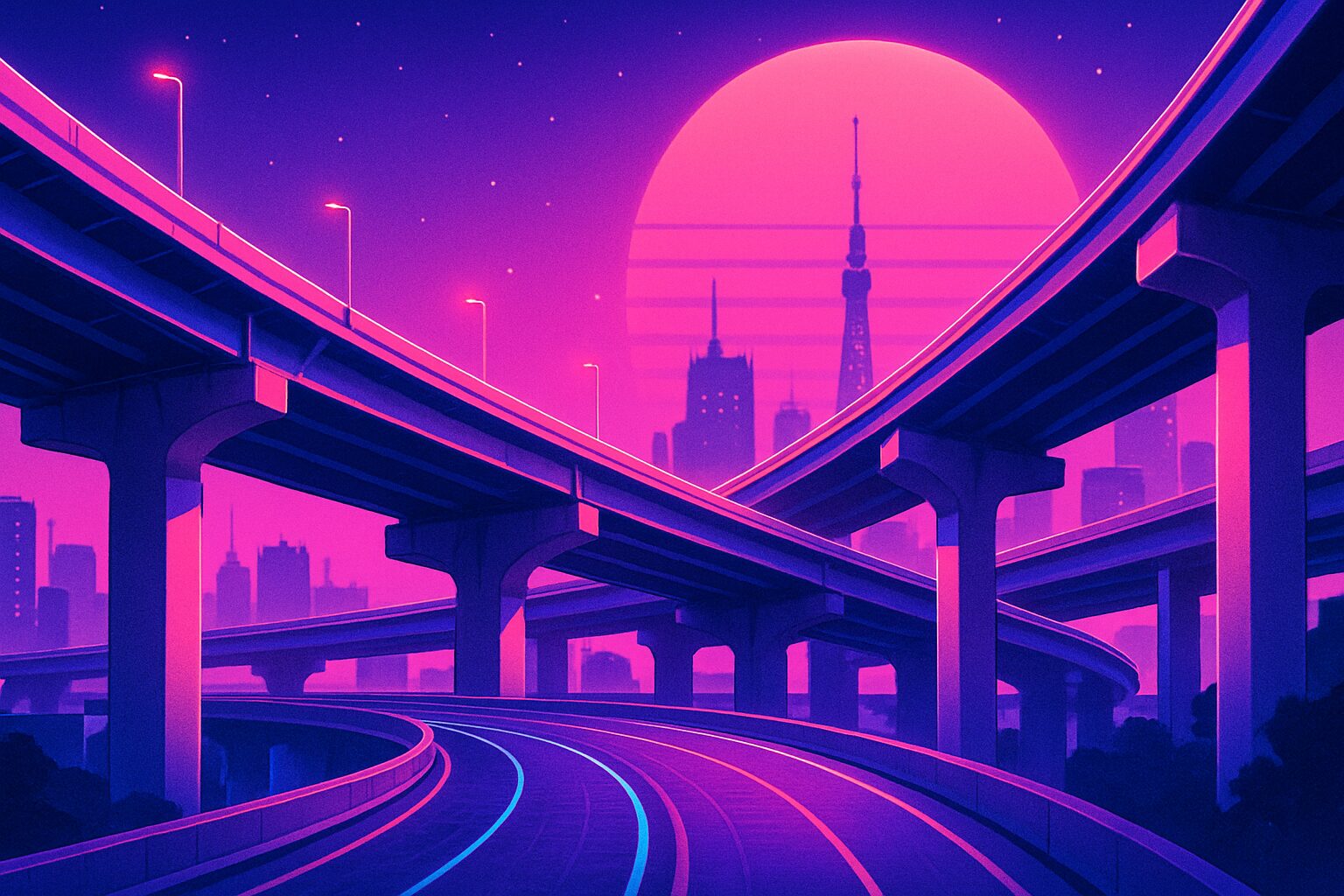
Hey everyone, it’s Sofia! So, when you picture Tokyo, what comes to mind? Shimmering temples, super cute cafes, maybe that crazy busy Shibuya Crossing, right? All total must-dos, for sure. But what if I told you some of the city’s most breathtaking, totally mind-blowing views aren’t in a perfectly manicured garden, but are hidden in plain sight, soaring above your head in twisting ribbons of concrete and light? For real, let’s ditch the traditional itinerary for a hot minute and talk about something a little more… electric. I’m talking about Tokyo’s expressway junctions, or as the locals call them, JCTs. These aren’t just roads; they’re massive, multi-level sculptures of concrete and steel, intricate knots of infrastructure that look like they were ripped straight out of a sci-fi anime. At night, they transform into a futuristic dreamscape, a symphony of red and white light trails painted by thousands of cars, all set against the glowing backdrop of the world’s biggest city. It’s this wild, beautiful chaos, a kind of accidental art gallery that’s open 24/7. Hunting for the perfect view of these concrete behemoths has become a low-key obsession for photographers and urban explorers, and honestly, it’s one of the most uniquely Tokyo experiences you can have. It’s about finding the poetry in the pavement, the beauty in the brutalist design, and seeing the city’s pulse in a way you never expected. Ready to dive into the Blade Runner aesthetic? Let’s go find some concrete poetry.
The Vibe Check: Why Are We Obsessed with Highways?
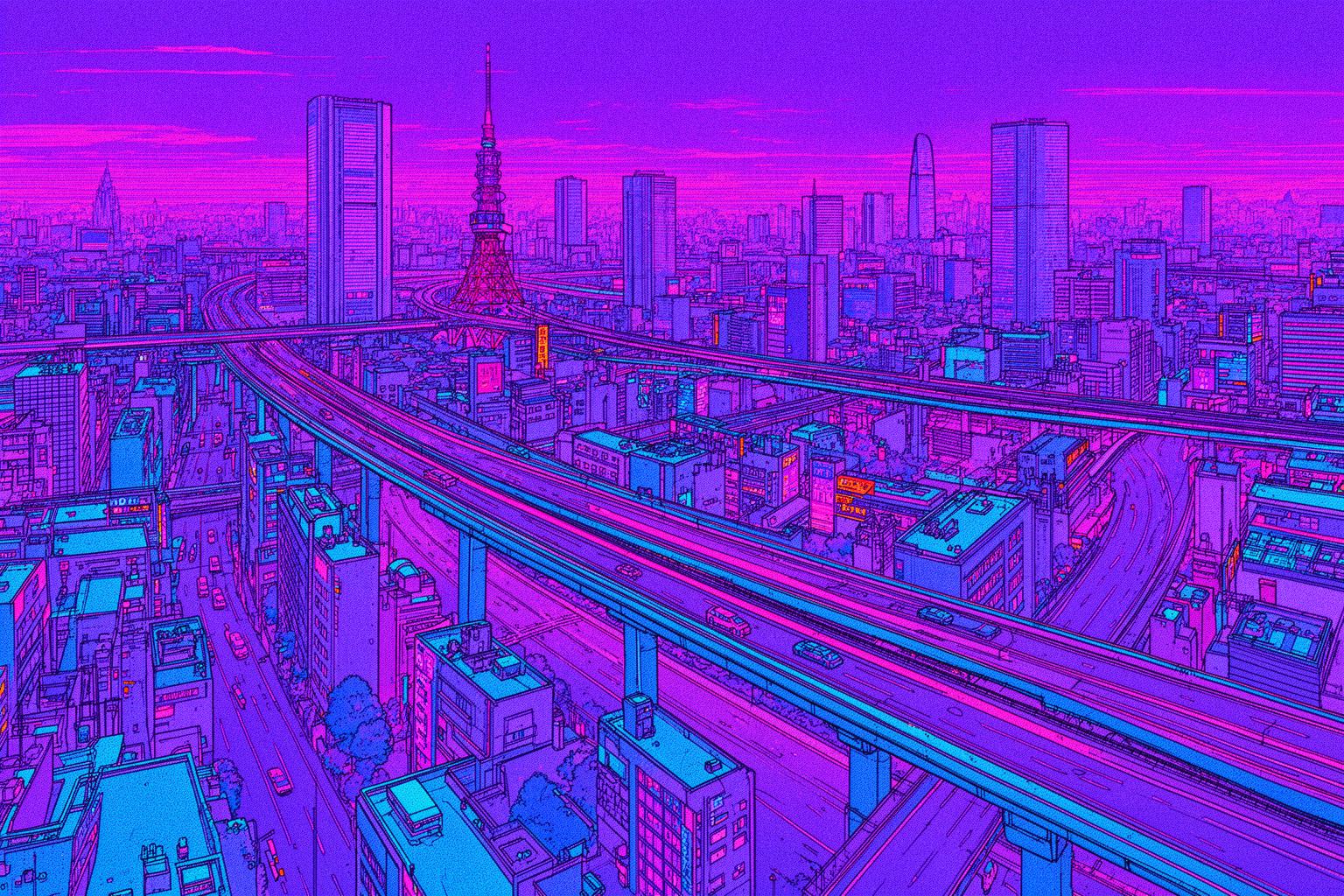
Alright, let’s be honest. On paper, “staring at a highway interchange” doesn’t exactly scream ‘vacation goals.’ But in Tokyo, it’s a completely different experience. This isn’t just about infrastructure; it’s a full-on aesthetic journey. The allure lies in an incredible blend of raw power and delicate beauty. During the day, these structures stand as monuments to brutalist architecture—all sharp angles, immense scale, and unapologetic concrete. They feel strong, permanent, and somewhat intimidating. You can truly admire the brilliance of the engineering involved in weaving these massive roads through, over, and under one of the densest urban environments on the planet.
But when night falls, that’s when the magic really kicks in. The whole atmosphere transforms. The harsh concrete softens beneath the warm glow of sodium lamps, and the structures become canvases for something almost otherworldly: light. As cars speed along the curves, their headlights and taillights blend into flowing rivers of vibrant color. A long-exposure photo turns this motion into something still and stunning—a smooth, silky ribbon of red and white light tracing the road like a calligrapher’s brushstroke. It’s this captivating interplay between the static and the moving, the eternal and the fleeting, that hooks you.
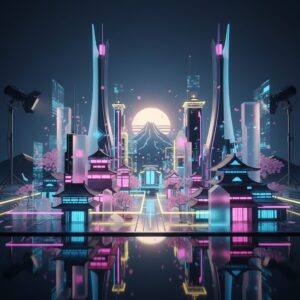
And then there’s the unmistakable cyberpunk vibe. Standing on a pedestrian bridge overlooking a complex junction like Hakozaki, with layers of traffic rushing above and below, framed by the neon glow of distant skyscrapers… it’s the closest you’ll get to living inside Akira or Ghost in the Shell. It’s the futuristic Tokyo you’ve seen in films and video games, brought vividly to life. There’s a sense of overwhelming scale that’s both humbling and thrilling. You feel like a tiny, insignificant witness watching the circulatory system of a giant, mechanical beast in motion. It’s a bit dystopian, hugely awe-inspiring, and 100% unforgettable. This isn’t just sightseeing; it’s tapping directly into the essence of modern, urban Japan.
The JCT Hall of Fame: Tokyo’s Most Epic Junctions
So you have your camera and tripod ready to capture those light trails, but where do you begin? Tokyo’s Shuto Expressway system is an extensive network, and not all junctions are equal. Some are legendary for their mind-bending complexity, while others are hidden gems with unique charm. Here’s a guide to my absolute favorites—the ultimate highlights in the JCT world.
Hakozaki Junction: The Final Boss
If any junction holds the crown, it’s Hakozaki—the one photographers speak of with a mix of awe and intimidation. This is a colossal, multi-level concrete labyrinth, earning nicknames like ‘The Labyrinth’ and ‘The Final Boss.’ It’s not just a crossing of a few roads; it’s where several major expressways converge, and the Tokyo City Air Terminal (T-CAT) is integrated right at its core. It’s a masterpiece of organized chaos.
The atmosphere is pure urban density. From the pedestrian overpasses crisscrossing the area, you are enveloped by towering structures: roads soar overhead, dip into tunnels below, and curve surround you in seemingly illogical ways. The constant roar of traffic sounds like a city’s heartbeat. At night, it transforms into a cage of light, with car beams weaving an intricate web of color in every direction. It’s intense, overwhelming, and breathtaking.
For the ideal shot, head to the pedestrian bridges around the junction. A classic spot is the bridge from Suitengumae Station toward the T-CAT building, offering a direct view into the heart of the beast. Use a wide-angle lens to capture the vast scale and dizzying layers of roads. Another excellent perspective is from a bit further out, showing how the junction interacts with the office buildings and the Sumida River. Access is straightforward: take the Hanzomon Line to Suitengumae Station and exit via Exit 2. Pro tip: shoot during the evening blue hour when the deep blue sky perfectly contrasts with the junction’s warm artificial lights, creating stunning color contrasts.
Ariake Junction: The Sleek Futurist
If Hakozaki is a gritty beast, Ariake Junction is its sleek, sophisticated counterpart. Situated on reclaimed land in Tokyo Bay near the futuristic Odaiba, Ariake feels entirely different—newer, cleaner, with smooth, sweeping curves. Unlike the cramped city junctions, it has space to breathe, surrounded by open areas and modern architecture.
The vibe here centers on futuristic minimalism. Elevated roads glide in graceful arcs atop massive, clean-lined pillars, resembling a utopian metropolis. Nearby are Tokyo Olympics venues and the Tokyo Big Sight convention center, giving the area a polished international aura. The Yurikamome automated train silently glides on its elevated track beside the expressway, adding to the sci-fi ambiance.
To capture Ariake’s essence, emphasize the clean lines and sweeping curves. A fantastic vantage point is aboard the Yurikamome train as it loops between Ariake and Ariake-Tennis-no-Mori stations. For ground-level shots, pedestrian walkways near the stations offer amazing views looking up at the soaring ramps against the sky. Because the area is open, telephoto lenses can compress the layers, making the roads appear even more intertwined. To get there, take the Yurikamome Line to Ariake-Tennis-no-Mori Station. My advice: spend the evening here during blue hour, then move on to Odaiba to capture the Rainbow Bridge and Tokyo skyline—two stunning but contrasting urban nightscapes.
Oji Junction: The Hidden Gem
Let’s step off the main road for a bit. Not all epic junctions are sprawling giants; some are compact and uniquely beautiful. Oji Junction in northern Tokyo is such a hidden gem. Its standout feature is a perfectly circular, spiraling ramp connecting the Central Circular Route (C2) with local roads below—a stunning concrete vortex set within a surprisingly green, tranquil neighborhood.
Oji offers a more peaceful, almost surreal atmosphere. Adjacent is Asukayama Park, one of Tokyo’s oldest and most cherished parks, famed for cherry blossoms. This juxtaposition of industrial design and natural beauty is captivating. Standing directly beneath the loop in the park, looking straight up creates a dizzying, hypnotic view, like being at the bottom of a concrete whirlpool. At night, circling car light trails form a glowing halo in your long-exposure photos.
The best vantage point is from the park at the base of the ramp. This low-angle perspective is rare among junctions. Use a super wide-angle or fisheye lens to capture the full circle. Being in a quieter residential area means a more relaxed photoshoot. Access is easy: a short walk from Oji Station on the JR Keihin-Tohoku Line and Tokyo Metro Namboku Line. My tip: visit late afternoon through sunset to capture the structure under soft daylight, golden hour tones, and afterward, magical light trails—a trio of shoots at one spot!
Nishi-Shinjuku Junction: The Urban Canyon
Shinjuku is the Tokyo everyone pictures—a forest of skyscrapers, neon lights, and bustling crowds. Nestled in its quieter, corporate western side is Nishi-Shinjuku Junction. This one’s not famous for complexity but for dramatic context: an ‘urban canyon’ where the elevated expressway cuts between some of Tokyo’s tallest, iconic buildings, including the Tokyo Metropolitan Government Building.
The scale here is staggering. You feel dwarfed not just by the expressway but by towering glass-and-steel giants flanking you. It powerfully illustrates Tokyo’s vertical layers. Daylight brings dramatic shadows filtering between buildings; at night, thousands of office windows, streetlights, and moving traffic illuminate the scene, reflecting off glass facades—an urban light symphony.
The best shooting spot is on elevated pedestrian walkways linking skyscrapers. The walkway from Shinjuku Station’s west exit to the Metropolitan Government Building offers a classic, head-on view of the expressway slicing through the canyon. Frame your shot with the surrounding buildings to emphasize enclosure and depth. Another cool angle is ground level looking up at the soaring expressway. Access via the Toei Oedo Line to Tochomae Station puts you right under the government building, or a 10-15 minute walk from the main Shinjuku Station works as well. Don’t forget to visit the free observation decks in the Metropolitan Government Building before closing; from there, you can get a bird’s-eye view of the junction and its place in the wider cityscape.
Takaracho Junction: The Classic Beauty
Sometimes you just want a classic, and Takaracho fits the bill perfectly. Near the upscale Ginza district, this older junction offers understated elegance. It’s not as complex as Hakozaki or as futuristic as Ariake, but it features elegant flowing curves and a quintessential Tokyo nightscape vibe—an iconic scene in traditional Tokyo photography with its clean red and white light trails.
The ambiance is refined and calm. Part of the original Shuto Expressway core, it exhibits mid-century modern grace in its design. Its standout feature is a smooth S-curve, perfect for long-exposure shots. Nestled among the office buildings of Kyobashi and Ginza, the background blends old and new architecture beautifully, grounding your photos in place.
The ideal shooting location is a pedestrian overpass crossing the expressway just south of the main curve. From this elevated spot, you get an unobstructed view of the S-curve, perfect for capturing silky smooth light trails as cars navigate the bend. It’s straightforward and reliably photogenic. Access is convenient: just steps from Takaracho Station on the Toei Asakusa Line or within walking distance from Kyobashi Station on the Tokyo Metro Ginza Line. My small tip: watch the traffic flow closely; it varies, so be patient and wait for sustained streams in both directions to capture dense, vibrant trails.
Special Stage – Daikoku PA (Yokohama): The Mecca
Lastly, a bit of a field trip, since this is technically in Yokohama, but it’s absolutely essential for anyone serious about car culture and epic infrastructure. Daikoku Parking Area isn’t just a rest stop; it’s the legendary gathering spot, the holy ground for Japan’s extreme car scene. It’s a huge parking lot nestled within a dizzying spiral of expressway ramps that could have been lifted from a Hot Wheels set.
The vibe at Daikoku is electric and unparalleled. On weekend nights, hundreds of highly modified vehicles fill the lot—from supercars and drift machines to slammed VIP sedans and quirky kei cars. The growl of engines and exhausts fills the air. It’s a living car show, beneath the massive, beautifully lit spirals of Daikoku Junction. The energy is contagious—a mix of industrial infrastructure and passionate subculture.
Photographing Daikoku includes two parts: first, roam the parking area to capture the incredible cars and vibrant community; second, find a spot to shoot the junction itself. The best views are from upper levels of the parking structure or pedestrian walkways leading to it, capturing the spirals with the Bay Bridge backdrop. Access is tricky since Daikoku PA sits on an expressway. The easiest route for visitors is taking a train to Yokohama or Tsurumi Station and then a taxi. It’s an investment but worth every yen. Before going, check social media with hashtags like #daikokuPA to see if meets are scheduled. Crucial: be respectful—don’t touch cars, avoid blocking paths, and use flash sparingly. You’re a guest in this world; act accordingly, and you’ll experience one of Japan’s most extraordinary urban scenes.
The Glow Up: Nailing Your JCT Photography
Witnessing these massive concrete structures firsthand is one thing, but capturing their futuristic essence in a photograph brings a whole new level of satisfaction. Though it may seem challenging, with a few essential techniques and some patience, you can definitely achieve those stunning shots you’ve admired online. Let’s explore how to elevate your photos to a professional level.
Gear Up: What’s in My Camera Bag
While a phone with solid night mode can produce decent images, to truly capture the magic of light trails, you’ll want a camera with manual settings. However, the gear you accompany it with is even more crucial than the camera itself.
First and foremost: a tripod. This is absolutely non-negotiable. You’ll be working with long exposures—anywhere from 10 to 30 seconds or more. Even the smallest movement during that time will ruin your shot with blur. Invest in a sturdy yet portable tripod that you’re comfortable carrying around the city.
Next, lenses. A versatile zoom lens like a 24-70mm is a great all-rounder. But to emphasize the enormity of these junctions, a wide-angle lens (such as a 16-35mm) is essential. It allows you to get close while fitting the entire sprawling structure into the frame, exaggerating scale and creating a dramatic perspective. Conversely, a telephoto lens (like 70-200mm) excels at isolating details and compressing the layers of the expressway, stacking them in a beautifully chaotic manner.
Finally, a remote shutter release or using your camera’s built-in 2-second timer is a pro tip. Even pressing the shutter button can cause slight vibrations that blur long exposure shots. Using a remote or timer eliminates that risk, ensuring your images are razor-sharp.
Dialing It In: Camera Settings 101
Here’s where the magic truly happens. Shoot in Manual Mode (M on your camera dial) to gain full control. Master these three key settings:
ISO: This controls your camera’s light sensitivity. For night shots, aim for the cleanest, least noisy image possible by setting ISO as low as you can, typically 100 or 200. Since you’re on a tripod with long exposures, high ISO is unnecessary.
Aperture (f-stop): This regulates the depth of field and how point light sources (like street lamps) appear. For wide landscape shots, you want everything in sharp focus from front to back. A mid-range aperture around f/8 to f/16 is ideal. A bonus? Smaller apertures create beautiful starbursts around streetlights, adding sparkle and charm.
Shutter Speed: This is your creative tool. It determines how long the sensor collects light and is key to capturing silky light trails. There isn’t one perfect speed—it depends on traffic speed and volume. Start with 15 seconds. Take a test shot. Are the trails too short or broken? Slow it down to 20 or 30 seconds. Too bright and blown out? Speed it up to 10 or 8 seconds. Experiment to find the right fit.
Finding Your Angle: Composition is Queen
Excellent settings alone won’t save a dull photo. Composition—the arrangement of elements in your frame—is everything. These junctions provide a treasure trove of compositional opportunities.
Look for leading lines. The roads themselves serve as perfect guides. Position yourself so curves draw the viewer’s eye from the frame’s edge into the heart of the image, creating depth and flow.
Use framing. Incorporate foreground elements to frame your subject, such as shooting through pedestrian bridge girders, using expressway pillars to outline a distant curve, or employing a building to naturally border your shot. Framing adds context and a polished, layered feel.
Symmetry and patterns are your allies. Many junctions feature repeating support structures or symmetrical curves. Centering these elements can produce a strong, balanced, and visually appealing image. Oji Junction’s perfect circle is a stellar example.
Don’t hesitate to experiment with your viewpoint. Avoid shooting only at eye level—get low for a dramatic, towering perspective or find a high vantage point to simplify busy scenes and highlight road patterns. The more you move and explore, the more unique and compelling your photos will become.
The Backstory: How Did This Concrete Dreamscape Happen?
To truly appreciate these remarkable structures, it helps to understand why they exist in the first place. They are not just random roads; they serve as a direct and powerful symbol of Japan’s post-war history—a story of extraordinary ambition, technological skill, and relentless progress. The origin of the Shuto Expressway system is closely connected to one key event: the 1964 Tokyo Olympics.
Following the devastation of World War II, Japan underwent a period of intense reconstruction and rapid economic growth, often referred to as the ‘Japanese economic miracle.’ When Tokyo was chosen to host the 1964 Olympic Games, it was viewed as the nation’s grand re-entry onto the global stage. Pressure mounted to transform Tokyo into a modern, efficient, and world-class city. But there was a significant challenge: traffic. Tokyo’s roads were chaotic and congested, completely unprepared for the flood of athletes, officials, and tourists.
The solution was bold and unprecedented: construct a vast network of elevated expressways directly above the existing cityscape. This was an engineering marvel. With limited space on the ground, engineers had to innovate, building over rivers, canals, and existing roads. This is why many of the expressways feature organic, winding curves—they literally trace the routes of old waterways. New earthquake-resistant construction techniques were developed to build on Tokyo’s soft, alluvial soil. The entire project was completed at a remarkable speed, demonstrating the country’s determination.
These expressways became more than mere transportation routes. They embodied the architectural philosophy of the era. Some have associated them with the Metabolism movement, a post-war Japanese architectural concept that envisioned cities as living, growing organisms with modular, expandable structures. The Shuto Expressway, with its ability to branch out and expand, perfectly embodied this vision of a city in a constant state of change and renewal. So when you stand there looking up at these concrete ribbons, you’re not just seeing a road—you’re witnessing a monument to a pivotal moment in Japanese history—a symbol of a nation’s capacity to rebuild, innovate, and dream boldly about the future.
Your Mission Brief: Planning the Perfect JCT Hunt
Alright, you’re inspired and ready to start. Spending a night hunting for junctions is one of the most unique adventures you can experience in Tokyo, but a bit of planning can greatly help ensure a smooth and successful outing.
The Game Plan
Tokyo is enormous, so don’t try to visit every junction in one night. It’s better to choose two or three that are relatively close together and really take your time exploring them. A good combination would be Hakozaki Junction and Takaracho Junction. They’re only a couple of subway stops apart, and you could easily spend a few hours between them. Use an app like Google Maps to plan your subway routes ahead of time. A Tokyo Metro 24-hour pass can be a very cost-effective way to travel between locations if you plan on visiting multiple spots.
Begin your evening just before sunset. This gives you a chance to scout your locations in daylight, find your ideal compositions, and set up your tripod before the best light appears. The ‘blue hour’—that brief period after the sun sets but before the sky is completely dark—is the absolute prime time for these shots, as the balance between ambient sky light and the artificial city lights is just perfect.
Safety First, Selfies Second
While Tokyo is one of the safest cities globally, you still need to stay alert, especially when out late at night with expensive camera equipment. Always stay aware of your surroundings.
The most important rule of junction hunting is to remain in designated pedestrian areas. Never, ever venture onto the expressway itself or enter areas marked off-limits. The views from pedestrian bridges and sidewalks are more than stunning enough. Don’t risk your safety for a photo.
Take care of your gear. When setting up your tripod on a pedestrian bridge, make sure it’s not blocking the path for others. Pedestrians and cyclists need to pass by, so be considerate and tuck yourself into a corner as much as possible. A little courtesy goes a long way.
When to Go
Timing greatly affects your photos. Weekday evenings, especially during rush hour (around 6–8 PM), will have the heaviest traffic, resulting in more cars and denser, more impressive light trails. Weekends might be a bit quieter, but you’ll still find plenty of traffic to work with.
Don’t shy away from bad weather! A rainy night can offer an incredible chance for junction photography. The wet pavement reflects the city lights, doubling the colors and atmosphere. The streets will glisten, giving the whole scene a moody, cinematic feel. Just be sure to protect your camera gear from the rain with a waterproof cover or even a simple plastic bag and umbrella.
It’s a Whole Vibe: Final Thoughts
Exploring Tokyo’s expressway junctions is about much more than just capturing striking photos. It’s about shifting your perspective. It’s about learning to recognize the hidden beauty in the ordinary, the artistic essence within the purely functional. For a city often celebrated for its ancient traditions and tranquil nature, there is an equally powerful and captivating beauty in its hyper-modern, man-made environments. These concrete giants serve as the veins and arteries of Tokyo, embodying its relentless energy and perpetual motion.
So, the next time you visit this remarkable city, after exploring the temples and strolling through the gardens, I challenge you to look up. Take a different route. Spend an evening beneath the glowing expressways, watch the streams of light flow by, and simply listen to the hum of the metropolis. You’ll discover a side of Tokyo that is raw, futuristic, and stunningly poetic. Go find your own concrete poetry. You won’t regret it.