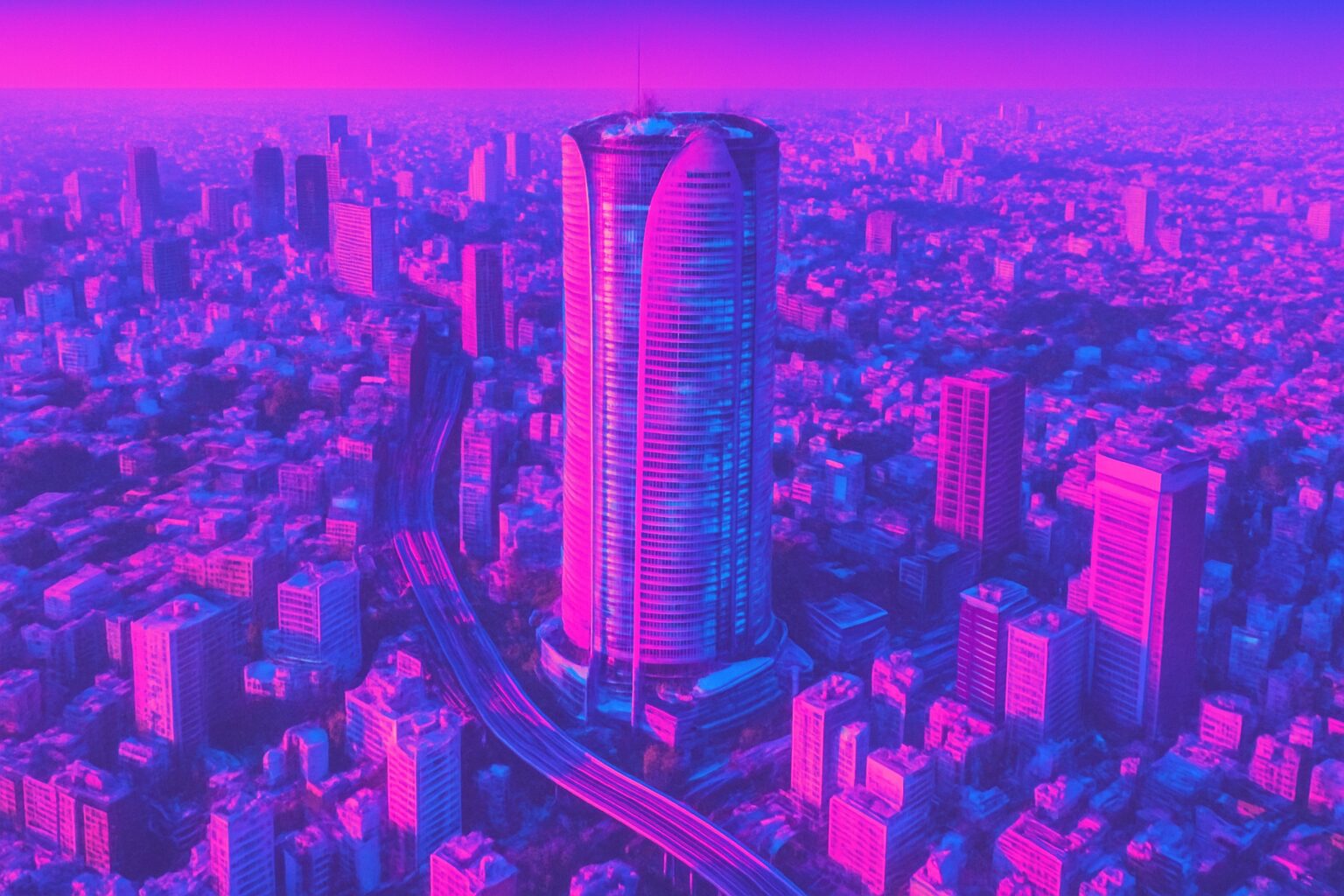
What’s up, fellow travelers and culture seekers? Hiroshi Tanaka here, your local guide to the real-deal Tokyo that exists beyond the postcards. Today, we’re time-tripping back to the early 2000s, a wild era when Tokyo decided to hit the reset button, hard. After the economic rollercoaster of the 90s, the city was craving a new identity—something sleek, ambitious, and unapologetically futuristic. The result? A wave of massive urban redevelopments that birthed what I call the “clean-core” aesthetic. Think vast expanses of polished concrete, shimmering glass towers piercing the sky, and an almost surreal sense of order. This wasn’t just about building new skyscrapers; it was about architecting a new vibe for the 21st century. And the two spots that are basically the headliners of this whole movement are Roppongi Hills and Shiodome. These places aren’t just collections of buildings; they’re entire ecosystems, meticulously planned cities-within-a-city that totally changed the game for how people live, work, and play in Tokyo. They represent a vision of a hyper-efficient, super-clean metropolis, and exploring them is like stepping into a sci-fi movie that’s actually real life. It’s a side of Tokyo that’s less about ancient temples and more about future-forward ambition, and for real, you gotta see it to believe it.
To truly appreciate the polished concrete and minimalist aesthetic of these developments, one must understand the profound influence of architects like Tadao Ando.
Roppongi Hills: The Vertical Garden City That Redefined Luxury
Let’s begin with the titan, the legend: Roppongi Hills. Before its 2003 debut, Roppongi had a completely different vibe, known almost entirely for its nightlife—a labyrinth of clubs, bars, and a slightly gritty reputation that came alive after dark. Then developer Minoru Mori arrived with a vision so grand it was almost unimaginable. He didn’t just aim to build a tower; he sought to create a “Vertical Garden City,” a space where people could live, work, create, and unwind without ever leaving the complex. The idea was to stack city functions vertically, freeing up ground space for parks and art. This philosophy was designed to enhance the quality of life, and honestly, the execution was exceptional.
The Vibe: Ambitious, Artsy, and Impeccably Polished
The moment you enter Roppongi Hills, the shift in atmosphere is unmistakable. The scale is the first thing that strikes you. The Mori Tower, the centerpiece, isn’t just tall; it has an immense, commanding presence. The architecture is a flawless example of clean-core design—sharp lines, high-quality concrete that feels smooth and deliberate, and expansive glass panes reflecting the sky. It feels less like a building and more like a modern fortress of culture and commerce. Yet, despite its size, the flow is undeniable. Walkways curve gracefully, escalators glide you between floors, and everywhere you look, there’s a piece of public art ready to surprise you. The most famous is, of course, Louise Bourgeois’s “Maman,” the giant bronze spider standing sentinel in the main plaza. It’s become an iconic meeting point, a piece of high art so deeply woven into daily life it feels like it has always belonged. The vibe here is sophisticated but approachable. You’ll see businesspeople power-lunching alongside art students sketching, and tourists from around the world marveling at the sheer ambition of it all. The air feels different—cleaner, more organized—a striking contrast to the vibrant chaos of other Tokyo neighborhoods.
The Crown Jewel: Mori Art Museum and Tokyo City View
If Roppongi Hills has a soul, it resides on the 52nd and 53rd floors of Mori Tower. Here you’ll find the Mori Art Museum and Tokyo City View observation deck, a pair offering one of Tokyo’s most essential experiences. The museum is transformative. Unlike others that close early, the Mori Art Museum often stays open late, letting you absorb world-class contemporary art under the glittering city lights. Its focus is on art from Japan and the broader Asia-Pacific region, providing a vital platform for voices less often heard. Exhibitions rotate frequently, always thought-provoking and impeccably curated. One day you might wander through an immersive digital installation; the next, a powerful political photography exhibit. But the experience doesn’t end there. From the museum, you ascend to Tokyo City View, an indoor observation deck boasting a stunning 360-degree panorama of the world’s largest metropolis. You can trace highways, spot Tokyo Tower’s iconic red-and-white frame, and on clear days, glimpse the majestic silhouette of Mount Fuji on the horizon. For a little extra yen and favorable weather, you simply must visit the Sky Deck. This open-air rooftop offers no glass reflections—just you, the wind, and the sprawling urban landscape spread out like a circuit board. The sensation is ineffable. Go at sunset. Watching the sky blaze with color and then gradually fade as millions of lights twinkle across the Kanto Plain creates a memory to cherish forever. It’s a perspective that deepens your appreciation for Tokyo’s vast scale and vibrant energy.
Finding Nature Amidst the Concrete
A common criticism of huge developments is their potential sterility, but Roppongi Hills skillfully counters this with green spaces. Mohri Garden is a perfect example. This isn’t a new, artificial park; it’s a genuine historical site. The garden was part of a feudal lord’s (daimyo) estate during the Edo period. The developers preserved it rather than paving it over, maintaining the pond, waterfall, and ancient trees. Walking through Mohri Garden is like stepping into a time capsule. In spring, cherry blossoms form a delicate pink canopy over the water. In autumn, maple leaves turn a fiery red. It’s a serene oasis where you can sit by the pond and momentarily forget you’re in the heart of a concrete giant. Then there’s Keyakizaka Street, the gently sloping boulevard alongside the main complex. Lined with elegant zelkova trees and luxury brand storefronts, it’s a beautiful stroll any time of year. But in winter, it becomes truly magical. The Keyakizaka Illumination is one of Tokyo’s most famous, with hundreds of thousands of LED lights draping the trees in cool blue and white tones, Tokyo Tower glowing in the background. It’s pure Blade Runner-esque romance.
Shiodome: The Gleaming Corporate Hub with a Steampunk Soul
Now, let’s take the subway over to Shiodome. If Roppongi Hills embodies the artsy, sophisticated socialite, Shiodome is its hyper-efficient, corporate cousin, seemingly stepped out of a William Gibson novel. Located near Ginza and Shimbashi, this area was once a vast freight rail yard, a sprawling, gritty industrial zone. The redevelopment in the early 2000s brought about a complete transformation. The Shiodome Sio-Site project erased its industrial past and replaced it with a forest of interconnected skyscrapers housing the headquarters of some of Japan’s largest companies, like Dentsu, All Nippon Airways, and Nippon TV.
The Vibe: Futuristic, Orderly, and Vertically Integrated
The atmosphere in Shiodome feels distinctly different from Roppongi Hills. It’s quieter, less crowded with shoppers, and exudes an almost clinical cleanliness. The whole district is designed on multiple levels. The ground floor mainly serves vehicle traffic, while daily life unfolds on the elevated pedestrian decks linking all major buildings. You can walk for fifteen minutes across the entire district without ever stepping on a street-level crosswalk. This design fosters a unique, futuristic ambiance. You feel detached from the ground, floating through a canyon of glass and steel. The wind often rushes through the corridors created by the towers, enhancing the dramatic, slightly impersonal vibe. It’s the ultimate clean-core environment—everything perfectly in place, every surface gleaming, every movement efficient. You get the impression that this is a place built for purpose, for the seamless flow of people and information. While it may lack the warm, organic buzz of other neighborhoods, its dedication to a singular futuristic vision is impressive in its own right.
The Ghibli Surprise: Hayao Miyazaki’s Clock
Just when you think Shiodome is all corporate seriousness, you encounter one of the most whimsical and wonderful pieces of public art in all of Tokyo. Attached to the side of the Nittele Tower (Nippon Television) is a massive, steampunk-inspired clock crafted by none other than the legendary Hayao Miyazaki of Studio Ghibli. Named the “NI-TELE Really BIG Clock,” it’s a masterpiece of imaginative, clanking, copper-toned artistry. It looks like something straight out of Howl’s Moving Castle. Vast and intricate, it’s packed with moving parts—cogs, cannons, and blacksmith figurines. Several times a day, the clock springs to life in a three-minute animated show, accompanied by music composed by Joe Hisaishi, Ghibli’s longtime collaborator. The entire piece whirs, clangs, and chimes in a delightful performance that attracts a small crowd of onlookers. This clock is the heart of Shiodome. It brings a beautiful, humanizing touch of analog fantasy to an overwhelmingly digital and corporate landscape. It’s a reminder that even in the most futuristic places, there’s always room for a bit of magic. Discovering it feels like uncovering a secret level in a video game.
Views and Culture from Above
Shiodome is also a fantastic, often overlooked spot for incredible, free city views. Head to the Caretta Shiodome building. Primarily offices and a theater, it also hosts several “Sky Restaurants” on its 46th and 47th floors. While dining requires a reservation, there’s a small, publicly accessible viewing area near the elevators. From here, you get a breathtaking panorama of the historic Hamarikyu Gardens, Tokyo Bay, the futuristic architecture of Odaiba, and the elegant curve of the Rainbow Bridge. It’s a stunning vantage point that beautifully showcases the contrast between old and new Tokyo—the meticulously maintained Edo-period gardens below and the sprawling modern metropolis beyond. For design and media enthusiasts, Shiodome is home to the Ad Museum Tokyo. This is Japan’s only museum dedicated to the history of advertising, and it’s fascinating. The collection spans from Edo-period woodblock print ads to award-winning contemporary TV commercials. It’s a sleek, thoughtfully designed museum offering a unique perspective on Japanese culture and its evolution.
Bridging the Past and Future
What makes Shiodome especially compelling is its close proximity to history. One moment you’re walking along a sterile, elevated walkway; the next, you descend a staircase and find yourself at the entrance to Hamarikyu Gardens. This is one of Tokyo’s finest traditional landscape gardens, once a tidal duck hunting ground for a shogun. Inside, you can enjoy matcha tea at a teahouse on a small island in the middle of a pond, while the skyscrapers of Shiodome tower behind like silent, futuristic sentinels. The juxtaposition is surreal and powerfully illustrates Tokyo’s skill in holding its past and future in delicate, beautiful balance. Nearby, you’ll also find a faithful reconstruction of the old Shimbashi Station, Japan’s first railway terminal—a small brick building standing as a quiet tribute to the industrial era that Shiodome’s futuristic vision now surpasses.
Practical Beta for Your Urban Exploration
Alright, let’s dive into the details so you can navigate these spots like a pro.
Getting to Roppongi Hills
Getting there is super simple. The easiest way is to take the Tokyo Metro Hibiya Line straight to Roppongi Station. Use Exit 1C to enter the main complex via a long underground passage. Alternatively, the Toei Oedo Line also stops at Roppongi Station (Exit 3), which brings you out closer to the main plaza. It’s a huge area, so be ready to do some walking as you find your way.
Getting to Shiodome
Shiodome is a major transit hub with plenty of options. Shiodome Station is served by the Toei Oedo Line and the automated Yurikamome Line (a scenic ride from Odaiba). You can also walk from nearby Shimbashi Station, a key stop on the JR Yamanote Line, JR Keihin-Tohoku Line, Tokyo Metro Ginza Line, and Toei Asakusa Line. From Shimbashi, it’s about a 5-10 minute walk through underground passages or overground walkways.
Best Times to Visit
Weekdays tend to be less crowded than weekends at both locations. If you’re visiting the observation decks, the golden hour just before sunset is the best time, but keep in mind it’s also the busiest. For a quieter visit, opt for a weekday morning. For illuminations, plan your trip in the winter season, typically from mid-November through Christmas Day. Always check the official websites for the Mori Art Museum and Tokyo City View, as hours may change and the rooftop Sky Deck closes during high winds or bad weather.
First-Timer Pro Tips
Wear your most comfortable shoes. You’ll be doing plenty of walking, both horizontally and vertically via escalators. These complexes are meant to be explored on foot. For Roppongi Hills, consider purchasing a combination ticket for the Mori Art Museum and Tokyo City View to save some money. In Shiodome, be sure to check the online showtimes for the Miyazaki clock so you don’t miss the performance. And don’t hesitate to wander—both areas have hidden corners, cozy cafes, and interesting architectural details that you’ll discover by getting a little lost.
The Clean-Core Legacy
What does all this mean? Roppongi Hills and Shiodome are more than mere tourist attractions; they stand as monuments to a distinct moment in Tokyo’s history. They embody the city’s recovery, its relentless pursuit of innovation, and its ambition to create hyper-functional, visually striking urban spaces. This clean-core aesthetic—the order, scale, and seamless fusion of art, commerce, and everyday life—is a core element of modern Tokyo’s identity. It represents a version of the city that is confident, global, and forward-looking. Exploring these concrete landscapes is key to grasping the complex, layered character of Tokyo. It reveals a city that honors its past but is never hesitant to dismantle the old and build a bold new future. So, go see it for yourself. Stand atop the Mori Tower and feel the heartbeat of the city. Discover the steampunk clock nestled within a canyon of glass. You’ll leave with a fresh appreciation for the clean, vibrant, and ever-evolving dream that is Tokyo.