There’s a certain kind of silence that only exists under a heavy blanket of snow. It’s a quiet so profound it feels like a physical presence, wrapping around you, muffling the outside world until the only things you can hear are the soft crunch of your boots and the rhythm of your own breathing. Now, imagine that silence, but experienced from the warm, focused cockpit of a capable 4WD vehicle, winding its way up a serpentine mountain road—a touge—somewhere deep in the heart of Japan. This isn’t your average road trip. This is a pilgrimage. A slow, deliberate journey into the soul of winter, where the drive itself is a form of meditation and the destination is nothing short of mythical: a hidden paradise of the fluffiest, lightest, most ridiculously perfect snow on Earth. We’re talking about Japow. And trust me, the hype is real. It’s more than just snow; it’s a phenomenon, a cultural touchstone for powder hounds globally. But the real magic, the stuff that stays with you long after the cold has left your bones, isn’t just in the skiing or snowboarding. It’s in the getting there. It’s in the quiet dance with the elements on a deserted mountain pass, pushing deeper into the yuki-guni, the snow country, until you feel like you’ve found a secret corner of the world that belongs only to you. This is the story of that journey—a journey that’s less about the destination on a map and more about a state of mind. It’s about finding stillness in motion, and discovering that sometimes, the most epic adventures are the quietest ones. Get ready to start your engine, because we’re heading out into the white.
After a day of chasing this legendary snow, the perfect way to warm up is by visiting a traditional onsen ryokan.
The Vibe Check: Decoding the Zen of the Snowy Drive
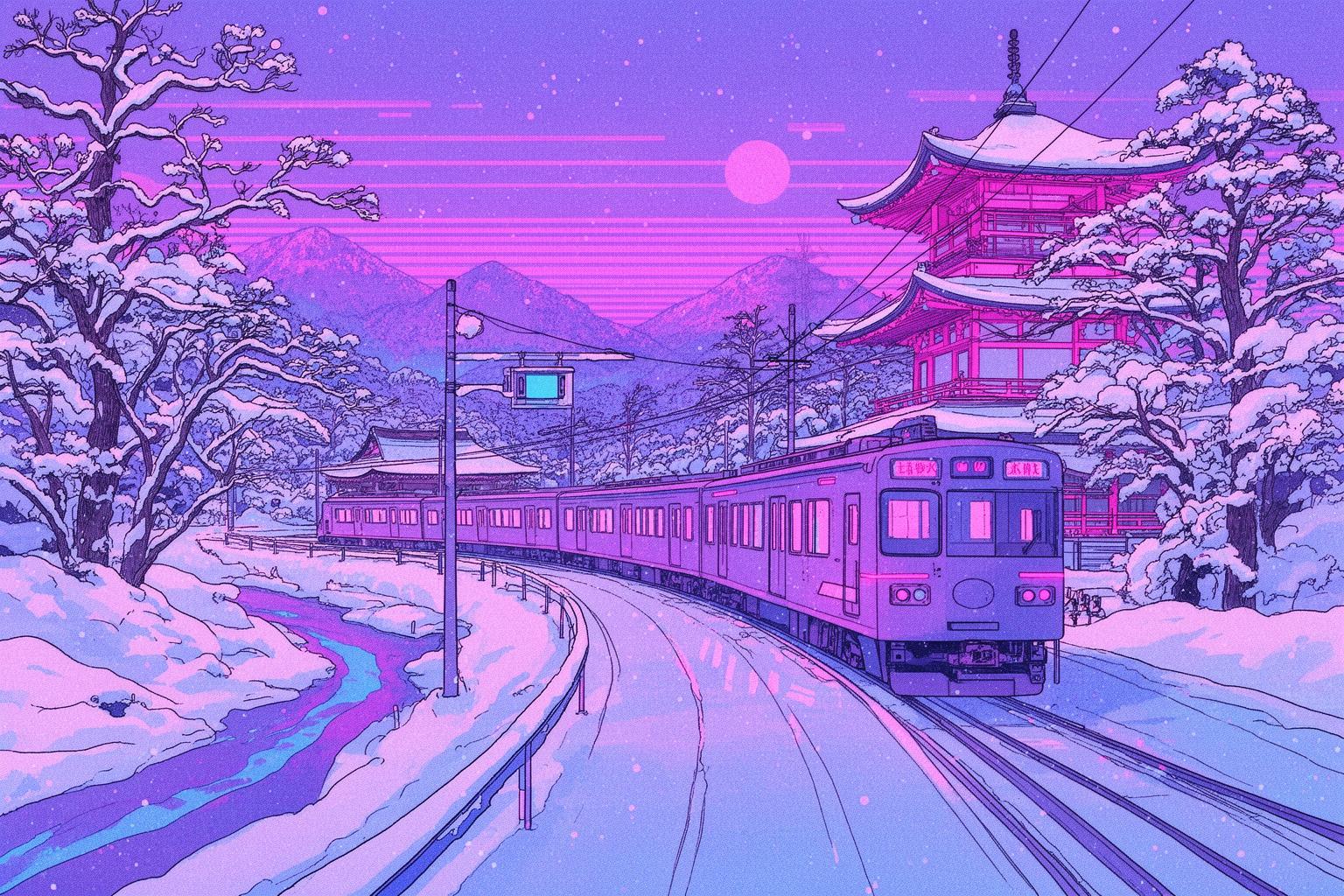
Before you even turn the key, you have to grasp the vibe. A winter touge drive isn’t about speed. Forget everything anime has taught you about drift racing. This is the opposite. It’s slow-fi, laid-back, study-beats-to-relax-to driving. The energy is reflective, almost reverent. The moment you leave the last sleepy town behind and the road starts to climb, the world changes. The dirty, grey slush of the city gives way to clean, untouched white. The trees, once bare and skeletal, now bow under the snow like robed monks in deep meditation. The sheer visual beauty is breathtaking. It’s a monochrome masterpiece of infinite white and grey shades, highlighted by the dark, wet bark of the trees and the occasional flash of a crimson temple gate or bright blue road sign, both strikingly vivid against the pale backdrop. Inside the car, the atmosphere becomes a sanctuary. Your world narrows to a warm, glowing bubble moving through the hushed landscape. The rhythmic thump-thump-thump of windshield wipers clearing the endless flakes becomes your mantra. The engine’s hum and the soft crunch of snow tires on packed powder form the only soundtrack you need. There’s a primal satisfaction in it—being warm and safe while the elements rage silently outside. It draws you into the present moment. Your focus sharpens, not from fear, but out of a deep, calm awareness. Every turn of the wheel is intentional. Your eyes constantly scan the road, reading the snow’s texture, watching for the subtle sheen of possible ice, anticipating the curve ahead. It’s a conversation between you, the machine, and the mountain. There are no distractions out here. Cell service is unreliable at best, often absent. No billboards, no traffic lights, no noise. Just you and the road, unfurling like a white ribbon through the forest. It’s during these drives my mind truly quiets. The usual chatter, the to-do lists, the low-level anxieties of modern life—they all just fade away. They get absorbed by the vast, silent white landscape. It’s main character energy, but in the most introspective and peaceful way possible. You stop not because you have to, but because you want to. You’ll pull over at a scenic viewpoint, kill the engine, and simply sit. The silence that rushes in is complete. You step out, and the cold air hits your face—sharp and clean, smelling of pine and frost. You hear the snow falling—a faint, almost imperceptible hissing. You’re utterly alone, a tiny speck in a vast wilderness, and instead of feeling small, you feel connected. You sense yourself as part of something ancient and immense. This meditative quality is the secret ingredient that elevates the journey from a simple drive to a profound experience. You’re not just heading to a destination; you’re journeying into yourself.
Mastering the Mountain Pass: Your Touge 101
Alright, let’s get practical. The word touge (峠) literally means ‘pass,’ referring to the winding mountain roads that snake through Japan’s rugged interior. While these roads are famous in pop culture for thrilling downhill races, in winter they command a completely different kind of respect. Mastering a snowy touge is a matter of finesse, not power. First and foremost: your vehicle is crucial. You absolutely, without exception, need a 4WD car. Don’t even consider attempting this with anything less. Equally important—if not more so—are the tires. You need proper Japanese snow tires, known as ‘studless’ tires. These aren’t just ‘all-season’ tires; they’re made of a special rubber compound that stays soft and grippy in freezing temperatures, with intricate tread patterns designed to bite into snow and ice. When renting a car in snowy regions of Japan during winter, it will almost always come equipped with these tires by default, but you must double-check. No kidding, this is an absolute safety essential. Driving on a touge is an art of momentum and gentle control. Your mantra should be ‘slow is smooth, and smooth is fast.’ Or in this case, ‘slow is smooth, and smooth is safe.’ Sudden movements are your enemy. Every action—braking, accelerating, steering—must be executed with a delicate touch. You learn to feel grip, or the lack of it, through the steering wheel and the seat of your pants. Brake in a straight line before the corner, ease off the pedal gently, turn the wheel smoothly, and only once you’re pointing where you want to go do you gently apply power to pull yourself through the turn. It’s a graceful, flowing dance. You’ll find yourself slipping into a state of flow, a deep focus where your actions become intuitive. You’re not battling the conditions; you’re cooperating with them. Another key element is understanding the road itself. Japanese mountain roads are impeccably engineered but often very narrow. They’re frequently lined with tall, reflective poles marking the edge of the road, which is a lifesaver when snowbanks rise higher than your car and obscure where the pavement ends and the ditch begins. Pay close attention to convex mirrors on blind corners—they’re often your only way to see what’s coming. Also, be ready to encounter service vehicles. Giant snowplows and graters patrol these roads, and you must give them all the space and respect they deserve. They are the guardians of the pass. Knowing when to take a break is part of the mastery, too. Pushing on when you’re fatigued is a recipe for disaster. Fortunately, Japan offers incredible roadside stations called michi-no-eki. These are far more than simple rest stops. They’re cultural hubs featuring clean restrooms, shops selling local crafts and produce, and excellent, affordable restaurants serving hearty, warming meals. Pulling into a michi-no-eki for a hot bowl of ramen or a can of hot coffee from a vending machine is a quintessential part of the Japanese road trip experience. It’s the perfect chance to reset, stretch your legs, and mentally prepare for the next leg of your journey through the silent, white landscape.
The Anatomy of a Snowflake: Why Japow is the GOAT
So, what exactly is this ‘Japow’ you keep hearing about? Is it just marketing hype? Absolutely not. Japow, or Japanese powder, is a meteorological wonder and, without exaggeration, the best snow in the world for skiing and snowboarding. If you know, you know (iykyk). But for those new to it, let’s break down why it’s considered the undisputed GOAT (Greatest Of All Time). It all comes down to a perfect combination of geography and atmospheric science. The story begins thousands of kilometers away in the frozen, desolate expanse of Siberia. Frigid, dry air masses sweep down from the continent—relentless winter winds carrying extreme cold. As this incredibly cold, moisture-starved air moves out over the relatively warm waters of the Sea of Japan, something magical occurs. The sea acts like a massive engine, pumping huge amounts of moisture into the freezing air. This process, known as the ‘ocean-effect’ or ‘lake-effect snow’ on a grand scale, creates clouds heavily laden with extraordinary snowfall potential. This super-saturated, freezing air mass then makes landfall on the western coast of Japan. Its first obstacle? A formidable mountain spine running down the length of the main island, Honshu. The air is forced to rise rapidly up the windward slopes. As it ascends, it cools further and can no longer hold the moisture it absorbed from the sea. The result is an epic and relentless dumping of snow—some of the highest snowfall totals recorded anywhere on Earth. But it’s not just the volume that makes Japow special; it’s the quality. Because the air is so cold and has traveled so far over land before picking up moisture, the snowflakes have an incredibly low water content. This is key. Japow is renowned for being ridiculously light and dry. Skiers in North America talk about ‘champagne powder,’ but Japow takes it to another level. It’s so light it barely feels solid—it’s more like gas or foam. When you ski or snowboard through it, it doesn’t slow you down; it billows and explodes around you in a weightless white cloud. The sensation is often described as floating or flying. You can be waist-deep or even chest-deep in it and still glide effortlessly. Point your board straight down the fall line, get completely submerged in a wave of white—a ‘face shot’—and come out the other side laughing, snow clearing from your vision like smoke. This unique consistency is what makes the experience so addictive and forgiving. Falling feels like landing on a pile of pillows. This ethereal, otherworldly quality draws people from around the globe to the mountains of Japan, all chasing that perfect, weightless turn in the heart of snow country.
Arrival: Piercing the Veil of the Yuki-Guni Paradise

The final stretch of the drive is always the most intense. The touge narrows, the turns sharpen, and the snowbanks on either side rise high, enveloping the car in a claustrophobic yet oddly comforting white canyon. It feels like you’re traveling through a secret passage. The world you left behind—with its convenience stores and traffic lights—seems a million miles away. Then, you spot it. Maybe it’s a small, hand-painted wooden sign, nearly buried in snow, pointing toward an even smaller side road. Or perhaps the road simply ends in a tiny, cleared parking lot, where only a few cars rest under comically large mounds of snow. You’ve arrived. The feeling is electric—a mix of relief, accomplishment, and excited anticipation. You shut off the engine, and the silence here is even more profound. It’s the silence of a truly remote place, utterly at the mercy of the elements. Stepping out of the car, the sheer volume of snow is overwhelming. It’s not just on the ground; it forms soft, sculptural drifts against every surface, clinging to every branch, weighing down the eaves of the sparse buildings that make up this hidden outpost. Often, these gems aren’t flashy resorts. They might feature a slow, two-person chairlift—a ‘romance lift’—operated by a friendly old man with a weathered face and warm smile. There’s no fancy base lodge, just a simple shack with a pot-bellied stove in the corner, serving the best curry rice and ramen you’ve ever tasted. Lift tickets are simple paper tags you attach to your jacket with a wire. The vibe is perfect—unpretentious, authentic, and wholly devoted to the snow. There are no crowds, no lift lines, no thumping music. The only sounds are the creak of the chairlift, the whisper of wind in the trees, and the joyful hoots of the few others who’ve also made the pilgrimage. Looking up at the mountain, you see a blank canvas. Sure, there are some groomed runs, but the true treasures lie in the trees, in the vast, untracked bowls easily accessed from the single lift. This is a playground of pillows, drops, and deep, bottomless powder. This is the reward for the long, meditative drive. You haven’t just reached a ski area; you’ve pierced the veil and entered a different reality—a place where time slows and the modern world cannot touch you. It’s the feeling of discovery, of finding something truly special that hasn’t been splashed across social media. It’s a secret now shared with the mountain itself.
Carving Your Own Lines: More Than Just a Ski Trip
This isn’t your typical resort experience, where you’re just another helmet in a sea of thousands. A trip to a hidden Japow spot is about freedom and personal expression. It’s about connecting with the mountain on your own terms. The raw, untamed nature of these places invites a different kind of mountain riding, one focused more on exploration and creativity than racking up vertical meters. The beauty of a simple, old-school lift is that it often grants access to incredible terrain that would be roped off or tracked out by 10 AM at a larger resort. Here, fresh tracks last all day. It’s the perfect place to push your skills in a low-pressure setting.
Riding the White Wave: The Untouched Powder Experience
Clipping into your board or skis feels different here. There’s no rush. You pause, breathe in the cold, crisp air, and study the mountain. You pick a line. Maybe it’s a straight shot through a glade of perfectly spaced birch trees, their black-and-white trunks forming a hypnotic slalom course. Or maybe it’s a series of rolling, pillow-like drifts you bounce and pop off, each landing a soft explosion of white. The first turn is always the best. The sensation of your base sinking into that light, dry powder is sublime. It’s a smooth, three-dimensional feeling, like surfing a cloud. The snow doesn’t resist; it yields, parting before you and billowing up around your waist, chest, and finally over your head. The face shot is the holy grail—a moment of sensory overload where you’re blinded by a torrent of crystalline powder. You’re not just on the snow; you’re in it. You emerge from the white room gasping, snow clinging to your eyelashes and a massive, un-wipeable grin spread across your face. You ride not just with your legs but your whole body, using subtle weight shifts to guide you through the deep snow. Each run is a creative act, a temporary signature drawn on a perfect white canvas. And because there are so few people, you have the luxury of stopping midway, not to catch your breath but just to look back up at your single track snaking down the mountain, appreciating the silence and soaking in the profound beauty of being alone in such a wild, perfect place.
The Silent Walk: Snowshoeing into Stillness
But the adventure doesn’t have to be gravity-driven. For a different kind of meditative experience, strap on snowshoes. This is your ticket to parts of the mountain lifts can’t reach—the silent, secret places beyond the beaten path. Snowshoeing is deceptively simple but allows an intimate connection with the winter landscape impossible at speed. The rhythmic crunch of the snowshoes, the gentle puff of your own breath crystallizing in the cold air—it’s a simple, repetitive cadence that lulls you into a peaceful state of awareness. You can follow the tracks of a kamoshika (Japanese serow) or a fox, noticing tiny forest details you’d otherwise miss. Find a clearing, lie on your back, and watch snowflakes drift down from a gray sky, each a unique, perfect crystal. It’s a chance to slow down fully, letting the silence of the snow country seep into your bones. It’s the perfect way to spend a ‘down day’ when your legs are tired from riding, or for those who prefer a quieter, more contemplative connection with the stunning Japanese winter. It reminds you that the mountain offers more than thrilling descents; it offers profound and accessible peace.
The Great Thaw: Onsen Culture in the Heart of Winter
After spending a long day immersed in the cold, white mountain world, there is no greater delight, no more perfect ritual, than the Japanese onsen (温泉). Calling it simply a hot spring or bath greatly understates its significance. The onsen is a cornerstone of Japanese culture—a place for cleansing, healing, relaxation, and social connection. In winter, its charm is amplified a thousandfold. The stark contrast between the biting cold outside and the soothing heat of the mineral-rich water is pure bliss. It’s a sensation of full surrender, a release of every last bit of tension in your body. Muscles sore and fatigued from skiing or snowshoeing throughout the day seem to dissolve in the geothermally heated water. It is the ultimate après-ski experience, and no visit to Japan’s snow country is complete without it. Often, the small towns and villages scattered across these mountain areas have their own local public onsen or belong to a larger onsen resort. This deeply traditional experience comes with a set of etiquette that’s important to know to show respect and fully enjoy the moment.
Before You Dip: A Quick Guide to Onsen Etiquette
First-timers might feel a bit intimidated, but the rules are simple and logical. Onsen are gender-segregated. Before entering the main bath, you must wash yourself thoroughly. You’ll find a washing area equipped with rows of small stools, faucets, and handheld showers. Sit on a stool and scrub yourself clean using soap and shampoo (almost always provided). This step is essential; the onsen bath is meant for soaking, not cleaning. Once you’re completely clean, you can enter the bath. You’ll be given a small towel, often called a “modesty towel.” You may use it to cover yourself as you walk to the bath, but it must never go into the water. Most people place it on their head or on a rock beside the tub. That’s basically it. The rest is about relaxation. Ease yourself into the water, which can be surprisingly hot, and settle into a comfortable spot to soak. Don’t splash or swim—just be still and let the heat work its magic.
Rotenburo Realness: Soaking Under the Snowfall
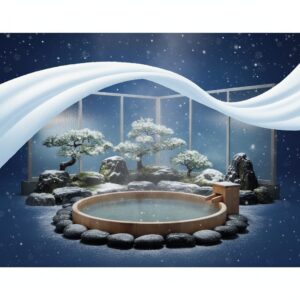
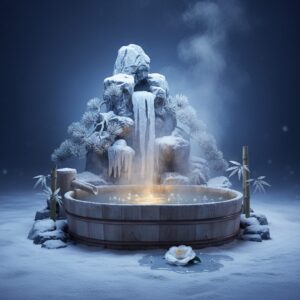
The ultimate onsen experience is the rotenburo, or outdoor bath. Finding an onsen with a rotenburo in winter is like discovering heaven on Earth. The experience is utterly magical. Picture this: you’re submerged up to your neck in perfectly hot, steaming water, with your head and shoulders exposed to the crisp, cold winter air. Thick, fluffy snowflakes drift down from the night sky, melting the moment they touch the water’s surface or your warm skin. The bath is often surrounded by a beautifully landscaped Japanese garden, now blanketed in snow. Frost covers the rocks, lanterns are capped with white, and pine trees wear their heavy winter coats. Steam rises from the water, mingling with the cold air to create a dreamy, ethereal atmosphere. The quiet is broken only by the gentle trickle of water over rocks and the soft hiss of falling snow. It is deeply peaceful—a moment of pure, unfiltered Zen. You feel your body and mind align, the cold air keeping you sharp and refreshed while the hot water relaxes you into near-weightlessness. It is in these moments, soaking in a rotenburo beneath a snowy sky, that you truly grasp the sublime beauty and poetry of a Japanese winter.
Fueling the Soul: The Flavors of Japan’s Snow Country
Life in the yuki-guni calls for a unique kind of fuel. The food here is hearty, warming, and deeply tied to the land and the seasons. It’s not about delicate, intricate dishes; rather, it centers on honest, satisfying flavors that nourish both body and soul after a day spent in the cold. Exploring the local cuisine is as vital to the snow country experience as making powder turns or soaking in an onsen. It offers a delicious glimpse into the culture and resilience of the people who live in these beautiful yet harsh landscapes. Forget fancy restaurants; the best meals are often found in small, family-run shokudo (diners), inns (ryokan or minshuku), or simple eateries at the base of ski hills. The menus tend to be limited, focusing on a few local specialties perfected over generations.
The Communal Cauldron: Nabe and the Warmth of Winter
If there is one dish that epitomizes winter in Japan, it is nabe (鍋), or hot pot. It’s more than just food; it’s a communal experience. A large earthenware pot filled with simmering broth is placed on a portable stove at the center of the table, and everyone gathers around to cook a delicious variety of meats, seafood, tofu, and seasonal vegetables. In the mountains, you’re likely to encounter local specialties like kinoko nabe (mushroom hot pot) featuring an incredible array of wild fungi, or botan nabe (wild boar hot pot), a rich and gamey dish reputed to warm one from the inside out. Sharing the cooking and eating from the same pot fosters a wonderful sense of connection and warmth, the perfect counter to the cold outside. Once the ingredients are finished, rice or noodles are often added to the remaining flavorful broth to make a final, satisfying course called shime. It’s the ultimate comfort food.
Liquid Gold: The Sake of the Snow Country
It’s no coincidence that some of Japan’s most renowned sake-producing areas, such as Niigata and Nagano, are also among its snowiest. The two are deeply connected. The heavy winter snowfall melts gradually in spring, filtering through the mountains to produce exceptionally pure, soft water. This pure water is essential for making premium sake. Additionally, the cold, stable temperatures of the long winter create ideal conditions for the slow, careful fermentation process that yields clean, crisp, and elegant sake. Visiting a local brewery (sakagura) is an excellent way to appreciate this relationship. Many breweries offer tours and tastings where you can sample the local jizake (craft sake). There is no better way to conclude a day than sitting in a cozy izakaya (Japanese pub), sipping a flask of hot sake (atsukan) or a glass of fragrant, chilled ginjo, while enjoying local delicacies. It’s a taste of the region, a liquid expression of the pure snow and cold, clear air. This is the perfect way to toast a day of adventure in the white paradise.
The Practical Playbook: Your Snow Country Survival Guide
An adventure of this magnitude calls for some careful planning. While the essence of the journey lies in meditative freedom, driving in one of the snowiest regions on Earth requires preparation and respect for the conditions. Getting the logistics right is what enables you to relax and fully immerse yourself in the experience. Think of this as your pre-flight checklist before entering the Japow-sphere. A bit of practical know-how goes a long way in making your trip smooth, safe, and stress-free. From the car you choose to the socks on your feet, every detail counts when you’re deep in the heart of yuki-guni. Let’s dive into the essentials so you can focus on the sublime.
Gearing Up: The Right Car for the Conditions
We’ve mentioned this before, but it’s worth repeating with greater detail. Your choice of vehicle is crucial. Rent from a reputable company and specify that you’ll be driving in heavy snow. You’ll need a 4WD—vehicles like a Subaru Forester, Toyota RAV4, or Mitsubishi Pajero are ideal. Rental companies often label these as ‘SUV’ or ‘RV’ class. Importantly, confirm the car comes with studless snow tires. In most northern areas, this is standard from December through March, but always double-check. It’s also wise to carry a set of snow chains in the trunk. While modern snow tires and Japan’s efficient snow clearing usually make their use unnecessary, having chains offers peace of mind and is legally required on some mountain passes during severe storms. Before you set out, familiarize yourself with the car’s features: how to use the defroster, fog lights, and 4WD system (some are full-time, others offer selectable modes). An ice scraper and snow brush should be in the vehicle—if not, buy them at the first convenience store you find. And always keep the fuel tank at least half full; running out of gas on a remote mountain pass in a blizzard is a risk you don’t want to take.
Packing the Essentials: Layers, Tech, and More
Packing for a snow country trip means strategic layering. Temperatures can swing dramatically between a heated car or cozy restaurant and the piercing cold of a mountain summit. Start with a moisture-wicking base layer (merino wool is best), add an insulating mid-layer like fleece or a down vest, and finish with a waterproof and windproof outer shell. This system lets you adjust to changing conditions by adding or removing layers. Reliable waterproof boots with excellent grip are essential. Bring warm wool socks, a beanie, gloves or mittens, and a neck gaiter or buff. Sunglasses or goggles are a must, as sunlight reflecting off the snow can be painfully bright—even on cloudy days. For tech, a portable power bank is vital to keep your phone charged since the cold can drain batteries quickly. Download offline maps of the area you’re visiting, as cell service may be spotty in the mountains. Don’t forget your International Driving Permit—it’s needed for renting a car in Japan.
Timing is Key: Chasing the Peak Powder Window
To fully experience the Japow phenomenon, timing is everything. The prime season for the deepest, most consistent powder is generally late January through mid-February. This period sees the strongest Siberian weather patterns, bringing storm after storm of light, dry snow. December can offer an early base but with more variable conditions. By March, storms taper off and spring skiing begins, bringing sunnier days and corn snow, but you’ll miss out on the legendary deep powder. Keep in mind that peak season is also the busiest time at popular resorts. However, the appeal of hunting for hidden, off-the-beaten-path spots is that even during the busiest weeks, you can find solitude and fresh tracks. Booking your rental car and accommodation well in advance is strongly advised during this window. A little planning ensures you’re in the right place at the right time to catch the storm of a lifetime.
Beyond the Powder: The Spirit of the Yuki-Guni

To fully appreciate this journey, it’s helpful to recognize that you are traveling through a landscape that has deeply influenced the culture and character of its people for centuries. This is more than just a winter wonderland; it is a place marked by immense hardship, resilience, and a unique, contemplative beauty. The term yuki-guni (雪国), or snow country, was immortalized by Nobel laureate Yasunari Kawabata in his novel of the same name. His work beautifully conveys the melancholic and starkly beautiful atmosphere of a remote onsen town buried under snow, and the lives of its inhabitants. Life here has always meant battling the elements. In the past, entire villages would remain cut off from the outside world for months at a time. This isolation cultivated a strong sense of community, deep reliance on neighbors, and remarkable ingenuity in adapting to harsh conditions. You can observe this in the traditional architecture, such as the steep-roofed gassho-zukuri farmhouses of Shirakawa-go, built to withstand heavy snowfall. You can taste it in the local food culture, which emphasizes preserved and fermented foods like pickles (tsukemono) and miso, intended to last through the long winters. The people of the yuki-guni are often described as patient, resilient, and quietly stoic. They possess a profound, unspoken understanding of nature’s rhythms. They do not fight the snow; they live alongside it. They comprehend its power to isolate as well as to purify, its silence, the hardships it imposes, and the pristine beauty it leaves behind. When traveling through these lands, you are not merely a passing tourist; you are a guest in a place with a deep, rich, and often challenging history. Taking the time to appreciate this cultural background adds a profound layer of meaning to your journey, transforming the stunning scenery into a meaningful landscape and your reflective drive into a pilgrimage to the very heart and soul of Japan.
The Last Turn: A Final Reflection
As you finally descend from the mountains, leaving the touge behind and rejoining the main highway, the world gradually comes back into focus. The snowbanks shrink, the trees shed their thick white coats, and the monochrome landscape slowly gives way to color and sound. There’s a strange, almost bittersweet feeling to this return. Part of you yearns to turn back, to remain in the silent, white sanctuary of the highlands. Yet you carry the silence with you. The journey has transformed something within. The meditative focus of the drive, the ethereal joy of gliding through untouched powder, the profound peace of a snowy rotenburo—all these experiences implant themselves deep in your soul. You come back with more than just photos and memories. You return with a renewed sense of calm, a deeper appreciation for stillness, and a powerful reminder that the greatest adventures aren’t always the loudest. Often, they are the ones that ask you to slow down, to listen, and simply to be present. The white silk road of the touge doesn’t merely lead to a hidden paradise of snow; it brings you back to a quieter, more focused version of yourself. And that, no exaggeration, is a destination worth driving any distance for.