You’ve probably seen them, even if you didn’t know what you were looking at. Tucked into the nooks of a sprawling train station, spilling warm light onto a backstreet, or lined up under the brick arches of a railway line. They are small, often crowded, and conspicuously missing one key piece of furniture: chairs. This is the world of the tachinomi, the Japanese standing bar, an institution that’s as essential to the rhythm of urban life as the trains that thunder by them. It’s easy to dismiss them as just quick, cheap places to grab a drink, but that’s like saying a handshake is just about touching hands. The tachinomi is a finely tuned social mechanism, a ritual space designed for a specific purpose: to provide a low-friction, high-efficiency moment of human connection in a society that moves at relentless speed.
To understand the standing bar, you have to understand the flow of a Japanese city. Life is structured around commutes, timetables, and the dense, often anonymous, crush of millions of people moving in concert. There are rigid social codes for the office, for formal dinners, for just about everything. The tachinomi is the antidote to all of that. It’s a deliberate pause, a liminal space between the structured world of work and the private world of home. It’s where you can shed the formalities for a brief, twenty-minute window, have a beer and a skewer of grilled chicken, and maybe strike up a conversation with a complete stranger before melting back into the urban current. There’s a beautiful, unwritten ceremony to it all, and it reveals more about Japanese social dynamics than a dozen formal dinners ever could. It’s not just about drinking; it’s about recalibrating your place in the social ecosystem, one quick stop at a time.
This unique social ritual, much like the rebellious kogal fashion of the 1990s, serves as a distinct cultural counterpoint to mainstream Japanese society.
A Space Designed for Fleeting Moments
The physical layout of a tachinomi is a brilliant example of social engineering. Every aspect of its design aims to encourage transient, spontaneous interactions. The most apparent feature is the absence of seating. Standing isn’t merely a gimmick; it’s the fundamental principle. By eliminating chairs, the feeling of permanence disappears. You’re not settling in for the night; you’re just stopping by. This lowers the psychological barrier to entry. There’s no need to commit to an entire evening or worry about occupying a table too long. You can come and go within fifteen minutes, and that’s not only acceptable but the expected norm.
This temporary nature significantly alters the social dynamic. In a typical bar, groups tend to form isolated clusters around their tables. Conversation stays contained. In a tachinomi, everyone shares the same level, gathered around a common counter or a few high-top barrels. You are physically closer to strangers, and the mutual act of standing fosters a subtle, subconscious sense of camaraderie. It becomes much easier to turn to the person beside you and comment on the drink they ordered or the intriguing dish that just arrived. The space itself encourages these brief, casual interactions.
The counter serves as the centerpiece of this ritual. Typically, it is a single slab of well-worn wood, polished smooth by decades of elbows and beer glasses. It functions as the stage. Behind it, the master, or taisho, works with practiced skill, pouring drinks, grilling skewers, and attentively overseeing everything. In front, customers line up shoulder-to-shoulder. This setup creates a shared focal point. You’re not facing friends across a table; you’re facing the action, side-by-side with strangers. This arrangement naturally invites conversation with your neighbors, as you all share the same audience watching the same performance.
Space is limited. Most tachinomi are very small, some fitting no more than ten or fifteen people. This isn’t a drawback; it’s an advantage. The close quarters foster a degree of intimacy. You must be mindful of those around you, making room for someone to leave or creating a small gap for a newcomer. This ongoing, subtle negotiation of personal space builds a temporary sense of community. For a short while, this small group of strangers becomes a single, functioning unit, connected by the physical limits of the room.
The Ritual of Ordering and Paying
The tachinomi experience follows a distinct rhythm, governed by a set of unwritten rules that regulars understand instinctively. Mastering this straightforward ritual is essential to fully appreciating the role these bars play. It’s a performance built on efficiency and mutual respect.
First, you find your spot; you don’t wait to be seated. You scan the counter for an opening and slide in, offering a subtle nod to your new neighbors. It’s considered proper etiquette to order your first drink almost immediately. The menu is usually simple, displayed on paper strips pasted to the wall or handwritten signs. The classics include draft beer (nama bīru), highballs, and sake. You catch the staff’s eye and clearly, concisely place your order: “Nama hitotsu, onegaishimasu.” (One draft beer, please.)
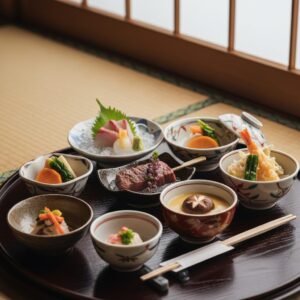
Food is just as straightforward. The offerings are meant to be prepared quickly and eaten easily while standing. Think grilled skewers (yakitori), simmered dishes like beef tendon (gyu-suji nikomi), potato salad, and simple sashimi. These aren’t elaborate meals, but otsumami—snacks designed to accompany alcohol. They provide a quick, savory boost that complements your drink and satisfies the immediate post-work hunger.
One of the most defining aspects is the payment system. Many traditional tachinomi use a cash-on-delivery approach called kyasshu on. You place a 1,000 yen bill or a small stack of coins on the counter in front of you. When you order, the staff takes the exact amount from your pile and returns any change. This method is brilliantly efficient. You don’t need to catch someone’s attention to pay at the end. Your running tab is right in front of you. When your money runs out or you decide it’s time to leave, you simply gather any remaining change and go. This system highlights the transient nature of the visit, keeping the transaction clean, quick, and impersonal, so social interactions remain the focus.
Some bars might use a different system, keeping a running tab or marking orders on a slip of paper, but the core principle of speed and simplicity remains. The entire process—from arrival to departure—is designed to be as seamless as possible. You arrive, drink, eat, pay, and leave. It’s a neat, self-contained social module that fits perfectly into the busy urbanite’s tight schedule.
The Social Lubricant: Forging Temporary Bonds
In a culture where direct communication with strangers is uncommon, the tachinomi plays a crucial role as a social release valve. The mix of alcohol, close proximity, and a shared, informal experience creates a distinctive atmosphere where usual social barriers are temporarily lowered.
These venues are not intended for deep, introspective conversations. Interactions are generally light, brief, and situational. You might ask the person beside you for a recommendation, comment on the baseball game playing on the small television in the corner, or simply exchange a few pleasantries about the weather. Although this type of small talk may seem trivial, in the Japanese context, it represents an important act of connection. It acknowledges a shared presence, forming a temporary bridge between two otherwise separate lives.
This phenomenon is especially significant for the typical sararīman, or office worker. After a long day of following strict workplace hierarchies and social protocols, the tachinomi provides a space of relative freedom. Here, a department manager might find himself standing next to a construction worker, and for those twenty minutes, they are simply two people enjoying a drink. Titles and business cards hold no meaning. This temporary flattening of social hierarchy is a key part of its appeal.
It’s also a place to practice honne, the expression of one’s true feelings, in contrast to tatemae, the public facade. Encouraged by a bit of alcohol, conversations may become more candid and personal than they would be in more formal settings. People might complain about their boss, share concerns about their family, or celebrate a minor personal victory. These fleeting moments of shared vulnerability foster a strong sense of connection. The understanding is that what is said in the tachinomi stays in the tachinomi. The bonds are intentionally temporary, fading as soon as one steps back out into the night.
The philosophy of ichigo ichie—literally “one time, one meeting”—feels especially pertinent here. Rooted in the tea ceremony, the phrase suggests that every encounter is a unique event that will never be repeated in exactly the same way. The interactions in a tachinomi capture this spirit. You might have a memorable ten-minute conversation with a stranger you’ll never see again. The value lies not in forming lasting relationships, but in appreciating the beauty and serendipity of that single, shared moment.
The Evolution of the Standing Bar
While the smoky, salaryman-filled tachinomi beneath the train tracks represents the classic image, the concept has shown remarkable adaptability. The core idea—a low-commitment, high-efficiency social space—has been reimagined for new generations and varied preferences.
In recent years, a fresh wave of standing bars has emerged. Today, you can find stylish wine tachinomi serving charcuterie and cheese, Italian-inspired bacari offering Aperol spritzes and cicchetti, and craft beer bars with ever-changing IPA selections on tap. These contemporary versions often feature sleeker designs, brighter lighting, and menus tailored to a younger, more diverse crowd, including many women.
What’s striking is that despite these updates, the fundamental principles remain unchanged. The emphasis is still on standing, quick service, and creating an atmosphere that encourages spontaneous social interaction. A standing wine bar might seem worlds apart from a Showa-era spot serving stewed offal, yet the underlying social dynamic is the same. Both act as social hubs—a place to connect quickly and easily before moving on.
This evolution highlights the lasting relevance of the tachinomi concept. It’s not merely a relic of the past but a flexible format fulfilling a basic human need for casual, low-pressure social connection—a need that may be more urgent than ever in our increasingly scheduled and digitally driven lives.
So, next time you’re navigating the controlled chaos of a Japanese city, watch for that warm glow from a small, chair-less storefront. Don’t hesitate. Slip into an open spot at the counter, order a drink, and take a moment to observe. You’re not just in a bar; you’re part of a vital, living element of the city’s social fabric, a place where the rituals of everyday life unfold in their most beautifully efficient and fleeting form.