The air in Tokyo crackles with a unique energy, a hum of the hyper-modern layered over whispers of the past. As a photographer, I find my lens drawn to these intersections, the places where ghosts of bygone eras dance in the neon glow of the present. And there’s no ghost more vibrant, more electric, than the echo of the 1960s—an era when Japan, bursting with post-war optimism and hurtling toward an unknowable future, grabbed the electric guitar and created a sound all its own. This was the age of ‘Group Sounds,’ or GS, a movement as explosive and fleeting as a firework over Sumida River. It was Japan’s answer to the British Invasion, a tidal wave of mop-tops, tailored suits, and fuzz-drenched melodies that captivated the nation’s youth and scandalized their parents. While the live acts and screaming fans have faded into memory, the movement’s soul remains, pressed into the grooves of countless vinyl records. These discs are not just music; they are portals. They are tangible artifacts of a cultural revolution, waiting in the record bins of Tokyo to be rediscovered. To hunt for GS vinyl is to embark on a kind of urban archaeology, a treasure hunt through the city’s hidden sonic archives. It’s a journey that takes you deep into the heart of what it meant to be young, loud, and alive in a Japan that was rapidly reinventing itself. This is not just a story about collecting records; it’s about collecting stories, and the beat goes on, if you know where to listen.
For a different kind of urban archaeology that uncovers Tokyo’s hidden listening spaces, explore the city’s unique vinyl kissaten.
Echoes in the Alleyways: What Was Group Sounds?

To understand Group Sounds, you need to envision Japan in the mid-1960s. The 1964 Tokyo Olympics had just reintroduced the nation to the global stage, highlighting a remarkable recovery and a forward-looking ambition. Cities were growing, the economy was thriving, and a new generation of young people—the first to be raised entirely in the post-war period—was coming of age. They craved something fresh, something beyond the traditional enka ballads or the restrained popular songs of their parents’ era. Then, The Beatles appeared on television. This, combined with the instrumental surf-rock surge initiated by bands like The Ventures, who enjoyed immense popularity in Japan, sparked a revolution. It was known as the ‘Eleki Boom,’ the surge of electric guitar music. Suddenly, every young man with some spare cash wanted a Mosrite or a Teisco guitar. From this electric furnace, Group Sounds emerged.
It was an ideal fusion, a musical alchemy. GS blended the melodic structures, harmonies, and stylish fashion of British Invasion bands with the raw, reverberating energy of American garage rock, all filtered through a uniquely Japanese sense of melodrama and lyrical sentimentality known as ‘kayōkyoku.’ The outcome was a sound both familiar and completely original. Bands with evocative English names like The Tigers, The Spiders, The Tempters, and The Golden Cups became instant household names. They were more than musicians; they were idols. They dominated TV shows, their faces appeared on magazine covers and teenage girls’ bedroom walls. They embodied a new kind of Japanese masculinity— androgynous, fashionable, and a little dangerous. For a brief, brilliant period from about 1966 to 1969, Group Sounds was the definitive soundtrack of Japanese youth culture, a vibrant, sometimes chaotic, and deeply influential era.
The Grooves that Defined a Generation: An Aural Snapshot
Dropping the needle on a vintage GS record is a deeply visceral experience. The initial crackle soon gives way to a sound that is simultaneously raw and refined. The production is frequently compressed, punchy, and soaked in spring reverb, imparting an immediate, energetic vibe. The guitars take center stage, often jagged with fuzz—a sound that was still novel at the time. Combined with the distinctive whine of a Farfisa or Vox Continental organ, it formed a sonic palette unmistakably tied to the era, dripping with psychedelic cool.
At the summit of the GS scene were The Tigers. Led by the charismatic Kenji ‘Julie’ Sawada, they were Japan’s equivalent to The Beatles in terms of sheer frenzy. Their songs often leaned toward a lighter, more pop-oriented style, but were delivered with flawless flair. A track like ‘Seaside Bound’ is pure sunshine pop, featuring a driving beat and infectious chorus that perfectly captures the youthful optimism of the time. Listening to it, you can almost feel the sea breeze and sand beneath your feet on a Shōnan beach in the summer of ’67.
Then there were The Spiders, a slightly older and more musically experienced group. Their output was highly eclectic, ranging from playful pop tunes to blistering garage rock. Their secret weapon was guitarist Hiroshi ‘Monsieur’ Kamayatsu, who could compose a tender ballad one day and a searing fuzz-rock anthem the next. Their hit ‘No No Boy’ perfectly exemplifies their raw energy—a rebellious anthem driven by pounding drums and snarling vocals brimming with rock and roll swagger. They were the cheeky, slightly irreverent elder siblings of the GS scene.
For pure, raw-throated passion, few matched The Tempters, fronted by the brooding Kenichi ‘Sho-ken’ Hagiwara. His vocal performances were legendary—a fusion of soulful blues shouting and a dramatic, almost tortured delivery. Their masterpiece, ‘Emerald Legend,’ is a psychedelic ballad of epic scope, complete with swirling organs and a sense of operatic tragedy. It highlights the uniquely Japanese flair for melodrama within rock, resulting in a heartbreakingly beautiful sound. Sho-ken became a symbol of rebellious, misunderstood youth, his voice embodying the cry of that generation.
No discussion of GS is complete without mentioning The Golden Cups. Originating from the port city of Yokohama, with its strong American military presence, they were deeply immersed in authentic rhythm and blues. Known as the ‘musicians’ band,’ they were a powerhouse of technical skill and raw, soulful energy. Their blistering covers of Western R&B standards impressed, but their original work, such as the iconic ‘Nagai Kami no Musume’ (Girl with the Long Hair), fused that bluesy foundation with a Japanese pop sensibility, crafting something tough and cool that distinguished them from their Tokyo rivals. They were the real deal, a band whose influence resonated through the Japanese rock scene for decades to come.
The Hunt for Black Gold: A Pilgrim’s Guide to Tokyo’s Record Shrines
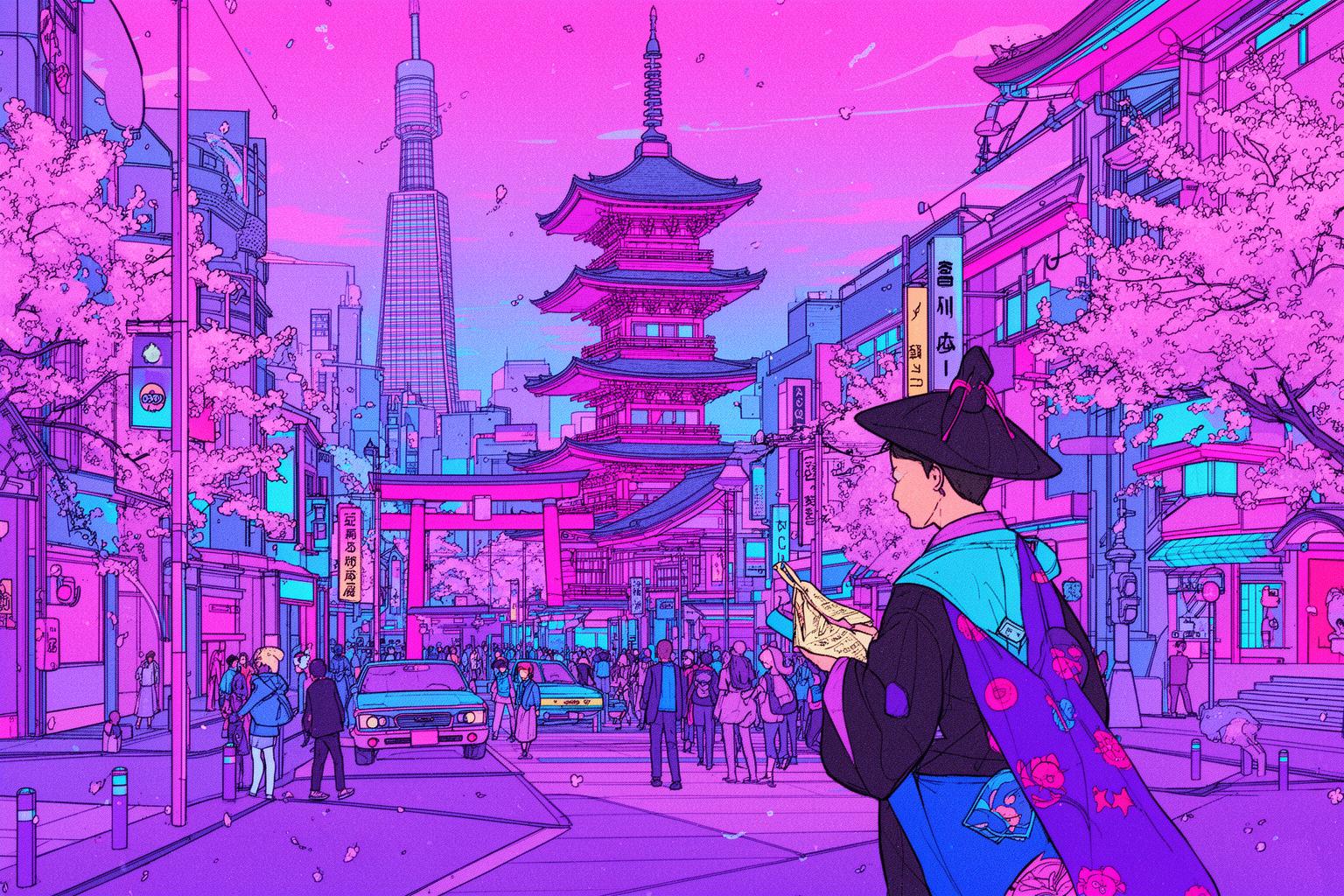
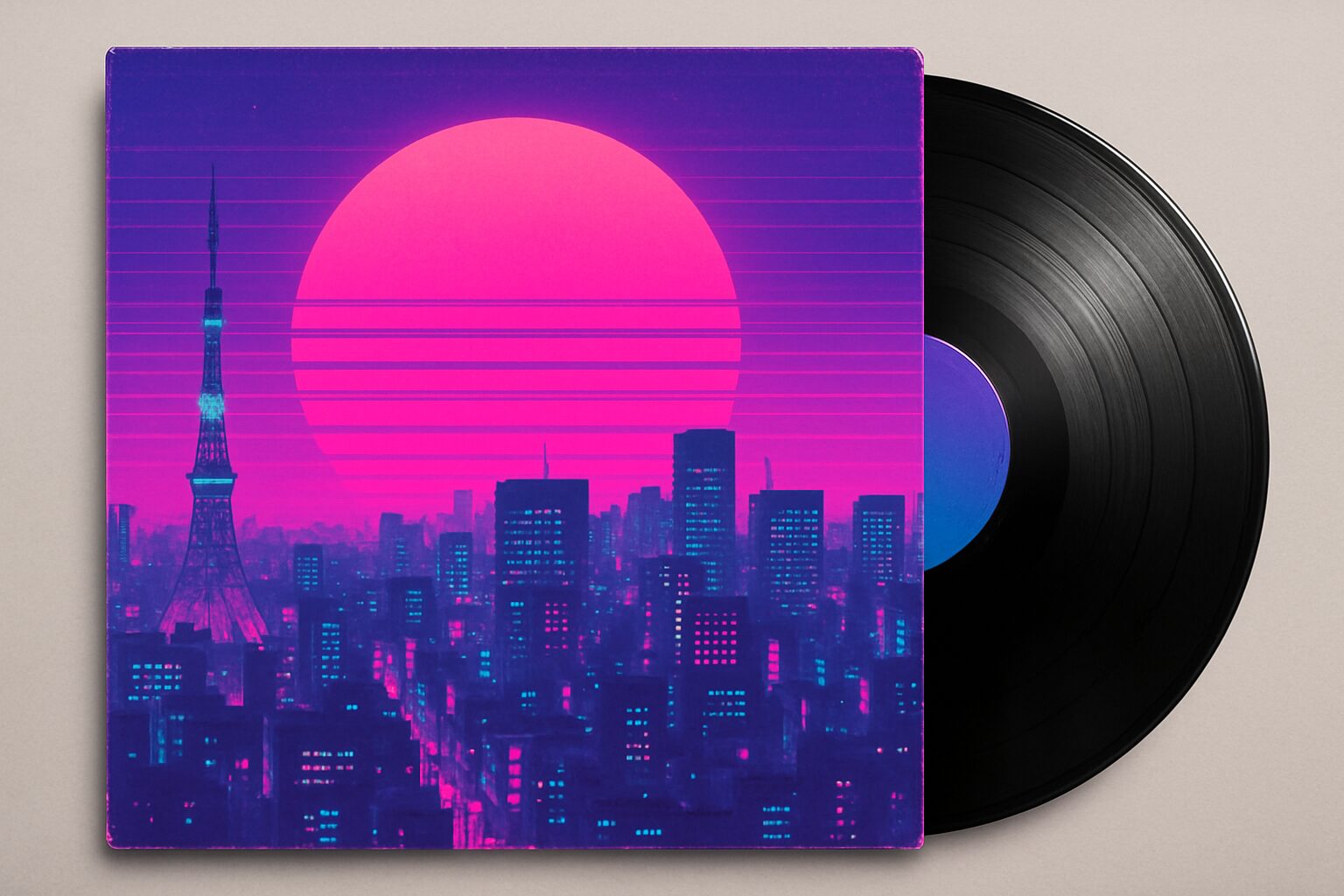
Today, the legacy of these bands, along with hundreds of others from the GS era, is carefully preserved in Tokyo’s iconic record stores. For vinyl enthusiasts, the city is a paradise—a vast landscape filled with sonic treasures. Searching for Group Sounds vinyl offers the perfect excuse to explore some of Tokyo’s most vibrant neighborhoods, each with its own unique character and crate-digging culture.
Shinjuku: The Concrete Canyon of Sound
Your journey will almost certainly start in Shinjuku, home to Disk Union—a name revered by collectors around the world. Rather than a single store, it is a network spread across multiple floors of several buildings near the main station. There’s a distinct sense of awe as you step into one of their elevators. Each floor is dedicated to a specific genre: jazz, heavy metal, hip-hop, and, most importantly for our quest, Japanese rock and pop. When the elevator doors open onto the Japanese music floor, you enter a hushed, library-like space. The only sounds are the gentle rustling of plastic sleeves and the quiet hum of air conditioning. Rows upon rows of meticulously organized records lie before you. The Group Sounds section acts as a time capsule. Here, you’ll find original 1960s pressings, their covers bursting with psychedelic colors and sharp Mod fashion. The sheer volume can be overwhelming, but the orderliness brings calm. Here, you can physically hold history in your hands, tracing the iconic logos of Columbia, Polydor, and Philips. Shinjuku stands for depth and breadth; if a record exists, you’re likely to find it here. It’s a place for systematic, focused searching.
Shimokitazawa: The Bohemian Rhapsody
If Shinjuku is a grand library, Shimokitazawa is a cozy, cluttered bookstore run by a passionate eccentric. A short train ride from the bustle of Shibuya, ‘Shimokita’ is a maze of narrow streets, vintage clothing shops, independent theaters, and small, exceptional record stores. The atmosphere here is entirely different: relaxed, bohemian, and endlessly cool. Record shops in Shimokitazawa tend to be smaller, more curated spaces, often hidden on the second floor of unremarkable buildings or down staircases into intimate basements. Stores like Flash Disc Ranch feel like a music lover’s living room, with records stacked high and hidden gems waiting to be uncovered. The hunt here is more about serendipity—you might not find every record on your list, but you’ll almost certainly stumble upon something you hadn’t known you needed. It’s a place to get lost, moving from shop to shop, stopping for coffee or craft beer along the way. In Shimokitazawa, you’re not just buying records—you’re immersing yourself in a culture that still values the independent and analogue.
The Quiet Corners: Ochanomizu and Jimbocho
For those truly dedicated hunters willing to stray from the main routes, the neighboring districts of Ochanomizu and Jimbocho provide a different kind of experience. Ochanomizu is famed for its vast array of musical instrument stores—a veritable ‘guitar street’ that is a haven in itself. Nestled among them, not surprisingly, are record shops catering to the musician’s ear. But it’s neighboring Jimbocho, Tokyo’s famous ‘book town,’ that holds a particular appeal. Among the hundreds of shops selling rare and antique books, you’ll find a handful of vinyl specialists who treat records with scholarly reverence. Digging here feels more like archival research. The pace is slower, more reflective. Discovering a rare Group Sounds 7-inch single in a Jimbocho shop is like unearthing a lost manuscript—a forgotten cultural artifact that tells a profound story about the city and its history.
Reading the Runes: A Deep Dive into the Art of Japanese Vinyl
Collecting Japanese records is an art in itself, complete with its own unique language and customs. The first thing any new collector will notice is the ‘obi,’ the distinctive paper strip wrapped around the spine of the album sleeve. For the aspiring Group Sounds collector, understanding these details is part of the enjoyment.
The Essential Obi: More Than Just a Paper Strip
The obi (meaning ‘sash,’ like the one worn with a kimono) is a uniquely Japanese feature of packaged media. Originally, it served a practical purpose: to provide Japanese-language information, such as the tracklist, price, and artist details, on imported records. Domestic releases soon adopted the practice, and the obi became a canvas for marketing and artistic expression. For collectors, the obi is crucial. An album with its original obi intact is far more valuable and desirable than one without it. It confirms the record is a complete, original artifact. The designs on GS-era obis are often striking, featuring bold typography and promotional slogans that capture the excitement of the era. Searching for a ‘perfect copy’ with a pristine, un-torn obi becomes a quest in itself, reflecting the care these items have received over more than half a century.
The Language of the Label: Pressings and Condition
Japanese pressings are renowned among audiophiles for their superior quality. The vinyl used was often of a higher grade, and quality control was famously rigorous. This means even a record from 1967 can sound remarkably quiet and dynamic. Serious collectors often seek out the earliest pressings. For some labels, this means hunting for the coveted ‘akaban,’ or red wax pressings, made from a vinyl formula that gives the disc a translucent red hue when held up to light. These are typically the first pressings and are prized for their warm sound. Moreover, Japanese sellers are meticulous about grading the condition of records. A record graded ‘Excellent’ in a Tokyo shop would likely be considered ‘Near Mint’ elsewhere in the world. They often point out the smallest scuff or hairline mark with apologetic sincerity. This culture of care and precision is one of the great pleasures of buying records in Japan. You can almost always rely on the grading, allowing you to purchase with confidence as you expand your psychedelic collection.
The Sound of Rebellion: Why Group Sounds Mattered

The story of Group Sounds goes beyond music and fashion; it represents a significant cultural flashpoint. In a society that valued conformity and respect for elders, the GS movement was a true youth rebellion. The long hair, loud music, and wild stage antics were deeply shocking to the conservative establishment. Media outlets were filled with concerned reports, and Parent-Teacher Associations nationwide warned of the corrupting influence of these bands. The ‘long-hair problem’ became a national controversy. Some schools even forcibly cut the hair of students who dared to imitate their idols. This generational clash became the crucible in which modern Japanese youth culture was forged. For the first time, teenagers had a culture exclusively their own, one their parents simply could not understand. It was a declaration of independence, set to a fuzz-guitar soundtrack. Though the GS boom was short-lived, its impact was profound. It opened the door for more authentic and artistically ambitious forms of rock music to thrive in Japan, including the heavy, psychedelic ‘New Rock’ movement that followed. Group Sounds was the necessary, glorious, and sometimes silly first step.
Fading Echoes and Modern Revivals: Hearing GS Today
Although the original wave of Group Sounds had broken by the early 1970s, its echoes continue to resonate. While GS bands no longer headline the Fuji Rock Festival, the spirit of that era remains alive. In the tiny, atmospheric bars of Shinjuku’s Golden Gai or the music-obsessed venues of Koenji, DJs still spin 60s Japanese garage and psych tracks. Entering one of these small, dimly lit spots feels like stepping into a secret club where the flame is kept burning. Here, you can enjoy a Japanese whisky as the raw sounds of The Mops or The Carnabeats crackle through the speakers. It’s an immersive experience that connects you directly to the past. Furthermore, the influence of GS is deeply embedded in the fabric of much of the Japanese music that followed. Its melodicism can be heard in City Pop, its raw energy in punk bands like The Blue Hearts, and its psychedelic vibe in the Shibuya-kei scene of the 1990s. Artists such as Pizzicato Five and The Flipper’s Guitar openly acknowledged the GS aesthetic, bringing its cool back to a new generation. Collecting Group Sounds vinyl isn’t merely about nostalgia; it’s about appreciating the foundational DNA of modern Japanese pop and rock.
As you leave the record store, your tote bag heavy with finds, you step back into the dazzling sensory overload of contemporary Tokyo. The city’s sounds—the train announcements, cheerful convenience store jingles, and the buzz of the crowds—surround you once again. But now, you carry a secret with you. Within your hands lies the sound of a different Tokyo, a different Japan: a time of unrestrained energy, youthful rebellion, and unforgettable guitar riffs. Though the psychedelic beat of the 1960s may have faded from the mainstream, in the grooves of these black vinyl discs, it remains forever young, forever wild, waiting for you to drop the needle and let the journey begin anew.